Showing posts with label Andhra Pradesh. Show all posts

Avalanche Partners with Centurion University to Launch Blockchain-Based Academic Degrees in India

Avalanche Partners with Centurion University to Launch Blockchain-Based Academic Degrees in India

Avalanche, the world’s leading blockchain platform, has collaborated with Centurion University of Technology and Management, Andhra Pradesh (CUTM-AP) to issue blockchain based academic degrees. Starting this academic year, students will receive a blockchain-secured credential, which is tamper-proof, transparent, and instantly verifiable across the globe. The university will issue 1,000+ degrees annually, covering bachelor’s, master’s, and doctoral programs, as well as diplomas, certificates, gold medals, and honorary degrees.

Centurion University (CUTM-AP) is deploying Avalanche’s fast and scalable blockchain to make every graduate’s degree secure, permanent, and globally accessible. Recruiters, institutions, and government agencies can verify credentials instantly within seconds, reducing the chances of academic frauds. The partnership underscores the University’s dedication to advancing Digital India while empowering students with future-ready tools. By safeguarding the authenticity of academic records, the initiative reinforces the University’s commitment to integrity and ensures global recognition for its graduates.

Blockchain technology is transforming the way institutions preserve and verify academic records. With this initiative, we are strengthening trust in our degrees while giving our students an edge in a digitally connected world,” said Dr. PK Mohanty, Vice Chancellor, CUTM-AP.

Authenticity and trust are the cornerstones of higher education. By issuing degrees on Avalanche, we are empowering students with secure credentials that will stand the test of time and remain verifiable anywhere in the world, we aim to replicate this model in educational institutes across India.” said Devika Mittal, Regional Head at Ava Labs.

Governments or accrediting agencies act as the trusted authority in blockchain-based degrees. Through initiatives like the Certificate Chain on the official blockchain platform, they are responsible for issuing, validating, and authenticating credentials on the blockchain. This ensures trust, transparency, and official recognition of the degrees by the Ministry of Electronics and Information Technology, Government of India.

Blockchain technology presents a viable alternative to traditional systems by cutting yearly subscription fees. In the long term, implementing blockchain based degrees will lead to significant long-term savings by automating credential verification, reducing administrative overhead, and eliminating fraud.

The global market for blockchain in education is just getting started. Valued at $240 million in 2023, it’s on track to grow at a blistering pace, nearly 44% every year between now and 2030. By the end of the decade, this market is expected to hit $3.07 billion, showing how quickly schools, universities, and training providers worldwide are adopting blockchain to secure and verify academic credentials.

About CUTM:

Centurion University of Technology and Management (CUTM) is a multi-campus state private university in Andhra Pradesh and Odisha, India. It offers a wide range of programs from vocational and undergraduate courses to master’s and Ph.D. degrees in engineering, applied sciences, agriculture, design, health sciences, management and other fields. Centurion University, Odisha accredited with an ‘A+’ grade by the NAAC, emphasizes industry-integrated, experiential learning and sustainable development. CUTM engages students in tech innovation through its Campus to Crypto initiative (also known as the CUTM Blockchain official community). This on-campus club organizes workshops, hackathons and bootcamps on blockchain and Web3. For example, Centurion hosted a 4-day Avalanche India bootcamp, drawing students and developers to learn Avalanche technology. The university’s blockchain degree rollout builds on this foundation, combining CUTM’s educational mission with Avalanche’s cutting-edge Blockchain platform.

About Avalanche Blockchain Network:

Avalanche is a high-performance blockchain platform designed for builders who need to scale. Engineered with a revolutionary three-part Layer 1 (L1) architecture, Avalanche is anchored by its Avalanche Consensus Mechanism, ensuring near-instant finality for transactions. The platform also features an open-source Layer 0 (L0) framework, enabling the seamless creation of interoperable Layer 1 blockchains with high throughput on both public and private networks. Supported by a global community of developers and validators, Avalanche offers a fast, low-cost environment for building the next generation of decentralized applications (dApps). With its unique blend of speed, flexibility, and scalability, Avalanche is the preferred choice for innovators pushing the boundaries of blockchain technology. For more information, visit avax.network

Google Commits $6 Bn to Build Asia’s Largest Data Centre in India

Google Commits $6 Bn to Build Asia’s Largest Data Centre in India

Google is making a landmark investment of $6 billion to build a 1-gigawatt hyperscale data centre in Visakhapatnam, Andhra Pradesh, marking its largest such project in Asia and its first of this scale in India.

Key Highlights
  • Location: Port city of Visakhapatnam, Andhra Pradesh
  • Capacity: 1 GW (gigawatt) data centre — largest in Asia by size and investment
  • Renewable Energy: $2 billion earmarked for green energy infrastructure to power the facility
  • Strategic Goal: Supports Andhra Pradesh’s ambition to build 6 GW of data centre capacity over five years, up from nearly zero today
  • Cable Infrastructure: Plans for three new cable landing stations in Visakhapatnam to double Mumbai’s current network capacity
  • Global Context: Part of Alphabet’s broader $75 billion global data centre expansion, including projects in Singapore, Malaysia, and Thailand
Sustainability Meets Scale

While the facility will be primarily powered by renewable energy, some coal-based capacity may be included to ensure 24/7 reliability. Andhra Pradesh anticipates 10 GW of additional power demand from the data centre industry in the next five years.

Strategic Implications

This move positions India — and Andhra Pradesh specifically — as a rising hub in the global digital infrastructure race. It also reflects Google’s confidence in India’s long-term tech ecosystem, despite global economic uncertainties.

Adani Green Energy Projects Cancelled in Andhra Pradesh

Adani Green Energy Projects Cancelled in Andhra Pradesh

The Andhra Pradesh government has officially cancelled two major pumped hydro storage projects allotted to Adani Green Energy Ltd (AGEL), following a formal request from the company, reported news agency PTI. The decision, approved by the State Investment Promotion Board (SIPB) on July 17, stems from unresolved boundary disputes between Andhra Pradesh and neighboring Odisha that have stalled project development.

Projects Cancelled:
  • Kurukutti Pumped Hydro Storage Project – 1,200 MW
  • Karrivalasa Pumped Hydro Storage Project – 1,000 MW
Both were located in Parvathipuram Manyam district and allotted to Adani Green Energy Ltd (AGEL).

Why Were They Cancelled?
  • AGEL requested cancellation due to boundary disputes between Andhra Pradesh and Odisha, which hindered surveys and investigations.
  • The New and Renewable Energy Development Corporation of Andhra Pradesh (NREDCAP) confirmed the challenges and stated that AGEL was not at fault.
  • The State Investment Promotion Board (SIPB) approved the cancellation on July 17, 2025, after reviewing AGEL’s proposal.
Financial Adjustments Requested
  • AGEL paid ₹12.98 crore in facilitation charges for the two projects.
  • The company requested either a refund or adjustment of these charges toward two other allotted projects:
    • Pedakota PSP – 1,000 MW
    • Raiwada PSP – 600 MW
Background
  • The projects were approved under the YSRCP government on June 29, 2022. 
  • Feasibility reports were prepared by TCE Ltd, and AGEL was responsible for the Detailed Project Report (DPR) and surveys.
Broader Implications
  • The cancellation highlights the risks of inter-state land disputes in infrastructure planning.
  • It underscores the need for clear land acquisition strategies and local stakeholder engagement, especially in Schedule-5 tribal regions.

Amaravati to Pioneer India’s First Homegrown 8-Qubit Computer

Amaravati to Pioneer India’s First Homegrown 8-Qubit Computer

In a landmark move for India’s quantum ambitions, Andhra Pradesh Chief Minister N. Chandrababu Naidu announced that Amaravati will deploy the country’s first indigenously built 8-qubit quantum computer this November. The initiative is being spearheaded by Bengaluru-based quantum startup QpiAI, with strategic support from the National Quantum Mission (NQM).

The announcement followed high-level discussions between Naidu and Dr. Nagendra Nagaraja, founder of QpiAI, who will play a pivotal role in the state’s ambitious Amaravati Quantum Valley project.

Our initiative, backed by the National Quantum Mission, aims to transform agriculture, water management, and health care,” Naidu said. “I would like to congratulate QpiAI founder Nagendra Nagaraja and express my gratitude to the National Quantum Mission for their support to this project.

Quantum Valley: A First for India

The Amaravati Quantum Valley will be India’s first dedicated hub for quantum innovation, research, and public-benefit applications. QpiAI will establish a center of excellence in the city, focusing on quantum algorithm development, startup incubation, and skill-building for youth.

A QpiAI Quantum system

The 8-qubit quantum computer, developed entirely within India, marks a significant milestone in the country’s push toward self-reliance in advanced technologies. It will be used to tackle complex problems across sectors including:
  • Agriculture: Precision farming, pest prediction, and crop advisory systems
  • Water Management: Predictive analytics and efficient resource allocation
  • Healthcare: Disease diagnostics and quantum simulations for treatment
  • Education & Skills: Quantum curriculum integration and youth empowerment

QpiAI’s Strategic Rise

QpiAI recently raised $32 million in Series A funding, co-led by Avataar Ventures and the National Quantum Mission, bringing its total funding to $39 million. The company aims to accelerate product development and global expansion, positioning itself as a frontrunner in the quantum computing space.

National Quantum Mission’s Backing

The National Quantum Mission, launched by India’s Department of Science and Technology (DST), is designed to position the country as a global leader in quantum technologies. Amaravati’s selection as the site for India’s first quantum valley underscores the mission’s commitment to regional innovation and infrastructure development.

With this deployment, Amaravati is set to become a beacon of quantum progress, blending cutting-edge technology with real-world impact across critical sectors.

Amaravati’s Quantum Valley Gets Structural Backbone Through AQCC Incorporation

Amaravati’s Quantum Valley Gets Structural Backbone Through AQCC Incorporation

The Andhra Pradesh government has formally established the Amaravati Quantum Computing Centre (AQCC) as a wholly owned government company under the Companies Act, 2013.

This move is part of the state’s ambitious plan to build a Quantum Valley in Amaravati, envisioned as India’s answer to Silicon Valley for quantum technologies.

GO-Ms-25: The Legal Backbone
  • Issued by State IT Secretary Bhaskar Katamneni, the government order outlines the creation of AQCC and its strategic role in quantum innovation.
  • The centre will serve as a technology hub, bringing together:
    • Academic institutions
    • Startups
    • Global tech providers
    • Research labs focused on quantum computing and allied fields.
Strategic Infrastructure & Governance
  • 50 acres have been allocated by the Capital Region Development Authority for the Quantum Valley campus.
  • The initial board of directors includes secretaries from departments like IT, finance, industries, agriculture, energy, health, and real-time governance.
This marks a pivotal moment in India’s deep-tech journey. The centre will support sectors like cybersecurity, pharmaceuticals, climate modeling, materials science, and AI.

This initiative could position Amaravati as a global nucleus for quantum innovation. The Amaravati Quantum Valley Declaration, adopted during a workshop on June 30, outlines a collaborative roadmap for quantum innovation.

Andhra Pradesh Shoots for the Stars: ₹25K Crore Space Policy Takes Off

Andhra Pradesh Shoots for the Stars: ₹25K Crore Space Policy Takes Off

Andhra Pradesh state government has introduced rhe AP Space Policy 2025–30, which is designed to transform the state into a hub for space innovation and industry. Below is a quick breakdown of what it sets out to achieve:

Strategic Goals

  • Attract ₹25,000 crore in investments over the next decade
  • Create 5,000 direct and 30,000 indirect jobs in high-tech space-linked domains
  • Align with India’s National Space Programme to support missions like Chandrayaan-4 and the Next Generation Launch Vehicle

Twin Space Cities

  • Lepakshi: Innovation hub for upstream and downstream space technologies
  • Tirupati (Routhusurmala): Focused on launch vehicle assembly, satellite integration, and manufacturing

Ecosystem Development

  • Formation of AP Space City Corporation, a special purpose vehicle to drive infrastructure, funding, and partnerships
  • Incentives for MSMEs and large enterprises, including capital subsidies and tax reimbursements
  • Dedicated SpaceTech Fund and ₹1,000 crore VC fund to support startups

Infrastructure & Policy Support

  • Manufacturing clusters near Sriharikota, India’s only operational spaceport
  • Direct logistics corridor with 6-lane road access to Satish Dhawan Space Centre
  • Regulatory frameworks to enable technology transfer and public-private partnerships
This move positions Andhra Pradesh as a serious player in India’s space ambitions. Want to explore how this compares with other state-level tech policies or dive into the startup opportunities it opens up?

Visakhapatnam Launches World's First MedTech University

Visakhapatnam Launches World's First MedTech University

India is setting a global precedent with the launch of the Global MedTech University at the Andhra Pradesh MedTech Zone (AMTZ) in Visakhapatnam.
  • Location: Within AMTZ, one of the world’s largest medtech manufacturing clusters
  • Launch Timeline: Academic operations begin in 2025–26
  • Programs Offered:
    • MBA in Medical Regulatory Approvals & Entrepreneurship
    • MTech in Medical Technology Devices
    • MTech in Bioengineering
    • PhD in Medical Technology & Regulatory Affairs

Purpose & Impact

  • India currently imports 80% of its medical devices, including diagnostic and imaging tools.
  • The university will develop skilled professionals tailored to industry needs, reducing reliance on imports.
  • Students will gain hands-on training from experts within AMTZ’s 140+ medtech companies.

Global Collaboration

  • Created through a public-private partnership, the university will collaborate with global institutions to boost research and innovation.
  • Led by Founding Director Prof. Hanumanthu Purushotham, it’s envisioned as a hub of healthcare technology and self-reliance.

Adani Leads ₹29,000 Cr Investment Wave in Andhra; 42,000 Jobs Coming

Adani Leads ₹29,000 Cr Investment Wave in Andhra; 42,000 Jobs Coming

Andhra Pradesh government has approved ₹28,546 crore worth of industrial projects in its 7th State-Level Investment Promotion Board (SIPB) meeting. Major highlights include:
  • Adani Renewable Energy Fifty One: ₹8,010 crore investment in Kadapa.
  • Adani Hydro Energy One & Four: ₹10,900 crore across multiple districts.
  • Adani Group projects to generate around 10,500 jobs.

Other key investments:

  • Cognizant: ₹1,583 crore IT campus in Visakhapatnam, creating 8,000 jobs.
  • Reliance Consumer Products: ₹1,622 crore in Orvakal.
  • Raymond: ₹1,201 crore across various locations.
Chief Minister Chandrababu Naidu emphasized the state's focus on balanced regional development, local job creation, and skill enhancement. MSME parks are being planned in every Assembly constituency under the "One Family – One Entrepreneur" initiative.

Andhra Pradesh has seen a remarkable surge in industrial investments over the past few years, positioning itself as a rising hub for clean energy, IT, and manufacturing.

In November 2024, Reliance Industries announced a massive investment of ₹65,000 crore (approximately US$ 7.5 billion) to set up 500 compressed biogas (CBG) plants in Andhra Pradesh over the next five years.

In January 2025, the State Investment Promotion Board (SIPB) approved ₹44,776 crore worth of projects, with ₹42,932 crore focused on clean energy—mostly solar. Major players included Navayuga Engineering (₹14,328 crore), Megha Engineering (₹10,300 crore), Tata Power Renewable, Ayana Renewable, and Ampin Energy.

Since July 2024, SIPB has cleared projects worth ₹3.1 trillion, with a job creation potential of over 3.12 lakh.

Last month, SAEL Solar MHP1 Pvt. Limited, a subsidiary of SAEL Industries Ltd., a clean energy company, secured a debt finance amounting to of $132 million from Asian Infrastructure Investment Bank (AIIB), New Development Bank (NDB), and Societe Generale for development of a solar power project in Andhra Pradesh.

Notably, 19 new projects worth over Rs 33,720 crore and a total of 76 projects have been cleared since the current administration took charge, the state is not only expanding its renewable capacity but also setting an economic momentum that could generate hundreds of thousands of jobs.

Besides, Andhra Pradesh is set to host India’s largest quantum computer at the upcoming Quantum Valley Tech Park in Amaravati.

SAEL Lands $132 Mn from NDB, AIIB & Societe Generale for Andhra Solar Push

SAEL Lands $132 Mn from NDB, AIIB & Societe Generale for Andhra Solar Push

SAEL Solar MHP1 Pvt. Limited, a subsidiary of SAEL Industries Ltd., a clean energy company, has secured a debt finance amounting to of US$132 million from three global financial institutions — Asian Infrastructure Investment Bank (AIIB), New Development Bank (NDB), and Societe Generale for development of a solar power project in Andhra Pradesh.

Each institution has committed US$44 million debt funding towards the project, which was awarded through a competitive auction conducted by the Solar Energy Corporation of India (SECI). The investment will be utilized towards the execution and operationalization of the project, in alignment with India’s renewable energy objectives and the ongoing development of clean energy infrastructure in Andhra Pradesh.

Speaking on this, Laxit Awla, CEO, SAEL Industries Ltd. said, “These funds represent a major development for SAEL Industries as we continue our efforts to deliver sustainable clean energy solutions that facilitate India’s transition to a low-carbon future. The support from these institutions reflects confidence in our technical expertise and financial credibility to execute energy infrastructure. We are aligned with the state’s mission to drive forward the clean energy transition and economic development in Andhra Pradesh with this solar project.”

By supporting SAEL solar project, Societe Generale is committed to enabling solutions that will create value for communities and the broader energy ecosystem, helping India achieve its goals of renewable energy generation adoption” said Dr. Katan Hirachand, Chief Executive Officer, Societe Generale India.

SAEL’s business spans solar and agri waste-to-energy projects across India. It has a portfolio of 6.5+ GW of Solar IPP projects, including both operational and under-development assets across India. The company operates solar module manufacturing facilities totalling a capacity of 3.5GW, utilizing TOPCon technology, further enhancing its vertical integration. SAEL also operates an agri waste-to-energy business, processing nearly 2 million tonnes of agricultural residue annually through 11 plants across Punjab, Haryana and Rajasthan, aimed to help combat pollution.

SAEL is an integrated renewable energy company with in-house Engineering Procurement and Construction (EPC), Operations and Maintenance (O&M), and manufacturing capabilities.

About SAEL:

SAEL Industries Ltd. is a renewable energy company specializing in solar and waste-to-energy. With over two decades of experience in the energy sector, SAEL is committed to providing sustainable and affordable energy solutions. The company has a renewable portfolio of 6.5+GW operating assets across the nation.

72GW Power Play: Andhra Pradesh’s Clean Energy Leap

72GW Power Play: Andhra Pradesh’s Clean Energy Leap

Andhra Pradesh is forging an ambitious path toward a cleaner future by setting its sights on a massive 72.60 GW of renewable energy capacity by 2029.

At the heart of this surge is the state’s bold push into clean energy infrastructure, exemplified by the recently launched ReNew Renewable Energy Complex in Anantapur. Valued at Rs 22,000 crore, this flagship project is designed to generate 4.8 GW through a mix of solar, wind, and battery storage technologies.

In a ceremonial event of laying foundation stone for the ReNew Renewable Energy Complex in Anantapur, the state's Minister for Information Technology and Renewable Energy, Nara Lokesh said
At the Renewable Energy Invest Summit held in 2024, the state announced its goal of achieving 72 gigawatts (GW) of renewable energy capacity by 2029. 

Lokesh described the mission as “bold, urgent, and necessary.”

This isn’t just about a single project but a cornerstone in what the state calls the clean energy revolution, transforming the region’s energy landscape and setting the stage for sustainable, long-term growth.

The energy blueprint is part of a broader strategy propelled by an integrated policy framework that emphasizes forward-thinking investments with an eye on job creation and industrial advancement.

Over the past eight months, Andhra Pradesh has attracted substantial commitments from major players such as Tata Power, NTPC Green Hydrogen, Vedanta Sarantika, Sal Industries, and Brookfield.

With the approval of 19 new projects worth over Rs 33,720 crore and a total of 76 projects cleared since the current administration took charge, the state is not only expanding its renewable capacity but also setting an economic momentum that could generate hundreds of thousands of jobs. Regions like Rayalaseema are poised to emerge as renewable energy powerhouses, further demonstrating the state’s commitment to leveraging its natural advantages for economic and environmental gains.

This audacious initiative, backed by the vision of key leaders and the Integrated Clean Energy Policy launched in late 2024, reflects a broader trend of governments and industries steering towards green energy solutions. It’s a transformative move that highlights the potential of renewable investments to drive substantial economic benefits while mitigating climate change—one of the defining challenges of our time.

The scale and ambition of Andhra Pradesh’s clean energy drive invite a broader discussion on how such regional initiatives can influence national energy policies and even inspire global renewable energy advancements.

Andhra Pradesh’s 72GW target contributes significantly to India’s national renewable energy ambitions, which aim for 500GW by 2030. Other states like Gujarat and Rajasthan are also ramping up solar and wind projects.

Andhra Pradesh’s model is notable for its integrated clean energy policy, blending solar, wind, and battery storage while fostering industrial growth. It’s a bold move that could serve as a blueprint for other regions.

Notably, China leads the world in renewable energy deployment, with aggressive investments in solar and wind. And interestingly, China's focus on large-scale grid integration and battery storage mirrors Andhra Pradesh’s approach.

Countries like Germany and the UK use financial incentives to accelerate adoption. Germany’s feed-in tariffs encourage households to sell excess solar power to the grid, while the UK offers discounts for residents near wind farms.

Andhra Pradesh’s clean energy push aligns with global trends, but its scale and integrated approach make it stand out.

India’s Largest Quantum Computer To Be Deployed in the Country’s First Quantum Valley Tech Park

India’s Largest Quantum Computer To Be Deployed in the Country’s First Quantum Valley Tech Park
  • IBM, Tata Consultancy Services and Government of Andhra Pradesh Unveil Plans to Deploy India’s Largest Quantum Computer in the Country’s First Quantum Valley Tech Park
  • The Quantum Valley Tech Park will be anchored by next-generation IBM Quantum System Two
  • Tata Consultancy Services partnering with IBM to advance India’s quantum algorithm and application development
IBM (NYSE: IBM) and Tata Consultancy Services (BSE: 532540, NSE: TCS) are partnering to further develop India’s quantum computing industry as part of the State of Andhra Pradesh’s Quantum Valley Tech Park, currently being built in the capital city of Amaravati. The tech park will be anchored by an IBM Quantum System Two installation, with a 156-qubit Heron quantum processor, the largest quantum computer in India. Tata Consultancy Services (TCS) is partnering with IBM to support the development of algorithms and applications that will help the Indian industry and academia solve some of the nation’s most challenging problems. The Government of Andhra Pradesh, IBM and TCS hope to accelerate the development of India’s quantum ecosystem through this initiative.

“Our National Quantum Mission is to make India a global hub in the quantum industry; a true center of innovation and job creation with access to the technology capable of solving some of our country’s and the world’s most pressing and complex challenges,” said N. Chandrababu Naidu, Chief Minister of Andhra Pradesh. “With IBM, TCS, L&T, and other members, the Quantum Valley Technology Park represents how India’s industry and academia will soon be able to take an important step forward in accelerating the achievement of the mission’s goals.”

“We are excited about our plans with the state of Andhra Pradesh to deploy our latest IBM Quantum System Two at the Quantum Valley Tech Park. Our collaboration with TCS will help attract the country’s thriving ecosystem of developers, scientists, and industry experts to develop algorithms and applications. Combining this with India’s National Quantum Mission we could see an acceleration of the next critical milestone – a successful demonstration of quantum advantage,” said Jay Gambetta, Vice President, IBM Quantum.

Members of the Quantum Valley Tech Park can work with TCS for the opportunity to access IBM’s cloud-based quantum computers, and once completed, the Quantum Valley Tech Park will include access to an IBM Quantum System Two with IBM’s latest 156-qubit Heron processor.

“Hybrid architectures are the key to overcoming intractable computing challenges, with quantum computing serving as a catalyst. TCS’s Hybrid Computing strategy is creating what we believe is a breakthrough software layer that intelligently decomposes programs across current systems — CPUs, GPUs and emerging computing architectures — such as quantum. We’re excited to be partnering with IBM, and the Government of Andhra Pradesh at the Quantum Valley Tech Park and support India’s National Quantum Mission to accelerate the development of quantum algorithms and applications that solve complex intractable problems and drive both economic growth and technological innovation,” said Dr. Harrick Vin, Chief Technology Officer, Tata Consultancy Services.

The capabilities of IBM’s quantum computers, Qiskit software, and other resources look to enable India’s growing ecosystem of innovators across academia and industry to discover how quantum computers could be applied toward solutions to complex challenges — such as those goals being pursued by the Government of Andhra Pradesh, via the Quantum Valley Tech Park, in contribution to the country’s National Quantum Mission.

By establishing a vibrant quantum ecosystem encompassing research, access to quantum computers, and industry applications, the Government of Andhra Pradesh intends to create high-end jobs, attract top-tier talent, and draw global investments.

As part of this collaboration, TCS will play a pivotal role in driving India’s applied research and innovation by developing quantum use cases across sectors such as life sciences, materials science, supply chain resilience, energy optimization, cryptography, and sustainable manufacturing. The goal is to unlock applications capable of a quantum advantage in solving practical industry problems that are currently beyond the reach of classical computing. TCS’s role within the Quantum Valley Tech Park will give researchers from TCS, domain experts across Indian industry, and academic institutions alike the opportunity to leverage IBM’s quantum computers and resources.

Andhra Pradesh to Create 'Quantum Valley', A World-class Quantum Computing Hub

Andhra Pradesh to Create 'Quantum Valley', A World-class Quantum Computing Hub

Andhra Pradesh is making significant strides in the field of quantum technology. Chief Minister N. Chandrababu Naidu has announced plans to establish a 'Quantum Valley' in Amaravati, aiming to create a world-class quantum computing hub. This initiative is part of the National Quantum Mission and involves collaboration with prestigious institutions like IIT Madras, Tata Consultancy Services (TCS), and IBM.

The state government is setting up a task force to drive this effort, with the goal of attracting top-tier talent and global investments. The vision is to position Andhra Pradesh as a national hub for quantum computing research, much like how the state led the Information Technology revolution in the 1990s.

This development is expected to bring revolutionary advancements across various sectors, aligning with the state's focus on emerging technologies and innovation.

The 'Quantum Valley' project is an ambitious initiative by the Andhra Pradesh government, led by Chief Minister N. Chandrababu Naidu, to establish a world-class quantum computing hub in Amaravati. This initiative aligns with the National Quantum Mission and aims to position Andhra Pradesh as a leader in quantum technology and deep tech advancements.

Key Collaborations

The project involves collaboration with prestigious institutions and industry leaders, including:
  • IIT Madras: Providing academic and research support.
  • Tata Consultancy Services (TCS): Contributing expertise in AI, data science, and cloud-based quantum applications.
  • IBM: Driving technological breakthroughs with their research strengths.

Strategic Goals

The primary goals of the 'Quantum Valley' initiative are:

1. Attract Top-Tier Talent: By creating a conducive environment for research and innovation, the project aims to attract top-tier talent from around the world.

2. Global Investments: The initiative seeks to draw significant global investments to foster cutting-edge research and development.

3. Technological Advancements: Focus on advancing quantum computing and deep tech to drive revolutionary advancements across various sectors.

Key Meetings and Stakeholders

A high-level meeting was held to lay the groundwork for the Quantum Computing Hub, attended by notable leaders from industry and academia, including:
  • Natarajan Chandrasekaran: Chairman of Tata Sons.
  • S.N. Subrahmanyan: Chairman & MD of L&T.
  • Prof. Abhay Karandikar: Secretary, Department of Science 77777777and Technology.
  • Dr. J.B.V. Reddy: Head of Quantum Technology Centre, DST.
  • Prof. Satyanarayana Kalidindi: Director, IIT Tirupati.
  • Prof. Kamakoti: Director, IIT Madras.
  • Dr. Amith Singhee: Director, IBM Research India.
  • Venkat Subramaniam: IBM Quantum India Leader.
Vision and Future Plans

The vision for 'Quantum Valley' is to establish Andhra Pradesh as a national hub for quantum computing research, similar to how the state led the Information Technology revolution in the 1990s. The initiative also includes plans to integrate quantum computing into Amaravati’s technological ecosystem and explore possibilities for research in the field.

Broader Impact

The establishment of 'Quantum Valley' is expected to bring revolutionary advancements across various sectors, including AI, space technology, defense, and energy. The project is part of a broader plan to create a DeepTech Research Park in Amaravati, fostering international collaborations and attracting technology leaders.

Inspired by Hyderabad's Hitec City, Andhra Pradesh to Develop Data City Near Visakhapatnam

Inspired by Hyderabad's Hitec City, Andhra Pradesh to Develop Data City Near Visakhapatnam

Andhra Pradesh is planning to build a 500-acre Data City near Visakhapatnam, modeled after Hyderabad's successful Hitec City. This ambitious project aims to establish a hub for data centers and artificial intelligence (AI).

The Data City will be developed in Madhurawada, near Visakhapatnam. Spanning 500 acres (about 2.02 million square meters), the project aims to create a comprehensive hub for global IT companies.

The concept of the Data City is credited to Nara Lokesh, the state's IT minister and son of current chief minister N Chandrababu Naidu. Lokesh drew inspiration from Hyderabad's successful Hitec City model, which attracted global tech giants like Microsoft. Interestingly, the Hitec City was also founded by N Chandrababu Naidu when he was CM of the united Andhra Pradesh in 1997. 

Google and Tata Consultancy Services (TCS) have already shown interest, with Google signing a Memorandum of Understanding (MoU) for 80 acres and TCS securing 30 acres for expansion. The project is expected to create 2 million jobs and boost the local economy.

Last October, TCS has announced plans to establish a significant IT hub in Visakhapatnam. This new facility is expected to create 10,000 jobs in the region. In 2023, IT giant Infosys also opened its state-of-the-art development center (DC) in Visakhapatnam, which is spread across 83,750 sq. ft. of area.

The Data City project is expected to generate 2 million jobs within 5 years, aligning with the Telugu Desam Party's election promise.

The success of the Data City hinges on securing a flagship player, similar to how Microsoft played a pivotal role in Hitec City.

By attracting major tech companies and fostering innovation, the Data City aims to boost the local economy and position Andhra Pradesh as a leading tech destination in India.

The state government plans to enhance the surrounding area with tourist attractions to further boost economic activity.

In addition to the Data City project, Andhra Pradesh is also developing a Drone City in Kurnool district. This initiative aims to train 35,000 drone pilots and promote the use of drones in various sectors like agriculture, infrastructure, and healthcare.

Reliance Power to Set Up Rs 6,500 Crore Solar Panel Manufacturing Unit in Andhra Pradesh

Reliance Power to Set Up Rs 6,500 Crore Solar Panel Manufacturing Unit in Andhra Pradesh

Reliance Power is planning to set up a Rs 6,500 crore solar panel manufacturing unit in the Anakapalli district of Andhra Pradesh. The project aims to use 1,500 acres of land acquired by the Andhra Pradesh Industrial Infrastructure Corporation (APIIC). It is estimated that the project will generate 4,000 direct and indirect jobs.

Reliance Power plans to set up the solar panel manufacturing unit on 1,800 acres in the Anakapalli district.

It may be recalled that Reliance Power had previously set up a gas-based thermal power plant in Samarlakota, Andhra Pradesh, which faced financial difficulties but has since settled its debts.

This new manufacturing initiative is part of a broader effort to boost renewable energy production and create employment opportunities in the region.

Earlier in last month, Reliance Power's subsidiary, Reliance NU Suntech Private Limited, secured a significant contract from the Solar Energy Corporation of India (SECI) for developing a 930 MW solar power project along with a 465 MW/1,860 MWh Battery Energy Storage System (BESS).

Prior to that, Reliance Power has partnered with the Government of Bhutan to develop large-scale solar and hydro power projects. This partnership represents the largest FDI by an Indian company in Bhutan's renewable energy sector.

Andhra Pradesh is home to a number of solar power related projects & units including Tata Power Solar's 100MW Solar Power Plant in Anantapur. It is a utility scale project using domestically manufactured solar cells and modules.

The state also houses Giga-scale solar PV manufacturing facility of Indosol Solar at Ramayapatnam. It is a Vertically integrated facility covering every step of the value chain from quartz to finished photovoltaic modules.

In Visakhapatnam, Ameya Solar and Semiconductors Pvt Ltd has PV module focused manufacturing unit with 100MW annual production capacity.

In Largest Investment Outside Gujarat Reliance to Invest ₹65,000 Cr in Andhra for 500 CBG Plants

In Largest Investment Outside Gujarat Reliance to Invest ₹65,000 Cr in Andhra for 500 CBG Plants

Reliance Industries has announced a massive investment of ₹65,000 crore (approximately US$ 7.5 billion) to set up 500 compressed biogas (CBG) plants in Andhra Pradesh over the next five years. This investment is part of Reliance's clean energy initiative and is the largest investment by the company outside Gujarat.

Each plant will involve an investment of ₹130 crore. The project is expected to generate 250,000 direct and indirect jobs.

Reliance Industries has entered into a Memorandum of Understanding (MoU) with the Andhra Pradesh Government in Amaravati on Tuesday. The AP Energy department and Reliance Industries had signed and exchanged the MoU copies in the presence of Chief Minister N Chandrababu Naidu.

The state government estimates that this initiative will generate ₹57,650 crore in revenue over 25 years through SGST collection, electricity duty, and taxes.

The Andhra Pradesh government has introduced incentives for biofuel projects, including a 20% capital subsidy on fixed capital investment and full reimbursement of state goods and services tax (SGST) and electricity duty for five year.

This initiative aligns with the state's integrated clean energy policy and aims to rejuvenate wastelands while providing significant economic benefits.

The Reliance Industries biogas venture in Andhra Pradesh offers several benefits for farmers too.

The project will create 250,000 direct and indirect jobs, providing employment opportunities for local communities.

Farmers will receive training in the cultivation of energy crops (Napier Crops) , helping them adopt new agricultural practices and improve their productivity.

With 500 CBG plants in the state, farmers will be able to earn around ₹30,000 per acre per annum by cultivating energy crops (Napier grass). The production of around 39 lakh tonnes of CBG per annum (7,800 tonnes per plant) will give a fillip to the State GDP by aiding industrial growth. CBG produced from 500 plants can provide renewable fuel to 9.38 lakh light commercial vehicles daily replacing fossil fuel with green energy, said a government release.

TCS to Develop IT Facility in Visakhapatnam, Housing 10,000 Employees

TCS to Develop IT Facility in Visakhapatnam, Housing 10,000 Employees

Tata Consultancy Services (TCS) has announced plans to establish a significant IT hub in Visakhapatnam (Vizag), Andhra Pradesh. This new facility is expected to create 10,000 jobs in the region. The announcement was made by Andhra Pradesh's Minister for Human Resources Development, Information Technology, Electronics, and Communication, Nara Lokesh.

This development is a major milestone for Andhra Pradesh as it aims to become a leading destination for IT investments. The state government is committed to offering a favorable investment climate to attract more corporate investments.


In August, Indianweb2.com reported that Andhra Pradesh Government and Tata Group were exploring the feasibility of establishing a TCS development centre in Visakhapatnam. The discussions were led by Andhra Pradesh Chief Minister N Chandrababu Naidu and Tata Sons Chairman Natarajan Chandrasekaran.

A 2023 report from Deloitte and NASSCOM highlighted Visakhapatnam as an emerging technology center in India, based on factors such as talent, infrastructure, regulatory environment, startup ecosystem, and quality of life.

It may also be recalled that, last year in October, IT giant Infosys also opened its state-of-the-art development center (DC) in Visakhapatnam, which is spread across 83,750 sq. ft. of area and is aligned with Infosys’ future-ready hybrid workplace strategy.

Beside TCS, Andhra Pradesh has been attracting significant IT investments and projects. In July, the Raheja Group has secured 7.24 acres in the IT SEZ at Rushikonda, Visakhapatnam, to develop an IT park featuring multiple towers.

The Adani Group is developing two data centres in Visakhapatnam with an investment of Rs 21,844 crore.

One project at Madhurawada, managed by Adani Tech Park Private Limited, will create an Integrated Data Center and Business Park, covering 130 acres and generating approximately 35,000 jobs, including 25,000 direct roles.

Tata Power Renewable Files Petition for Compensation for 100 MW Losses from Andhra Pradesh Grid Restrictions

Tata Power Renewable Files Petition for Compensation for 100 MW Losses from Andhra Pradesh Grid Restrictions

Tata Power Renewable Energy Limited has filed a petition seeking compensation for the loss of generation due to grid curtailment in Andhra Pradesh. The Appellate Tribunal for Electricity (APTEL) issued an order in August 2021, stating that the actions of the state utility in issuing backdown instructions were 'mala fide.'

As a result, solar independent power producers (IPPs) are entitled to compensation at 75% of the power purchase agreement (PPA) tariff. This order acts as a deterrent against grid curtailment by discoms and grid operators.

The Andhra Pradesh Electricity Regulatory Commission document dated 20th August says – "Tata Power Renewable Energy Limited (for short “the Petitioner”) has filed this petition under Under Section 86(1)(e) and (f) of the Electricity Act, 2003 (for short “the Act”) seeking a direction to the Respondents to treat the loss of generation of Rs.68.39 crores computed till May 2020 - on account of curtailment of power due to inadequacy of the Transmission System, i.e. Uravakonda Grid Sub-Station (“Uravakonda GSS”) and the consequential rampant backing down instructions given to it, frequently, by the Respondents - as Deemed Generation by the Petitioner; and to direct Respondent No.3-APTRANSCO/Respondent-1 APSPDCL to make payment of the Deemed Generation Charges for the aforesaid Deemed Generation of power."

Additionally, the Supreme Court is examining whether tariff determined under long-term PPAs can be revised by State Electricity Regulatory Commissions. It's essential for timely implementation of such orders to mitigate the impact on debt metrics for renewable energy projects.

Grid curtailment refers to the deliberate reduction or restriction of electricity generation from renewable energy sources, such as solar or wind, by grid operators or utilities. It occurs when the electricity grid is unable to accommodate the full output of these renewable energy projects due to technical limitations or other operational reasons.

Essentially, it’s a way to manage the balance between supply and demand on the grid. When grid curtailment happens, the affected power plants generate less electricity than their capacity, which can impact their revenue and overall project viability.

Andhra Govt and Tata Exploring Feasibility of TCS Development Centre in Visakhapatnam

Andhra Govt and Tata Exploring Feasibility of TCS Development Centre in Visakhapatnam

The Andhra Pradesh Government and Tata Group are exploring the feasibility of establishing a Tata Consultancy Services (TCS) development centre in Visakhapatnam. This initiative aims to boost economic development and enhance air connectivity in the region.

The discussions were led by Andhra Pradesh Chief Minister N Chandrababu Naidu and Tata Sons Chairman Natarajan Chandrasekaran. They also talked about potential collaborations across various sectors and the formation of a Task Force for Economic Development of Swarna Andhra Pradesh @2047.

Chief Minister N Chandrababu Naidu tweeted this after a meeting with Natarajan Chandrasekaran, Chairman of the Board at Tata Sons, the holding company and promoter of all Tata Group companies, in Amaravati on Friday.

Andhra Govt and Tata Exploring Feasibility of TCS Development Centre in Visakhapatnam

This development could bring significant growth and opportunities to Visakhapatnam.

Establishing a TCS development center in Visakhapatnam can bring several benefits. The center can attract investments and boost the local economy by creating job opportunities and supporting local businesses. It can generate numerous jobs for IT professionals, engineers, and support staff, reducing unemployment in the region.

Besides this, the enhancement of the State’s air connectivity with Air India and Vistara, along with the feasibility of collaboration across various sectors was also discussed, the Chief Minister said.

Moreover, Tata Group chairperson Mr. Natarajan Chandrasekaran will be co-chair of a Task Force for Economic Development of Swarna Andhrapradesh @ 2047 which will be formed by Govt of Andhra Pradesh.

Additionally, the Tata Group also agreed to partner in the Centre for Global Leadership on Competitiveness (GLC), which is being set up by the Confederation of Indian Industry (CCI) in Amaravati.

India-Born Gopi Thotakura Becomes 1st Indian To Go To Space As A Tourist

India-Born Gopi Thotakura Becomes 1st Indian To Go To Space As Tourist

In a historic moment, India-born Gopi Thotakura's participation in the Blue Origin's New Shepard-25 (NS-25) mission marks a significant milestone as he becomes the first Indian citizen to travel to space as a tourist.

The mission, which included a diverse crew, successfully completed its 25th flight, contributing to the advancement of commercial space travel. It's inspiring to see individuals like Gopi Thotakura and the rest of the crew, including the notable former Air Force Captain Ed Dwight, partake in such pioneering journeys. This event not only represents a personal achievement for the crew members but also signifies the growing accessibility of space travel for civilians.

Gopi is a pilot and aviator, and a graduate of Embry-Riddle Aeronautical University. He’s co-founder of Preserve Life Corp, a global center for holistic wellness and applied health located near Hartsfield-Jackson Atlanta International Airport.
 
India-Born Gopi Thotakura Becomes 1st Indian To Go To Space As Tourist

The NS-25 Crew (from left to right) : Gopi Thotakura, Mason Angel, Carol Schaller, Ed Dwight, Ken Hess, and Sylvain Chiron.

Andhra Pradesh born Gopi knows flying jets commercially and he pilots bush, aerobatic, and seaplanes, as well as gliders and hot air balloons, and has served as an international medical jet pilot. Gopi is from Vijayawada in Andhra Pradesh who later settled in US. He took pilot training there and piloted many commercial jets, skyplanes and air ambulances.
 

The duration of Gopi Thotakura's Blue Origin space flight is not explicitly mentioned in the Blue Origin's press release. However, typical suborbital flights with Blue Origin's New Shepard last approximately 11 minutes from launch to capsule landing. This includes a few minutes of weightlessness in space.

The NS-25 mission marks the seventh human spaceflight for the New Shepard program and the 25th in its history, further advancing the possibilities of commercial space travel.

Blue Origin's New Shepard program is a significant venture in the field of commercial space travel aka Space Tourism. Named after Alan Shepard, the first American in space, the New Shepard is a fully reusable suborbital rocket system designed from the outset for human flight.

The system is capable of vertical takeoff and landings, providing an 11-minute journey that takes astronauts past the Kármán line, which is the internationally recognized boundary of space at 100 km/62 miles above Earth.

The crew capsule is pressurized and features large windows, offering each space-tourist a window seat and the opportunity to experience several minutes of weightlessness and breathtaking views of Earth.

The New Shepard program has successfully completed multiple missions, including the recent NS-25 mission, marking its seventh human spaceflight and the 25th flight overall for the program. This milestone reflects Blue Origin's ongoing efforts to build a road to space for the benefit of Earth, making space more accessible for research, technology development, and tourism.

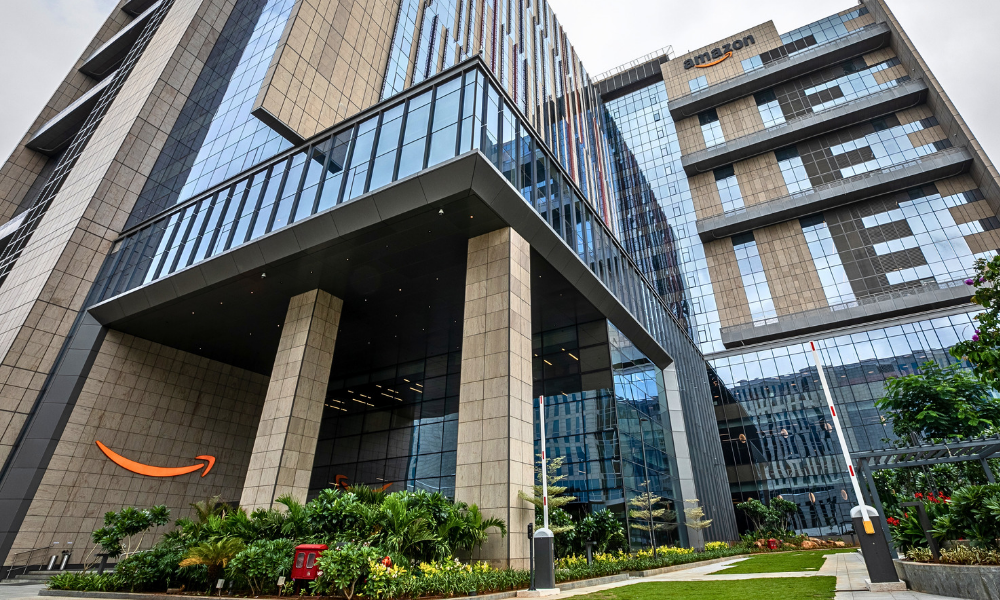
Amazon India Launches Amazon Future Engineer Program in Andhra Pradesh

Amazon India Launches Amazon Future Engineer Program in Andhra Pradesh

  • Amazon India partners with the government of Andhra Pradesh and non-profits to launch the Future Engineer program
  • The program will build teacher competencies on Computational Thinking & 21st century skills via blended learning courses in Andhra Pradesh
  • The program will take computer science education to 10,000 students and 500 teachers across Srikakulam, Vizianagaram and Vizag districts of Andhra Pradesh in 2024-25
  • Over 1,00,000 students of the state to benefit through 21st-century skills curriculum by 2026-27
Amazon India has announced that under its Amazon Future Engineer Program in Andhra Pradesh, an MOU was signed between Leadership for Equity (LFE), and Quest Alliance (QA) and the Government of Andhra Pradesh in the presence of key government dignitaries, including the Commissioner of School Education, Shri Suresh Kumar (IAS), the State Project Director of Samagra Shiksha, Shri Srinivas Rao (IAS), and the Director of SCERT, Shri Prathap Reddy. This MOU signifies the launch of the Program in the state, beginning in the districts of Srikakulam, Vizianagaram, and Visakhapatnam. The program aims to empower 10,000 students with computer science education by the 2024-25 academic year, with a projected impact on over 100,000 students by 2026-27.

The Amazon Future Engineer program in Andhra Pradesh will equip teachers with pedagogical, technical, and teacher leadership skills to effectively deliver computer science curriculum in classrooms through a training program on Computational Thinking & 21st Century Skills. The program will train teachers to run Computational Thinking (CT) Clubs in schools and actively work with the State Council for Education Research and Training (SCERT), to develop and pilot a computer science curriculum for the Government schools of Andhra Pradesh.

Shri Suresh Kumar, Commissioner of School Education, Government of Andhra Pradesh said, “The partnership with Amazon Future Engineer Program underscores our commitment to providing high-quality education to every child in Andhra Pradesh. Through computational thinking modules, the program will nurture a generation of problem-solvers and innovators in an increasingly tech-driven world. Together, we are shaping the future of education and empowering our youth to reach their full potential."

Shri Srinivas Rao, State Project Director, Samagra Shiksha, Government of Andhra Pradesh said, “Our collaboration to expand Amazon Future Engineer Program marks a significant step towards revolutionizing our education system. By integrating computer science teaching excellence courses, we aim to equip our students with essential skills for the digital age, paving the way for a tech-savvy future generation.” He added, “Such private-public partnerships will build the future tech talent pool in India.”

Akshay Kashyap, Lead, Amazon Future Engineer, India said, “Amazon Future Engineer is focused on preparing all students, especially those farthest from opportunity, with skills required for careers of the future, and prioritize partnerships which are aligned with our vision. We recognize computer science as one such key skill and have taken computer science education to over 1.5 million students and 8,000 educators across the nation in the past two years. We have observed that educators who are interested in bringing computer science to their classrooms are key to change. We express our sincere gratitude to the government of Andhra Pradesh for this collaborative effort to enable teachers of Andhra Pradesh to bring computer science education to their classrooms and shape the future of education.”

Amazon introduced the Amazon Future Engineer Program in India in 2021 and has partnered with several education-focused non-profit organizations, including Leadership for Equity and Quest Alliance to take computer science education to more than 10,000 schools in India in the past two years. As a childhood-to-career program, AFE offerings starts with primary schooling and continues through secondary into career. Under this program, Amazon has also offered scholarships and internships to girl students interested to make a career in the tech industry. Throughout, Amazon partners with organizations that share its mission and create opportunities for students to discover the richness of computer science through intersections with self-expression, social justice, sustainability, and more.

Amazon is guided by four principles: customer obsession rather than competitor focus, passion for invention, commitment to operational excellence, and long-term thinking. Amazon strives to be Earth’s Most Customer-Centric Company, Earth’s Best Employer, and Earth’s Safest Place to Work. Customer reviews, 1-Click shopping, personalized recommendations, Prime, Fulfilment by Amazon, AWS, Kindle Direct Publishing, Kindle, Career Choice, Fire tablets, Fire TV, Amazon Echo, Alexa, Just Walk Out technology, Amazon Studios, and The Climate Pledge are some of the things pioneered by Amazon. For more information, visit www.amazon.in/aboutus.

About Amazon Future Engineer

Amazon Future Engineer is Amazon’s signature computer science education program designed to offer all young people the chance to build their best future, inspiring and educating millions of students globally. Students explore computer science through school curriculum and project-based learning using code to make music, program robots, and solve problems. Through the program, Amazon reaches millions of students from historically underrepresented communities globally. Amazon Future Engineer provides real-world inspired virtual and hands-on computer science project learning. The program is available in the U.S., U.K., Canada, France, and India.

Market Reports

Market Report & Surveys
IndianWeb2.com © all rights reserved