Showing posts with label Deep Tech. Show all posts

NetApp Excellerator Cohort-14 Demo Day Showcases India’s Deep-Tech Startups Driving AI and Cloud Innovation

NetApp Excellerator Cohort-14 Demo Day Showcases India’s Deep-Tech Startups Driving AI and Cloud Innovation

NetApp, the Intelligent Data Infrastructure company, today hosted the Demo Day for the 14th cohort of its flagship accelerator program – NetApp Excellerator. The event brought together some of the most promising deep-tech startups working at the intersection of AI, data, and cloud. The event showcased how the selected startups are redefining possibilities in enterprise technology, responsible AI, and digital infrastructure.

The Demo Day marked the culmination of an intensive, mentorship-driven journey for Synthefy, Filo Systems, TrueFoundry, Sentra, and Genloop.ai — five innovative startups that were part of the current cohort. Over the past few months, these startups worked closely with NetApp’s global leadership and technology experts to fine-tune their solutions, build scalable go-to-market models, and explore proof-of-concept (PoC) opportunities with NetApp customers and partners.

Through NetApp Excellerator, we aim to nurture innovation that has real-world impact — supporting startups building the next generation of data and AI infrastructure. Each cohort reinforces our belief that collaboration between startups and established enterprises can accelerate meaningful change,” said Vasanthi Ramesh, VP & Engineering Head, NetApp India. “As we celebrate another successful Demo Day, we’re proud to see how these founders are pushing boundaries and strengthening India’s position as a global innovation hub.”

Speaking about the impact of the program, Anuraag Gutgutia, COO, Co-Founder, TrueFoundry, shared, “NetApp Excellerator has been instrumental in refining our platform which will help us scale our business vision. The mentorship, technical guidance, and access to NetApp’s network with real business value delivered, helped us accelerate faster than we imagined while building for global markets with confidence.”

Since its inception in 2017, NetApp Excellerator has emerged as one of India’s leading corporate accelerator programs, dedicated to empowering deep-tech and AI-led startups. To date, the program has accelerated 90 startups over eight years and 13 cohorts. Its alumni have collectively raised over USD 600 million, and eight startups have achieved successful exits. Recognized among the top five accelerator programs in India for corporate innovation by the NexTT Awards, NetApp Excellerator continues to play a pivotal role in building innovation-driven businesses.

As the Demo Day for Cohort 14 concluded, the spotlight was on collaboration, responsible innovation, and the power of India’s deep-tech ecosystem to drive future-ready solutions. With each new cohort, NetApp continues to strengthen its mission to empower startups that are building for scale, sustainability, and global relevance.

About NetApp

For more than three decades, NetApp has helped the world’s leading organizations navigate change – from the rise of enterprise storage to the intelligent era defined by data and AI. Today, NetApp is the Intelligent Data Infrastructure company, helping customers turn data into a catalyst for innovation, resilience, and growth.

At the heart of that infrastructure is the NetApp data platform – the unified, enterprise-grade, intelligent foundation that connects, protects, and activates data across every cloud, workload, and environment. Built on the proven power of NetApp ONTAP, our leading data management software and OS, and enhanced by automation through the AI Data Engine and AFX, it delivers observability, resilience, and intelligence at scale.

Disaggregated by design, the NetApp data platform separates storage, services, and control so enterprises can modernize faster, scale efficiently, and innovate without lock-in. As the only enterprise storage platform natively embedded in the world’s largest clouds, it gives organizations the freedom to run any workload anywhere with consistent performance, governance, and protection.

With NetApp, data is always ready – ready to defend against threats, ready to power AI, and ready to drive the next breakthrough. That’s why the world’s most forward-thinking enterprises trust NetApp to turn intelligence into advantage.

NETAPP, the NETAPP logo, and the marks listed at www.netapp.com/TM are trademarks of NetApp, Inc. Other company and product names may be trademarks of their respective owners.

L&T-Cloudfiniti and QpiAI Partner to Drive Quantum Computing Workloads Including Quantum Computing as a Service (QCAAS)

L&T-Cloudfiniti and QpiAI Partner to Drive Quantum Computing Workloads Including Quantum Computing as a Service (QCAAS)

To revolutionise the quantum computing landscape globally, L&T-Cloudfiniti has forged a strategic partnership with Bengaluru-based deep-tech company QpiAI. The collaboration will focus on driving quantum computing workloads, including Quantum Computing as a Service (QCAAS), enabling scalable deployment of quantum solutions across domains.

L&T-Cloudfiniti and QpiAI will explore collaborative opportunities under India’s National Quantum Mission. QpiAI is the company that has built Indus, India's most powerful 25-qubit quantum computer. Going forward, they will offer 256-qubit quantum computer, followed by a fault-tolerant quantum computer with 100 logical qubits, thus opening up large-scale commercial applications.

Combining L&T’s industry leadership with QpiAI’s technical capabilities, the two companies will initiate and execute joint R&D programmes focussed on next-generation solutions at the intersection of artificial intelligence and quantum computing. This will lead to the development of innovative solutions that address complex challenges across domains, including finance, healthcare, logistics and more.

Commenting on the collaboration, Ms Seema Ambastha, Chief Executive, L&T Cloudfiniti, stated: “We are thrilled to partner with QpiAI to drive quantum computing workloads globally. This collaboration will leverage our cloud infrastructure to host and execute quantum algorithms, enabling scalable deployment of quantum solutions across domains. Together, we aim to deliver innovative and efficient solutions to our customers and enhance operational efficiency.”

Dr Nagendra Nagaraja, CEO, QpiAI, added: “The collaboration with L&T-Cloudfiniti marks a significant milestone in the advancement of quantum computing technology. By combining our technical expertise with L&T’s industry leadership, we are poised to drive innovation and deliver cutting-edge solutions to our customers. We are excited about the opportunities this partnership will bring under India’s National Quantum Mission.”

The partnership marks a significant milestone in the advancement of quantum computing technology and its application across industries.

India Seeks Japanese Tech to Power Next-Gen Fighter Jets & Tanks

India Seeks Japanese Tech to Power Next-Gen Fighter Jets & Tanks

In a move that promises to reshape India's defence manufacturing landscape, the Indian government is reportedly exploring the incorporation of Japanese technology for the co-production of next-generation engines for fighter jets and tanks. This strategic dialogue, initiated at the historic Manekshaw Centre in Delhi, was marked by a high-level meeting between Indian Defence Minister Rajnath Singh and his Japanese counterpart, General Nakatani.

Tapping into a Legacy of Engine Excellence

India Seeks Japanese Tech to Power Next-Gen Fighter Jets & Tanks
IHI F7 engine for test (Source - Wikipedia) 

Japanese expertise in aero-engine and tank propulsion technologies spans nearly a century. Companies such as Kawasaki Heavy Industries, Mitsubishi Heavy Industries, and Ishikawajima-Harima Heavy Industries, which form the backbone of Japan's Aero Engine Corporation, have a long track record of designing and manufacturing high-performance powerplants for global markets.

These engines, built using advanced materials like high-temperature alloys and precision machining techniques, are used in some of the world's most demanding aviation and armored applications.

By collaborating with Japan, India intends to leverage this deep technical know-how to overcome persistent bottlenecks in its indigenous engine programs, such as those for the Advanced Medium Combat Aircraft (AMCA) and Tejas Mark II.

Engine Technologies: From Fighter Jets to Tanks

India Seeks Japanese Tech to Power Next-Gen Fighter Jets & Tanks

The technical challenges involved in developing engines for modern fighter jets and tanks are formidable but distinct. For fighter jets, propulsion systems must feature an exceptional thrust-to-weight ratio, high fuel efficiency, and the ability to operate reliably at high altitudes and speeds. They incorporate cutting-edge combustion systems, turbine blades made from exotic alloys, and advanced digital control systems that optimize performance under extreme conditions.

On the other hand, tank engines require immense low-end torque and efficient power delivery to support heavy armor and unpredictable terrains. They must also deliver consistent performance across long operational periods without compromising on durability.

By joining forces, India and Japan hope to combine India’s robust manufacturing practices—evident in its success in maintenance, repair, and overhaul (MRO) contracts for US warships—with Japan’s innovative engine design capabilities, creating a synthesis that could set new standards for military propulsion technologies.

Enhancing Broader Defence Capabilities

India Seeks Japanese Tech to Power Next-Gen Fighter Jets & Tanks
General Electric GEnx engine, specifically designed for the Boeing 787 Dreamliner.
Japan's IHI has responsibility for the design, manufacture and assembly of about 13% of the engine, which primarily include the rotating members of the low pressure turbine, the aft part of the high pressure compressor airfoils, and fan mid-shaft. GEnx is a trademark of GE

The discussions between India and Japan were not confined solely to engine technology. Both leaders recognized the value of a holistic defence partnership, which included mutual cooperation in emerging domains such as automation, artificial intelligence, cyber security, and space technology. This broader approach is expected to boost the overall capabilities of Indian forces aboard air, land, and sea. Notably, Japan’s invitation to India to join the Global Combat Air Programme (GCAP), aimed at developing a sixth-generation stealth fighter jet, underscores the strategic depth of this multifaceted collaboration.

Such initiatives not only bolster the immediate technological edge but also set the stage for long-term transfer of cutting-edge technology and skills—a critical component in India's "Make in India" vision for self-reliance in defence production.

Geo-strategic Implications and Future Prospects

India Seeks Japanese Tech to Power Next-Gen Fighter Jets & Tanks
F7-10 Turbo fan engine rear, at Iwaguni Air Base.

Amid shifting power dynamics in the Indo-Pacific, the India–Japan co-production initiative marks a significant step forward in strategic defence ties. Deepened military collaboration between the two nations is expected to serve as a counterbalance to regional threats while reinforcing maritime cooperation and regional stability.

Over the coming years, joint production ventures like the engine co-development project could catalyze further innovation in both nations’ defence sectors and stimulate a ripple effect across related high-tech industries.

Moreover, the successful fusion of Japanese technological finesse with India’s robust industrial base may pave the way for additional collaborative projects and enhance not only combat performance but also the resilience of supply chains in critical defence domains.

The initiative signals a new era where international co-production is not merely about sharing costs but is fundamentally about integrating complementary strengths. For India, this is not just a stop-gap measure to overcome current challenges in fighter jet and tank engine development—it is a strategic investment in future technological capabilities.

By harnessing the established expertise of Japanese manufacturers, India can fast-track its journey toward building world-class defence hardware that meets the rigorous demands of modern warfare. In doing so, the Indo-Japan partnership is setting a gold standard in defence innovation—one that will undoubtedly capture the attention of global defence analysts and industry leaders alike.

Harnessing Deep-Tech: India's Path to Global Tech Dominance

Harnessing Deep-Tech: India's Path to Global Tech Dominance

Authored by Pramod Gummaraj, Founder and CEO of Aprecomm

India's tech ecosystem is witnessing a remarkable resurgence, with the first quarter of 2025 witnessing tech startups securing $2.5 billion in funding which is a 13.64% increase from the previous quarter and an 8.7% rise year-over-year. This achievement positions India as the third most-funded country globally, trailing only the US and the UK.

This influx of capital signifies a deliberate shift from the traditional focus on consumer-centric ventures to an emphasis on deep-tech domains. Investors are now channelling resources into startups specializing in artificial intelligence (AI), robotics, blockchain, and other advanced technologies. This strategic reallocation is not merely a trend but a response to the escalating global demand for sophisticated technological solutions that address complex challenges across various industries.​

Global Momentum for India's Deep-Tech Startups

Indian deep-tech startups are gaining unprecedented global traction. The number of these startups securing Series A funding and beyond has surged, indicating a maturing ecosystem. This trend is further bolstered by increased collaboration between academia, government, and industry, fostering an environment conducive to innovation and the commercialization of research.​

The current trajectory aligns with India's ambitions to lead in AI and advanced technologies. The government's focus on fostering innovation, as evidenced by policies promoting deep-tech growth, is creating an ecosystem where startups can thrive. This strategic emphasis is essential for India to not only keep pace with global advancements but to set new benchmarks in technological innovation.

The government's proactive initiatives have played a pivotal role in this evolution. For instance, the Atal Innovation Mission (AIM) has been extended until March 2028, with a budget allocation of ₹2,750 crore. AIM 2.0 aims to underscore global competitiveness, introduce new initiatives, emphasize public-private partnerships, address the rural-urban imbalance, and focus on the growth and expansion of India's entrepreneurship ecosystem. This strategic emphasis enhances India's positioning as a global tech powerhouse.

Implications for Emerging Technologies

The strategic infusion of capital into deep-tech sectors has profound implications for emerging technologies. As industries grapple with increasing complexities and data proliferation, the demand for intelligent systems capable of autonomous management and optimization has intensified. Investments in AI and related technologies are crucial to developing solutions that can enhance operational efficiency, security, and scalability.​

Furthermore, the global recognition of India's deep-tech capabilities opens avenues for international collaborations and market expansion. Startups demonstrating robust, scalable solutions are well-positioned to attract further investment and establish a global footprint, thereby contributing to India's emergence as a global technology leader.

Among the various deep-tech domains, network intelligence has emerged as a pivotal area, especially as network operators confront escalating complexities and demands. The integration of advanced technologies into network management enables networks to self-optimize, self-heal, and adapt to dynamic conditions, thereby enhancing performance, security, and reliability.​

The current funding surge into deep-tech startups focusing on network intelligence is timely. As networks become more complex, the necessity for intelligent systems that can autonomously manage and optimize network performance grows. Investments in this sector are not merely about enhancing existing infrastructures but are aimed at pioneering solutions capable of addressing future challenges in network management.​

Major Telecommunications Companies Investing in Digital Infrastructure

Recognizing the transformative potential of advanced technologies, major telecommunications companies are proactively investing in digital infrastructure to support the AI era. These investments are strategically directed towards enhancing network capabilities, improving customer experiences, and unlocking new revenue streams. The focus is on integrating intelligent systems that can autonomously manage and optimize network performance, ensuring resilience and efficiency in the face of growing data demands.

While the momentum is promising, deep-tech startups face unique challenges, including longer gestation periods for research and development, higher capital requirements, and the need for specialized talent. However, the current funding surge provides a ray of hope, offering the necessary resources to navigate these challenges and bring groundbreaking technologies to market.​

Indian-Norwegian Deeptech Aerospace Startup SiriNor Successfully Tests World’s 1st All-Electric Jet Engine

Indian-Norwegian Deeptech Aerospace Startup SiriNor Successfully Tests World’s 1st All-Electric Jet Engine in Pune

SiriNor, a deeptech aerospace startup based in India and Norway, has successfully completed the on-ground test of its all-electric jet engine in Pune, marking a key milestone for the future of clean aviation.

The test, which achieved Technology Readiness Level 6 (TRL-6) under NASA’s framework, proved that SiriNor’s proprietary engine can deliver both the performance and scalability needed for commercial use. The engine exceeded its design targets, reaching over 40,000 RPM and delivering 10 kgf of thrust, demonstrating its readiness for commercial development and real-world applications.

SiriNor is addressing a jet engine market projected to exceed USD 100 billion by 2030, at a time when aviation emissions and costs are under growing scrutiny. With a power-agnostic design compatible with both batteries and hydrogen fuel cells, the electric jet engine is built for application across drones, unmanned aerial vehicles (UAVs) to regional aircraft and seaplanes, targeting both civilian and defence markets.

Approaching commercialisation in a phased manner, SiriNor will integrate its engine with UAVs, targeting rollout by mid-2026. Building on this foundation, SiriNor will expand to seaplanes and ground-effect vehicles, aiming for certification and market entry in 2027. The final phase focuses on scaling up for regional and civil aircraft, with integration and certification planned for 2030. This staged process allows SiriNor to validate its technology, gain operational experience, and accelerate adoption—starting with drones and scaling to mainstream, zero-emission flight across the aviation sector.

SiriNor has already attracted early-stage investment from Shell E4, DCM Shriram, and several prominent angels, and has secured a valuation exceeding USD 20 million. The company is preparing to raise another USD 5 million in 2025 to accelerate commercialization.

Seven Letters of Intent (LOIs) have been signed with global partners in the UAV, ground-effect vehicle, and small aircraft sectors. SiriNor has also already signed an MoU with Genser Aerospace earlier in 2025 to integrate its electric jet engine into Genser’s Light Business Programme.

We had the fortune of meeting Abhijeet at a startup conference and were deeply impressed by his passion and commitment to building a sustainable electric jet engine. After hearing Abhijeet’s pitch, it was clear to me that this was serious, homegrown technology being developed right here in India. I truly believe this represents the future of aviation, and I’m proud to be part of this journey,” said Mr. Alok B Shriram, CEO, DCM Shriram Industries Ltd.

By eliminating combustion and the need for exotic materials, the SiriNor engine cuts manufacturing costs by 30% and reduces maintenance by 40%. The flexible engine architecture lowers barriers to adoption, enables easier retrofitting, and is highly relevant for both emerging and established aviation manufacturers.

Ivar Aune, Chairman & CEO, SiriNor, said
This ground test is not just a technical milestone. It’s a moment of validation for our amazing team and our common vision. I’m incredibly proud of our team, who have dedicated five relentless years to reaching this point. Their hard work, perseverance, and never-say-die attitude made this achievement possible. TRL6 is a result of their hard work and a testament to their belief in our mission.

Abhijeet Inamdar, Co-founder and CEO, SiriNor India, added,
Our engine architecture is designed for flexibility at its core, enabling us to usher in a new era of emission-free, electrified aviation. I’m proud to be part of this transformative journey and to contribute meaningfully to the Make-in-India mission.

This breakthrough aligns with India’s push for sustainable aviation and could disrupt the USD 100 billion jet engine market.

Disclaimer by SiriNor: The electric jet engine highlighted in this news has completed laboratory testing at Technology Readiness Level 6 (TRL6) under controlled conditions. Some figures and projections shared are based on assumptions regarding current market conditions and supply chain constructs. These results are preliminary and subject to further validation through real-world testing and regulatory review.

The World's First Fully-Electric Jet Engine(s) 

SiriNor claims its jet engine is the world’s first all-electric jet engine, However, verifying whether it is truly the first requires comparing it to other electric propulsion systems developed globally.

While electric aircraft propulsion has been explored before—such as NASA’s X-57 Maxwell and Rolls-Royce’s Spirit of Innovation —these systems primarily use electric propellers rather than a true jet engine. SiriNor’s design appears to be distinct in that it mimics traditional jet propulsion while being fully electric.

SiriNor's engine uses true jet propulsion, whereas electric aircraft like NASA's X-57 Maxwell and Rolls-Royce's Spirit of Innovation rely on electric propellers.

If Power Source is considered, SiriNor's design is power-agnostic, meaning it can run on battery systems or hydrogen fuel cells, making it more adaptable.

SiriNor's engine achieved 40,000 RPM and 10 kgf thrust, proving its feasibility for UAVs, seaplanes, and regional aircraft.

For the scalability, the young Indian startup company plans to scale up to regional aircraft by 2030, whereas most electric propulsion systems today are limited to small planes and drones.

About SiriNor

SiriNor Team

Operating between Norway and India, SiriNor has pioneered a tip-driven propulsion system using distributed edge-mounted motors instead of a central hub that results in significantly lower operating temperatures, simplified manufacturing resulting into at least 30% lower costs. SiriNor aims to license its technology and partner with established global suppliers for contract manufacturing. The engine is power-agnostic and compatible with both electric battery packs and hydrogen fuel cells, enabling adaptable deployment across aviation's evolving energy landscape.

SiriNor will now advance to TRL 7 testing of its 40cm x50 cm prototype, with plans to commercialise the UAV engine by mid-2026 with the goal of scaling toward commercial aviation platforms by 2030. The company’s staged approach from UAVs to regional aircraft positions it as a pragmatic, innovation-driven player in the race to decarbonise the aviation sector.

SiriNor has already raised early-stage funding, crossing USD 20 million valuation following its successful TRL-6 test, with plans to raise another USD 5 million in Q2 of 2025.

The Founders

Ivar Aune

Based in Stavanger, Norway Ivar Aune is the CEO and Chairman of SiriNor. With over 20 years of leadership experience in venture capital, energy technology, and engineering, Ivar leads SiriNor’s global strategy and product roadmap.

At SiriNor, Ivar drives the company’s mission to develop power-agnostic electric jet engines, scaling from UAV to aircraft. His leadership bridges Norway’s deep engineering tradition with India’s emerging aerospace ecosystem, positioning SiriNor at the forefront of clean aviation. Prior to SiriNor, Ivar served as Investment Director at Equinor Ventures, where he was involved in 30 transactions including investments in hydrogen and fusion energy companies as well as several successful exits.

He has served on the boards of over a dozen startups in energy transition, drilling technology, and industrial automation. Ivar holds an MSc in Petroleum Engineering from NTNU and has formal training in project management from OsloMet. His career spans roles at Statoil, Norsk Hydro, and global advisory boards, giving him cross-functional expertise in engineering, finance, and scaling deeptech ventures.

Abhijeet Inamdar

Abhijeet Inamdar is the co-founder and India CEO of SiriNor, a Norwegian-Indian aerospace startup developing the world’s first scalable electric jet engine. With more than 20 years of global experience across energy, aviation, and deeptech, he brings a unique blend of technical expertise and commercial leadership to the clean aviation sector.

At SiriNor, Abhijeet along with Ivar, leads strategy, team building, fundraising, and partnerships, driving the company’s mission to build zero-emission, power-agnostic jet engines for UAVs, seaplanes, and regional aircraft. His work focuses on aligning advanced propulsion technologies with the future needs of sustainable aviation.

Prior to SiriNor, Abhijeet served as an investment manager at Equinor, where he led strategic technology investments in areas such as emissions monitoring, artificial intelligence, hydrogen, and mobility. During his time there, he held board positions in several high-growth startups, including SeekOps, Reveal Energy Services, and Ambyint, and also advised Advanced Aircraft Company, a US-based hybrid drone startup.

Abhijeet holds a master’s degree in petroleum engineering from the University of Alaska Fairbanks. He was featured in Hart Energy Journal’s 40 Under 40 Investors in North America in 2019, and in 2022, was recognized by Passion Vista Journal as one of the Most Admired Global Indians.

How Will ANRF Support Startups and Small Businesses?

How Will ANRF Support Startups and Small Businesses?

The Anusandhan National Research Foundation (ANRF) was established through the ANRF Act, 2023 to provide strategic direction for research, innovation, and entrepreneurship across various scientific disciplines in India. It serves as an apex body guiding scientific research in alignment with the National Education Policy (NEP).

ANRF has subsumed the Science and Engineering Research Board (SERB), which was originally set up in 2008, and now fosters collaborations between industry, academia, and government institutions. It aims to seed, grow, and promote research and development (R&D) across universities, colleges, research institutions, and R&D laboratories.

The foundation plays a crucial role in India’s scientific ecosystem, ensuring that research efforts align with Viksit Bharat 2047 and global best practices.

ANRF is launching initiatives to support startups and MSMEs, particularly in deep tech innovation. Here’s how it plans to help:
  • Small Business Deep Tech Innovation Program: ANRF is rolling out a program inspired by global best practices to help startups and small businesses scale up technologies for real-world applications.
  • Cloud of Research and Innovation Infrastructure: This initiative will allow deep-tech startups and institutions to access underused research equipment across India, maximizing national research infrastructure.
  • Private Sector Collaboration: ANRF is positioning itself as a catalyst for private sector investment, ensuring that research outcomes align with market needs and public utility.
  • AI-for-Science Initiative: ANRF is leveraging AI to accelerate scientific research, helping startups integrate AI-driven solutions into their solutions.
These efforts aim to bridge the gap between research and commercialization, ensuring that scientific advancements translate into scalable business solutions.

How does ANRF support differ from other startup programs?

ANRF’s support for startups and small businesses stands out in several ways compared to traditional startup programs:
  • Deep-Tech Focus: Unlike many startup incubators that emphasize broad entrepreneurship, ANRF specifically targets deep-tech innovation, ensuring that research-driven startups receive tailored support.
  • Hub-and-Spoke Model: Through the Partnerships for Accelerated Innovation and Research (PAIR) initiative, ANRF connects startups with top-tier research institutions, fostering mentorship and collaboration.
  • Access to National Research Infrastructure: ANRF’s Cloud of Research and Innovation Infrastructure allows startups to utilize underused research equipment across India, reducing costs and accelerating R&D.
  • AI-Driven Research Acceleration: ANRF integrates AI-for-Science initiatives, helping startups leverage AI for scientific breakthroughs and commercialization.
  • Government-Industry Collaboration: Unlike standalone startup accelerators, ANRF facilitates cross-ministerial missions, ensuring that research aligns with national economic and technological priorities.
ANRF has been instrumental in supporting deep-tech startups and MSMEs through its Small Business Deep Tech Innovation Program. While specific startup names aren't widely publicized, some of the key areas where ANRF-backed ventures are making an impact are — AI-driven scientific modeling, Next-Gen battery technologies, Space-based applications, Healthcare and biotech, and startups focusing on medical diagnostics, drug discovery, and AI-powered health solutions.

ANRF’s Cloud of Research and Innovation Infrastructure has also helped startups access underused research equipment, reducing costs and accelerating development. 

Deeptech Co. Simpliforge with, Indian Army, Delivers World’s Highest On-Site 3D Printed Structure in Himalayan Range


In a monumental leap for defense infrastructure and construction technology, Simpliforge Creations and IIT Hyderabad, in collaboration with Indian Army represented by Arun Krishnan (who is also a PhD student at IIT-Hyderabad), have successfully delivered India’s first on-site 3D printed protective military structure at a staggering altitude of 11,000 feet above sea level in Leh under Project PRABAL.

This marks the world’s highest-ever in-situ 3D construction printing feat, accomplished under the extreme high altitude and low oxygen (HALO) conditions.

Under the guidance of Prof. K.V.L. Subramaniam of IIT-Hyderabad, Simpliforge Creations and IIT-Hyderabad Teams developed specialized 3D printing technology capable of operating under extreme environmental conditions. This innovation enabled the construction of a form-optimized protective bunker using locally sourced materials, completed over a total printing time of fourteen hours.

Deeptech Co. Simpliforge with Indian Army Deliver World’s Highest On-Site 3D Printed Structure in Himalayan Range
The PRABAL initiative showcases how homegrown technology and academic-industry collaboration can push the boundaries of construction science. The deployment of this 3D printed bunker is not only a first-of-its-kind in India but also sets the stage for rapid, on-site, deployable infrastructure in challenging terrains, further strengthening the country’s defense preparedness.

This groundbreaking project marks a convergence of engineering innovation, military utility, and the Make-in-India spirit—paving the way for future-forward infrastructure solutions.

Speaking on the occasion, Simpliforge Creations CEO Dhruv Gandhi stated "Executing this project in the high-altitude, low-oxygen environment of Ladakh was an immense operational challenge—for both our team and our machines. The Robotic printer system was set-up and commissioned in under 24 hours proving its agility & mobility. The reduced oxygen levels affected everything from power systems performance, which were delivering lower energy output than they would on normal plains, to human efficiency. The low humidity and high UV posed challenges in integrity of the built material. Despite these constraints, we were able to meet our production targets and deliver a robust structure within a record timeframe of 5 days.”

Prof KVL Subramaniam – IIT Hyderabad said, "One of the most critical aspects of this project was the development of specially engineered materials tailored to perform in extreme environmental conditions. Operating at high altitudes with low oxygen levels, low humidity and significant thermal variations required not just structural innovation, but also material science at its finest. Our team at IIT Hyderabad, in collaboration with Simpliforge Creations, designed a concrete mix that could be 3D printed on-site while offering superior mechanical performance, durability, and resilience. Before deployment, we conducted vigorous testing at IIT Hyderabad’s advanced facilities, including comprehensive studies on local sand and aggregates sourced from the region, rheology of mix. Understanding the material behaviour under simulated environmental stresses allowed us to optimize the mix design for on-site usage. This material innovation was fundamental to achieving the desired strength and structural integrity within such a challenging context."

Arun Krishnan commented, "Project Prabal was conceptualized and initiated during my M.Tech program at the Indian Institute of Technology Hyderabad. Several teams and companies had attempted to bring 3D printed construction to the high-altitude terrain of Leh, but the extreme conditions of Ladakh proved to be a formidable challenge. It was the unmatched synergy between Simpliforge Creations and IIT Hyderabad that finally made it possible. Their technical depth, adaptability, and relentless focus on innovation enabled the successful execution of Project PRABAL. Together, we didn’t just build a structure—we proved that indigenous, cutting-edge technology can overcome even the harshest operational environments and deliver tangible impact for our armed forces. The printed structure has undergone rigorous trials."

Hari Krishna Jeedipalli, MD - Simpliforge Creations said, “we've been pushing the boundaries of additive construction since 2022—from building India’s first 3D printed bridge, to the world’s first 3D printed place of worship, and the Indian Army’s first in-situ 3D printed medical facility using locally available material. Each project has been a leap forward, and this bunker in Ladakh marks a crucial milestone in our journey towards extra-terrestrial”.

“Looking ahead, we envision commercialising this technology for remote terrain applications and extending this beyond Earth—towards space habitats on the Moon and Mars. Printing in the extreme, open conditions of Ladakh has given us vital insights and validation for operating in extra terrestrial environments. It’s more than construction—this is a stepping stone on our journey into space deep tech. added Mr Hari

The Rise of India’s Deep Tech Startups: Pioneering AI, Blockchain, and IoT Innovations

The Rise of India’s Deep Tech Startups: Pioneering AI, Blockchain, and IoT Innovations

There has been a significant shakeup in the Indian startup ecosystem. Deep tech startups are at the forefront of a new wave of innovation. The technologies that these start-ups deal with are also diverse like famous names are AI, Blockchain and IOT ( Internet of things). And by solving real-world problems and building innovative solutions, they are not only redefining industries but also putting India in the forefront of the global technological revolution.

In this blog, we discuss how India’s deep tech startups are changing the game in key sectors, the challenges they face and their potential to drive the country of the future.

What Are Deep Tech Startups?

Deep tech startups are companies developing advanced tech solutions that target hard, complex problems. Unlike traditional startups that focus mainly on consumer-based apps or services, deep tech startups are primarily focused on advancing innovation in artificial intelligence (AI), blockchain, Internet of Things (IoT), robotics and quantum computing, among other fields.

The emergence of these startups makes huge sense coming from India's service-based dominated IT businesses towards technology-driven innovation in products. These companies are aiming for revolutionary solutions in sectors from healthcare to agriculture to finance to manufacturing.

Artificial Intelligence: Revolutionizing Industries

AI sits at the center of India’s deep tech revolution. AI technology firm startups are used to help businesses analyze data, refine decision-making, and automate processes. AI applications range from healthcare diagnostics to predictive maintenance in manufacturing, and they are booming.

AI has also empowered health tech startups in early diagnosis by recognizing images and recognizing patterns in collected data. In a similar, AI is assisting farmers in maximizing their crop output by processing soil and weather data. In retail and banking, it allows companies to offer individualized recommendations, as well as detect fraudulent transactions.

Blockchain: Redefining Trust and Transparency

In India, blockchain technology is emerging in various sectors where trust and transparency matter. Although known mostly for crypto, the blockchain technology is much more than that.

Some startups are using blockchain to transform supply chain management by providing product authentication and traceability. In the world of finance, blockchain is facilitating secure, efficient digital transactions. However, this technology is learnt to be also used for land registry systems, voting mechanisms, and digital identity verification.

Deep tech startups across India are making blockchain technology more accessible and practical for businesses, helping them deal with inefficiencies and boosting security.

IoT: Connecting Devices for Smarter Solutions

The Internet of Things (IoT) is another area where Indian startups are leading the charge. IoT connects devices and enables them to share data, creating smarter and more efficient systems.

Indian startups are leveraging IoT in various sectors, including smart cities, healthcare, and logistics. For example, IoT-enabled sensors are being used to monitor air quality in urban areas. In healthcare, wearable devices track patient health in real time, allowing for timely interventions. IoT is also improving supply chain management by providing real-time data on inventory and transportation.

The Role of Government and Ecosystem Support

Deep tech startups thrive under the support of the Indian government. Programs such as Startup India and Digital India offer funding, mentorship and infrastructure。 Others include: Policies like innovation labs, brilliant tax benefits and collaborations with the global techno-gurus that constitute the boot of these emerging startups.

The presence of India’s robust ecosystem of accelerators, incubators, and tech hubs further fuels the potential for deep tech ventures. Bangalore, Hyderabad, and Pune are awakening as hotbeds of technology-led innovation. 

Real-World Applications Driving Change

Indian deep tech startups are not building dreams, they are solving real-world problems. For example:
  • Healthcare: AI-based diagnostic devices not only help identify diseases at an early stage but also make it easier for people in rural areas to access health services.
  • Agriculture: From monitoring crop health and predicting yield patterns, IoT sensors and AI models help farmers reduce losses.
  • Finance: Blockchain-based solutions improve secure and transparent transactions, and reduce fraud.
  • Retail: Artificial intelligence helps to create customized ever shopping experiences and tailor inventory.
Not only are these innovations changing industries — they're changing lives as well.

Global Recognition and Partnerships

Indian deep tech startups are gaining recognition on the global stage. Some industries, such as Lottoland's casino services, demonstrate how digital platforms can innovate user experiences and adapt to evolving technologies. By observing such advancements, Indian startups can draw inspiration to enhance their technological solutions across various sectors.

By leveraging global expertise and resources, Indian startups are scaling their solutions to address global challenges.

The Future of Deep Tech in India

India’s deep tech startups has a bright future. These companies will lead the next wave of innovation with the advancement of AI, blockchain, and IoT. Emerging technologies, such as quantum computing and 5G, will create even more possibilities for deep tech ventures.

As startups keep solving major problems, they will make a great impact beyond the industries to the society as a whole. The importance of deep tech in our life is immense as the role of technology is undeniable, from creating jobs to tackling environmental challenges, deep tech will shape India’s future.

Challenges for Deep Tech Startups

While deep tech startups hold very much potential, these kinds of companies even have associated challenges in India. R&D: Build New Innovative Technologies Access to funding is still a challenge for many startups, especially in the early stages.

Even in specialized fields such as AI, blockchain, and IoT, talent is a rarity. Finding skilled engineers that can work with complex technologies is a real problem for startups. Also, innovation can be stifled by regulatory challenges and low uptake in the marketplace.

Overcoming these challenges will require a collaborative effort between the government, industry stakeholders, and academia.

Conclusion

Deep tech startups in India are leading the way towards a tech-enabled future. Through groundbreaking advancements in AI, blockchain, and IoT, they're reshaping industries, enhancing lives, and placing India on the global innovation landscape. (2) Despite challenges, their resilience and creativity continue to drive progress.

With robust government support, an evolving ecosystem and international recognition — the saga of India’s deep tech start-ups has just begun. These startups won't just mold the future of business, they are also reworking the structure of technological creativity as they soar to greater heights.

In An India's 1st, Tamil Nadu Drafting State's Deep Tech Policy, Says State's IT Minister

Hon’ble Minister Palanivel Thiaga Rajan Brainstorms with Industry Leaders to Nurture Startup Innovation in Emerging & Deep Tech Sectors


Tamil Nadu Technology Hub functioning under the Information Technology & Digital Services (IT&DS) Department, Government of Tamil Nadu, hosted the iTNT Industry Conclave in Chennai on Friday (September 6). Hon’ble Minister for IT&DS, Tamil Nadu, Dr. Palanivel Thiaga Rajan was the chief guest of the conclave that highlighted the role of Corporates in nurturing innovation in the Emerging & Deep Tech space.

In An India's 1st, Tamil Nadu Drafting State's Deep Tech Policy, Says State's  IT Minister
(Left - Right) Ms. Vanitha Venugopal, CEO of iTNT Hub; Hon’ble Minister for IT&DS, Tamil Nadu, Dr. Palanivel Thiaga Rajan; Thiru. Kumar Jayant, I.A.S., Additional Chief Secretary to Government, IT&DS Department

Innovate in Tamil Nadu (IN2TN) is our new mantra. It is more than just a slogan; it is a strategic call to action. It encapsulates our commitment to fostering a culture of innovation and entrepreneurship in the State,” Dr. Palanivel Thiaga Rajan said. Innovation and startups are pivotal to realizing our Hon’ble Chief Minister’s ambitious vision of propelling Tamil Nadu towards a trillion-dollar economy.

To support this journey, that State is in the process of drafting the Tamil Nadu Deep Tech Policy – the first of its kind in the country, he added. Stating that industries can play a crucial role in shaping the future of innovation in Tamil Nadu, he urged industries to industry partners to deepen their engagement with iTNT Hub through strategic partnerships and CSR contributions.

The hon’ble minister also gave away cheques for cash prizes to the tune of Rs. 4.5 Lakh to the winners of the top three places of the iTNT “Unlock The Future Innovation Challenge”. The challenge attracted more than 500 teams of startups, innovators and aspirants from the emerging and deep tech space across the State. The applications were scrutinised by a panel of subject matter and industry experts and the top 10 teams pitched before an expert jury after a series of training sessions.

Healthcare startup Vyuhaa Med Data won the prize for their solution on AI & IoT for Real-time Data Analysis and Decision Making. Sustainability startup Daijo won the prize for their solution on Resource Consumption Reduction, while Climate Tech startup Climatequant Tech emerged winner for their Supply Chain Transparency & Efficiency solution. “We have chalked out a strategy to take these winning solutions into deep tech enterprises,” said Additional Chief Secretary - IT&DS Department, Thiru. Kumar Jayant, I.A.S.

Earlier that evening, a curtain-raiser roundtable on the “Tamil Nadu Deep Tech Policy” was chaired by Thiru. Kumar Jayant, I.A.S., Additional Chief Secretary to Government, IT&DS Department, and co-chaired by Ms. Vanitha Venugopal, CEO of iTNT Hub. Industry and subject matter experts from the deep tech sectors participated in the discussion for the policy that was announced by the Hon’ble Minister for IT&DS at the Demand for Grants session in the assembly in June.

About iTNT Hub

Tamil Nadu Technology Hub (iTNT Hub) was established by the Ministry of Electronics and Information Technology, Government of India; and Information Technology and Digital Services Department, Government of Tamil Nadu; along with industry support. The Hub was inaugurated by the Hon’ble Chief Minister of Tamil Nadu Thiru. M.K. Stalin in May 2023, and is functioning from the 3rd Floor of Sir C V Raman Science Block, Anna University Campus, Kotturpuram, Chennai. iTNT Hub is building a first-of-its-kind Deep Tech Innovation Network by leveraging the combined strengths of the Startups, Innovators, Researchers, Incubators, Academia, Government, and International Partners to propel transformative global innovation.

The Hub’s sectors in focus include Artificial Intelligence, IoT, Space Tech, Robotics Healthcare, Cyber Security, Creative Tech, and High Value SaaS. In addition to incubating, accelerating and facilitating Startups, and co-incubating those incubated by Deep Tech incubators across Tamil Nadu, iTNT Hub is also taking strides to accelerate innovation and investment in the target sectors. In his budget demand session, the Hon’ble Minister for IT&DS Dr. Palanivel Thiaga Rajan announced that the Government of Tamil Nadu will soon release a Tamil Nadu DeepTech Policy. iTNT Hub will be anchoring this policy which is the first to be announced by any State in India.

NTT Develops Real-Time Voice Conversion GenAI Tech That Can Instantly Change Your Voice and Speaking Style

NTT Develops Real-Time Voice Conversion GenAI Tech That Can Instantly Change Your Voice and Speaking Style

NTT Corporation has recently announced that it has developed a remarkable real-time voice conversion technology based on deep learning that achieves both high sound quality and low latency.

This technology enables voice conversion in a variety of voice communications, whether face-to-face or remotely, and contributes to the realization of communication that is free from physical, intellectual, and psychological constraints, for example, converting the intonation and voice quality of a speaker into easy-to-understand speech at a call center.

High Sound Quality and Low Latency: The technology achieves both high sound quality and low latency. Unlike conventional methods, it doesn't require a buffer for future speech signals, resulting in real-time conversion without delays.

Voice Feature Extraction: A newly devised voice feature extraction process ensures high sound quality. It flexibly converts voice quality, intonation, and rhythm using paired data of the same utterance of the source and target speakers.

Applications

This breakthrough enables voice conversion in various scenarios, whether face-to-face or remote. Imagine converting the intonation and voice quality of a speaker into easy-to-understand speech at a call center or during web conferencing.

NTT Develops Real-Time Voice Conversion GenAI Tech That Can Instantly Change Your Voice and Speaking Style
Communication Enhancement through Voice Conversion

The technology opens doors for web conferencing, live streaming, and smartphone applications. It contributes to communication free from physical, intellectual, and psychological constraints.

This technology is expected to enrich speech communication in various business and real-life situations, whether face-to-face or remote, such as the use of this technology for dysphonia, fluent English pronunciation close to native English, persuasive speech, and removing of nervousness-induced voice tremors, etc.

In the future, NTT says that it will work to improve noise-resistance and stability in real environments, as well as countermeasures against impersonation, with the aim of creating a future in which users can communicate with their favorite voices more securely.

Samsung R&D Institute Bangalore Forays into its First Deep-Tech Start-up Showcase for R&D Teams

Samsung R&D Institute Bangalore Forays into its First Deep-Tech Start-up Showcase for R&D Teams

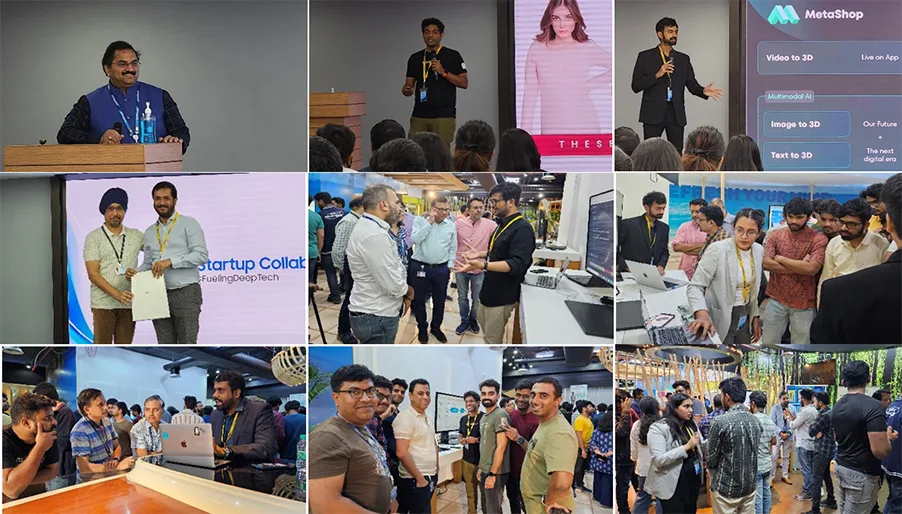
In January, Samsung R&D Institute India – Bangalore (SRI-B) organized ‘The Startup Collab: #FuelingDeepTech’, where 11 startups, working in the field of Generative AI, Responsible AI, Emotion AI, Visual AI, Quantum and Health, participated with great enthusiasm. The startups pitched their unique product offerings and showcased interactive live demos to a large audience consisting of SRI-B’s R&D teams, leaving them highly motivated and mesmerized.

Employees seized this opportunity to understand the startup offerings and explore potential areas of collaboration with them to influence Samsung’s products and services.

The daylong event featured a leadership address, startup pitches, an interactive demo showcase, and Samsung expert talks.

Mohan Rao, CVP & CTO at SRI-B, addressed a packed audience on how Samsung aligns its efforts with ecosystem partners. During the talk, Mohan Rao emphasized the company’s ‘build vs source’ philosophy and how we endeavor to bring about win-win collaboration opportunities.

“At Samsung, we are deeply committed to open innovation and ecosystem collaboration. Collaboration with startups is a symbiotic relationship where startups bring fresh ideas and agility, while Samsung can offer scale and stability. This also infuses the startup’s entrepreneurial spirit within the organization, fostering a culture of risk-taking and innovation. We look forward to collaborating with promising deep-tech startups and creating ground-breaking innovations”, he shared.

The Open Innovation team, operating under the aegis of the CTO Office, collaborates with both R&D teams and the startup ecosystem to identify and align potential collaboration opportunities. As part of their core responsibilities, this team facilitates incubation, partnerships and potential investments into aligned startups. So far, the team has successfully established 30+ partnerships and made around 12 strategic investments.

Traditionally, discussions around R&D, especially in the early exploration phase, have been limited to product owners, technology leaders, and key decision-makers. However, the Startup Collab: #FuelingDeepTech aims to create a platform that opens up startups to a broader audience within SRI-B. This approach enables the identification of high-impact, innovative, and potentially unexpected use cases across various ABC products, fostering collaboration and driving cutting-edge solutions.

“Open Innovation at SRI-B is at the heart of our New Valley Vision. We strongly believe and encourage building Samsung products and services utilizing the power of our partners and the vibrant startup ecosystem”, shared Dr. Balvinder Singh, Head of the Advanced Research Group & Open Innovation at SRI-B.
 
The open format of the event allows Samsung and the startups to explore beyond the boundaries of traditional meeting setups, and enables R&D teams to combine the offerings of multiple startups with Samsung products, creating novel concepts and immersive consumer experiences. This unique approach will lead to many fruitful collaborations in the future, ultimately delivering non-linear value to Samsung users.

To Promote DeepTech and Science-led Startups SIDBI Setting Up ₹20 Cr Accelerator Fund with CIIE at IIM Ahmedabad


SIDBI, the principal financial institution for MSMEs in India, will set up a SIDBI Accelerator Fund at CIIE, a startup incubator established by IIM Ahmedabad, with an initial corpus of Rs 20 crore.

SIDBI is partnering IIM Ahmedabad as part of its new initiative "India of Tomorrow" under which it collaborates with different incubators in the country to promote deep technologies and science-led innovation by enabling seed funding to startups in exchange for equity.

The programme focuses on supporting startups with meritorious ideas and technologies important for India’s goals for 2047 to become self-reliant as well as a dominant player in high quality/ high entry barrier products/services.

The partnership would facilitate institutional seed investment in early stage viable and scalable ventures in future.

Sectors aimed to be supported include deep tech, hardware/ product startups, energy, clean tech, pharmaceuticals, biotech, defence innovations, rural, social and industrial technologies, high quality components, chips and other R&D driven startups.

During the program, six start-ups made a presentation on their ideas, methodology and the likely amount of seed capital required for scaling up their operations.
 

CIE at IIIT Hyderabad Commences the Summer 2023 Cohort of its AVISHKAR Deep Tech Accelerator

CIE at IIIT Hyderabad Commences the Summer 2023 Cohort of its AVISHKAR Deep Tech Accelerator
  • Cohort started with 4 startups in deep tech, medtech, media tech and mobility domains, selected from over 200 applications.
  • Startups will get up to INR 40L seed fund, strategy mentoring, research advisory and market access
  • Since 2016, 26 cohorts 48 startups, and about 53% raising follow-on funding.
The Centre for Innovation and Entrepreneurship (CIE) at IIIT Hyderabad announced the onboarding of 4 startups for the Avishkar accelerator 2023 Summer cohorts of Deeptech, Mobility, Healthcare and Mediatech domains. Since the launch of Avishkar accelerator in 2016, there have been over 26 cohorts and 48 startups in AI, ML, IoT, and digital health with about 53% of them raising follow-on funding.

The Accelerator Kickoff was held from 29 May - 2 June 2023 with CIE’s panel mentors and experts from the industry. From an overwhelming application pool of 120+ startups, the selection committee shortlisted 6 startups for the program. The shortlisted startups were from domains of real-time data collection of patients' movements, Brain Health management, lithium-ion cell manufacturing, C-V2X, AI & Digital Twins and Web tools for mobile.

As a part of the Avishkar Accelerator, the selected startups will receive INR 40L seed fund along with a detailed 6-month plan that offers 4 streams of mentorship - Business Strategy, GoToMarket Plan, Technical Review and domain-specific mentorship. The program is facilitated jointly by CIE, IIIT Hyderabad, Co-creation Consulting, and SucSeed Indovation fund among other industry leaders. The program also opens avenues for startups through IIITH’s research support and collated networks and Corporate Connects.

Prof. Ramesh Loganathan, COO of CIE-IIITH says “Very happy to see Avishkar in its 7th year. A program that connects deep tech startups, research and market access, thru a structured 6-month accelerator program

The startups shortlisted for this cohort are:
  • NxtQ aims to provide accurate and real-time data about a patient's movements, allowing prosthetists and orthotics to create customized devices that better match their needs.
  • Nirvesh Enterprises aims to provide Post Operative Brain Health Management. They plan to provide this through products related to neuro-care.
  • Petrol Social aims to bring all the tools found on PCs and the web to mobile. Tools such as content creation platforms, and smart legos on mobile.
  • Eranext Auto enables Vehicles To Communicate With Each Other And Their Surrounding Infrastructure, Including Pedestrians And Other Road Users.
About IIIT-Hyderabad: The International Institute of Information Technology, Hyderabad (IIIT-H) is an autonomous research university founded in 1998 that focuses on the core areas of Information Technology, such as Computer Science, Electronics and Communications, and their applications in other domains through inter-disciplinary research that has a greater social impact. Some of its research domains include Visual Information Technologies, Human Language Technologies, Data Engineering, VLSI and Embedded Systems, Computer Architecture, Wireless Communications, Algorithms and Information Security, Robotics, Building Science, Earthquake Engineering, Cognitive Science, Computational Natural Sciences and Bioinformatics, Education Technologies, Power Systems, IT in Agriculture and e-Governance.

Website: www.iiit.ac.in

About CIE IIIT Hyderabad: The Centre for Innovation & Entrepreneurship (CIE) was set up in 2008 and has since grown to be the largest academic incubator in the country. CIE-IIITH was supported by DST (TBI) and MeitY (TIDE) in the initial years. Today, there are very active programs focused on emerging technology startups, research-based startups, medical technologies, and social technology startups. In the past 14 years, CIE has housed over 300+ startups that have raised about 200 Cr in funding and created over 2000 jobs.

For further information, please contact: Sunory Dutt, Head of Communications, IIIT-Hyderabad.


Cognifiber, which is Replacing Computer Chips with Fiber-Optic Cables Raises $6 Mn To Enable Computing at The Speed of Light


Surpassing Moore’s Law: Cognifiber Raises $6 Million Series A to Bring In-Fiber Photonic Processing to Market

In-fiber photonic processing enables computing at the speed of light, breaking the barriers of current technologies. “Our fiber optics-based system delivers a 100-fold boost in speed while reducing power consumption by 80%.

- said Dr. Eyal Cohen, Co-founder & CEO of CogniFiber

CogniFiber, a deep technology company developing advanced in-fiber photonic processing systems, raised a $6 million Series A round of funding. 

The funding round was led by Chartered Group, a private equity firm specializing in disruptive technologies with a far-reaching presence in Europe and Asia. This investment opens the path to break through current processing speed barriers, unlocking many AI-driven business opportunities.

Today’s hyper-scale data centers and edge devices alike run on silicon-based processors. Moore’s law, the standard trend in processor evolution, predicts that the capability of chips will double every two years without increasing in size. This capability is fast approaching a wall as the industry struggles with today’s barriers while maintaining efficiency and reliability. Complex computations can now be done on the fly with light carried through optical fibers.

Dr. Eyal Cohen
 
“This new ability to compute complex algorithms in a fraction of the time will leave Moore’s law in the rearview mirror,” said Dr. Eyal Cohen, Co-founder & CEO of CogniFiber. “In-fiber processing allows for the realization of a 100-fold boost in processing speed and efficiency.” Beyond leaping over the physical limitations of semiconductors, fiber-based processing radically cuts the cost of computing, which demands 1% of the world's electricity to operate and cool servers. This is even more important for Edge micro centers where high performance needs to co-exist with limited power resources.

Prof. Zeev Zalevsky
 
Before officially founding the company in 2018, CogniFiber’s co-founders spent years bringing the technology to life, including working within Intel’s Ingenuity Partner Program. “Senior engineers at Intel were excited to drill down into every aspect of our technology, reviewing its viability to revolutionize how computers operate today,” said Professor Ze’ev Zalevsky, Co-founder & CTO of CogniFiber. “This technology will help deliver on the promise of photonic computing to safety, cybersecurity, autonomous driving, AI-developed medicines, and countless other applications.”

Working with industry leaders and Japanese investors to promote this revolutionary technology, the Series A funding will go towards creating and delivering a robust and scalable product to market. “The balance between Israel’s agile approach to innovation and the tradition of high-quality, value-focused technologies amongst Japanese investors creates excellent synergy where entrepreneurs feel they have true partners,” said Eyal Agmoni, Founder and Chairman of Chartered Group. “Together, these parties will usher in a new era of photonic computing”.

Deep-Tech Video Analytics Platform Startup Pixuate Raises Funds from SucSEED Indovation Fund

Founders & Core Team

A bulk of the investment amount of $1M, would go towards Pixuate’s R&D efforts for accelerated product development and rapid market expansion


Hyderabad - 6th Aug 2021 : Deep-Tech Video Analytics Platform startup Pixuate has secured $1M in Seed Fund from Hyderabad headquartered SucSEED Indovation Fund and other investors including Mumbai Angels Network, CIIE-IIM Ahmedabad and few eminent angel investors. Pixuate has also recently received debt funding support from the Technology Development Board (TDB), a nodal agency of the Govt. of India

Pixuate by Cocoslabs Innovative Solutions Pvt. Ltd is the brainchild of technopreneur Prathvi Palekar, the Founder and CEO of Pixuate. The startup uses proprietary algorithms in AI, Deep Learning, and Computer Vision and aims to deliver real-time and actionable insights from high-volume video and image data.

Pixuate’s flagship intelligent video analytics platform Plant360 offers the widest range of capabilities for enterprise and industrial companies ranging from security intelligence, compliance audits, and automation, which includes analytics for people (such as facial recognition and thermal scanning), vehicle analytics (like ANPR, vehicle classification, and violation detection), and object recognition (including safety gear check and object detection). Powered by world-class analytics capabilities, Pixuate Plant360 platform provides a complete suite of deep-tech enterprise grade solutions for a safer today and a smarter tomorrow.

Prathvi Palekar, the Founder, said -
We are ready to fast-track our growth through market expansion focused on Pharma, Logistics, Oil & Gas, and Food & Hospitality sector clients, with our exciting line-up of product features in the pipeline; and with this freshly infused funding we will also be looking at smart cities and highway traffic management use cases as our platform’s video analytics capabilities are also applicable in those areas.’’

Speaking on why they have invested in Pixuate, Vikrant Varshney Co-Founder & Managing Partner of SucSEED Indovation Fund, said -
There is a surge in AI-enabled video analytics demand from enterprises and Industries to deliver smart data that can improve their Security Technology Infrastructure, operational efficiency and help in reducing costs drastically. Covid Pandemic has increased focus on reducing touchpoints and digitisation is the way to go. Pixuate’s platform is positioned to revolutionize and disrupt how video analytics can be used for enhancing Perimeter Security, enhanced security capability and operational efficiency in companies of both big and small in size.

Prathvi Palekar, the Founder further added that “The seed funding we raised from SucSEED Indovation Fund and such established Angel Network and Investors comes at an opportune time for our growth plans as India’s industrial landscape is all set to undergo digital transformation in a bid to make themselves future ready. The investor confidence in Pixuate's platform capabilities is sure to send the right signals in the market.”

About the Startup


Pixuate by Cocoslabs Innovative Solutions Pvt. Ltd. is an intelligent video analytics platform startup that uses proprietary algorithms in AI, Deep Learning, and Computer Vision to deliver real-time and actionable insights from high-volume video and image data. Pixuate’s mission is to create value for enterprises by deploying cutting-edge AI as it is the best possible way forward.

Problem(s) that Pixuate is addressing:

Manufacturing companies manage a large set of security-risk variables. Many of these businesses still rely on legacy systems that require human decision-making which is expensive and of low accuracy due to human-dependent errors. There is a need for an efficient AI driven CCTV feed analytics and response system (CFAR) that provides a fool- proof mechanism to operate at a highly efficient response and action rate.


Toll Plazas need Automatic Vehicle Classifier (AVC ) systems to count vehicles at every toll and a robust auditing mechanism to maintain accurate track of vehicles and the type of vehicles, this requires identifying the vehicle type. The volume of vehicles also needs to be identified by the highway maintenance contractors.

Solution that Pixuate is providing:
  • Pixuate Plant360 offers 4 main suite of products:
  • 360 Security: Reliable 24X7 surveillance
  • 360 Safety: End-to-end safety compliance
  • 360 Ops Maintenance: Control & Monitor Shop Floors
  • 360 Visitor Management: Automate & Secure external entry

The USP of the platform is that it is designed and built considering the core value proposition of large and small Indian companies making it a retrofittable plug-and-play platform that can be integrated with existing HRMS, BPM & ERP platforms to transform Monitoring, Safety, and Efficiency at scale with efficiency.

Founder’s Details –

Founders of Pixuate


Prathvi Palekar, Founder & CEO At Pixuate - A passionate entrepreneur and technocrat on a mission to build the smartest computer vision platform. Founded Pixuate and led the business to acquire 20+ B2B marquee customers, while also establishing partnerships in UAE, US and India and winning the Yes Scale Competition.

Akshata Kari, Co-Founder & COO - Akshata completed her MBA from India’s premier university Institute of Rural Management Anand (IRMA), Previously spearheaded Business Development endeavors for Barrix, a top agri-startup based out of India, and led startup accelerator programs & investment portfolio of India’s topmost accelerator CIIE-IIM Ahmedabad and Technoserve. As the COO of Pixuate she manages business operations and investor relations.

About the market Potential in this at space:
  • There are around 6,000 enterprise customers in India. On average, enterprise customers would spend INR 15 Lakhs per year on Video Analytics requirements.
  • 100 smart cities have been announced by the Govt. of India and another 100 smart cities are in the pipeline – considering that 5% of total budget allocated for AI analytics.
In lieu of the above facts, we are looking at an addressable market of INR 2,000 Crore per annum in India alone and we plan to capture 5% of this market within the next 2 years. The global video surveillance market is expected to grow from USD 45.5 billion in 2020 to USD 74.6 billion by 2025, at a CAGR of 10.4%. And some of the major players in the field of AI-driven visual analytics (IBM, Aviva, C3.ai etc.) have expensive offerings which are also infeasible for most Indian business requirements.

causaLens is Building the World's Largest Causal AI Lab and Appoints Dr Hana Chockler as Principal Investigator

Deeptech scaleup comes out of stealth mode with first public research paper and announces appointment of leading causality researcher


LONDON, Feb. 24, 2021 /PRNewswire/ -- causaLens, a deep-tech company which recently launched the world's first Causal AI platform, is set to build the world's largest Causal AI research lab. Causal AI is the next step in AI as it understands cause and effect compared to current ML techniques which are based on historical correlations.

causaLens is also debuting its first research paper "Data Generating Process to Evaluate Causal Discovery Techniques for Time Series Data" showcasing a benchmarking system for causal discovery techniques - a key step towards helping the community to harmonise the evaluation of causal techniques.

"We are excited to announce that Dr Hana Chockler, Associate Professor at King's College London with more than two decades of research experience in causality, joins us as Principal Investigator to lead one of our research teams. Dr Chockler brings a powerful vision of advancing towards universal causal and explanation mechanisms which will contribute to further scientific development and deliver immense value for our customers through product innovation", explains causaLens CEO Darko Matovski.

"Over the last four years we have observed that enterprises across Finance, Technology, Energy, Telecommunications and other industries are trying to optimise their businesses by acquiring machine learning capabilities. However, machine learning has severe limitations when applied to the real world. It assumes that historical patterns will hold in the future, which often is not the case in our increasingly dynamic world. At the same time, there is a lack of trust. Businesses struggle to let machines they don't fully understand make decisions for them", explains causaLens CTO Maksim Sipos.

"Causality has the potential to solve these problems with truly robust, explainable and high-performing models. We have observed that the academic research in causal inference and causality, is not applicable in realistic settings, and makes unrealistic assumptions. This led us to build the largest Causal AI lab in the world".

"Even the most sophisticated enterprises with large teams made of the best of breed data science talent have struggled to navigate the changing environment in 2020. We are looking forward to continuing to make advancements in Causal AI, engineering systems that are robust as the world changes and that can recommend business actions to directly optimise KPIs", Matovski comments.

Demonstrations of the product can be requested via causaLens.com.

Press contact:
Alejandro Ortega Ancel,
Director of Scientific Communications
alejo@causalens.com
www.causaLens.com


Related Links

Why Causal AI

LinkedIn Page

Deeptech Academic Incubator CIE-IIITH and Headstart Hyderabad Inks MoU with MUST Research for AI Product Development Bootcamp

  • The MoU signed by the 3 parties will be a long-term association between CIE-IIITH, Headtstart & MUST Research
  • Under the MoU, the parties will facilitate an AI Product Development Bootcamp, every month starting from Feb 2021
  • Will provide students, young entrepreneurs, IT professionals hands-on experience on building AI products


CIE-IIITH, one of the largest and oldest deeptech academic incubators in India along with Headstart Network (Hyderabad Chapter), known for its Startup Saturdays and programs supporting early stage startups, signed an MoU with MUST Research for running AI Product Development Bootcamp.

Through this association, the 3 parties will collaborate to organize and run a 5-day bootcamp every month starting from February 2021, which will help early stage startups, students and IT Professionals to get hands on experience in developing AI Products. MUST research mainly focuses on advanced research on cutting-edge technologies like structured data analysis and modeling, text mining & NLP etc. The association will bring together ideas and hands on mentoring from the 3 parties and help the participants in building AI Products, which eventually will get incubated at CIE-IIIT Hyderabad.

As part of the program every month, each cohort will accommodate upto 20 teams (3 members in each). The 5-day bootcamp will focus building AI products in sectors like Healthcare, Retail, Education, Transportation & Smart Cities. It will help candidates with data science & analytics, ML algorithms, Ideation & implementation.

L to R - Prof Ramesh Loganathan, Joy Mustafa & Anubhav Tiwari


Commenting on the program Prof. Ramesh Loganathan (COO, CIE-IIITH) said, “There is a need of such bootcamps which give a broad view to next gen entrepreneurs and fresh graduates about AI and help them with hands-on experience in working around the same."

"Since our inception in 2007, we have been supporting early stage startups through our various initiatives such as Startup Saturday, Headstart Mentor etc. This bootcamp will help us support startups in a more structured way," said Anubhav Tiwari, City Lead, Headtstart Network (Hyderabad Chapter)

"Partnering with Headstart and CIE-IIITH will help us reach the right audience and with the incubation support many such products ideas coming out of the bootcamps can eventually convert into a startup with the help of CIE and Headstart" said Joy Mustafi, Founder, MUST Research.

About CIE-IIITH: Centre of Innovation and Entrepreneurship, also known as CIE-IIITH is a DST approved incubator operational since 2008. CIE-IIITH has so far supported around 200+ startups and has seed- funded 30 startups. CIE-IIITH was also instrumental being the kiln of the initiatives that culminated into the foundation of T-Hub. Along with developments in AVISHKAR, CIE-IIITH is also focusing on turning a new leaf in terms of infrastructure facilities, programs and startup engagements focusing towards building a deep tech startup ecosystem. New working spaces are launched, seed funding programmes, structured workshops and mentoring opportunities and technology transfer facilitation are also being deployed now. Visit https://cie.iiit.ac.in for more details.

About IIIT-Hyderabad: The International Institute of Information Technology, Hyderabad (IIIT-H) is an autonomous research university founded in 1998 that focuses on the core areas of Information Technology, such as Computer Science, Electronics and Communications, and their applications in other domains through inter-disciplinary research that has a greater social impact. Some of its research domains include Visual Information Technologies, Human Language Technologies, Data Engineering, VLSI and Embedded Systems, Computer Architecture, Wireless Communications, Algorithms and Information Security, Robotics, Building Science, Earthquake Engineering, Computational Natural Sciences and Bioinformatics, Education Technologies, Power Systems, IT in Agriculture and e-Governance.

Website: www.iiit.ac.in

Market Reports

Market Report & Surveys
IndianWeb2.com © all rights reserved