Showing posts with label Deeptech Startups. Show all posts

DeepTech Startup Aeronero Secures $1.5M to Scale Breakthrough Air-to-Water Technology

DeepTech Startup Aeronero  Secures $1.5M to Scale Breakthrough Air-to-Water Technology

Aeronero, a Chennai-based deep-tech startup focused on solving global water scarcity, has raised $1.5 million in a landmark funding round led by Callapina Capital and Rezwan Razack of Prestige Group. Here's a breakdown of what makes this round—and the company—so compelling:

Key Highlights of the Funding Round

  • Lead Investors: Callapina Capital and Rezwan Razack (MD, Prestige Properties) 
  • Co-Investors: SAN ANGELS, Jamwant Ventures, and prominent HNIs including:
    • Kiran Deshpande (Former CEO, Tech Mahindra)
    • S. Ramadorai (Former CEO & Vice Chairman, TCS)
  • Purpose: To scale Aeronero’s patented Air Water Generators (AWGs)—devices that extract clean, alkaline drinking water directly from the atmosphere.

Why It Matters

  • 13 Global Patents: Many already commercialized, backing a robust tech platform.
  • 400% YoY Growth: Driven by demand across homes, offices, and military outposts.
  • ₹30 Crore Order Book: With ambitions to hit a ₹100 crore topline.
  • Production Scale-Up: Targeting 2,000 units/month from in-house manufacturing

Impact & Vision

  • Mission: “Water for All, Always”—a decentralized, sustainable approach to water access.
  • Technology: AWGs use a 5-step filtration system including Biovitae™ and mineralization to produce alkaline water (pH 7–8.5) free of bacteria, viruses, and chemicals.
  • Smart Features: IoT-enabled systems offer real-time monitoring, alerts, and performance tracking.

Investor Endorsements

Vinod Jose, Callapina Capital: “The most disruptive innovation the water sector has seen in a century.”

Rezwan Razack, Prestige Group: “Aeronero’s tech is key to sustainable infrastructure.”

Kiran Deshpande: “We are proud users of Aeronero’s ‘Bubble’ system.”

S. Ramadorai: “Drinkable water from thin air—visionary and scientific in equal measure.”

IIT Madras to Launch ₹200 Crore VC Fund to Back Deeptech Startups

IIT Madras to Launch ₹200 Crore VC Fund to Back Deeptech Startups

IIT Madras has announced the launch of a ₹200 crore (~$24 million) venture capital fund to support early-stage deeptech startups, particularly those incubated within its innovation ecosystem.

The fund, titled the IITM Alumni Fund, was formally introduced during the Sangam 2025 alumni summit in Bengaluru.

The fund aligns with the institute’s Startup Shatam mission to incubate 100 deeptech startups annually. 
  • Fund Focus: Pre-Series A and Series A investments in deeptech ventures
  • Backers: Primarily funded by IITM alumni and high-net-worth individuals
  • Structure: Operates as a separate legal entity with standard VC governance
  • Vision: Supports the institute’s ‘Startup Shatam’ mission to incubate 100 deeptech startups annually
  • Track Record: IITM has already incubated 500+ startups with a combined valuation of over ₹50,000 crore and created 11,000+ jobs
  • Notable Successes: Includes unicorns like Ather Energy and Uniphore

Prof. Ashwin Mahalingam, Dean (Alumni and Corporate Relations), IIT Madras, said —
“This fund will help accelerate our vision of ‘Startup Shatam’... A focused Series A-level VC fund, where the investors are our own alumni and well-wishers, is exactly what is going to get us there.”

Maieutic Semiconductor Raises $4.15Mn to Transform Analog Semiconductor Design with Generative AI

Maieutic Semiconductor Raises $4.15Mn to Transform Analog Semiconductor Design with Generative AI

Bengaluru-based deep tech startup Maieutic Semiconductor has raised USD 4.15 Million in Seed funding, co-led by Endiya Partners and Exfinity Venture Partners. This funding round marks a significant milestone in Maieutic’s mission to reimagine chip design by introducing generative AI to design and development workflows.

Maieutic is tackling one of the most complex and underserved challenges in semiconductor design. Their GenAI-first solution will significantly accelerate early-stage chip design, domain expert review process, and enable intelligent analysis of design trade-offs, all of which are typically time-consuming and resource-intensive. With this new round of funding, Maieutic plans to expand its engineering team and significantly improve time to market. The company is on an aggressive hiring trajectory to build out its platform and take its vision to market.

Founded by serial entrepreneurs and industry veterans, Maieutic’s core team includes Gireesh Rajendran (CEO), Ashish Lachhwani (CBO), Rakesh Kumar (CPO), and Krishna Sankar (CTO), each a domain expert with over two decades of experience in semiconductor design, AI systems, and commercial product delivery. Collectively, the team holds over 70 patents and has shipped products that have sold over a billion units globally.

Semiconductor design has remained largely untouched by modern productivity enhancements,” said Gireesh Rajendran, CEO and Co-founder of Maieutic Semiconductor. “At Maieutic, we’re combining decades of deep analog and semiconductor experience with cutting-edge AI techniques to create a copilot that reduces the design cycle from weeks to days, spots inconsistencies without expert intervention, and brings intelligence to every trade-off. We’re thrilled to have raised this round of funding and are incredibly grateful to have visionary partners like Endiya Partners and Exfinity Venture Partners on board, who not only believe in our mission but are actively supporting us as we build for the future of chip design.” Gireesh was previously the CEO and co-founder of Steradian Semiconductors, a radar startup that saw a successful acquisition.

Maieutic is well poised to address a massive market opportunity beginning with analog IC design, which is critical to next-gen communications, automotive, and industrial electronics.

Sateesh Andra, Managing Partner at Endiya Partners, said, “Maieutic is solving a real problem in the semiconductor design space, an area that has long resisted automation despite its growing complexity. Analog workflows in particular have remained largely manual and dependent on domain expertise and time-intensive iteration. Maieutic’s AI-first approach has the potential to change that. The founding team has both deep technical expertise and years of experience in taking products to market. We believe their vision can lead to a foundational shift in how analog chips are designed and optimized, making the process faster, more intelligent, and globally competitive. We’re excited to partner with Maieutic as they build a transformative platform that positions India at the forefront of semiconductor innovation.” Endiya was an early investor in Steradian.

Chinnu Senthilkumar, Managing Partner at Exfinity Venture Partners, added, “The Maieutic team brings an exceptional blend of deep technical expertise, global semiconductor experience, and a clear vision for the future of analog design. Having spent more than a decade in Analog/Mixed-Signal design early in my career, I truly appreciate the complexity and magnitude of the problem. What truly excites me is their bold approach to applying GenAI to an area that has seen very little disruption over the decades. As the demand for intelligent, high-performance chips continues to grow globally, Maieutic is uniquely positioned to lead this paradigm shift. We are proud to support them on this journey and confident that they will build a category-defining company from India.” Exfinity is an active investor in deep-tech and semiconductor startups, with successful exits such as Kinara.ai, an edge AI semiconductor company.

With the global semiconductor market projected to cross $1 trillion by 2030, and analog chips forming the backbone of every modern electronic device, Maieutic’s innovation couldn’t come at a more relevant time. As India pushes ahead with its semiconductor ambitions, Maieutic Semiconductor is poised to be a key force in positioning the country as a serious player in analog innovation.

Deeptech Startup Sthyr Energy Secures $1 Mn to Advance Zinc-Air Battery Innovation

Deeptech Startup Sthyr Energy Secures $1 Million to Advance Zinc-Air Battery Innovation

IIT Madras-incubated startup Sthyr Energy has raised $1 million in seed funding, led by Speciale Invest and supported by Antares Ventures, reported Economic Times. The funding will accelerate the development of their novel mechanically rechargeable Zinc-Air battery system, designed for long-duration, grid-scale energy storage.

What Makes Sthyr Stand Out

  • Mechanically rechargeable Zinc-Air battery architecture
  • 100+ hours of storage ideal for seasonal and remote grid use
  • Uses non-flammable, water-based electrolytes for safety
  • No rare earth materials; built from locally available resources
  • Decoupled energy and power components for modular scaling
  • Targets fossil-free peaker plant replacement and microgrids

Comparison with Other Energy Storage Solutions

Lithium-Ion Batteries

  • 4–6 hour duration
  • Safety concerns due to thermal runaway
  • Dependence on imported metals like cobalt and lithium
  • Suited for EVs and short-duration balancing

Flow Batteries

  • 6–12 hours duration, extendable
  • Generally safe but bulky systems
  • Uses vanadium or other redox materials
  • Costly upfront, best for frequent cycling

Green Hydrogen

  • Storage duration from days to weeks
  • Challenges with storage and flammability
  • Involves electrolyzers and fuel cells
  • Still expensive with energy conversion inefficiencies
Sthyr Energy was founded by Gunjan Kapadia, Akhil Kongara, and Muhammed Hamdan, all researchers from IIT Madras. Gunjan serves as the CEO, Akhil as the CTO, and Hamdan as the COO. Their collaboration stems from over five years of foundational research at IIT-M, where they set out to rethink battery architecture for long-duration energy storage.

The Deeptech founders are quite the powerhouse trio—each bringing technical depth and a mission-driven mindset to the table.

Sthyr’s Zinc-Air solution could prove transformative for India’s renewable grid, microgrids in remote areas, and as a cost-effective alternative to fossil-based peaker plants—marking a significant step toward energy independence and resilience.

Deeptech Cold Chain Startup Tan90 Raises $2.4 Mn in Series A Funding Led by NABVENTURE

Deeptech Cold Chain Startup Tan90 Raises $2.4 Mn in Series A Funding Led by NABVENTURE

In a significant boost to India’s sustainable logistics ecosystem, Tan90 Thermal Solutions, a deeptech startup revolutionizing cold chain technology, has secured ₹20 crore (~$2.4 million) in a Series A funding round led by NABVENTURES, the venture capital arm of NABARD. The round also saw participation from Blue Ashva Capital, Capital-A, and 3i Partners.

Founded in 2019 by a team of IIT alumni, Tan90 develops proprietary Phase Change Materials (PCMs) that enable passive cooling across a wide temperature spectrum, from –50°C to +80°C. These innovative thermal packs are designed to reduce dependency on conventional refrigeration systems, offering scalable, energy-efficient, and eco-friendly solutions for cold chain logistics across industries.
  • Expand its Cooling-as-a-Service (CaaS) model from eight cities to 18, targeting underserved Tier-II regions
  • Launch new product lines catering to cold storage, HVAC systems, and even thermal management of data centers
  • Strengthen international footprint in Southeast Asia, the Middle East, and Africa
According to the company, their PCM-based solutions offer twice the cooling duration and longer cycle life compared to traditional gel packs—crucial for sectors like pharmaceuticals, fresh produce, food delivery, and vaccines. Remarkably, Tan90 boasts zero customer churn on its existing CaaS platform and has clocked a 70% CAGR in the past three years while nearing operational breakeven.

Backed by DBT-BIRAC (Biotechnology Industry Research Assistance Council), Tan90 is part of India’s growing ecosystem of climate-conscious, deeptech innovators. The firm’s roadmap aligns with broader national priorities, including cold chain modernization, food security, and climate resilience.

A press quote from NABVENTURES said, “Tan90 is precisely the kind of tech-first, impact-driven enterprise we champion,” said a spokesperson from NABVENTURES. “Its scalable approach to sustainable cold storage addresses real-world bottlenecks in agricultural and health supply chains.”

As India races to decarbonize and digitize its logistics infrastructure, Tan90’s success signals rising investor confidence in technologies that blend deep science with market-ready applications.

Harnessing Deep-Tech: India's Path to Global Tech Dominance

Harnessing Deep-Tech: India's Path to Global Tech Dominance

Authored by Pramod Gummaraj, Founder and CEO of Aprecomm

India's tech ecosystem is witnessing a remarkable resurgence, with the first quarter of 2025 witnessing tech startups securing $2.5 billion in funding which is a 13.64% increase from the previous quarter and an 8.7% rise year-over-year. This achievement positions India as the third most-funded country globally, trailing only the US and the UK.

This influx of capital signifies a deliberate shift from the traditional focus on consumer-centric ventures to an emphasis on deep-tech domains. Investors are now channelling resources into startups specializing in artificial intelligence (AI), robotics, blockchain, and other advanced technologies. This strategic reallocation is not merely a trend but a response to the escalating global demand for sophisticated technological solutions that address complex challenges across various industries.​

Global Momentum for India's Deep-Tech Startups

Indian deep-tech startups are gaining unprecedented global traction. The number of these startups securing Series A funding and beyond has surged, indicating a maturing ecosystem. This trend is further bolstered by increased collaboration between academia, government, and industry, fostering an environment conducive to innovation and the commercialization of research.​

The current trajectory aligns with India's ambitions to lead in AI and advanced technologies. The government's focus on fostering innovation, as evidenced by policies promoting deep-tech growth, is creating an ecosystem where startups can thrive. This strategic emphasis is essential for India to not only keep pace with global advancements but to set new benchmarks in technological innovation.

The government's proactive initiatives have played a pivotal role in this evolution. For instance, the Atal Innovation Mission (AIM) has been extended until March 2028, with a budget allocation of ₹2,750 crore. AIM 2.0 aims to underscore global competitiveness, introduce new initiatives, emphasize public-private partnerships, address the rural-urban imbalance, and focus on the growth and expansion of India's entrepreneurship ecosystem. This strategic emphasis enhances India's positioning as a global tech powerhouse.

Implications for Emerging Technologies

The strategic infusion of capital into deep-tech sectors has profound implications for emerging technologies. As industries grapple with increasing complexities and data proliferation, the demand for intelligent systems capable of autonomous management and optimization has intensified. Investments in AI and related technologies are crucial to developing solutions that can enhance operational efficiency, security, and scalability.​

Furthermore, the global recognition of India's deep-tech capabilities opens avenues for international collaborations and market expansion. Startups demonstrating robust, scalable solutions are well-positioned to attract further investment and establish a global footprint, thereby contributing to India's emergence as a global technology leader.

Among the various deep-tech domains, network intelligence has emerged as a pivotal area, especially as network operators confront escalating complexities and demands. The integration of advanced technologies into network management enables networks to self-optimize, self-heal, and adapt to dynamic conditions, thereby enhancing performance, security, and reliability.​

The current funding surge into deep-tech startups focusing on network intelligence is timely. As networks become more complex, the necessity for intelligent systems that can autonomously manage and optimize network performance grows. Investments in this sector are not merely about enhancing existing infrastructures but are aimed at pioneering solutions capable of addressing future challenges in network management.​

Major Telecommunications Companies Investing in Digital Infrastructure

Recognizing the transformative potential of advanced technologies, major telecommunications companies are proactively investing in digital infrastructure to support the AI era. These investments are strategically directed towards enhancing network capabilities, improving customer experiences, and unlocking new revenue streams. The focus is on integrating intelligent systems that can autonomously manage and optimize network performance, ensuring resilience and efficiency in the face of growing data demands.

While the momentum is promising, deep-tech startups face unique challenges, including longer gestation periods for research and development, higher capital requirements, and the need for specialized talent. However, the current funding surge provides a ray of hope, offering the necessary resources to navigate these challenges and bring groundbreaking technologies to market.​

Indian-Norwegian Deeptech Aerospace Startup SiriNor Successfully Tests World’s 1st All-Electric Jet Engine

Indian-Norwegian Deeptech Aerospace Startup SiriNor Successfully Tests World’s 1st All-Electric Jet Engine in Pune

SiriNor, a deeptech aerospace startup based in India and Norway, has successfully completed the on-ground test of its all-electric jet engine in Pune, marking a key milestone for the future of clean aviation.

The test, which achieved Technology Readiness Level 6 (TRL-6) under NASA’s framework, proved that SiriNor’s proprietary engine can deliver both the performance and scalability needed for commercial use. The engine exceeded its design targets, reaching over 40,000 RPM and delivering 10 kgf of thrust, demonstrating its readiness for commercial development and real-world applications.

SiriNor is addressing a jet engine market projected to exceed USD 100 billion by 2030, at a time when aviation emissions and costs are under growing scrutiny. With a power-agnostic design compatible with both batteries and hydrogen fuel cells, the electric jet engine is built for application across drones, unmanned aerial vehicles (UAVs) to regional aircraft and seaplanes, targeting both civilian and defence markets.

Approaching commercialisation in a phased manner, SiriNor will integrate its engine with UAVs, targeting rollout by mid-2026. Building on this foundation, SiriNor will expand to seaplanes and ground-effect vehicles, aiming for certification and market entry in 2027. The final phase focuses on scaling up for regional and civil aircraft, with integration and certification planned for 2030. This staged process allows SiriNor to validate its technology, gain operational experience, and accelerate adoption—starting with drones and scaling to mainstream, zero-emission flight across the aviation sector.

SiriNor has already attracted early-stage investment from Shell E4, DCM Shriram, and several prominent angels, and has secured a valuation exceeding USD 20 million. The company is preparing to raise another USD 5 million in 2025 to accelerate commercialization.

Seven Letters of Intent (LOIs) have been signed with global partners in the UAV, ground-effect vehicle, and small aircraft sectors. SiriNor has also already signed an MoU with Genser Aerospace earlier in 2025 to integrate its electric jet engine into Genser’s Light Business Programme.

We had the fortune of meeting Abhijeet at a startup conference and were deeply impressed by his passion and commitment to building a sustainable electric jet engine. After hearing Abhijeet’s pitch, it was clear to me that this was serious, homegrown technology being developed right here in India. I truly believe this represents the future of aviation, and I’m proud to be part of this journey,” said Mr. Alok B Shriram, CEO, DCM Shriram Industries Ltd.

By eliminating combustion and the need for exotic materials, the SiriNor engine cuts manufacturing costs by 30% and reduces maintenance by 40%. The flexible engine architecture lowers barriers to adoption, enables easier retrofitting, and is highly relevant for both emerging and established aviation manufacturers.

Ivar Aune, Chairman & CEO, SiriNor, said
This ground test is not just a technical milestone. It’s a moment of validation for our amazing team and our common vision. I’m incredibly proud of our team, who have dedicated five relentless years to reaching this point. Their hard work, perseverance, and never-say-die attitude made this achievement possible. TRL6 is a result of their hard work and a testament to their belief in our mission.

Abhijeet Inamdar, Co-founder and CEO, SiriNor India, added,
Our engine architecture is designed for flexibility at its core, enabling us to usher in a new era of emission-free, electrified aviation. I’m proud to be part of this transformative journey and to contribute meaningfully to the Make-in-India mission.

This breakthrough aligns with India’s push for sustainable aviation and could disrupt the USD 100 billion jet engine market.

Disclaimer by SiriNor: The electric jet engine highlighted in this news has completed laboratory testing at Technology Readiness Level 6 (TRL6) under controlled conditions. Some figures and projections shared are based on assumptions regarding current market conditions and supply chain constructs. These results are preliminary and subject to further validation through real-world testing and regulatory review.

The World's First Fully-Electric Jet Engine(s) 

SiriNor claims its jet engine is the world’s first all-electric jet engine, However, verifying whether it is truly the first requires comparing it to other electric propulsion systems developed globally.

While electric aircraft propulsion has been explored before—such as NASA’s X-57 Maxwell and Rolls-Royce’s Spirit of Innovation —these systems primarily use electric propellers rather than a true jet engine. SiriNor’s design appears to be distinct in that it mimics traditional jet propulsion while being fully electric.

SiriNor's engine uses true jet propulsion, whereas electric aircraft like NASA's X-57 Maxwell and Rolls-Royce's Spirit of Innovation rely on electric propellers.

If Power Source is considered, SiriNor's design is power-agnostic, meaning it can run on battery systems or hydrogen fuel cells, making it more adaptable.

SiriNor's engine achieved 40,000 RPM and 10 kgf thrust, proving its feasibility for UAVs, seaplanes, and regional aircraft.

For the scalability, the young Indian startup company plans to scale up to regional aircraft by 2030, whereas most electric propulsion systems today are limited to small planes and drones.

About SiriNor

SiriNor Team

Operating between Norway and India, SiriNor has pioneered a tip-driven propulsion system using distributed edge-mounted motors instead of a central hub that results in significantly lower operating temperatures, simplified manufacturing resulting into at least 30% lower costs. SiriNor aims to license its technology and partner with established global suppliers for contract manufacturing. The engine is power-agnostic and compatible with both electric battery packs and hydrogen fuel cells, enabling adaptable deployment across aviation's evolving energy landscape.

SiriNor will now advance to TRL 7 testing of its 40cm x50 cm prototype, with plans to commercialise the UAV engine by mid-2026 with the goal of scaling toward commercial aviation platforms by 2030. The company’s staged approach from UAVs to regional aircraft positions it as a pragmatic, innovation-driven player in the race to decarbonise the aviation sector.

SiriNor has already raised early-stage funding, crossing USD 20 million valuation following its successful TRL-6 test, with plans to raise another USD 5 million in Q2 of 2025.

The Founders

Ivar Aune

Based in Stavanger, Norway Ivar Aune is the CEO and Chairman of SiriNor. With over 20 years of leadership experience in venture capital, energy technology, and engineering, Ivar leads SiriNor’s global strategy and product roadmap.

At SiriNor, Ivar drives the company’s mission to develop power-agnostic electric jet engines, scaling from UAV to aircraft. His leadership bridges Norway’s deep engineering tradition with India’s emerging aerospace ecosystem, positioning SiriNor at the forefront of clean aviation. Prior to SiriNor, Ivar served as Investment Director at Equinor Ventures, where he was involved in 30 transactions including investments in hydrogen and fusion energy companies as well as several successful exits.

He has served on the boards of over a dozen startups in energy transition, drilling technology, and industrial automation. Ivar holds an MSc in Petroleum Engineering from NTNU and has formal training in project management from OsloMet. His career spans roles at Statoil, Norsk Hydro, and global advisory boards, giving him cross-functional expertise in engineering, finance, and scaling deeptech ventures.

Abhijeet Inamdar

Abhijeet Inamdar is the co-founder and India CEO of SiriNor, a Norwegian-Indian aerospace startup developing the world’s first scalable electric jet engine. With more than 20 years of global experience across energy, aviation, and deeptech, he brings a unique blend of technical expertise and commercial leadership to the clean aviation sector.

At SiriNor, Abhijeet along with Ivar, leads strategy, team building, fundraising, and partnerships, driving the company’s mission to build zero-emission, power-agnostic jet engines for UAVs, seaplanes, and regional aircraft. His work focuses on aligning advanced propulsion technologies with the future needs of sustainable aviation.

Prior to SiriNor, Abhijeet served as an investment manager at Equinor, where he led strategic technology investments in areas such as emissions monitoring, artificial intelligence, hydrogen, and mobility. During his time there, he held board positions in several high-growth startups, including SeekOps, Reveal Energy Services, and Ambyint, and also advised Advanced Aircraft Company, a US-based hybrid drone startup.

Abhijeet holds a master’s degree in petroleum engineering from the University of Alaska Fairbanks. He was featured in Hart Energy Journal’s 40 Under 40 Investors in North America in 2019, and in 2022, was recognized by Passion Vista Journal as one of the Most Admired Global Indians.

How Will ANRF Support Startups and Small Businesses?

How Will ANRF Support Startups and Small Businesses?

The Anusandhan National Research Foundation (ANRF) was established through the ANRF Act, 2023 to provide strategic direction for research, innovation, and entrepreneurship across various scientific disciplines in India. It serves as an apex body guiding scientific research in alignment with the National Education Policy (NEP).

ANRF has subsumed the Science and Engineering Research Board (SERB), which was originally set up in 2008, and now fosters collaborations between industry, academia, and government institutions. It aims to seed, grow, and promote research and development (R&D) across universities, colleges, research institutions, and R&D laboratories.

The foundation plays a crucial role in India’s scientific ecosystem, ensuring that research efforts align with Viksit Bharat 2047 and global best practices.

ANRF is launching initiatives to support startups and MSMEs, particularly in deep tech innovation. Here’s how it plans to help:
  • Small Business Deep Tech Innovation Program: ANRF is rolling out a program inspired by global best practices to help startups and small businesses scale up technologies for real-world applications.
  • Cloud of Research and Innovation Infrastructure: This initiative will allow deep-tech startups and institutions to access underused research equipment across India, maximizing national research infrastructure.
  • Private Sector Collaboration: ANRF is positioning itself as a catalyst for private sector investment, ensuring that research outcomes align with market needs and public utility.
  • AI-for-Science Initiative: ANRF is leveraging AI to accelerate scientific research, helping startups integrate AI-driven solutions into their solutions.
These efforts aim to bridge the gap between research and commercialization, ensuring that scientific advancements translate into scalable business solutions.

How does ANRF support differ from other startup programs?

ANRF’s support for startups and small businesses stands out in several ways compared to traditional startup programs:
  • Deep-Tech Focus: Unlike many startup incubators that emphasize broad entrepreneurship, ANRF specifically targets deep-tech innovation, ensuring that research-driven startups receive tailored support.
  • Hub-and-Spoke Model: Through the Partnerships for Accelerated Innovation and Research (PAIR) initiative, ANRF connects startups with top-tier research institutions, fostering mentorship and collaboration.
  • Access to National Research Infrastructure: ANRF’s Cloud of Research and Innovation Infrastructure allows startups to utilize underused research equipment across India, reducing costs and accelerating R&D.
  • AI-Driven Research Acceleration: ANRF integrates AI-for-Science initiatives, helping startups leverage AI for scientific breakthroughs and commercialization.
  • Government-Industry Collaboration: Unlike standalone startup accelerators, ANRF facilitates cross-ministerial missions, ensuring that research aligns with national economic and technological priorities.
ANRF has been instrumental in supporting deep-tech startups and MSMEs through its Small Business Deep Tech Innovation Program. While specific startup names aren't widely publicized, some of the key areas where ANRF-backed ventures are making an impact are — AI-driven scientific modeling, Next-Gen battery technologies, Space-based applications, Healthcare and biotech, and startups focusing on medical diagnostics, drug discovery, and AI-powered health solutions.

ANRF’s Cloud of Research and Innovation Infrastructure has also helped startups access underused research equipment, reducing costs and accelerating development. 

The Rise of India’s Deep Tech Startups: Pioneering AI, Blockchain, and IoT Innovations

The Rise of India’s Deep Tech Startups: Pioneering AI, Blockchain, and IoT Innovations

There has been a significant shakeup in the Indian startup ecosystem. Deep tech startups are at the forefront of a new wave of innovation. The technologies that these start-ups deal with are also diverse like famous names are AI, Blockchain and IOT ( Internet of things). And by solving real-world problems and building innovative solutions, they are not only redefining industries but also putting India in the forefront of the global technological revolution.

In this blog, we discuss how India’s deep tech startups are changing the game in key sectors, the challenges they face and their potential to drive the country of the future.

What Are Deep Tech Startups?

Deep tech startups are companies developing advanced tech solutions that target hard, complex problems. Unlike traditional startups that focus mainly on consumer-based apps or services, deep tech startups are primarily focused on advancing innovation in artificial intelligence (AI), blockchain, Internet of Things (IoT), robotics and quantum computing, among other fields.

The emergence of these startups makes huge sense coming from India's service-based dominated IT businesses towards technology-driven innovation in products. These companies are aiming for revolutionary solutions in sectors from healthcare to agriculture to finance to manufacturing.

Artificial Intelligence: Revolutionizing Industries

AI sits at the center of India’s deep tech revolution. AI technology firm startups are used to help businesses analyze data, refine decision-making, and automate processes. AI applications range from healthcare diagnostics to predictive maintenance in manufacturing, and they are booming.

AI has also empowered health tech startups in early diagnosis by recognizing images and recognizing patterns in collected data. In a similar, AI is assisting farmers in maximizing their crop output by processing soil and weather data. In retail and banking, it allows companies to offer individualized recommendations, as well as detect fraudulent transactions.

Blockchain: Redefining Trust and Transparency

In India, blockchain technology is emerging in various sectors where trust and transparency matter. Although known mostly for crypto, the blockchain technology is much more than that.

Some startups are using blockchain to transform supply chain management by providing product authentication and traceability. In the world of finance, blockchain is facilitating secure, efficient digital transactions. However, this technology is learnt to be also used for land registry systems, voting mechanisms, and digital identity verification.

Deep tech startups across India are making blockchain technology more accessible and practical for businesses, helping them deal with inefficiencies and boosting security.

IoT: Connecting Devices for Smarter Solutions

The Internet of Things (IoT) is another area where Indian startups are leading the charge. IoT connects devices and enables them to share data, creating smarter and more efficient systems.

Indian startups are leveraging IoT in various sectors, including smart cities, healthcare, and logistics. For example, IoT-enabled sensors are being used to monitor air quality in urban areas. In healthcare, wearable devices track patient health in real time, allowing for timely interventions. IoT is also improving supply chain management by providing real-time data on inventory and transportation.

The Role of Government and Ecosystem Support

Deep tech startups thrive under the support of the Indian government. Programs such as Startup India and Digital India offer funding, mentorship and infrastructure。 Others include: Policies like innovation labs, brilliant tax benefits and collaborations with the global techno-gurus that constitute the boot of these emerging startups.

The presence of India’s robust ecosystem of accelerators, incubators, and tech hubs further fuels the potential for deep tech ventures. Bangalore, Hyderabad, and Pune are awakening as hotbeds of technology-led innovation. 

Real-World Applications Driving Change

Indian deep tech startups are not building dreams, they are solving real-world problems. For example:
  • Healthcare: AI-based diagnostic devices not only help identify diseases at an early stage but also make it easier for people in rural areas to access health services.
  • Agriculture: From monitoring crop health and predicting yield patterns, IoT sensors and AI models help farmers reduce losses.
  • Finance: Blockchain-based solutions improve secure and transparent transactions, and reduce fraud.
  • Retail: Artificial intelligence helps to create customized ever shopping experiences and tailor inventory.
Not only are these innovations changing industries — they're changing lives as well.

Global Recognition and Partnerships

Indian deep tech startups are gaining recognition on the global stage. Some industries, such as Lottoland's casino services, demonstrate how digital platforms can innovate user experiences and adapt to evolving technologies. By observing such advancements, Indian startups can draw inspiration to enhance their technological solutions across various sectors.

By leveraging global expertise and resources, Indian startups are scaling their solutions to address global challenges.

The Future of Deep Tech in India

India’s deep tech startups has a bright future. These companies will lead the next wave of innovation with the advancement of AI, blockchain, and IoT. Emerging technologies, such as quantum computing and 5G, will create even more possibilities for deep tech ventures.

As startups keep solving major problems, they will make a great impact beyond the industries to the society as a whole. The importance of deep tech in our life is immense as the role of technology is undeniable, from creating jobs to tackling environmental challenges, deep tech will shape India’s future.

Challenges for Deep Tech Startups

While deep tech startups hold very much potential, these kinds of companies even have associated challenges in India. R&D: Build New Innovative Technologies Access to funding is still a challenge for many startups, especially in the early stages.

Even in specialized fields such as AI, blockchain, and IoT, talent is a rarity. Finding skilled engineers that can work with complex technologies is a real problem for startups. Also, innovation can be stifled by regulatory challenges and low uptake in the marketplace.

Overcoming these challenges will require a collaborative effort between the government, industry stakeholders, and academia.

Conclusion

Deep tech startups in India are leading the way towards a tech-enabled future. Through groundbreaking advancements in AI, blockchain, and IoT, they're reshaping industries, enhancing lives, and placing India on the global innovation landscape. (2) Despite challenges, their resilience and creativity continue to drive progress.

With robust government support, an evolving ecosystem and international recognition — the saga of India’s deep tech start-ups has just begun. These startups won't just mold the future of business, they are also reworking the structure of technological creativity as they soar to greater heights.

Mumbai-based Deeptech Startup Delivered Its Green Propulsion System to DRDO

Mumbai-based Deeptech Startup Delivered Its Green Propulsion System to DRDO

Manastu Space Technologies, a Mumbai-based deep-tech startup, has delivered its iBooster Green Propulsion System to the Defence Research and Development Organisation (DRDO).


This system is designed for satellites weighing between 100 and 500 kg and will be used for critical operations such as orbit raising, station-keeping, and deorbiting.

Founded in 2017 by Tushar Jadhav and Ashtesh Kumar, Manastu Space Technologies specializes in developing green propulsion systems and satellite technology to address critical challenges in space safety and sustainability.

Key Features of iBooster Green Propulsion System:
  • Proprietary Hydrogen Peroxide-Based Fuel: Safer, more environmentally friendly, and cost-effective compared to conventional toxic fuels
  • Optimized Thruster Design: Ensures enhanced efficiency and precision.
  • High-Temperature Catalyst: Provides seamless ignition and long-term performance in space.
This achievement is the result of four years of intensive research and development, supported by DRDO's Technology Development Fund (TDF). Manastu Space is now preparing for a space test aboard an upcoming PSLV mission by ISRO, which will demonstrate the system's capabilities on a global stage.

iBooster Green Propulsion System
iBooster 

Last year in October, Manastu Space has successfully secured $3 million Pre-Series A round, led by IAN.

Apart from the iBooster Green Propulsion System, Manastu Space has developed several other innovative products and solutions such as Debris Collision Avoidance System, a system designed to prevent satellite collisions and reduce space debris by providing agile and efficient propulsion capabilities.

Vyom 1U Module, a compact propulsion module for small satellites (5U to 24U+), offering specific impulse and thrust capabilities suitable for various mission requirements.

Infosys Acquires 20% Stake in Healthcare Deep-Tech Startup 4basecare for ₹8 Cr.

Infosys Acquires 20% Stake in Healthcare Deep-Tech Startup 4basecare for ₹8 Cr.

Infosys has acquired a 20% minority stake in the healthcare deep-tech startup 4baseCare for Rs 8.3 crore (approximately US$ 1 million). This investment is part of the Infosys Innovation Fund, which aims to partner with AI and deep-tech startups to co-create next-generation solutions.

Founded in 2018, by Hitesh Goswami and Kshitij Rishi, 4basecare focusses on developing precision oncology solutions leveraging advanced genomics and digital health technologies. The deeptech startup offers solutions that finds applications in personalized cancer care, improving diagnosis, treatment, and drug discovery.

4baseCare has attracted investments from several prominent investors including Yali Capital, Mount Judi Ventures, GrowX Ventures, and also received grant funding from BIRAC in June, 2022. Startup Karnataka, an initiative by the Government of Karnataka to promote the state as the ultimate startup destination, has provided grant funding to 4basecare in 2018.

This strategic investment will help Infosys enhance its capabilities in healthcare and life sciences, benefiting its clients through innovative solutions.

The Infosys Innovation Fund has made several investments in innovative startups across various sectors. Some notable investments GalaxEye, ideaForge, AirViz, and WHOOP, among others.

Former DRDO Employees' Founded Nabhdrishti Aerospace Secured Rs 3 Cr in Funding from IIMA Ventures to Develop Fuel-Flexible Gas Turbine Engines

Former DRDO Employees' Founded Nabhdrishti Aerospace Secured Rs 3 Cr in Funding from IIMA Ventures to Develop Fuel-Flexible Gas Turbine Engines

Nabhdrishti Aerospace, a deep-tech startup focused on developing indigenous gas turbine engines, has secured a funding of Rs 3 crore from IIMA Ventures. This funding is part of a pre-seed round and will be instrumental in supporting the company's ambitious project to design and develop gas turbine engines that are fuel-flexible, which means they can support clean fuels and enhance efficiency.

Nabhdrishti Aerospace was founded in 2023 by former employees of Gas Turbine Research Centre (GTRC) of Defence Research and Development Organisation (DRDO),  Rohit Chouhan and Arjun Srivatsa. The deeptech startup's initial product, the ND350 Engine, is expected to be market-ready by Q3 2025. This engine will have a power output of 275 KW in turbogenerator mode and can be used for backup power generation, range extenders, and marine propulsion. When coupled with a propeller, it will generate 350 SHP, suitable for UAVs and air taxis.

The recent investment by IIMA Ventures, which has launched a deep-tech pre-seed accelerator fund with SIDBI, marks Nabhdrishti Aerospace as its first investment. This is a significant step for the company and highlights the growing interest in sustainable and efficient energy solutions in the aerospace sector.

Nabhdrishti is an innovative startup that specializes in developing and manufacturing micro gas turbines for aerospace and defense applications. The startup has made significant strides in propulsion technology and have been recognized for their achievements with the Startup Karnataka Elevate 2023 grant. Nabhdrishti's founders — Rohit Chouhan and Arjun Srivatsa, have previously worked at organizations like GTRE-DRDO, GE, and Rolls-Royce.

This year, Nabhdrishti Aerospace reached a new milestone by unveiling their inaugural office and embarking on new horizons. The startup is also known for their collaboration with IISc Bangalore and Prof. Dr. Saptarshi Basu, who fosters sustainable future developments. The leadership team, including CEO Rohit Chouhan, COO Arjun Srivatsa, and CTO Antanu Sadhu, is steering the company towards innovation in aerospace technology.

The company's focus includes designing and developing gas turbine engines, such as a 350 SHP turbo-prop engine intended for aviation and power generation use cases. These engines are designed to offer fuel flexibility, supporting clean fuels and enhancing efficiency. Nabhdrishti Aerospace's efforts align with the growing trend towards sustainable and efficient energy solutions in the aerospace industry.

For an uninitiated, Gas turbine engines have a wide range of applications across various industries due to their high power-to-weight ratio, compact size, and efficiency. These engines are highly versatile and can be adapted for use in a variety of settings, making them an integral part of modern mechanical and energy systems.

Gas turbines are commonly used in aircraft engines for propulsion. These are known for their reliability and ability to generate high thrust. It is also employed in power plants to generate electricity. Gas turbines can be used in combined cycle plants with steam turbines to improve overall efficiency.

Moreover, these turbine engines also find applications in marine propulsion to propel ships and submarines, offering high-speed travel and maneuverability. In Oil and Gas Industry, these turbine engines drive compressors and pumps, especially in remote areas or offshore platforms.

IIMA Ventures, formerly known as CIIE (Centre for Innovation Incubation and Entrepreneurship), is a dynamic incubator and accelerator associated with the Indian Institute of Management Ahmedabad (IIM Ahmedabad). Established in 2002 and rebranded in 2024, IIMA Ventures has been recognized as a Centre of Excellence by the Government of India's Department of Science & Technology and the Government of Gujarat.

Over the years, IIMA Ventures has launched several initiatives and programs to foster innovation and entrepreneurship. Some of their notable achievements include pioneering acceleration in India with iAccelerator, launching India's first climate accelerator Powerstart, and establishing the Bharat Inclusion Initiative & Bharat Innovation Fund. 

In 2023, IIMA Ventures introduced the Bharat Seed Fund, further expanding their support for startups. Their impact is evident in the success stories of startups that began their journey with IIMA Ventures and have achieved significant milestones, including acquisitions by major companies and going public. 

Samsung R&D Institute Bangalore Forays into its First Deep-Tech Start-up Showcase for R&D Teams

Samsung R&D Institute Bangalore Forays into its First Deep-Tech Start-up Showcase for R&D Teams

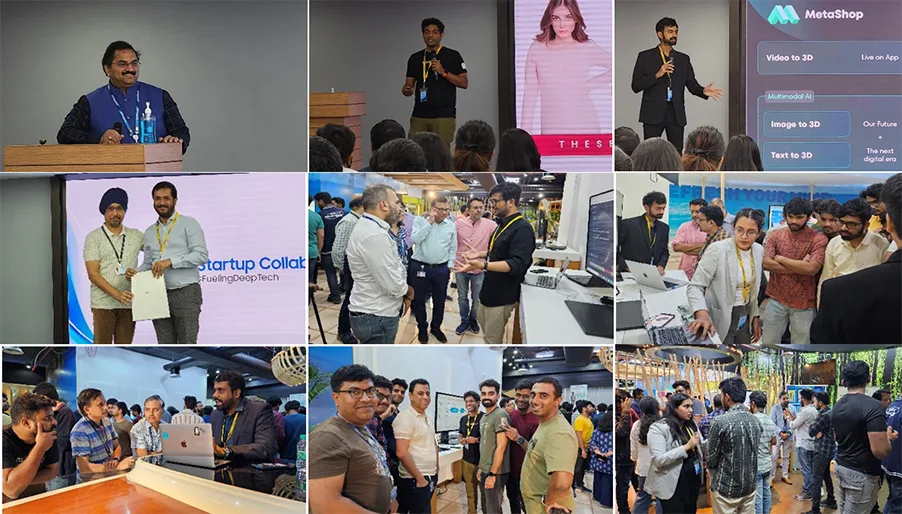
In January, Samsung R&D Institute India – Bangalore (SRI-B) organized ‘The Startup Collab: #FuelingDeepTech’, where 11 startups, working in the field of Generative AI, Responsible AI, Emotion AI, Visual AI, Quantum and Health, participated with great enthusiasm. The startups pitched their unique product offerings and showcased interactive live demos to a large audience consisting of SRI-B’s R&D teams, leaving them highly motivated and mesmerized.

Employees seized this opportunity to understand the startup offerings and explore potential areas of collaboration with them to influence Samsung’s products and services.

The daylong event featured a leadership address, startup pitches, an interactive demo showcase, and Samsung expert talks.

Mohan Rao, CVP & CTO at SRI-B, addressed a packed audience on how Samsung aligns its efforts with ecosystem partners. During the talk, Mohan Rao emphasized the company’s ‘build vs source’ philosophy and how we endeavor to bring about win-win collaboration opportunities.

“At Samsung, we are deeply committed to open innovation and ecosystem collaboration. Collaboration with startups is a symbiotic relationship where startups bring fresh ideas and agility, while Samsung can offer scale and stability. This also infuses the startup’s entrepreneurial spirit within the organization, fostering a culture of risk-taking and innovation. We look forward to collaborating with promising deep-tech startups and creating ground-breaking innovations”, he shared.

The Open Innovation team, operating under the aegis of the CTO Office, collaborates with both R&D teams and the startup ecosystem to identify and align potential collaboration opportunities. As part of their core responsibilities, this team facilitates incubation, partnerships and potential investments into aligned startups. So far, the team has successfully established 30+ partnerships and made around 12 strategic investments.

Traditionally, discussions around R&D, especially in the early exploration phase, have been limited to product owners, technology leaders, and key decision-makers. However, the Startup Collab: #FuelingDeepTech aims to create a platform that opens up startups to a broader audience within SRI-B. This approach enables the identification of high-impact, innovative, and potentially unexpected use cases across various ABC products, fostering collaboration and driving cutting-edge solutions.

“Open Innovation at SRI-B is at the heart of our New Valley Vision. We strongly believe and encourage building Samsung products and services utilizing the power of our partners and the vibrant startup ecosystem”, shared Dr. Balvinder Singh, Head of the Advanced Research Group & Open Innovation at SRI-B.
 
The open format of the event allows Samsung and the startups to explore beyond the boundaries of traditional meeting setups, and enables R&D teams to combine the offerings of multiple startups with Samsung products, creating novel concepts and immersive consumer experiences. This unique approach will lead to many fruitful collaborations in the future, ultimately delivering non-linear value to Samsung users.

SanchiConnect Unveils the 2nd Phase of Its Multi-City Deep Tech Startups Roadshow, Amplifying Innovation Across India

Building on the success of connecting groundbreaking startups from untapped regions with investors and leading industry mentors, SanchiConnect unveils the second phase of its multi-city deep tech roadshow.

SanchiConnect, the thriving deep-tech community, proudly announces the continuation of its unique roadshow, which has historically unearthed disruptive startups from India's burgeoning towns and cities. This initiative, in collaboration with esteemed partners HSBC India, Arctic Invent, and Startup Movers, aims to further bridge the gap between innovative tech entrepreneurs and top-tier industry mentors within the SanchiConnect ecosystem.

SanchiConnect Unveils the 2nd Phase of Its Multi-City Deep Tech Startups Roadshow, Amplifying Innovation Across India

The roadshow's first phase set a high bar, identifying innovative startups and facilitating investment opportunities, directly contributing to India's 5 trillion-dollar economic mission. In this second phase, the roadshow will journey through Delhi (9th December), Hyderabad (11th December), Bengaluru (12th December), Chennai (13th December), Coimbatore (14th December), and Kochi (15th December) creating a hub of innovation and investment potential.

"We are excited to embark on this journey with HSBC India, Arctic Invent, and Startup Movers, this roadshow signifies our dedication to nurturing the deep tech ecosystem in India. By connecting startups with investors and providing a platform for collaboration, we aim to catalyze innovation and drive sustainable growth. We extend our sincere thanks to our esteemed partners, HSBC India, Arctic Invent and Startup Movers, for their invaluable support. Together, we look forward to creating a transformative experience for startups, investors, and the entire deep tech community." said Sunil Shekhawat, CEO at SanchiConnect.

Arctic Invent, a global intellectual property consulting firm, will contribute its expertise to the roadshow. Focused on patent, trademark, design, and copyright registration, Arctic Invent aims to help businesses drive innovation and create lasting business value.

Startup Movers specializes in guiding startups through business planning and strategy, helping them avoid common pitfalls and streamline their path to success with expert advisory and consulting services.

About SanchiConnect:

SanchiConnect is India’s largest community for Deep Tech Startups, Investors, Enterprise Partners, and Service Providers. Committed to helping deep tech companies scale and succeed, SanchiConnect believes in the potential of deep tech to drive sustainable growth and contribute significantly to India's trillion-dollar economic agenda.

Applied Ventures Selects Seven Deep tech Startups during ASTRA 2023

Applied Ventures Selects Seven Deep tech Startups during ASTRA 2023

Selected start-ups in the fourth cohort of the successful ASTRA program will be evaluated for mentorship and possible collaboration with Applied Materials, helping them reach their growth potential

Applied Ventures, LLC, the venture capital arm of Applied Materials, Inc., along with Applied Materials India Private Limited, selected seven deeptech startups during the fourth cohort of its start-up engagement program - ASTRA (Applied Startup Technology & Research Accelerator) in Bengaluru. ASTRA aims to collaborate with start-ups and transform disruptive possibilities into reality.

Based in India and Singapore the selected startups during ASTRA 2023 include Lightspeed Photonics, Portkey, Sungreen H2, Exposome, OIP Technologies, App Sentinels, and Ethereal Machines.

Chosen from a pool of 50+ outstanding applications, the selected start-ups pitched their business proposals to Applied Materials executives and industry leaders during the event. The start-ups were then evaluated based on criteria such as Fit to Applied Technology and Business, High-Value Problems Addressed, Differentiation from Existing Market Solutions and Business Models, and Growth Potential. The areas of focus for ASTRA 2023 were Generative AI, Semiconductor and Display Technologies, Sustainability, Supply Chain Solutions, Cybersecurity, Advanced Materials, Advanced Optics and Photonics, and AI Hardware.

Commenting on the occasion, Om Nalamasu, Senior Vice President and Chief Technology Officer of Applied Materials, Inc., and President of Applied Ventures said, "I would like to congratulate the seven selected start-ups for their innovative solutions. All of them have showcased exciting visions of the future, and we look forward to helping them reach their full potential through collaboration and mentorship. The ASTRA program connects us with some of the most dynamic deeptech startups, and we want to continue this incredible journey where Applied Ventures can play a significant role in fostering innovation, collaboration, and entrepreneurship to cultivate a thriving start-up ecosystem."

Anand Kamannavar, Global Head, Applied Ventures, and sponsor of ASTRA, said, “The fourth cohort of ASTRA has showcased breakthrough innovations across the broader Materials to Systems™ stack in the areas of Generative AI, Semiconductors, ESG, and Supply Chain. We are thrilled to engage with the shortlisted startups; they all have tremendous potential to transform the market ecosystem. Applied Ventures will continue to support breakthrough companies across the globe, help bring their innovations to market, and guide their journey towards becoming successful business models.”

Srinivas Satya, Country President, Applied Materials India said, “We've always believed in the power of entrepreneurship to drive meaningful change, and we're excited to see how these shortlisted startups will contribute to India’s semiconductor ecosystem. By collaborating with these cutting-edge businesses, we are accelerating the creation of a local semiconductor ecosystem and building on the recent announcement of our intent to establish a Collaborative Engineering Center in India.

With ASTRA 2023, Applied Materials and Applied Ventures are leveraging their extensive technical and industry expertise to accelerate the growing start-up ecosystem. The companies selected during the fourth cohort of ASTRA will now be assessed for mentorship, possible collaboration with Applied Materials, and investment opportunities from Applied Ventures. As a consultant, Applied Materials will help the final start-ups selected this year address market and technology challenges and explore potential scale-up pathways. The selected companies will also have access to Applied Materials’ product development expertise, best-known methods for maximizing market opportunities, infrastructure, and ecosystem connections.

Following are the selected start-ups during ASTRA 2023 —
  1. App Sentinels
    • Full life-cycle API Security platform
  2. Exposome
    • Material chemistry technology for abating industrial wastewater & emissions
  3. Ethereal Machines
    • Axis CNC Machining
  4. Lightspeed Photonics
    • Photonics: Optoelectronic interconnects and modular processors
  5. OIP Technologies
    • Optical-in-Package solution with advanced packaging technology
  6. Portkey
    • Production-ready tools to make Generative AI apps
  7. Sungreen H2
    • High-efficiency electrolyzer components for Green Hydrogen production
About Applied Ventures, LLC

Applied Ventures, LLC, the venture capital arm of Applied Materials, invests in innovative technology companies globally that promise to deliver high growth and exceptional strategic and financial returns. For more than a decade, Applied Ventures has invested in startups globally, including India, that are pioneering innovations in semiconductor and display technologies, high-performance computing, smartphones, augmented and virtual reality, AI/ML, autonomous cars, big data, life sciences, fab automation software, robotics, sensors, advanced materials, and ESG.


BITS Pilani Launches PhD Program to Create Deep Tech Ventures

BITS Pilani Launches PhD Program to Create Deep Tech Ventures
BITS Pilani has announced the launch of an innovative PhD Program that would result in creation of a startup based on research done during the PhD. The program will focus on creation of deep tech and deep science startup ventures, that will solve some of the most critical societal and business challenges. This is keeping in line with BITS Pilani’s history of introducing innovations in the higher education space over the past 60 Years, be it the Practice School concept, the first ever dual-degree programs or newer pedagogical practices.

The new program, to be called as PhD-DRIVE, short for Deep-tech Research, Innovation, Value generation & Entrepreneurship, will admit students with expertise in technology and science, and a clear intent to set up a startup. The program will include courses in entrepreneurship, incubation program, funding for building a solution or product, and most of all, access to BITS alumni network for further investments.

Prof. V. Ramgopal Rao, Vice-Chancellor, BITS Pilani said, “The world requires our best researchers and academics to put their innovative research to use in solving the biggest challenges facing humanity. As a country, we haven’t done enough in the area of Deep Technology and Deep Science ventures, where a startup takes a long time to become viable. With this new program, we want PhD scholars to become an entrepreneur along with becoming an innovator, and not just look at an academic career post their PhDs”. Goal will be to incubate 100 startups through this program by 2030, said Prof. Rao. BITS Pilani alumni have created over 7400 startups of value all over the world so far including 13 unicorns and a decacorn.

He further added, “Our current focus areas include solutions to address issues related to homeland and cyber security, healthcare, environment, agriculture, space and energy. Many sub-domains in these areas related to climate change, industry 4.0, food-technology etc will be of interest. The idea is to make advanced technologies such as quantum science and nanotechnology work for people at the grassroots. The PhD students under this startup track shall join a centre of excellence or a specialized lab at BITS Pilani working in these areas.”

To recall, in last November Devjani Ghosh, president of the National Association of Software and Services Companies (NASSCOM), said — "More financing is needed for the country's deep technology startup to move fast, while at the moment the sector is receiving only 11 percent of total technology investment."

BITS Pilani and its technology business incubators such as DST supported PIEDS, BIRAC supported BGIIES, and the DST NM-ICPS supported BioCyTIH will work with various partners including investment partners, government labs, industry experts, corporates, and BITS alumni to keep the PhD scholars on a path of forming a startup, and also create opportunities for them to seek further investments. Speciale Invest, a leading venture capital firm with a focus to invest in deep tech startups has already expressed their early support to the program.

Vishesh Rajaram, Managing Partner, Speciale Invest, said, “Academia is a breeding ground for deeptech innovations and as a leading deeptech investor in India, we are excited to partner with BITS Pilani in an innovative programme to foster the next generation of deep science and deeptech entrepreneurs.”

Rajaram further adds, “shaping holistic founders who understand technology and business will be a critical link for the current decade of India Deep Tech to be successful. Having invested in multiple deeptech startups at the early stage including those in spacetech, electric mobility, batteries, robotics, semiconductors amongst others, we look forward to playing an active role in helping PhD students ideate, build, iterate and commercialize innovations that have a large-scale impact on India and the world.”

The scholars will be working in various Centre of Excellences that BITS has already set up in the areas of Semiconductors, Bio-Cyber Physical Systems, Artificial Intelligence and Machine Learning, Medical Diagnostics and Infectious Diseases, amongst others. The scholars would be supported through a much higher stipend, and would be provided a prototyping grant during the program.

Suresh Kabra, alumnus of 82-87 batch, under the auspices of Prof. Dr. Suman Kapoor Memorial Charitable Trust, has decided to sponsor 3 women Ph.D. Scholars with innovative ideas in the Biological Sciences area, along with the seed funds. Kabra said, “BITS Pilani has a strong entrepreneurial culture amongst the undergraduate levels and in the alumni community. With Ph.D. and post-doc scholars being encouraged to set up a venture, it will augur well for the deep science innovation ecosystem on its campuses. The industry needs application of fundamental research being done at Ph.D. level and this is a step in the right direction."

The admission for this program will be round the year and notifications for the program shall be posted on BITS website and its social media channels. BITS Pilani is leveraging its strong alumni network and corporate partners for funding and mentorship support.

BITS Pilani is an institution of eminence that offers programs in science, technology, and management from its 5 campuses – Pilani, Dubai, Goa, Hyderabad, and Mumbai. In 2021, it launched BITS School of Management (BITSoM), a new-age global business school, and in 2023, it began offering programs in Law through the BITS Law School (BITSLaw). It also offers program to working professionals in more than 300 companies through its Work Integrated Learning Programs.


CIE at IIIT Hyderabad Commences the Summer 2023 Cohort of its AVISHKAR Deep Tech Accelerator

CIE at IIIT Hyderabad Commences the Summer 2023 Cohort of its AVISHKAR Deep Tech Accelerator
  • Cohort started with 4 startups in deep tech, medtech, media tech and mobility domains, selected from over 200 applications.
  • Startups will get up to INR 40L seed fund, strategy mentoring, research advisory and market access
  • Since 2016, 26 cohorts 48 startups, and about 53% raising follow-on funding.
The Centre for Innovation and Entrepreneurship (CIE) at IIIT Hyderabad announced the onboarding of 4 startups for the Avishkar accelerator 2023 Summer cohorts of Deeptech, Mobility, Healthcare and Mediatech domains. Since the launch of Avishkar accelerator in 2016, there have been over 26 cohorts and 48 startups in AI, ML, IoT, and digital health with about 53% of them raising follow-on funding.

The Accelerator Kickoff was held from 29 May - 2 June 2023 with CIE’s panel mentors and experts from the industry. From an overwhelming application pool of 120+ startups, the selection committee shortlisted 6 startups for the program. The shortlisted startups were from domains of real-time data collection of patients' movements, Brain Health management, lithium-ion cell manufacturing, C-V2X, AI & Digital Twins and Web tools for mobile.

As a part of the Avishkar Accelerator, the selected startups will receive INR 40L seed fund along with a detailed 6-month plan that offers 4 streams of mentorship - Business Strategy, GoToMarket Plan, Technical Review and domain-specific mentorship. The program is facilitated jointly by CIE, IIIT Hyderabad, Co-creation Consulting, and SucSeed Indovation fund among other industry leaders. The program also opens avenues for startups through IIITH’s research support and collated networks and Corporate Connects.

Prof. Ramesh Loganathan, COO of CIE-IIITH says “Very happy to see Avishkar in its 7th year. A program that connects deep tech startups, research and market access, thru a structured 6-month accelerator program

The startups shortlisted for this cohort are:
  • NxtQ aims to provide accurate and real-time data about a patient's movements, allowing prosthetists and orthotics to create customized devices that better match their needs.
  • Nirvesh Enterprises aims to provide Post Operative Brain Health Management. They plan to provide this through products related to neuro-care.
  • Petrol Social aims to bring all the tools found on PCs and the web to mobile. Tools such as content creation platforms, and smart legos on mobile.
  • Eranext Auto enables Vehicles To Communicate With Each Other And Their Surrounding Infrastructure, Including Pedestrians And Other Road Users.
About IIIT-Hyderabad: The International Institute of Information Technology, Hyderabad (IIIT-H) is an autonomous research university founded in 1998 that focuses on the core areas of Information Technology, such as Computer Science, Electronics and Communications, and their applications in other domains through inter-disciplinary research that has a greater social impact. Some of its research domains include Visual Information Technologies, Human Language Technologies, Data Engineering, VLSI and Embedded Systems, Computer Architecture, Wireless Communications, Algorithms and Information Security, Robotics, Building Science, Earthquake Engineering, Cognitive Science, Computational Natural Sciences and Bioinformatics, Education Technologies, Power Systems, IT in Agriculture and e-Governance.

Website: www.iiit.ac.in

About CIE IIIT Hyderabad: The Centre for Innovation & Entrepreneurship (CIE) was set up in 2008 and has since grown to be the largest academic incubator in the country. CIE-IIITH was supported by DST (TBI) and MeitY (TIDE) in the initial years. Today, there are very active programs focused on emerging technology startups, research-based startups, medical technologies, and social technology startups. In the past 14 years, CIE has housed over 300+ startups that have raised about 200 Cr in funding and created over 2000 jobs.

For further information, please contact: Sunory Dutt, Head of Communications, IIIT-Hyderabad.


DeepTech Startup Chara Raises $4.75 Mn Pre-Series A Round Led by Exfinity Venture Partners

DeepTech Startup Chara Raises $4.75 Mn Pre-Series A Round Led by Exfinity Venture Partners

Chara, a Bangalore-based deep-tech start-up, has raised a pre-series A round of $4.75M led by Exfinity Venture Partners, a Bengaluru based VC firm known for its B2B focus and deep-tech expertise. This round also had participation from Vietnam based Big Capital, venture arm of Bitexco and Log9 Materials. Kalaari Capital and ciie.co who are existing investors participated in this round as well.

There has been a global shift towards e-mobility, greenification of supply chain and other electrification trends. The existing motor technologies which were designed about a century back need a major overhaul to meet these emerging needs in an efficient and cost-effective manner. To this end, Chara is building a scalable, cloud-controlled, and rare-earth free platform for designing, building, and deploying electric motors for EV, HVAC and various other applications. Chara’s proprietary Drive Control FIrmware (DCF) is the brain of our motor controller. DCF is a suite of packages consisting of advanced motor control algorithms at its core. The state-of-the-art motor control algorithms are developed to extract maximum performance from in-house designed Chara Motors. Using Model-Based Design (MBD), DCF gives peak motor performance while ensuring optimum efficiency, thermal management and smooth, ripple-free torque delivery.

The motors will be based on a specialized patent-pending variation of the well-known SRM (Switched Reluctance Motor) and SynRM technologies and other magnet-free motor technologies. These ‘Make in India’ motors are currently being field-tested and will be in production in the second half of 2023.

Chara was founded in November 2019 by Bhaktha Keshavachar, Ravi Prasad Sharma, and Mahalingam Koushik. The founders are serial entrepreneurs, veteran product experts, and motor technologists with decades of experience developing cutting-edge products and technologies. The Chara story began with an initial grant from Indian Institute of Science (IISc), Bengaluru.

So far, Chara has built motors for 2-Wheeler (hub and mid-mount), 3 & 4-Wheeler LCVs and HVAC use cases. The motors and its matching controllers are being field tested and are expected to go into production later this year. Chara also has several projects lined up to build motors and controllers for heavy commercial vehicles. Chara’s current motor range starts from fractional kW to 10’s of kW with voltage ranges from 48V to 400V. Higher voltages and powers will be built in the near future. Chara has filed patents in Motor design, controller design and Control algorithms for these Motor technologies.

Commenting on the deal, Mr. Bhaktha Keshavachar, Founder & CEO, Chara Technologies, said “At Chara, we pride ourselves in being disruptors and 2023 is going to be a year of realizing our electric dreams. We're working towards turning the current motor tech on its head, doing away with inefficient and rare-earth-dependent practices.We are building rare-earth-free, hyper-efficient, cost-effective, intelligent motors and controllers for EV, HVAC, and other industries. We are very excited to work with Exfinity, BigCapital, Log9, Kalaari, and CIIE to bring cutting-edge technology to OEMs in India and in the future to the world.”

Speaking on the fund raised, Mr. Chinnu Senthilkumar, Managing Partner at Exfinity said "To build SRM/Hybrid version of SRM motors, an interdisciplinary team with backgrounds in Electro-mechanical, power electronics and software domains is a must. We found that the Chara founding team is exemplary in this regard. Exfinity strongly believes that the EV story for South Asia & similar markets has to be contextualized and not replicated from the US and European markets. After our earlier investment in Log 9 Materials, Chara is part of our continued belief in this thesis. Chara Motors is also a great example for Atmanirbhar Bharat as it delinks the permanent magnet supply chain dependency from China and other countries."

Speaking on the investment, Mr. Preetinder Singh Panjrath, CFO - BIG Capital, said “BIG Capital continues to support innovative technologies that will power the world of the future. As part of our commitment to environmentally friendly solution for land and aerospace markets we were especially attracted to Chara motors with the focus on rare earth free electric motors that are safer for the planet, more cost efficient and offers better efficiency compared to the legacy solutions. We are delighted to be part of Chara motors journey to not only power the EV and Power Market but also do so in an environmentally responsible way.”

Speaking on his continued interest and investment, Mr. Ravinder Singh, Partner at Kalaari, said “Chara is a remarkable global deeptech institution in making, with a rare practical approach to paint the civilization’s future which is rare-earth free and geo-political neutral.”

About Exfinity Venture Partners

Exfinity Venture Partners is an early-stage technology focused fund investing in the domains of deep technology, SaaS and platforms. Exfinity’s core founding principles are to focus on B2B-sector investments with a practitioner driven approach, and they are the pioneer fund in India in these aspects. Exfinity is uniquely positioned to enable scaling of cross border startups building world class enterprise solutions for customers across the globe, and also facilitate growth stage investments for their portfolio companies. Their other investments include Log 9 Materials, Kinara, Pixis, MoEngage, Ati Motors, Awiros etc.

About Big Capital

BIG Capital invests in early to mid stage startups globally with a focus on deep tech, innovation and next generation technologies. Investments focus on Aerospace Technologies, Green Economy focused companies, Healthcare and Fintech. BIG Capital was founded in 2018 and is the largest shareholder of a Space Tech unicorn in the United States.

DeepTech EV Solutions company Vecmocon raises $5.2M from Tiger Global, Blume Ventures and others

DeepTech EV Solutions company Vecmocon raises $5.2M from Tiger Global, Blume Ventures and others
L-R Adarshkumar B, Peeyush Asati, Shivam Wankhede
  • The company is on its way to power 100,000 vehicles by the end of next yea
  • Several other strategic angels participated in this round
  • The company is based out of Delhi and was also incubated at IIT Delhi & ISB
DeepTech EV Solutions company Vecmocon has raised $5.2M in funding from Tiger Global, Blume Ventures and prominent strategic angels. The company is based out of Delhi and had previously raised $300k and was also incubated at IIT Delhi & ISB. Vecmocon aims to utilise this fundraise to invest into team building, business expansion, scaling up of operations and further product innovation.

Vecmocon is on a mission to empower the EV OEMs and other ecosystem players with access to state-of-the-art technology and best-in-class reliable components. The company engineers future-ready solutions for the next generation of electric vehicles.

The EV industry has been booming in the country with multiple policies and incentives by the government in the favour of EV adoption. As per multiple reports, the market of light EV industry comprising 2Ws, 3Ws, forklifts, tractors, etc is estimated to be $500B by 2030 and India alone would be $100B.

Vecmocon’s tech first integrated hardware and software solution would comprise of at least 30% of the value chain in an EV providing for a large market of $30B in India alone. Some of their products such as motor controller, vehicle intelligence module, battery management system and charger are critical to an EV which dictate the safety, reliability, and performance of the vehicle. Vecmocon’s solutions reduce the time to market for an OEM as they have built a plug and play architecture for building reliable, safe, cost-effective quality first products, complete with an entire software stack for fleet management, maintenance, and service. Investing heavily into the design of these components the company enables a truly connected and smart vehicle which are customised, tested, and proven for the rugged Indian roads. The company already has powered more than 5k vehicles working with multiple OEMs so far and aspire to power more than 500k vehicles by the end of 2025.

Vecmocon was founded in 2016 by Peeyush Asati, Adarshkumar B and Shivam Wankhede. The core team comes with expertise in battery modelling, components design, systems architecture, embedded software and data science.

Peeyush Asati, Co-founder & CEO, said: “EV mass adoption is not a product story but an ecosystem story. Robustness, reliability, and service are at the core of this story which we at Vecmocon are building. With our state-of-the-art solution, and data-centric approach we are working with the mission to deliver a truly smart, connected, and reliable platform for the world. We plan to utilize this fundraise to invest primarily in team and tech.”

Connie Lee, Partner, Tiger Global, said: “We are impressed with the deep commitment and progress that Peeyush, Adarshkumar and Shivam have made to solve long-term problems in India’s EV industry, and we are excited to partner with them as they build a high-quality global automotive tech company to support the adoption of EVs.”

Arpit Agarwal, Director, Blume Ventures, added, “An electric vehicle is a technologically advanced product. For the larger number of OEMs, it is hard to develop the expertise to design and perfect the software and hardware components like a BMS or VIM. Such customers stand to win greatly by adopting Vecmocon’s platform which allows them to launch high-performance vehicles faster to the market. Over the last 5 years, Vecmocon has built a unique capability to engineer such data intensive components and deliver a highly robust and safe system.”

Bgauss, a new age EV OEM building smart and reliable electric 2Ws, founded by Hemant Kabra quotes that “Vecmocon’s intelligent solutions truly support BGuass to deliver high quality, smart and reliable EVs for the Indian market”

About Vecmocon

Vecmocon

Founded in 2016, Vecmocon makes cutting-edge mobility solutions that help OEMs get access to next generation components which are both robust and field-tested. Vecmocon’s intelligent and connected Battery Management Systems, Vehicle Intelligence Modules, Motor Controllers and other products power 5000 EVs, with a target of getting into 500k vehicles by 2025. In doing this, Vecmocon is helping adoption of a new wave of technology in the industry. The company also helps OEMs manage their operations better by offering a unique maintenance management software, complete with mobile based diagnostics, and a fleet manager.

The company was founded by Peeyush Asati, Shivam Wankhede and Adarshkumar B, alumni of IIT Kanpur, IIT Delhi and ISB respectively. For additional information, please visit www.vecmocon.com or contact hello@vecmocon.com.

AI-based Computer Vision Platform Awiros Raises $7 Mn Led by Inflexor and Exfinity


AI-based Computer Vision Platform Awiros Raises $7 Mn Led by Inflexor and Exfinity

Awiros raises $7m led by Inflexor and Exfinity to accelerate growth and global expansion

Tech-focused VC funds, Inflexor Ventures and Exfinity Venture Partners, led the Series A round in Awiros, a deep-tech start-up that develops an AI-based computer-vision platform primarily for video processing. The current round of funding also saw participation from VedaVC, leading family offices and UHNIs.

Awiros is bridging a key gap in the market through its offering, a marketplace of Video AI “Apps” that allows its customers to discover and adopt suitable technology solutions quickly. Enterprises have been actively deploying Video AI solutions across automation, safety and process monitoring where the market is projected to reach USD 27Bn by 2030, based on various research studies. Awiros is accelerating the adoption of this technology, where its average customer subscribes to more than 10 apps today, up from 4 in 2019. With several Fortune 500 customers and large-scale Video AI deployments across manufacturing, warehousing, data centers, critical infrastructure and public safety, Awiros is already one of the leading companies in this space in India.

In terms of technology, Awiros is a device-agnostic Operating System (OS) for easy development and delivery of Video AI applications. The OS eliminates the need for enterprise clients to upgrade, redesign, or reinstall new systems as the enterprise’s Video AI use cases increase. The platform also abstracts out all the tedious workflow around computer vision-based AI models and lets developers concentrate on building efficient models, resulting in faster development and deployment cycles for enterprise-grade applications. In the near future, Awiros aims to be the default platform for computer vision use-cases that would allow any developer to create and deploy computer vision applications in large-scale projects in a friction-less manner and create an ecosystem that allows the best apps to thrive, much like the app-stores for smartphones.

The company aims to utilize the funding towards product enhancement, building its developer community, and business growth in India and overseas markets. This funding round will allow Awiros in augmenting the India and US teams, both in technology and sales-related functions.

Awiros was founded in 2015 by Vikram Gupta and Yatin Kavishwar. Vikram is a computer engineering research expert with a PhD from Carnegie Mellon University. His key focus area during his PhD was to architect a middleware for multi-application embedded systems, which became the base and motivation for founding Awiros. Yatin is a seasoned enterprise business leader with experience in leading government, enterprise, defence and public sector sales across multiple stints at AppDynamics, Citrix, Cisco and IBM.

Vikram Gupta CEO & Co-Founder of Awiros said “Awiros is one of the fastest growing companies in the Video AI space in India and this funding round will help us build further momentum for global growth by increasing our market share, streamlining technical operations and investing in the R&D of existing and new product categories. By onboarding the seasoned deep-tech investors from Inflexor and Exfinity, Awiros will benefit heavily from their extensive experience in technology, international business and scalable GTM.”

Jatin Desai, Managing Partner at Inflexor Ventures added, “We are very excited to partner with Vikram, Yatin and the team at Awiros as they take their patented deeptech/AI-based Computer Vision operating system and app store to global markets and continue to grow in the domestic market. As cameras become even more ubiquitous globally there will be a huge addressable market for their products. Awiros investment fits very well with Inflexor’s deeptech/tech IP theme and backing solid founders in this space”.

Chinnu Senthilkumar, Managing Partner at Exfinity Venture Partners added, “In the backdrop of data explosion happening in the video domain, we are thrilled to join Awiros’ journey in building a unified video intelligence platform that derives actionable insights for its customers. Awiros’ approach is analogous to Android O/S which enables and empowers the customer to design and deploy AI-based solutions for their business needs quickly. Awiros has excellent business synergy with our portfolio company Kinara (erstwhile Deepvision) wherein they will be able to co-develop solutions in domains such as retail automation, smart buildings, Industry 4.0 etc. for Fortune 500 clients.”

Market Reports

Market Report & Surveys
IndianWeb2.com © all rights reserved