Showing posts with label Defence Tech. Show all posts

Bharat Forge Subsidiary KSSL Signs MOU with L3Harris to Collaborate on Advanced Defense Tech in India

Kalyani Strategic Systems Limited sign MOU with L3Harris Technologies

Kalyani Strategic Systems Limited (KSSL), a subsidiary of Bharat Forge Limited (NYSE: BFL) and L3Harris Technologies (NYSE: LHX) signed a Memorandum of Understanding (MOU) for wider collaboration in supporting advanced defense and security equipment in India.

Under the two-year agreement, both companies will work in close collaboration to provide solutions for mutually agreed opportunities in Command, Control, Communications, Intelligence, Surveillance and Reconnaissance (C4ISR) technologies. The MOU provides L3Harris with a strong, local partner to support tactical communications network development in India, extending an existing global install footprint of more than 1 million fielded radios across U.S. Department of Defense and allied inventories.

Kalyani Strategic Systems Limited sign MOU with L3Harris Technologies


This MOU sets the stage for future partnerships and opportunities in India, where the combined strengths of L3Harris and KSSL can contribute to bolster national security for the country,” said Dave Johnson, Vice President, International, L3Harris. “We are excited to move forward and increase our delivery speed in advanced tactical radios and equipment to the Indian Armed Forces.”

The U.S.-India Defense Industrial Cooperation encourages both parties’ support of advanced defense technologies, capabilities and equipment. The MOU is designed to foster collaboration in defence technologies, with a framework for innovation that benefits both L3Harris and KSSL.

This collaboration unlocks new strategic capabilities and will lead to harnessing new opportunities for quick delivery of sophisticated defense products to the Indian Armed Forces,” said Neelesh Tungar, President & CEO, KSSL. “Aligned with the evolving doctrines and emerging warfare paradigms, this collaboration between KSSL and L3Harris is aimed at serving future strategic requirements, including joint and integrated ISR capabilities.”

While focusing on the Indian market, the collaboration also seeks to establish robust and resilient supply chains outside India for global obligations.

L3Harris has operated in India for more than 21 years, with facilities in New Delhi and Bengaluru. In addition to providing the Indian Armed Forces with sophisticated tactical radios and manned airborne electro-optic/infrared systems, the company provides Futuristic Telecommunications Infrastructure for all Indian airports in partnership with the Airport Authority of India.

OpenAI Signs Agreement With US Govt for Use in Nuclear Weapon Security and Scientific Breakthroughs

OpenAI Signs Agreement With US Govt for Use in Nuclear Weapon Security and Scientific Breakthroughs

OpenAI has announced that it has signed an agreement with the U.S. National Laboratories to use its advanced AI models for scientific research and nuclear weapons security. This partnership aims to enhance cybersecurity, improve disease treatment and prevention, and deepen the understanding of fundamental Sciences.

This agreement signed involves deploying OpenAI's advanced models, such as the o1 series, at several U.S. National Laboratories, including Los Alamos, Lawrence Livermore, and Sandia National Labs. The goal is to enhance cybersecurity, improve disease treatment and prevention, and support nuclear safety initiatives.

Though its a significant step, but it also raises some important questions about the ethical implications of using AI in such sensitive areas.

As OpenAI has partnered with the U.S. National Laboratories to use its advanced AI models for various critical projects, up to 15,000 scientists working at the institutions will get access to OpenAI's latest o1 series of AI models.

OpenAI will also work with Microsoft, its lead investor, to deploy one of its models on Venado, the supercomputer at Los Alamos National Laboratory, according to a release.

One of the key aspects of this partnership is the deployment of OpenAI's o1 series models on the Venado supercomputer at Los Alamos National Laboratory. This supercomputer, powered by NVIDIA's Grace Hopper architecture, will be a shared resource for researchers from the participating labs. The goal is to reduce the risk of nuclear conflict and secure nuclear materials and weapons worldwide.

OpenAI's involvement in nuclear weapons research has raised some eyebrows, given the sensitive nature of the work. However, the company has emphasized that AI researchers with security clearances will conduct careful and selective reviews to ensure the safety and ethical use of AI in these areas.

It may also be recalled that OpenAI has also launched ChatGPT Gov, recently, a version of its AI product tailored for government agencies, aiming to enhance security and efficiency.

IG Drones Secures Contract with Indian Army for VTOL and FPV Drones Made in India

IG Drones Secures Contract with Indian Army for VTOL and FPV Drones Made in India

Amid rising security concerns and evolving drone warfare tactics, IG Drones has solidified its position as a trusted technology partner for India’s defense forces by securing a significant contract with the Indian Army. The order includes the supply of IG Drones’ indigenously developed VTOL (Vertical Take-Off and Landing) and FPV (First-Person View) drones, designed to enhance the Army’s operational capabilities while addressing national security concerns surrounding the use of foreign components in critical defense systems.

The decision to prioritize domestically developed drone technology comes at a time when the Indian Army faces mounting security threats along international borders. Recent incidents, such as the hijacking of an Indian Army drone near the Pakistan border, have underscored the urgent need for reliable, indigenously manufactured platforms free from Chinese-origin components, which could compromise national security. As of August 2024, India had 398 drone startups, doubling in three years, surpassing China's 298. However, a recent Indian Army drone hijacking near the Pakistan border has raised security concerns, highlighting the need for certified, reliable companies to provide secure solutions.

India’s defense strategy is increasingly dependent on cutting-edge drone technology to counter challenges in high-altitude terrains, border surveillance, and rapid response operations. IG Drones’ VTOL systems are tailored for operations in extreme environments, offering unparalleled flexibility by enabling vertical take-off and landing in areas where runways are unavailable, such as mountainous regions and urban conflict zones.

The FPV drones, on the other hand, bring a real-time, first-person perspective to tactical reconnaissance, enabling precise intelligence gathering while keeping personnel out of harm’s way. These drones are particularly suited for urban warfare, search-and-rescue missions, and counter-infiltration efforts.

As part of the government’s Make in India and Atmanirbhar Bharat initiatives, the Indian Army has prioritized procuring equipment that aligns with the country’s vision for self-reliance in defense manufacturing. IG Drones has responded to this call by ensuring its platforms are free from Chinese components, addressing concerns over potential data security vulnerabilities.

Speaking on the milestone, Mr. Bodhisattwa Sanghapriya, Founder and CEO of IG Drones, remarked:
This contract reflects the Indian Army’s trust in our ability to deliver secure, world-class drone systems. By integrating indigenous innovation with advanced capabilities, we aim to empower the armed forces to meet modern security challenges head-on. With this, we have global aspirations to take drone ecosystem and 5-G enabled drone solutions to another level. We are committed to our forces’ determination for ensuring fool-proof security and surveillance along the borders.

Expressing his views, Major General RC Padhi, Senior VP (R&D), IG Drones, said —
The procurement of these indigenously developed drones is a significant step toward bolstering our operational capabilities amid evolving security challenges. These advanced drone systems, tailored for high-altitude and tactical operations, will play a pivotal role in ensuring reliable surveillance, precise intelligence gathering, and enhanced border security. This partnership underscores our commitment to embracing Made-in-India solutions for a self-reliant and secure defense ecosystem.

The Indian drone market is experiencing rapid growth, fueled by increasing demand across sectors like defense, agriculture, and logistics. Government initiatives such as the Drone Shakti scheme and a ban on the import of drones have further accelerated the adoption of indigenous technology. Recent data reveals that India now hosts over 390 drone startups, a figure that has more than doubled in the past three years, showcasing the sector’s potential.

With this new contract, IG Drones not only strengthens its relationship with the Indian Army but also sets a benchmark for the role of homegrown technology in bolstering national security. By aligning its efforts with India’s vision for self-reliance and innovation, the company underscores the importance of indigenous solutions in addressing the country’s evolving defense needs.

The Indian drone market is expected to reach $13 Bn in size by 2030, growing at a CAGR of 21% between 2022 and 2030. In terms of volume, drone units are projected to increase from 10,803 in 2024 to 61,393 by 2029. This rapid expansion is fueled by growing demand across sectors such as agriculture, defense, and e-commerce.

About IG Drones

IG Drones is a leading drone technology company specializing in advanced defense and industrial solutions. Driven by innovation, it has established itself as a pioneer in delivering cutting-edge technologies to meet the evolving needs of industries and national defense. At the forefront of industry-first breakthroughs, IG Drones is revolutionizing the sector with 5G-enabled drones and Made-in-India manufacturing. With AI-powered solutions, the company enhances drone applications across defense and industry. Founded by Bodhisattwa and Om Prakash and headquartered in Noida, IG Drones exemplifies industrial leadership in drone technology and innovation in India.

India Achieves Milestone in Next-Gen Hypersonic Missiles Development, Successfully Conducts Ground Test of Scramjet Engine

India Achieves Milestone in Next-Gen Hypersonic Missiles Development, Successfully Conducts Ground Test of Scramjet Engine

The Defence Research & Development Laboratory (DRDL), a Hyderabad-based laboratory of Defence Research and Development Organisation (DRDO) recently conducted a successful ground test of a scramjet engine. This test marks a significant milestone in India's development of next-generation hypersonic missiles.

A scramjet (supersonic combustion ramjet) is a type of airbreathing jet engine designed to operate at extremely high speeds, typically greater than Mach 5 (five times the speed of sound). Unlike traditional jet engines, scramjets do not have rotating compressors or turbines. Instead, they use the high speed of the vehicle to compress incoming air before combustion.

Here are some key details of the ground test by DRDO:

1. Test Duration: The scramjet combustor ground test lasted for 120 seconds, demonstrating stable combustion and successful ignition.
 
India Achieves Milestone in Next-Gen Hypersonic Missiles Development, Successfully Conducts Ground Test of Scramjet Engine

2. Speed: Hypersonic missiles, powered by scramjet engines, can travel at speeds greater than Mach 5 (five times the speed of sound or more than 5,400 km/hr).

3. Technological Achievements: The test showcased several notable achievements, including an innovative flame stabilization technique that maintains continuous combustion at air speeds exceeding 1.5 km/s.

4. Indigenous Development: The indigenous development of endothermic scramjet fuel, the first time in India, jointly by DRDL and Industry is central to this breakthrough.

The endothermic scramjet fuel offers significant cooling improvements and ease of ignition. The team developed a special manufacturing process to achieve stringent fuel requirements of DRDL at Industrial scale.

A state-of-the-art ceramic thermal barrier coating (TBC) was developed to withstand extreme temperatures encountered during hypersonic flight.

TBC is an another key achievement along side the Scramjet. The TBC developed is designed to withstand extreme temperatures encountered during hypersonic flight. A new advanced ceramic TBC having high thermal resistance & capable of operating beyond melting point of steel has been jointly developed by DRDL and Department of Science & Technology (DST) Laboratory.

Defence Minister Rajnath Singh praised the DRDO and industry partners for this achievement, highlighting its importance for advancing India's hypersonic missile capabilities.

Scramjets are primarily used in experimental and military applications, such as hypersonic missiles and Space planes.

Work on Indian Coast Guard’s 1st Full-Fledged Data Center Started in Delhi's Mahipalpur

Work on Indian Coast Guard’s 1st Full-Fledged Data Center Started in Delhi's Mahipalpur

The Indian Coast Guard has embarked on a significant digital transformation project with the construction of its first full-fledged data center in Mahipalpur, New Delhi. The project is valued at Rs 588 crore (approximately $70 million).

The data center is expected to be completed within two years.

This will be the first full-fledged data center for the Indian Coast Guard. The success of this project may pave the way for similar initiatives in other branches of India's defense forces, such as the Indian Air Force and the Indian Army.

The initiative is expected to improve the efficiency and effectiveness of decision-making within the Indian Coast Guard.

The project is be executed by Telecommunications Consultants India Limited (TCIL), in collaboration with Yotta Infrastructure and Attero, a software solution company.

The data center will be built to Tier III standards, ensuring high reliability and security parameters, including a disaster recovery site.

The data center will integrate an Enterprise Resource Planning (ERP) system, connecting the Coast Guard's 109 offices and 88 ships. The data center aims to automate internal processes, including finance, HR, and operational modules.

This project is a major step towards modernizing the Indian Coast Guard's operations and enhancing their digital capabilities. 

PM Modi To Launch 1st Truly Private Make in India Aerospace Assembly Line, Today

PM Modi To Launch 1st Truly Private Make in India Aerospace Assembly Line, Today

  • 2026 Will Mark A New Era
  • C-295 – 1st Made in India Military Aircraft To Roll Out in 2026 From Vadodara
Prime Minister Narendra Modi, along with his Spanish counterpart Pedro Sanchez, is set to inaugurate India's first private sector final assembly line for military aircraft. This significant event will take place at the Tata Advanced Systems Ltd. (TASL) facility in Vadodara, Gujarat, on October 28, 2024.

Set to be a complete example of Atmsnirbharta, the C-295 Manufacturing plant will be a Powerhouse for jobs with direct employment of 3000+ at various sites, and over 15000 indirect employment, 1 million+ hours of labor effort per aircraft by TASL & suppliers.

Key Highlights:

Aircraft: The facility will produce 40 C-295 military tactical transport aircraft in collaboration with Airbus Spain.

Make in India: This project is a flagship initiative under the Make in India program, marking the first instance of a complete military aircraft being manufactured in India by a private company.

Operational Timeline: The first C-295 aircraft from this facility is expected to be delivered by September 2026, with the final aircraft set to be handed over by August.

Capabilities: The C-295 aircraft can transport up to nine tonnes of cargo or up to 71 soldiers and is suitable for various missions, including maritime surveillance, medical evacuations, and disaster relief.

The C-295 Aircraft
The C-295 Aircraft

This project is a significant milestone for India's aerospace sector, enhancing the country's defense capabilities and promoting self-reliance in military manufacturing.

From Stick Holding Depot in Prayagraj to Training Centre at Air Force Station, Agra, the project will expand India's aviation ecosystem as besides the Vadodara's new assembly line it will also boost local industries.

Moreover, the Indian Air Force (IAF) will be inducting the C-295 aircraft. The IAF has already received six C-295 aircraft from Spain, which were delivered in flyaway condition. The remaining 40 aircraft will be manufactured in India by Tata Advanced Systems Ltd (TASL) at the new assembly line in Vadodara 2 The first domestically produced C-295 is expected to roll out in September 2026, with the final aircraft to be delivered by August 2031.

The C-295 aircraft will replace the aging Avro-748 planes and enhance the IAF's tactical transport capabilities.

India, US Ink $4 Bn Deal for 31 Predator Drones

India, US Ink $4 Bn Deal for 31 Predator Drones

India has signed a landmark Rs 32,000 crore ($4 billion) deal with US defence giant General Atomics, for 31 MQ-9B Predator drones. This deal aims to enhance India's surveillance capabilities along the China border and in the Indian Ocean Region.

The 31 drones will be divided among the Indian Navy (15 drones), the Indian Air Force, and the Indian Army. The deal also includes setting up a maintenance, repair, and overhaul (MRO) facility in India.

This agreement marks a significant step in Indo-US defense collaboration and reflects growing strategic ties between the two countries.

This acquisition is expected to bolster India's military strength and enhance its defense infrastructure.

The MQ-9B Predator drones are high-altitude, long-endurance (HALE) drones designed for both surveillance and combat roles. These drones can fly for up to 40 hours non-stop, covering vast areas of land and sea, and can operate at altitudes of up to 40,000 feet, providing a broad surveillance range.

Equipped with state-of-the-art sensors and cameras, these MQ-9B Predator drones can capture high-resolution imagery and conduct real-time monitoring.

Moreover, the drones can be used for a variety of missions, including reconnaissance, border surveillance, maritime patrol, and targeting in combat situations.

The Indian Navy will receive the Sea Guardian variant, which is specifically designed for maritime operations. The Indian Air Force and Army will receive the Sky Guardian variant, which is optimized for land-based operations.

The drone maker General Atomics is known for manufacturing the MQ-9B Predator drones. The defence company develops advanced systems like electromagnetic aircraft launch systems (EMALS) for the US Navy and high-power laser technologies.

General Atomics is also involved in nuclear fusion research and other energy-related projects. The company operates on five continents and includes subsidiaries like General Atomics Aeronautical Systems, Inc.

This India-US partnership is part of a broader trend of increasing defense cooperation between India and the US, including joint military exercises, defense technology transfers, and industrial collaboration. 

PM Modi-Chaired CCS Approves 52 Spy Satellites equipped with Artificial Intelligence

PM Modi-Led CCS Approves 52 Spy Satellites equipped with Artificial Intelligence

The Cabinet Committee on Security (CCS), chaired by Prime Minister Narendra Modi, has approved the launch of 52 spy satellites under Phase III of the Space Based Surveillance (SBS-III) project. This project, estimated to cost around Rs 27,000 crore, aims to enhance India's surveillance capabilities, especially along its borders with Pakistan and China.

The satellites will be launched into low Earth and geostationary orbits and will be equipped with artificial intelligence (Al) to improve geo-intelligence and communication between satellites for better threat mitigation.

Additionally, the CCS has also approved the $3.9 billion purchase of 31 weaponized Predator drones from General Atomics, to complement the surveillance capabilities of the SBS-III mission. General Atomics (GA) is a California, US based company that specializes in defense and diversified technologies, including energy, defense, robotics, and unmanned aircraft.

The Space Based Surveillance (SBS-III) project is a significant initiative by the Indian government to enhance its surveillance capabilities through space-based technology.

In Phase-I (2001), 4 satellites were launched, under the aegis of the then prime minister Atal Bihari Vajpayee. In Phase-II, 6 satellites were launched in the year 2013. And, now in 2024, 52 surveillance satellites have been approved by the CCS, to launch. 

Indian Space Research Organisation (ISRO) is responsible for the development and launch of these satellites.

National Security Council Secretariat works alongside the Defence Space Agency under the integrated headquarters in the Defence Ministry to handle the project. Defence Space Agency plays a crucial role in the project, focusing on enhancing India's defense capabilities.

These organizations and entities are working together to enhance India's surveillance and defense infrastructure.

Development of the Spy Satellites

ISRO will follow a comprehensive process to develop these spy satellites. Here's an overview of the steps involved:

1. Design and Development: The satellites will be designed and developed at the U R Rao Satellite Centre (URSC). This involves creating detailed designs, selecting materials, and developing the technology.

2. Assembly and Testing: Once the design is finalized, the satellites will be assembled and rigorously tested to ensure they meet all specifications and can withstand the harsh conditions of space.

3. Launch Vehicle Preparation: The satellites will be launched using ISRO's launch vehicles, such as the Polar Satellite Launch Vehicle (PSLV) or Geosynchronous Satellite Launch Vehicle (GSLV), depending on the payload and orbit requirements.

4. Launch: The satellites will be launched from the Satish Dhawan Space Centre on Sriharikota Island, near Chennai.

5. Deployment and Operation: After launch, the satellites will be deployed into their designated orbits and will start their operational phase, providing surveillance data and enhancing India's national security.

ISRO's expertise in satellite technology and its successful track record in launching and operating satellites make it well-equipped to handle this ambitious project.

Bharat Electronics and Israel's Aerospace Major Forms New JV Company for Lifecycle Support of India's MRSAM Air-Defence Systems

Bharat Electronics and Israel's Aerospace Major Forms New JV Company for Lifecycle Support of India's MRSAM Air-Defence Systems

Bharat Electronics Limited (BEL) and Israel Aerospace Industries (IAI) have formed a joint venture company named BEL IAI AeroSystems Private Ltd. 

This new company, with its registered office in Delhi, will serve as the single point of contact for providing long-term product support to the Medium Range Surface-to-Air Missile (MRSAM) systems used by India's defense forces.

The MRSAM system includes an advanced phased array radar, command and control shelter, mobile launchers, and interceptors with an advanced RF seeker. This system is used by the Indian Air Force, Indian Army, Indian Navy, and also the Israeli defense forces.

This partnership marks a significant step in strengthening the relationship between the two companies, which have a long history of collaboration on strategic programs. The joint venture aims to provide life cycle support, both technical and maintenance-related, for the MRSAM air-defense systems.

BEL and IAI have a long history of collaboration on strategic programs for India's defense forces.

Last year in September, the two companies signed a Memorandum of Understanding (MoU) to explore opportunities in the Short Range Air Defence Systems domain.

Moreover, BEL and IAI have also collaborated on developing tactical missile systems for India's defense forces.

Tata Advanced Systems’ 1st Expansion Abroad as a Defence OEM, To Assemble Wheeled Armoured Platform in Morocco

Tata Advanced Systems’ 1st Expansion Abroad as a Defence OEM, To Assemble Wheeled Armoured Platform in Morocco

  • Kingdom of Morocco’s Royal Armed Forces and Tata Advanced Systems sign deal for local production of Wheeled Armoured Platform
  • TASL platform 8x8 jointly developed by Tata Advanced Systems with Defence Research and Development Organisation (DRDO) and Tata Motors, will be assembled in Morocco under an agreement with Government of Morocco
  • Marks Tata Advanced Systems’ first expansion abroad as a Defence OEM
The Kingdom of Morocco’s Royal Armed Forces and Tata Advanced Systems Limited (TASL) announced a strategic partnership for the final assembly and integration of the TASL Wheeled Armoured Platform 8x8 in Casablanca, Morocco. Tata Advanced Systems’ local unit will produce a significant number of the specialised vehicle systems for Morocco and potentially for other countries in Africa. This will be Morocco’s first large defence manufacturing plant, and the first defence manufacturing plant by an Indian defence OEM situated outside India. The TASL platform 8x8, which has been developed jointly by Tata Advanced Systems and Tata Motors with DRDO, is itself a successful example of Indian private sector and government partnership. This will generate production in India while also starting final assembly of a defence platform in Morocco.

The production facility is expected to be operational over the next 12 months to deliver the contracted quantity of units thereafter over time. Significant content of the TASL platform 8x8 will be exported from India, while also meeting a commitment for local employment, value addition and support in Morocco. The production facility in Casablanca covering 20,000 sq. m. has been identified. While the initial contracted quantity is entirely to meet the needs of Royal Moroccan Army, this facility will be a 100% subsidiary of Tata Advanced Systems and become an export hub to meet the requirements of other countries especially in Africa.

During the signing, Mr. Abdeltif Loudyi, Honourable Minister Delegate to the Head of Government in charge of the Administration National Defence, said,” This partnership with Tata Advanced Systems marks a new era in the development of our defence industry. It is a strategic step that will not only contribute to our national self-reliance but also our ability to scale up our defence industry quickly and reliably. We are committed to creating a robust industrial ecosystem that drives economic growth and delivers tangible benefits to our investors and industry partners similar to the successful model of the automobile industry.”

Mr. Sukaran Singh, Chief Executive Officer and Managing Director, TASL, said, “TASL is extremely proud to sign this partnership with the government of the Kingdom of Morocco. This contract is of significant size and of strategic importance for us. This not only enables TASL to help initiate Morocco’s defence ecosystem but also acts as a launch point for TASL into rest of Africa for select defence systems. We would like to acknowledge the progressive and industry friendly policies of the Kingdom of Morocco that made it viable for TASL to sign this landmark production and supply agreement.”

Tata Advanced Systems will work closely with the government of the Kingdom of Morocco to develop a robust ecosystem which would include engaging with the local supply chain partners and vendors, training and skill development of the workforce and building related capabilities, and to maintain the systems in-country. Further, the facility will adopt global standards in line with international best practices.

TASL platform 8x8 incorporates state-of-the-art critical technologies like a high power, integrated power pack with automatic transmission, with modularity and scalability which can be easily customised to cater to various missions and operating conditions of Morocco’s Royal Armed Forces.

Tata Advanced Systems Limited, a wholly owned subsidiary of Tata Sons, is a significant player for aerospace and defence solutions in India. Tata Advanced Systems offers a full range of integrated solutions across: Aerostructures & Aeroengines, Airborne Platforms & Systems, Defence & Security, and Land Mobility. Tata Advanced Systems has a strong portfolio of partnerships and joint ventures with leading global aerospace and defence firms, making it an integral partner in the international supply chain and in some instances, a global single source provider for leading aerospace and defence OEMs. With the requisite capabilities, resources and scale, Tata Advanced Systems is equipped to deliver end-to-end innovative solutions throughout the entire aerospace and defence value chain from design to full platform assembly, and is well positioned in areas that include satellites, missiles, radars, unmanned aerial systems, artillery guns, command and control systems, optronics, homeland security and land systems, in addition to aircraft and helicopters.

Nibe to Launch 23 Made-In-India Military-Grade Intelligence Satellites in India

Nibe to Launch 23 Made-In-India Military-Grade Intelligence Satellites in India

Nibe Limited, a prominent Indian aerospace and defense company, is gearing up to launch a cutting-edge constellation of 23 military-grade intelligence satellites. This ambitious project marks a major milestone in India's efforts to enhance its space-based surveillance and intelligence capabilities.

The constellation is expected to be expanded to 40 satellites over a time of seven years, and these satellites will be manufactured and launched in India.

These Made-In-India satellites will serve multiple purposes including Military Surveillance, Monitoring borders, Disaster Management and Environmental Monitoring such as deforestation and pollution.

Key Features of the Satellites:

Advanced Technologies: The satellites will be equipped with Optical, Infra-Red, and Synthetic Aperture Radar (SAR) technologies. These tools are essential for providing high-resolution imagery and real-time data.

Versatile Applications: The satellites will benefit both military and civilian applications, including border monitoring, disaster management, and environmental tracking.

Strategic Partnerships:

Nibe Limited is collaborating with several key players to bring this project to fruition:

Thales Alenia Space: A joint venture between French company Thales and Italian firm Leonardo, providing essential components and expertise.

Larsen & Toubro: A major Indian conglomerate with extensive engineering capabilities.

AgniKul and Skyroot: Indian startups known for their breakthroughs in small satellite launch vehicles.

This initiative not only strengthens India's strategic presence in space but also positions the country as a rising player in the global space industry.

Established in 2021, Nibe Limited is headquarters is located in Pune, Maharashtra. Specifically, their main office for the defense and aerospace division is situated at Chakan Industrial Area, Pune District.

The company also have facilities for their Electric Vehicles division in Maharashtra.

Besides this, it may be recalled that earlier this month, Union Minister Nitin Gadkari announced that India will soon introduce a satellite-based toll collection system on highways. This system will use GNSS (Global Navigation Satellite System) and GPS technology to charge vehicles based on the distance traveled, eliminating the need for toll plazas.

Tata Advanced Systems Reportedly to Get Order of 100 Wheeler Armor Vehicle Platform from Indian Army

Tata Advanced Systems Reportedly to Get Order of 100 Wheeler Armor Vehicle Platform from Indian Army

Tata Advanced Systems, a subsidiary of Tata Sons, is likely to secure an order for over 100 wheeled armored vehicle platforms from the Indian Army, said a report by Zee Business citing sources. A Request for Information (RFI) may be issued soon in this regard.

This order is expected to be for the 8x8 wheeled armored platform, developed in collaboration with the Defence Research and Development Organisation (DRDO). The contract could be signed within the next year.

The contract can be signed within the next one year, said the report.

This development highlights Tata Advanced Systems' significant role in India's defense sector, providing advanced solutions across various domains.

The 8x8 wheeled armored vehicles from Tata Advanced Systems are designed to meet the Indian Army’s requirements for mobility, protection, and firepower.

These vehicles are equipped with powerful engines and advanced suspension systems, allowing them to navigate rough terrains and challenging environments with ease.

Tata Advanced Systems (TASL) and the DRDO have a strong collaborative relationship, particularly in the development of advanced defense technologies. The 8x8 Wheeled Armored Platform is one of their notable joint projects. The platform is designed to meet the Indian Army’s requirements for mobility, protection, and firepower. It features advanced armor, modular design, and amphibious capabilities.

Under a contract with DRDO, TASL designed and manufactured combat management systems for the Medium-Range Surface-to-Air Missile (MRSAM) program. This system enhances the operational capabilities of the Indian Armed Forces.

TATA Kestrel is a wheeled armored personnel carrier developed by Tata Motors and DRDO. It is designed to meet the Indian Army’s requirements for a modern, versatile, and highly mobile armored vehicle.

Bharat Electronics (BEL) Develops Drone-based Electronics Intelligence System Prototype

Bharat Electronics Develops Drone-based Electronics Intelligence System

Bharat Electronics Limited (BEL), headquartered in Hyderabad, has taken a significant leap forward in Electronic Intelligence (ELINT) systems by developing a drone-based ELINT system. This prototype marks an important step in bolstering India's electronic warfare capabilities.

For an uninitiated, Electronic Intelligence (ELINT) refers to the intelligence gathered from the analysis of electronic signals and communications. It involves intercepting and analyzing various types of electromagnetic emissions, such as radio waves, radar signals, and electrical signals, to extract valuable information. ELINT plays a critical role in understanding adversary capabilities, detecting threats, and supporting military operations. 

BEL's Drone-based ELINT prototype operates in the 2-18 GHz frequency range, detecting, identifying, and locating radar and communication signals used by potential adversaries. While the current prototype covers a specific range, there's immense potential for further research and development (R&D) to expand its operational spectrum from 0.175 GHz to 40 GHz.

BEL actively encourages private sector expertise and innovation to achieve this broader vision. Drone-based ELINT systems offer advantages such as accessibility to areas traditional ground-based systems can't reach, greater deployment flexibility, and cost-effectiveness for electronic intelligence gathering.

Former Defence Secretary Raises Rs 250 Crore VC Fund

Former Defence Secretary Raises Rs 250 Crore VC Fund

Ajay Kumar, a former bureaucrat who retired as India's defense secretary in 2022, has ventured into the world of venture capital. He is now the chairman of Mounttech Growth Fund, a venture capital firm that has already raised over ₹250 crore in its first round, aptly named "Kavach."

The fund focuses on investing in startups operating in the fields of defense, deeptech, aerospace, and space. Kumar's transition from government assignments to finance and startups reflects his eagerness to explore new horizons. As he embarks on this second innings, he aims to create value for both the fund and the innovative startups it supports.

Mounttech Growth Fund aims to back early-stage startups operating in the defense, aerospace, and deeptech sectors. It has a total corpus of ₹250 crore (approximately $33.5 million). The fund has already secured approval from the Securities and Exchange Board of India (SEBI).

Mounttech Growth Fund seeks to support innovative ventures related to space technology, Aerospace and Deep Tech. The fund will also invest in companies leveraging cutting-edge technologies.

The first scheme of the fund is called "Kavach." MGF-Kavachh is a Category-Il AIF involved in the business of venture capital investments in Aerospace &, Defence, Space Tech and Deep Tech sectors.

The chairman of Mounttech is Ajay Kumar while the CEO of the fund is Ravi Sethi who is former senior telecom industry executive

The fund has onboarded retired armed forces officers, including former Indian Air Force chief RKS Bhadauria and former Indian Navy vice chief SN Ghormade, along with other industrialists and business professionals.

Ajay Kumar's transition from government service to venture capital reflects his commitment to fostering innovation and supporting startups in critical sectors. 

Adani Group Set Aside $2–2.5 Billion for Acquisitions in the Defence Sector

Adani Group Set Aside $2–2.5 Billion for Acquisitions in the Defence Sector

The Adani Group has set aside $2-2.5 billion for acquisitions in the defence sector over the next 2-3 years. Their focus includes drone technology companies in Bengaluru and Hyderabad, which can be used for reconnaissance in hostile environments. Talks are ongoing, and a deal is likely in the next few months.

According to the report, there are ongoing talks with the drone technology firms, and a deal is likely in the next few months. With acquisitions Adani aims to fill the gap of more advanced technologies. 

To recall, in year 2022 Adani Group acquired Alpha Design Technologies, a Bengaluru- based firm catering to the aerospace sector. This move bolstered Adani Group's technological capabilities. Last year in May, ISRO transferred the IMS-1 Satellite Bus Technology to Alpha Design Technologies, which was one of the two private players identified to receive the transfer of this technology through Interest Exploratory Note (IEN) published by ISRO's commercial arm NewSpace India Limited (NSIL).

Adani Group has also collaborate with the Defence Research and Development Organisation (DRDO) on various projects, including naval anti-ship missiles.

Earlier this month, Adani Defence & Aerospace and one of the world’s leading advanced technology and defence groups in the UAE, EDGE Group, collaborate across strategic defence and military domains, combining their expertise in missiles, weapons, unmanned platforms, and cyber systems. The agreement explores setting up research and development facilities in India, the UAE, and other global markets, emphasizing technological advancements in the defence sector.

Additionally, Adani has invested in an ammunition factory in Kanpur and plans to establish counter-drone and missile facilities in Telangana. The company aim to bolster their technological capabilities, emphasizing unmanned systems, small arms, missiles, and indigenous artillery guns.

In January, Adani Defence & Aerospace recently achieved a significant milestone by unveiling its indigenously manufactured Drishti 10 Starliner Unmanned Aerial Vehicle (UAV). This advanced intelligence, surveillance, and reconnaissance (ISR) platform boasts impressive features. It can fly for up to 36 hours continuously.

Russia Offers India Deployment of Its Advanced Floating Nuclear Power Plant (FNPP) Technology

Russia Offers India Deployment of Its Advanced Floating Nuclear Power Plant (FNPP) Technology

Russia has officially offered India the deployment of its advanced Floating Nuclear Power Plant (FNPP) technology. This proposal could significantly impact India's energy landscape, especially in terms of providing reliable power to remote regions and coastal areas. The announcement came in a ROSATOM press release following a meeting between top nuclear officials from both countries and encompasses multiple facets of nuclear energy cooperation.

FNPPs are self-contained, sea-based platforms housing small nuclear reactors. They are designed to be strategically positioned off the coast and can be connected to the onshore power grid, offering a flexible and relocatable energy source¹.

Russia has been a pioneer in the field of FNPPs. The Akademik Lomonosov is the world's first operational FNPP, which has been successfully powering the Chukotka region in the Arctic since 2019.
 
Akademik Lomonosov

Akademik Lomonosov
Akademik Lomonosov – World's Only Floating Nuclear Power Plant

The offer aligns with India's growing energy demands and its commitment to diversifying energy sources. FNPPs present a potential solution to the challenges of supplying reliable power to regions where traditional infrastructure may be lacking.

To recall, in November 2022, India's Science & Technology minister Dr Jitendra Singh had told that India is taking steps for development of Small Modular Reactors (SMR), with up to 300 MW capacity to fulfill its commitment to Clean Energy transition.

Last month, IndianWeb2 reported that BARC is working on a mobile nuclear reactor that uses a teleoperated system of a mobile robot, wireless network, and control stations. The mobile robot is Ackerman steered and has a mission time of 10 hours on a single charge.

Getting back to FNPPs, these are designed to withstand harsh marine environments and incorporate robust safety measures to prevent accidents. They also offer a low-carbon alternative to fossil fuel-based power generation, contributing to India's sustainability goals. However, concerns regarding nuclear safety, waste management, and potential environmental impacts will need thorough consideration before any deployment.

The Russian offer extends beyond FNPPs, including serial construction of Russian-designed land-based nuclear power units, cooperation in nuclear fuel cycles, and exploration of non-power applications of nuclear technologies. This comprehensive approach underscores the depth of potential collaboration between the two nations in the nuclear energy sector.

For India, this presents an opportunity to bolster energy security and strengthen ties with Russia. However, India must carefully weigh this partnership against its existing energy collaborations and broader foreign policy considerations.

The global interest in FNPPs is growing, and the International Atomic Energy Agency (IAEA) has hosted discussions on the benefits, challenges, and regulatory implications of this emerging technology. It's a space that's garnering international attention for its potential to revolutionize energy supply in sustainable ways.

Related Video —


Accenture Wins $789 Mn U.S. Navy SHARKCAGE Cybersecurity Contract

Accenture Federal Services Wins $789 Mn U.S. Navy SHARKCAGE Cybersecurity Contract

Accenture Federal Services, a subsidiary of Accenture, has secured a significant contract, valued at $789 Million, to bolster the cybersecurity framework of the U.S. Navy's SHARKCAGE environment. This ten-year contract will support global U.S. Navy maritime forces in conducting unified cybersecurity operations across a shared set of systems designed to maintain a single, common, continuous security perimeter.

The contract includes a base ordering period of five years with an option to extend for an additional five years. The scope of work involves providing the Navy’s Program Executive Office, Command, Control, Communications, Computers and Intelligence Program Manager, Warfare Cybersecurity with ashore and afloat SHARKCAGE systems. These systems are comprised of integrated commercial and commercial off-the-shelf hardware and software configured to deliver defensive cyberspace operations analytics across Navy networks.

Accenture Federal Services will be responsible for tasks such as design, architecture, testing, production, delivery, installation support, and integrated logistics support to enhance the Navy's cyber monitoring and decision support cycles. This initiative is a step towards strengthening the security of critical U.S. defense assets and sensitive military data.

Early of last month, Accenture Federal Services and Google Public Sector have announced the launch of a Data & Artificial Intelligence Center of Excellence (CoE) to support federal agencies by modernizing citizen services with solutions specifically designed for federal needs, including Google Cloud generative AI technologies.

What is the SHARKCAGE environment?

The SHARKCAGE environment is a cybersecurity initiative by the U.S. Navy designed to protect a single, common, continuous security perimeter. It is a shared set of systems that includes integrated commercial and commercial off-the-shelf hardware and software. These systems are configured to deliver defensive cyberspace operations analytics across Navy networks.

SHARKCAGE aims to enhance the U.S. Navy's ability to sense and warn against cyber attacks by synthesizing critical cyber event data from across its platforms and networks. This includes networks such as Information Technology-21 (IT-21), ONENet, and the Navy/Marine Corps Intranet. The environment facilitates a unified approach to cybersecurity, allowing for integrated workflow, collaboration, and analysis solutions within a protected, out-of-band classified environment.

Accenture Federal Services, under the recent contract, will support the Navy by providing ashore and afloat SHARKCAGE systems, thereby improving the Navy's overall cyber monitoring and decision support cycles.

Other government contracts Accenture has won

In September 2023, Accenture won a $25- million contract to help build a digital depot for the U.S. Air Force.

In the July of same year, Accenture Federal secured a $94-million contract with the U.S. Army for an Identity, Credential, and Access Management (ICAM) contract. In the same month, Accenture was awarded a $98-million health agency award from the Department of Defense.

Previously, in October 2022, Accenture Federal Services secured a $189 million contract for cloud modernization for public health with the Centers for Disease Control and Prevention (CBDC).

These contracts demonstrate Accenture Federal Services' extensive involvement and expertise in providing technology and professional services to various branches of the U.S. government.

SAIL's Bhilai Plant Pioneers Next-Gen Steel for S5 Nuclear Ballistic Missile Submarines (SSBNs)

SAIL's Bhilai Plant Pioneers Next-Gen Steel for S5 Nuclear Ballistic Missile Submarines (SSBNs)

The Steel Authority of India Limited's (SAIL) Bhilai Steel Plant (BSP) has made a significant advancement in the development of strategic defense materials. They have pioneered the creation of next-generation steel designed specifically for the S5 class of nuclear-powered ballistic missile submarines (SSBNs).

The S5-class submarine is a planned class of Indian nuclear-powered ballistic missile submarines (SSBNs) currently under development for the Indian Navy.

This new steel is currently undergoing a comprehensive multi-year testing phase to ensure it meets the stringent performance requirements necessary for underwater applications.

Once the testing phase is successfully completed and the steel is cleared for use, it will be utilized in the construction of the S5 class SSBNs. These submarines are reported to be true underwater giants with an estimated submerged displacement exceeding 12,000 tons and a length of nearly 150 meters.

The S5 class submarines are expected to significantly enhance India's underwater deterrence capabilities and reinforce its position as a leading maritime power.

The S5 class submarines project was assessed by the Government of India in 2006, and production is expected to start by 2027. These submarines are part of India's strategic nuclear deterrent and are expected to play a crucial role in the country's defense strategy by providing a second-strike capability. The S5- class will contribute to the triad of India's nuclear deterrence, which comprises land- based missiles, strategic bombers, and SSBNs.

The next-generation steel developed is designed to meet the specific demands of modern submarine construction. While official details on the composition and properties of this new steel are classified, it is undergoing rigorous testing to ensure it surpasses the performance requirements for underwater applications.

Compared to existing materials, this new steel variant is likely to offer improved strength, corrosion resistance, and longevity, which are critical for the harsh conditions submarines encounter in deep-sea environments. The development process for this steel is more extensive than that for the steel used in the INS Vikrant aircraft carrier, indicating a significant advancement in quality and performance.

This specialized steel is expected to enhance the structural integrity and safety of the S5 class submarines, contributing to India's strategic defense capabilities and supporting the nation's goal of self-reliance in defense technology.

This initiative is part of India's strategic move towards self-reliance in defense capabilities. The steel produced by BSP will undergo extensive testing and inspection by the Defence Metallurgical Research Laboratory (DMRL) and the Indian Navy before it is used in the construction of the Submarine.

The development of this steel is a testament to SAIL-Bhilai's commitment to contributing to major defense projects, following their previous work on special steel plates for the INS Vikrant aircraft carrier. The testing for the submarine steel is reported to be ten times more rigorous than that for the steel used in INS Vikrant, highlighting the critical nature and high standards required for submarine construction.

This project is a significant step in bolstering India's defense infrastructure and enhancing its maritime security. The indigenous development of submarines using materials produced within the country not only strengthens national security but also supports the growth of domestic Industries.

Source – Times of India | Via – Idrw.org

Nokia Bell Labs Selected by NATO for its Defence Innovation Accelerator DIANA

Nokia Bell Labs Selected by NATO for its Defence Innovation Accelerator DIANA

Nokia Bell Labs in Budapest has been chosen to join NATO's Defense Innovation Accelerator for the North Atlantic (DIANA) as both an accelerator and test site. This selection is part of NATO's initiative to develop dual-use emerging and disruptive technologies. Nokia Bell Labs will provide access to its cutting-edge testing facilities and expertise to support companies working on solutions in key sectors identified by the Alliance.

The focus areas include advanced capabilities such as 6G, post-quantum security, knowledge management, reliable and cyber-resilient networking, and AI/ML-based digital twins of communication networks. Nokia Bell Labs' involvement in DIANA will support NATO's efforts to maintain technological leadership and address challenges affecting security and defense.

Currently, Nokia Bell Labs in Budapest is researching autonomous intent-based robust and resilient network management architectures for special cyber security, critical networks and defense use cases for 5G, 5G-Advanced and 6G, including the creation of blueprints for using 5G for defense and cyber-physical test ranges.

Prof. Deeph Chana, Managing Director of DIANA, said, “Part of DIANA’s strength is our unique transatlantic network of talent centres and innovation leaders working
toward a common purpose. The breadth and diversity of partners in DIANA’s network will accelerate the development and deployment of ground-breaking solutions for defence, security and peace
.”

Interestingly, Prof. Chana has been Senior Advisor at Indian conglomerate, Reliance Industries Limited, between 2017 and 2020.

Peter Vetter, President of Bell Labs Core Research at Nokia, said: “By becoming part of the DIANA network, Nokia Bell Labs in Hungary will be able to support NATO and help maintain the technological leadership of the Alliance and its members that protect its one billion citizens. This is yet another example of Nokia’s commitment to EU innovation, the Defense community and the development of dual-use technologies.”

NATO's DIANA has a network of over 200 affiliated accelerator sites and test centers.

Recently, NATO selected 44 companies for DIANA projects to address challenges related to undersea sensing and surveillance, secure information-sharing, and energy resilience. These companies are part of the first cohort and were chosen from over 1,300 applicants. They will work on developing technology solutions for the alliance's defense and security challenges.

The NATO DIANA program has seen several success stories since its inception. For instance, the German company Helsing and Estonian companies Defendec and Milrem have shared their achievements in the defense sector. These companies have made significant contributions to defense innovation, showcasing the potential of the DIANA initiative to foster technological advancements within the Alliance.

Moreover, the first cohort of 44 companies selected for DIANA projects is working on challenges related to undersea sensing and surveillance, secure information-sharing, and energy resilience. These companies were chosen from over 1,300 applicants and are now actively developing their technology solutions with the support of DIANA's resources and network. Each company has received funding and mentorship to aid in the development of their projects, marking a dynamic and promising start for the program.

Nokia Bell Labs

Nokia Bell Labs is an American industrial research and scientific development company owned by the Finnish company Nokia. It's headquartered in Murray Hill, New Jersey, and operates a global network of laboratories. Known for its significant contributions to information technology and telecommunications, Bell Labs researchers have been credited with the development of radio astronomy, the transistor, the laser, the photovoltaic cell, the charge-coupled device (CCD), information theory, the Unix operating system, and programming languages like B, C, C++, and others.

Throughout its history, Bell Labs has been associated with a number of groundbreaking discoveries and developments, earning its researchers no less than ten Nobel Prizes². Originally established as Bell Telephone Laboratories in 1925, it has undergone several changes in ownership and name, with Nokia acquiring it in 2016 as part of its purchase of Alcatel-Lucent.

Today, Nokia Bell Labs continues to focus on innovating technologies that aim to transform how we live, with a strong emphasis on collaboration and sustainable, impactful research. They are actively involved in the development of 6G technology and have recently been selected for the NATO DIANA accelerator to develop dual-use emerging and disruptive technologies.

Kerala Engineer Secures Patent for Hand-Portable Kamikaze Drone

Kerala Engineer Secures Patent for Hand-Portable Kamikaze Drone

Late last month, C.J Varghese, a Kerala based engineer & innovator, received a patent (#515036) from Indian Patent Office for his pioneering invention of hand-portable Kamikaze drone.

Kamikaze drones, also known as loitering munitions or suicide drones, are weapons that can patrol over a battlefield before attacking a target.

The patent granted to Varghese is third patent by Indian Patent Office to him, out of six applications he has filed to date.

The Hand Portable Track and Kill Suicide Drone, designed by Varghese, to be operated by the army or special ops during war or in the chance of a terrorist attack. The main aim of this is to reduce casualties and allow the force to advance quickly in a face to face combat situation where the enemy is just few metres in front of the force. The enemy can be tracked and the user can decide whether to act or not.

Kerala Engineer Secures Patent for Hand-Portable Kamikaze Drone


Unlike other suicide drones and surveillance drones available in the market, its design is made simple and light so as to be operated with comfort and can be held in the palm of a soldier, which allows him to throw it like a grenade. Thus, it can also be called as a Smart Grenade. But this drone comes with less specs, short life time of about 5 to 10 minutes and a maximum range of about 400 to 700 meters within a limited altitude of 30 to 40 metres from the ground.

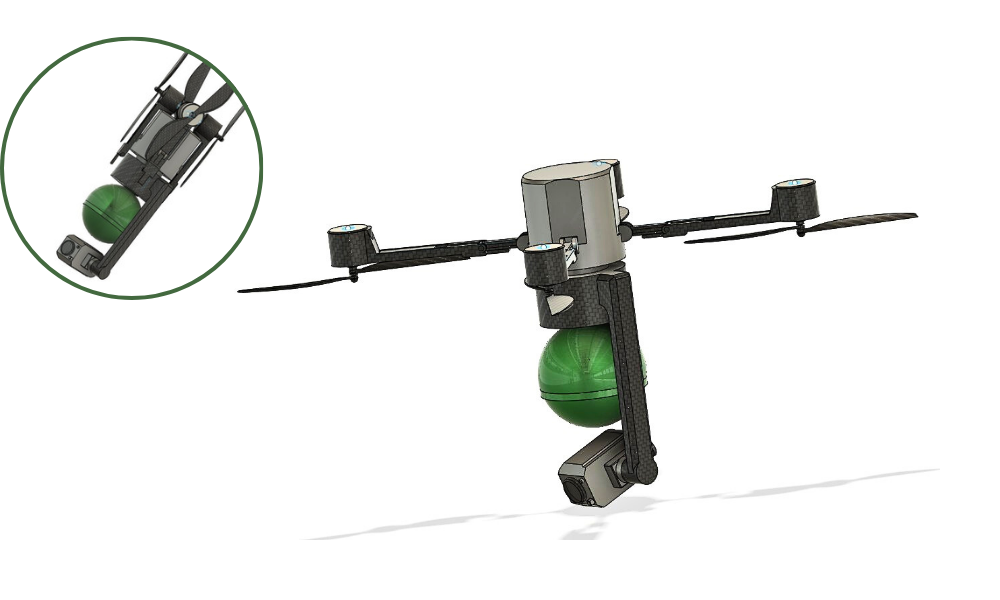
Varghese's Kamikaze drone resembles a capsule, or a smart grenade, featuring distinctive foldable and deployable mechanisms, along with an innovative engagement strategy.

The drone is operable by using small tablets that can be fixed on the arms and such drone's controls being partially automated and standard controls will only pop up if needed or on request.

The drone invented has throw mode or normal lift mode that can be selected before deployment by flicking a switch on the drone, wherein the control tablet will have the live feed from the drone; the drones can be taken out from its tube casings and hooked to the exterior part of the user"s backpack and a user in a 6-team unit can carry about three of these drones with the user.

The weight of the drone with warhead is about 1200g. The condition for lifting i.e. fly of Quadcopter is that the ratio of total thrust of the body to the total weight of the body should be minimum 1.5.

Total Thrust/ Total weight = X/1200 = 1.5 So total thrust X = 1.8 Kg. Thus, the minimum required thrust per motor is equal to 450g.

The foldable arm holds the motor and the propeller unit. Upon the deployment of the drone, on releasing the pin the arm is unfolded and for doing this it uses elastic cables or similar spring mechanisms.

The drone, claims Varghese in one of the patent documents, can be taken out from its tube casings and hooked to the exterior part of the soldier's backpack by giving such a mechanism on the drone, so that he can use them quickly and easily while advancing towards an enemy territory.

Market Reports

Market Report & Surveys
IndianWeb2.com © all rights reserved