Showing posts with label Digital India. Show all posts

India Plans New Law to Keep Big Tech in Check

India Plans New Law to Keep Big Tech in Check

India is weighing a standalone Digital Competition Bill to regulate large technology platforms through ex-ante rules—a proactive shift aimed at curbing anti-competitive behavior before it harms the market. This marks a strategic pivot from case-by-case enforcement under the Competition Act of 2002 to a sector-specific framework targeting dominant digital players.

Status & Intent

  • Paused for Refinement: As of September 2025, the bill is undergoing a fresh market study to recalibrate thresholds and obligations.
  • Standalone Law Favored: The government prefers a new law over amending existing competition statutes.
  • Focus on SSDEs: Targets Systemically Significant Digital Enterprises across app stores, ad tech, search, social media, e-commerce, and OS platforms.

Key Features Under Review

  • Designation Criteria: Moving beyond blunt metrics (e.g., turnover, user base) to qualitative factors like control over bottlenecks, network effects, and incentive structures.
  • Conduct Rules: Includes bans on self-preferencing, anti-steering, bundling, default settings, and mandates for data access and portability.
  • Startup Safeguards: Thresholds are being revised to ensure only dominant platforms are regulated, avoiding unintended burdens on emerging players.

Stakeholder Dynamics

  • Big Tech Pushback: Industry groups call the bill “prescriptive” and “regressive.”
  • Startup Support: Indian startups broadly support the bill but advocate for higher thresholds to avoid overreach.

Comparative Table: India vs. Global Digital Competition Regimes

Feature / Jurisdiction 🇮🇳 India – Digital Competition Bill (Draft) 🇪🇺 EU – Digital Markets Act (DMA) 🇰🇷 South Korea – Online Platform Fairness Act 🇯🇵 Japan – Digital Market Competition Enhancement Act
Legal Structure Standalone ex-ante law (under review) Standalone ex-ante regulation Amendment to existing Fair Trade Act Amendment to Anti-Monopoly Act
Regulator Competition Commission of India (CCI) European Commission Korea Fair Trade Commission (KFTC) Japan Fair Trade Commission (JFTC)
Platform Scope Systemically Significant Digital Enterprises (SSDEs) Gatekeepers (based on size & impact) Large platforms with bargaining power Digital platform operators with significant market power
Designation Criteria Qualitative + Quantitative (under revision) Quantitative thresholds (turnover, users) Bargaining power, transaction volume Market dominance, data control
Key Obligations No self-preferencing, anti-steering, bundling, data portability Similar obligations + interoperability Fair contract terms, transparency Transparency, fair data use, algorithm accountability
Enforcement Style Ex-ante + case-by-case flexibility Strict ex-ante with fixed obligations Ex-ante + ex-post hybrid Ex-post with some ex-ante elements
Penalty Mechanism Fines + behavioral remedies Fines up to 10% of global turnover Fines + corrective orders Fines + improvement orders
Startup Safeguards Thresholds under review to protect startups Exemptions for smaller players Focus on platform–SME fairness Tailored obligations for smaller platforms
Status (as of Sep 2025) Paused for refinement, new market study Fully in force since 2023 Passed, enforcement ongoing Enforced, with annual reviews

Sources: Government briefings, regulatory filings, legal commentary.

NUCFDC–CSC Alliance to Launch Phased Digital Infrastructure for Urban Cooperative Banks

NUCFDC–CSC Alliance to Launch Phased Digital Infrastructure for Urban Cooperative Banks

The National Urban Cooperative Finance and Development Corporation Ltd (NUCFDC), the Umbrella Organisation for India’s Urban Cooperative Banks (UCBs), has signed a Memorandum of Understanding with CSC e-Governance Services India Ltd. (CSC SPV) to fast-track the sector’s digital transformation.

The partnership aims to equip UCBs with secure and compliant digital infrastructure. The rollout will be undertaken in phases, beginning with Aadhaar-based eKYC, eSign, digital signature certificates, DigiLocker integration, e-stamp services, cloud hosting, data centre management, and cybersecurity solutions. Subsequent phases will introduce internet and mobile banking, kiosk-based services, and digital communication platforms.

NUCFDC will facilitate adoption across its member UCBs, while CSC SPV will provide platforms, APIs, and operational support. A joint governance team will oversee implementation and capacity building. The agreement also covers training, compliance support, grievance redressal, and data protection measures, with an emphasis on aligning with applicable regulatory norms to strengthen institutional processes within the UCBs.

The MoU was formally signed in Mumbai in the presence of Shri Prabhat Chaturvedi, CEO, NUCFDC, and Shri Bhagwan Patil, Group President, CSC SPV.

Commenting on the partnership, Shri Prabhat Chaturvedi, CEO, NUCFDC, said, “The Urban Cooperative Banking sector needs to leapfrog into the digital era along with its legacy grassroots character. This partnership equips UCBs with future-ready digital infrastructure, enabling them to serve millions with greater efficiency, transparency, and compliance. At a time when financial inclusion and trust are central to sectoral growth, this collaboration places UCBs firmly on the path of modernisation and resilience.”

Shri Bhagwan Patil, Group President, CSC SPV, said, “CSC SPV’s digital backbone, coupled with NUCFDC’s institutional mandate, creates a powerful Technology platform for transformation of Urban Cooperative Banks (UCBs). Together, we will deliver scalable solutions that strengthen the Cooperative Bank sector and also ensure last-mile citizens experience banking services with the same convenience. This is about reimagining urban cooperative banking for a digital India.”

About The National Urban Cooperative Finance and Development Corporation (NUCFDC)

The National Urban Cooperative Finance and Development Corporation Ltd. (NUCFDC) serves as the umbrella organization for India’s Urban Cooperative Banking (UCB) sector. Constituted with the support of the Ministry of Cooperation and in consultation with the Reserve Bank of India, NUCFDC has been mandated to explore avenues for capital mobilisation and enhance the professionalisation of the sector. It also aims to strengthen public confidence in UCBs by fostering a unified, resilient, and transparent banking framework.

About The CSC e-Governance Services India Ltd. (CSC SPV)

CSC SPV is a Special Purpose Vehicle incorporated as a Company under Companies Act to implement CSC Scheme and monitor Common Service Centers (CSC) incorporated under CSC Scheme and enables a range of services to be delivered through CSCs like Government to Citizen (G2C), Business to Customers (B2C), Business to Business (B2B). Education, Skills and other services to rural citizens. Also, it provides services for e-sign, e-KYC, Digilocker, Data Centre and other services.

India Calls on Cisco to Boost Digital Infrastructure, AI, and 6G Collaboration

India Calls on Cisco to Boost Digital Infrastructure, AI, and 6G Collaboration

Union Minister Jyotiraditya Scindia has urged Cisco to significantly expand its presence in India’s rapidly growing digital ecosystem, emphasizing the country’s pivotal role in shaping the global tech future.
  • Participants: Scindia met with Cisco CEO Chuck Robbins and his leadership team in New Delhi.
  • Focus Areas:
    • Artificial Intelligence (AI) and 6G development
    • Cybersecurity enhancement
    • Inclusive digital growth, especially in Tier 2 and Tier 3 cities
    • Grassroots innovation to uplift the common man
  • Strategic Vision: Scindia emphasized India’s emergence as a global innovation hub and invited Cisco to co-create solutions that empower communities and prepare future generations.

Cisco’s Growing India Footprint

  • Cisco inaugurated its first manufacturing facility in Chennai in 2024, in partnership with Indian contract manufacturer Flex.
  • The facility is expected to:
    • Generate $1.3 billion annually through exports and domestic production
    • Create 1,200 jobs
    • Produce advanced telecom equipment, contributing to India’s “AtmanirbharBharat” (self-reliant India) in tech

Broader Implications

Scindia’s outreach reflects India’s ambition to:
  • Lead in next-gen technologies like 6G
  • Build a secure, inclusive, and future-ready digital Bharat
  • Attract global tech giants to invest deeper in its digital infrastructure and innovation ecosystem.

Blackstone To Invest $11 Billion In Data Centres In India

Blackstone To Invest $11 Billion In Data Centres In India

Blackstone Inc. is making a significant move by investing $11 billion in data centres across India. This investment aims to tap into the growing demand for artificial intelligence and cloud computing services. Stephen Schwarzman, Blackstone's CEO, emphasized the importance of this investment in meeting the accelerating growth of AI.

This move aligns with India's increasing focus on digital infrastructure and the rapid advancements in AI and cloud computing. It's an exciting development that could have substantial implications for the tech landscape in India.

Blackstone's $11 billion investment in data centres in India will primarily focus on the Mumbai Metropolitan Region (MMR). This includes partnerships with the Maharashtra Industrial Development Corporation (MIDC) and the City & Industrial Development Corporation of Maharashtra (CIDCO) to develop advanced data centres. The investment is part of a broader initiative to enhance digital infrastructure and support the growing demand for AI and cloud computing services.

Approximately $5 billion will be allocated to the Mumbai 3.0 project, which aims to develop the Karnala-Sai-Chirner New Town (KSC New Town). This project will expand Mumbai's capacity with new infrastructure, residential, and commercial spaces.

$6 billion will be invested in data centres and other infrastructure across the MMR. Blackstone, in partnership with Panchshil Realty, will develop these data centres under the Lumina CloudInfra brand.

This significant investment aligns with India's increasing focus on digital infrastructure and the rapid advancements in AI and cloud computing. It's an exciting development that could have substantial implications for the tech landscape in India.

MeitY Unveils ‘Entity Locker’, A Cloud-based Business Document Management Infrastructure

MeitY Unveils ‘Entity Locker’, A Cloud-based Business Document Management Infrastructure

The Entity Locker is a new digital public infrastructure developed by the Ministry of Electronics and Information Technology (MeitY) through its National eGovernance Division (NeGD). It's designed to streamline the management, verification, and storage of business documents.

Entity Locker is a secure, cloud-based solution that simplifies the storage, sharing, and verification of documents for a wide range of entities, including large organisations, corporations, micro, small, and medium Enterprises (MSMEs), trusts, startups and societies.
  1. Real-time Access: Integrates with government databases to provide real-time document verification.
  2. Consent-based Sharing: Allows secure sharing of documents with the user's consent.
  3. Role-based Access: Implements Aadhaar-authenticated access to ensure accountability.
  4. 10 GB Encrypted Cloud Storage: Provides secure storage for business documents.
  5. Legally Valid Digital Signatures: Ensures documents are properly authenticated
The platform aims to minimize administrative overhead, speed up processing times, and enhance operational efficiency for businesses. It also supports compliance with regulatory and reporting requirements and integrates with systems like the Ministry of Corporate Affairs, GST Network, and Directorate General of Foreign Trade.

The Entity Locker offers numerous benefits across various industries by simplifying and securing business document management. Here’s how it can be particularly beneficial:

For Startups and Small Businesses:

Streamlined Compliance: Easily manage and submit necessary documents for various registrations and compliance requirements.

Document Security: Store critical business documents securely with encryption and control who has access to them.

Efficiency: Reduce the administrative burden of handling physical documents, leading to faster processing times.

For Large Corporations:

Centralized Repository: Maintain a central repository for all business documents, accessible to authorized personnel only.

Audit Trail: Keep a detailed log of document access and modifications to enhance accountability and transparency.

Scalable Solutions: Handle large volumes of documents efficiently with scalable cloud storage.

For Financial Institutions:

Verification: Quickly verify documents for loan applications, opening bank accounts, and other financial transactions.

Risk Management: Reduce the risk of fraud by ensuring documents are authenticated and legally valid.

Customer Convenience: Improve customer experience by enabling seamless document submission and verification.

For Government Agencies:

Inter-agency Collaboration: Facilitate the sharing of verified documents across different government departments and agencies.

Reduced Paperwork: Minimize the need for physical document submission, making processes more efficient and eco-friendly.

Transparency: Enhance transparency in administrative processes by maintaining a reliable digital record of documents.

For Healthcare Providers:

Patient Records: Securely store and manage patient consent forms, insurance documents, and other essential records.

Compliance: Ensure compliance with regulatory requirements for document handling and storage.

Operational Efficiency: Streamline administrative tasks and improve overall operational efficiency.

By leveraging the capabilities of the Entity Locker, businesses and organizations can achieve better document management, enhanced security, and improved operational efficiency.

Senior officials from MeitY emphasise that Entity Locker is more than just a technological innovation. It is a strategic initiative designed to reduce administrative friction, catalyse productivity, and unlock new opportunities for businesses. The platform reflects the government’s commitment to creating a digitally empowered and efficient business environment.

Google, NCERT Partner for Dedicated Youtube Channels for Students in 29 Languages

Google, NCERT Partner for Dedicated Youtube Channels for Students in 29 Languages

Technology giant Google has partnered with the India's National Council of Educational Research and Training (NCERT) to launch dedicated YouTube channels for students from grades 1 to 12.

These channels will offer educational content in 29 Indian languages, including Indian Sign Language. This initiative aims to make high-quality education more accessible and inclusive for students across India.

Additionally, Google is collaborating with the National Programme on Technology Enhanced Learning (NPTEL) to offer certified courses on YouTube. These courses, backed by India's prestigious IITs, cover a wide range of subjects and allow learners to earn certifications through the NPTEL-SWAYAM portal.

Key Highlights:
  • Content: The channels will offer curriculum-based educational content for students from grades 1 to 121. This includes subjects like sciences, literature, sports psychology, and even rocket propulsion.
  • Languages: Content will be available in 29 Indian languages, including Indian Sign Language, ensuring that students from diverse linguistic backgrounds can benefit.
  • Certifications: Google is also collaborating with the National Programme on Technology Enhanced Learning (NPTEL) to offer certified courses. Learners who complete these courses can earn certifications through the NPTEL-SWAYAM portal.
  • AI Integration: Google is leveraging AI to enhance the learning experience. AI tools will identify key concepts in videos and provide definitions, images, and additional context from Google’s Knowledge Graph.
This initiative aims to break barriers to learning and provide high-quality educational resources to millions of students across India.

Modi Govt's Extensive Digitization Drive Elimininates 5.8 Crore Fake Ration Cards Through e-KYC

Digital Verification Enables Eliminination of of 5.8 Crore Fake Ration Cards Through e-KYC


Prime Minister Narendra Modi -led Indian government's extensive digitization drive has successfully eliminated 5.8 crore (58 million) fake ration cards through Aadhaar-based authentication and e-KYC verification. This initiative is part of the broader effort to reform the Public Distribution System (PDS), which serves 80.6 crore beneficiaries.

The digitization efforts have significantly reduced leakages and ensured that food grains reach the intended beneficiaries.

The One Nation One Ration Card scheme allows beneficiaries to access their rations anywhere in India using their existing cards.

The government has deployed 5.33 lakh electronic Point of Sale (e-PoS) devices at fair price shops to facilitate Aadhaar-based verification during distribution.

The Union Food Ministry said that almost all of the 20.4 crore ration cards have been digitalized, with 98.7% of beneficiaries’ credentials being validated through biometric identification and 99.8% being connected to Aadhaar.

This digital transformation has set a global benchmark for state-sponsored food security initiatives, ensuring targeted delivery to genuine beneficiaries while eliminating ghost cards and fake entries from the system.

AWS and Nandan Nilekani's EkStep Establish Joint Innovation Center To Create Digital Public Goods Infrastructure

AWS and Nandan Nilekani's EkStep Establish Joint Innovation Center To Create Digital Public Goods, Infrastructure

Amazon Web Services (AWS) India Private Limited and EkStep Foundation, a philanthropic initiative founded by Nandan Nilekani, Rohini Nilekani, and Shankar Maruwada, have established a Joint Innovation Center (JIC) to foster and accelerate the creation of digital public goods and digital public infrastructures. This collaboration aims to support public sector and commercial entities in developing digital solutions for large-scale use and help governments build socially and digitally inclusive economies.

The JIC will focus on sectors such as education, agriculture, finance, healthcare, and climate change, and it will leverage technologies like cloud computing, generative AI, and analytics from AWS. The initiative is part of a broader vision to use technology to create a more equitable and inclusive society.

According to the Nasscom-Arthur D. Little report Digital Public Infrastructure of India – Accelerating India’s Digital Inclusion, the economic value addition from DPIs to India’s GDP has the potential to grow 3x – from 0.9% in 2022 to 2.9 – 4.2% by 2030. The JIC by AWS and EkStep will be a mechanism to bring together key stakeholders who are committed to driving digital cooperation for a more equitable and sustainable world. These stakeholders include owners and developers of DPGs/ DPIs; enablers like startups, independent software vendors (ISVs), and system integrators (SIs); and adopters/ implementers like governments, multilateral organisations, and private sector entities. The JIC will promote collaboration among these stakeholders to develop DPGs and DPIs for sectors such as education, agriculture, finance, healthcare, and climate change, and help accelerate societal transformation.

The JIC will focus on supporting startups, ISVs, and SIs to leverage the power of technologies such as cloud computing, generative artificial intelligence (AI), and analytics from AWS; help them imagine and invent new use cases for DPGs and DPIs, incubate them, and enhance existing ones; and offer comprehensive starter kits for states and countries interested in such solutions.

To enable ease-of-use and faster adoption, the DPGs and DPIs will be packaged for one-click deployment via the AWS Partner Network (APN), which features more than 130,000 partners from more than 200 countries. AWS will explore featuring the DPGs on AWS Marketplace, providing a global channel to showcase and distribute the solutions.

AWS will further explore featuring the DPGs and DPIs on the Open Government Solutions Catalog, which provides government organisations with valuable resources such as digital solutions, policies, and standards, enabling them to explore and reuse proven approaches to digital transformation.

Governments and organisations serving the public at large are increasingly seeing how DPIs using cloud computing and open-source solutions can provide scalable, secure, agile, and efficient services to people, accelerating public service transformation programs”, said Shalini Kapoor, Director and Chief Technologist, AWS India Private Limited. “Building newer DPGs and DPIs requires collective focus from stakeholders on solving problems of scale, and we are pleased to have EkStep’s visionary thinking and commitment in this initiative. The two organisations share a belief that technology should cut across barriers and enable the creation of a more equitable and inclusive society.”

EkStep Foundation, a philanthropic initiative founded by Nandan Nilekani, Rohini Nilekani, and Shankar Maruwada, aims to utilise technology to build population scale public goods, empower communities, and orchestrate sharing of resources, enabling civil society, governments, and the private sector to make meaningful decisions for societal benefits.

A prime example of this approach is EkStep’s Sunbird, an open-source, modular, and configurable digital infrastructure that can help organisations scale the delivery of resources to users. Sunbird can be applied for a variety of applications such as capacity building and professional development in education, and credentialing, accreditation, and capturing health records in healthcare. It can be used to record crop quality, standards, soil quality, and inventory, in agriculture; supporting financial inclusion by capturing people’s income certificates and credit worthiness; and driving climate-positive actions by recording carbon credits and sustainability scores for products and organisations.

“EkStep is committed to accelerating inclusive innovation that can address profound challenges and drive positive change on a national level,” said Shankar Maruwada, Co-founder and CEO, EkStep Foundation. “The establishment of a Joint Innovation Center with AWS marks a significant leap towards the adoption and scaling of India's Digital Public Infrastructure with the extensive reach and expertise of AWS’s Partner Network. It truly takes a collaborative effort to come together with deep conviction to build and implement digital solutions at population-scale, especially in the era of AI . We look forward to delivering on this vision by building on AWS’s proven global abilities of scale, resilience, and security, and the innovation community.”

The JIC further propels the scope for innovation and driving scalable impact from India, where a wide range of open-source based digital solutions have been pioneered to benefit citizens at scale. Examples include Modular Open Source Identity Platform (MOSIP), a global DPG developed for issuing trusted foundational identifications, currently at different stages of adoption in 17 countries serving more than 110 million people, where MOSIP’s development and pilot environments use AWS for rapid deployment and scale.

Another example is Namma Yatri, a popular autorickshaw booking application built on the Beckn protocol, which enables the creation of open, peer-to-peer decentralized networks for pan-sector economic transactions. Namma Yatri is committed to the vision of open mobility; building on AWS has helped Namma Yatri to scale the application to serve 5 million commuters across eight cities in six months, and generate INR 4.5 billion as commission-free earnings to drivers.

Deepfake: Minister Held Digital India Dialogues with Digital Intermediaries on Deep Fakes, IT Rules Compliance

Deepfakes: Minister Held Digital India Dialogues with Digital Intermediaries on Deep Fakes, IT Rules Compliance

Platforms and Intermediaries Commit to Tackling Deepfakes Under Existing Laws

“Platforms have agreed that within the next 7 days, they will ensure that all terms and contracts with users expressly forbid them from engaging in the 11 types of content laid out in the IT rules”: MoS Rajeev Chandrasekhar

“MEITY has confirmed the imminent appointment of a ‘Rule 7’ officer and a digital platform for users to report any violations by intermediaries”: MoS Rajeev Chandrasekhar 

In a Digital India dialogue session held on Friday, Union Minister of State for Skill Development & Entrepreneurship and Electronics & IT, Shri Rajeev Chandrasekhar, reiterated the need for safe and trusted internet, and for social media intermediaries to be accountable to Digital Nagriks. Following Prime Minister Shri Narendra Modi’s concerns about deepfake threats, all platforms and intermediaries agree to align their community guidelines with the IT rules, specifically targeting 11 types of content that causes user harm including Deepfakes.

Addressing the media after the session, the Minister affirmed the collective commitment of platforms and intermediaries to confront deepfake challenges within the bounds of current regulations.

The Minister said, “All platforms and intermediaries have agreed that the current laws and rules even as we discuss new laws and regulations, they provide for them to deal with deepfakes conclusively. They have agreed that in the next seven days they will ensure all the terms and views and contracts with users will expressly forbid users from 11 types of content laid out in IT rules. The Hon’ble Prime Minister Narendra Modi ji had already highlighted the issue of deepfakes and the threats and challenges that it represents to a safe and trusted internet last year. MEITY has conveyed that there will be an imminent appointment of a rule seven officer shortly and a digital platform for digital nagriks to report violations of law by intermediaries. Digital nagriks have rights to a safe and trusted internet and intermediaries are accountable for providing the same."

Acknowledging the progress in grievance redressal mechanisms, Minister Rajeev Chandrasekhar urged continued collaboration with intermediaries to address challenges such as deepfakes and misinformation.

We have in partnership, the government and platforms done considerably well in terms of addressing grievances. I must congratulate intermediaries for proactively doing this. However, there is more to be done, especially in the areas of misinformation, deepfakes and advertising of betting illegal betting platforms and advertising of fraudulent loan apps. These continue to be threats to safety and trust online,” the Minister further added.

NSDC Partners HCLTech to Transform Job Markets from Qualification-based to Skill-based Hiring

NSDC Partners HCLTech to Transform Job Markets from Qualification-based to Skill-based Hiring

Aligned with the vision of the Hon’ble Prime Minister, Shri Narendra Modi, to empower India’s youth through digital technology and Artificial Intelligence (AI), the National Skill Development Corporation (NSDC) has entered into a partnership with HCLTech to bridge the skills gap, particularly in the tech and engineering sectors. Under this collaboration, both the organizations will work together to promote the adoption of technology among learners from diverse backgrounds and explore new global markets and business opportunities.

The agreement was exchanged by Ved Mani Tiwari, CEO, NSDC and C Vijayakumar, CEO & Managing Director, HCLTech. This partnership comes shortly after the recent G20's Digital Economy Working Group (DEWG) meeting, which achieved consensus on deliverables in three discussion areas: Digital Skilling, Digital Economy, and Digital Public Infrastructure.

This strategic partnership will enable NSDC and HCLTech to jointly transform the assessment landscape and digital learning by introducing digital assessments in tech and non-tech-based courses (B2B & B2C). There is also scope for collaborating on the creation of new products and programs to enhance talent with flexibility and scale. Additionally, to ensure that every Indian has access to quality training, the focus will be on enhancing the impact of learning by jointly developing and offering industry-relevant resources and tools. Under the partnership, the vision to add new dimension in assessment for setting standards in digital learning indicates the keenness of both the organizations to provide a regular check in learning and augment access to technology.

Praising this initiative, Ved Mani Tiwari, CEO, NSDC, said, “NSDC and HCLTech are entering into this partnership with a commitment to enhance the trust in job markets. Both organizations will jointly develop an assessment platform where students and working professionals can get themselves assessed and certified for skills in demand. This is a significant step towards moving from qualification-based hiring to skill-based hiring. Both parties will also collaborate to offer reskilling, upskilling online courses to prepare for opportunities in a dynamic job market.”

It is estimated that the assessments market is expected to grow to $10B+ by 2027. North America accounted for the largest (~40%) revenue share in 2021. Europe plays a significant role in international employability and rate of employment, hence contributing to the growing share in assessment services market. APAC market is expected to register the fastest revenue growth during the forecast period

As part of the agreement, NSDC and HCLTech will jointly leverage each other’s technical and domain expertise in the Assessment platform, Assessment & hiring test (both tech and non-tech), Smart labs (coding and data science), Learning programs, Faculty development & certification programs, and Advisory services for government and institutions.

Besides, both parties will also collaborate in creating joint IPs for digitalizing and digitizing assessments, covering the wider landscape of skilling as well as educational ecosystem and engage in advisory services and positioning tech solutions.

Commenting on the occasion, Srimathi Shivashankar, Corporate Vice President and Global Head, EdTech Business, HCLTech, said, “We are delighted to join forces with NSDC to leverage digital technologies to build a future-ready talent ecosystem for India and the rest of the world. I am confident that HCLTech’s proven Career Shaper learning and assessments platforms and NSDC experience in talent and nation building can make a significant impact in how technology can be smartly used for skilling.”

Under its EdTech Business, HCLTech leverages its vast experience to assist governments, enterprises and educational institutions in establishing technology and talent skill academies through its Career Shaper learning and assessment platforms.

NSDC, operating under the aegis of the Ministry of Skill Development and Entrepreneurship, is actively advancing digital skills for India's youth by integrating technology into skill development. Online learning platforms and digital resources have been introduced, making training materials more accessible and adaptable to changing industry trends.

NSDC's digital learning initiatives collaborate with Indian and global partners, offering access to over 1.4 lakh minutes of multi lingual digital content in various sectors.This extensive resource pool equips learners with the necessary digital skills for today's rapidly transforming world. Furthermore, NSDC's partnerships with industry leaders have resulted in industry-specific skill development programs, aligning training with industry needs and improving the quality of training while enhancing employment prospects for candidates. These collaborations bridge the gap between education and employment in the digital age, promoting India's digital skills revolution.

The recently launched Skill India Digital (SID) is one such platform that will play a pivotal role in transforming India into a thriving digital economy. This initiative coincides with the global consensus on Digital Public Infrastructures (DPI) during India's G20 presidency. The platform will also prepare the younger generation for international job opportunities, aligning with the vision of the Hon’ble Prime Minister, Shri Narendra Modi, to make India a global skill hub.

Giving boost to Indian Government Skill India Mission, NSDC, a nodal skill development agency, working under the Ministry of Skill Development & Entrepreneurship (MSDE), Government of India, is a unique Public Private Partnership (PPP) that aims to catalyze the creation of a large and quality vocational training ecosystem in India. Since inception, NSDC has trained over three crore people in different sectors through its collaboration with training partners pan India. NSDC has established 37 Sector Skill Councils (SSCs) and implements the Government’s flagship skill development schemes such as Pradhan Mantri Kaushal Vikas Yojana (PMKVY), National Apprenticeship Promotion Scheme (NAPS), among others. NSDC also funds enterprises, companies and organizations that provide skill training. The organization enables private-sector capacity building in skill development by offering concessional loans, other innovative financial products, and strategic partnerships. For more information, please visit at https://nsdcindia.org

HCLTech is a global technology company, home to more than 221,000 people across 60 countries, delivering industry-leading capabilities centered around digital, engineering, cloud and AI, powered by a broad portfolio of technology services and products. We work with clients across all major verticals, providing industry solutions for Financial Services, Manufacturing, Life Sciences and Healthcare, Technology and Services, Telecom and Media, Retail and CPG, and Public Services. Consolidated revenues as of 12 months ending September 2023 totaled $12.9 billion. To learn how we can supercharge progress for you, visit hcltech.com.


Smart City Indore with Pataa App is Now India's 1st Digital Address City with Over 5 Lakh Digital Addresses

Smart City Indore with Pataa App is Now India's 1st Digital Address City with Over 5 Lakh Digital Addresses
Pataa created over 5 lakh digital addresses in Indore in just 4 months, with over 7 million downloads pan-India.

Pataa, an Indore-based digital addressing platform, has recently announced Smart City Indore as India's First Digital Address City with over 5 lac Pataa digital addresses in association with Smart City Council and IMC Indore. This official declaration was made in the presence of Shankar Lalwani, Member of Parliament, Dr. Nishant Khare, Usha, Smart City CEO Divyank Singh IAS, and IDA CEO Jaypal Singh Chawda at the "Indore Gaurav Diwas" event. All government entities in Indore, emergency services including police, and necessary services like E-KYC and banking geotagging will now use the Pataa app.

Smart City Indore with Pataa App is Now India's 1st Digital Address City with Over 5 Lakh Digital Addresses

Smart City Indore with Pataa App is Now India's 1st Digital Address City with Over 5 Lakh Digital Addresses

Finding an address in India is challenging since a pincode only covers an average area of 179 sq km. In order to resolve the nation's addressing challenge and address the country's addressing issue, Pataa and the Indore administration signed a memorandum of understanding (MOU) in October 2022, and Indore now officially becomes the first digital address city in India. Now, all government organizations and Indore 311 emergency services, including the police, fire department, and ambulance, will use the Pataa application.

In attendance at the event, Mr. Shankar Lalwani, an esteemed Member of Parliament, expressed. "It is a proud occasion that Indore has reached over 5 lakh digital addresses. Accordingly, Indore is creating history by becoming the first digitally addressed city in India. Every year, almost 75,000 crore is spent owing to the problem of unstructured addressing systems, which is a huge loss to the country. Rajat and his team chose our capital since Indore is a city that accomplishes its goals by putting them into action. Furthermore, we appreciate Rajat and his team for making Indore stand out all across the country. There is no doubt in my mind that following Madhya Pradesh's lead, Pataa will continue to be at the forefront of the nation's digital transition."

Expressing his gratitude to the Indian government and Pataa’s team, Mr. Rajat Jain, the co-founder of Pataa, stated, "Four months ago, we embarked on this initiative with Smart City and Madhya Pradesh to establish Indore as the first digital address city in the country. Today, we proudly announce that Indore has successfully achieved this milestone and stands as India's premier digital address city. Every institution, including emergency services and fire stations, can now be linked to the app. I would like to express my heartfelt gratitude to our honorable Prime Minister, Shri Narendra Modi, and Minister of IT, Mr. Ashwini Vaishnav, who came up with the mandate to strengthen India, which has resulted in 5 lac Pataa addresses.

With Pataa, we are overcoming our nation's major challenge of unstructured addressing. Pataa is bringing out new digital solutions for the country in stages as it transitions to digital addressing. Residents will be able to easily locate their homes and businesses, and emergency services will be able to respond more promptly and efficiently. The method will also increase the accuracy of mail and package delivery, lowering the frequency of lost or misdelivered items." Mr. Jain added. 

With the address app, one can drop a pin on one's door with an accuracy of up to 3 meters, change your long address into a short personal code like ^JAIN73, ^KUMAR100, or ^SINGH221, and share it without any hassle. Also, the service providers will benefit from Pataa’s unique offerings like short codes, recorded voice directions, photos, extensions, etc. By saving the logistics and delivery companies from driving around in circles, the Pataa app helps them save on fuel costs and also allows them to make better use of their time.

About Pataa Navigations Pvt. Ltd.:

Pataa is a digital addressing system that creates a short code for your address and location like ^KUMAR100 by converting the long address into a personalized short code. It allows users to select a 3 x 3 meter block on the digital map to mark the exact doorstep just once. The platform aims to address unstructured addressing systems in India to solve last-mile delivery issues for people living in smaller cities and neighborhoods where tiny lanes and streets are still nameless, and delivery agents spend hours trying to locate the drop-off spots.


Govt of India, MeitY Organizes 2-Day Event on Universal Acceptance Day to Promote Multilingual Internet for Digital Inclusion in India

  • Government of India, Ministry of Electronics and Information Technology (MeitY) organizes two-day event on Universal Acceptance Day to promote multilingual internet for digital inclusion in India
  • India was the flag bearer this year to promote and promulgate Universal Acceptance for digital inclusion.
  • Being celebrated globally, this inaugural UA Day was aimed at driving efforts for inclusive and multilingual internet.
  • Adoption of UA in India can add another 500 million broadband users to add value to the digital economy, promote startup ecosystems and generate employment opportunities.
  • Next 1 billion internet users are likely to come from non-English speaking countries, heightening the importance of multilingual internet, noted experts.
National Internet Exchange of India (NIXI), a non-for-profit company, under the aegis of the MeitY, successfully organized a 2-day event (27-28th March) on Universal Acceptance Day to drive collaborative efforts for an inclusive and multilingual internet in India.

Govt of India, MeitY Organizes 2-Day Event on Universal Acceptance Day to Promote Multilingual Internet for Digital Inclusion in India

Elaborating on the importance of Universal Acceptance, Bhuvnesh Kumar, IAS, Additional Secretary, MeitY said, "India is home to more than 18,000 dialects. As we move from one city to another, pronunciation and ways of speaking change completely. The country has the most internet users but it must be noted that language barriers also make it a base of the largest numbers of non-users who do not speak English. It is very important that we not just provide internet services but also create emails and websites in native languages. Providing a multilingual internet user interface is crucial for bridging the current digital divide. Through Universal Acceptance, we can connect with non-internet users and promote digital inclusion across the country and the world.”

Various experts who engaged in thought-provoking sessions during the event noted that the next 1 billion internet users are likely to come from non-English speaking countries, heightening the need towards achieving a multilingual internet to make it accessible for all. Additionally, adoption of UA in India can add another 500 million broadband users which can add value to the digital economy, promote startup ecosystems and generate employment opportunities in the country.

Addressing a session during the event , Tripti Sinha, ICANN Board Chair said," The Internet is a powerful tool for equalizing access to information, but its full potential cannot be realized until it becomes multilingual. It is also important to include multiple genders in this initiative."

In her address during a session, Sally Costerton, Interim President and CEO, ICANN, said "The Indian government can lead the way in promoting multilingual internet systems, similar to their efforts in the financial sector with Unicode. This move will enable more people to access the internet in their native languages, making it easier for them to communicate and access information. It is also important to have top-level domain names in local languages and scripts and ensure that the multilingual systems are safe and secure to use."

India, which is fast-turning into a digital economy, has been chosen as the flag bearer this year to promote and promulgate Universal Acceptance for digital inclusion. The event was a serious effort to initiate thought-provoking, meaningful and result-oriented dialogues to raise awareness, break the language barriers and make the internet accessible to a larger population and bring every citizen in the ambit of economic progress.

Dr Ajay Data, UASG Chair said, "I am very thankful of NIXI, MeitY and ICANN to support and make UA Day a reality in 42 countries.UA is a solution to multilingual issues. It ensures that all valid domain names and email addresses can be used equally by all internet-enabled applications, devices, and systems, regardless of script, language, or character length. This is a significant step towards creating a more inclusive internet that caters to the needs of all users."

This is an important moment in Indian history, because we want to lead conversations on Universal Acceptance. India is the perfect example of diversity & I can't think of a better nation to lead the dialogue on Acceptance, inclusivity & bridging the digital divide. Internet needs to be made inclusive to enable women to get online, use digital tools & services, and contribute to the global economy. UA is the 1st step towards a safe, secure & accessible Internet. UA is going to be about bringing the next billion users online and there will be three things that will be essential in bring and then keeping them online: acesss to devices and data at affordable rates, local language content, and capacity building through digital and cyber literacy” Said Dr Subi Chaturvedi, Global SVP & Chief Corporate Affairs & Public Policy Officer, InMobi speaking at the inaugural panel of global UA day.

The country is home to the most internet users in the world however, it also houses a large-base of non-users who do not speak English. Acknowledging the high importance and urgent need of inclusive internet, the event hosted policy and decision makers, government officials, thought-leaders, industry experts from India and across the globe who deliberated on building multilingual internet, including emails and websites in native languages to bridge digital divide, connect non-internet users and promote digital inclusion.

The first-of-its-kind initiative registered the participation of dignitaries including Bhuvnesh Kumar- IAS, Additional Secretary, MeitY, Abhishek Singh- President & CEO- NeGD, MeitY, Edmon Chung- Board Director, ICANN, Ajay Data - Chair UASG,Tripti Sinha- ICANN Board Chair, Sally Costerton- CEO, ICANN, Jia-Rong Low- Vice President & MD, APAC, ICANN, Anil Kumar Jain- CEO, NIXI, Asha Nangia- Scientist G (MeitY), T Santhosh- Scientist ‘E’, Internet Governance Division, MeitY, Nitin Wali - Senior Director of Stakeholder Engagement, ICANN, and others who shared their views with students, developers, researchers, content creators, participants and guests.

It hosted engaging sessions and workshops on relevant and important topics such as “Socio-Economic aspects of UA and Multilingual Internet and its impact on public policy’, ‘Technology enablement for universal acceptance - challenges and mitigation’, ‘Introduction to Universal Acceptance (UA),’ ‘Making your website Universal Acceptance ready: Way Forward’, ‘Universal Acceptance work in India’, ‘Importance of UA for multi-cultural society in India,’ and others.

Universal Acceptance means building a technical environment to allow computing devices, operating systems, browsers, social media or e-commerce to accept instructions in local language other than English and ensure valid domain names and email addresses, regardless of script, language or character length. India has set a target of becoming a USD 1 trillion digital economy soon and it is important for the country to widen the cover of digital inclusion with UA.

Achieving it can ensure every Indian has the ability to experience the full social and economic power of the internet by choosing domain name and email address in any language that best aligns with their interests, business, culture, language, and script.

Celebrated globally on 28th March, this inaugural UA Day was organized by UASG and ICANN and it successfully engaged and mobilized top technical and language communities, companies, governments and DNS industry stakeholders to better understand the benefits of UA and how they can make their systems UA-ready. It was reported that more than 40 countries participated in celebrating 1st Global UA day.

About ICANN

ICANN's mission is to help ensure a stable, secure, and unified global Internet. To reach another person on the Internet, you need to type an address – a name or a number – into your computer or other device. That address must be unique so computers know where to find each other. ICANN helps coordinate and support these unique identifiers across the world. ICANN was formed in 1998 as a non-profit public benefit corporation with a community of participants from all over the world. For more information please visit: https://www.icann.org/

About NIXI

NIXI is a not-for-profit organization under section 8 of the Companies Act 2013, and was registered on 19th June, 2003. NIXI was set up for peering of ISPs among themselves for the purpose of routing the domestic traffic within the country, instead of taking it all the way to US/Abroad, thereby resulting in better quality of service (reduced latency) and reduced bandwidth charges for ISPs by saving on International Bandwidth. NIXI is managed and operated on a Neutral basis, in line with the best practices for such initiatives globally. .IN is India’s Country Code Top Level domain (ccTLD). The Govt. of India delegated the operations of INRegistry to NIXI in 2004. The .INRegistry operates and manages India’s .IN ccTLD. To know more about NIXI and its other business units please visit: www.nixi.in

About the UASG

The UASG is a community-led initiative that was formed in 2015 and funded by ICANN. It consists of representatives from more than 120 companies, governments, and community groups. The UASG works to raise awareness of the importance of UA globally, provide free resources to organizations to help them become UA-ready and measure the progress of UA adoption. To learn more, visit https://uasg.tech/

ONDC Platform Can Be A Game Changer for Many Small Businesses in India: Jayesh Ranjan

ONDC Platform Can Be A Game Changer for Many Small Businesses in India: Jayesh Ranjan
E-retail penetration is only 4.3% in India; well below China (25%), South Korea (26%), and the UK (23%): Shireesh Joshi, Business Officer, ONDC

ONDC Is the first of its kind in the world and there is no parallel to it: ONDC Official

ONDC is an answer when people cannot do physical commerce: Experts

ONDC can shape the future of not just Indian but global e-commerce space: T. Koshy, CEO of ONDC

A session on How ONDC (Open Network for Digital Commerce) will be a game changer for your business held on Tuesday at FTCCI, Red Hills, Hyderabad.

ONDC is an open network for Digital Commerce and is a Govt of India initiative. It can be the next big revolution in Digital Commerce in India.

It is the first of its kind in the world and there is no parallel to it, said Shireesh Joshi, Chief Business Officer, ONDC.

ONDC is the response to a situation if people are confined to homes, like in the last pandemic times and could not do physical commerce, said Shireesh.

Khyati, Shireesh, Koshy and Jayesh Ranjan at the opening of the seminar on INDC

Seen participants in the seminar  HOW ONDC WILL BE A GAME CHANGER FOR YOUR BUSINESS held in FTCCI
Seen participants in the seminar  HOW ONDC WILL BE A GAME CHANGER FOR YOUR BUSINESS held in FTCCI

E-retail penetration is only 4.3% in India; well below China (25%), South Korea (26%), and the UK (23%). There is a huge growth potential he observed.

India has 1.2 crore Kirana shops, but just 15000 are e-commerce enabled, which is 0.125%.

We are working towards enabling population-scale inclusion of merchants and buyers. Increasing the Gross Merchandise Value (GMV) of digital transactions. Expanding the coverage of retailers using digital commerce Expanding the share of Indians using eCommerce to buy online Amplifying the geographic coverage of every domain via eCommerce, shared Mr Shireesh.

Anil Agarwal, President of FTCCI seen welcoming T Koshy, CEO of ONDC

Many industry insiders viewed it as Amazon, and Flipkart's killer when our Prime Minister Mr Modi launched it a year ago. It is like a Unified Payments Interface (UPI) , an instant real-time payment system developed by the National Payments Corporation of India (NPCI) which has revolutionized digital transactions and many countries are trying to replicate this model. The next big thing on the making similar to that is ONDC observed speakers while interacting informally.

Open Network for Digital Commerce, is a private non-profit Section 8 company established by the Department for Promotion of Industry and Internal Trade (DPIIT) of the Government of India to develop open e-commerce.

The Seminar was jointly organised by FTCCI, Govt of Telangana, Globallinker, and ONDC.

Addressing the 250-plus gathering Jayesh Ranjana said there are many national examples of the success of ONDC, which include Kancheepuram sarees onboarded. Kerala state is fully supportive of online stores.

Telangana State GlobalLinker started early even before ONDC started. Now 12000 MSMEs are part of Globallinker, Mr. Rajan shared.

Telangana State GlobalLinker is one of the early ONDC-compliant platforms. Any business owner can join the GlobalLinker network, create an online store in under 10 minutes and link their catalogue to the ONDC network. This is done in collaboration with the Government of Telangana said Malavika Jaggi, Director, GlobalLinker

GlobalLinker' is a Business Enablement Platform powering the growth of SMEs. It enables SMEs to 'Get Digitized' (E-Biz Card, E-Commerce Enablement); 'Get Connected' (Matchmaking) and 'Get Partner Solutions' (3rd Party Offers on Preferential Terms), she dded.

ONDC platform can be a game changer for many small businesses in India Jayesh highlighted

Nearly 25000 merchandises across India are onboarded on the ONDC platform. The traction is very good. Home-based manufacturers and entrepreneurs can take maximum advantage of the platform. Once the products are onboarded, they may face global competition. So, they must pay attention to quality, labelling and packaging. Only quality products will survive. So back-end work is also equally important, Mr Jayesh Rajan said.

Giving a welcome address Vatsala Mishra, Officer on Special Duty, Industries Department and Director MSME said India’s share of Global E-Commerce is only 1.5% in the year 2023 and will grow to 2% in the year 2030. India’s E-commerce is one of the fastest-growing markets in the world. Tier 2, and 3 cities continue to dominate India’s e-commerce growth in near future.

Giving Telangana Government initiatives, she said it launched Globallinker in collaboration with Digivation Digital Solutions P Ltd. to build a digital ecosystem for MSME retailers of the State, offering a range of services, either free or highly discounted compared to market standards. An AI-powered platform dedicated to serving MSMEs. It has 12,000+ registrants in Telangana. It has allowed them to network with other existing 4 Lac+ MSMEs across the world. It’s an online store builder, enabling MSMEs to digitize their business. Companies can make their store free of cost, with domain and lifelong cloud hosting. TSGL (Telangana State Global Linker) handholds these clients right from inception to execution, including integrating payment gateway & logistics on the stores informed Vatsala.

Amidst 1st lockdown (May 2020), Telangana State Govt. and GlobalLinker collaborated to launch a portal called KiranaLinker. This enabled local grocery/ kirana store owners to create their online store in under 10 minutes she said. 

Speaking on the occasion T. Koshy, CEO of ONDC said the unique platform ONDC can shape the future of the global e-commerce space.

ONDC is a unique initiative across the globe, he added. In future, every merchandise can make their catalogue visible with ONDC. He urged merchandise to join it in the early stages.

Giving his closing remarks, Anil Agarwal, President of FTCCI said, it will be a game changer for your business. Online commerce is the mainline commerce of the future. He urged participants to take advantage of first movers and join the mission and make the world discover your business.

Ms Khyati Naravane, CEO of FTCCI, ICT Committee Chair, members, guests, and government functionaries participated in the seminar. 

National Digital University Backed By NEP Could Be India’s Next UPI Moment: India Edtech Consortium Chair Mayank Kumar

National Digital University Backed By NEP Could Be India’s Next UPI Moment: India Edtech Consortium Chair Mayank Kumar

The India Edtech Consortium (IEC), a self-regulatory body created under the aegis of the Internet and Mobile Association of India (IAMAI), in a statement issued today welcomed the formation of the National Digital University (NDU) by the government of India this year under the National Education Policy (NEP 2020). The initiative has started making waves for its proposed framework which will benefit Indian students and has been receiving encouraging reactions from industry stakeholders, the IEC said in the statement.

Commenting on the development, Mr. Mayank Kumar, Chairman of the IEC, said, “It will bolster the growth and adoption of online higher education across Indian households and will co-exist with Indian edtechs to further future-proof our youth.”

The yet-to-arrive NDU will foster key learning benefits like no capping on the number of seats or admissions and will allow school pass-outs and working professionals to pursue multi-disciplinary careers for enhanced professional growth. It will also accelerate the popularity of the NEP-led Academic Bank of Credits (ABC) that allows students to utilize accrued credits and subsequently transfer them as they go in for further skilling or completing their higher education programs.

“The NDU is definitely a value-add and is aptly timed to enhance India's learning curve. Indian Edtechs have built a strong digital infrastructure in the past years across metros and drove accessibility of learning, especially amid testing times of the pandemic. With the NDU shaping up, we can expect it to be the catalyst in making online higher education a non-metro phenomenon and will also encourage wider participation by top Indian universities who will now be able to reach out to more students with their quality products for scaling the impact. Working professionals and freshers will also be able to pursue short-term or skill-based courses more confidently from one university and utilize the accumulated credits for completing their higher education programs with another, without having them to worry about the career backlog. NDU could be India’s next UPI moment making quality education more accessible and flexible and will continue to throttle Edtechs’ mission of making India a Vishwa guru,” Mr. Kumar added.

About Internet and Mobile Association of India

Established in 2004, Internet and Mobile Association of India (IAMAI) is a not-for-profit industry body and the country's only organization representing the digital services industry with over 400 Indian and multinational corporations as its members, which include established companies in diverse sectors of the digital ecosystem as well as start-ups. Its mandate is to expand and enhance the online and mobile value-added services sectors. It is dedicated to presenting a unified voice of the businesses it represents to the government, investors, consumers and other stakeholders. IAMAI represents varied sectors such as digital advertising, digital entertainment, traveltech, online gaming, digital payments, fintech, digital commerce, edtech, healthtech, agritech, big data, ML, AI & IoT, AR/ VR, logisticstech and so on.

Samsung R&D Institute Launches ‘Samsung Innovation Campus’ Program at CIT, Bengaluru to Upskill Youth on AI, IoT, Big Data, Coding & Programming

Samsung R&D Institute Launches ‘Samsung Innovation Campus’ Program at CIT, Bengaluru to Upskill Youth on AI, IoT, Big Data, Coding & Programming

Samsung R&D Institute Bangalore Launches ‘Samsung Innovation Campus’ Program at Cambridge Institute of Technology (CIT), Bengaluru

Engineers from Samsung R&D Institute Bangalore will mentor the faculty at CIT to bridge the industry-academia gap

Samsung R&D Institute Bangalore (SRI-B) today inaugurated the Samsung Innovation Campus program at the Cambridge Institute of Technology (CIT) in Bengaluru to upskill youth in future tech domains such as Artificial Intelligence, Internet of Things, Big Data and Coding & Programming. This initiative strengthens Samsung’s commitment towards the Government’s Skill India initiative as part of its vision of #PoweringDigitalIndia.

At the classroom facility, students and faculty at CIT will work on advanced technology training as well as projects on domains such as Machine Learning, Artificial Intelligence, Big Data and Coding & Programming, making students industry-ready. Through the integration of technology, basic software skills and emerging capabilities, the program seeks to empower its participants to grow into well-rounded professionals.

Additionally, engineers from SRI-B will mentor the faculty at CIT to bridge the industry-academia gap.

Mr. Mohan Rao Goli, Chief Technology Officer, SRI-B and Mr. DK Mohan, Chairman, Cambridge Group of Institution inaugurated the Samsung Innovation Campus at CIT along with Padmashri Prof RM Vasagam, Scientist at ISRO and Chairman, Aerospace Engineering Division Board, The Institution of Engineers (India). Other guests included Mr. Sanjeev Prasad, Head HR, SRI-B, Mr. Srimanu Prasad, Head, Tech Strategy, SRI-B, Mr. Nithin Mohan, CEO, Cambridge Group of Institutions and Dr. G. Indumathi, Principal, Cambridge Institute of Technology.

The goal of the Samsung Innovation Campus is to contribute to the development of India by empowering youth with education. We are very excited about the launch of Samsung Innovation Campus at CIT that will empower students with skills to not only improve their digital literacy, learning abilities, creativity and imagination but also create opportunities for them in future tech domains. This will further boost new India’s growth story and strengthen our commitment to Powering Digital India,” said Mr. Mohan Rao Goli, Chief Technology Officer, Samsung R&D Institute Bangalore.

Samsung Innovation Campus is a great initiative to bring one of the finest global technology leaders, Samsung and CIT together to form a classroom dedicated to cutting edge technologies. We are privileged that Samsung reached out to CIT to serve as a partner for this pioneering initiative. We are aware that we have a lot of work to do to deliver results and will do everything to make it a success. I am confident that our cooperation with Samsung opens a new page in our capacity to contribute to the development of our students and ultimately, India,” said Mr. DK Mohan, Chairman, Cambridge Group of Institutions.

Youth enrolled for the program will undergo classroom and online training and complete their hands-on capstone project work in their selected technology areas from among Artificial Intelligence, Internet of Things, Big Data and Coding & Programming.

The demand for engineers/scientists with knowledge in Machine Learning, Artificial Intelligence and Big Data is high. The Samsung Innovation Campus curriculum is designed to help close the skills gap and make students industry-ready.

Samsung Innovation Campus acts as a hub for students and professors to work with SRI-B experts, enabling them to have an in-depth understanding through hands-on exposure and by solving real-world challenges using cutting-edge technologies.

As part of its collaboration with the Institute, Samsung has also setup a Data Lab at the campus. The Samsung SEED Lab (Student Ecosystem for Engineered Data) in the Institute premises will enable lab members, faculty and students to work on AI & Data Science projects under the mentorship of SRI-B. The lab plans to execute projects by establishing an end-to-end pipeline for data, which includes data collection, data engineering (curation, labelling, data management archival, etc).

The Samsung SEED Lab, which is a collaborative initiative between SRI-B and CIT for five years, is spread across 1,800 sq ft. In its initial phase, the lab has been equipped with facilities, such as servers, data acquisition devices, quality analysis tools, among others. It also has a backend infrastructure to store, process and archive large volumes of data. In the subsequent phases, the in-house capabilities of the lab will be expanded to cater for technologies such as 3D and AR/VR.

About Samsung Electronics Co., Ltd.

Samsung inspires the world and shapes the future with transformative ideas and technologies. The company is redefining the worlds of TVs, smartphones, wearable devices, tablets, digital appliances, network systems and memory, system LSI, foundry, and LED solutions. For the latest news on Samsung India, please visit Samsung India Newsroom at http://news.samsung.com/in. For Hindi, log on to Samsung Newsroom Bharat at https://news.samsung.com/bharat. You can also follow us on Twitter at @SamsungNewsIN

‘Willful Misinterpretation of How Digital Economy Works’: IAMAI on Ill-Conceived Recommendations on Draft Telecom Bill from A Section of The Industry

IAMAI on Ill-Conceived Recommendations on Draft Telecom Bill

The Internet and Mobile Association of India (IAMAI) in a statement on Friday said that it was appalled at the regression and denigration of the discussion around regulating the digital economy. Far from the government’s stated goal of creating a 1 trillion-dollar digital economy, part of the telecom infrastructure industry has sought to reignite discussions that threaten to erase the progress the Indian tech industry has achieved thus far.

Data released by the Union Ministry of Electronics and Information Technology (MeitY) shows that India’s digital economy has grown tremendously over the past decade, generating over 200 billion US dollars of economic value each year. Integral to this growth has been the compartmentalisation of legislations regulating carriage and content. By regulating carriage and content separately, India has enabled the growth of both OTT service providers as well as traditional telecommunication service providers. The rapid creation of India’s 100+ unicorns is a testament to this phenomenon. Despite this astronomical growth that has allowed India to leapfrog into becoming a global start-up hub, the recently concluded consultation on the Draft Telecom Bill betrays either a wilful misinterpretation or a fundamental lack of understanding of how the digital economy works.

An Industry body representing the telecom infrastructure sector has championed the creation of revenue -sharing mechanisms for ‘Over the Top’ (OTT) Layer within the ambit of the Draft Telecom Bill. The implications of this move would be as far-ranging as they would be devastating. Creating room for licensing provisions applicable to over-the-top service providers presents an existential threat to India’s start-up ecosystem by creating herculean barriers to entry. Not only would this mean that aspiring Indian start-ups which are still evolving and developing their business and monetisation models will risk massive compliance costs in their infancy, but also would mean that foreign investors bullish on Indian start-ups may experience a chilling effect owing to the drastic policy uncertainty.

Despite this, certain policy experts continue to propagate fantasies about equitable contributions from stakeholders within the OTT layer, which would only seem to strengthen the gatekeeping abilities of the owners of the infrastructural layer on which OTT services operate. These changes would only establish additional sources of revenues for well-established sectors while leaving the start-up ecosystem vulnerable to compliance costs even when they may be pre revenue.

IAMAI, in its letter to the DoT, expressed grave concern about the impact of these changes on India’s start-up ecosystem and the digital economy. IAMAI also sought to illustrate the success of the extant regulatory framework facilitated the creation of 100+ unicorns and 200+ billion dollars of growth, achievements which have enabled India to dream of a 1 trillion-dollar digital economy.

Considering this, IAMAI has recommended that the scope of telecommunication services be reviewed and be limited to only services which distribute spectrum in a utilisable form. The time-tested distinction between telecom spectrum-controlling entities and spectrum-using companies should be maintained as it has been the basis that has allowed innovation and deeper penetration of the internet in India.

About IAMAI

Established in 2004, the Internet & Mobile Association of India (IAMAI) is a not-for-profit industry body and the country's only organization representing the digital services industry with over 400 Indian and multinational corporations as its members, which include established companies in diverse sectors of the digital ecosystem as well as start-ups. Its mandate is to expand and enhance the online and mobile value-added services sectors. It is dedicated to presenting a unified voice of the businesses it represents to the government, investors, consumers and other stakeholders. IAMAI represents varied sectors such as digital advertising, digital entertainment, TravelTech, online gaming, digital payments, Fintech, digital commerce, Edutech, Healthtech, Agritech, blockchain, Big data, ML, AI & IoT, AR/ VR, LogisticsTech and so on.

For any query please contact: Nilanjan Hajra, Associate Vice President. E-mail ID: h.nilanjan@IAMAI.in Mobile Ph. No. 9163788318

Ministry of Tribal Affairs Partnered With Microsoft and Meta to Train Tribal Youth in Digital Skills and Technology

Ministry of Tribal Affairs Partnered With Microsoft and Meta to Train Tribal Youth in Digital Skills and Technology
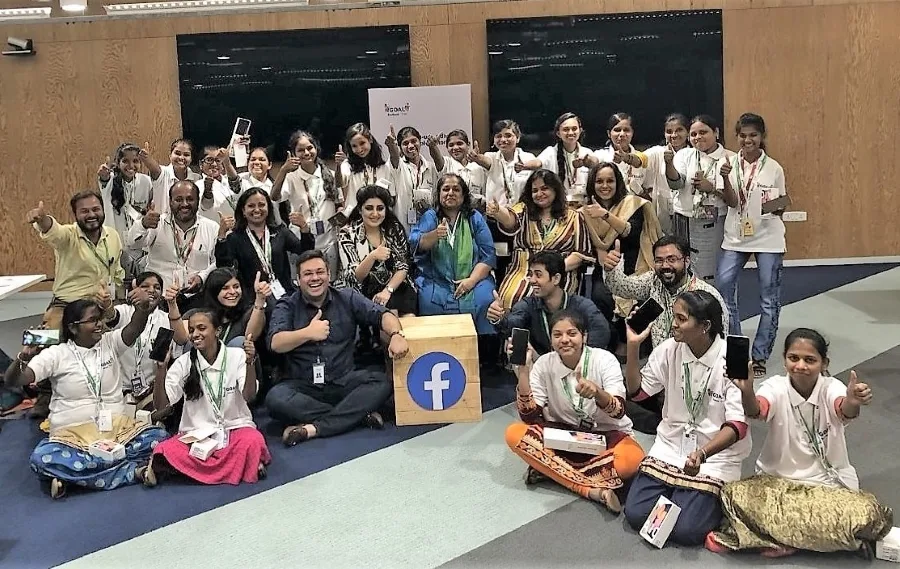
Image - goal.tribal.gov.in

In an initiative aimed at digitally skilling tribal youth and opening up opportunities for them using digital technology, the Ministry of Tribal Affairs has partnered with tech giants — Microsoft and Meta (formerly Facebook) — for training tribal youth in digital skills and technology.

The State Tribal Welfare Departments and Tribal Research Institutes are being consulted and asked to create awareness about the program amongst tribal communities of the state.

In May, 2021, the Ministry of Tribal Affairs has entered into a Memorandum of Understanding (MoU) with Microsoft. The MOU with Microsoft also aimed to support the digital transformation of residential schools, specifically for Scheduled Tribes, across India such as - Eklavya Model Residential Schools (EMRS) and Ashram Schools, among others.

The initiative will enable the professional development of educators so as to train them to use technology in classrooms. Under the partnership, students from EMRS schools will be mentored on projects that involve AI applications.

The second phase of the GOAL Programme (GOAL 2.0) was launched on 28th June, 2022 in partnership with Meta (previously Facebook).


GOAL 2.0 initiative aims to digitally upskill 10 lakh youth by on promoting entrepreneurship amongst tribal communities of the country and opening up opportunities for them using digital technology.

Through this program, the identified GOAL participants will have access to Meta Business Coach - a WhatsApp based learning bot - that will give the participants an opportunity to learn skills on how to build and grow their business using Facebook, Instagram and WhatsApp.

In a result of 1st-Phase of GOAL, 75% of the participants from the tribal community admitted to being able to better articulate their thoughts to words and saw an improvement in their interpersonal skills. About 69% were able to leverage Digital Commerce for increased reach and about 63% said that it helped them understand how to set up their business.

PayNearby Extends Digital Payment and Banking Services to Indo-China and Indo-Pak Borders

PayNearby Extends Digital Payment and Banking Services to Indo-China and Indo-Pak Borders
Retailers on PayNearby network offering digital services in Jammu & Kashmir

Brings micro-ATM and QR payments to kirana stores of far-flung areas in Jammu & Kashmir, Sela Pass in Tawang and Lakhpat in Kachchh

In continuation with its commitment to financially and digitally empower the last mile across the length and breadth of the country, PayNearby, India’s leading digital payments company and largest branchless banking network, today announced that it is now available in Jammu & Kashmir along with Sela Pass in Arunachal Pradesh on the Indo-China border and Lakhpat in Gujarat on the Indo-Pakistan border. PayNearby has enabled QR codes and Micro ATMs at local shops to upgrade their shops and make them digital-savvy to cater to both locals and tourists. This step is to further strengthen PayNearby’s presence in locations where accessibility of financial and digital services is limited for the underbanked and unbanked population of Bharat while accelerating the democratization of digital payments in the country.

India is a population of 1.3 billion people, most of which lives in its 664,369 villages with little or no access to formal financial solutions. The situation becomes even more crucial if these villages are on the borders or in sensitive areas. These areas are high-security zones that have their own peculiarities like remoteness, unusual terrain and erratic weather conditions, making it difficult for financial services to reach the masses. As a result, inhabitants have to face challenges in accessing cash or payment services and are deprived of the benefits of even the government-sponsored schemes. 

With the non-availability of digital banking due to inconsistent internet connectivity and the absence of steady transportation, villagers often end up investing a day and spending considerable money to travel to a nearby town just to withdraw or deposit cash. So, it is imperative that there is a robust network in place, both digital and assisted, to allow the beneficiaries to avail them.

For a more inclusive growth, it is important to create an ecosystem that serves the large unbanked population in these areas in a format that the masses can easily access, trust and consume. PayNearby is trying to solve this problem by turning the nearby trusted local stores into efficient digital touchpoints offering essential banking services. The company is porting this local trust and layering it with the right tools, training and technology to universalize digital payments in India. In sync with this, PayNearby’s micro-entrepreneurs are now serving in the neighbourhoods of Jammu & Kashmir, in Sela Pass – one of the highest military and civilian operational fields on the India-China border and at Lakhpat – India’s last village on the India-Pakistan border to bring essential financial services to the areas.

Speaking on the development, Anand Kumar Bajaj, Founder, MD & CEO, PayNearby said, "PayNearby is on a mission to make financial and digital services available to everyone, everywhere. Our retail partners in the hinterlands are a step in the direction of our commitment towards the agenda of financial empowerment at the last mile in the country. In remote areas, the number of ATMs is often far and few. PayNearby’s entry into these areas will ensure that the local population gets cash withdrawal and other basic banking services near their house through our retail partners. For example, as per the PMJDY, J&K has more than 25 lakh beneficiaries of which more than 21 lakhs reside in rural and semi-urban areas[1]. Now, people in these areas wouldn’t have to travel long distances or stand in a queue at a bank branch to avail of these government benefits.”

“At PayNearby, we believe that financial empowerment is only as successful as its remotest citizen and we are delighted that today PayNearby is present in every terrain from 42°C in Lakhpat, Kachchh to - 10°C in Sela Pass, Tawang to the remote areas of J&K. We will continue this endeavour to include more and more villages in our network till every village in Bharat is connected. PayNearby, Zidd Aage Badhne Ki," Mr. Bajaj added.

Retailer on PayNearby network offering digital services in Jammu & Kashmir

Currently, have already signed up 200 partners locally who will work with us for the last mile advancement of Kashmir. PayNearby, through its tech-backed DaaS (Distribution as a Service) network of 50+ lakh micro-entrepreneurs, serves 75% of India across 17,600+ PIN codes and enables services like cash withdrawal, remittance, Aadhaar Banking, bill payment and recharges, savings, travel, digital payments, insurance and more, at a store nearby. Through retailer empowerment, the company ensures that each and every citizen finds financial and digital services in their locality, gets on the digital payment bandwagon and gradually on the path to uncash India.

Retailer on PayNearby network offering digital services in Jammu & Kashmir

Incepted in April 2016, PayNearby is a DPIIT-certified company and India’s leading branchless banking and digital payments network. PayNearby operates on a B2B2C model, where it partners with neighbourhood retail stores and enables them with the tools to provide digital and financial services to local communities. PayNearby’s mission is to make financial services available to everyone, everywhere. The company aims to simplify high-end technology so that it can be easily assimilated at the last mile while transforming the lives of its retail partners and customers.

Today, PayNearby, through its tech-led DaaS (Distribution as a Service) network, serves 75% of India and is enabling services like cash withdrawal, remittance, Aadhaar Banking, bill payment and recharges, savings, travel, digital payments, insurance and more. Currently, PayNearby’s 50 lakh plus microentrepreneurs across 17,600+ PIN codes assist 20+ crore customers across the country to the tune of more than ~6000 crores GTV per month.

Market Reports

Market Report & Surveys
IndianWeb2.com © all rights reserved