Showing posts with label DST. Show all posts

India’s Flagship Sci. & Tech Conclave ESTIC-2025 to Chart Roadmap for Atmanirbhar and Viksit Bharat

India’s Flagship Sci. & Tech Conclave ESTIC-2025 to Chart Roadmap for Atmanirbhar and Viksit Bharat

  • A stage for young innovators and startups to showcase solutions and connect with industry, says Dr. Jitendra Singh, Union Minister
  • Designed as an outcome-oriented forum, the event aims to accelerate the lab-to-market journey for disruptive innovation. 
  • Scheduled for 3–5 November 2025 at Bharat Mandapam, New Delhi, the conclave will feature three days of plenaries, technical sessions, and exhibitions. 
India's flagship Emerging Science, Technology, and Innovation Conclave, ESTIC-2025 is set to bring together the nation's top scientific minds, innovators and policymakers. Scheduled for November 3-5 at New Delhi’s Bharat Mandapam, the conclave will propel the nation towards an Atmanirbhar Bharat, turning the vision of Viksit Bharat 2047 into action. 

As India's flagship S&T conclave under the theme Imagine, Innovate, Inspire for Viksit Bharat 2047, ESTIC 2025 will unite the country's innovation ecosystem across the entire gamut of the scientific spectrum. Curtain raiser programmes by participating Ministries and Departments are building momentum for detailed discussions across the 11 thematic sessions spanning Advanced Materials & Manufacturing, Artificial Intelligence, Bio-Manufacturing, Blue Economy, Digital Communications, Electronics & Semiconductor Manufacturing, Emerging Agricultural Technologies, Energy--Environment--Climate, Health & Medical Technologies, Quantum Science & Technology, and Space Technologies. 

India’s Flagship Sci. & Tech Conclave ESTIC-2025 to Chart Roadmap for Atmanirbhar and Viksit Bharat

The programme features plenary addresses by global experts and Nobel Laureates, thematic technical discussions with S&T leaders, women entrepreneurs, and deep-tech startup CEOs, and on-ground showcases that spotlight disruptive innovation, including an exhibition by deep-tech startups and a poster forum for young scientists, faculty, and engineers. Designed as an outcome-oriented forum, ESTIC-2025 aligns research, standards-readiness, and scale-up mechanisms to accelerate the lab-to-market journey.

"The conclave is a stage for young innovators, startups and researchers to showcase innovative solutions, find mentorship, and connect with industry and stakeholders," said Union Minister of State (Independent Charge) for Science & Technology; Minister of State for Earth Sciences; PMO; Personnel, Public Grievances and Pensions; Department of Atomic Energy and Department of Space, Dr. Jitendra Singh. He highlighted the integration of key frontier technologies, including semiconductors, AI, quantum computing, biotech, space, and clean energy, across all eleven themes.

ESTIC brings together India's scientific community, industry and startups on a single platform to turn ideas into impact. By connecting efforts across ministries and aligning with national priorities, the conclave strengthens translation pathways from laboratories to scale," said Prof. Ajay Kumar Sood, Principal Scientific Adviser to the Government of India.

"Through eleven thematic sessions and high-level panels, ESTIC-2025 will chart a comprehensive roadmap for Viksit Bharat 2047, enabled by a whole-of-government approach," said Prof. Abhay Karandikar, Secretary, Department of Science & Technology (DST), emphasizing ESTIC's role in advancing collaborative pathways that translate science into societal and economic impact.

ESTIC-2025 is designed as an outcome-oriented forum that celebrates stakeholder contributions while fostering collaborations among researchers, entrepreneurs, industry and funding bodies. The conclave's discussions and showcases are structured to identify actionable next steps and measurable follow-ups so that momentum continues beyond the three event days.

The conclave is a collaborative initiative of the Department of Science & Technology, under the guidance of the Office of the Principal Scientific Adviser, and brings together an association of key ministries and departments including the Department of Atomic Energy, Ministry of Ayush, Department of Biotechnology, Council of Scientific & Industrial Research (CSIR), Defence Research & Development Organization (DRDO), Ministry of Earth Sciences, Ministry of Education, Ministry of Electronics and Information Technology, Indian Council of Agricultural Research (ICAR), Indian Council of Medical Research (ICMR), Department of Space, and Department of Telecommunications.

About ESTIC-2025:

The Emerging Science, Technology, and Innovation Conclave (ESTIC) is India’s premier STI platform, bringing together ministries, innovators, and global visionaries. A flagship annual event, ESTIC fosters collaboration, celebrates disruptive innovation, and drives forward the vision of “Viksit Bharat 2047." This transformative platform showcases cutting-edge research, deep-tech breakthroughs, and thought-provoking discussions with Nobel Laureates, global experts, policymakers, and emerging leaders. ESTIC-2025 is scheduled for 3-5 November 2025 at Bharat Mandapam, New Delhi.

From Satellites to Startups: India’s Space Law To Open New Frontiers

From Satellites to Startups: India’s Space Law To Open New Frontiers

The Space Activities Bill, originally drafted in 2017, has now been finalized and is ready for circulation among stakeholder ministries reported Indian Express citing a government official. This bill aims to provide statutory powers to IN-SPACe (Indian National Space Promotion and Authorization Centre), which currently operates without formal legislative backing. 

The bill is expected to boost private sector participation in India's space industry, offering a structured regulatory framework and easing entry barriers for private players. It also includes provisions for affordable insurance for space assets, addressing a key concern for startups.

India is targeting a $44 billion space economy by 2033, with $11 billion expected from exports. The bill is seen as a crucial step toward achieving this goal.

The Bill could have a significant impact on India’s precision manufacturing sector, particularly in high-tech aerospace components and satellite manufacturing. Here’s how:

1. Boost to Private Aerospace Manufacturing

The bill grants statutory powers to IN-SPACe, making it easier for private firms to enter the space industry.

This could lead to greater demand for precision-engineered components, benefiting companies specializing in high-tolerance machining, advanced materials, and microelectronics.

2. Expansion of Space Manufacturing Hubs

The government is encouraging state-level space manufacturing hubs.

Tamil Nadu is expected to focus on launch vehicles, Gujarat on satellites and payloads, and Karnataka on general space activities.

This could create regional clusters of precision manufacturing expertise, fostering innovation and supply chain efficiencies.

3. Insurance & Risk Mitigation for Space Components

The bill includes provisions for affordable insurance for space assets.

This could reduce financial risks for precision manufacturers supplying critical components, making it easier for startups to enter the sector.

4. Export Opportunities & Global Collaboration

India is targeting a $44 billion space economy by 2033, with $11 billion from exports.

Precision manufacturers could tap into global markets, supplying components for satellites, propulsion systems, and avionics. 

5. Regulatory Clarity & Intellectual Property Protection

The bill revises earlier provisions that restricted private sector IP rights in space.

This could encourage R&D investments in precision manufacturing, as companies gain greater control over their innovations.

This could be a pivotal moment for India’s precision manufacturing sector, aligning with companies like Sedemac Mechatronics and Dhoot Transmission.

IIT Kanpur’s C3iHub Upgraded to a Technology Translational Research Park (TTRP)

IIT Kanpur’s C3iHub Upgraded to a Technology Translational Research Park (TTRP)

Indian Institute of Technology Kanpur’s C3iHub has been upgraded to a Technology Translational Research Park (TTRP) by the Department of Science and Technology (DST), Government of India. Among the selected institutions, C3iHub has been designated to host one of these prestigious TTRPs, with a dedicated focus on cybersecurity.

The TTRP at IIT Kanpur will specifically focus on advancing cybersecurity technologies and supporting deep-tech startups while promoting strong industry-academia partnerships. After a thorough examination of the proposal from IIT Kanpur, the Mission Governing Board of NM-ICPS has selected C3iHub for upgradation to TTRP under NM-ICPS in the focus area of “Cybersecurity”.

This announcement was made during a review meeting by the Union Minister of State for Science and Technology, Dr. Jitendra Singh. This development India’s commitment to advancing cutting-edge technological innovations for both societal and commercial applications.

The TTRP has been designed to enable the transformation of research into market-ready solutions. By upgrading existing Technology Innovation Hubs (TIHs), such as C3iHub, into TTRPs, the DST seeks to enhance collaboration between academia, industry, and startups.

This recognition reflects our ongoing commitment to pioneering research and innovation in cybersecurity. The enhanced support will further accelerate the translation of cutting-edge research into impactful, market-ready solutions and strengthen our role in advancing national cybersecurity capabilities. I congratulate the entire C3iHub team on this well-deserved achievement,” said Prof. Manindra Agrawal, Director, IIT Kanpur.

As a leading TIH under the National Mission on Interdisciplinary Cyber-Physical Systems (NM-ICPS), C3iHub will continue to work towards strengthening national by securing critical infrastructure, protecting data privacy and integrity, tracking evolving cybercrimes, and more.

With DST NM-ICPS support, C3iHub, as a Technology Innovation Hub (TIH) during mission tenure, i.e., 2020-2024, has successfully deployed more than 15 technology products, nurtured 49 start-ups, 3 spokes, and 50 spikes, with 60% start-ups commercializing one or more products and 25% of R&D delivering demonstrable technology solutions. More than ten thousand individuals have been skilled by C3iHub at various skill levels including master’s degree in cyber security, six month long certification programs, specialized hands-on training programs for organizations, and vocational training at scale to support and strengthen the startup and R&D ecosystem in cybersecurity.

With its elevation to a TTRP, C3iHub is set to lead in cybersecurity innovation, advancing research, empowering startups, and nurturing talent.

IIT Kanpur’s C3iHub Upgraded to a Technology Translational Research Park (TTRP)

Govt-backed QpiAI Launches One of India’s Most Powerful Quantum Computers

Govt-backed QpiAI Launches One of India’s Most Powerful Quantum Computers

Bengaluru-based QpiAI, one of the eight startups selected under the National Quantum Mission (NQM), has launched QpiAI-Indus, a 25-qubit superconducting quantum computer. This marks India's first full-stack quantum computing system, integrating advanced quantum processors, scalable control systems, and optimized software for hybrid computing.

The launch, which coincided with World Quantum Day (April 14), positions QpiAI at the forefront of India's quantum ecosystem, driving innovation across life sciences, drug discovery, materials sciences, mobility, logistics, sustainability, and climate action. Since its founding in 2019, QpiAI has filed 11 patent applications and generated revenue of around ₹1 million per annum, with additional funding from SIDBI.
 
QpiAI-Indus
QpiAI-Indus

This milestone aligns with India's broader quantum ambitions, reinforcing its position in deep-science and deep-tech innovation. Given your interest in quantum computing's role in AI model fine-tuning, this development could have exciting implications for hybrid AI-quantum optimization.

Notably, India ranks 6th globally in quantum startups, with 53 startups working in the field. However, private investment in quantum computing in India is significantly lower compared to countries like the US and UK.

To recall, Physicist Rajamani Vijayaraghavan led TIFR Quantum Computing Lab at Tata Institute of Fundamental Research (TIFR) is working on a 6-qubit quantum system, aiming to develop indigenous quantum computing technology.

India's National Mission for Quantum Technology and Applications (NMQTA) was launches five years ago, but public investment remains lower than global leaders like China and the US.

While India is making strides, there's still a long way to go in terms of funding and infrastructure.

DST Selects 8 Quantum & Cyber-Physical Systems Startups for Support under NQM and NM-ICPS

DST Selects 8 Quantum & Cyber-Physical Systems Startups for Support under NQM and NM-ICPS

On 26 November 2024, Union Minister Dr. Jitendra Singh announced the selection of eight pioneering startups for support under the National Quantum Mission (NQM) and the National Mission on Interdisciplinary Cyber-Physical Systems (NM-ICPS). 

These startups are at the forefront of innovation in quantum technology and cyber-physical systems, and they represent significant strides in fields such as quantum communication, quantum computing, quantum sensing, and quantum materials.

These startups were chosen through a rigorous evaluation process and are expected to make significant contributions to their respective fields.

Here are the eight pioneering startups selected for support under the National Quantum Mission and the National Mission on Interdisciplinary Cyber-Physical Systems:
  1. QNu Labs (Bengaluru) - Quantum communication
  2. QPIAI India Private Ltd (Bengaluru) Quantum computing
  3. Dimira Technologies (IIT Mumbai) Indigenous cryogenic cables essential for quantum computing
  4. Prenishq (IIT Delhi) - Precision diode-laser systems
  5. QuPrayog (Pune) - Optical atomic clocks
  6. Quanastra (Delhi) - Advanced cryogenics and superconducting detectors
  7. Pristine Diamonds (Ahmedabad) - Creating Diamond materials for quantum sensing
  8. Quan2D Technologies (Bengaluru) - Superconducting Nanowire Single-photon Detectors
These startups are poised to make significant contributions to their respective fields in quantum technology and cyber-physical systems.

DST Selects 8 Quantum & Cyber-Physical Systems Startups for Support under NQM and NM-ICPS
Dr. Jitendra Singh


The DST will support the selected startups through a structured framework that includes: Funding Opportunities, Mentorship and Guidance, Infrastructure Support, and facilities to aid in the development and testing of new technologies, among other things.

Categorised by Cities and Institutes:

By Cities:

  • Bengaluru:
    • QNu Labs
    • QPIAI India Private Ltd
    • Quan2D Technologies
  • Pune:
    • QuPrayog
  • Ahmedabad:
    • Pristine Diamonds
  • Delhi:
    • Quanastra

By Institutes:

  • IIT Mumbai:
    • Dimira Technologies
  • IIT Delhi:
    • Prenishq
These startups represent a diverse range of innovations and specializations in quantum technology and cyber-physical systems.

With this initiative, the Minister remarked, the selected startups are not just participants in a technological mission but torchbearers of India’s ambition to emerge as a global leader in quantum science.

During the event, Union Minister Dr. Jitendra Singh proposed that such initiatives and programs should be held beyond Delhi to ensure broader participation and engagement across the country. He emphasized that taking these events to smaller towns and other regions would provide the youth with a valuable opportunity to witness the advancements in quantum technologies and related fields firsthand.

India Launches BharatGen, the World’s 1st Govt-Funded Multimodal LLM Project

India Launches BharatGen, the World’s 1st Govt-Funded Multimodal LLM Project

India has just launched the BharatGen project, a pioneering initiative aimed at developing generative AI in Indian languages. This state-funded project is spearheaded by IIT Bombay under the National Mission on Interdisciplinary Cyber-Physical Systems (NM-ICPS).

BharatGen is notable for being the world's first government-funded multimodal large language model project. It aims to create high-quality text and multimodal content in various Indian languages, making AI more accessible and inclusive. The project will benefit government, private, educational, and research institutions, and is expected to be completed in two years.

AtmaNirbhar Bharat, Promoting Indian Languages & Social Equity

By leveraging generative AI, the BharatGen project can help preserve and promote the rich linguistic diversity of India. This initiative not only supports cultural heritage but also ensures that technological advancements are inclusive and accessible to a broader population.

BharatGen aligns with the vision of Atmanirbhar Bharat by creating foundational AI models specifically tailored for India. By developing AI technologies within India, BharatGen reduces reliance on foreign technologies and strengthens the domestic AI ecosystem for startups, industries, and government agencies.

Democratizing access to AI through foundational models and detailed technical recipes it allows innovators, researchers, and startups to build AI applications quickly and affordably. A core feature of BharatGen is its focus on data-efficient learning, particularly for Indian languages with limited digital presence. Through fundamental research and collaboration with academic institutions, the initiative will develop models that are effective with minimal data—a critical need for languages underserved by global AI initiatives. BharatGen will also foster a vibrant AI research community through training programs, hackathons, and collaborations with global experts.

One of the primary goals of BharatGen is to deliver generative AI models and applications as a public good. This means prioritizing India’s socio-cultural and linguistic diversity while ensuring that the benefits of AI reach all segments of society.

This initiative also aligns with India's broader goals of promoting social equity, cultural preservation, and linguistic diversity through advanced AI technologies.

Technical Aspects of BharatGen.

The BharatGen project is being developed by a consortium led by IIT Bombay under the National Mission on Interdisciplinary Cyber-Physical Systems (NM-ICPS). The project is managed by the TIH Foundation for IoT and IOE at IIT Bombay.


Several premier academic institutions are involved in this initiative, including IIIT Hyderabad, IIT Mandi, IIT Kanpur, IIT Hyderabad, IIM Indore and IIT Madras.

This collaborative effort aims to create generative AI systems that can produce high-quality text and multimodal content in various Indian languages.

BharatGen focuses on developing multimodal large language models that can handle text, speech, and computer vision tasks. This means the models will be capable of understanding and generating content across different types of media. BharatGen will be developed as an open-source platform. This approach encourages collaboration and innovation, allowing researchers and developers to contribute to and benefit from the project.

The models will be built and trained using datasets that are specifically curated to represent Indian languages and contexts. This ensures that the AI is culturally and contextually relevant.

BharatGen’s roadmap outlines key milestones up to July 2026. These include extensive AI model development, experimentation, and the establishment of AI benchmarks tailored to India’s needs. BharatGen will also focus on scaling AI adoption across industries and public initiatives.

BIRAC and USISPF Partner for Cooperation Between Biotech and Health Tech Co.s, Organizations, and Institutions Across US & India

BIRAC and USISPF Partner for Cooperation Between Biotech and Health Tech Co.s, Organizations, and Institutions Across US & India

The BIRAC (Biotechnology Industry Research Assistance Council), a public sector enterprise established by the Department of Biotechnology (DBT) India and Department of Science & Technology (DST) has announced the signing of a letter of intent to collaborate with USISPF (US-India Strategic Partnership Forum) to foster innovation & partnerships between biotech and health tech companies, organizations, and institutions across the US and India.

This collaboration aims to enhance innovation and development in the biotech and health tech sectors by leveraging the strengths and resources of both countries.

The signing ceremony took place in the august presence of Dr. Rajesh Gokhale, Secretary, DBT, Shri Ajay Sood (IISc), Office of Principal Scientific Advisor, Union Minister Dr Jitendra Singh, and Smt. Kiran Mazumdar-Shaw, Executive Chairperson and Founder of Biocon Limited and Biocon Biologics Ltd.

BIRAC and USISPF Partner for Cooperation Between Biotech and Health Tech Co.s, Organizations, and Institutions Across US & India

This partnership will aim to facilitate the exchange of best practices and develop coordinated support measures to enhance the growth of the innovation ecosystem.

The focus will be on fostering knowledge transfer and innovation cooperation between biotech and health tech companies, organizations, and institutions across both

Earlier this month, USISPF announced and hold the 3rd edition of its defence summit — the India-US Defence Acceleration Ecosystem (INDUS-X)— in the US to strengthen advanced technology partnerships in defence innovation between the two countries.

Formed in 2017, the US-India Strategic Partnership Forum (USISPF) is a non-profit organization dedicated to strengthening the strategic and economic partnership between the United States and India. It focuses on promoting bilateral trade and investment, fostering innovation, and enhancing collaboration across various sectors, including technology, healthcare, and energy.

Aditya-L1 Mission – DST Institutes IIA, ARIES, CREST and IUCAA Key Drivers in Designing Payloads To Automated Algo for Detecting CMEs

Aditya-L1 Mission – DST Institutes IIA, ARIES, CREST and IUCAA Key Drivers in Designing Payloads To Automated Algo for Detecting CMEs

Aditya-L1, India's first observatory to study Sun, seeded in IIA - ISRO discussions to observe solar corona closely
  • Visible Emission Line Coronagraph (VELC), the primary payload developed by IIA
  • IIA & ARIES designed the first automated algorithm to detect CMEs on board Aditya-L1 using the VELC instrument
  • Aditya-L1 support cell established at ARIES to act as community service centre for analyzing science data
India’s Aditya-L1, a space observatory with 7 payloads heading for a vantage point to study the Sun has started countdown for its journey. It had its beginnings in preliminary/initial discussions between the Indian Institute of Astrophysics (IIA) and Indian Space Research Organisation (ISRO) about possible observations of the solar corona using indigenous space based telescopes.
Aditya-L1

Visible Emission Line Coronagraph (VELC)

VELC Engineering Team
VELC Engineering Team Members in front of the truck which had the VELC all packed and ready to go to ISRO

IIA, an autonomous institute of the Department of Science and Technology (DST), had initially proposed a ‘suitable coronagraph’ payload to be mounted on a small satellite offered by ISRO. This ‘suitable coronagraph’ later graduated to the Visible Emission Line Coronagraph (VELC) and still prevails as the primary payload, even as India’s Solar study ambitions expanded, making it a national initiative with multi-institutional collaboration.

The VELC will image the Sun's atmosphere, the corona, closer to the Sun than ever before, at high resolution and time cadence. The payload has 40 different optical elements of high precision and will be kept at a temperature of 22 degrees celsius in space.

Led by IIA, the VELC was designed, assembled, characterised, tested and integrated at Centre for Research and Education in Science and Technology (CREST) campus in Hosakote and delivered in close collaboration with ISRO. A Clean Room of international standard (India's first large-scale “Class 10” Clean Room) was constructed for the purpose inside its MGK Menon Laboratory. ISRO made the mirrors and detectors and provided them to IIA, while IIA delivered the completed VELC to ISRO on 26 Jan 2023.

Faculty, students, postdocs in IIA who work on solar astrophysics


Since VELC observes the Sun closest to its surface, many other Aditya-L1 payloads also need its data about new coronal mass ejections and other eruptions. The VELC Payload Operations Centre (POC) set up in IIA campus, will receive raw data from ISRO Indian Space Science Data Centre (ISSDC) and process them further to make it suitable for scientific analysis.

The processed data will be sent back to ISSDC for dissemination. The scientific team at IIA will use the Aditya-L1 data from its many payloads in conjunction with field station observations on the ground to gain a deeper understanding of the Sun-Earth links and, more crucially, the space-weather impact.

Kodaikanal Solar Observatory and Gauribidanur Radio Observatory of IIA will play a key role in this.

Automated Algorithm To Detect Coronal Mass Ejections (CMEs)

IIA and Aryabhatta Research Institute of Observational Sciences (ARIES), an another institute of DST, designed an automated algorithm to detect CMEs (Coronal Mass Ejections) on board Aditya-L1 using the VELC instrument. This algorithm will be the first of its kind to track the huge bubbles of gas threaded with magnetic field lines that are ejected from the Sun, disrupting space weather and causing geomagnetic storms, satellite failures, and power outages.

Solar physics group at ARIES

This algorithm has been hard-coded by ISRO and will be used to detect CMEs automatically on board Aditya-L1, making it one of the first onboard intelligence algorithms for this purpose as no similar thing has been attempted in previous NASA or ESA missions studying the Sun.

Aditya-L1 Support Cell (AL1SC)

ISRO has also collaborated with ARIES to establish the Aditya-L1 Support Cell at ARIES. The Aditya-L1 Support Cell (AL1SC) acts as a community service centre for the guest observers in preparing science observing proposals and analyzing science data.

This support cell will provide additional tools and train users about solar physics and provide help to understand, download and analyse the data from ISSDC/ISRO. AL1SC is conducting workshops in different parts of the country to familiarise students with the basic processes happening on the Sun, current open problems, the Aditya-L1 mission and observational data analysis.

X-ray Spectrometers and In-Situ Instruments

Aditya-L1 carries an ultraviolet imager, two X-ray spectrometers, and four in-situ instruments to measure plasma parameters. These are made by various centres of ISRO and the Inter-University Centre for Astronomy and Astrophysics (IUCAA) with contributions from many other institutions.

IIT Kanpur-Incubated Noccarc Gets ₹3.94 Cr in TDB-DST Funding for Commercialization of Digitally-enabled Advanced Universal ICU Ventilator

IIT Kanpur-Incubated Noccarc Robotics Gets ₹3.94 Cr in TDB-DST Funding for Commercialization of Digitally-enabled Advanced Universal ICU Ventilator

Technology Development Board (TDB), a statutory body established by Government of India, has entered into an agreement with Indian Institute of Technology (IIT) , Kanpur incubated startup — Noccarc — which is dedicated to the commercialization of Digitally Enabled Advanced Universal ICU Ventilators.

TBD has pledged support of ₹3.94 Crores out of the total project cost of ₹7.89 Crores to Pune-based Noccarc for its indigenously developed technology innovation.

Incubated at the Startup Incubation and Innovation Centre (SIIC) of the IIT-Kanpur, Noccarc has indigenously developed the entire technology, with several patents filed for each component, of the ventilator. The company's entry-level ventilator, V310, played a critical role during the COVID-19 pandemic, being deployed in diverse hospitals across India, where it became instrumental in saving lives.

Noccarc V730i
Noccarc V730i

Building on this success, Noccarc is now launching the Noccarc V730i, which is a smart ventilator. V730i allows seamless connectivity to the cloud via GSM, Wi-Fi, and LAN, allowing doctors and intensive care specialists to remotely monitor the patient data on Noccarc’s digital platform, and will also enable hospitals to digitize their ICU data and workflows.

This initiative is aligned with the Government's push towards creating a self-reliant India in the medical devices sector.

Founded in 2017, by IIT Kanpur graduates – Harshit Rathore and Nikhil Kurele, Noccarc (Formerly Nocca Robotics) is a medical device start-up company at the forefront of healthcare innovation. Its smart medical devices are just the beginning of our mission to transform the healthcare industry through technology.

In September 2019, Noccarc had raised INR 12.4 crore from IAN Fund and Indian Angel Network.

Speaking on this occasion, the Founders of Noccarc, Nikhil Kurele, and Harshit Rathore, expressed that the support and assistance from TDB would propel the company in its quest for technological indigenization across India's healthcare sector. They emphasized that Noccarc's endeavours would contribute significantly to the Atmanirbhar Bharat initiatives of the Government, setting a precedent for innovation and self-reliance in the field of medical technology.

Rajesh Kumar Pathak, Secretary, TDB said that, “Noccarc's innovations in advanced medical technology are a testament to India's capabilities in developing advanced solutions that cater to the needs of domestic healthcare facilities. M/s Noccarc focuses on commercializing Digitally Enabled Advanced Universal ICU Ventilators, which are expected to revolutionize the critical care industry. The company's manufacturing site in Pune is a symbol of the realization of digitally-enabled healthcare devices made in India, which have immense potential in export markets too.”

Notably, more than 85% of medical devices in India are imported, the push towards indigenously developed products is thus become more critical. The Government of India, under its "Make in India" initiative and a renewed focus on digitization across all sectors, including healthcare, is driving a robust ecosystem for homegrown Innovations like that of Noccarc. 

Bill of $6.03 Bn Fund for R&D and Innovation Introduced in Lok Sabha

Bill of $6.03 Bn Fund for R&D and Innovation Introduced in Lok Sabha

Today, Union Minister of Science & Technology, Dr Jitendra Singh, has introduced a Bill in the Lok Sabha, for setting up a national agency to fund research across universities, institutions and laboratories in the country.

Named "Anusandhan National Research Foundation", the bill once implemented, will provide high level strategic direction for research, innovation and entrepreneurship in the fields of natural sciences including mathematical sciences, engineering and technology, environmental and earth sciences, health and agriculture.

The Anusandhan National Research Foundation Bill-2023 seeks to set up a Rs 50,000-crore (~ US $6.03 Billion) fund, with a sizeable contribution from the private sector, to "seed, grow and promote" research and development (R&D) and foster a culture of research and innovation throughout India's universities, colleges, research institutions, and R&D laboratories.

Introducing the Bill, Dr Jitendra Singh said, when passed by Parliament the Act will provide high level strategic direction for research, innovation and entrepreneurship in the fields of natural sciences including mathematical sciences, engineering and technology, environmental and earth sciences, health and agriculture.

The Minister said, it will also promote scientific and technological interfaces of humanities and social sciences to promote, monitor and provide support as required for such research and for matters connected therewith or incidental thereto.

It may be recalled that on 28th June, 2023 the Union Cabinet, chaired by the Prime Minister Shri Narendra Modi approved the introduction of the National Research Foundation (NRF) Bill, 2023 in the Parliament. The approved Bill will pave the way to establish NRF that will seed, grow and promote Research and Development (R&D) and foster a culture of research and innovation throughout India’s universities, colleges, research institutions, and R&D laboratories.

The bill, after approval in the Parliament, will establish NRF, an apex body to provide high-level strategic direction of scientific research in the country as per recommendations of the National Education Policy (NEP), at a total estimated cost of Rs. 50,000 crores ( ~ US $6.03 billion) during five years (2023-28).

The Department of Science and Technology (DST) will be the administrative Department of NRF which will be governed by a Governing Board consisting of eminent researchers and professionals across disciplines. Since the scope of the NRF is wide-ranging – impacting all ministries - the Prime Minister will be the ex-officio President of the Board and the Union Minister of Science & Technology & Union Minister of Education will be the ex-officio Vice-Presidents. NRF’s functioning will be governed by an Executive Council chaired by the Principal Scientific Adviser to the Government of India.

NRF will forge collaborations among the industry, academia, and government departments and research institutions, and create an interface mechanism for participation and contribution of industries and State governments in addition to the scientific and line ministries. It will focus on creating a policy framework and putting in place regulatory processes that can encourage collaboration and increased spending by the industry on R&D.

The bill will also repeal the Science and Engineering Research Board (SERB) established by an act of Parliament in 2008 and subsume it into NRF which has an expanded mandate and covers activities over and above the activities of SERB.

GITAM Wins 3.65 Cr Grant from DST to Set Up Four Science & Technology Hubs in Andhra Pradesh, under Tribal Welfare Grant

GITAM Receives 3.65 Cr from DST to Set Up Sci-Tech Hubs in Andhra Pradesh, under Tribal Welfare Grant

GITAM STI wins Rs 3.65 cr grant for Tribal development plan in Andhra Pradesh’s Alluri Sitarama Raju District

Four business units to be set up, each of which will initiate economic enterprises such as Niger Seed Oil Mill Units, Honey Processing Units, Solar Based Cold Storage Units, and Vegetable Processing Units

In a groundbreaking initiative, GITAM (Deemed to be University) is pioneering a transformative approach to uplift the socio-economic conditions of the local Scheduled Tribe (ST) population in select villages of Andhra Pradesh. By establishing four (04) Science Technology and Innovation Hubs (GITAM STI Hubs), this prestigious educational institution is blending academic research and community service to create a platform that nurtures entrepreneurship and empowers the tribal youth, ultimately leading to a remarkable improvement in their overall lifestyle.

Funded by the Government of India’s Ministry of Science and Technology, and to be executed under the purview of the Department of Science and Technology (DST), these STI Hubs are the first of its kind in Paderu and Araku Valley Mandals.

Currently, a field survey is underway to identify and enroll the target beneficiaries for the project that is expected to run for a period of three years (up to 31-03-2026). This project will see several departments work in synergy as GITAM STI will collaborate with ICAR-Krishi Vigyan Kendra (ICAR-KVK), Integrated Tribal Development Authority (ITDA), National Bank for Agricultural and Rural Development (NABARD), Khadi & Village Industries Commission (KVIC), Girijan Co-Operative Corporation (GCC), and several local NGOs.

Associate Professor Dr. I. Sarat Babu, Principal Investigator from the Department of Biotechnology, GITAM School of Technology, and the team of researchers at the Science Technology and Innovation Hub of the GITAM (Deemed to be University) have been granted a funding amounting to Rs 3.65 crore towards a project aimed at uplifting the socio-economic status of the tribal population by setting-up a revenue generating model. Dr. Babu is leading the team along with co-investigators, Dr Raja Phani Pappu, Director, Dept of Research & Consultancy and Dr P Manjushree, Professor, GITAM School of Business.

Speaking about the initiative, Dr. Raja Pappu said, “The tribal communities have long faced socio-economic challenges that hindered their growth and progress. However, GITAM (Deemed to be) University has recognized the immense potential hidden within these communities, and is leading the initiative to provide them with the tools, resources, and knowledge necessary for self-sustenance and success.”

Speaking about the novelty of the project Dr. Babu added, “The GITAM STI Hubs go beyond the traditional boundaries of academic research by directly engaging with the tribal communities and uplift their socio-economic conditions. Professors, researchers, and students from diverse fields collaborate closely with the local inhabitants, bridging the gap between theoretical knowledge and practical application. By leveraging their expertise, the university creates an environment that fosters innovation, problem-solving, and skill development, tailored specifically to the needs and aspirations of the tribal population.”

The overall goal of the STI Hub is to improve the livelihood of small and marginalised tribal communities and help with skill development through the formation of 2 FPOs (Farmer Producer Organisation) and 20 SHGs (Self Help Group) reaching out to 1000 beneficiaries. It also aims at creating value chains through Science and Technology Interventions and the develop social enterprises. The activity will help improve the physical and human capitals of selected beneficiaries as well as lead to improvement in the health and nutritional status of the tribals.

To function within the framework of Science for Equity Empowerment and Development (SEED) Division, four business units will be set up, each of which will initiate economic enterprises such as Niger Seed Oil Mill Units, Honey Processing Units, Solar Based Cold Storage Units, and Vegetable Processing Units for vegetables including broccoli, cucumber, ginger, etc.

The GITAM STI Hub is operated in the “Hub and Spoke Model”. The main hub will be in Paderu (district headquarters) while the 12 identified villages in the Paderu (Thumpada, Modapalle, Minumuluru, Raigedda, Talarisingi and Yegumodaputtu) and Araku Valley (Padmapuram, Pappuduvalasa, Yandapallivalasa, Chompi, Hattaguda and Lotheru) Mandals will act as spokes. The hubs are well equipped with Niger seed oil Processing Units, Honey Processing Units, Solar based Cold storage Units, Vegetable Processing Units, and Quality Assurance, Quality Control Laboratories for Honey, and Niger oil, along with the training centers.

About GITAM (Deemed to be University)

GITAM was founded in 1980 by an inspired group of eminent intellectuals and industrialists of Andhra Pradesh led by Dr M. V. V. S. Murthi, former Member of Parliament and popular philanthropist. Located in Visakhapatnam, Andhra Pradesh, it also has campuses in Hyderabad and Bengaluru. Collectively, the four campuses have 12 Schools offering 112 UG and PG Programmes , under their wing, in addition to Ph.D. Programme. Over the years, GITAM (Deemed to be University) has taken part in many social activities and has also produced many renowned personalities. For more information, visit:
https://www.gitam.edu/.

Winners of the DST Geospatial Hackathon 2023

Winners of the DST Geospatial Hackathon 2023

CIE (Centre for Innovation and Entrepreneurship), one of India's largest and oldest academic incubators, fostering deep-fetch early-stage startups at IIIT (International Institute of Information Technology)-Hyderabad, a leading research university in the country hosted recently the final event of the Geospatial Hackathon in Collaboration with DST (Department of Science and Technology), SOI (Survey of India) and Microsoft.

The four winners were selected. The final 4 winners-built solutions including Weather Forecast API services, efficient Geographical Text Analysis etc. The hackathon attracted over 500 applications, of whom 70 were selected for the final round.

The winners of the challenge are Faizan Khan (A high-resolution, dynamic and accurate weather forecast API ), Dhanashri Patil (App, that will measure the UN SDG Goals via Geospatial data), Ambarish Ganguly (The socio-economic data that would be consolidated with geospatial data as well as tabular data), VSS Kiran (GeoAI entity recognition model to extract a predefined set of entities from raw text and generate thematic maps).
 
Winners of the DST Geospatial Hackathon 2023

The DST Geospatial Hackathon offers the winners a POC(Proof of Concept) to work with Survey of India, Tech Support from IIITH and Azure credits from Microsoft. Also, the opportunities to participate and present at industry events.

The 4 winners were selected post a national campaign that attracted applications from a large number of startups/research teams and students applying. CIE IIIT-H launched the hackathon earlier this year on 14 January 2023.

The Geospatial Hackathon had two challenges: A Startup Challenge to promote the use of geospatial technologies in solving real-world problems. The second one was the Research Challenge, which was specific to real-time geospatial problem statements given by DST (Survey of India). The challenges were open to students, innovators, researchers, working professionals and startups.

The top 5 in each challenge are Team Sac (a model that learns segmentation features effectively through a diverse set of satellite images using deep learning), Team Technosync (Blockchain technology is a distributed ledger technology that enables the creation of a decentralized and secure digital record of transactions), Pyare Lal ( point cloud segmentation using deep learning is to utilize the RandlaNet architecture), Garudylatics (GeoAI model which is capable of real-time identification and classification of road cracks), CommutLink (contactless solutions to identify violations in the use of cycle lanes, capture evidence of violation), and The Saviour (Precision agriculture, Environmental monitoring, Building a community for farmers).

The Finale Event of the DST Geospatial Hackathon was held for all the winners and the top 5, which was joined by the DST, SOI, Microsoft and IIIT-Hyderabad Teams.

Prof. Ramesh Loganathan, COO at CIE-IIITH said “Very happy that IIITH got the opportunity to drive this unique challenge hackathon to get solutions from both research and startups. Such initiatives are much needed to seed and nurture innovations coming from research”.

DN Pathak, Director at Survey (Air) & Delhi Geo-spatial Data Centre, Survey of India said “The Geospatial Hackathon not only showcased the power of geospatial technology but also exemplified the importance of collaboration and teamwork. Participants showcased remarkable problem-solving abilities throughout the hackathon and utilized geospatial data to uncover valuable insights. The creative solutions developed during the event highlighted the potential of geospatial technology to transform industries, improve decision-making, and create sustainable solutions for a better future”

Sanjay Dhingra, Director at Public Sector, Microsoft said “The Great Collaboration between Microsoft, IIITH, DST and SOI has created an incredible journey, a hackathon dedicated to Geospatial Technology. We are excited to carry this momentum forward inspiring others and making a long-lasting impact in the world of Geospatial technology".

The winners of the DST Geospatial Hackathon, Startup Challenge are

Tensor Dynamics — A high-resolution, dynamic and accurate weather forecast API providing weather data at multiple spatiotemporal scales designed to serve the needs of the Power industry.

Morai Solutions — The solution is to develop an App, that will measure the UN SDG Goals via Geospatial data. For Eg, in the case of hospitals (UN SDG Goal 3 - Healthcare), it will display the spatial distribution of Hospitals in a given area and per population density. A progress tracker will measure the SDG Goal progress every year.

The winners of the DST Geospatial Hackathon, Research Challenge are:

Ambarish Ganguly — The solution would be to develop the Socio-Economic Hub for India. The socio-economic data would be consolidated with geospatial data as well as tabular data.

Garudalytics Pvt Ltd Developed a GeoAI entity recognition model to extract a predefined set of entities from raw text and generate thematic maps.

The Top 5 of the DST Geospatial Hackathon, Startup Challenge are

Tensor Dynamics — A high-resolution, dynamic and accurate weather forecast API providing weather data at multiple spatiotemporal scales designed to serve the needs of the Power industry.

Morai Solutions — The solution is to develop an App, that will measure the UN SDG Goals via Geospatial data. For Eg, in the case of hospitals (UN SDG Goal 3 - Healthcare), it will display the spatial distribution of Hospitals in a given area and per population density. A progress tracker will measure the SDG Goal progress every year.

Garudylatics Pvt Ltd — GeoAI model which is capable of real-time identification and classification of road cracks, potholes and other features on archived and live video feeds. It analyzes their spatial density and severity and presents the information on a dashboard.

CommutLink — Develop contactless solutions to identify violations in the use of cycle lanes, capture evidence of violation (infringement by other vehicles for movement or stopping) and alert the same to concerned authorities for enforcement.

The Saviour
  1. Precision agriculture
  2. Environmental monitoring
  3. Building a community for Farmer

India Releases National Climate Research Agenda 2030 and Beyond

India Releases National Climate Research Agenda at International Climate Research Conclave

India’s National Climate Research agenda was released at the inauguration of the two-day International Climate Research Conclave (ICRC-2023) at DST’s Centre of Excellence in Climate Studies at IIT Bombay on 26 May 2023, paving the way forward for coordinating national efforts towards understanding and addressing climate change 2030 and beyond.

Secretary, Department of Science and Technology (DST), Dr. S. Chandrasekhar, highlighted that the damage caused by climate change has already taken its toll, and our response has been delayed. He pointed out that valuable lessons to tackle the situation can be taken from our experiences of positive changes in the environment due to altered human behavior during the COVID-19 pandemic. He said these serve as a reminder that if we act responsibly, there is a real possibility of passing on a sustainable planet to future generations.

Dr. Chandrasekhar emphasised that addressing climate change is not the responsibility of climate scientists alone. “It is a collective responsibility that extends to all individuals and sectors of society. Climate change is influenced by peripheral activities surrounding climate science, and it becomes the duty of scientists to identify the areas that have the most significant impact on the climate and work towards mitigating them,” he stressed at the conclave jointly organised by The Department of Science and Technology (DST) and Ministry of Earth Sciences and hosted by DST’s Centre of Excellence in Climate Studies at IIT Bombay.

By acknowledging the collective responsibility and adopting sustainable practices across various sectors, we can make meaningful progress in mitigating climate change and preserving a healthy planet for future generations. It is a call to action for everyone to play their part in creating a more sustainable and resilient world,” he added while releasing the report on “India’s Climate Research Agenda: 2030 & Beyond’.

Secretary, Ministry of Earth Sciences, Dr. M. Ravichandran, emphasised the importance of understanding the cryosphere and the implications of climate change. He highlighted the importance of formulating policy decisions to address various aspects such as water resources, extreme rainfall, heat waves, and marine waves. These complexities need to be quantified and communicated with reduced uncertainty to facilitate better policy decision-making.

Dr. Ravichandran underscored the interconnectedness between different regions and bodies, including the Arctic, Antarctic, and Himalayas, as they directly impact water bodies. Recognizing this, the conclave aims to generate a multitude of recommendations that will benefit the country as a whole.

This conclave serves as a platform to discuss and propose recommendations that will contribute to effective policy formulation. By addressing these complex challenges and providing actionable insights, the conclave aims to enhance policy decision-making and benefit the nation as a whole in its quest for a more sustainable and resilient future,” he added.

Over 200 climate scientists, students, experts, and policymakers from different parts of the country and around the globe are participating in the International Climate Research Conclave (ICRC-2023) to discuss India’s recent progress in climate research and its agenda and vision for 2030. The conclave also discussed a long-term research agenda for the country in the priority areas of climate research and plans for creating a Climate Consortium of several departments and ministries of the Government of India for facilitating climate Research.

Dr. Akhilesh Gupta, Senior Adviser, DST and Secretary, Science Engineering Research Board (SERB), highlighted the significance of the day, reflecting on the historic celebration of the 10th anniversary of the ICDP (International Centre for Development and Performance) Centre of Excellence at IIT Bombay. This center, established in 2012 as the first Center of Excellence by the Department of Science and Technology (DST), has since paved the way for a broader climate change program.

Referring to the progress made over the years, Dr. Gupta said that today, there are not only 12 Centers of Excellence but also 20 major programs dedicated to climate change research. This extensive network encompasses a staggering 1,400 institutes where climate change studies and research take place, with recent expansions to private institutions.

“This event is, however, immensely significant as its purpose is to unveil the National Climate Research agenda -- a crucial step forward in guiding and coordinating National efforts towards understanding and addressing climate change,” Dr. Gupta explained.

“It is already evident that India is making significant strides in climate research and demonstrating its commitment to combat this global challenge. The conclave serves as a platform for collaboration, knowledge sharing, and setting the course for future research endeavors, all in pursuit of a more sustainable and resilient future,” Dr. Gupta added.


IIT Hyderabad and DST's Sree Chitra Tirunal Inked MoU to Collaborate in the Field of Biomedical Engineering

IIT Hyderabad and Sree Chitra Tirunal Inked MoU to Collaborate in the Field of Biomedical Engineering
IIT Hyderabad and Sree Chitra Tirunal Collaborate on Exchange of Faculty-Students and Research of Mutual Interest

The two institutes of National Importance will focus on the following aspects in principle, not in total:
  • Students Exchange
  • Faculty Exchange
  • Exchange in Research
  • Joint Programs
  • Centre of Excellence
Sree Chitra Tirunal Institute for Medical Sciences and Technology ‘SCTIMST” (An Institute of National Importance, Dept. of Science and Technology, Govt. of India) has signed a Memorandum of Understanding (MoU) on May 17, 2023 (Virtually) with IIT Hyderabad “IITH”, to collaborate in the field of Research of Mutual Interest along with Faculty & Student Exchange. The two institutes of National Importance were already working together for some time in the field of Bio-medical Engineering, Medical Device Innovation and related area. This step confirms the strong connection between the two institutes and paves the wave for path-breaking innovation both in the Academics & Research front.

IIT Hyderabad and Sree Chitra Tirunal Inked MoU to Collaborate in the Field of Biomedical Engineering
Virtual Signing Ceremony

Prof B S Murty, Director, IIT Hyderabad, expressed his compliments to Prof Renu John, the key person behind formalizing this collaboration and said, “Inventing Innovating in Technology for Humanity” drives every effort IITH endeavours. Since our inception, we have had a strong focus on healthcare, be it the Department of Biomedical Engineering, Department of Biotechnology, Centre of Healthcare Entrepreneurship, Interdisciplinary MTech in Medical Device Innovation with AIG Hospital, MTech in Ophthalmic Engineering with LVPEI and MSc in Medical Physics with Basavatarakam. I am confident that this strategic collaboration with SCTIMST will increase our reach towards healthy humanity.”

IIT Hyderabad and Sree Chitra Tirunal Inked MoU to Collaborate in the Field of Biomedical Engineering,
Virtual Signing Ceremony

Dr Sanjay Behari, Director, SCTIMST, welcomed the Team IITH to explore their state-of-the-art facilities and said, “We have been working with IITH now for quite some. Optimizing the opportunity that this collaboration has brought, we would be glad to offer facilities to validate the various innovations IITH is working on. In addition, we also look forward to the joint program to develop skilled human resources in the field of Biomedical Engineering."

Dr P V Mohanan, Scientist-G & Head, Division of Toxicology, Head, Department of Applied Biology, Biomedical Technology Wing, SCTIMST, witnessed the occasion along with Prof Renu John, Chair – Centre of Interdisciplinary Program, Prof Chandrashekhar Sharma, Dean (SRC) and Prof V Kanchana, Dean (Faculty), IITH. 

Indian Institute of Technology Hyderabad (IITH) is one of the eight IITs established by the Government of India in 2008. In a short span of 15 years, the institute has become a one of the top ranked institutions in the country and has received global recognition. It has 300+ full-time faculty, ~4,200 students, 18 Departments + 1 Centre for Interdisciplinary Programs, nearly 200+ state-of-the-art laboratories, and five research and entrepreneurship centres. The institute has a strong research focus with approx. Rs ~880 crores of sanctioned research funding, with PG+PhD students accounting for about 60% of total student strength. IITH has more than 8700+ research publications with 1,30,000+ Citations, 190+ Published Patents, 2,200+ sponsored/consultancy projects with 500+ running projects, and about 125+ startups that have generated 1000+ jobs and a revenue of Rs. 800+ Cr. To know more, please visit https://www.iith.ac.in/.

Indian Navy and RRI To Jointly Develop Quantum Technologies for Secure Maritime Communications

Indian Navy and RRI To Jointly Develop Quantum Technologies for Secure Maritime Communications

Department of Science & Technology (DST) Institute to partner Indian Navy in developing secure maritime communications using Quantum Technology

In order to develop secure maritime communications, Quantum technologies will soon be used by Indian Navy, in a joint effort by the Raman Research Institute (RRI), an autonomous institute of the Department of Science and Technology (DST), and the Indian Navy, said a public press release by Ministry of Science & Technology.

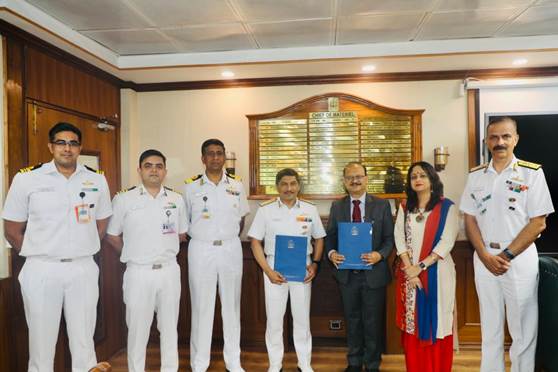
RRI has inked a Memorandum of Understanding (MoU) with the Indian Navy's R&D unit Weapons and Electronics Systems Engineering Establishment (WESEE), during a ceremony held in New Delhi recently. The MoU, which is for a period of 5 years, was signed between Professor Tarun Souradeep, Director, RRI, and Vice Admiral Sandeep Naithani, Chief of Materiel, Indian Navy.

Under this agreement, RRI’s Quantum Information and Computing (QuIC) lab will lead the research efforts towards developing quantum key distribution techniques that the Indian Navy could leverage in the nation's efforts towards securing free space communications.

The MoU was signed in New Delhi (Image Credit: Indian Navy) 

"I am absolutely delighted that Indian Science and Technology ecosystem has been opening borders in recent years that enable talented and world-class researchers in the academic research institutions to contribute to the growth of Science and Technology capabilities in strategic areas of national importance. Porosity of the perceived boundary between fundamental and applied sciences as well as Science and Technology, will bode well in the coming decades. RRI feels proud to partner with WESEE in cutting edge Science and Technology," said Prof. Souradeep.

Professor Urbasi Sinha, Group Head, QuIC lab, said, “This is a great opportunity to use indigenously developed science and technology knowledge to serve our nation. We are excited with the collaboration and believe that with our expertise in the domain of secure quantum communications, we will be able to help foster cutting-edge research towards identification of potential maritime use-cases for the Indian Navy.”

This lab has been leading the country’s research in the field of secure quantum communication. Some of its major achievements include the development of an end-to-end simulation toolkit named “qkdSim”, ensuring safety in communication platforms, establishing secure communication between two buildings, and, more recently, between a stationary source and a mobile receiver.

QuIC lab also happens to be India’s first laboratory to propose and implement a wide range of applications using single and entangled photons, particularly towards establishing secure communications in strategic areas like banking, defence, and cyber security.

Earlier this month, International Institute of Information Technology, Hyderabad (IIITH) partnered with Synergy Quantum India (SQ India) to establish Quantum Solution Lab with an aim of developing financially feasible quantum technologies and their applications in both military and civilian use cases.

In December 2020, India's DRDO unveiled "Quantum Key Distribution (QKD)" as a new technology developed by DRDO's Centre for Artificial Intelligence and Robotics (CAIR) and DRDO Young Scientist Laboratory (DYSL-CT).

Last year in August, it was reported that, QNu Labs, a Bengaluru-based Deep Tech Start-up, supported by the Defence Ministry's iDEX, did successful trials of QKD system and even equipping Indian Army with Quantum Communication technology.

India Partners with Germany's Fraunhofer ISE for Developing Indigenous Hydrogen and Clean Energy Technologies

India Partners with Germany's Fraunhofer ISE for Developing Indigenous Hydrogen and Clean Energy Technologies

Department of Science and Technology (DST), Government of India, has signed a letter of intent (LoI) with Germany based Fraunhofer Institute for Solar Energy Systems (Fraunhofer ISE) for a long-term collaboration focusing on hydrogen technologies.

This collaboration will pave the way to forge active engagements & collaborations based on mutual needs and strength to further research & technological capabilities in the hydrogen & clean energy sector.

Both countries have committed to develop a national green hydrogen economy to facilitate achievement of the Paris Agreement targets.

The LoI will trigger development of higher Technology Readiness Level (TRL) for hydrogen energy clusters being set up by DST and identify existing technologies and potential interventions from Fraunhofer in green hydrogen, integrate them with indigenous technologies, and deploy /calibrate them for Indian conditions.

DST will provide the enabling framework for cooperation in the hydrogen valley cluster projects, support activities, and facilitate the resources needed wherever applicable and possible. Meanwhile Fraunhofer acts as a technology partner for the hydrogen valley /cluster, provides information and access to technologies of TRL 5 – 8, scientific and technical experts, collaboration in preparing technology roadmaps and guidelines for innovation ecosystem/cluster.

The LoI was signed on 25th February, 2023, by Dr. Anita Gupta, Scientist G and Head, Energy Technologies Cell, DST and Prof. Dr. Christopher Hebling, Director, Division Hydrogen Technologies, Fraunhofer ISE in the presence of Secretary, DST, Dr. S. Chandrasekhar.

The event was also attended by Mr. R. Madhan, Director, Indo-German Science & Technology Centre (IGSTC), Ms Anandi Iyer, Director Fraunhofer India and officials representing both the sides.

To Boost Astro Tourism in India, Govt Setting Up India’s First-Ever "Night Sky Sanctuary" in Next 3 Months

To Boost Astro Tourism in India, Govt To Set Up India’s First-Ever "Night Sky Sanctuary"

In what could be called as unique and first-of-its-kind initiative in India's science & astronomy history, the Department of Science & Technology (DST) under Ministry of Science & Technology, Govt of India, has undertaken to set up India’s first-ever "Night Sky Sanctuary" in Ladakh in order to boost Astro tourism in India as one of the world’s highest-located sites for optical, infra-red, and gamma-ray telescopes.

The proposed Dark Sky Reserve, which will be completed within next three months, is situated at Hanle in Ladakh.

The upcoming Night Sky Sanctuary will be a part of Changthang Wildlife Sanctuary, informed Dr Jitendra Singh, the Union Minister of State (Independent Charge) Science & Technology.

Notably, Hanle is a historic village and home to the world's tallest astronomical observatory, and it was designated as a Dark Sky Sanctuary by The Union Territory administration in Ladakh, in early this year. Hanle is also home to a special "cherenkov telescope" called as "Major Atmospheric Cerenkov Experiment Telescope (MACE)". It is the highest (in altitude) and second largest Cerenkov telescope in the world.

For the launch of Night Sky Sanctuary the site, a tripartite MoU has been signed among the the Union Territory administration, Ladakh Autonomous Hill Development Council (LAHDC) Leh and the Indian Institute of Astrophysics (IIA).

The upcoming "Dark Space Reserve" site will have activities to help in boosting local tourism and economy through interventions of Science and Technology. All the stakeholders will jointly work towards the preservation of the night sky from unwanted light pollution and illumination, which is a serious threat to the scientific observations and natural sky conditions. It may be noted that Hanle is best suited for this project as it is located in Ladakh’s cold desert region, away from any form of human disturbance and clear sky conditions and dry weather conditions exist throughout the year, the Minister added.

Besides, few private companies are also working on boosting astro-tourism in the country. Starscapes, a leading astro-tourism company in India, has been actively working towards promoting Dark Sky Locations in India in a bid to boost interest in astro-tourism

Earlier in last month, IIT Hyderabad established its first astronomical observatory with a large telescope for public outreach.

Prior to this, in  June this year, India's 1st and Asia's largest liquid mirror telescope was launched in Uttarakhand at campus of Aryabhatta Research Institute of Observational Sciences (ARIES) to keep a watch on the overhead sky to identify transient or variable objects such as supernovae, gravitational lenses, space debris, and asteroids.

Delhi Startup Gets Seed Funding from DST for Anti-pollution Helmet

Delhi Startup Gets Seed Funding From DST for Anti-pollution Helmet

Delhi-based startup Shellios Technolabs (Shellios), which has developed an anti-pollution helmet, has received seed funding from the Department of Science and Technology (DST), Ministry of Science and Technology, Government of India. The startup claims that it has designed a new-age helmet that helps reduce its users' exposure to toxic pollutants by more than 80%.

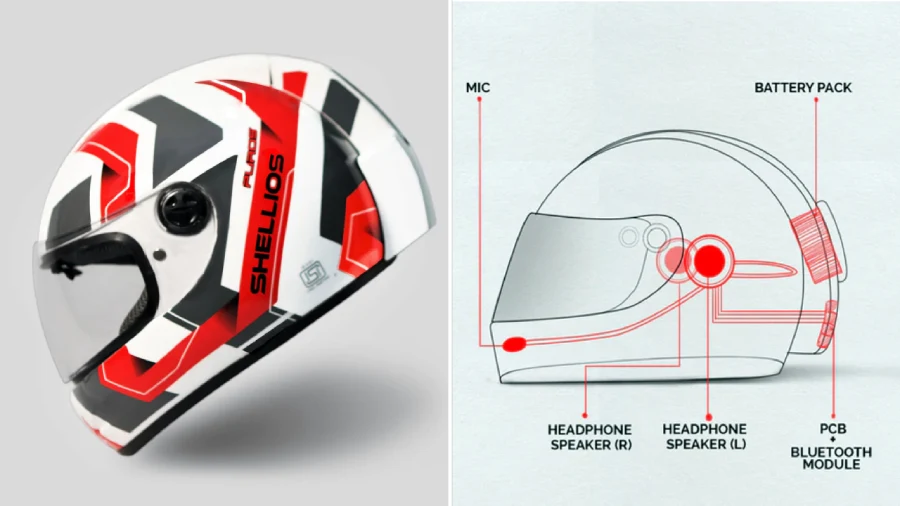
Shellios has developed a "Clean Air Helmet" dubbed as 'PUROS' integrated with air purifying accessories including the patented innovations of the startup — a Brushless DC (BLDC) blower fan, High-Efficiency Particulate Air (HEPA) filter membrane, electronic circuit, and microUSB charging port integrated into the helmet.

The patented anti pollution helmet has a purifying system set at the back of the helmet that picks up all particulate matter coming from outside and cleans the air before it reaches the biker, via its H13 Grade HEPA filter. In addition, it also reduces visor fogging & feeling of suffocation. The helmet has a cordless device with a dedicated rechargeable power supply.

The helmet has a Bluetooth-enabled app that lets the rider know when the helmet requires cleaning.

Puros Helmet
Image - www.shellios.com

Puros Helmet
Puros Helmet [Image - www.shellios.com]

The startup had signed commercialization deals with leading Original Equipment Manufacturers (OEMs) for the helmet. The product, at Technology Readiness Level (TRL) level 9 has been granted utility patent and is now being sold in all parts of the country priced at Rs. 4500/-. The end-users of the product include individual riders all over India and for the next version, Shellios ties up with top tier-2-wheeler OEM for the commercialization of the anti-pollution helmet.

Founded in 2017, by Amit Pathak & Mayank Pathak, Shellios design & develops technology-enhanced wearables like helmets, headgears and respirators for a variety of settings, so as to solve problems faced by two-wheeler riders including polluted air, suffocation, heat & sweating, impaired communications, difficulties in navigation during different ride scenarios.

Shellios Technolabs was incubated at DST-established Science and Technology Entrepreneur Park (JSSATE-STEP), Noida. Sellios was earlier seed funded under STEP programme of National Science & Technology Entrepreneurship Development Board (NSTEDB). It was also shortlisted as one of the top 15 startups of India in 2018 by QUALCOMM®.

Earlier in 2020, an another Delhi-based startup, Proxgy, has developed a smart helmet with a 360-degree rotating camera, which is mounted in a VR powered helmet and do live broadcasting in a 3D view.

Technology Development Board of DST Forays Into Aquaculture, Funds Its 1st Aquaculture-Project That Uses Israeli Tech

TDB of DST Forays Into Aquaculture Funds Its 1st Aquaculture-Project Using Israeli Tech
Fountainhead's Aquaculture Site [Image - fafpl.co.in]

Inspired by Pradhan Mantri Matsya Sampada Yojana, and to bring ‘Blue Revolution’ TDB-DST supports its first aquaculture project

Realizing the potential of Fisheries sector, Government of India has taken several steps to promote and encourage fisheries & aquaculture in the country. Last year in July, Union Minister for Fisheries, Animal Husbandry and Dairying, launched the Online Course Mobile App “Matsya Setu” to disseminate the latest freshwater aquaculture technologies to the aqua farmers of the country.

In a latest now, Technology Development Board (TDB), a statutory body under Department of Science and Technology (DST), Govt. of India has funded its first ever ‘Aquaculture’ project using ‘state of the art’ Israeli technology for production of Tilapia Fish. The board has supported Navi Mumbai-based Fountainhead Agro Farms Pvt Ltd. (Fountainhead), for ‘Advanced, Intensive, All Male Tilapia Aquaculture Project with Israeli Technology’, says today's press release by Ministry of Science & Technology.

TDB has penned an mutual agreement, to provide loan assistance of Rs. 8.42 crores out of the total project cost of Rs. 29.78 crores to the company.

Tilapia’ has emerged to be one of the most productive and internationally traded food fish in the world. The culture of tilapia has become commercially popular in many parts of the world and the fishery experts have dubbed the tilapia as “aquatic chicken” due to its quick growth and low maintenance cultivation. Today, if any fish that could be named as global fish, no better name can be thought of than Tilapia.

In order to facilitate the culture of Tilapia in India in responsible manner, Fountainhead envisages setting up of a complete production line (from breeding to full fish) in Mudhol (Karnataka). The company aims to produce 500 tons of Tilapia, to be grown from the imported parent broodstock ‘Hermon’ from Nir David Fish Breeding Farm, Israel.  

Hermon is a hybrid of two selected strains of Tilapia, namely Oreochromis Niloticus (Male) and Oreochromis Aureus (Female), and is known for special characteristics such as high growth rate; resistance to low temperature.

Fountainhead Site in construction for Aquaculture [Image - fafpl.co.in]

Fountainhead initiated the conventional fish farming of Indian Major Carps (IMC) at Mudol, Karnataka by converting the sugarcane fields to earthen ponds and drawing water through pipelines from the river. It specialized over the years to grow particular breed of IMC from seedling stage to full grown fish, most conducive to the water and soil properties of the established Site location spreading over 16 acres of land.

The company has adopted advanced Israeli Technology from Aquaculture Production Technology Limited (APTIL), Israel (under Technology Service Agreement signed in October, 2020) for land locked locations through closed loop farming for arid zone with seasonal water supply from rivers, which may be replicated throughout India in multiple arid landlocked locations with reasonable water sources. In order to suit Indian conditions, the complete engineering of the facility is tuned as per the requirement of site conditions such as land availability, water availability, weather conditions, availability of the surrounding resources, soil conditions, topography.

Mr. Rajesh Kumar Pathak, IP&TAFS, Secretary, TDB said that, “The Govt. of India has placed special attention to fisheries sector with a view to uplift fishermen community of India economically through ‘Blue Revolution’. The sector holds vast potential for export, especially the ‘Tilapia Fish’ considering its huge demand in the global market. Also, the imported technology being ‘one of its kind’ will be a great addition to Pradhan Mantri Matsya Sampada Yojana (PMMSY), the ambitious scheme of Hon’ble PM, which aims to double the export earnings to Rs.1,00,000 crore from fisheries sector.

Fisheries is one of the fastest growing sectors amongst the primary producing sectors. The sector plays a vital role in economic and overall development of the country, also referred as the “sunrise sector”, it is poised to bring in immense potential through equitable and inclusive growth. The sector is recognized as a powerful engine for providing employment to 14.5 million people and sustaining livelihood for 28 million fishermen community of the country.

A couple of months back, AquaExchange, a full-stack, tech-driven platform serving India’s multi-billion-dollar shrimp & fish ecosystem, had raised $3 million in Pre-Series A funding from Endiya Partners and Accion Venture Lab, and others. AquaExchange’s IoT-powered technology helps India’s shrimp and fish farmers improve productivity and increase profits

Notably, to promote fisheries the cabinet under the chairmanship of Hon’ble Prime Minister, came up with ‘Pradhan Mantri Matsya Sampada Yojana (PMMSY)’ to bring about ‘Blue Revolution’ through sustainable and responsible development of fisheries sector in India.

The PMMSY scheme targets to enhance fish production to 220 lakh metric tons by 2024-25, at an average annual growth rate of about 9%. The ambitious scheme also aims to double the export earnings to Rs.1,00,000 crore and generate about 55 lakhs direct and indirect employment opportunities in fisheries sector over a period of next five years.

Market Reports

Market Report & Surveys
IndianWeb2.com © all rights reserved