Showing posts with label EV Charging. Show all posts

Mumbai Gets a MegaCharge! Tata Power & Tata.ev Launch City’s Largest EV Hub

Mumbai Gets a MegaCharge! Tata Power & Tata.ev Launch City’s Largest EV Hub

In a landmark move to accelerate India’s electric mobility infrastructure, Tata Power Company Limited and Tata Passenger Electric Mobility Limited have jointly inaugurated Mumbai’s first large-scale premium EV charging hub under the TATA.ev MegaCharger initiative. The launch coincided with World EV Day, marking a strategic milestone in the country’s clean energy transition.

A Flagship Collaboration for Urban EV Adoption

The co-branded charging facility was unveiled by Dr. Praveer Sinha, CEO & MD of Tata Power, and Mr. Shailesh Chandra, MD of Tata Motors Passenger Vehicles and Tata Passenger Electric Mobility. Located within the premises of The Leela Mumbai Hotel, adjacent to Terminal 2 of Chhatrapati Shivaji Maharaj International Airport, the hub is designed to serve a wide spectrum of EV users—from private car owners to commercial fleets.
This MegaCharger hub reflects our commitment to building a robust, accessible EV ecosystem that supports India’s net-zero ambitions,” said Dr. Sinha during the inauguration.

Infrastructure Highlights

  • Eight fast DC chargers with speeds up to 120 kW
  • 16 charging bays, enabling simultaneous charging for 16 EVs
  • 24/7 accessibility for private vehicles, taxis, ride-hailing services, and logistics operators
  • Strategically positioned to serve airport travelers, hotel guests, and professionals in the Andheri–BKC–South Mumbai corridor
The facility aims to eliminate long wait times and offer a seamless charging experience, especially during peak hours. Its location near a major transit hub also makes it a critical node in Mumbai’s evolving EV landscape.

Clean Mobility Meets Premium Access

The TATA.ev MegaCharger hub is part of Tata Power’s broader strategy to deploy 25,000+ EV charging points across India by 2028. With this launch, the company reinforces its leadership in both EV infrastructure and sustainable urban planning.
“This initiative not only supports our growing EV customer base but also sets a benchmark for future-ready urban mobility solutions,” said Mr. Chandra.

Power Theft Fuels Delhi’s E-Rickshaw Boom, At a Cost of ₹120 Crore

Power Theft Fuels Delhi’s E-Rickshaw Boom, At a Cost of ₹120 Crore

Delhi’s e-rickshaw sector is grappling with widespread electricity theft, with reports indicating that 60% of e-rickshaws are charged using stolen electricity. This illegal practice is causing an estimated ₹120 crore in annual losses for power companies.

Many e-rickshaw drivers rely on unauthorized charging points, often set up in shops, parking lots, or even residential buildings, leading to frequent fire hazards. The lack of dedicated charging infrastructure has forced drivers to seek alternative, often unsafe, charging methods.

Authorities are under pressure to crack down on illegal charging hubs and establish regulated fast-charging stations to curb theft and improve safety.

How this issue ties into Delhi’s clean-energy policies?

Delhi’s clean-energy push is at odds with the widespread electricity theft fueling its e-rickshaw sector. While e-rickshaws were introduced as a green alternative to fossil-fuel-powered transport, their reliance on illegal charging networks undermines the city’s sustainability goals.

The Delhi Electricity Regulatory Commission (DERC) has set a special tariff of ₹4.50 per unit to encourage legal charging. However, with over 60% of e-rickshaws tapping into stolen power, the city faces ₹120 crore in annual losses. This not only strains the grid but also increases fire hazards, as many illegal charging points operate without safety measures.

Experts argue that dedicated fast-charging stations and strict enforcement are crucial to aligning e-rickshaw operations with Delhi’s clean-energy vision. Without intervention, the sector risks becoming a liability rather than an asset in the city’s transition to sustainable transport.

TATA.ev Launches Its First 10 High-speed Megachargers Across India

Tata.ev and Statiq MegaCharger – launch in Hamzapur
TATA.ev has launched its first 10 high-speed MegaChargers across India, marking a major milestone in expanding the country’s EV charging infrastructure. TATA.ev had committed to installing 500 TATA.ev MegaChargers across India. 

TATA.ev MegaChargers are high-speed EV charging stations designed to accelerate India's electric vehicle infrastructure. These chargers, launched by TATA.ev in collaboration with ChargeZone and Statiq, are strategically placed along major highways and urban hubs to support long-distance and city commuters.

The flagship 400 kW charger in Vadodara can charge six vehicles simultaneously, adding 150 km of range in just 15 minutes.

Key Highlights:

Strategic Locations: Chargers have been installed along major routes like the Mumbai–Ahmedabad, Delhi–Jaipur, and Pune–Nashik highways, as well as urban centers like Bengaluru and Udaipur.

Ultra-Fast Charging: The Vadodara MegaCharger offers 400 kW charging, capable of powering up to six vehicles simultaneously and adding 150 km of range in just 15 minutes.

Enhanced EV Experience: Many locations feature cafés, Wi-Fi, restrooms, co-working spaces, and retail outlets, making charging stops more convenient.

Scaling Up: This initiative is part of TATA.ev’s broader commitment to install 400,000 charge points by 2027, significantly boosting India’s EV ecosystem.

This move is expected to reduce range anxiety and accelerate EV adoption across India.

Balaje Rajan, Chief Strategy Officer, Tata Passenger Electric Mobility Ltd., and Tata Motors Passenger Vehicles Ltd., said, “At a time when EV adoption is on its growth path, ubiquitous and dependable charging infrastructure is the need of the hour. These first 10 TATA.ev MegaCharger sites in key EV corridors of the country are the first tranche of a superfast charging network that we will have across major highways. The TATA.ev MegaCharger network will increasingly connect all major cities across India to remove charging anxiety. We are on a mission to provide fast, reliable, and effortless charging that enables seamless mobility across the country – and we are just getting started.”

TATA.ev Launches Its First 10 High-speed Megachargers Across India
Tata.ev and Statiq MegaCharger – Tata.ev and Statiq team at the Tata.ev MegaCharger launch in Hamzapur

TATA.ev Launches Its First 10 High-speed Megachargers Across India
Tata.ev and ChargeZone – launch in Shreenath Food Hub in Vadodara

Gurugram-based EV Charger Maker Exicom Tele-Systems Acquiring Australia-based Tritium for $29.6 Million

Gurugram-based EV Charger Maker Exicom Tele-Systems Acquiring Australia-based Tritium

Gurugram-based Exicom Tele-systems, a leading provider of EV charging solutions in India and Southeast Asia, is acquiring Tritium, an Australian company known for its DC fast chargers. This acquisition will allow Exicom to expand its global footprint in the EV charging market, for USD $29.6 Million (approx. ₹ 248.48 crore) 

With this acquisition Exicom will gain access to Tritium's manufacturing facility in Tennessee, USA, and its engineering center in Brisbane, Australia.

Exicom will pay up to USD 6.13 million between the signing of the agreement and completion of the acquisition, with the remaining USD 23.5 million to be paid at completion, subject to the terms of the agreement. The acquisition is expected to be completed by August 31, 2024.

This move aligns with Exicom's strategic vision to contribute to a sustainable, emission-free future for mobility. By combining their expertise and resources, Exicom and Tritium aim to enhance the adoption of EV infrastructure worldwide.

With Tritium’s established presence in key markets like the USA and Australia, Exicom will be able to expand its global footprint more effectively. This could lead to increased availability of advanced EV charging solutions worldwide.

Exicom Tele-Systems offers a wide range of products, including AC and DC chargers for homes, workplaces, and public spaces.

Founded in 1994, Exicom has deployed over 70,000 chargers across various regions. Their solutions are known for their robustness and ability to operate in harsh environmental and electrical conditions. They also provide batteries, rectifiers, and energy storage solutions, along with installation and maintenance services.

Tritium was founded in 2001 by three engineering graduates from the University of Queensland – Dr. David Finn, James Kennedy, and Dr. Paul Sernia. The company initially focused on developing motor control technology for solar racing cars before shifting its focus to DC fast chargers for electric vehicles.

Tritium is renowned for its advanced DC fast chargers, which are designed to be both powerful and reliable. Its chargers, such as the PK350, can deliver up to 350 kW of power, enabling them to provide up to 350 km (217 miles of range to an EV in just 10 minutes. These chargers are capable of charging any EV on the market, automatically adjusting to the correct power level for each vehicle's battery.

Tritium's chargers are engineered to operate in extreme temperatures, from -35°C to +50°C (-31°Fx to +122°F), making them suitable for various environments. These chargers are designed to maximize space efficiency, with power units that can be located away from the user units. They include standard cable management to reduce hazards and offer custom branding options.

Tritium has sold over 13,000 chargers worldwide and supports a wide range of industries, from highway rest stops to heavy-duty mining vehicles.

Researchers at IIT Madras Develop Universal Battery Charger for Electric Vehicles

Researchers at IIT Madras develop universal battery chargers for electric vehicles

Researchers at the Indian Institute of Technology Madras (IIT-M) have developed a universal battery charger for electric vehicles (EVs). This innovative charger is capable of providing a wide range of voltages from 120-900 V from a universal input power supply, which means it can potentially charge all types of EVs, including two-wheelers, three-wheelers, and four-wheelers, from a single unit.

The charger also features a controller programming that can be adapted for use in different countries based on the input power supply availability. This could significantly simplify the EV charging infrastructure and is akin to having a universal fuel pump for different types of vehicles.

Moreover, the charger is designed to be portable, serving as an emergency kit in case of vehicle breakdown or deep discharge of the battery pack. The research team, led by Dr. Deepak Ronanki, Assistant Professor at the Department of Engineering Design, IIT-M, aims to commercialize this charger for both onboard and offboard use, which could help reduce the production cost of chargers and promote wider adoption of EVs.

This development addresses one of the major hurdles in the widespread adoption of EVs, which is the lack of a seamless and quick charging infrastructure. By being able to modify the input power supply to meet the EV's requirements and deliver the appropriate output voltage, the universal charger by IIT Madras could play a crucial role in the EV ecosystem.

This development is particularly significant as one of the major barriers to the adoption of EVs is the lack of a seamless and quick charging infrastructure. The universal charger developed by IIT Madras addresses this issue by being able to modify the available input power supply according to the EV's requirements and deliver an output voltage based on the battery pack voltages.

The research is led by Dr Deepak Ronanki, Assistant Professor, Department of Engineering Design, IIT-M, and published in peer-reviewed journal IEEE Transactions on Power Electronics.

The IIT Madras innovators are currently in talks with multiple industry players to commercialize the product. "We will be finalising a company very soon and the commercial production could happen in about a year’s time", said Dr Deepak. 

Source ~ Deccan Herald

Tata Power Strengthens Its Nationwide e-Bus Charging Network With High-Capacity Fast Charging Points

Tata Power Strengthens Its Nationwide e-bus Charging Network With High-Capacity Fast Charging Points

  • 2300+ e-buses powered through 850+ bus charging points across Delhi, Mumbai, Bengaluru, Ahmedabad, Goa, Jammu and Srinagar to accelerate e-mobility in public transport
  • Enabling e-mobility across 30+ bus depots for State Transport Corporations like DTC, BEST, BMTC, JSCL, SSCL, BRTS-AJL through OEM partnerships
  • Expansive pan-India bus charging network led to the saving of more than 1 lakh tonne tailpipe CO2 emissions
Tata Power Renewable Energy Limited (TPREL), a subsidiary of the Company, one of India's largest integrated renewable energy companies and electric vehicle charging service providers, continues to spearhead the nation's transition towards e-mobility by deploying 850+ charging points in key metropolitan areas.

With charging points strategically located across 30+ bus depots in prominent cities such as Delhi, Mumbai, Ahmedabad, Bengaluru, Jammu, Srinagar, Dharwad, Lucknow, and Goa, Tata Power has enabled 2300+ public e-buses nationwide. The robust bus charging network has successfully led to more than 1 lakh tons of tailpipe CO2 emissions savings. Tata Power has also designed and built various bus depots across the country.

Tata Power Renewable's charging infrastructure boasts of high-capacity fast chargers with a range of 180 - 240 KW with average charging time being of 1 to 1.5 hours. Rapid charging capabilities support the demanding operational needs of public transport buses.

Tata Power Strengthens Its Nationwide e-bus Charging Network With High-Capacity Fast Charging Points


While Delhi leads in e-bus presence utilizing Tata Power's EV Charging points, it is followed closely by Mumbai, Bengaluru, Ahmedabad, Jammu, and Srinagar. Tata Power is dedicated to promoting e-mobility adoption and is fostering synergies with various OEM operators and enabling various state governments’ transport corporations.

The company offers an end-to-end solution for charging infrastructure development, ensuring the best charging experience, emphasizing lean, customized, and cost-effective design solutions, along with timely execution and comprehensive operation and maintenance (O&M) services for our clients. Additionally, Tata Power provides services such as effluent treatment plants and statutory NOC approvals to ensure smooth business operations.

In alignment with India's Net Zero goals, Tata Power is committed to achieving Net Zero emissions by 2040. As a leader in the country's green energy transition, Tata Power offers a comprehensive range of green energy solutions from Rooftop Solar, Home Automation, and Smart Metering to EV Charging, to promote the adoption of sustainable lifestyles. This commitment is further reinforced by the company's 'Sustainable Is Attainable' movement, which aims to foster the widespread adoption of green energy solutions and transform sustainability into a people's movement.

Indian-origin Techie Develops Technology to Charge Phones/Laptops in A Minute and EVs in 10 Minutes

Indian-origin Techie Develops Technology to Charge Phones/Laptops in A Minute and EVs in 10 Minutes

Ankur Gupta, an Indian-origin researcher and assistant professor of chemical and biological engineering at the University of Colorado Boulder, a public research university in Boulder, Colorado, United States, has made a significant breakthrough. His research has led to the development of a technology that can charge laptops and mobile phones in just one minute. Moreover, this technology also has the potential to charge electric vehicles in about 10 minutes.

The key to this innovation lies in the efficient movement of ions within a complex network of minuscule pores, which could lead to more efficient energy storage devices like supercapacitors. Supercapacitors are known for their rapid charging times and longer lifespans compared to traditional batteries. Gupta's work modifies Kirchhoff’s law, which has governed current flow in electrical circuits since 1845, by demonstrating how ions move due to both electric fields and diffusion.

This discovery is not only promising for personal electronic devices but also for power grids, where fluctuating energy demand requires efficient storage to avoid waste during periods of low demand and to ensure rapid supply during high demand¹. It's indeed an exciting development in the field of energy storage and could revolutionize how we charge our devices in the future.

The research is still in the development phase and has been published in the Proceedings of the National Academy of Science. Gupta's team at the University of Colorado Boulder has discovered how ions move within a complex network of minuscule pores, which is a significant step towards developing more efficient energy storage devices like supercapacitors

Technology

Ankur Gupta's technology is based on the efficient movement of ions within a complex network of microscopic pores, leading to rapid charging capabilities for devices like laptops, mobile phones, and electric vehicles.

Simplified Explanation of How Ankur Gupta's Tech works:

Supercapacitors: The technology utilizes supercapacitors, which are energy storage devices that store and release energy by accumulating ions in their pores.

Ion MovementUnlike traditional batteries, where ions move relatively slowly, Gupta's technology allows for a more efficient movement of ions. This is achieved by optimizing the flow within a complex structure of interconnected pores.

Charging Speed: By enhancing ion mobility, the charging process becomes much faster, allowing for a laptop or phone to be charged in just a minute and an electric vehicle in about 10 minutes.

Energy Storage: This method is not only beneficial for personal electronics but also for power grids, where efficient energy storage is crucial to handle fluctuating demands.

The breakthrough lies in modifying Kirchhoff’s law, which traditionally describes current flow in electrical circuits. Gupta's research demonstrates how ions move due to both electric fields and diffusion, which is a significant departure from the behavior described by Kirchhoff’s law in a single straight pore.

This discovery enables the simulation and prediction of ion flow in a complex network of thousands of interconnected pores within minutes, which was previously not possible¹. It's a leap forward in energy storage technology, promising faster and more efficient charging for a variety of applications.

The research is ongoing, and it may take some time before we see this technology implemented in everyday devices. However, the potential impact of such a technology on the market and our daily lives could be substantial, offering much faster charging times and longer-lasting energy storage solutions.

Source – Colorado.edu

Tata Power Installed Over 220 RFID-equipped EV Charging Stations Across Karnataka

Tata Power Installed Over 220 RFID-equipped EV Charging Stations Across Karnataka

Tata Power is evidently spearheading the growth of sustainable mobility in Karnataka with its electric vehicle (EV) infrastructure in the state. The company has so far installed over 220 RFID-enabled EV charging stations across Karnataka, which are part of their EZ Charge network. These charging points are equipped with RFID card transactions for a seamless 'tap, charge, and go' system, making the charging process convenient for EV users.

The chargers are strategically placed along major highways connecting key cities like Bengaluru, Mangaluru, Davangere, and Mysuru, and also at popular tourist destinations such as Chikmagalur and Coorg. In Bengaluru alone, there are over 150+ charging points across various suburbs, ensuring that the capital city is well-covered.

This expansion by Tata Power is in line with Karnataka's vision to adopt clean and efficient transportation and positions the state as a leader in EV adoption in India. The initiative also includes collaborations with well-known public locations and commercial complexes to form a comprehensive charging network.

Other important cities with a notable EZ Charge presence include Mangaluru, Mysuru, Hubli, Belgaum, Gulbarga, and Davangere. EV Chargers have also been deployed at prominent public locations like Taj, Park, Oberoi, Gokulam Hotels, Tata Croma, and Tanishq, ensuring seamless accessibility for electric vehicle users.

With an extensive network of over 150+ charging points strategically positioned in Bengaluru across key suburbs like Devanahalli and Electronic City, Tata Power is committed to minimizing charging distances across the capital city also.

Tata Power has also collaborated with renowned builders and societies like Brigade Gardenia and Divyashree Elan Homes (RWA). This strategic approach extends to key commercial complexes, forming a comprehensive charging network in the state. Moreover, the company’s strategic collaborations with entities like Decathlon and Titan further strengthen its position in Karnataka's EV charging landscape.

Tata Power's EV charging stations, including those in Karnataka, are designed to be compatible with a variety of electric vehicle models. They have deployed a pan-India charging infrastructural solution with over 4000+ public and semi-public EZ CHARGE points that cater to diverse charging standards and specifications. This includes different EV vehicle categories and manufacturers, ensuring that a wide range of EVs can be accommodated.

Tata Power is actively advancing to fulfill the state government's visionary objectives. By strategically placing charging points in key locations, Tata Power not only facilitates the growing EV adoption but also contributes significantly to Karnataka's position as one of the leaders in EV adoption in the country.

Tata Power stands at the forefront of the electric vehicle charging domain, having forged impactful collaborations with state governments and municipal corporations nationwide. With a large market share, its commitment to sustainable mobility is exemplified through the extensive EZ Charge network spanning 530 cities and towns, 86,000 home chargers, 5300 public charging points, and 850 strategically positioned bus-charging stations. Present across prominent highways and diverse locations such as hotels, malls, offices, hospitals,residential complexes, etc., Tata Power is playing a pivotal role in accelerating e-mobility adoption across the country.

MG Motor and Epsilon Collab for EV Charging and Battery Recycling

MG Motor and Epsilon Collab for EV Charging and Battery Recycling

MG Motor India has collaborated with the Epsilon Group to enhance EV charging solutions and battery recycling.

MG Motor has signed a Memorandum of Understanding (MoU) with Power EV, a subsidiary of Epsilon Group, to provide Custom Charging technology for MG's electric vehicles (EVs). This technology will
include a range of AC and DC chargers capable of speeds from 22kW to 120kW.

Power EV aims to expand the availability of AC chargers and introduce high-capacity DC charging options by deploying 1,000 charging points in 1,000 days within residential communities and apartments across India.

Another Epsilon Group subsidiary, LICO, will assist MG Motor India in its Extended Producer Responsibility (EPR) obligations by providing comprehensive battery recycling and certification services. This partnership emphasizes a circular economy approach, focusing on second-life and end-of-life solutions for batteries.

MG Motor India's Chief Growth Officer, Gaurav Gupta, expressed that this collaboration signifies a strategic alliance aimed at realizing an efficient charging infrastructure that complements a circular economy. It's great to see companies working together to promote sustainable practices in the EV industry.

In India's First, Tata Power's EV Charging Network Surpasses 100 Million Green KMs Milestone

Tata Power's EV Charging Network Surpasses 100 Million Green KMs Milestone

Company’s comprehensive EV charging network serving 530 cities and towns to support the Government's vision for 1 crore annual EV sales by 2030

Tata Power, one of India’s largest integrated power companies and providers of electric vehicle charging solutions becomes the first EV Charging solutions provider to power 10 crore (100 million) green kilometers spanning public, semi-public, bus/fleet and home charger segments across India. This milestone achievement underscores Tata Power's pivotal role in promoting sustainable mobility solutions nationwide.

India's vision for sustainable transportation and the government's push for e-mobility through schemes such as FAME and the National Electric Mobility Mission aims to ensure that 30 percent of all vehicle sales in the country are electric by 2030. Recognizing the pivotal role of robust EV charging infrastructure in this transition, Tata Power has expanded its network under the name of EZ Charge (read easy) to over 86,000 home chargers, 5,300+ public, semi-public, and fleet charging points, along with 850+ bus charging stations across 530 cities and towns. These chargers have been strategically deployed at diverse and accessible locations such as highways, hotels, malls, hospitals, offices, residential complexes, etc. This concerted effort has been instrumental in facilitating the exponential growth of electric mobility in India.

According to an industry estimate, India is expected to reach annual sales of 1 crore electric vehicles by 2030. Tata Power, with its presence across the country, stands at the forefront of this transformative journey.

With a surge in demand for electric vehicles and an EV charging infrastructure, Tata Power is also ensuring tech-enabled customer-centric solutions such as the RFID card that enables EV users to tap.charge.go by making wireless payments.


Tata Power has received the prestigious 'Shoonya Infrastructure Champion' accolade for our unwavering dedication to zero-emission mobility. This recognition was recently bestowed upon the company during the 2nd Annual Shoonya Forum in New Delhi. Launched in 2021 by NITI Aayog, the Shoonya – Zero Pollution Mobility campaign has fostered crucial collaborations, including with MyGov, the Government of India's citizen engagement platform, and approximately 200 industry partners. These partnerships, spanning e-commerce and food delivery firms, ride-hailing services, vehicle manufacturers, fleet aggregators, infrastructure providers, and financiers, are instrumental in shaping the landscape of cleaner mobility within the electric vehicle (EV) ecosystem.

Adani TotalEnergies E-Mobility and MG Motor India Tie-up To Develop EV Charging Infrastructure

Adani TotalEnergies E-Mobility and MG Motor India Tie-up To Develop EV Charging Infrastructure

Adani TotalEnergies E-Mobility Limited, a wholly owned subsidiary of Adani Total Gas (ATGL), and MG Motor India have signed a Memorandum of Understanding (MoU) to collaborate on developing electric vehicle (EV) charging infrastructure.

This partnership aims to enhance the EV ecosystem by setting up CC2 60 kW DC chargers at upcoming MG dealerships, improving customer accessibility to charging facilities. Additionally, the two companies plan to integrate public charging stations across platforms using advanced application programming interfaces (APIs), which will contribute to a cleaner environment by reducing carbon emissions.

The collaboration between Adani TotalEnergies E-Mobility and MG Motor India addresses one of the major hurdles in EV adoption - the lack of charging infrastructure. By setting up fast-charging stations at MG dealerships, the collaboration will make it more convenient for EV owners to charge their vehicles. The partnership aims to improve customer experience by providing easy access to charging facilities, which can encourage more consumers to consider purchasing EVs.

In addition, a digital platform will be launched to facilitate a seamless customer experience, covering discovery, user authentication, charging, and billing settlement through a dedicated mobile application.

With this partnership, integrating public charging stations across platforms using APIs will likely lead to a more seamless charging experience for users, as they can locate and access chargers through a unified system.

By pomoting the use of EVs, this collaboration contributes to reducing carbon emissions, aligning with global efforts to combat climate change and promote sustainability. Such collaborations can stimulate the growth of the EV market in India, potentially leading to increased investment and innovation in the sector.

Overall, this MoU represents a strategic move to accelerate India's transition to a greener automotive landscape.

Tata Passenger Electric Mobility and Hindustan Petroleum Partner To Introduce RFID Payment Sustem and Setup 5000 EV Charging Stations

Tata Passenger Electric Mobility and Hindustan Petroleum Partner To Introduce RFID Payment Sustem and Setup 5000 EV Charging Stations

Tata Passenger Electric Mobility Ltd. has collaborated with Hindustan Petroleum Corporation Limited to setup 5,000 electric vehicle charging stations in India by December 2024.

The MoU was signed today, by (L – R) Mr. Balaje Rajan, Chief Strategy Officer, Tata Motors Passenger Vehicles Ltd., and Tata Passenger Electric Mobility Ltd., and Mr. Debashis Chakraverty, Chief General Manager- Retail Strategy and Business Development, Hindustan Petroleum Corporation Ltd.

Tata Passenger Electric Mobility Ltd. (TPEM), known for pioneering India’s electric vehicle revolution, has signed an MOU with Hindustan Petroleum Corporation Ltd. (HPCL) to collaborate in establishing 5,000 electric vehicle charging stations in India by December 2024.

This strategic partnership aims to improve the experience of EV owners across India by setting up chargers at locations frequently visited by Tata EV owners. HPCL, with its nationwide network of over 21,500 fuel stations, is committed to a sustainable future and aims to install 5,000 electric vehicle charging stations by the specified deadline.

Additionally, the two companies are exploring the introduction of a convenient payment system through a co-branded RFID card, which will make the charging experience hassle-free. Leveraging TPEM’s extensive insights into EV usage and HPCL’s extensive nationwide network, this partnership has the potential to transform the charging infrastructure landscape in the country.

Commenting on this partnership, Balaje Rajan, Chief Strategy Officer, Tata Passenger Electric Mobility Ltd. and Tata Motors Passenger Vehicles Ltd. said, “As the adoption of EVs increases, the availability of widespread and dependable charging infrastructure will play a crucial role in making EVs mainstream in India. This strategic partnership with HPCL emphasizes our dedication to advancing India’s EV ecosystem in which the growth of charging infrastructure plays a pivotal role. This collaboration is essential for facilitating infrastructure development to support the expanding EV customer base. Leveraging TPEM’s extensive insights into EV usage and HPCL’s extensive nationwide network, this partnership has the potential to transform the charging infrastructure landscape in the country.”

According to Debashis Chakraverty, Chief General Manager, Retail Strategy & BD, HPCL, “HPCL with its 21000+ fuel stations has entered into an alliance with Tata Motors that commands 68% market share in Indian EV market. Through this alliance, HPCL shall leverage Tata Motors’ vehicle base to enable our strategic expansion in EV Charging infrastructure at places with higher charging demand and will help in reducing range anxiety of EV customers

Case studies from across the world show that ubiquitous and convenient charging infrastructure is a prerequisite for driving EV adoption, and that growth in charging infrastructure results in exponential growth in EV adoption as well. To that effect, the collaboration between two leading companies in this space is sure to help catapult India’s EV growth to its next phase.

Mahindra Signs MoU with Adani Total Energies E-Mobility for Expanding EV Charging Infra Across India

Mahindra Signs MoU with Adani Total Energies E-Mobility for Expanding EV Charging Infra Across India

Mahindra & Mahindra, a leading SUV manufacturer in India, has signed a Memorandum of Understanding (MoU) with Adani Total Energies E-Mobility Limited (ATEL). This partnership aims to expand the electric vehicle (EV) charging infrastructure across India, enhancing the convenience and reach of EV charging for Mahindra EV owners.

The collaboration is part of a broader initiative to accelerate the adoption of EVs in line with India's climate action goals. It includes the integration of more than 1100 chargers into the Bluesense+ App, which will provide Mahindra's XUV400 customers with seamless access to the charging network.

This strategic alliance is a significant step towards building a sustainable future and decarbonizing transportation, in accordance with COP 26 commitments.

Moreover, the partnership will also entail rolling out e-mobility solutions to provide seamless access to the charging network for the customers covering discovery, availability, navigation, and transactions. With this association, the XUV400 customers will now have access to more than 1100 chargers on the Bluesense+ App, significantly enhancing the convenience and reach of electric vehicle charging for Mahindra EV owners.

Veejay Nakra, President - Automotive Division, M&M Ltd. said, "We are thrilled to partner with Adani Total Energies. This alliance is a cornerstone in enhancing the EV charging infrastructure, ensuring our customers enjoy seamless access to charging network and digital integration for an unparalleled EV experience. In line with our commitment to enhance customer experience with partner network, we are actively on-boarding multiple partners to broaden the EV ecosystem, driving the adoption of electric vehicles."

Mr. Suresh P Manglani, Executive Director & CEO of Adani Total Gas Ltd. said, "This is one more step towards expanding the footprint of Adani Total Gas Ltd in the EV space. The collaboration with M&M for the charging infrastructure will bolster the confidence of customers to embrace EV technology as part of the energy transition. Together, such steps will help reduce carbon emissions, and help India meet its climate action goals."

Tata Power Achieves A Milestone of 1000 Green Energy-powered EV Charging Points in Mumbai

Tata Power Achieves A Milestone of 1000 Green Energy-powered EV Charging Points in Mumbai

Tata Power, one of India’s largest integrated power companies and electric vehicle charging solutions providers, has made a notable stride towards sustainable mobility by transitioning over 1000 of its EV charging points in Mumbai to being powered by green energy.

With over 10000 EVs and growing four-wheelers on the roads, Mumbai is rapidly embracing e-mobility. To support this growth, Tata Power is spearheading the development of an extensive EV charging infrastructure throughout the city. Currently, Mumbai is equipped with over 1000 green charging points out of which 44 are public, 385 are in residential societies, 58 are across commercial locations such as malls, hotels, workplaces, etc, and 531 are fleet charging points. Their presence at strategic locations ensures convenient access for EV owners.

Moreover, the network also extends along major highways, facilitating seamless intercity travel for electric vehicle users. Tata Power has been providing EV charging services to players like Everest, CAB-E and also has EV charging points at prominent residential societies like Rustomjee Oriana, Rustomjee Elanza, Lodha The Park, Kalpataru Pinnacle, Lodha Primero, The Reserve by Runwal across the city.

To encourage intercity travel along popular routes, Tata Power has installed over 19 fast charging points on the Mumbai-Pune highway and about 26 fast charging points on the Mumbai-Goa (via Pune) highway. Tata Power's dedication to enhancing nationwide EV charging accessibility is evident through its comprehensive network that spans over 475 cities and towns, offering a variety of charging solutions tailored to meet the needs of home users, public and semi-public, and bus fleets. With more than 73,000 home chargers, 5,300+ public, semi-public, and fleet charging points, and 690+ bus charging stations, Tata Power is at the forefront of driving the transition towards environment- friendly transportation.

Tata Power has outlined an ambitious plan to expand its green energy footprint to an additional 4000 charging points across Maharashtra, in a phased manner. This expansion aims to not only extend the reach of accessible EV charging solutions but also to ensure that these facilities are powered by 100% renewable energy sources. This initiative is aligned with Tata Power's ‘Sustainable Is Attainable’ movement, positioning the company as a pioneer in the shift towards a greener future.

By focusing on renewable energy sources for EV charging, Tata Power is not just facilitating eco-friendly transportation but is also setting a benchmark for sustainability in the energy sector. This strategic move is poised to inspire a nationwide paradigm shift, encouraging other states to adopt similar green initiatives.

SIDBI Grants ₹ 12.45 Cr to ETO Motors to Deploy 300 Electric 3-Wheelers in Delhi, Hyderabad and Build EV Charging Infrastructure

SIDBI Grants ₹ 12.45 Cr to ETO Motors to Deploy 300 Electric 3-Wheelers in Delhi, Hyderabad and Build EV Charging Infrastructure
Small Industries Development Bank of India (SIDBI) has granted INR 12.45CR to ETO Motors to deploy 300 Electric 3-wheelers in Delhi and Hyderabad and also build an EV Charging Infrastructure to support the deployment

The Small Industries Development Bank of India (SIDBI) has granted INR 12.45 CR to ETO Motors to deploy 300 Electric 3-Wheelers (E3W) in Hyderabad and Delhi for first and last-mile passenger connectivity. ETO Motors, as part of the financial support, will also build an EV Charging Infrastructure to support the deployment of 300 E3Ws in Hyderabad and Delhi.

The financial support to ETO Motors is under SIDBI’s Mission 50K-EV4ECO which aims at strengthening the EV ecosystem in India, including uptake for two, three and four-wheelers through direct and indirect lending. The objective of this scheme is to provide access to affordable financing for electric vehicles and to develop charging infrastructure, including battery swapping.

As part of the funding, ETO Motors will deploy three hundred Electric 3-Wheelers, in the cities of Delhi and Hyderabad, over the next 3 months. ETO Motors will also set up 180 Charging points, in the two cities, to support the E3W deployment.

ETO Motors is one of very few EV players that have received financial support from SIDBI under its Mission 50K-EV4ECO scheme. This is a testament to ETO Motors which is India’s largest Electric Mobility as a Service (EMaaS) company. Currently, ETO Motors partners with metro rails like Delhi Metro, Nagpur Metro, Hyderabad Metro, and Pune Metro for passenger first and last mile connectivity. ETO Motors manages over 1,500 E3Ws ( Passenger + Cargo) and has over 1,500+ drivers, including 200 women drivers.

 
SIDBI Grants ₹ 12.45 Cr to ETO Motors to Deploy 300 Electric 3-Wheelers in Delhi, Hyderabad and Build EV Charging Infrastructure

Speaking at the occasion of SIDBI choosing ETO Motors under the mission 50K-EV4ECO scheme, Dr. Karthik S. Ponnapula, Director, ETO Motors said, “We are extremely thrilled to have been chosen by SIDBI under its 50K-EV4ECO scheme. This is a testament to our work in the EV/ E3W space as we move forward to help fulfil our country’s EV mission 2030. The financial support will synergize our capabilities in manufacturing state-of-art E3Ws and managing them as a fleet to optimize performance. It will also support our charging infrastructure initiative which is an essential requirement for the growth of EVs in the country.”

The E3Ws will be manufactured in ETO Motors’ state-of-art manufacturing capacity in Jadcherla, Telangana which also includes a modern research and development lab. The E3Ws are manufactured with a focus on safety (only e3W in India with a seatbelt) and technology, incorporating a fully integrated Vehicle Control Unit and IoT connected platform.

About ETO Motors

ETO Motors is India’s largest eMaaS (Electric Mobility as a Service) company with a fleet of over 1500 e3Ws (Electric Three Wheelers) under management.

It has, though its experience and expertise in managing electric fleets, collaborated with multiple ecommerce, grocery, B2B companies - Amazon, Flipkart, Big Basket, Ikea - for their first and last mile connectivity.

It is also driving growth in passenger market through tie-ups with ride aggregators (Uber), last mile delivery solution (Amazon, FlipKart, BigBasket, Gati, DHL, Blue Dart, Bisleri, ShadowFax, BlowHorn, Exide etc ) and with metro rails like Delhi Metro, Nagpur Metro, Hyderabad Metro, Pune Metro, Bengaluru Metro and Chennai Metro for passenger first and last and last mile https://www.facebook.com/photo.php?fbid=473526441463585&set=a.422887116527518&type=3&mibextid=rS40aB7S9Ucbxw6v.


Indian Oil Corporation and Tata Power To Roll Out 500+ Fast and Ultra-Fast EV Charging Points Across India

Indian Oil Corporation and Tata Power To Roll Out 500+ Fast and Ultra-Fast EV Charging Points Across India

Just a few days after Tata Passenger Electric Mobility Ltd. (TPEM) signed a Memorandum of Understanding (MoU) with Bharat Petroleum, an another Tata conglomerate company, Tata Power EV Charging Solutions Limited (TPEVCSL), has signed an MoU with Indian Oil Corporation Limited (IOCL) to roll out fast and ultra-fast electric vehicle (EV) charging points across India. The collaboration will see Tata Power install 500+ EV charging points across multiple IOCL retail outlets.

These EV charging points will be installed in major cities like Mumbai, Delhi, Kolkata, Bengaluru, Ahmedabad, Pune, and Kochi, as well as across major highways such as the Mumbai-Pune Expressway, Salem-Kochi Highway, Guntur-Chennai Highway and the Golden Quadrilateral. This strategic collaboration focusses on building a reliable and expansive intercity charging network which will help alleviate range anxiety for EV owners travelling between cities.

Mr. Virendra Goyal, Head -Business Development-EV Charging, Tata Power said "Our partnership with IOCL is a strategic move towards establishing a robust EV charging network in the country. Leveraging IOCL's extensive presence, Tata Power will set up fast and superfast charging points in multiple regions, contributing to accessibility and inclusivity for a sustainable electric mobility future.”

Earlier in last week, TPEVCSL had also inked an MoU with the Kanpur Municipal Corporation to install 12 EV charging stations across six strategic locations in Kanpur.

Tata Power is committed to enhancing the EV user experience through tech integration and innovative solutions. EV users will have a dual advantage of a seamless EV charging experience through the ‘Tata Power EZ Charge’ app and ‘IndianOil e-Charge’ mobile app that can be used to locate and book the chargers at their convenience.

Representing IOCL, Sh. Saumitra Shrivastava, Executive Director (Retail-N&E) expressed the Corporation’s commitment to adapting to the rising trend of electric vehicle penetration. "IOCL envisages to provide 10,000 EV Charging Stations by 2024 transforming retail network to complete energy solutions outlets. With more than 6,000 EV charging stations at present, the company plans to keep expanding its reach. Our strategic partnership with Tata Power is poised to play a pivotal role in responding to this transformative shift. We at IOCL are geared up to overcome challenges and capitalize on opportunities in this area, ensuring a seamless transition towards a more sustainable and eco-friendly mobility paradigm."

Mr. K Navin Charan, Chief General Manager, Retail Transformation, IOCL; Mr. Soumitra Chakraborty, Chief General Manager, Marketing Strategy, IOCL, and Mr. Virendra Goyal, Head of Business Development – EV Charging, Tata Power were present during the MoU signing ceremony along with officials from IOCL and Tata Power.

Tata Power has established itself as a leader in the electric vehicle charging domain, with a substantial market share of nearly 60%. Their expansive nationwide network, reaching more than 420 cities, offers a comprehensive array of charging solutions, including over 62,000 home chargers, 4,900 public and semi-public charging points, and 430 bus charging stations. Notably, this network is continually expanding, underscoring Tata Power's unwavering commitment to enhancing electric vehicle charging accessibility across the nation.


Bharat Petroleum and Tata Motors To Setup 7,000 Public EV Charging Stations By Next Year

Bharat Petroleum and Tata Motors To Setup 7,000 Public EV Charging Stations By Next Year

Fortune Global 500 Company, Bharat Petroleum Corporation Limited (BPCL), which is the second largest Indian Oil Marketing Company and one of the premier integrated energy companies in India, aims to install 7,000 electric vehicle charging stations by next year. For this, BPCL has signed an MOU with Tata Passenger Electric Mobility Ltd. (TPEM), a subsidiary of Tata Motors, to collaborate in establishing public charging stations across India.

The collaboration will leverage BPCL’s widespread fuel stations network and TPEM’s insights from over 1.15 lakh Tata EVs on Indian road, to set up chargers at locations frequently visited by Tata EV owners. Additionally, BPCL will gather insights on charger usage to improve customer experience.

This agreement between TPEM and BPCL aims to improve the overall experience for EV owners across India. The two companies are also exploring the possibility of introducing a convenient payment system through a co-branded RFID card, making payment easier for Tata EV users and to encourage more people to adopt electric vehicles in the country.

BPCL boasts a nationwide network of over 21,000 Fuel Stations and is committed to a sustainable future by amalgamating strategy, investments, and environmental goals. BPCL aims to install 7,000 electric vehicle charging stations by next year. To alleviate electric vehicle owners’ range concerns, BPCL has initiated over 90 Electric Vehicle Fast Charging Highway Corridors across the nation, ensuring a fast-charging station approximately every 100 kilometers on both sides of major highways. These corridors span more than 30,000 kilometers across various highways, assuring enhanced EV convenience and accessibility.

According to Santosh Kumar, Executive Director In charge Retail, BPCL said “BPCL is constantly striving to align with the nation’s vision to achieve net zero carbon emissions by 2040. BPCL steadily moving closer to goal to converting 7000 of our conventional retail outlets into energy stations which is a part of a comprehensive decarbonization strategy to support and prioritize sustainable initiatives. BPCL has already set up a very large network of fast charging stations across highways. EV is a field of collaboration and we believe that the joining hands with TPEM shall take the EV game of BPCL and TPEM to the next level.”

TPEM is the market leader in EVs in India, commanding a market share of over 71% in electric passenger vehicles. With more than 115,000 Tata EVs on Indian roads, where 75% are used as primary vehicles, TPEM continues to lead the way in India’s electric mobility revolution.

According to Shailesh Chandra, Managing Director, Tata Motors Passenger Vehicles Ltd., and Tata Passenger Electric Mobility Ltd., “EV adoption is a key imperative to combat the deteriorating air quality in Indian cities. Wide-spread and reliable charging infrastructure will be a key catalyst for accelerating EV adoption in India. In line with our commitment to develop the charging ecosystem in India, we are delighted to announce our strategic collaboration with BPCL, which is aimed at accelerating India’s journey towards e-mobility. This collaborative partnership epitomizes our shared vision of fostering positive change – an enabling infrastructure for the growing EV customer base. It will benefit from TPEM’s unparalleled EV usage insights, and BPCL’s formidable nationwide network. It has the potential to reshape the landscape of charging infrastructure in the country.”

Case studies from across the world show that ubiquitous and convenient charging infrastructure is a prerequisite for driving EV adoption, and that growth in charging infrastructure results in an exponential growth in EV adoption. The collaboration between two leading companies is expected to accelerate the growth of charging infrastructure in the country, and thus contribute to mainstreaming EV adoption in India.

Kanpur Gets e-Mobility Boost with 12 EV Charging Stations Across the City, Installed By Tata Power

Kanpur Gets e-Mobility Boost with 12 EV Charging Stations Across the City, Installed By Tata Power

Tata Power and Kanpur Municipal Corporation collaborate to boost E-Mobility in Kanpur

Tata Power EV Charging Solutions Limited (TPEVCSL), a Tata Power Group Company and one of the leading EV Charging solutions providers in India, signed a Memorandum of Association with the Kanpur Municipal Corporation to install 12 EV charging stations across six strategic locations in Kanpur. This collaboration signifies the beginning of a trailblazing initiative to revolutionize the EV infrastructure landscape in Kanpur.

These charging stations will be located strategically at key points across the city, including the Zonal Offices in Zone-02 and Zone-05 of Krishna Nagar, Sen Para Police Chauki between Apna Ghar Ashram and Road, Moti Jheel Parking /Kargil Park, the vicinity of Medical College at Gol Chouraha, and the Children's Park near OEF at Vijay Nagar Chauraha. Each of these locations will be equipped with two charging guns, totaling 12 charging points across the city. EV users will be able to locate these points using the Tata Power EZ Charge mobile app.

Kanpur Gets e-Mobility Boost with 12 EV Charging Stations Across the City, Installed By Tata Power

Tata Power's accessible and reliable EV charging infrastructure will support the Uttar Pradesh government's visionary plan to establish EV charging stations and accelerate e-mobility adoption across the state.

Our partnership with the Kanpur Municipal Corporation is a significant stride in our journey, where we have consistently forged multiple partnerships with both government and private organizations to propel sustainable mobility initiatives nationwide. Kanpur holds special significance as the penetration of electric vehicles is on the rise, and strategically placing charging stations at key locations aligns seamlessly with our broader goals. By making electric mobility easily accessible to the residents of Kanpur, we aim to contribute to the State's vision of a sustainable and electric future, fostering a cleaner and greener environment for all," stated Mr. Virendra Goyal, Head - Business Development (EV Charging), Tata Power.

Shri. Shivasharanappa G N (IAS), Municipal Commissioner, Kanpur Municipal Corporation said, “We are pleased to join hands with Tata Power, a pioneer in the field of EV infrastructure. Their commitment to advancing green energy aligns perfectly with Kanpur's vision of becoming a green and resilient city. Tata Power's hi-tech and reliable charging solutions will undoubtedly play a crucial role in accelerating our transition towards a sustainable future. As we aim to promote a green and clean environment, we encourage and urge maximum people to adopt e-mobility, and this collaboration is a significant step in that direction.”

The State government aims to set up EV charging stations across various municipal cities, including Agra, Lucknow, Kanpur, and Prayagraj, with an additional 100 at heritage sites and around 200 at popular tourist destinations like Mathura-Vrindavan and Varanasi-Ayodhya. Furthermore, the plan includes establishing 400 charging stations in National and State parks across Uttar Pradesh.

Tata Power's commitment to fostering e-mobility in Kanpur mirrors its nationwide effort to provide reliable and convenient EV charging infrastructure. With the UP government’s goal of establishing public charging stations every three kilometres in cities, every 25 kilometres on highways, and every 100 kilometres on roads used by heavy-duty vehicles, Tata Power is playing a pivotal role in supporting the State's ambitious EV vision.

Tata Power stands at the forefront of the electric vehicle charging domain, having forged impactful collaborations with state governments and municipal corporations nationwide. With a commanding 60% market share, its commitment to sustainable mobility is exemplified through the extensive EZ Charge network spanning 420 cities, 62,000 home chargers, 4,900 public charging points, and 460 strategically positioned bus-charging stations. Present across prominent highways and diverse locations such as hotels, malls, offices, hospitals, residential complexes, etc., Tata Power is playing a pivotal role in accelerating e-mobility adoption across the country.

Tata Power's expansive EV Charging network across the country can be accessed through the Tata Power EZ Charger mobile app, available to download on iOS and Android.

Tata Power Activates EV Charging Infrastructure Along the Chandigarh–Shimla Highway

Tata Power Activates EV Charging Infrastructure Along the Chandigarh–Shimla Highway

Tata Power energizes EV Travel on Chandigarh-Shimla route with seamless charging infrastructure

Tata Power, one of India's largest and leading EV charging solutions providers announced the activation of its electric vehicle (EV) charging infrastructure along the Chandigarh- Shimla highway, covering a total distance of 111 kms and addressing the demand for reliable charging options on this popular route.

The strategically positioned EZ Charge stations at Hotel Falcon Crest on Chandigarh-Shimla Highway around Kandaghat and The Oberoi Cecil, Chaura Maidan Road near Shimla, enhance the feasibility of EV travel on the route.

Committed to building a reliable and accessible EV Charging network, the first charging point is located at a distance of 83 kilometres from Chandigarh to Hotel Falcon Crest, and the other charging point is at a distance of 26 kilometres from Hotel Falcon Crest to The Oberoi Cecil. This route connects two major cities, Chandigarh and Shimla, serving as a crucial link for travelers and businesses alike. Consumers can easily locate the two stations using the Tata Power EZ Charge mobile app. They can also make online payments for their charging sessions or use an RFID Card to simply Tap.Charge.Go.

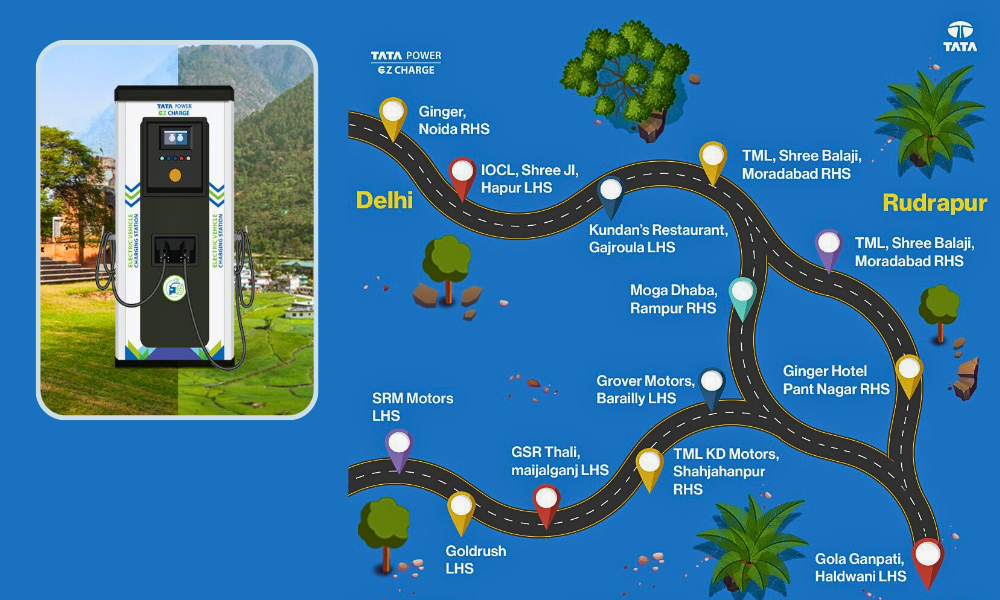
EV travellers coming from Delhi to Shimla can also use multiple charging points along the route to Chandigarh, refuel at the scenic Kalaghat Falcon Crest hotel location, and then proceed to Shimla, where they can refill again at Oberoi Shimla or Oberoi Wildflower Shimla.

Tata Power is committed to sustainable mobility and reducing carbon footprints. It's nationwide EZ Charge network spreads over 420 cities with more than 62,000 home chargers, 4,900 public and semi-public charging points, and 460 bus-charging stations that are present at diverse and strategic locations expanding EV charging accessibility across the country. The company is also present across major national and state highways on diverse locations such as hotels, commercial complexes, car dealerships, etc., across more than 25 states and five union territories. 

LG Innotek Receives 3 EV Charging Specific International Essential Patents

LG Innotek Receives 3 International Essential Patents on EV Charging

LG Group affiliate, LG Innotek, has received three international standard essential patents on Electric Vehicles (EV) charging announced Jeong Cheol-dong, CEO of LG Innotek, on 19th of this month.

LG Innotek, which generates most of its revenue from selling camera modules for the iPhone, is now poised to compete in electric vehicle charging market with international standard essential patents on EV charger components.

The company was chosen by a standard patent licensing company (Via Licensing Alliance or Via LA) specialized in EV charging as a licensor.

A licensor refers to a person or a company that gives permission to another entity to use the patented technology and receives royalties in return. In May this year two licensing organizations — Via Licensing Corporation (Via) and MPEG LA — announced the merger to form Via Licensing Alliance LLC (Via LA), a new collaborative licensing organization with a rich portfolio of patents and intellectual property licensing programs, hundreds of licensors, and thousands of licensees.

Notably, General Electric, Philips and Mitsubishi Electric, which all had partial ownership in MPEG La, now have a stake in the new – Via LA.

Via LA has so far only registered 8 companies globally, including GE, Bosch, Siemens, and LG Innotek, as licensors in the EV charging sector.

The International standard essential patents LG Innotek was recognized for are charging control technologies (two patents) based on battery status data and a charging reservation technology (one patent). The registration has accelerated LG Innotek’s push to fully engage in the global EV component market.

LG Innotek is already fostering the future car business as a new growth driver for the company. The company is ramping up its R&D efforts in order to support control solutions of not only wired charging but also wireless charging, and to implement power conversion solutions for both parts of EVs and outdoor charging systems.

LG Innotek is taking out patents for not just essential EV technologies but also autonomous driving technologies.

In April this year, LG Innotek gained the industry attention for acquiring more than 180 patents from Argo AI, an American startup that develops autonomous vehicles and founded by veterans of the Google and Uber automated driving programs.

Many of the patents LG Innotek acquired are those for the LiDAR technology.

LiDAR is a sensing technology of detecting the target, distance and direction, etc. by sending the light and measuring the time taken to return. The technology is seen as a key autonomous driving system applied in Advanced Driver Assistance Systems (ADAS).

In a context to LiDAR, it may be recalled that in June this year, a Bengaluru-based and NVIDIA's senior executives-backed startup Minus Zero unveiled India's first autonomous/ driverless car that depends less on LiDAR and instead uses high-resolution cameras to analyse driving conditions including traffic. 

Back to LG Innotek, the Korean company is bolstering its patent portfolio envisioning the future as a leader of the automotive market driven by EVs and self-driving cars. In particular, LG Innotek is leveraging an AI patent data system capable of analyzing and using patents at a speed 900 times faster than that of humans.

The company evaluates big data on global patents with 3 million new patents added every year to get an insight into technology trends and the industry. LG Innotek then explores more areas of differentiation against the existing products and reflects findings in the product development strategy.

Kim Jin-hyun, the Head of Intellectual Property Division at LG Innotek, says, “It’s crucial that we secure the proprietary technology to become the top player in the industry, so we need to systematically manage and secure the intellectual property (IP) like patents. LG Innotek will continue to offer differentiated customer value through R&D based on original IP.”

Market Reports

Market Report & Surveys
IndianWeb2.com © all rights reserved