Showing posts with label Gujarat. Show all posts

Starscapes and Gujarat Tourism Join Forces to Build India’s 1st Dark-Sky Astro Villages

Starscapes and Gujarat Tourism Join Forces to Build India’s 1st Dark-Sky Astro Villages
  • Starscapes to conduct a detailed study to identify potential stargazing locations across the state
Starscapes, India’s leading astro-tourism company, has signed a Memorandum of Understanding with Gujarat Tourism to jointly develop Gujarat as a key astro-tourism destination over the next five years.

As a part of the collaboration, Starscapes will conduct a detailed study to identify potential stargazing locations across the state, starting with North Gujarat. The selected sites will be evaluated based on light pollution levels, accessibility, and suitability for astro-tourism infrastructure. Gujarat Tourism’s approach to categorizing various types of tourism such as adventure, heritage and nature tourism provides a clear advantage in designating specific areas as dark-sky zones. This will play an important role in exclusively developing astro-tourism without interference from other tourism activities that may contribute to light pollution.

The identified astro-tourism zones will later be developed into Astro Villages, where local communities will play a key role in reducing light pollution and preserving dark skies. The initiative aims to generate employment opportunities for local communities, improve livelihood while creating sustainable astro tourism experiences.
 
Starscapes and Gujarat Tourism Join Forces to Build India’s st Dark-Sky Astro Villages

Commenting on the partnership, Ramashish Ray, Founder, Starscapes, said, “ "From the vast salt deserts of Kutch to the clear skies around Gir National Park, Gujarat offers some of the most pristine and untouched dark-sky locations with immense potential for astro-tourism. Our goal is to work closely with the local communities, empowering them to become ambassadors of dark skies and to create a model of responsible, sustainable tourism. We’re excited to partner with Gujarat Tourism to develop the state into a leading astro-tourism destination."

This initiative builds on Starscapes’ ongoing efforts to promote astro-tourism across India. After a successful ‘Nakshatra Campaign’ with Uttarakhand Tourism Development Board (UTDB), Starscapes has recently launched ‘Astro-Tourism Guides’ Skill Development Program in collaboration with UTDB and Tourism & Hospitality Skill Council (THSC).

About Starscapes:

Starscapes is India’s premier experiential astronomy venture, dedicated to promoting sustainable live and online celestial exploration. With a nationwide network of observatories, skilled teams, school and hospitality affiliates, and eco-friendly initiatives, Starscapes strives to enrich education and provide unforgettable cosmic experiences.

i-Hub Gujarat and India Accelerator Launch ‘Sanjeevan Healthcare Accelerator Program’ to Empower Healthcare Startups

i-Hub Gujarat and India Accelerator Launch ‘Sanjeevan Healthcare Accelerator Program’ to Empower Healthcare Startups

i-Hub Gujarat, the state’s flagship startup and innovation hub under the Education Department, Government of Gujarat, in collaboration with India Accelerator (IA), India’s leading fund-led accelerator, has launched the Sanjeevan Healthcare Accelerator Program—a 12-week initiative to nurture and scale promising healthcare startups.

The program is designed to strengthen India’s healthcare ecosystem by helping startups achieve market readiness, access funding, and grow sustainably. Selected ventures will benefit from structured capacity-building sessions, one-on-one mentorship with healthcare experts, tailored go-to-market strategies, and access to industry networks and investors. The program will conclude with a high-impact Investor Demo Day, giving founders a platform to showcase their innovations to top venture funds and healthcare leaders.

Hiranmay Mahanta, CEO, i-Hub Gujarat, said: “At i-Hub Gujarat, our vision is to create pathways from ‘Mind-to-Market’ by fostering innovation and entrepreneurship across the state. The Sanjeevan Healthcare Accelerator, in collaboration with India Accelerator, marks an important step in empowering innovators to deliver impactful healthcare solutions that strengthen India’s healthcare ecosystem and reinforce Gujarat’s position as a leading hub for innovation.”

Munish Bhatia, Co-Founder, India Accelerator, added “At India Accelerator, we believe in fund-led, ecosystem-driven growth. Sanjeevan is designed to empower healthcare entrepreneurs with the right mix of mentorship, networks, and capital. This accelerator will act as a catalyst for early and growth-stage startups, helping them scale innovations that can touch lives at large.”

The 12-week Sanjeevan Healthcare Accelerator will provide startups with expert mentorship, tailored go-to-market support, and access to networks, markets, and strategic partners. The program will conclude with an Investor Demo Day, giving founders the chance to pitch to leading funds and healthcare stakeholders.

Applications are open for early and growth-stage healthcare startups until 15th September 2025, with the cohort starting in September 2025.

About i-Hub Gujarat

i-Hub Gujarat, established under SSIP by the Education Department, Government of Gujarat, is a Section 8 company envisioned as a catalyst for building an end-to-end innovation and entrepreneurial ecosystem in Gujarat. With modern infrastructure, focused mentoring, and access to networks and capital, i-Hub empowers young innovators to transform ideas into impactful enterprises. Gujarat’s pioneering efforts through SSIP have earned it the title of Best Performer in State Startup Ranking 2018 by the Ministry of Commerce & Industry, Government of India.

About India Accelerator

Founded in 2017, India Accelerator is a multi-stage, fund-led accelerator recognized as one of India’s leading platforms for nurturing startups across diverse sectors. With expertise spanning Defense Tech, AI, Energy, Mobility, Sustainability, Healthtech, Consumer and more, IA provides startups with mentorship, industry linkages, capital access, and global networks. Through its fund-led model and collaborative ecosystem, IA has emerged as a key player in supporting early-stage and growth-stage startups in India and abroad.

Google and Reliance Unveil Dedicated Cloud Region in Jamnagar to Power India’s AI Future

Google and Reliance Unveil Dedicated Cloud Region in Jamnagar to Power India’s AI Future

In a landmark announcement at Reliance Industries’ 48th Annual General Meeting, Google CEO Sundar Pichai revealed the launch of a dedicated Google Cloud region in Jamnagar, built exclusively for Reliance. The move marks a pivotal step in India’s digital transformation, aimed at accelerating AI adoption across industries and democratizing access to advanced computing infrastructure.

Purpose-Built for AI Innovation

The Jamnagar region will host Google Cloud’s latest-generation AI hypercomputer, offering full-stack environments for generative AI development, model training, and enterprise deployment. Designed and powered by Reliance, the facility will run entirely on green energy, aligning with the company’s sustainability goals.
This region is purpose-built to support India’s AI ambitions — from large enterprises to kirana stores, said Sundar Pichai.
“It’s a new chapter in India’s technology journey,” added Mukesh Ambani.

Infrastructure Highlights

  • Hypercomputer Deployment: Optimized for large-scale generative models and AI-powered applications
  • Green Energy Backbone: Powered by Reliance’s renewable energy assets
  • Jio Fiber Integration: High-capacity connectivity linking Jamnagar to metros like Mumbai and Delhi
  • Secure Data Environments: Designed for enterprise-grade governance and compliance

Strategic Impact

The Jamnagar region will serve as a launchpad for AI-first services across sectors including:
  • Retail, telecom, energy, and financial services
  • Startups, SMBs, and public sector organizations
  • Developers and researchers building India-centric AI solutions
This initiative complements Reliance’s newly launched Reliance Intelligence, a wholly owned subsidiary focused on building consumer and enterprise-grade AI products.

National Significance

The announcement aligns with India’s broader push for sovereign AI infrastructure under the ₹10,370 crore IndiaAI Mission. By localizing compute power and enabling scalable AI deployment, the Jamnagar region positions India as a serious contender in the global AI race.

What’s Next

The cloud region is expected to go live in early 2026, with pilot deployments already underway in Reliance’s retail and telecom verticals. Analysts view this as a strategic convergence of infrastructure, innovation, and national ambition — one that could redefine India’s digital economy.

APM Terminals Pipavav Signs Key Contracts to Advance Liquid Cargo Jetty, Reinforcing Gujarat’s Maritime Vision

APM Terminals Pipavav Signs Key Contracts to Advance Liquid Cargo Jetty, Reinforcing Gujarat’s Maritime Vision

In a firm step toward fulfilling its commitment made at the Vibrant Gujarat Global Summit 2024, APM Terminals Pipavav has formalised two significant contracts to accelerate the construction of a dedicated liquid cargo jetty (Berth 6), solidifying its role in India’s maritime growth story.

APM Terminals Pipavav has signed a contract with L&T Geostructure Pvt. Ltd. for the construction of the new liquid jetty and related marine infrastructure. In parallel, Van Oord India Pvt. Ltd. has been engaged for capital dredging and reclamation works essential to the project’s execution.

The signing ceremony was held in the presence of Shri Rajkumar Beniwal, IAS, Vice Chairman & CEO of the Gujarat Maritime Board, at GIFT City, Gandhinagar, emphasizing the State’s continued support for port-led development and infrastructure expansion.

Speaking on the occasion, Mr. Girish Aggarwal, Managing Director, APM Terminals Pipavav, said, “APM Terminals Pipavav remains committed to the Gujarat, its people, and its progress. The signing of these strategic contracts is a reflection of our intent to transform investment into impact. With the continued support of the Gujarat Maritime Board, we are advancing infrastructure that not only strengthens the state’s maritime capabilities but also fulfils the vision we set forth at the Vibrant Gujarat Global Summit.

The upcoming liquid jetty is expected to significantly boost the port’s capabilities in handling diversified cargo, while also improving service reliability and future-proofing operations. Beyond infrastructure, the project is poised to generate employment, attract industrial investments, and catalyse regional development around the Pipavav Port corridor.

APM Terminals Pipavav is one of India’s leading gateway ports for containers, dry bulk cargoes, liquid bulk, and RoRo with excellent connectivity to the India’s northwest hinterland through rail and road network. The current annual cargo handling capacity includes 1.35 million TEUs of containers, 4 million metric tons of dry bulk, with a dedicated liquid berth coming up the capacity will be increased to 5.2 million metric tons of liquid bulk and 250,000 passenger cars. APM Terminals Pipavav is India’s first public private partnership (PPP) port and the first port to be connected to the DFC in India and is a part of the APM Terminals global terminal network.

Adani Powers India’s First Off-Grid 5MW Green Hydrogen Plant in Kutch

Adani Powers India’s First Off-Grid 5MW Green Hydrogen Plant in Kutch

That’s a major leap for India’s clean energy ambitions! Adani New Industries Limited (ANIL) has officially commissioned the country’s first off-grid 5 MW green hydrogen pilot plant in Kutch, Gujarat. What makes this facility stand out is that it’s entirely powered by solar energy and integrated with a Battery Energy Storage System (BESS), allowing it to operate independently of the main power grid.

The plant uses a fully automated, closed-loop electrolyser system that dynamically adjusts to real-time solar input—crucial for maintaining efficiency despite the variability of renewable sources. It’s not just a technical milestone; it’s also a proof of concept for Adani’s upcoming Green Hydrogen Hub in Mundra, which aims to scale up production and support India’s National Green Hydrogen.
 
Adani Powers India’s First Off-Grid 5MW Green Hydrogen Plant in Kutch

Green hydrogen shines in decarbonizing hard-to-abate sectors like steel, cement, and long-haul transport—areas where batteries fall short. It’s also a strong candidate for seasonal energy storage and exportable clean energy in the form of ammonia or synthetic fuels.

This pilot could be a game-changer for hard-to-abate sectors like fertilizers, refining, and heavy transport.

Green Hydrogen vs. Other Clean Fuels

Fuel Type Emissions Profile Key Advantages Challenges
Green Hydrogen Zero emissions (if powered by renewables) Versatile, storable, ideal for heavy industry High production cost, infrastructure still emerging
Blue Hydrogen Lower emissions (with carbon capture) Uses existing natural gas infrastructure Relies on fossil fuels, CCS not 100% efficient
Biofuels Low to moderate emissions Compatible with existing engines Land use, food vs. fuel debate
Electricity (RE) Zero emissions at point of use Highly efficient, scalable for transport & homes Storage limitations, grid dependency
Ammonia (Green) Zero-carbon fuel (if green hydrogen-based) Easier to transport than hydrogen Toxicity, energy-intensive synthesis

Infosys Opens New Tech Hub in GIFT City, Creating Over 1,000 Jobs

Infosys Opens New Tech Hub in GIFT City, Creating Over 1,000 Jobs

Infosys has officially opened a new development center at Gujarat International Finance Tec-City (GIFT City) in Gandhinagar. This facility is designed to accommodate over 1,000 employees in a hybrid working model and will serve as a TechFin hub, delivering advanced digital solutions for global Banking, Financial Services, and Insurance (BFSI) clients.

The center will focus on key areas such as digital banking, regulatory affairs, trade finance, capital markets, cards & payments, and risk & compliance management. It will leverage cutting-edge technologies like AI, generative AI, cloud computing, APIs, cybersecurity, and blockchain to provide seamless cross-border services and strengthen India's position in global financial technology.

 
Infosys Opens New Tech Hub in GIFT City, Creating Over 1,000 Jobs

Infosys Opens New Tech Hub in GIFT City, Creating Over 1,000 Jobs

Infosys' new development center in GIFT City is expected to create over 1,000 jobs in a hybrid working model. Beyond direct employment, the expansion strengthens India's position as a global financial technology hub, potentially attracting more fintech firms and investment, leading to thousands of additional jobs in the broader ecosystem.

The center will focus on Al, cloud computing, blockchain, and cybersecurity, fostering demand for specialized tech talent. With GIFT City emerging as a fintech powerhouse, experts estimate 30,000 to 40,000 jobs could be generated across financial services and technology.

Gujarat Chief Minister Bhupendrabhai Patel inaugurated the center, highlighting its role in fostering talent, collaboration, and innovation in financial services. Infosys CFO Jayesh Sanghrajka emphasized that this move aligns with the company’s vision of leading innovation in financial services from within India’s foremost international financial hub.

This development is a significant step in Infosys’ global delivery strategy, reinforcing its capabilities in tech-enabled financial services.

From Sarabhai’s Legacy to Startup Stardust: Ahmedabad’s Spacetech Renaissance Takes Off

From Sarabhai’s Legacy to Startup Stardust: Ahmedabad’s Spacetech Renaissance Takes Off

Ahmedabad is rapidly transforming into a spacetech startup hub, thanks to the combined efforts of ISRO, IN-SPACe, and IIMA Ventures. The city, long associated with India's space legacy—dating back to Vikram Sarabhai's founding of the Physical Research Laboratory (PRL)—is now fostering a new wave of spacetech entrepreneurs, many of whom are former ISRO scientists.

Why Ahmedabad?

Ahmedabad houses ISRO’s Space Applications Centre, IN-SPACe headquarters, and IIMA Ventures, creating a dense ecosystem for space innovation. Startups like PierSight, SatLeo Labs, and Orbitt Space are leveraging this infrastructure to develop cutting-edge satellite technologies, including:
  • Synthetic Aperture Radar (SAR) for maritime surveillance.
  • Thermal imaging satellites for commercial applications.
  • Air-breathing electric propulsion systems for ultra-low Earth orbit (ULEO) missions.

Key Developments

  • PierSight is building a SAR-enabled satellite constellation for persistent maritime surveillance, with plans to launch 32 satellites by 2028.
  • Orbitt Space, founded by ex-ISRO scientists, is working on ULEO propulsion technology, using residual atmospheric gases as propellant to extend satellite lifespans. The newly founded space tech startup has recently raised $1 million from in pre-seed funding led by pi Ventures, with support from IIMA Ventures. 
  • SatLeo Labs secured $3.3 million in funding to advance thermal imaging payloads, aiming to revolutionize commercial space applications.

Institutional Support

IN-SPACe is actively facilitating testing facilities, regulatory approvals, and funding access for startups, while IIMA Ventures is incubating many of these companies, providing strategic mentorship and investment.

Ahmedabad’s scientific heritage, regulatory backing, and entrepreneurial momentum are positioning it as a key player in India’s commercial space race.

Besides Ahmedabad, Pune in Maharashtra is also emerging as a space-tech research hub, with startups working on satellite propulsion systems.

Additionally, Assam in north east of India has recently became home to the Assam State Space Application Centre (ASSAC), which focuses on remote sensing and GIS applications for governance and resource management. The state also boast of AssamSat, the state's first satellite, developed in collaboration with ISRO. 

India is ramping up its space activities, with 30 missions planned for 2024-2025, including launches by Skyroot Aerospace and Agnikul Cosmos. 

Top Image - Prajwal Dwivedi

IDSR, Gujarat University and IA (India Accelerator) Launch Accelerator for Defense & Aerospace Startups — 'ADVAIT’

IDSR, Gujarat University and IA (India Accelerator) Launch Accelerator for Defense & Aerospace Startups — 'ADVAIT’

In a bold move to strengthen India's defense innovation ecosystem, Institute for Defence Studies and Research (IDSR), Gujarat University and India Accelerator (IA) have announced the launch of ADVAIT — a strategic accelerator program designed to empower startups building cutting-edge technologies for defense and aerospace applications.

Coming at a time when India’s defence budget has surpassed ₹6 lakh crore and with a growing thrust on self-reliance under the Atmanirbhar Bharat mission, ADVAIT is poised to play a catalytic role in nurturing next-generation defence startups. The program will focus on early and growth-stage ventures working in key areas such as artificial intelligence, autonomous systems, space tech, advanced materials, cybersecurity, and surveillance.

IDSR, Gujarat University and IA (India Accelerator) Launch Accelerator for Defense & Aerospace Startups — 'ADVAIT’

Sharing his thoughts and vision for ADVAIT, Ashish Bhatia, Founder & CEO, IA, said-
India is at an inflection point where our startups are not just solving commercial problems but are stepping up to serve national priorities. With ADVAIT, we’re creating a platform that gives these startups the tools, mentorship, and ecosystem support they need to build for Bharat’s strategic edge.

Echoing this vision and elaborating on the program’s strategic framework, Mr. Arindam Mukhopadhyay, Partner at IA commented,
ADVAIT is not just another startup program — it’s a mission to fast-track national security innovation. By bringing startups, academia, and industry into one unified platform, we’re building an engine for next-generation defense capability.

At its core, ADVAIT is structured around the Tripod Approach — a unique model that leverages the combined strengths of Industry, Academia, and Startups. This ensures that innovations emerging from the program are not only technically sound but also market-ready and strategically aligned with national priorities.

This collaborative framework delivers distinct value to all participants. The applications for the program are open from 5th May’25. Selected startups will gain access to domain-specific mentorship, opportunities to work on live problem statements from the defence sector, collaboration avenues with established industry players, and potential funding support. This initiative also gives academia a meaningful platform to translate its research into real-world impact, while fostering entrepreneurship on campus. Industry players, meanwhile, benefit from access to disruptive, cost-effective innovations with faster go-to-market timelines.

This is a unique moment for India’s defense sector — one where innovation is no longer limited to labs or large contractors. Through ADVAIT, we’re enabling a new breed of defense-ready startups,” said Mr. Srinivasa Rao Sureddi, CEO, IDSR.

With this initiative, IDSR, IA and Gujarat University are laying the foundation for India’s future in defense tech, one startup at a time.

NTPC REL Achieves Full Commercial Operation of 150 MW Gujarat Solar PV Project

NTPC Renewable Energy Limited (NTPC REL) a wholly owned subsidiary of NTPC Green Energy Limited has successfully declared the commercial operation of the final 60 MW capacity of its 150 MW Gujarat Solar PV Project, marking the full commissioning of the project in Limbdi, Gujarat. 

NTPC REL Achieves Full Commercial Operation of 150 MW Gujarat Solar PV Project
Limbdi, Gujarat

This solar venture was awarded under the GUVNL 500 MW Solar (Phase XII) tender.

The last segment of 60 MW commenced commercial operation on April 16, 2025. This follows the earlier commissioning of the first 60 MW on July 29, 2024, and the second 30 MW on December 11, 2024.

With this milestone, the entire 150 MW capacity of the Gujarat Solar PV Project is now operational, reinforcing NTPC REL’s commitment to advancing India’s renewable energy goals and supporting the nation’s clean energy transition.

GE Spin-Off, GE Vernova, Plans $1.17 Bn Investment in Renewable Energy in Kutch, Gujarat

GE Spin-off, GE Vernova, Plans $1.17 Bn Investment in Renewable Energy in Kutch, Gujarat

GE Vernova is making a significant move in India's renewable energy sector with a ₹10,000 crore (about US$ 1.17 Billion) investment in Kutch, Gujarat. The company, which spun off from General Electric (GE) in April 2024, focuses on electrification and decarbonization, aiming to deliver reliable, affordable, and sustainable energy solutions.

This investment aligns with India's ambitious 500 GW renewable energy target by 2030, and it will contribute to the 30 GW hybrid renewable energy park in Kutch-the largest of its kind in Asia. The Gujarat government has already commissioned 1 GW capacity in March 2024.

India is rapidly expanding its renewable energy infrastructure, and GR Vernova’s involvement strengthens the country’s position as the third-largest renewable energy producer globally, after the US and China.

According to a report by Ahmedabad Mirror, a high level delegation of the company led by the COO met Chief Minister Bhupendra Patel and other officers and talked about the project. The CM has assured all cooperation and support for the project.

GE Vernova is a global energy technology company focused on electrifying and decarbonizing the world, with businesses in Power, Wind, and Electrification, headquartered in Cambridge, Massachusetts.

Beyond this, GE Vernova's Grid Solutions business has secured multi-million dollar orders from Power Grid Corporation of India (PGCIL) to supply 765 kV Shunt Reactors. These reactors will enhance grid stability and efficiency, supporting India's clean energy transition. The equipment will be manufactured at GE T&D India's Vadodara plant, with deliveries scheduled for FY 2025-26.

Additionally, Shailesh Mishra, Asia Pacific Regional Leader for GE Vernova, has emphasized the company's investments in manufacturing capacities in India and the UK, particularly in HVDC links to improve power transmission efficiency

General Electric (GE) has undergone a major transformation, splitting into three independent companies: GE Aerospace, GE HealthCare, and GE Vernova. 

Waree Energies Opens India's Largest Solar Cell Manufacturing Gigafactory

Waree Energies Opens India's Largest Solar Cell Manufacturing Gigafactory

Waaree Energies has made a remarkable achievement by inaugurating India's largest solar cell manufacturing gigafactory in Chikhali, Gujarat.

This state-of-the-art facility boasts a capacity of 5.4 GW and spans 150 acres, with a built-up area of 101 acres. Equipped with advanced technologies like TOPCon and Mono PERC solar cells, the gigafactory aims to achieve efficiencies of up to 25%.

The facility is expected to create over 9,500 direct jobs and approximately 30,000 indirect employment opportunities, contributing significantly to India's clean energy goals and economic growth. It aligns with the "Atmanirbhar Bharat" initiative, reducing dependency on imports and positioning India as a global manufacturing hub for renewable energy technologies.

This milestone reflects India's growing prowess in the global renewable energy landscape.

Waaree Energies is a prominent player in India's renewable energy sector. Established in 1990 and headquartered in Mumbai, it is the country's largest manufacturer of solar PV modules, with an impressive installed capacity of 13.3 GW as of 2024. The company has a strong presence both domestically and internationally, with manufacturing facilities in India and the USA.

The new 5.4 GW solar cell gigafactory in Chikhali, Gujarat, is a significant addition to the global solar manufacturing landscape. While it is the largest in India, globally, there are even larger facilities. For instance, China's Longi Green Energy operates a solar manufacturing facility with a capacity exceeding 20 GW, making it one of the largest in the world. Similarly, other major players like JinkoSolar and Trina Solar also have massive production capacities.

However, India's facility stands out for its focus on reducing import dependency and aligning with the "Atmanirbhar Bharat" initiative. It also contributes significantly to employment and technological innovation in the renewable energy sector. This positions India as a growing force in the global clean energy market.

Suzuki to Invest in NDDB Subsidiary to Setup Biogas Plants in India

Suzuki to Invest in NDDB Subsidiary  to Setup Biogas Plants in India

Suzuki Motor Corporation has signed an agreement to invest in NDDB Mrida Limited, a wholly owned subsidiary of the National Dairy Development Board (hereinafter, NDDB), through Suzuki R&D Center India Private Limited, a wholly owned subsidiary of Suzuki in India.

A signing ceremony was held at NDDB headquarters in Anand, Gujarat, on Wednesday, with NDDB’s Executive Director S Rajeev, Suzuki’s President Toshihiro Suzuki and main Indian dairy industry in attendance.

The biogas plants will utilize cow dung to produce biogas, which will then be purified and compressed to generate compressed biomethane gas for vehicles. This project aims to promote environmental conservation and agricultural development while providing clean energy.

Suzuki Motor Corporation plans to invest over ₹250 crores (approximately $30 million USD) in setting up five biogas CNG plants in the Banaskantha district of Gujarat, India. These plants are expected to be operational by 2025 and will contribute to Suzuki's goal of achieving carbon neutrality in India.

It's a significant investment that will help promote sustainable energy solutions and support rural mobility services using biogas.

Mrida is a wholly owned subsidiary of NDDB, which was established in July 2022 to promote environmental conservation and agricultural development. The company establishes and operates biogas plants by using cow dung in India. Suzuki plans to expand its biogas business by establishing and operating biogas plants in cooperation with dairy cooperatives across India through Mrida.

Suzuki is also promoting rural mobility services using biogas fuel for CNG vehicles. This initiative aims to provide clean and affordable transportation in rural areas, starting with the Banaskantha district in Gujarat. In July this year, Suzuki concluded a three-party MoU for the basic agreement between Suzuki R&D Center India Private Limited, a wholly owned subsidiary of Suzuki in India, National Dairy Development Board (NDDB), and Banas Dairy (Headquarters: Banaskantha district, Gujarat) to setup the 5th biogas production plant as well as to promote rural mobility service utilizing biogas, which would contribute toward realizing carbon neutrality in India.

Notably, Suzuki has also signed agreements with Amul Dairy in Anand and Dudhsagar Dairy in Mehsana to establish additional biogas plants. These plants will further expand Suzuki's biogas business in Gujarat.

PM Modi and Spanish PM Pedro Sanchez Jointly Inaugurate TATA Aircraft Complex for Manufacturing C-295 Aircraft in Vadodara, Gujarat

PM Modi and Spanish PM Pedro Sanchez Jointly Inaugurate TATA Aircraft Complex for Manufacturing C-295 Aircraft in Vadodara, Gujarat

  • The C-295 Aircraft facility in Vadodara reinforces India's position as a trusted partner in global aerospace manufacturing:PM
  • Make in India, Make for the World:PM
  • The C-295 aircraft factory reflects the new work culture of a New India:PM
  • India's defence manufacturing ecosystem is reaching new heights:PM
The Prime Minister, Shri Narendra Modi and the Prime Minister of Spain, Mr Pedro Sanchez jointly inaugurated the TATA Aircraft Complex for manufacturing C-295 aircraft at TATA advanced systems limited (TASL) Campus in Vadodara, Gujarat today. Both Prime Ministers also took a walkthrough of the exhibition showcased on the occasion.

Addressing the gathering, the Prime Minister remarked that it is the Prime Minister of Spain, Mr Pedro Sanchez’s first visit to India and the partnership between the two countries is finding a new direction today. Noting the inauguration of the TATA Aircraft Complex for manufacturing C-295 aircraft, the Prime Minister said that it would not only strengthen the relations between the two nations but also give momentum to the mission of ‘Make in India, Make for the World’. Shri Modi conveyed his best wishes to the entire team of Airbus and TATA on the occasion. The Prime Minister also paid his tributes to Late Shri Ratan Tata ji.

The Prime Minister underlined that the factory of C295 aircraft is a reflection of the new work culture of New India and said that India’s speed from idea to the execution of any project in the country can be witnessed here. Recalling the foundation stone laying of the factory in October 2022, the Prime Minister said that the facility is now ready for production of C295 aircrafts.

Emphasizing the focus on eliminating unaccounted delays in the planning and execution of projects, the Prime Minister recalled the setting up of Bombardier Train Coach manufacturing facility in Vadodara as the Chief Minister of Gujarat and said that factory was ready in record time for production. “Metro Coaches made in this factory are being exported to other nations today”, he added. Shri Modi expressed confidence that the aircrafts made in today’s inaugurated facility would also be exported.

Quoting the famous Spanish poet, Antonio Machado, the Prime Minister remarked that as we start treading towards the goal, the path towards the goal is created automatically. Noting that India’s defence manufacturing ecosystem was scaling new peaks today, Shri Modi said that if concrete steps were not taken 10 years ago then it would have been impossible to reach this destination today. He added that a decade ago, the priority and identity of defence manufacturing were about import and none could imagine that defence manufacturing could take place on such a large scale in India. The Prime Minister remarked that the Government decided to walk on a new path, set new goals for India, whose results are evident today.

The Prime Minister said that India’s transformation of the defense sector exemplifies how a right plan and partnership can turn possibilities into prosperity. He underlined that strategic decisions have spurred the growth of a vibrant defense industry in India over the last decade. “We expanded private sector participation in defense manufacturing, made public sector units more efficient, restructured ordnance factories into seven major companies, and empowered DRDO and HAL”, said Shri Modi.

He said establishing defense corridors in Uttar Pradesh and Tamil Nadu infused new energy into the sector. Touching upon iDEX (Innovation for Defence Excellence) scheme, the Prime Minister said that it has driven the growth of around 1,000 defense startups in the past five to six years. He informed that India’s defense exports have increased 30 times over the past decade, with the country now exporting equipment to over 100 countries.

The Prime Minister laid emphasis on skilling and job creation and said that projects like the Airbus-Tata factory will create thousands of jobs. He said that the factory will support indigenous manufacturing of 18,000 aircraft parts, providing immense opportunities for MSMEs across India. Noting that India is one of the biggest suppliers of parts for the world's major aircraft companies even today, Shri Modi said that the new aircraft factory will give a big boost to new skills and new industries in India.

The Prime Minister underlined that he was looking at today's program beyond the manufacturing of transport aircraft. Highlighting the unprecedented growth and transformation of India's aviation sector in the last decade, Shri Modi remarked that India was providing air connectivity to hundreds of small cities in the country, while simultaneously working to make India a hub of aviation and MRO domain. He added that this ecosystem will also pave the way for Made in India civil aircraft in the future. Noting that various Indian airlines have ordered 1200 new aircraft, Shri Modi said that this only meant the newly inaugurated factory will play a major role from designing to manufacturing civil aircraft to meet the needs of India and the world in the future.

Noting that Vadodara City was a stronghold of MSMEs, Shri Modi remarked that the city will act as a catalyst in these efforts of India. He added that the city also had a Gatishakti University, which was preparing professionals for different sectors of India. The Prime Minister also noted that there were many companies related to many sectors like the pharma sector, Engineering and Heavy Machinery, Chemicals and Petrochemicals, Power and Energy Equipment in Vadodara. He added that now this entire region was also going to be a major hub of aviation manufacturing in India. Shri Modi congratulated the Government of Gujarat and its Chief Minister Bhupendra Patel and his entire team for their modern industrial policies and decisions.

Noting that Vadodara was also an important cultural city of India, Shri Modi said he was elated to welcome all the friends from Spain. “The cultural connect between India and Spain has its own importance”, stated the Prime Minister. He remarked that Father Carlos Valle had come from Spain and settled in Gujarat and spent fifty years of his life. He further added that Father Valle had enriched the culture with his thoughts and writings. Shri Modi stated that he also had the good fortune of meeting Father Valle and the Government of India honored him with Padma Shri for his great contribution.

Shri Modi noted that yoga was highly popular in Spain too and Spanish football was also liked in India. Remarking about the football match between Real Madrid and Barcelona clubs which took place yesterday, Shri Modi said that Barcelona's great victory was a topic of discussion in India too and the fervor of the fans of both the clubs was same in India as it is in Spain. Throwing light on India and Spain’s multifaceted partnership, the Prime Minister said, “Whether it's food, films, or football, our strong people-to-people connect has always strengthened our ties.” Shri Modi expressed happiness that India and Spain have decided to celebrate 2026 as the India-Spain Year of Culture, Tourism, and AI.


Concluding the address, the Prime Minister expressed confidence that today's event will inspire many new joint collaboration projects between India and Spain. He extended an invitation to the Spanish industry and innovators and encouraged them to come to India and become partners in the country's development journey.

Under the C-295 program, a total of 56 aircrafts are to be delivered out of which 16 are being delivered directly by Airbus from Spain and remaining 40 are to be made in India.

Tata Advanced Systems Ltd is responsible for making these 40 aircrafts in India. This facility becomes the first private sector Final Assembly Line (FAL) for military aircraft in India. It will involve the full development of a complete ecosystem from the manufacture to assembly, test and qualification, to delivery and maintenance of the complete lifecycle of the aircraft.

Apart from Tatas, leading defence public sector units such as Bharat Electronics Ltd. and Bharat Dynamics Ltd, as well as private Micro, Small and Medium Enterprises will contribute to this program. Earlier in October 2022, Prime Minister had laid the foundation stone for the Vadodara Final Assembly Line (FAL).

IBM and Gujarat Govt to Establish AI Cluster in Gift City to Drive AI Innovation and Collaboration

IBM and Gujarat Govt to Establish AI Cluster in Gift City to Drive AI Innovation and Collaboration

IBM and the Department of Science and Technology, Government of Gujarat have recently entered a Memorandum of Understanding (MoU) to establish and promote an AI Cluster leveraging IBM’s watsonx to foster innovation and collaboration among financial institutions in Gujarat International Finance Tec (GIFT) City. As part of this collaboration, financial institutions will gain access to AI Sandbox, assistance in providing proof of concept, AI Literacy programs, and Digital Assistant Solutions.

Speaking on the occasion, Shri Bhupendrabhai Patel, Hon’ble Chief Minister, Government of Gujarat said, “This MoU with IBM will help Gujarat to lead the country in efforts to adopt AI and drive digital transformation.”

“Using AI for business is a strategic priority for enterprises today to gain competitive advantage through better productivity, innovation and customer experience,” said Sandip Patel, Managing Director, IBM India & South Asia. “This collaboration is a significant step in our continued association with the Government of Gujarat to accelerate the digital transformation of the state. By establishing this AI cluster, our aim is to make the latest AI solutions easily accessible to the vibrant and growing number of financial institutions in GIFT City,” he added.

As part of this MoU, IBM will provide software technologies and platforms over a cloud environment enabling financial institutions to customise and fine-tune large language AI models in a sandbox environment. IBM will also aim to build a Digital assistant-based solution that facilitates the onboarding and integration of these customised large language models for financial institutions.

Aligned with IBM’s commitment to skill 30 million people by 2030 and train 2 million learners in AI by the end of 2026, IBM will develop an AI curriculum for schools and universities across Gujarat. The collaboration also includes literacy programs and certifications for professionals in the state to enhance the skill sets of professionals, preparing the state’s talent for the AI-driven future economy.

Asia's Largest Compressed Biogas (CBG) Plant Coming Up Gujarat's Navsari; To Produce Over 16K Tons of Biogas Annually

Asia's Largest Compressed Biogas (CBG) Plant Coming Up Gujarat's Navsari; To Produce Over 16K Tons of Biogas Annually

  • Gruner Renewable to Build Asia’s largest CBG Plant in Gujarat; to Invest Rs 220 crores
  • Gujarat is currently seeing significant interest in the green energy space, with major Indian business conglomerates announcing new renewable energy projects in the state.

Gruner Renewable Energy, in collaboration with a leading business conglomerate, is all set to establish Asia's largest Compressed Biogas (CBG) plant in Navsari, Gujarat. This will mark a significant step towards a cleaner and greener future for India and in line with the government’s efforts to increase dependency on renewable energy solutions. The estimated cost of this plant at Navsari is approximately Rs. 220 crores.

The flagship CBG plant in Navsari is expected to produce an impressive 44 tons of biogas per day (TPD) using cost-effective feedstocks such as paddy, pressmud, canetrash and OF MSW. This equates to an annual production of over 16,000 tons of biogas, highlighting the plant's significant contribution to PM Narendra Modi's vision for India's energy independence and sustainability goals.

Gujarat is currently experiencing a surge of interest in the green energy sector, with major Indian business entities announcing new renewable energy projects in the state. In 2018, Gujarat pioneered the nation's first Hybrid Policy, resulting in an installed capacity of 1,373 MW. Beyond wind and solar energy, the state has diversified its renewable energy portfolio.

Utkarsh Gupta, Founder & CEO of Gruner Renewable Energy, emphasized the company's efforts to address climate change and promote economic growth through sustainable energy solutions. “Since our inception in 2023, Gruner has been committed to mitigating climate risks by converting waste into biogas, thereby promoting environmental sustainability. As India work towards decreasing reliance on fossil fuels, opening of plants like Navsari is going to play a critical role in meeting our goals of championing sustainable energy solutions. Furthermore, in addition to generating employment opportunities within the biofuel sector, the establishment of CBG plants will significantly reduce our country's crude oil import bill,” added Gupta.

The Navsari CBG plant is a crucial step in India's CBG-based rural economy master plan. The local population will directly or indirectly benefit by the opening of this plant with work opportunities created for stakeholders like farmers, suppliers, labourers and youth among others.

Gruner has strategically planned this facility, from selecting high-yielding and cost-effective feedstocks like pressmud, paddy, OF MSW and canetrash to its optimal location. These choices will ensure high-quality biofuel production while simplifying the feedstock supply chain, improving availability, and eliminating pretreatment costs. Additionally, by converting industrial waste products into CBG, the new plant will address disposal challenges and help to reduce environmental pollution.

While speaking at the inaugural ceremony of India Energy Week (IEW) earlier this year, PM Modi stated that India’s energy sector will see an investment of over $67 billion over the next five years. He also unveiled plans for the establishment of 5,000 CBG plants across India.

Based on Indian Oil Corporation Ltd. (IOCL’s) white paper on CBG, the estimated CBG potential from various sources in India is nearly 62 million metric tons (MMT) with bio manure generation capacity of 370 MMT.

According to data from the Petroleum Planning and Analysis Cell, India's gas production stands at 29,769 million metric standard cubic meters (mmscm) against a consumption of 55,256 mmscm. This results in a shortfall of 25,488 mmscm, or 46.12% of total consumption, currently met through imports. “CBG has the potential to bridge this gap, and Gruner Renewable Energy recognized this critical need early on, understanding the importance of CBG in the growth of India's renewable energy sector. We expect that the push for renewable energy will further strengthen under the term of the new government,” said Gupta.

With an unwavering focus on innovation and sustainability, Gruner Renewable Energy continues to spearhead the revolution in the biogas industry. The company remains steadfast in its commitment to delivering cutting-edge solutions that drive business growth while fostering positive environmental and societal impacts.

About Gruner Renewable Energy:

Established in February 2023, Gruner Renewable Energy has quickly become a premier provider of sustainable energy solutions, dedicated to reducing carbon footprints and achieving sustainability objectives. Leveraging advanced German technology, the company offers end-to-end solutions encompassing the entire plant setup process. Gruner Renewable is a proud member of the Indian Biogas Association, driven by a vision to revolutionize India's energy industry.

Gruner Renewable excels in installing top-tier biogas plants known for their affordability and user-friendliness. Headquartered in Noida, the company has achieved remarkable success in a short period, surpassing a turnover of INR 40 crores within just five months of its inception and currently managing over 50 projects. Starting with a team of four, Gruner has grown into a conglomerate with 200 employees.

Gruner Renewable Energy is committed to paving the way for a greener and more sustainable future. Their expertise in biogas production aims to mitigate environmental impact while promoting renewable energy sources. The company's strategic approach to using high-yield, cost-effective feedstocks ensures the production of high-quality biofuel, addressing significant waste disposal challenges and contributing to a cleaner environment.

Micron to Roll Out the First Made-in-India Chips From Gujarat Facility in 2025 for Global Export

Micron to Roll Out the First Made-in-India Chips From Gujarat Facility in 2025 for Global Export

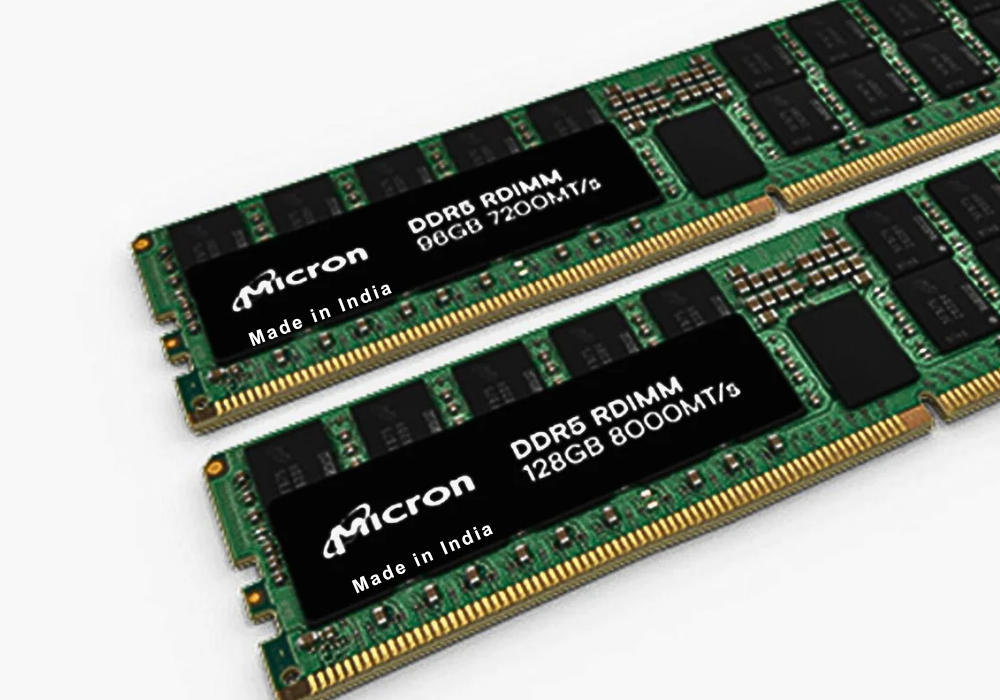
Micron Technology is set to roll out its first batch of semiconductor chips manufactured in India from its Sanand facility in Gujarat by early 2025, the company's India managing director Anand Ramamoorthy, in an interaction with Economic Times. This move is part of a broader strategy to cater to global demand, with a significant portion of the output intended for export markets.

The Sanand unit is focused on exporting chips and is expected to serve multiple sectors, including data centers, smartphones, notebooks, internet-of-things devices, and the automotive industry.

The emphasis is on agility and addressing talent scarcity in niche sectors like cybersecurity as the company prepares for this significant step in semiconductor manufacturing. This development is a part of India's growing semiconductor industry and is expected to contribute to the global supply chain diversification efforts.

The plant will focus on the assembly and test manufacturing for both DRAM and NAND products. The facility is part of Micron's strategy to meet long-term global demand for memory and storage, complementing the company's global assembly and test network.

This development is a testament to India's growing capabilities in the high-tech manufacturing sector and its potential to contribute to the global semiconductor supply chain.

The semiconductor chips to be packaged at Micron's Sanand unit in Gujarat are intended for a wide range of applications and will primarily be used in Data Centers, Smartphones, Notebooks, Internet-of-Things (IoT), Automotive Segments (ADAS).

Idaho based Micron's product range includes DRAM, flash memory, and SSDs, marketed under brands like Ballistix Gaming and Crucial.

In 2023, Micron reported a revenue of US$ 15.54 billion. The company employs around 43,000 people worldwide. Micron has been instrumental in several technological advancements, including the development of atomic layer deposition high-k films for DRAM and pioneering pitch double-patterning for NAND flash memory.

Besides Micron, Indian conglomerates – Tata and Vedanta, are also setting up semiconductor chips manufacturing plants in the country.

Collaborating with a Taiwanese partner, Tata is planning to set up India's first semiconductor fabrication plant in Gujarat's Dholera. The project is estimated to cost Rs 91,000 crore and aims to produce 300 crore chips annually for various sectors.

While, Vedanta has announced a $20 billion investment in technology, electronics, and glass businesses over the next four years, which includes semiconductor manufacturing.

Interestingly, even cricket icon Sachin Tendulkar has invested in a semcon company called RRP Electronics which is investing Rs. 5,000 crore in a semiconductor facility, contributing to the 'Make In India' initiative.

In addition to these, companies like Tata Elxsi, Dixon Technologies, Moschip Technologies, and SPEL Semiconductor Limited are also involved in the semiconductor sector and are considered key semiconductor stocks in India.

A Snake's Fossil Found in Gujarat is of Largest Snake Ever Existed on the Planet

A Snake's Fossil Found in Gujarat is of Largest Snake Ever Existed on the Planet

A remarkable discovery has been made in India. Paleontologists have unearthed a fossil of a massive snake in Gujarat, which they claim could be the largest snake to have ever existed. Named Vasuki Indicus, this prehistoric serpent is estimated to have been 11 to 15 meters (~ 36 to 49 Foot) long.

This discovery challenges the previous record-holder, Titanoboa, for the title of the biggest snake known.

To give an another perspective, the snake fossil estimated at up to 15 metres (~ 50 Foot) in length – longer than a T rex

The fossil was found in the lignite mines of Gujarat and is believed to have lived around 47 million years ago in the marshy swamps of Kutch. Despite its enormous size, the snake is thought to have had a surprisingly gentle demeanor, suggesting it was a swamp-dwelling giant.

Geological map of Kutch Basin showing fossil locality
Geological map of Kutch Basin showing fossil locality 

This discovery not only provides insight into the past ecosystems of India but also adds a significant chapter to the history of these fascinating reptiles. The Vasuki Indicus could have been an ambush predator, similar to modern-day pythons, relying on constriction to subdue its prey. The research and findings regarding this giant snake have been published and are contributing to our understanding of prehistoric life on Earth.

The size of Vasuki Indicus was estimated using predictive regression equations based on the dimensions of the snake's vertebrae.

Anterior trunk vertebrae of Vasuki indicus.


The researchers analyzed 27 well-preserved vertebrae from the specimen to estimate these sizes. The vertebrae measured between 37.5 and 62.7 millimeters in length, which indicated a large-bodied snake. This method is a standard approach in paleontology for estimating the size of extinct animals when complete skeletons are not available.

These estimations suggest that Vasuki Indicus could have been longer than the previously known largest snake, Titanoboa.

Story behind the discovery

The discovery of Vasuki Indicus is quite an interesting story. The initial fossil remains were found in the Panandhro Lignite Mine in Kutch, Gujarat, almost two decades ago, around 2005. At that time, the fossils were believed to belong to a prehistoric species of crocodile and were stored away without further examination.

It wasn't until 2024 that the true nature of the fossils was realized. Debajit Datta, a postdoctoral fellow at the Indian Institute of Technology Roorkee (IITR), began examining the fossils and noticed anatomical features that were not crocodilian but rather snakelike. This led to a more detailed investigation, where Datta, along with IITR paleontology professor Sunil Bajpai, cleaned and identified 27 relatively preserved vertebrae. These vertebrae ranged between roughly 1.5 and 2.5 inches long and 2.5 and four inches wide, which suggested they belonged to an adult snake of considerable size. 

The researchers' analysis revealed that these remains were from a previously unknown species of snake, which they named Vasuki Indicus after the mythological serpent king associated with the Hindu deity Lord Shiva. This discovery has shed light on the ancient biodiversity of India and contributes significantly to our understanding of the evolution and distribution of large snake species during the Eocene period.

Study published at – Nature

Adani Intends to Invest ₹1,689 Crore for Ship Leasing Firm in Gujarat's Gift City

Adani Intends to Invest ₹1,689 Crore for Ship Leasing Firm in Gujarat's Gift City

Adani Ports and Special Economic Zone Ltd (APSEZ) has reportedly proposed a significant investment of ₹1,689 crore for the establishment of Poseidon Leasing IFSC Ltd, a step-down subsidiary company, to operate within the GIFT SEZ in Gujarat. This strategic move marks their venture into ship leasing activities, encompassing both operating and financial leases of ships, ocean-going vessels, and related components.

Poseidon Leasing IFSC Ltd has been set up under the umbrella of another APSEZ subsidiary, Shanti Sagar International Dredging Ltd (SSIDL), which will hold full ownership of Poseidon. The newly formed entity will boast an authorized and paid-up capital of ₹2.5 crore, divided into ₹25,00,000 equity shares of ₹10 each. While the company is yet to formally respond to queries, sources familiar with the matter revealed that three director names have been proposed for the venture

This move by the Adani Group signifies their active expansion within the maritime sector, particularly in ports and terminals across India. Establishing a ship leasing entity within Gift City holds strategic significance as it enables Indian firms to conduct transactions in foreign currency, thus attracting companies that previously operated overseas due to regulatory and tax considerations. The decision to set up ship leasing operations at Gift City aligns with the broader trend of Indian entities seeking regulatory clarity and tax incentives domestically, rather than opting for offshore locations like Dubai or Singapore.

Gift City offers various tax breaks, including income tax waivers for up to 10 consecutive years within the first 15 years of operation, along with exemptions on input GST for services procured from Indian or non-resident vendors. Kolkata-based Ripley has already established Ripley Shipping India IFSC Pvt Ltd at Gift City in December 2022, pioneering ship leasing activities in the region.

Meanwhile, Reliance Industries has also ventured into the ship leasing domain at IFSC-Gift City with a substantial investment totaling ₹22,033 crore.

UAE based Transworld Group has also signed a ₹2,000 crore MoU for setting up a ship leasing and aircraft leasing activities in Gift IFSC, while StoneX Group will open a bullion trading desk in GIFT city

With an estimated $75 billion spent annually on seaborne freight to foreign shipping companies and a global charter hire market valued at $100 billion, the emergence of Gift City as a hub for ship leasing activities promises significant opportunities for Indian companies to capitalize on the growing maritime sector while benefiting from favorable regulatory and tax frameworks.


In India's Largest, Reliance To Lead ~ $12 Bn Investment in Green Hydrogen, Ammonia Units at Kandla

In India's Largest, Reliance To Lead ~ $12 Bn Investment in Green Hydrogen, Ammonia Units at Kandla

Reliance Industries Ltd (RIL), along with Larsen and Toubro (L&T), Greenko Group, and Welspun New Energy, is planning to establish green hydrogen and green ammonia units at Gujarat’s Deendayal Port Authority (DPA) in Kandla. RIL will reportedly lead this ambitious project, estimated to attract investments of up to Rs 1 lakh crore (approximately USD 12 billion), marks one of the largest investments in India's energy infrastructure.

The Kandla Green Hydrogen Hub aims to become one of the largest green hydrogen projects in India. It will be located at Gujarat’s Deendayal Port Authority (DPA) in Kandla. The project involves collaboration among major industry players — RIL, L&T, Greenko Group, and Welspun New Energy.

In October of last year, the DPA had received expression of interest for 14 land parcels, each measuring 300 acres, for this project.

DPA offered 14 plots with around 4,000 acres of land in total. Of this, RIL has been allotted six plots, L&T has been allotted five, Greenko Group has bagged two and Welspun New Energy has been allotted one plot. These four companies had bid the highest in the auction.

These allotments were made based on the highest bids in the auction.

Production Targets

The Kandla port aims to produce 7 MTPA of green ammonia and 1.4 MTPA of green hydrogen.

Green hydrogen is produced by electrolysing water using power from renewable energy sources, without emitting greenhouse gases. It is a crucial step toward achieving net-zero emissions.

Ammonia plays a pivotal role in producing green hydrogen at scale.

India's National Green Hydrogen Mission aims to position the nation as a leading global center for green hydrogen production.

The Ministry of Ports, Shipping & Waterways (MoPSW) identified and nominated DPA, Paradip Port in Odisha, and VO Chidambaranar Port in Tamil Nadu for development as hydrogen hubs capable of handling, storing, and generating green hydrogen by 2030

This project represents a significant step toward sustainable energy and has the potential to create substantial job opportunities. The formal announcement is expected after the general elections in June.


Adani Green Energy Completes Operationalization of 300 MW Wind Power Project In Gujarat

Adani Green Energy Completes Operationalization Of 300 MW Wind Power Project In Gujarat

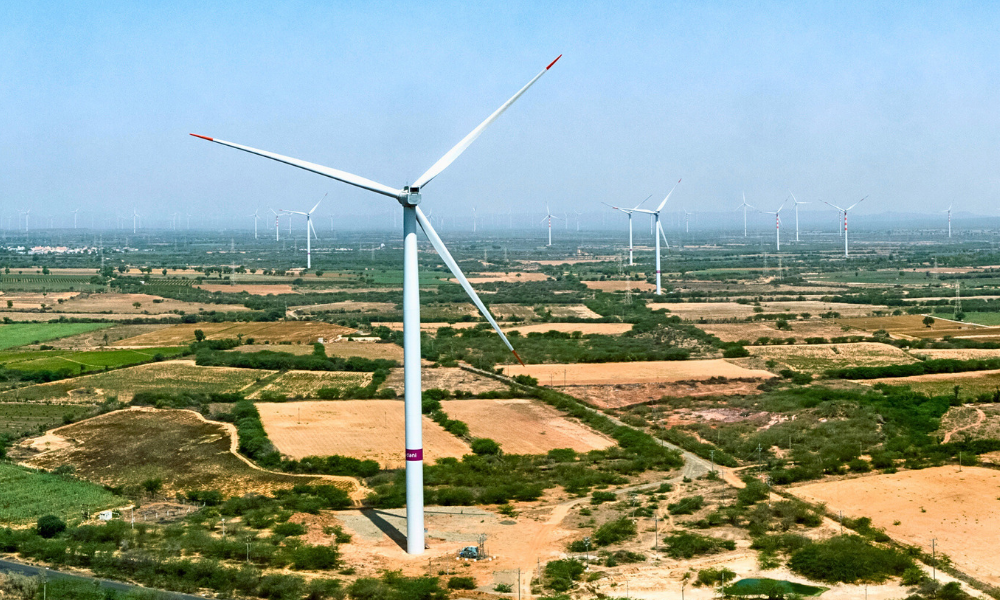
Adani Green Energy Limited (AGEL), India's largest and one of the world's leading renewable energy companies, has successfully operationalized a 300 MW wind power project in Gujarat. This project adds to AGEL's impressive portfolio, which now stands at 9,604 MW of operational renewable energy capacity.

The project is expected to generate 1,091 million electricity units annually, which could reduce CO2 emissions by around 0.8 million tonnes per year.

Operating India’s largest renewable energy portfolio of 9,604 MW, Adani Green Energy's operational assets are maintained and monitored by the cloud-based platform, the Energy Network Operations Centre (ENOC), which enables real-time monitoring and leverages analytics and machine learning setting benchmarks for industry-leading performance.

The Adani Energy Network Operation Centre (ENOC) is a cloud-based platform that uses machine learning, drones, and digital asset mapping to monitor project progress. It is a centralized location that manages and monitors energy dispatches from around the world in real time. The ENOC also aims to maximize the potential for scaling up the energy portfolio.

Wind energy is critical to India’s energy mix for grid balancing. The complementary nature of wind energy, integrated with solar and other sources, strengthens grid stability. According to the Ministry of New and Renewable Energy, India has the fourth highest wind installed capacity in the world. The National Institute of Wind Energy has estimated India’s gross wind power potential at 695.5 at 120 metres and 1163.9 GW at 150 metres above ground level.

Here are the key details about this project:

Project Capacity: The 300 MW wind project comprises two phases. The first phase of 174 MW was operationalized earlier, and the second phase of 126 MW has now been completed.

Annual Electricity Production: The entire 300 MW project is expected to produce approximately 1,091 million electricity units annually.

Environmental Impact: By generating clean energy, this wind project will help avoid approximately 0.8 million tons of CO2 emissions each year. 

Market Reports

Market Report & Surveys
IndianWeb2.com © all rights reserved