Showing posts with label Hyundai. Show all posts

Hyundai to Launch India’s First Locally Designed Electric Vehicle by 2030—A Strategic Shift in the EV Market

Hyundai to Launch India’s First Locally Designed Electric Vehicle by 2030—A Strategic Shift in the EV Market

Hyundai Motor Co has announced plans to launch India’s first electric vehicle designed entirely for local consumers—not just assembled here, but conceptualized, engineered, and tailored for Indian roads and buyers. This marks a bold shift from global adaptation to local innovation.

It was announced at the CEO Investor Day in New York, 

Key Highlights:
  • India-Centric Design: Built from the ground up for Indian driving conditions, climate, and consumer preferences.
  • Localized Supply Chain: Hyundai is investing in a full ecosystem—from R&D to manufacturing—to reduce costs and improve serviceability.
  • Talegaon Plant Expansion: The Pune facility will add 2,50,000 units to Hyundai’s global capacity, positioning India as a major export hub.
  • Global Vision Alignment: Part of Hyundai’s goal to sell 5.55 million vehicles globally by 2030, with 60% electrified.

How It Stacks Up: Hyundai vs Tata, Mahindra, BYD

Brand Core Strategy Product Focus Localization Price Range Unique Edge
Hyundai India-first EV design Compact & mid-size EVs Full local design & supply chain TBD (₹15–25L expected) First global OEM to design EV in India
Tata Motors Mass-market disruptor Hatchbacks, SUVs Deep localization, platform reuse ₹8–23L Largest EV market share, trusted brand
Mahindra SUV-led electrification Born-Electric SUVs Local R&D + global tech ₹15–26L Futuristic BE platform, rugged appeal
BYD Premium-to-affordable pivot Compact SUVs, MPVs Import-heavy, exploring local assembly ₹20–35L Blade Battery tech, global EV leader

Strategic Takeaways
  • Tata dominates the budget segment with proven models like Tiago EV and Nexon EV, leveraging ICE platforms for cost efficiency.
  • Mahindra is carving out a niche with its BE series and XUV400, targeting aspirational SUV buyers.
  • BYD, despite import duties, is pushing premium tech like Blade Batteries and exploring partnerships (e.g., Adani) for local assembly.
  • Hyundai’s India-first EV could redefine the mid-tier segment—blending global design standards with local cost efficiency and infrastructure.
Notably, until Hyundai’s recent announcement, India had no electric vehicle designed entirely from scratch by a global OEM specifically for Indian consumers.

So far, India’s EVs have been Tata Tiago EV, Nexon EV, which are built on ICE platforms with EV adaptations. While engineered and manufactured locally, they weren’t designed as EVs from the ground up.

While Hyundai’s upcoming EV is the first global OEM-designed EV for India, several Indian automakers have already built vehicles from the ground up for domestic needs. Tata Tiago EV & Nexon EV were designed and engineered by Tata Motors in India, these models use modified ICE platforms to deliver affordable EVs tailored for Indian roads and climate.

Hyundai’s upcoming EV—confirmed at its 2025 CEO Investor Day—is the first electric car designed entirely for India, with — A localized supply chain, India-specific design & engineering.

This marks a first-of-its-kind milestone where in a global automaker designing an EV from scratch for India’s roads, climate, and consumer needs—not just adapting or assembling an existing model.

Hyundai Motor Opens CoE for Future Mobility at IIT Delhi

Hyundai Motor Opens CoE for Future Mobility at IIT Delhi

Hyundai Motor Group (the Group), on Thursday, announced the opening of the Hyundai Center of Excellence (CoE) for future mobility technology (Hyundai CoE) at the Indian Institute of Technology (IIT) Delhi.

This initiative is establishing a joint research system to advance future mobility technologies focused on electrification and battery systems, reflecting the Group’s commitment to driving innovation tailored to the needs of Indian customers.

To recall, it was in December last year when Hyundai Motor announced partnership with three IITs – IIT Delhi, IIT Bombay and IIT Madras.

The Group has selected nine joint research projects in collaboration with IITs as part of its long-term academic-industrial cooperation framework. These projects cover key focus areas including:
  • Battery cells, systems and testing
  • Battery management systems (BMS)
  • Energy density enhancement
  • Safety
  • Durability
  • Diagnostic technologies.
The initiative also explores new materials and system components, driving forward innovation in battery design and performance.

Hyundai Motor Group officials – including Heuiwon Yang, President and Head of the R&D Division; Unsoo Kim, Managing Director of Hyundai Motor India Limited; and Chang Hwan Kim, Executive Vice President and Head of the Electrification Energy Solutions Tech Unit – attended the main agreement ceremony held in New Delhi. They were joined by IIT representatives, including Prof. Rangan Banerjee, Director of IIT Delhi; Dean Manu Santhanam from IIT Madras; and Dean Sachin C. Patwardhan from IIT Bombay.

The Steering Committee of the Hyundai CoE will be co-chaired by EVP Chang Hwan Kim and Dean Bijaya Ketan Panigrahi at IIT Delhi.

We’re excited to work with India’s brightest minds in battery innovation,” said Heuiwon Yang, President and Head of R&D Division at Hyundai Motor Group.Collaborating with leading researchers and IIT professors through the Hyundai Center of Excellence for future mobility technology will help us develop technologies tailored to India while contributing to its economy and society. We see this partnership with India’s academia and industry as a foundation for building a sustainable future together.”

Future Technology Research

In parallel, the Group is expanding its Future Technology Research Program, which has been in operation since 2021. Unlike the general operation methods of academic-industrial projects, the program allows university faculty members to propose their own research topics, which are then reviewed and selected by the Group.

Previously limited to domestic universities and Korean professors at overseas institutions, the program has been expanded to include foreign faculties – beginning with professors at IITs. This marks a significant step in globalizing the Group’s academic collaboration efforts.

Starting with IIT Delhi, the Hyundai CoE will expand in phases to build an India-wide network of experts, connecting leading researchers and institutions across the country.

Currently, the Group collaborates with three IIT universities (IIT Delhi, IIT Bombay, and IIT Madras), engaging around 30 professors. By December 2025, it aims to expand its reach to 10 universities in India, including non-IIT institutions, with approximately 100 professors participating.

The Group is organizing a range of initiatives to further strengthen this collaborative ecosystem. These include:
  • Technology exchange forums bringing together experts from both India and Korea
  • Global conferences on battery and EV technologies to share insights on trends and policies
  • Policy dialogue sessions that engage key stakeholders from the Indian government, academia, and industry to discuss the future of the mobility and electrification sectors
As the Group’s first academic-industrial collaboration model for a growth economy, the Hyundai CoE is set to become a central hub for research and innovation. It will play a key role in advancing future mobility solutions while fostering a strong, localized innovation base tailored to the evolving needs of the Indian market.

Hyundai and TVS Motor Explore Partnership to Redefine Last Mile Mobility Solutions

Hyundai and TVS Motor Explore Partnership to Redefine Last Mile Mobility Solutions

Showcase Micro Mobility Concept EVs at Bharat Mobility Global Expo 2025
  • The partnership will provide a unique opportunity to contribute to the micromobility needs in one of the world’s fastest growing economies.
  • TVS Motor Company (TVSM) will explore to manufacture, market and co-develop the vehicles along with Hyundai Motor Company.
TVS Motor Company and Hyundai Motor Company (HMC) today unveiled concept models of advanced electric three-wheelers and micro four-wheelers at Bharat Mobility Global Expo 2025. The concept models address the pressing need for sustainable mobility and align with the evolving demands of road and urban infrastructure in one of the world’s fastest growing economies. Together with Hyundai Motor, TVSM is exploring to contribute to the last-mile mobility market of India. While binding agreements are yet to be executed, Hyundai Motor is exploring to offer design, engineering and technology while TVSM will contribute towards manufacture, market and co-development of the vehicles.

These innovative concepts underline TVSM’s focus on providing mobility solutions that are efficient, exciting, responsible, safe and sustainable.

Commenting on the announcement, Sharad Mishra, President, Group Strategy, TVS Motor Company, said, "TVS is proud to partner with Hyundai to shape the future of urban mobility. By combining Hyundai’s global expertise with our deep understanding of mobility solutions, we aim to develop next-generation micro-mobility solutions that redefine last-mile connectivity. This collaboration reflects our commitment to innovation and sustainability. With a shared vision, we are confident that this partnership will deliver impactful solutions that set new standards in design, engineering, technology, and quality."

Commenting on the concepts, Mr SangYup Lee, Executive Vice President and Head of Hyundai and Genesis Global Design, Hyundai Motor, said, “Hyundai Motor is a customer-centric brand, and caring for people in India is our first mission. This commitment has driven us to explore designing micro-mobility solutions tailored to India's unique environment, reimagining the iconic three-wheeler to enhance mobility experiences through thoughtful design. Collaborating with TVS Motor, we aim to locally produce the three-wheeler while exploring global opportunities for the four-wheeler, blending intuitive functionality with the spirit of a rapidly innovating India.”

Hyundai Group Partners Three IITs for Battery-Tech, Electrification Research, Investing $7 Mn

Hyundai Group Partners Three IITs for Battery-Tech, Electrification Research Investing $7 Mn
  • Hyundai Motor Group partners with the Indian Institutes of Technology (IITs) to establish a collaborative research system in batteries and electrification
  • Group plans to invest around USD 7 million over five years, starting in 2025, to jointly conduct battery and electrification-related research with the IIT universities
  • The Hyundai CoE to facilitate technical and human exchanges between battery and electrification experts from Korea and India, fostering talent and promoting long-term employment
Hyundai Motor Group, on Tuesday, announced partnerships with the Indian Institutes of Technology (IITs) to establish a collaborative research system in the fields of batteries and electrification. The three institutes include IIT Delhi, IIT Bombay and IIT Madras.

Hyundai Motor Group Partners with Indian Institutes of Technology to Advance Battery and Electrification Research

Investment:

USD 7 million over five years (2025-2029) to support various research activities.

Hyundai Center of Excellence (COE):
  • Location: IIT Delhi
  • Objective: To drive advancements in batteries and electrification, specifically tailored to meet the unique requirements of the Indian market.
  • Activities: Conducting joint research, facilitating technical and human exchanges between Korean and Indian experts, and fostering talent development.
Collaboration Areas:
  • Battery Technology: Researching and developing advanced battery solutions.
  • Electrification: Innovating in electrification technologies.
  • Software Development: Enhancing software for electric vehicles (EVs)
  • Hydrogen Fuel Cells: Exploring hydrogen fuel cell technologies.
Impact:
  • EV Ecosystem: Contributing to the establishment of an EV ecosystem in India, in line with government policies for expanding EV distribution.
  • Academic-Industrial Cooperation: Promoting collaboration between academia and industry to drive innovation and growth.
Hyundai Motor Group plans to contribute to the establishment of an electric vehicle (EV) ecosystem in India. This will be done in conjunction with various policies for expanding EV distribution, implemented by the Indian government. The collaboration will involve the Centre for Automotive Research and Tribology (CART), the only EV-related research institute in India, located within IIT Delhi.

The Hyundai CoE will not only conduct joint research on academic-industrial cooperation tasks but also facilitate technical and human exchanges between battery and electrification experts from Korea and India. This will involve technical exchange meetings, special IIT lectures by Group battery and electrification experts, and operation of Korean visit training programs. The Group plans to continue efforts for, fostering talent and mid- to long-term employment.

This partnership aligns with Hyundai Motor Group's efforts to expand its presence in India and support the country's transition to sustainable mobility solutions.

Hyundai Motor India Submit Draft IPO Papers to SEBI, Plans for the Biggest IPO of India of $3 Billion

Hyundai Motor India Submit Draft IPO Papers to SEBI, Plans for the Biggest IPO of India of $3 Billion

Hyundai Motor India has submitted draft papers to the Securities and Exchange Board of India (SEBI) for an initial public offering (IPO).

According to the draft red herring prospectus, Hyundai Motor Company, the Korean auto giant, plans to dilute a 17.50% stake in its Indian arm through an offer-for-sale (OFS). This translates to selling 142,194,700 shares out of its 100% stake, which currently stands at 812,541,100 shares.

The IPO aims to raise approximately USD 3 billion (around Rs 25,000 crore). The expected valuation for Hyundai Motor India is around USD 18 billion (approximately Rs 1,50,390 crore).

If successful, this IPO will be the largest ever in India, surpassing the 2022 LIC IPO, which raised Rs 21,000 crore. Remarkably, this marks the first time in over two decades that an automaker is going public in India. The last carmaker to do so was Maruti Suzuki India back in 2003.

Hyundai has appointed Kotak Mahindra Capital, Citigroup Global Markets India, HSBC Securities and Capital Markets (India), J.P. Morgan India, and Morgan Stanley India as book running lead managers for the IPO.

Hyundai Motor India is currently the second-largest carmaker in India by volume, trailing only Maruti. It also holds the position of the second-largest car exporter from India. The company sells 14 models, including popular ones like the Creta, Venue, Verna, and i20.

Going public allows Hyundai to raise substantial capital by selling shares to the public. This infusion of funds can be used for various purposes, such as expanding production capacity, investing in research and development, and strengthening the company's financial position. In addition, by listing on the stock exchange, Hyundai aims to unlock the value of its Indian subsidiary. The IPO provides an opportunity for existing shareholders (including the parent company) to monetize their holdings and realize gains.

Hyundai Motor India to Open Its Pune Plant, Acquired from GM, in the 2nd Half of 2025

Hyundai Motor India to Start Operating Its Pune Plant in the 2nd Half of 2025

Hyundai Motor India expanding its production capacity. The Korean auto giant announced its plans to open its Pune plant, which was acquired from General Motors, in the second half of 2025.

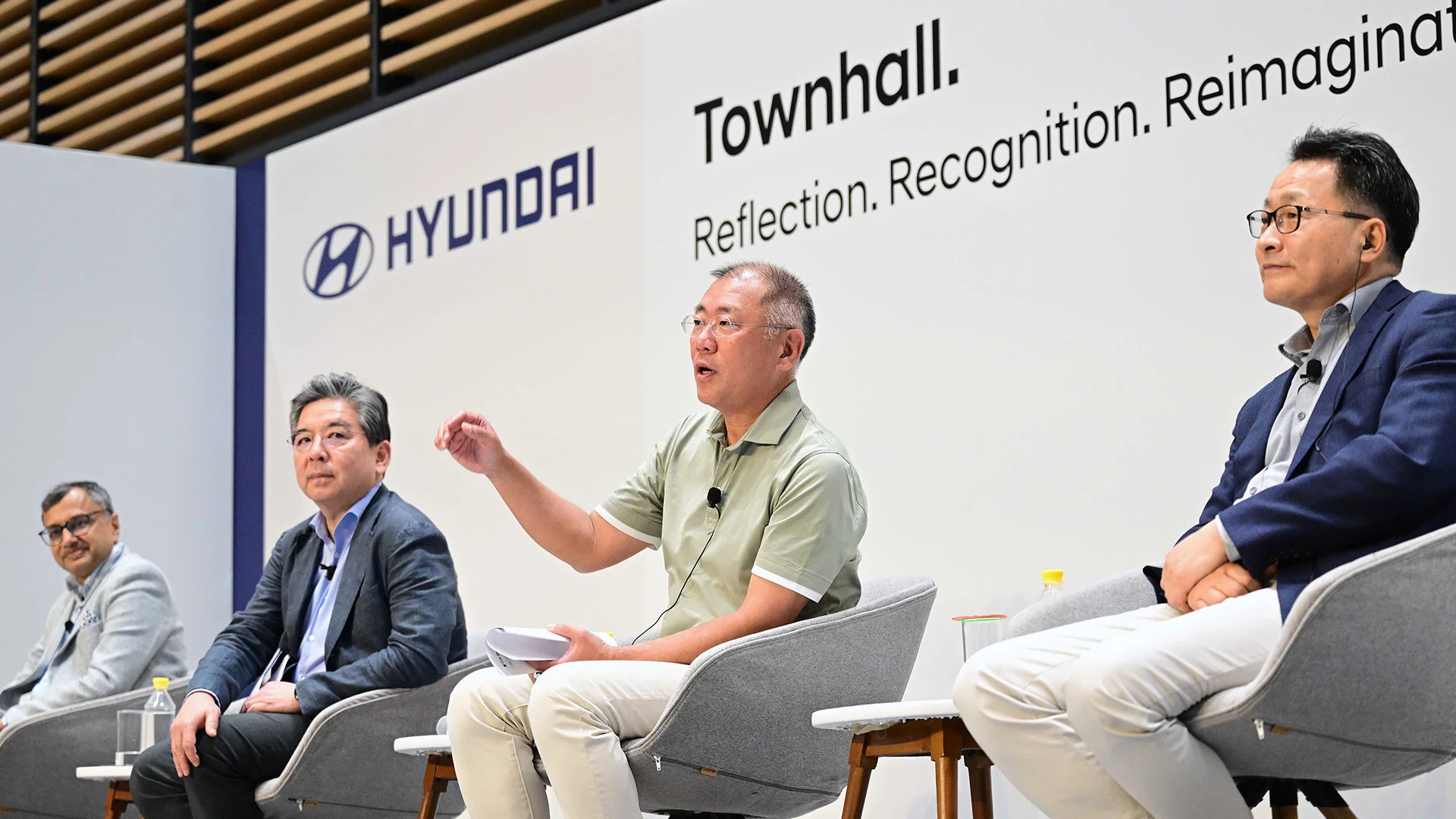
Several other India expansion announcements were also made in the first overseas town hall meeting, at Gurugram, with the Executive Chair Euisun Chung, who visited India to review the Group’s mid- to long-term future mobility strategies, which lay the foundation for its leadership in the Indian market.

The Pune facility will be upgraded to create a production hub capable of building more than 200,000 units annually using smart manufacturing technology and systems. Additionally, when combined with the existing capacity of its Chennai plant (which produces 824,000 vehicles annually), Hyundai Motor India's total annual capacity will exceed one million vehicles.

Furthermore, Kia India's yearly production capacity will also be expanded to 431,000 units within the first half of this year. With this, Hyundai and Kia together will give the conglomerate a combined production capacity of about 1.5 million vehicles per year in India.

Besides, Hyundai Motor India also announced an exciting lineup of models planned for production in India. Some of the popular models that will be manufactured locally include — Hyundai Creta, Venue, i20, Verna, Alcazor and Kona Electric.

Hyundai Motor Group also plans to strengthen its EV leadership in the Indian EV market through its electrification strategy.

Hyundai Motor India plans to unveil its first locally produced EV in India next year and proactively respond to the growth of the Indian EV market. Starting with the mass production of its first electric SUV model at the Chennai plant at the end of 2024, the company plans to further produce five EV models by 2030. Hyundai Motor India will also utilize its sales network hubs, expanding the number of EV charging stations to 485 by 2030.

Hyundai Motor India employees expressed significant interest in the company’s EV business plan in the Indian market.

Hyundai Motor India to Start Operating Its Pune Plant in the 2nd Half of 2025

By around 2030, we expect to see a substantial expansion in the EV market. In anticipation of this evolution, Hyundai is focused on developing locally tailored EVs aimed at establishing us as a leading global EV brand,” explained Executive Chair Chung. “We also plan to proactively build charging stations at strategic locations – including dealerships – to facilitate the adoption of EVs.”

Hyundai Motor Group has achieved strong growth over the past 28 years, since Hyundai Motor India first entered the Indian market in 1996.

Hyundai's AI-based Autonomous IONIQ 5 Robotaxi Successfully Passes Driver’s License Test

Hyundai's AI-based Autonomous IONIQ 5 Robotaxi Successfully Passes Driver’s License Test

The Hyundai IONIQ 5 robotaxi has recently made headlines by successfully completing a process akin to a U.S. driver's license test. This achievement showcases the vehicle's advanced autonomous driving capabilities and marks a significant step towards the future of mobility.

The Hyundai IONIQ 5 robotaxi is an innovative autonomous vehicle designed to provide safe and convenient public ride-hailing services. It's a Level 4 autonomous vehicle, which means it can operate safely without a driver under certain conditions. This robotaxi is a collaboration between Hyundai Motor Company's automotive R&D and Motional's driverless technology, combining electrification and autonomy.

The robotaxi met all the necessary evaluation criteria to earn its license, demonstrating 'uncompromised safety' in the process. This event not only highlights Hyundai's technological prowess but also its commitment to creating accessible and inclusive mobility solutions.

In the driving test, conducted by the highly experienced professional examiner, the IONIQ 5 robotaxi excelled, impressing with its speed control, lane changes and maneuvering, its ability to accurately stop at a stop sign, perform left turns, and its reaction time to developing hazards.


Captured in the video, the IONIQ 5 robotaxi effortlessly navigated the Las Vegas Strip, as well as the city’s suburban areas.

The IONIQ 5 robotaxi is the embodiment of transformative technologies in mobility coming together in one vehicle. It signifies the extensive collaboration between Hyundai Motor Group and autonomous driving technology developer Motional, spanning years of development and rigorous testing of advanced automotive platforms and self-driving technology. The IONIQ 5 robotaxi achieves consistent driving performance in various driving environments thanks to its suite of advanced sensors, combining LiDAR, radar and cameras.

The video features the IONIQ 5 robotaxi completing a series of public-level driving tests, including road driving in Las Vegas, U.S., demonstrating outstanding performance. This achievement underscores the IONIQ 5 robotaxi’s reliability as well as the inclusivity of its autonomous vehicle technology, highlighting its potential to safely provide freedom of mobility to all.

The film ‘Hyundai gets its driver's license’ can be seen on Hyundai Motor Company’s official YouTube channel.

"As a company that pursues freedom of mobility, we at Hyundai aim to exhibit the safety and trustworthiness of the IONIQ 5 robotaxi through this campaign,” said Sungwon Jee, Senior Vice President and Global Chief Marketing Officer at Hyundai Motor Company. “We will continue our efforts to communicate our AI-based autonomous driving technology, which is set to provide positive changes to our customers’ everyday lives.”

The Hyundai IONIQ 5 robotaxi stands out in the autonomous vehicle landscape for several reasons:

Level of Autonomy: It is an SAE Level 4 autonomous vehicle, meaning it can operate without a driver under certain conditions¹.

Electrification: The IONIQ 5 robotaxi is fully electric, aligning with the push towards sustainable transportation¹.

Safety and Accessibility: It emphasizes safety and aims to provide more accessible transportation options, potentially improving mobility for a broader range of users. 

Design: The design is based on Hyundai's Electric Global Modular Platform (E-GMP), offering a spacious and comfortable interior for passengers. 

These features position the IONIQ 5 robotaxi as a strong competitor in the autonomous vehicle market, combining advanced driverless technology with eco-friendly aspects to enhance the overall transportation experience.

Hyundai, Kia Partner KAIST To Develop LiDAR Sensors for Advanced Autonomous Vehicles


Hyundai Motor, Kia and KAIST Form Joint Research Laboratory to Develop Next–Generation Autonomous Driving Sensors
  • Hyundai Motor Group–KAIST On–Chip LiDAR Joint Research Lab at the KAIST HQ in Daejeon to develop LiDAR sensors for advanced autonomous vehicles
  • Lab aims to develop essential high–performance, compact on–chip sensors and new signal detection technology
  • On–chip sensors to reduce the size of LiDAR system compared to conventional methods and secure price competitiveness through mass production using semiconductor fabrication processes
Hyundai Motor Company and Kia Corporation have announced that they are partnering with KAIST (Korea Advanced Institute of Science and Technology), to develop next–generation autonomous driving sensors.

Established in 1971, by the Korean government, KAIST is Korea's first public, research-oriented science and engineering institution. It may be recalled that, in 2009, KAIST researchers unveiled an electric transport system where the vehicles get their power needs from cables underneath the surface of the road via non-contact magnetic charging.

It may be recalled that in 2018, researchers from 30 countries boycotted KAIST due to an allegation that KAIST was starting an AI weapons research project together with the Korean arms manufacturer Hanwa. The allegations were of developing lethal autonomous weapons. Later the institute denied the existence of such project.

Years later, now Hyundai Motor, Kia and KAIST are joining together to establish the ‘Hyundai Motor Group–KAIST On–Chip LiDAR Joint Research Lab’ at KAIST in Daejeon to develop LiDAR sensors for advanced autonomous vehicles.

The joint research lab aims to develop high–performance and compact on–chip sensors and new signal detection technology that are essential in the increasingly competitive autonomous driving market.
On-Chip LiDAR joint laboratory establishment and agreement ceremony

On–chip sensors, which utilize semiconductor manufacturing technology to add various functions, can reduce the size of LiDAR compared to conventional methods and secure price competitiveness through mass production using semiconductor fabrication processes.

In addition, the current LiDAR sensors measure the distance to objects by emitting and measuring the time it takes for light to return. However, the next–generation signal detection method, called Frequency Modulated Continuous Wave (FMCW), emits light with a frequency that varies over time and analyzes the frequency shift of the returning light to detect distance.

Compared to existing methods, this technology has less signal noise, can calculate relative speed with objects, and can exclude interference from external light sources such as sunlight, making it relatively advantageous in severe weather conditions.

The joint research lab will consist of about 30 researchers, including the Hyundai–Kia Institute of Advanced Technology Development research team and KAIST professors Sang–Hyeon Kim, Sangsik Kim, Wanyeong Jung and Hamza Kurt from KAIST’s School of Electrical Engineering, and will be in operation for four years until 2028.

KAIST will be leading the specialized work of each research team, such as the development of silicon optoelectronic on–chip LiDAR components, fabrication of high–speed, high–power integrated circuits to run the LiDAR systems, and the optimization and verification of LiDAR systems.

Hyundai Motor and Kia, together with Hyundai NGV, a specialized industry–academia cooperation institution, will oversee the operation of the joint research lab and provide support, such as monitoring technological trends, suggesting research directions, deriving core ideas and recommending technologies and experts to enhance research capabilities.

Hyundai Motor Group Invites Startups for 2024 First-half ZER01NE Accelerator

Hyundai Motor Group Invites Startups for 2024 First-half ZER01NE Accelerator
  • Hyundai Motor Group invites startups to apply for the 2024 first-half innovation program to collaborate with Hyundai and Kia on future technologies
  • Startups can apply to one of seven projects under three different tech themes, including Software-Defined Vehicle, Smart Factory, and ESG
  • Submissions are to be accepted from February 19 to March 10, and results will be announced in April
Hyundai Motor Group (the Group) announced its 2024 first-half ZER01NE Accelerator program, an open innovation platform to facilitate collaboration between startups and the Group on various projects. This program aims to discover valuable startups and explore the possibilities of strategic use of their innovative technologies.

Startups can apply to one of seven global projects derived by the Group’s internal teams under three key themes: two Software-Defined Vehicle (SDV) projects, two Smart Factory projects, and three Environmental·Social·Governance (ESG) projects. Each startup is limited to one specific project.

The Group’s organizations that are responsible for technology developments are directly involved in reviewing and recruiting the applicants for each project. Only registered corporations will be eligible for consideration and can submit their proposal on the official application website from February 19 to March 10. Results will be announced in April.

Selected startups will be provided with a project development budget and could be evaluated for equity investments.

Since the Group introduced the ZER01NE Accelerator in 2018, 150 teams from 11 affiliates of the Group and 177 startups have worked together on 128 collaborative projects. This has led to 96 startups successfully receiving equity investments from the Group.

Last year, three global startups were selected and are currently engaged in collaborative projects focused on lithium metal battery, teleoperation, and cold-spray metal 3D printing solutions.

More details about the ZER01NE Accelerator can be found on the program’s official website.

Hyundai, Kia Unveil New Technology to Increase Range of Electric Vehicles

Hyundai, Kia Unveil New Technology to Increase Range of Electric Vehicles
  • Reducing the drag coefficient (Cd) in an automobile improves the performance of the vehicle as it pertains to speed and fuel efficiency.
  • Hyundai Motor and Kia Unveil ‘Active Air Skirt’ Technology to Help Electric Vehicles Go Faster and Farther
  • New 'Active Air Skirt' (AAS) technology controls the turbulence generated during high-speed driving by operating variably depending on the vehicle’s speed
  • Installed between the front bumper and the front wheels, AAS is hidden during normal operation but operates at speeds over 80 km/h when the aerodynamic resistance becomes greater than the air resistance and is stored again at 70 km/h
  • Taking into account the specificity of the E-GMP platform, it is positioned only in front of the tires without completely covering the front end.
Hyundai Motor Company and Kia Corporation has just unveiled the ‘Active Air Skirt’ (AAS) technology that minimizes the aerodynamic resistance generated during high-speed driving, effectively improving the driving range and driving stability of electric vehicles (EVs).

AAS is a technology that controls the flow of air entering through the lower part of the bumper and effectively controls the turbulence generated around the vehicle wheels by operating variably according to the vehicle speed during high-speed driving.

In the EV era, competition to secure a better driving range from a single charge has become fierce, making the relationship between vehicles and aerodynamics even more important. Furthermore, aerodynamic performance has a significant impact not only on power performance but also on driving stability and wind noise.

In response, manufacturers are exploring various measures to reduce the coefficient of drag (Cd), which is the resistance coefficient of the air acting in the opposite direction of the vehicle’s motion.

Reducing the drag coefficient (Cd) in an automobile improves the performance of the vehicle as it pertains to speed and fuel efficiency.

AAS is installed between the front bumper and the front wheels of the vehicle and is hidden during normal operation, but it operates at speeds over 80 km/h when the aerodynamic resistance becomes greater than the rolling resistance and is stored again at 70 km/h. The reason for the difference in deployment and storage speeds is to prevent frequent operation in specific speed ranges.

Also, the reason why AAS only covers the front part of the tires without completely covering the front is related to the characteristics of Hyundai Motor Group’s E-GMP platform for EVs. This is because it is more effective in improving aerodynamic performance to only cover the tire part since the platform floor is flat. This also functions to enhance downforce of the vehicle, thereby improving vehicle traction and high-speed stability.

AAS can also operate at speeds over 200 km/h. This was possible thanks to the application of rubber material on the lower part, which reduces the risk of external objects splashing and damaging while driving at high speeds and ensures durability.

Hyundai Motor and Kia announced that they have tested and reduced the drag coefficient (Cd) by 0.008, improving drag by 2.8 percent, by installing AAS in Genesis GV60. This is a figure that can expect an additional range improvement of about 6 km.

Hyundai Motor and Kia have applied for related patents in South Korea and the United States, and plan to consider mass production after durability and performance tests.

This technology is expected to have a greater effect on models such as SUVs where it is difficult to improve aerodynamic performance,” said Sun Hyung Cho, Vice President and Head of Mobility Body Development Group at Hyundai Motor Group.We will continue to strive to improve the driving performance and stability of electric vehicles through improvements in aerodynamics.”

Meanwhile, Hyundai Motor and Kia are applying various technologies, such as rear spoilers, active air flaps, wheel air curtains, wheel gap reducers and separation traps, to vehicles to secure competitive drag coefficients. Hyundai IONIQ 6, which incorporates these technologies, has achieved a global leading Cd of 0.21.

Hyundai Motor and Abu Dhabi's Mubadala Collaborate for CleanTech and Future Mobility Technologies

Hyundai Motor and Abu Dhabi's Mubadala Collaborate for CleanTech and Future Mobility Technologies
  • Hyundai Motor Company and Mubadala Investment Company to explore collaboration on future mobility and cutting-edge technologies, including the hydrogen value chain and production
  • The two entities will also explore potential investment opportunities
South Korea's Hyundai Motor Company and UAE -based Mubadala Investment Company “Mubadala”, a global sovereign investor, have signed a memorandum of understanding (MOU) to jointly explore potential business opportunities and synergies for future mobility and technologies.

The signing ceremony, which took place in Abu Dhabi, was attended by Jaehoon Chang, President and CEO of Hyundai Motor Company, and Waleed Al Mokarrab Al Muhairi, Deputy Group Chief Executive Officer of Mubadala Investment Company. This marks the beginning of a strategic collaboration that will drive progress in future mobility and clean technologies.

The agreement will allow both parties to jointly invest and share expertise, leveraging the advantages of Mubadala's investments and Hyundai Motor's expertise in various fields, including green steel production, green aluminum production and recycling, as well as advanced air mobility (AAM), and infrastructure for electric vehicles.

Additionally, Hyundai Motor and Mubadala will seek to unlock potential investment opportunities.

This collaboration capitalizes on the organic synergy between Hyundai Motor's eco-friendly and futuristic business strategies, including hydrogen, green steel, green aluminum as well as future mobility technologies, and Mubadala's investment portfolio,” said Jaehoon Chang, President and CEO of Hyundai Motor Company. “Hyundai Motor will continue to pursue diverse partnerships to achieve a sustainable future and contribute to the global energy transition.”

To recall, in August this year Hyundai announced that it aims to develop technology to produce clean hydrogen from food waste as the world’s third-largest automaker aims to cement its global dominance in the fuel cell electric vehicle sector.

Commenting on this agreement, Waleed Al Mokarrab Al Muhairi, Deputy Group CEO of Mubadala Investment Company, said: “This strategic partnership with Hyundai Motor Company marks a significant milestone in our journey to further diversify our portfolio across sectors that are shaping the future of the global economy such as mobility, green technology, and energy. Through our combined strengths and expertise, we will surface new investment opportunities that are in line with our strategic growth ambitions and sustainability agendas. We look forward to collaborating with Hyundai Motor Company and expanding our presence in South Korea.”

Hyundai Develops Snow-Chain Technology Located Inside A Wheel/Tire

Hyundai Develops Snow-Chain Technology Located Inside A Wheel/Tire

Hyundai Motor Company and Kia Corporation have together unveiled a new snow chain-integrated tire technology to make it easier to stay safe in winter driving conditions.

For an uninitiated, Snow-chains are quite in demand in cold countries where snow covers the roads making it slippery, and difficult and dangerous to drive on. Snow-chains can effectively dig into snow and frozen surfaces. The chains can grip the road and allow the wheels to rotate freely.

Hyundai has presented a new wheel and tire design that incorporates built-in snow chains that deploy and retract at the push of a button, potentially putting an end to the fiddly, freezing process of wrapping and removing traditional snow chains.

The snow chain-integrated tire technology consists of a wheel and tire assembly that feature radial grooves at regular intervals, like a pizza, with modules made of shape memory alloy inserted into these channels.
 
Hyundai Motor and Kia Unveil Snow Chain-Integrated Tire Technology Using Shape Memory Alloy

Hyundai's snow chain-integrated tire technology uses shape memory alloy modules that are located inside the wheel and tire. These modules protrude to act as a ‘snow chain’ when an electrical signal is received.

Unlike traditional snow chains that are complicated to install and remove, this technology will automatically deploy shape memory alloy snow chains at the push of a button, helping to improve safety in snowy conditions.


This technology takes advantage of the shape memory alloy’s ability to return to its original shape when an electric current is applied. During normal driving, the shape memory alloy located inside the wheel is compressed into the shape of the letter ‘L’ and does not contact the road surface. When the driver activates the function, an electric current is applied, causing the shape memory alloy to revert to its original profile; the material forms a ‘J’ shape, pushing the module out of the tire to make contact with the surface, improving grip, stability and safety on snowy roads.

If the surface of the tire is worn down to the height of the module in normal driving mode due to severe tire wear, drivers can easily recognize this degradation so as not miss the tire replacement cycle.

The technology is patent-pending in both South Korea and the U.S. Hyundai Motor and Kia plan to consider mass production of the tires after further technological development, durability and performance tests and regulation reviews.

Hyundai Motor and Kia Unveil Paradigm–Shifting 'Uni Wheel' Drive System to Revolutionize Future Mobility

Hyundai Motor and Kia Unveil Paradigm–Shifting 'Uni Wheel' Drive System to Revolutionize Future Mobility
  • Hyundai Motor Company and Kia Corporation present the ‘Universal Wheel Drive System’ (Uni Wheel) at ‘Uni Wheel Tech Day’ in Seoul
  • New system integrates existing drive components to deliver excellent efficiency, power and durability without impacting ride comfort
  • Improved packaging potential opens up avenues for greater driving range, passenger space and PBV development
Hyundai Motor Company and Kia Corporation have unveiled the Universal Wheel Drive System — called ‘Uni Wheel’ — at ‘Uni Wheel Tech Day’ in Seoul, Korea. This paradigm-shifting vehicle drive system will revolutionize the design of future mobility devices.

Uni Wheel is a functionally integrated wheel drive system that dramatically improves available space inside an electric vehicle (EV) by moving the main drive system components to the vacant space within the wheel hub. In doing so, Hyundai Motor and Kia have designed a completely new structure for the drive system.


In internal combustion engine (ICE) vehicles power is transmitted from the engine through the transmission and to the wheels via drive shafts and constant velocity (CV) joints. In EVs, the engine and transmission are replaced by a motor and reduction gear, but the final method of transmission to the wheels is the same.

Uni Wheel opens new possibilities and enables a flat-floor configuration by moving an EV’s reduction gear inside the wheel hub, locating a compact individual motor close to each wheel, reducing the length of the drive shafts.

The system frees up significantly more interior space compared with conventional drive systems, enabling future mobility products optimized for various applications, such as Purpose Built Vehicles (PBVs).

“We are pleased to showcase innovative ideas that could become game changers in the future mobility market,” said Jongsool Park, Senior Fellow at the Institute of Advanced Technology Development of Hyundai Motor Group. “We will perfect the technology so that customers can experience mobility in a completely different and new way.”

Advancing future mobility through new technology

Recent advances in electrification, autonomous driving and connectivity technologies are transforming mobility products into living spaces. Hyundai Motor and Kia’s focus on space utilization in future vehicle architectures will further boost customer value and provide owners with richer user experiences as a result.

Uni Wheel uses a special planetary gear configuration consisting of a sun gear in the center, four pinion gears on each side and a ring gear surrounding this arrangement. Power generated by the motor is transmitted to the sun gear, which in turn engages the pinion gears to rotate the ring gear. This is connected to the wheel to drive the vehicle.

Uni Wheel’s pinion gears are connected to each other to form two linkages, and this multi-link mechanism enables Uni Wheel’s multi-axis movement to allow a wide range of suspension articulation.

A conventional drive system using a regular CV joint suffers from a decrease in efficiency and durability as the angle of drive shaft deflection increases when travelling over bumpy, undulating surfaces. Uni Wheel can transmit power with almost no change to efficiency regardless of wheel movement, ensuring high durability and ride comfort.

When combined with electronic air suspension that can adjust ride height according to the driving situation, this can be increased to stabilize the vehicle on rough roads, or decreased for high-speed driving to improve power and stability.

By moving the reduction gear to the wheel hub, Uni Wheel’s high reduction ratio delivers a significant torque output and allows for a more compact electric motor. With independent control of up to four efficient electric drive units, Uni Wheel also allows for unprecedented levels of torque vectoring to boost dynamic ability and deliver high levels of steering and driving stability.

More efficiency, more interior space

The Uni Wheel concept frees up space within a vehicle that was previously unavailable to users. By relocating many components of the drive system to the wheel hub and downsizing the electric motor with no impact on performance, the extra space made available within the vehicle body can be utilized as additional cargo room, such as a larger trunk or a ‘frunk’.

It’s also possible to move away from conventional seating arrangements designed around the driver, creating new interior layouts and designs for the era of fully autonomous driving. Utilizing this space to improve battery capacity can also improve driving range, meaning users can achieve the range of a large EV without the physical size of the vehicle growing.

The developments Uni Wheel allows will also significantly increase passenger space. EV batteries are conventionally located low down in a vehicle’s body, which requires a raised ride height, often reducing passenger space by the volume of the battery. However, Uni Wheel optimizes battery packaging, with the loss of passenger space minimized.

This will be a valuable feature for PBVs, which need to maximize interior space by offering a low, flat-floor design. The flat-floor platform enabled by Uni Wheel allows for strong flexibility and scalability when it comes to PBVs, enabling the design of various body types depending on the intended use case.

Uni Wheel is highly flexible and easily adaptable to all types of EVs, including regular passenger and high-performance EVs, as the system can implement the same powertrain and reduction gear functions required for conventional EVs.

In addition to vehicles of various sizes, Uni Wheel can also be applied to other types of mobility devices, such as wheelchairs, bicycles and delivery robots. Depending on the requirements of these different forms of mobility, Uni Wheel can be scaled to work with wheel sizes as small as 4 inches and as large as 25 inches or more. In addition, Uni Wheel’s ability to move the rotation axis of the wheel makes it possible to create forms of personal mobility that can climb stairs as smoothly as an escalator.

Hyundai Motor and Kia are continuously verifying the stability, efficiency, and durability of Uni Wheel through various tests to perfect its development and will continue efforts to improve its efficiency by adjusting the reduction gear ratio, and upgrading the lubrication and cooling system.

Hyundai Motor and Kia have applied for and registered eight patents related to Uni Wheel in South Korea as well as the United States. 

Amazon and Hyundai Partner for Built-in Alexa in Hyundai Vehicles, Amazon To Sell Hyundai Vehicles Online from Next Year

Amazon and Hyundai Partner for Built-in Alexa in Hyundai Vehicles, Amazon To Sell Hyundai Vehicles Online from Next Year

  • Amazon to launch online vehicle sales in the U.S., starting with Hyundai in 2024, making it more convenient for customers to find and buy their vehicle of choice on Amazon.com and pick it up from their local dealer
  • Hyundai names AWS as its preferred cloud provider to help facilitate digital transformation of the automaker’s operations, production, and customer service
  • Amazon and Hyundai to bring the Alexa Built-in experience to Hyundai’s next-generation vehicles
Amazon (NASDAQ: AMZN) and Hyundai Motor Company announced a broad strategic partnership to bring innovative new experiences to customers. The announcement was made today at the 2023 Los Angeles Auto Show and a livestream can be viewed here. This strategic collaboration includes Amazon launching online sales of Hyundai vehicles in the U.S. in 2024, Hyundai naming AWS as its preferred cloud provider to help facilitate digital transformation, and the Alexa Built-in experience coming to Hyundai’s next-generation vehicles.

Hyundai is a very innovative company that shares Amazon’s passion for trying to make customers’ lives better and easier every day,” said Amazon CEO Andy Jassy. “Our broad, strategic partnership should do just that, from changing the ease with which customers can buy vehicles online, to making it simple to use Alexa in Hyundai vehicles for entertainment, shopping, smart home adjustments, and calendar checks, to enabling Hyundai to transform their customer experiences and business operations by moving to AWS. We look forward to inventing together for many years.”

Partnering with one of the world’s most customer-centric organizations unlocks incredible opportunities as we continue to expand our portfolio, grow our sales network, transition to electrification and realize the future of smart mobility,” said President and CEO of Hyundai Motor Company Jaehoon (Jay) Chang. “Amazon is the ideal partner to help realize our vision of progress for humanity, including improving how people and goods move more efficiently and sustainably. Hyundai is the first automotive company available for full end-to-end transactions in Amazon’s U.S. store and this is another example of how we continue to push for ways to elevate the customer journey together with our outstanding retail partners.”


Hyundai Motor Launches Future Mobility School Program in ASEAN Countries

Hyundai Motor Launches Future Mobility School Program in ASEAN Countries
  • Hyundai Motor ASEAN HQ launched Future Mobility School in 12 primary, junior and senior high schools in Indonesia, Malaysia and Cambodia for the fall semester
  • In collaboration with UNESCO APCEIU and South Korean Ministry of Education, the program is expanded to ASEAN region with 23 dispatched Korean teachers
  • Students of different ages participated and learned about transformative future mobility through experiential programs and creative learning materials
Hyundai Motor ASEAN HQ launched the Future Mobility School in collaboration with the UNESCO APCEIU and the South Korean Ministry of Education, expanding the educational program to ASEAN countries. The classes have been in session since August for the fall semester of 2023, at a total of 12 schools – three in Indonesia, five in Malaysia and four in Cambodia.

The Future Mobility School was first introduced by Hyundai Motor Company and the South Korean Ministry of Education in 2016, and this year, Hyundai Motor ASEAN HQ worked together with the UNESCO APCEIU to expand the program to ASEAN countries. 23 skilled teachers from South Korea have been selected to provide a variety of learning activities to primary, junior and senior high school students in Indonesia, Malaysia and Cambodia.

Hyundai Motor Launches Future Mobility School Program in ASEAN Countries

Hyundai Motor Launches Future Mobility School Program in ASEAN Countries

Hyundai Motor Launches Future Mobility School Program in ASEAN Countries

Hyundai Motor Launches Future Mobility School Program in ASEAN Countries

Hyundai is committed to using mobility for the betterment of humanity, and we believe that education plays a pivotal role in shaping the next generation, especially in ASEAN countries, with its demographic bonus,” said Youngtack Lee, Executive Vice President and Head of Hyundai Motor ASEAN Headquarters. “Future Mobility School is one of the ways we can prepare youths in ASEAN countries on the emerging career paths to become leaders of the mobility industry themselves."

Through the program, students learn about innovations in the mobility industry, such as autonomous driving systems, electrification and eco-friendly mobility. The program is specifically designed to provide an educational experience through hands-on projects, discussions, and workshops, engaging them in the journey of mobility transformations throughout the decades.

For primary and junior students, three different classes are provided: “Eco-Friendly Mobility Saving Our Planet,” “Making Our Future Mobility” and “Creating a Future City.” In the class, students are encouraged to express their creativity and unique vision of the future city and vehicle by building clay sculptures and drawing pictures. Students also make a keychain from recycled materials as an introduction to eco-friendly mobility solutions.

Senior students take two advanced courses: “Understanding Autonomous Driving Technology” and “Autonomous Driving Mobility Experience,” where they learn about safety technologies used in autonomous driving systems and create their own model cars to test the autonomous driving features firsthand.

One of my dreams is to become a car designer,” said a grade 4 student at a primary school in Cambodia. “During this program, I learned a lot of things about cars and the technology. I also discovered what my future job could look like, and even got the chance to make my own futuristic model car. I hope this program continues to be held every year."

Hyundai’s Future Mobility School has been making positive impacts on both teachers and students, as the survey shows – in the previous program in South Korea, 98 percent of teachers were satisfied with the program, while 97 percent of students answered that the program helped them set their career paths.

Since its first introduction in 2016, over 46,500 students have participated in the Future Mobility School program in South Korea. Hopefully, the 2023 program can also bring a positive influence to the participating ASEAN countries and lead to a successful landing in the Philippines and Thailand in 2024.

About Hyundai Motor ASEAN HQ

In 2019, the Hyundai Motor ASEAN headquarters opened in Jakarta, Indonesia to manage the ASEAN region and Macau, Taiwan, Hong Kong, Mongolia sales, marketing, aftersales, fleet and dealer activities.

Committed to the region, we built up the South East Asia operations by opening production facilities at the PT Hyundai Motor Manufacturing Indonesia (HMMI) in Cikarang, West Java, Indonesia. The plant is built in 77.6 ha of land in Cikarang and has been operated since the second half of 2021 with the annual capacity of 150,000. The plant also acts as the production hub for the South East Asia region with highly-skilled employees and experts Half of the output will be exported to the neighboring countries in Southeast Asia.

A total of US$1.55 billion will be invested in the plant along with the future product developments until 2030. The company also invests in developing the Hyundai Mobility Innovation Centre, located within the same area as HMMI, to ensure that every innovation and development from Hyundai meets the wishes and needs of ASEAN region customers.

About Hyundai Motor Company

Established in 1967, Hyundai Motor Company is present in over 200 countries with more than 120,000 employees dedicated to tackling real-world mobility challenges around the globe. Based on the brand vision ‘Progress for Humanity,’ Hyundai Motor is accelerating its transformation into a Smart Mobility Solution Provider. The company invests in advanced technologies such as robotics and Advanced Air Mobility (AAM) to bring about revolutionary mobility solutions, while pursuing open innovation to introduce future mobility services. In pursuit of sustainable future for the world, Hyundai will continue its efforts to introduce zero emission vehicles equipped with industry-leading hydrogen fuel cell and EV technologies.

Hyundai and Saudi Arabia's PIF Launch JV for Highly-Automated Vehicle Manufacturing Plant

Hyundai and Saudi Arabia's PIF Launch JV for Highly Automated Vehicle Manufacturing Plant

Saudi Arabia's sovereign wealth fund, Public Investment Fund (PIF), and Hyundai Motor Company (Hyundai) have announced the signing of a Joint Venture (JV) agreement to establish a highly automated vehicle manufacturing plant in Saudi Arabia, with total investment of more than US$500 million.

Announced at the Saudi–Korean Business Forum, the JV aims to manufacture 50,000 vehicles per year, including both internal combustion engine (ICE) and electric vehicles (EV). The plant groundbreaking is planned for 2024, and production is expected to begin in 2026.

The sovereign fund – PIF, which counts Uber, Lucid Motors, Jio and Reliance Retail among its investment portfolio, will hold a 70% stake in the new joint venture with Hyundai holding the remaining 30%. Hyundai will also act as a strategic technology partner to support the development of the new manufacturing plant, by providing technical and commercial assistance.

The completion of the JV agreement is subject to obtaining customary approvals from the relevant authorities and satisfaction of conditions.

The upcoming manufacturing plant will create thousands of jobs and allow for knowledge & expertise transfer. The localization of Hyundai’s vehicles will accelerate the development of Saudi Arabia’s automotive and mobility ecosystem and attract further investments to the sector and the wider economy.

The partnership is PIF’s latest initiative to elevate Saudi Arabia as a global automotive player, drive transformation in the sector, and boost manufacturing capabilities, infrastructure and supply chains in Saudi Arabia and beyond. Among the major investments in the sector, PIF announced recently the launch of Tasaru, the National Automotive and Mobility Investment Company, which is dedicated to localizing automotive supply chains and manufacturing capabilities. In addition, PIF and Saudi Electricity Company announced the Electric Vehicle Infrastructure Company, with plans to install over 5,000 electric car fast chargers across Saudi Arabia by 2030.

As the third largest automaker worldwide in terms of sales volume, Hyundai Motor Group brings invaluable technical capabilities and expertise to design, develop, and operate the vehicle manufacturing plant.

The joint venture also underscores PIF’s efforts to create national and regional champions, building local capabilities, attracting cutting–edge technology, and creating highly skilled jobs in Saudi Arabia’s automotive and mobility sectors. PIF’s investments are also localizing automotive component manufacturing in Saudi Arabia, further strengthening the automotive supply chain.

Yazeed A. Al–Humied, Deputy Governor and Head of MENA Investments at PIF, said: “Partnering with Hyundai is another significant milestone for PIF in successfully enabling and accelerating the growth of Saudi Arabia’s automotive ecosystem – one of our 13 priority sectors. Our investment in vehicle manufacturing with Hyundai Motor Company is a pivotal milestone, aligning closely with our existing stakes in Lucid and Ceer Motors, and amplifying the breadth of Saudi Arabia's automotive and mobility value chain.”

Jaehoon Chang, President and CEO of Hyundai Motor Company, said: “We are excited about the potential of this venture to drive significant advancements in vehicle production, fostering a sustainable and eco–friendly automotive future in the region. Our joint efforts will create opportunities for innovation and environmental progress.”


Hyundai Motor and Kia Introduce AI-enabled and Blockchain-based Carbon Emission Monitoring System

Hyundai Motor and Kia Introduce AI-enabled and Blockchain-based Carbon Emission Monitoring System

Two major Korean multinational automobile manufacturers — Hyundai Motor and Kia Corporation — introduce an AI-enabled, blockchain-based Supplier CO2 Emission Monitoring System (SCEMS) to support their partner companies to efficiently handle global environmental regulations. It is to be noted that Hyundai Motor is the parent company of Kia Corporation and the later comes under the umbrella of Hyundai Motor Group. 

The system, SCEMS, calculates emissions across partners' supply chains, and since its on top of blockchain tech it promises transparency and data integrity. It's also expected to ease suppliers' workloads in data collection and management, enhancing accuracy in carbon emissions monitoring.

Leveraging Artifical Intelligence (AI) and blockchain, Hyundai and Kia aim to proactively meet environmental regulations and foster sustainable supply chains, responding to climate change issues.

The SCEMS is designed to record and manage carbon footprints at every stage of the manufacturing process, starting from the extraction of raw materials to the production and delivery of parts and vehicles. This comprehensive approach allows Hyundai and Kia to gain better control over their carbon reduction initiatives.

Both the companies have successfully verified the effectiveness of the high-performance blockchain technology and adopted it to accomplish their critical goal of promptly and securely collecting carbon emissions data.

Hyundai Motors and Kia would distribute the SCEMS free of charge to suppliers/partners that make up the automotive supply chain to support carbon emission reduction activities throughout the supply chain.

When partners input essential data that suits their circumstances into the SCEMS system, the artificial intelligence automatically provides information on carbon emissions and predicts what will occur in the future.

The system also expected to relieve suppliers from this time & cost consuming work and enable them to manage their carbon emissions with accuracy. With SCEMS, which is powered by AI and high-performance blockchain technology, business partners can efficiently monitor and manage the collected data and carbon emission status at their respective workplaces.

This year in February, Hyundai and Kia joined the Carbon Disclosure Project's (CDP) "CDP Supply Chain" program, conducting capacity-building training on carbon neutrality for partner companies facing challenges in their independent response.

CDP was established as the 'Carbon Disclosure Project' in 2000 as a non-profit organization, asking companies to disclose their climate impact. Over the time since its establishment, CDP has broadened the scope of environmental disclosure, to incorporate deforestation and water security, while also building its reach to support cities, states and regions.

Companies participating in the program submit data to CDP, including energy consumption and greenhouse gas emission status, carbon neutrality strategies, progress in goal setting and execution, and plans and achievements related to the renewable energy transition, and undergo evaluations.

TeamViewer and Hyundai Motor Sign Strategic Partnership to Accelerate Digital Innovation in Automotive Smart Factory

TeamViewer and Hyundai Motor Sign Strategic Partnership to Accelerate Digital Innovation in Automotive Smart Factory
From Left to Right - Hong Bum Jung, CEO, HMGICS and Oliver Steil, CEO, TeamViewer
  • TeamViewer to provide Hyundai Motor with industry-leading enterprise augmented reality (AR) platform and artificial intelligence (AI) capabilities
  • Partnership will help Hyundai Motor develop an intelligent manufacturing platform and enhance productivity, accuracy and worker safety in a smart factory
TeamViewer, a leading global provider of remote connectivity and workplace digitalization solutions, today announced a partnership with global mobility solutions provider Hyundai Motor Company to digitalize business operations and manufacturing processes for Hyundai Motor Group Innovation Center in Singapore (HMGICS).

TeamViewer and Hyundai Motor Company will cooperate to maximize digitalization benefits in HMGICS’ smart factory using TeamViewer’s augmented reality (AR) platform, which includes mixed reality (MR) and artificial intelligence (AI) capabilities. The platform will support assembly, maintenance, quality management, logistics, client experience projects and workforce training.

The two companies will conduct joint research and development (R&D) activities in AR-powered smart factory operations, immersive digital experience for frontline workers and AI support for a future automotive factory.
 

Overall, the partnership will drive increased productivity, accuracy, speed and safety of frontline production workers. To leverage these benefits for the industry, the two parties will also pursue global joint marketing of smart factory and enterprise AR technology.

“We are pleased to have TeamViewer as a key technology partner for digital transformation in building a smart factory,” said Hong Bum Jung, Chief Executive Officer of HMGICS. “Developing an intelligent manufacturing platform is an important part of Hyundai's strategy to lead the future mobility industry. We are continuously innovating the overall mobility value chain, which includes presenting a vision for a future mobility smart factory. We expect the partnership will further accelerate our transition to smart factory and enhance its efficiency.

Sojung Lee, President for TeamViewer Asia Pacific, said, “We are excited to collaborate with Hyundai Motor Company in digitalizing manufacturing processes and building an automotive factory of the future. As digital transformation has accelerated on the shopfloor, there is a growing need for AR solutions like TeamViewer Frontline that helps by optimizing manual work processes in industrial environments. Our collaboration with Hyundai Motor Company will further solidify our position as an enterprise software provider with specialized solutions for the manufacturing industry and it will strengthen our role as a leading player in the industrial metaverse space.”-

HMGICS, the Group’s test bed and a global open innovation hub, aims to develop new EV business models, forge innovative partnerships, produce mobility products, and develop the Group’s intelligent manufacturing platform to revolutionize the overall mobility value chain.

About TeamViewer

TeamViewer is a leading global technology company that provides a connectivity platform to remotely access, control, manage, monitor, and repair devices of any kind – from laptops and mobile phones to industrial machines and robots. Although TeamViewer is free of charge for private use, it has more than 625,000 subscribers and enables companies of all sizes and from all industries to digitalize their business-critical processes through seamless connectivity. Against the backdrop of global megatrends like device proliferation, automation and new work, TeamViewer proactively shapes digital transformation and continuously innovates in the fields of Augmented Reality, Internet of Things and Artificial Intelligence. Since the company’s foundation in 2005, TeamViewer’s software has been installed on more than 2.5 billion devices around the world. The company- is headquartered in Goppingen, Germany, and employs around 1,400 people globally. In 2021, TeamViewer achieved billings of EUR 548 million. TeamViewer AG (TMV) is listed at Frankfurt Stock Exchange and belongs to the MDAX. Further information can be found at https://www.teamviewer.com/.

About Hyundai Motor Company

Established in 1967, Hyundai Motor Company is present in over 200 countries with more than 120,000 employees dedicated to tackling real-world mobility challenges around the globe. Based on the brand vision ‘Progress for Humanity,' Hyundai Motor is accelerating its transformation into a Smart Mobility Solution Provider. The company invests in advanced technologies such as robotics and Advanced Air Mobility (AAM) to bring about revolutionary mobility solutions, while pursuing open innovation to introduce future mobility services. In pursuit of sustainable future for the world, Hyundai will continue its efforts to introduce zero emission vehicles equipped with industry-leading hydrogen fuel cell and EV technologies. More information about Hyundai Motor and its products can be found at:
http://worldwide.hyundai.com or http://globalpr.hyundai.com

Hyundai Mobis and IIT Hyderabad Join Hands for Research on Advanced Automotive Technologies

Hyundai Mobis and IIT Hyderabad Join Hands for Research on Advanced Automotive Technologies

IIT Hyderabad signed a pact with Mobis India Ltd for joint research on Advanced Automotive Technologies

  • Mobis collaboration with IIT Hyderabad in Advanced Driving Assistance Systems (ADAS) and Chassis systems
  • This collaboration shall address India-specific challenges in ADAS and Hardware resource optimization techniques for Chassis Software.
  • IIT Hyderabad shall support developing mathematical models, Hardware prototypes for ADAS, and Machine Learning Algorithms for Chassis software.

With the aim to accelerate the research in the field of Advanced Automotive Technologies, IIT Hyderabad joined hands with  Mobis India Ltd last week. IIT Hyderabad will leverage its expertise in the field of Mathematical Modeling, Machine Learning, and Hardware prototypes for ADAS to address India-specific challenges in Advanced Driving Assistance Systems (ADAS) and Hardware Resource Optimization techniques for Chassis Software.

Expressing delight on this collaboration, Mr. Jae oh Cha, Chief Technical officer (CTO), said, “Mobis India Limited (Mobis Technical Centre of India) is happy to collaborate with IIT Hyderabad for future technology development in advanced driver assistance systems and Chassis systems for Indian Automobile Market. We are looking forward to increasing the collaboration in the future”.

Speaking on occasion, Prof B S Murty, Director of IITH, said, “With this collaboration, IITH aims to strengthen further its expertise in the field of Automotive Industry, specific to Advanced Automotive Technologies like ADAS. This pact will enable our researcher to answer the unsolved challenges and equip IITH to prep industry-ready human resources with the domain expertise to achieve our motto of Inventing & Innovating in Technology for Humanity”. 

During the event, Mr. Jae oh Cha, Chief Technical officer (Mobis Technical Centre of India), Prof B S Murty, Director IITH, Prof C Krishna Mohan, Dean (PCR) & other officials from Hyundai Mobis were present.

Indian Institute of Technology Hyderabad (IITH) is one of the eight new IITs established by the Government of India in 2008. In a short span of 13 years, the institute has become a top-ranker. Currently, it has 260+ full-time faculty, 3,900+ students (26% women), nearly 200+ state-of-the-art laboratories, and five research and entrepreneurship centers. The institute has a strong research focus with approx. Rs 575+ crore of sanctioned research funding with Ph.D. scholars accounting for about 30% of total student strength. IITH has to its credit more than 7200+ research publications, 210+ patent disclosures, 1600+ sponsored/consultancy projects, and about 100+ startups. 

Hyundai Displays Ioniq 5 Electric Car in India


South Korea's leading automaker Hyundai has inaugurated its new headquarters in Gurugram. On this occasion, the company has also displayed some models available in the global market, including the Ioniq 5 electric car. It is a hydrogen fuel-cell SUV and in fact bringing such vehicles into the country will require the support of the government as well as the demand from the customers.

The Ioniq 5 is quite popular in the global market and is seen as a competitor to Tesla's famous electric car Model 3. In this, the company has given a battery pack of 72.6kWh capacity and the company claims that this car gives a driving range of up to 480 km in a single charge.


In the new Hyundai IONIQ 5, the company has given a 12-inch touchscreen system and the gear selector is given behind the steering wheel. Charging ports have been given on both sides of this electric car, so that it can be charged easily. In this crossover model, the company has given 20-inch alloy wheels with pop up door handles, raked front windshield, black roof, slick LED headlamps. As an electric vehicle, the largest size wheel is being given in it. The company will launch it in different trims and its top speed is 185 kmph.

In this crossover, the company has given a 58 kWh capacity battery and single motor set up. Which generates power of 58 168 hp and torque of 350 Nm. This electric car is capable of accelerating from 0 to 100 kilometers per hour in just 8.5 seconds. While its all wheel drive model generates power of 232 hp and torque of 605 Nm, this model accelerates from 0 to 100 kilometers per hour in 6.1 seconds.

As far as launching this car in the Indian market is concerned, it is currently studying the possibilities. SS Kim, MD & CEO, Hyundai Motor India Ltd. says, "The demand for two wheelers and three wheelers is highest in the field of electric mobility. As far as the four wheeler segment is concerned, we are studying it and these are the demands of the customers. And depends on the support provided by the government."

Last month, Hyundai announced that it plans to reduce manufacturing of petrol and diesel cars by 50% to focus on electric vehicles. The company said that it wants to save its funds and resources to invest more in electric vehicles.

Currently, there are very limited options available in the electric passenger vehicle segment in the Indian market. However, in the last few years, the legendary players have definitely introduced some of their few models in this segment. Kona from Hyundai, MZs from MG Motor, Tata Nexon Electric etc. But it is difficult to say anything about the launch of Ioniq 5 in India right now.

Market Reports

Market Report & Surveys
IndianWeb2.com © all rights reserved