Showing posts with label Internet. Show all posts

Maharashtra Becomes 1st State to Partner with Starlink for Rural Connectivity

Maharashtra Becomes 1st State to Partner with Starlink for Rural Connectivity

Maharashtra has officially become the first Indian state to sign a partnership with Elon Musk’s Starlink for satellite internet, marking a major step in bridging the digital divide across rural and underserved regions. The agreement was formalized on November 5, 2025, through a Letter of Intent (LOI) signed in Mumbai.

Key highlights of the partnership

  • Historic first: Maharashtra is the first state in India to partner with Starlink, positioning itself as a pioneer in satellite-based connectivity.
  • Digital Maharashtra mission: The collaboration supports the state’s flagship initiative to make the state future-ready by expanding internet access to remote communities.
  • High-speed, low-latency internet: Starlink’s satellite technology will deliver fast, reliable internet to areas where traditional telecom infrastructure is limited or absent.
  • Focus areas:
    • Rural education: e-learning platforms and school connectivity
    • Telemedicine: remote diagnostics and healthcare access
    • Government services: digital governance and citizen services
    • Disaster resilience: coastal development and emergency connectivity

Who was involved

  • Chief Minister Devendra Fadnavis: Led the signing ceremony, highlighting transformative potential for state development.
  • Lauren Dreyer (Starlink VP): Attended the event in Mumbai, underscoring Starlink’s commitment to India.
  • Starlink Satellite Communications Pvt Ltd: The Indian arm that signed the LOI.

Strategic implications

  • Complementary to telecom: Meant to fill connectivity gaps rather than replace existing providers.
  • Digital inclusion: Expected to reduce the digital divide and enable access to education, e-commerce, and government services.
  • Global signal: Indicates India’s openness to next-gen satellite internet solutions and may spur other states to follow.

Broader context

  • Last-mile connectivity: Addresses persistent access challenges in rural and tribal regions.
  • LEO constellation: Uses low-Earth orbit satellites to leapfrog infrastructure hurdles and accelerate adoption.
  • Alignment with DPI: Complements India’s digital public infrastructure like Aadhaar, UPI, and BharatNet.

Summary


Maharashtra’s deal with Starlink is a landmark move that could redefine rural connectivity in India, serving as a test case for integrating satellite internet with national digital strategies.

From Mumbai to Kolkata: Starlink to Establish 9 Gateway Stations Across India

From Mumbai to Kolkata: Starlink to Establish 9 Gateway Stations Across India

Starlink is gearing up for its satellite internet debut in India by establishing nine gateway earth stations across key cities. This infrastructure is crucial for enabling high-speed, low-latency satellite broadband access nationwide—even in remote areas with limited mobile coverage.

Key Highlights

  • Cities targeted: Mumbai, Noida, Chandigarh, Hyderabad, Kolkata, Lucknow, and others
  • Purpose: These stations will serve as ground infrastructure to connect Starlink’s Gen 1 satellite constellation with users across India
  • Spectrum access: Starlink has applied for 600 Gbps capacity and received provisional spectrum clearance to begin testing
  • Regulatory status: The Department of Telecommunications (DoT) has allowed Starlink to import 100 satellite terminals for testing
  • Launch timeline: Full-scale rollout expected by late 2025 or early 2026

Gateway Station Deployment Overview

Feature Details
Number of Stations 9 planned across major cities
Cities Identified Mumbai, Noida, Hyderabad, Lucknow, Chandigarh, and Kolkata among others
Purpose To connect Starlink’s satellite constellation to India’s terrestrial internet backbone
Spectrum Clearance Provisional approval for 600 Gbps capacity from the Department of Telecommunications (DoT)
Terminal Imports 100 satellite user terminals approved for testing (not commercial use)
Launch Timeline Commercial rollout expected in late 2025 or early 2026
Regulatory Status Awaiting full licensing under India’s new satellite communication framework

Strategic Implications

  • Rural Connectivity Boost: Enables coverage in remote and underserved areas, bypassing the need for fiber or mobile towers
  • Competitive Landscape: Starlink will compete with Bharti-backed OneWeb and Jio’s satellite JV with SES
  • Security & Sovereignty: Government monitoring for compliance with national security and data localization norms
  • Tech Stack: Gen 1 satellites use Ku-band; Gen 2 may introduce laser interlinks and higher throughput
This move positions India as a major market for Starlink’s global expansion, potentially transforming connectivity for underserved regions.

Last month, Starlink received trial spectrum clearance from the DoT to conduct tests at its Navi Mumbai terminal. Starlink has applied for high-capacity spectrum (600 Gbps Spectrum Request) to support its Gen 1 satellite constellation.

The company has received approval to import 100 satellite terminals for testing purposes. Services are expected to begin by early 2026, pending final SATCOM licensing and spectrum allotment.

Starlink Begins Internet Trials in Navi Mumbai, Plans 20 Satellite Hubs Across India

Starlink Begins Internet Trials in Navi Mumbai, Plans 20 Satellite Hubs Across India

Elon Musk’s satellite internet venture, Starlink, is gearing up for a major infrastructure push in India. Starlink has received trial spectrum clearance from the DoT to conduct tests at its Navi Mumbai terminal. These tests aim to meet security compliance and regulatory standards before commercial rollout.

This move positions Starlink to compete with players like Jio-SES and Eutelsat OneWeb, who are also racing to build satellite broadband infrastructure in India.

Union Minister Jyotiraditya Scindia publicly confirmed that Starlink has received its operating license to launch satellite internet services in India. He shared details of his meeting with Gwynne Shotwell, President & COO of SpaceX, calling it a “great start to the journey”.

The Department of Telecommunications (DoT) granted temporary spectrum approval, allowing Starlink to begin trial runs and set up ground stations across India.

20 Earth Stations Planned

  • Starlink plans to set up 20 earth stations across India, including Noida, Chennai, and Navi Mumbai.
  • Three sites are already under construction.
  • Deployment will require at least 50,000 user terminals imported from Texas, LA, and Seattle.

Regulatory Landscape

  • Starlink holds a GMPCS licence and has IN-SPACe authorization to operate satellites in India.
  • DoT and TRAI are still finalizing spectrum pricing and long-term licensing terms.

Comparison Table: Satellite Internet Players in India


Company Key Moves Status
Starlink 20 earth stations, Navi Mumbai trials Testing phase
Jio-SES Joint venture with SES for satellite broadband Infrastructure buildout underway
Eutelsat OneWeb Merger completed, targeting enterprise and rural markets Operational in select regions

Interestingly, Jio has signed a strategic agreement with SpaceX to integrate Starlink into its broadband ecosystem. The partnership aims to extend Jio’s reach into underserved regions and offer Starlink hardware via Jio retail outlets.

Airtel has also inked an agreement with SpaceX to bring Starlink’s high-speed internet to its customers in India. The collaboration explores retail distribution, enterprise solutions, and rural connectivity, pending SpaceX’s full commercial authorization.

Starlink has identified 17 ground station sites across India and is working with data center operators like Equinix, Sify, and CtrlS.

Expected pricing includes — ₹30,000–₹35,000 one-time equipment cost. And, ₹3,000–₹4,200 monthly subscription fee. 

Internet speeds will range from 25 Mbps to 220 Mbps. 

6 Countries that Implemented or Considering Ban on Social Media for Users Under Certain Age

6 Countries that Implemented or Considering Ban on Social Media for Users Under Certain Age

Recently, Australia has passed a bill to ban children under 16 from using social media platforms like TikTok, Facebook, Instagram, and others. The legislation aims to address concerns over online safety and the negative impact of social media on young people's mental health.

This legislation, which was approved by the Australian Senate on November 29, 2024, imposes fines of up to 50 million Australian dollars (approximately Rs 275 crore) on social media companies that fail to prevent underage users from creating accounts. Messaging apps and online gaming platforms are exempt from this ban.

Besides Australia, more countries have implemented or are considering age restrictions for social media use to protect young people from potential online harms.

Here are some examples:

1. United Kingdom:

While the UK does not currently have plans for an Australia-style ban, it has passed the Online Safety Act, which sets stricter standards for social media platforms, including age-appropriate restrictions. The UK is considering a similar ban for individuals under 16. The Online Safety Act aims to enforce the removal of detrimental posts and protect young people from harmful content.

2. France:

In France, children under 15 cannot create a social media account without parental consent. The government requires legally documented parental consent for accessing social media platforms.

Social media firms that fail to comply with these regulations face fines of up to 1% of their global revenues. France is also advocating for an EU-wide adoption of similar regulations, urging other European countries to follow its lead.

3. United States:

The Children's Online Privacy Protection Act (COPPA) mandates that children under 13 cannot legally have a social media account. Some states, like Ohio and Florida, have required parental permission for minors to use social media.

In a proposed Federal Legislation, the Protecting Kids on Social Media Act would set a minimum age of 13 for social media use and require parental consent for users aged 13 to 17.

Montana has banned TikTok within the state. New Jersey has established a commission to study the effects of social media on adolescent.

4. South Korea:

South Korea had a "shutdown law" that limits children under 16 from accessing gaming sites after midnight. However, this law has faced challenges with enforcement.

Initially introduced in 2011, the Cinderella Law or shutdown law banned children under 15 from playing online games between midnight and 6 a.m. to prevent tiredness in school. However, it was replaced in 2021 with a "choice permit" system, allowing parents to set approved playing times.

In August this year lawmakers in South Korea proposed a bill aimed at regulating use of social media by under-16.

5. Norway:

Norway is set to enact a strict age minimum of 15 for social media use following a government campaign against social media giants.

The current minimum age limit to use social media in Norway is 13, which is in line with the requirements of TikTok, Instagram and Snapchat’s terms of service.

Last month, Norway has announced plans to raise the minimum age for social media use from 13 to 15. This decision aims to protect children from harmful online content and data collection practices. Social media platforms will need to implement age verification measures to ensure that users are at least 15 years old.

In India, the country has Digital Personal Data Protection Act, 2023, requires data fiduciaries to collect verifiable parental consent from parents of children under the age of 18 for processing their data online.

In 2023, the Karnataka High Court suggested to the Union Government to implement an age limit of 21 for accessing social media, citing concerns about excessive addiction among schoolchildren and its negative impact.

In the EU, parental consent is required for processing personal data for children under the age of 16, although member states can lower this limit to 13.

These measures reflect a growing global effort to protect young people from the potential negative effects of social media.

Modi Govt Issues Notice to Wikipedia Over Alleged Bias and Inaccuracies

Modi Govt Issues Notice to Wikipedia Over Alleged Bias and Inaccuracies

The Narendra Modi-led central government of India has issued a notice to Wikipedia, raising concerns about alleged bias and inaccuracies in its content. The notice questions Wikipedia's editorial control and whether it should be classified as a publisher rather than an intermediary. This move follows complaints from Indian users and a Delhi High Court ruling that criticized Wikipedia's open editing feature as "dangerous".

The government highlighted that a small group of editors appears to have significant control over the content, which could lead to skewed narratives on sensitive topics. The notice is part of a broader effort to regulate online platforms in India and ensure the accuracy and neutrality of Information.

It's a significant development in the ongoing debate about the responsibilities of online platforms in managing user-generated content.

Wikipedia has not yet issued an official statement in response to the Indian government's notice. However, in previous instances, Wikipedia's legal representatives have assured that the platform has established policies to govern user contributions and ensure compliance with legal guidelines. They emphasized that users must adhere to these guidelines when creating or updating content.

In July 2024, news agency ANI filed a defamation lawsuit against Wikipedia in the Delhi High Court. ANI alleged that the Wikipedia page about it contained defamatory content, describing the news agency as a "propaganda tool for the incumbent central government" and accusing it of distributing materials from fake news websites and misreporting events.

The Delhi High Court has ordered Wikipedia to disclose information about the users who made the edits on ANI's page. This case has raised concerns about online free speech in India and the responsibilities of online platforms in managing user-generated content.

Notably, there is an existing research, including the analysis of Wikipedia’s co-founder Larry Sengar, which has detailed how Wikipedia is not neutral.

The research cites three prior researches to bolster its case. Research by the Manhattan Institute published in June 2024 by David Rozado concluded that Wikipedia heavily leans towards the Left.

Beside these development, a very recent dossier published by media outlet, OpIndia, on Wikipedia highlights several concerns regarding the platform's content and editorial practices.

OpIndia alleges that Wikipedia exhibits significant bias against India and Hindus, often blocking corrections perceived as biased against India.

The dossier claims that Wikipedia censors content that does not align with certain ideological perspectives, leading to skewed narratives. It points out that a small group of editors wields significant control over the content, which can lead to biased information.

Moreover, OpIndia raises concerns about the sources of funding for Wikipedia, suggesting potential conflicts of interest. OpIndia also argues that Wikipedia's open editing model lacks accountability, making it difficult to ensure the accuracy and neutrality of content.

These points have contributed to the Indian government's decision to issue a notice to Wikipedia, questioning its status as an intermediary and raising concerns about its editorial practices.

It's a complex situation that highlights the challenges of balancing free speech and accountability on the internet.

Founded on January 15, 2001, by Jimmy Wales and Larry Sanger, Wikipedia is owned by the Wikimedia Foundation, a non-profit organization based in San Francisco, California. The foundation was established in 2003 to support Wikipedia and its sister projects, such as Wiktionary and Wikibooks. 

Nokia, Vodafone Conduct World’s 1st Trial of A New Tech That Greatly Enhances Internet Experiences

Nokia, Vodafone Conduct World’s 1st Trial of A New Tech That Enhances Internet Experiences

Nokia and Vodafone conduct world’s first trial of L4S technology over an end-to-end PON network

Nokia and Vodafone have announced, on Tuesday, that the two companies have conducted the world's first trial of L4S technology over an end-to-end Passive Optical Network (PON), demonstrating its potential to enhance the internet experience for activities like video conferencing and gaming.

L4S is ideal for latency-dependent applications such as cloud gaming, virtual/ augmented reality (VR/AR), and high-quality video conferencing. It helps in managing network congestion, reducing jitter, and preventing packet loss.

What is L4S?

L4S, which stands for "Low Latency, Low Loss, Scalable throughput," is a technology that aims to significantly improve internet traffic management. This new technology ix developed and pioneered by Nokia Bell Labs and is now an Internet Engineering Task Force (IETF) standard.

This technology represents a significant step forward in creating a smoother and more reliable online experience for users, especially as we move towards more real-time and interactive applications on the internet.

The Lab Test

Nokia’s research arm Nokia Bell Labs and Vodafone’s Fixed Access Center of Excellence (CoE) performed this world’s first demonstration of L4S running over PON in Vodafone’s lab in Newbury, U.K.

The demonstration was performed on an end-to-end fixed access network built with Nokia technology. It consisted of a broadband network gateway (BNG), a PON optical line terminal (OLT), multiple PON optical network terminals (ONTs) and WiFi access points. The tests showed extremely low and consistent end-to-end latencies when travelling across every element of the network.

L4S achieves almost zero packet queuing delay, which is a common cause of latency on the internet. This is particularly beneficial when the network is under heavy load.

In tests, L4S showed extremely low and consistent end-to-end latencies across various network elements, including fully congested access networks and WiFi links.

In the lab tests, Vodafone and Nokia Bell Labs measured consistent latencies of 1.05ms at local Ethernet ports running over a fully congested access network (BNG to ONT), and just 12.1ms when including a fully congested WiFi link as the final connection.

Latency can affect the quality and speed of online activities, such as browsing, streaming, gaming, or video calling. Low latency means less delay and a smoother internet experience. For example, low latency ensures that video calls are synced and that your connection has minimal delay. Online gamers typically covet low lag or latency because delays cause losses. Low latency also reduces buffering and allows for better video quality.

While the tests were conducted on PON networks, L4S can be implemented over any access technology, whether wireless or wireline.

Nokia is also working on an another research initiative called UNEXT. L4S is a prime example of the network-application symbiosis that is a key component of UNEXT.

UNEXT is a research initiative from Nokia Bell Labs that aims to redefine network software and systems by evolving the network into an operating system. UNEXT is self-regulating and interactive, and includes Natural-Language Networking, which allows for voice-based network capabilities. Nokia believes that UNEXT will pave the way for the 6G era and enable smooth support for users and applications.

For the 1st Time Since Independence, Lakshadweep Getting Connected Through Submarine Optic Fibre Cable

For the 1st Time Since Independence, Lakshadweep Getting Connected Through Submarine Optic Fibre Cable

  • PM inaugurates Kochi-Lakshadweep Islands Submarine Optical Fibre Connection
  • Project will ensure 100 times faster Internet for the people of Lakshadweep: PM
  • Enable faster and more reliable internet services, telemedicine, e-governance, educational initiatives, digital banking, digital currency usage, digital literacy, etc.
  • The project is funded by Universal Services Obligation Fund (USOF), Department of Telecommunications

Prime Minister, Mr Narendra Modi today, in Kavaratti, Lakshadweep, inaugurated Kochi-Lakshadweep islands submarine optical fiber connection (KLI-SOFC) project among various developmental projects worth more than Rs 1,150 crore covering a wide range of sectors including technology, energy, water resources, healthcare and education.

The KLI-SOFC project will lead to an increase in internet speed unlocking new possibilities & opportunities. For the first time since independence, Lakshadweep will be connected through Submarine Optic Fibre Cable. The dedicated submarine OFC will ensure a paradigm shift in communication infrastructure in the Lakshadweep islands, enabling faster and more reliable internet services, telemedicine, e-governance, educational initiatives, digital banking, digital currency usage, digital literacy etc.

Addressing the gathering, the Prime Minister recalled the guarantee given by him in 2020 about ensuring fast internet within 1,000 days. He said, “Kochi-Lakshadweep Islands Submarine Optical Fiber Connection (KLI - SOFC) project has been dedicated to people today and will ensure 100 times faster Internet for the people of Lakshadweep”. He added, “This will improve facilities like government services, medical treatment, education and digital banking. The potential of developing Lakshadweep as a logistics hub will get strength from this”.

The Prime Minister assured the people of Lakshadweep that the government will continue to take every possible step to ensure their ease of living, ease of travel and ease of doing business. The Prime Minister highlighted that “Lakshadweep will play a strong role in the creation of a Viksit Bharat”.

Administrator of UT of Lakshadweep, Shri Praful Patel was present on the occasion among others.

Background of Kochi-Lakshadweep Submarine OFC (KLI) Project

Background of Kochi-Lakshadweep Submarine OFC (KLI) Project

The need for digitally connecting the Lakshadweep Islands through a high capacity submarine cable link with the main land has been felt for some time. Earlier, the only means of communication with the Islands was through Satellite medium, which had limited bandwidth capacity and was not able to meet the growing bandwidth demand.

The Department of Telecommunications (DOT) took immediate action and conceptualized the Kochi-Lakshadweep Submarine OFC Project (KLI project). The KLI project has been completed well within the timelines.

In the Kochi-Lakshadweep Islands Submarine Cable (KLI) project submarine cable connectivity from Mainland (Kochi) to eleven Lakshadweep Islands namely, Kavaratti, Agatti, Amini, Kadmat, Chetlet, Kalpeni, Minicoy, Androth, Kiltan, Bangaram and Bitra has been extended.
The project is funded by Universal Services Obligation Fund (USOF), Department of Telecommunication.

Bharat Sanchar Nigam Limited (BSNL) was the Project Executing Agency and the work was awarded to M/s NEC Corporation India Pvt Ltd through Global Open Tendering process. Major activities related to the project includes Marine Route Survey, Submarine Cable laying, Civil Construction of CLS stations, Installation, Testing and Commissioning of End Terminals (SLTE).

Highlights of the KLI Project:
  • Total link distance: 1,868 kilometres.
  • Total cost of project : Rs 1072 crore plus taxes.

Benefit of the KLI Project:

The project will play a significant role in achieving the objective of ‘Digital India’ and ‘National Broadband Mission’ and for rolling out of various e-governance projects of Government of India in Lakshadweep Islands.

E-Governance, Tourism, Education, Health, Commerce and Industries will get a boost. It will also help in further improvement in standards of living of the people in Island and will accelerate overall social and economic development in these areas.

Population of Lakshadweep Islands will be provided high speed wireline broadband connectivity.

High speed broadband will be provided through FTTH and 5G/4G Mobile network.
The bandwidth created under this project will be available to all Telecom Service Providers (TSPs) to strengthen their telecom services in the Lakshadweep Islands.

With 1200 GB/s Speed, China Launches World's Fastest Internet

With 1200 GB/s Speed, China Launches World's Fastest Internet

China claims to have launched the world's first ultra-high-speed next-generation Internet backbone with a bandwidth of 1,200 GB per second (1.2 Terrabytes), reported China’s national daily Xinhuanet.

The speed of 1.2 TB per second means one can download more than 100 movies within a second.

Jointly developed by Tsinghua University, Huawei Technologies Co., China Mobile Ltd., and CERNET.com, this ultra-high-speed next-generation Internet backbone has a 3,000 kilometer (1,860-mile) internet network linking Beijing to the south, which China is touting as its latest technological breakthrough.

China claim it as the world's first internet network to achieve a "stable and reliable" bandwidth of 1.2 terabits per second, several times faster than typical speeds around the world. Trials began July 31 and it's since passed various tests verifying that milestone, the university said in a statement.

China started trials of its ambitious – Future Internet Technology Infrastructure (FITI) project, on July 31 this year. FITI is built by 40 Chinese universities including the Tsinghua University. FITI has been running stably and reliably, successfully passing various tests.

Tsinghua, Chinese President Xi Jinping's alma mater, is plugging the project as an industry-first built entirely on homegrown technology, and credits Huawei prominently in its statement.

The FITI backbone is operated based on China's domestically-owned key technologies such as the next-generation Internet core router 1.2T ultra-high-speed IPv6 interface and the ultra-high-speed multi-path aggregation. Both the software and hardware of the FITI backbone are made domestically.

Google's Alphabet and Bharti Airtel Bringing New Laser Internet Technology in India

Google's Alphabet and Bharti Airtel Bringing New Laser Internet Technology in India

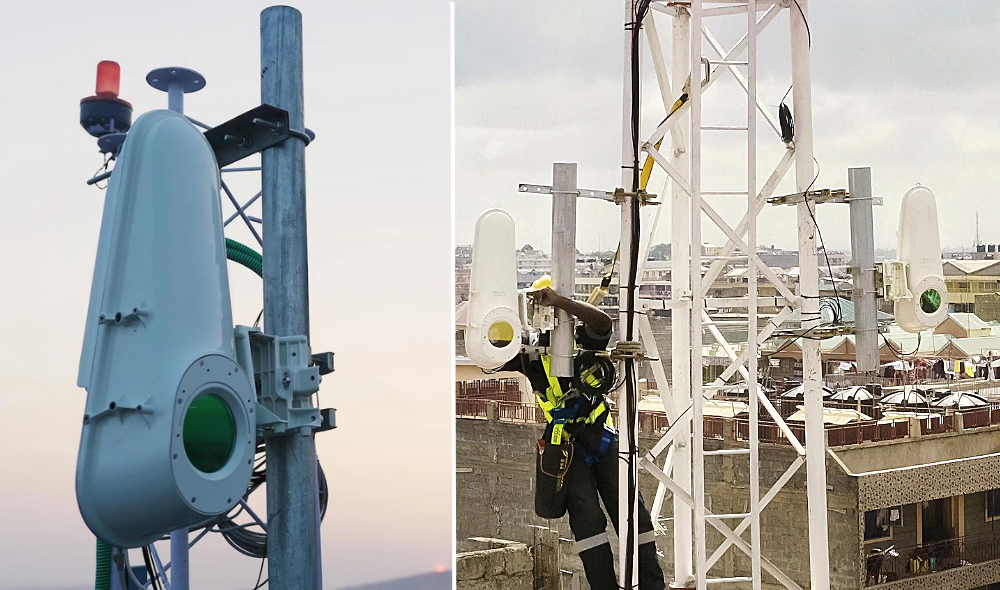
Google's parent Alphabet and Indian telecom and internet provider, Bharti Airtel, are working together to deploy a new laser internet technology in India, reported news agency Reuters.

This is being done under a project known as — Taara, a part of Alphabet's innovation lab called X, also nicknamed the "Moonshot Factory."

Based on open standards to work with existing infrastructure, including radio and fiber, Taara uses light to transmit information at super high speeds through the air as a very narrow, invisible beam.

The Taara team is implementing 20 Gbps connectivity over distances up to 20 km with units that are fast and easy to deploy. The team is working with telcos, internet service providers (ISPs), and governments around the world to significantly accelerate the deployment of the extensive, high-throughput networks necessary to support the future of the web.

The Taara team is currently deploying their light beam internet technology in India, Africa, and other locations around the world.

For Project Taara, the deployment with Bharti Airtel is its largest deployment in India to date, following several pilot projects including rural villages in Andhra Pradesh, downtown Nairobi, and remote areas of Fiji and Tonga

Notably, last year in January Google invested $700 million for a 1.28% stake in Bharti Airtel. Although, Taara's partnership with Bharti Airtel is separate from the Google investment.

In an official blog post, Mahesh Krishnaswamy, General Manager, Project Taara at X said, "Over the coming months Airtel will be deploying Taara’s links across their network in rural and urban areas in an effort to bring fast affordable internet to more people. This rollout follows a number of pilots with Airtel and is the largest deployment of Taara in India to date."

To recall, in a similar lines of laser based communications, Transcelestial, a Singapore-based startup which makes wireless laser communications equipment, had raised $10 million in a funding round led by Airbus Ventures and others, in February this year. 

Govt of India, MeitY Organizes 2-Day Event on Universal Acceptance Day to Promote Multilingual Internet for Digital Inclusion in India

  • Government of India, Ministry of Electronics and Information Technology (MeitY) organizes two-day event on Universal Acceptance Day to promote multilingual internet for digital inclusion in India
  • India was the flag bearer this year to promote and promulgate Universal Acceptance for digital inclusion.
  • Being celebrated globally, this inaugural UA Day was aimed at driving efforts for inclusive and multilingual internet.
  • Adoption of UA in India can add another 500 million broadband users to add value to the digital economy, promote startup ecosystems and generate employment opportunities.
  • Next 1 billion internet users are likely to come from non-English speaking countries, heightening the importance of multilingual internet, noted experts.
National Internet Exchange of India (NIXI), a non-for-profit company, under the aegis of the MeitY, successfully organized a 2-day event (27-28th March) on Universal Acceptance Day to drive collaborative efforts for an inclusive and multilingual internet in India.

Govt of India, MeitY Organizes 2-Day Event on Universal Acceptance Day to Promote Multilingual Internet for Digital Inclusion in India

Elaborating on the importance of Universal Acceptance, Bhuvnesh Kumar, IAS, Additional Secretary, MeitY said, "India is home to more than 18,000 dialects. As we move from one city to another, pronunciation and ways of speaking change completely. The country has the most internet users but it must be noted that language barriers also make it a base of the largest numbers of non-users who do not speak English. It is very important that we not just provide internet services but also create emails and websites in native languages. Providing a multilingual internet user interface is crucial for bridging the current digital divide. Through Universal Acceptance, we can connect with non-internet users and promote digital inclusion across the country and the world.”

Various experts who engaged in thought-provoking sessions during the event noted that the next 1 billion internet users are likely to come from non-English speaking countries, heightening the need towards achieving a multilingual internet to make it accessible for all. Additionally, adoption of UA in India can add another 500 million broadband users which can add value to the digital economy, promote startup ecosystems and generate employment opportunities in the country.

Addressing a session during the event , Tripti Sinha, ICANN Board Chair said," The Internet is a powerful tool for equalizing access to information, but its full potential cannot be realized until it becomes multilingual. It is also important to include multiple genders in this initiative."

In her address during a session, Sally Costerton, Interim President and CEO, ICANN, said "The Indian government can lead the way in promoting multilingual internet systems, similar to their efforts in the financial sector with Unicode. This move will enable more people to access the internet in their native languages, making it easier for them to communicate and access information. It is also important to have top-level domain names in local languages and scripts and ensure that the multilingual systems are safe and secure to use."

India, which is fast-turning into a digital economy, has been chosen as the flag bearer this year to promote and promulgate Universal Acceptance for digital inclusion. The event was a serious effort to initiate thought-provoking, meaningful and result-oriented dialogues to raise awareness, break the language barriers and make the internet accessible to a larger population and bring every citizen in the ambit of economic progress.

Dr Ajay Data, UASG Chair said, "I am very thankful of NIXI, MeitY and ICANN to support and make UA Day a reality in 42 countries.UA is a solution to multilingual issues. It ensures that all valid domain names and email addresses can be used equally by all internet-enabled applications, devices, and systems, regardless of script, language, or character length. This is a significant step towards creating a more inclusive internet that caters to the needs of all users."

This is an important moment in Indian history, because we want to lead conversations on Universal Acceptance. India is the perfect example of diversity & I can't think of a better nation to lead the dialogue on Acceptance, inclusivity & bridging the digital divide. Internet needs to be made inclusive to enable women to get online, use digital tools & services, and contribute to the global economy. UA is the 1st step towards a safe, secure & accessible Internet. UA is going to be about bringing the next billion users online and there will be three things that will be essential in bring and then keeping them online: acesss to devices and data at affordable rates, local language content, and capacity building through digital and cyber literacy” Said Dr Subi Chaturvedi, Global SVP & Chief Corporate Affairs & Public Policy Officer, InMobi speaking at the inaugural panel of global UA day.

The country is home to the most internet users in the world however, it also houses a large-base of non-users who do not speak English. Acknowledging the high importance and urgent need of inclusive internet, the event hosted policy and decision makers, government officials, thought-leaders, industry experts from India and across the globe who deliberated on building multilingual internet, including emails and websites in native languages to bridge digital divide, connect non-internet users and promote digital inclusion.

The first-of-its-kind initiative registered the participation of dignitaries including Bhuvnesh Kumar- IAS, Additional Secretary, MeitY, Abhishek Singh- President & CEO- NeGD, MeitY, Edmon Chung- Board Director, ICANN, Ajay Data - Chair UASG,Tripti Sinha- ICANN Board Chair, Sally Costerton- CEO, ICANN, Jia-Rong Low- Vice President & MD, APAC, ICANN, Anil Kumar Jain- CEO, NIXI, Asha Nangia- Scientist G (MeitY), T Santhosh- Scientist ‘E’, Internet Governance Division, MeitY, Nitin Wali - Senior Director of Stakeholder Engagement, ICANN, and others who shared their views with students, developers, researchers, content creators, participants and guests.

It hosted engaging sessions and workshops on relevant and important topics such as “Socio-Economic aspects of UA and Multilingual Internet and its impact on public policy’, ‘Technology enablement for universal acceptance - challenges and mitigation’, ‘Introduction to Universal Acceptance (UA),’ ‘Making your website Universal Acceptance ready: Way Forward’, ‘Universal Acceptance work in India’, ‘Importance of UA for multi-cultural society in India,’ and others.

Universal Acceptance means building a technical environment to allow computing devices, operating systems, browsers, social media or e-commerce to accept instructions in local language other than English and ensure valid domain names and email addresses, regardless of script, language or character length. India has set a target of becoming a USD 1 trillion digital economy soon and it is important for the country to widen the cover of digital inclusion with UA.

Achieving it can ensure every Indian has the ability to experience the full social and economic power of the internet by choosing domain name and email address in any language that best aligns with their interests, business, culture, language, and script.

Celebrated globally on 28th March, this inaugural UA Day was organized by UASG and ICANN and it successfully engaged and mobilized top technical and language communities, companies, governments and DNS industry stakeholders to better understand the benefits of UA and how they can make their systems UA-ready. It was reported that more than 40 countries participated in celebrating 1st Global UA day.

About ICANN

ICANN's mission is to help ensure a stable, secure, and unified global Internet. To reach another person on the Internet, you need to type an address – a name or a number – into your computer or other device. That address must be unique so computers know where to find each other. ICANN helps coordinate and support these unique identifiers across the world. ICANN was formed in 1998 as a non-profit public benefit corporation with a community of participants from all over the world. For more information please visit: https://www.icann.org/

About NIXI

NIXI is a not-for-profit organization under section 8 of the Companies Act 2013, and was registered on 19th June, 2003. NIXI was set up for peering of ISPs among themselves for the purpose of routing the domestic traffic within the country, instead of taking it all the way to US/Abroad, thereby resulting in better quality of service (reduced latency) and reduced bandwidth charges for ISPs by saving on International Bandwidth. NIXI is managed and operated on a Neutral basis, in line with the best practices for such initiatives globally. .IN is India’s Country Code Top Level domain (ccTLD). The Govt. of India delegated the operations of INRegistry to NIXI in 2004. The .INRegistry operates and manages India’s .IN ccTLD. To know more about NIXI and its other business units please visit: www.nixi.in

About the UASG

The UASG is a community-led initiative that was formed in 2015 and funded by ICANN. It consists of representatives from more than 120 companies, governments, and community groups. The UASG works to raise awareness of the importance of UA globally, provide free resources to organizations to help them become UA-ready and measure the progress of UA adoption. To learn more, visit https://uasg.tech/

eMudhra Launches emSign; Becomes the 1st and Only Indian Provider to Issue SSL/ TLS Certificates Globally

eMudhra Launches emSign; Becomes the 1st and Only Indian Provider to Issue SSL/ TLS Certificates Globally
Issued under the globally accredited Trust Services offering emSign, will help eMudhra compete on a global scale with a state-of-the-art managed PKI offering

eMudhra Limited, (Listed on BSE & NSE, EMUDHRA) a technology, digital identity, and transaction management company, has launched its services to issue its own Secured Sockets Layer (SSL) / Transport Layer Security (TLS) certificates for large enterprises, IoT manufacturers, SMEs and retail customers. eMudhra is the first & only company from India to get accredited by Webtrust, and its offering emSign is recognized by all the major browsers in the world.

SSL/TLS Certificates play a major role in the Cyber Security space, where they help encrypt every communication on the internet. This includes use-cases such as E-commerce websites for secure online transactions, online banking sites, social media and other websites that require login credentials, Email services, online marketplaces, payment gateways, healthcare portals, online government services, mobile applications, OTT streaming portals and apps, API Services including Digital Public Infrastructure Services (e.g.: UPI), and others.

These certificates use PKI (Public key infrastructure) technology and are widely used in the form of SSL (or TLS) issued by global trust service providers. Certificates issued by emSign are trusted by prominent web browsers of today to enable secure, trusted communication between a web server and the website. This enables organizations and consumers to enhance encrypted network connections, thereby protecting both the end users’ information and the service provider. The SSL/TLS certificates issued by emSign – eMudhra’s Global Trust Root, is a fully made in India solution for the world with local data residency capabilities.

V. Srinivasan, chairman of eMudhra said, “With this latest initiative, eMudhra expects to enhance secure encryption across sectors like BFSI, Government, Education, logistics, healthcare, E-commerce, etc. Through our SSL and TLS certificates, customers can ensure accountability while browsing the web for their needs and be confident while making transactions. A seamless and secure digital experience is a priority for everyone, and SSL/TLS certificates issued under emSign will instill confidence and trust amongst businesses and government authorities, as the data stays in India with limited or no reliance on foreign players”.

Operated under the brand “emSign”, Businesses can get the certificates online from the website, or through eMudhra resellers. emSign certificates support modern ACME APIs, as well as web server agents to adopt automation. Domain validated certificates are issued instantly and meet the global compliance requirements. Enterprises/Businesses can also get Organization/Extended validated certificates to display their identity as part of the certificates. This offering is also available in wildcard and Unified Communication Certificates (UCC) categories for multiple website support and is compatible with all major browsers in the world.

About emSign

emSign by eMudhra is a Managed PKI Ecosystem and a Globally Trusted Root to issue X.509 certificates for a multitude of use-cases across industries. From issuance of SSL/TLS certificates that are trusted by all major web browsers to SMIME and Code Sign Certificates, emSign powers businesses to achieve identity assurance through seamless issuance and management of public certificates at scale. Businesses, large enterprises and IoT companies across the globe can deploy certificates issued by emSign to make safe transactions, protect network and device, and all communication from cyber-attacks.

Certificate lifecycle Management (CLM) offered by emSign is best suited for enterprises looking for scale and would like to manage millions of digital identities on an intuitive dashboard. With an end-to-end automation of authentication and encryption, emSign offers to make the digital world secure, trusted and agile.

National Internet Exchange of India (NIXI) wins the Prestigious SAFA Awards

National Internet Exchange of India (NIXI) wins the Prestigious SAFA Awards

The National Internet Exchange of India, a not-for-profit (Section 8) Company, under Ministry of Electronics & Information Technology, Government of India has been awarded by the South Asian Federation of Accountants (SAFA) as the recipient of ‘Certificate of Merit’ in ‘Communication & Information Technology Sector’. The SAFA BPA Award is considered as the most prestigious accolade for financial reporting in the entire South Asian region.

As announced by the South Asian Federation of Accountants (SAFA), which had 118 nominations from 7 countries, awarded NIXI for the best-presented annual report. This honour was presented in recognition of excellence in presentation and disclosure of high quality, relevant, reliable and objective financial statements in accordance with the establish international framework.

On this occasion CEO - NIXI, said “A transparent financial reporting is critical not only for stakeholders of company but also provides a path for sustainable development of company. This also helps NIXI for effective corporate governance which brings confidence amongst customers and the Government.”

About NIXI

NIXI is a not-for-profit Organization under Section 8 of the Companies Act 2013, and was registered on June 19th, 2003. NIXI was set up for peering of ISPs among themselves for the purpose of routing the domestic traffic within the country instead of taking it all the way to the US/Abroad, thereby resulting in better quality of service (reduced latency) and reduced bandwidth charges for ISPs by saving on International Bandwidth. NIXI is managed and operated on a neutral basis, in line with the best practices for such initiatives globally. NIXI has three business verticals under them:

IXP - Internet Exchange Points (IXPs) are the most critical part of the Internet's Infrastructure. An Internet Exchange Point is a facility that allows Internet Service Providers to "meet" and exchange traffic, also called peering. This saves money on International bandwidth for the ISPs and improves connectivity for their customers by reducing latency.

IRINN - IRINN is a division functioning under NIXI and provides allocation and registration services of Internet Protocol addresses (IPv4 & IPv6) and Autonomous System numbers to its Affiliates.

.IN Registry - Government of India has authorized NIXI as .IN Registry. It is India's top-level domain on the Internet. Like .COM, .IN can be used for email, Web sites, and other applications. But unlike other domains, .IN is a unique symbol of India and its role in the world. The .IN Registry by itself will not carry out registrations. It will do so through a number of Registrars to be appointed by it through an open process of selection on the basis of transparent eligibility criteria. Now .IN domain names are available to anyone on a first-come-first-served basis.

Website Link: https://www.nixi.in

World’s 1st Context Aware P2P Protocol, MOI, Brings New Dynamics to Web3


My Own Internet (MOI), a personalized Web3 internet protocol, is focused on driving web3 development and adoption to new heights with their path-breaking IP, Interaction State Machine (ISM), allowing participation at Layer 0.

MOI is a global network that enables sustainable transactions across millions of decentralized nodes and billions of transactions in an interoperable network. With hyper parallelism mechanism, complete user ownership and personalization, cross platform transfers of digital assets, data storage, and web2 to web3 migration processes, this ecosystem is highly efficient for users and developers alike.

A primary offering of Sarva Labs, a deeptech web3 startup focused on simplifying digital interactions through emerging technologies such as blockchain and AI, MOI is forging a path towards a pioneering user-centric consensus mechanism that will give the power back to the users in a simple and effective manner. With a human-centric sybil mechanism, MOI has introduced participant context as a new dimension to computation and settling of transactions in distributed networks. This unique and fresh concept generates personalized value states, truly owned by the users, with a high degree of security and scalability.

The ISM based technology that powers MOI has facilitated a participant centric consensus mechanism and enables Web3 networks to shift focus from a programmatic and system oriented approach to user first model. With a strong community of 35K and 680+ global validators, MOI is steadily moving towards building a true P2P global internet that accommodates user needs and behavior along with having a sustainable, equitable, and scalable structure.

We as a society have gotten complacent into the pervasiveness of intermediaries and the intermediated interactions and transactions. Today, with the rapid advancement of technology, we are steadily moving towards less personalization in our everyday interactions. This makes us insecure and lacks transparency. With MOI, our aim is to have a user centric future that is personalized, context aware, sustainable, and secure. Our focus through our 5 years of research and development was to create a next generation technology that is foundationally human-centric, enables complete user ownership of assets and participation, and personalization of digital networks in a simple, secure and sustainable way - as each user sees it. A confluence of next generation technologies leading us into a constantly connected and aware world.` Anantha Krishnan, CEO, Sarva Labs

Winners of the Building Future Cities Hackathon held in August 2022, organized by CoinSwitch Kuber, MOI is already supporting 15+ builders on its platform. They have also recently launched a holistic NFT platform, Mint Valley, a personalized ecosystem for artists, creators, technologists to create, list, sell, and share digital assets. Additionally, they have launched their College Ambassador program to foster Web3 awareness, knowledge sharing, and mentorship to ensure continued augmentation of the sector and support the resultant innovations.

About My Own Internet (MOI):

MOI, the primary offering of Sarva Labs, is a decentralized global web3 network that supports humanized interactions on the internet enabling true P2P value transfers and personalized digital interactions. MOI is built using Interaction State Machine (ISM), a revolutionary new computational model created by Sarva Labs for the web3 world. Using the ISM technology, MOI delivers a simple, secure, and sustainable web3 experience for users by enabling a single web3 network capable of hosting millions of nodes to support billions of transactions with complete user privacy, ownership and control. With a practical and equitable governance model, the value generation in MOI is democratic, while offering flexibility to support the regulatory norms of respective environments.

For more, visit: https://moi.technology/

About Sarva Labs:

Sarva Labs is a DeepTech web3 startup focused on simplifying digital interactions by developing user-centric technologies in blockchain and AI. Sarva ‘s vision is to help build an equitable, sustainable, and happy digital society and is doing foundational research to create new computational models, design methodologies, and governance frameworks to make the emerging web3 ecosystem practical, personalized and useful.

For more, visit: https://www.sarva.ai/

About Mint Valley:

Powered by MOI, Mint Valley is a personalized ecosystem for artists, creators, technologists to create, list, sell, and share digital assets. A holistic NFT platform, Mint Valley allows users to create, customize, and sell NFTs with no transaction fees, easy wallet access, and a simple and fast user experience.


For more, visit: https://mintvalley.ai/

Internet Service from Space will be Available in India Very Soon: Dr. P Chauhan, Director, National Remote Sensing Centre


Dr. K. V. Rao Scientific Society held its 22nd Annual Science Awards and Memorial Oration Function virtually on Zoom on Saturday till late in the night

The Memorial Oration was given by Chief Guest, Dr. Prakash Chauhan Director, National Remote Sensing Centre, Hyderabad.

Internet Service from Space will be available in India very soon said Dr. Prakash Chauhan Director, National Remote Sensing Centre while giving his oration lecture on subjected “Satellites for Society”.

There is a lot of curiosity of human race about space. He spoke what is space where it begins. He spoke about exciting journey of space, its applications, how modern and new wave of technologies is changing space science. We at ISRO have the capability of identifying from 500 kms above surface an object of 50x50 cms in size on earth’s surface, he said. We can study images of weather patterns taken from the satellite hundreds of kilometers away from earth’s surface, he added.

Prakash Chouhan, Ratna, Ramoorthy, Anil Kumar Kutty seen at 22nd Annual Science Awards of KV Rao Scientific Society

Dr. K Ratna, Secretary of the society while Welcoming the gathering said what was started small in then combined states of Andhra Pradesh, the Dr KV Rao Scientific Society now has gone national.

Giving her annual report, Dr. K. Ratna, Secretary of Dr K. V. Rao Scientific Society said the society has embarked on its journey of science promotion and popularization since 2001. And it has been involved in encouraging child scientists, young scientists in pursuit of science and research.

This was an event Celebrating excellence in Science commented Dr. K. Ratna. The Annual Science Awards included: Science Quiz, School Talent, SPARK Innovation, and Research Awards.

Mr.Anil Kumar Kutty, President and Mr K. Ramamurthy, Vice President of the Society graced the occasion.

The two ambitious projects Science Innovation Centre and Science Mobile Labs have reached out 200 plus schools and 3000 plus students said AMr Kutty. Many government schools do not have science labs. For them knowledge of science is through reading books. Mobile science lab helped many students, he added.

The Society was founded by the family in memory of Dr. K.V. Rao, an eminent Scientist of yester years who worked with Geological Survey of India. Dr. K.V Rao Society has been working hard for the past 18years for the cause of popularizing science among school children and enthusing young minds towards pursuing a career in science.

Rural India Takes Driving Seat in India’s Internet Usage Growth — IAMAI KANTAR Report

Rural India Takes Driving Seat in India’s Internet Usage Growth — IAMAI KANTAR Report

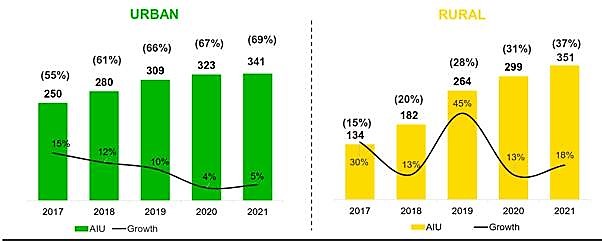
The recently released IAMAI KANTAR report titled ‘Internet in India’, based on ICUBE 2021 study, reflects a remarkable surge in internet users in rural India. According to the report, at present there are 692 million active internet users in India, and much of the growth continues to be driven by rural India (351 Mn users with 37% penetration), as urban India seems to have hit a plateau (341 Mn users with 69% penetration). The report also estimates that there will be 900 million internet users in India by 2025 led by rural growth. In terms of states, Goa has the maximum internet penetration while Bihar has the lowest.

Base: ICUBE 2021, All India Population 1454 Million, Urban India 496 Million, Rural India 958 Million, (Numbers in bracket indicate internet penetration)
Source: Internet in India 2021, IAMAI- KANTAR

More importantly for internet businesses in India, around 346 million Indians are engaged in actual online transactions such as e-commerce and digital payments, a number which is greater than the total US population estimated at 331 million. The global pandemic witnessed a record 51% increase in digital transactions in just two years from 230 Mn in 2019 in India.

In terms of gender break-up, there are more male internet users in India than female users, with almost similar gender ratios across both urban and rural users.

In terms of user cases, Entertainment, Communications and Social media are the top three activities engaged in by internet users across India. While Communications using text and e-mail is the most popular usage, the survey suggests that Voice and Indic languages usage will be the key drivers of growth in the future with two out of five rural internet users having done voice-based activities on their phones. The penetration of OTT services in rural India is at par with that in urban India, however, the penetration of other digital services such as online gaming, digital commerce and digital payments is still skewed in favour of urban users. This reflects a large head room for growth of such services among the rural population.

Base: ICUBE 2021, Non-Active Internet Users, All India 762 Million, Urban India 155 Million, Rural India 607 Million
Source: Internet in India 2021, IAMAI- KANTAR

At present around 762 Mn Indians have not adopted internet yet, out of which 63% are rural Indians. ‘Difficulty to understand the Internet’, continues to be primary deterrent along with lack of awareness, especially in rural India.

Base: ICUBE 2021, Active Internet Users, 692 Million, Urban India 341 Million, Rural India 351 Million (Number in bracket indicate penetration)
Source: Internet in India 2021, IAMAI- KANTAR

About ‘Internet in India’ report

‘Internet in India’ report based on the ICUBE 2021 study, covering over 77,000+ households across all states and Union Territories of India (barring Lakshadweep), is an annual report which is the oldest and most comprehensive survey of internet usage in the country. The report is jointly prepared by Internet and Mobile Association of India (IAMAI) and KANTAR, the world’s leading marketing data and analytics company.

About Internet and Mobile Association of India

Established in 2004, the Internet and Mobile Association of India (IAMAI) is a not-for-profit industry body and the country's only organization representing the digital services industry with over 400 Indian and multinational corporations as its members, which include established companies in diverse sectors of the digital ecosystem as well as start-ups. Its mandate is to expand and enhance the online and mobile value-added services sectors. It is dedicated to presenting a unified voice of the businesses it represents to the government, investors, consumers and other stakeholders. IAMAI represents varied sectors such as digital advertising, digital entertainment, TravelTech, online gaming, digital payments, Fintech, digital commerce, Edtech, Healthtech, Agritech, blockchain, Big data, ML, AI & IoT, AR/ VR, LogisticsTech and so on.

About Kantar

Kantar is the world’s leading marketing data and analytics company. We have a complete, unique and rounded understanding of how people think, feel and act; globally and locally in over 90 markets. By combining the deep expertise of our people, our data resources and benchmarks and our innovative analytics and technology, we help our clients understand people and inspire growth.

7 Fixable PDF Accessibility Errors to Avoid

7 Fixable PDF Accessibility Errors to Avoid

PDF remediation is vital for making any PDF document accessible for people with disabilities. However, this is not an easy process to carry on. On your way to making documents accessible, there are several common mistakes that you could easily make, which are preventable.

Testing PDF for accessibility and carrying out PDF remediation can come with mistakes and issues. However, these remediation issues are easily fixable or, in fact, entirely avoidable if you know what they are. The main challenge is locating the error and understanding how to fix it.

7 Common Accessibility Issues in PDF Remediation

Testing PDF for accessibility and carrying out PDF remediation can come with mistakes and issues. However, these remediation issues are easily fixable or, in fact, entirely avoidable if you know what they are. The main challenge is locating the error and understanding how to fix it.

Here are some of the most common PDF remediation issues that cause difficulties in your PDF documents:

1. Missing Alternative Text

Missing an image alt text while remediating a file is not uncommon. These texts are the trickiest ones to tackle when you’re not well-versed in the specialized subject.

Every image must include an alt text to comply with the WCAG 2.0. It makes image reading easier for visually impaired people. If you skip or make a mistake in adding alt texts, screen readers won’t be able to understand what the image represents.

2. Not Embedding Fonts

When performing remediation for a document, embedding fonts is the most crucial step that cannot be avoided. Skipping this step in the beginning and performing it at the end of remediation can corrupt your document. Once your file is corrupted, you may have to start it all over again.

3. Getting Errors in Heading Structure

Losing track of the heading level while working on a large document is one very common mistake that happens frequently. It’s essential to get it right and understand when your heading structure is illogical.

4. Using Adobe Auto Tag Features

When a PDF is tagged logically, the reader can comprehend the content without difficulties. Programs such as text-to-voice need correctly structured documents that follow logical reading order. Moreover, people relying on a keyboard rather than a mouse find document navigation easier through tagged PDFs. Hence, tagging documents correctly without making any mistakes is vital.

But auto-tagging software like the one Adobe offers isn’t always your friend. It may work well but can also corrupt your document. So, relying on an auto tag feature is not always a correct choice.

Also Read — Edit PDF Documents Directly on Google Chrome Browser

5. Lacking Table Summary

A tabular format is easily understood in a PDF document. A user can easily navigate through a document with the help of a table of contents. But setting tables in a PDF document is not easy. It is time-consuming and is often easy to get it wrong.

Moreover, if you get it wrong or get the data mixed up, your document can become corrupted.

6. Disappearing Content

Tagging content in the wrong format may sometimes cause it to disappear. This “disappearance” happens when the PDF hides in several layers. To fix this, you will need to rearrange these layers, search for the hidden content with the content panel and rearrange it to make it visible.

7. Keeping Pages Untagged

When the content structure is divided into meaningful sections, the document is given a proper structure. Screen readers can read it conveniently and navigate it with ease. But when a document is not tagged, it comes with several other accessibility errors.

Moreover, if a document holds a blank page that needs to be remediated, you might miss it. To avoid this, using a tool meant for remediating PDFs is recommended.

8. Making PDFs Accessible

Automating your PDF accessibility process proves to be a great option to eliminate these errors. There are several PDF accessibility tools you can try out and save your time and efforts while being accurate and as quick as possible.

Author Bio: Emilie Brown works with the Digital Marketing team at PREP, an AI-based remediation software that enables businesses to create WCAG and ADA compliant PDFs in minutes. Her approach and methodology is simple, concise and to-the-point and connects with readers seeking for solution-driven content on topics related to accessibility and remediation. Apart from her time at work, she loves to spend time with her dog, volunteer and play her guitar.

Dating Apps for People Who Care About Nature

Dating Apps for People Who Care About Nature

You’ve no doubt heard that opposites attract. Allegedly, people with different interests, hobbies and positions in life complement each other, bring something new into the life of each other and broaden their horizons. However, everything isn’t quite so simple.

In some cases, differences between partners can be detrimental to relationships:
  1. Overly conservative views from one partner. When one person longs for complete control over the other and the second wants to retain complete freedom, this sooner or later leads to conflict.
  2. Lack of acceptance of differences. One way or another, people have to adapt to each other as a couple. But it doesn't always work out. As a result, it’s sometimes impossible to achieve a compromise that is comfortable for both.
  3. Dependence on other people's opinions. This is another very important factor that can greatly affect your relationship. You need to learn to distance yourself from other people’s opinions and defend your own position.
It turns out that opposites attract, but do not always get along together. So if you’re in search of a mate, we advise you to look for people with whom your interests and life position are in sympathy. Even if it's not an easy task.

Dating on the Internet and caring for nature — are they compatible?

dating and nature

Very compatible! Especially as in recent years, a lot of dating sites and applications have appeared that are made for a "green" audience. We thought we’d simplify your search a little and compile a list of these services for your reference:
  1. Vegaia — a popular dating site for vegetarians that has been operating since 2008. Registration here is free and simple — it takes literally just two minutes. According to the developers of Vegaia, there are more than 7,000 single vegetarians on the site who are interested in relationships. Of course, this is not as many as, for example, on Tinder or Badoo. But it’s much easier to meet like-minded people here.
  2. Dolfin — a dating site for people who love nature. In particular, they care about the cleanliness of the world's oceans. There are many people on the site who are fond of watersports and do their best to preserve the planet's water resources in their purest form. Dolfin is especially popular among surfers.
  3. Green Singles — a dating site for eco-activists who care about our environment. Among the interesting features of the site is the ability to choose how to search for a suitable pair — by postal code or by location. You can also choose the sexual orientation and age of a potential partner.
  4. Ecodate a fairly popular dating site for eco-conscious people who love nature, care about the environment and want to save the planet for future generations. The site is most popular in the UK, but gradually its reach is expanding.
  5. EliteSingles — not exactly an eco site, but definitely worth checking out. A unique algorithm for intellectual matchmaking is used here, which is able to accurately select the right match for you according to your interests and life values. Including taking into account your green position. According to the developers, more than 85% of EliteSingles users are people with higher education, so they tend to be more  conscious and responsible.
  6. MeetMindful — a dating platform for people who lead a healthy and green lifestyle, care for the environment, follow the rules of conscious eating, and so on. Each user can select their interests here for a more accurate search for a partner: yoga, personal growth, ecological lifestyle, volunteering, a conscious diet, creativity, and more.
This is only a small part of online dating services created for people with an environmentally friendly lifestyle and those who are looking for like-minded people. Although many of them can’t boast of an audience of millions, it is still possible to find the perfect match here. Even better, such sites are suitable for finding like-minded people and friends with the same interests. For example, to join your eco-project that needs support. But if your goal is just finding promising matches, it may be worth considering alternatives.

Should you limit yourself to the classic online dating format?

No, we’re convinced that it is not worth it. There are several reasons for this in the context of our today's topic:
  1. On dating sites and apps, people often embellish their profiles and give themselves the “right” interests and lifestyle, just to please others. In fact, it often turns out that this is an outright lie.
  2. The audience for "green" dating services is quite small. Using such platforms, you severely limit your potential social circle. As a result, you reduce the chances of a successful and promising interaction.
  3. The functionality of such sites, as a rule, is very poor. Small audience means a small income. It is simply unprofitable for the developers to actively develop new features. Adding video chat and other convenient features is usually out of the question.
You can use "green" dating sites and apps, but you should definitely not focus on them alone. If you want to expand your social circle, get to know your chat partners better and meet new people every day, look for an alternative. One of the best options is random video chat.

Random chat: changing the idea of online dating

The first random video chat sites began to appear in 2009. These were Omegle and Chatroulette. They allowed random users to communicate via video, discuss almost any topic, get to know each other and then meet in real life in order to develop relationships offline.

Subsequently, the format became extremely popular, and the number of random video chats has grown tenfold. Among the most famous sites today are Chatrandom, EmeraldChat, Chatspin, Bazoocam and coomeet.com/chatrandom.

Random video chat has several important advantages over dating sites:
  1. Quick registration or even the ability to use the platform without registration.
  2. Convenient search filters for finding other users and unlimited skips (switching).
  3. Live video communication — as close as possible to a conversation in real life.
By chatting with a person in a random chat, you can learn much more about their interests, values, hobbies, way of speaking, and so on. And believe us, if they really care about nature rather than just claiming to, you will discover this very quickly.

Expand your dating site choices

We’re convinced that every format of dating and communication on the Internet has the right to exist. And we always say that a large selection of dating platforms is a plus. But it’s important to  understand that they are all very different, and so the audience for them can also be very different. Depending on your personal preferences, interests and goals, you should choose the most suitable sites for you.

Do not limit yourself to only themed sites and applications — try to expand your circle of potential acquaintances. You’ll be surprised how many interesting people you can meet on the web if you change the format of your searches a little. We hope you’ll find only pleasant meetings on the Internet and complete happiness!

Web3 - Opera Unveils Dedicated Crypto Browser for iOS Users

Web3 - Opera Unveils Dedicated Crypto Browser for iOS Users

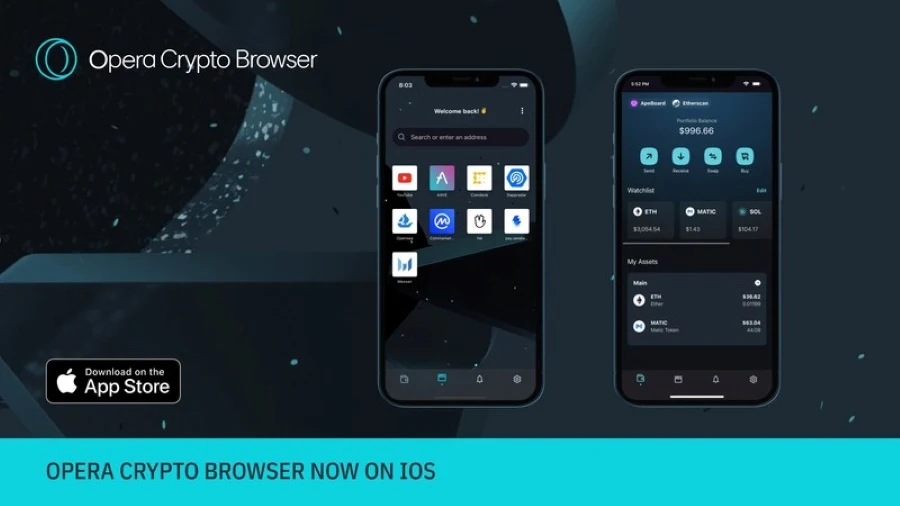
Under its "Crypto Browser Project," multi-platform web browser Opera has unveiled iOS version of its dedicated crypto browser that offers more users direct, user-friendly access to Web3 services. In 2020, an estimated 1 billion people use iPhones worldwide.

The launch of iOS version of crypto browser follows initial integration of the Crypto Browser Project with Windows, Mac, and Android and looks to take mass adoption of Web3 to new levels. Earlier in January this year, Opera unveiled beta release of its crypto browser for Mac, Windows, and Android.

The iOS version of Opera crypto browser also boasts the ability to restore any Ethereum Virtual Machine (EVM) compatible Wallet with the native Opera Wallet, allowing users to integrate their existing assets and balances into their Crypto Browser setup.

Late last month, Opera, announced that it has integrated support for several major blockchain ecosystems, including Solana, Polygon, StarkEx, Ronin, Celo, Nervos, IXO and Bitcoin.

Norway-based Opera originally launched the first web browser with an integrated cryptocurrency wallet and basic Web3 support back in 2018. In 2019, Opera also released a gaming-oriented version of the browser called "Opera GX" and in 2021 Opera released a mobile version of Opera GX iOS and Android.

Opera's focus for the Crypto Browser Project is a simplified user experience across decentralized apps (dapps), games, and metaverse platforms. The browser also features a news and data aggregator named "Crypto Corner," a bespoke start page focused on live crypto information and updates, crypto asset prices and gas fees, as well as crypto events, airdrops, and even podcasts.

Jorgen Arnesen, EVP Mobile at Opera, said: "The interest in Web3 is continuing to grow. The Opera Crypto Browser Project was built to simplify the Web3 user experience that has often been bewildering for mainstream users. Opera believes Web3 has to be easy to use in order to reach its full potential and a mass adoption."

Google Cloud Compares Blockchain to Open Source Internet

Google Cloud Compares Blockchain to Open Source Internet

Blockchain technology is gaining more attention as interest in cryptocurrency reaches a fever pitch. Google Cloud has gotten involved with blockchain by creating a Digital Assets Team. The team will focus on blockchain technology - which it thinks will eventually become as common as the internet and open source.

The Growth of Blockchain

Blockchain technology is relatively new. And some people think it’s too early to compare it to developments such as the internet and open source. Also, critics say that blockchain isn’t easy to understand and that most people don’t even know it exists.

However, Google believes that blockchain is here to stay. As long as there’s an interest in cryptocurrency, blockchain will play a role. The company also states that Microsoft Azure and Amazon Web Services have made use of blockchain technology.

Google and Cryptocurrency Capabilities

Google plans to eventually allow cloud customers to receive and make payments using cryptocurrencies. Several companies now accept digital currency as payment, including AT&T. Dealing with cryptocurrencies is currently the most popular use for blockchain.

However, Google’s interest in blockchain is a surprise to some. Especially since Microsoft ended its Azure Blockchain service. Microsoft abruptly ended the service without any notice.

It’s assumed that Microsoft ended the service because it wasn’t profitable. However, Google is betting on their service being a success. The company believes that blockchain technology will play a role in the future. And that it has tremendous potential to create valuable and innovative opportunities for businesses and consumers.

Google also states that as blockchain enters the mainstream, more companies will see its value. And those companies will need secure, reliable, and scalable infrastructure to handle the change. The company plans for Google Cloud to play a role in the mainstream adoption of blockchain technology.

Google’s Digital Asset Team will help customers deal with various aspects of blockchain-based platforms. The team plans to help with short and long-term goals, such as:
  1. Taking place in on-chain governance and node validation with selected Google Cloud partners.
  2. Creating a clean environment for blockchain. The plan is to help users and developers use blockchain in a way that supports Google’s social, environmental, and governance endeavors.
  3. Hosting BigQuery datasets publicly on Google’s Marketplace. Datasets might possibly include full blockchain transaction records for huge cryptocurrencies such as Bitcoin, Ethereum, Litecoin, Dogecoin, and Hedera.
  4. Google believes that digital assets are already changing how the world handles information. Digital assets offer an entirely new way to store and move information. It’s also changing what people value. Such as the rise in digital art in the form of NFTs, which often sell for thousands of dollars.
Google Cloud wants to become a part of this current evolution with decentralized networks and blockchain technology. No one is sure what the future holds for cryptocurrency, blockchain technology, or decentralized networks. But companies such as Google, Amazon, and others are getting involved in what will possibly change the world.

Polygon Launches Web3 ID That Keeps Personal Details Private

Polygon Launches Web3 ID that Keeps Personal Details Private

The Polygon network, a decentralized app (Dapp) layer for Ethereum today announced that “Polygon ID”, one of the first identity platforms powered by zero-knowledge (ZK) cryptography — privacy, and blockchain scaling technology, will be ready before the year ends.

The blockchain-based ID for decentralized and self-sovereign models has Zero-knowledge native protocols for ultimate user privacy, is scalable and private on-chain verification to boost decentralized apps and decentralized finance, and is open to existing standards and ecosystem development.

Polygon ID leverages the Iden3 protocol and Circom ZK toolkit. Moving forward, both of the projects will be sponsored by Polygon while keeping the original spirit of community initiatives to provide open-source protocols and tools to the broader ecosystem of developers.

"Polygon ID is private by default, offers on-chain verification and permissionless attestation. There is nothing in the digital identity space now that ticks all these boxes,” said Mihailo Bjelic, Polygon’s co-founder. “It is also a great showcase for how zero-knowledge proofs can help us create a better world.”
Polygon ID is expected to be used by organizations and businesses, for identity and trust management purposes, such as KYC (Know Your Customer) and digital wallets, where users can authenticate  themselves to blockchain-based applications, without providing passwords or data to every such application individually.

Polygon ID will also allow for the construction of new forms of reputations like a decentralized credit score for financial primitives and social payments in DeFi; decentralized Sybil score, voting power/delegation, and domain-expertise reputation for DAOs to enable new decision-making and governance models; player reputation profile for Web3 games; private and censorship-resistant P2P communication and interactions for social applications.

Polygon ID leverages the Iden3 protocol and Circom ZK toolkit. Moving forward, both of the projects will be sponsored by Polygon while keeping the original spirit of community initiatives to provide open source protocols and tools to the broader ecosystem of developers.

According to the company’s stated timeline, the proof-of-concept (PoC) has been developed and the complete Polygon ID platform is scheduled to be ready in the third quarter of 2022.

Market Reports

Market Report & Surveys
IndianWeb2.com © all rights reserved