Showing posts with label nuclear energy. Show all posts

India’s Largest Indigenous Nuclear Plant Breaks Ground in Rajasthan Under PM Modi’s Leadership

India’s Largest Indigenous Nuclear Plant Breaks Ground in Rajasthan Under PM Modi’s Leadership

Hon’ble Prime Minister Shri Narendra Modi will lay Foundation Stone for ASHVINI’s Mahi Banswara Rajasthan Atomic Power Project - MBRAPP (4X700 MW) at Banswara on 25th Sept 2025. Located in Banswara district of Rajasthan, the project entails an investment of around Rs 42,000 crore.

Upon completion, this project will be one of the largest nuclear plants in the country supplying reliable base load energy and will strengthen India’s position in the environmental stewardship & evolving nuclear energy landscape.

MBRAPP comprises four indigenous 700 MW Pressurized Heavy Water Reactors (PHWRs) with advanced safety features - also known as IPHWR 700 - designed and developed by NPCIL. The project is part of India’s broader “fleet mode” initiative, where ten identical 700 MW reactors are being built across India under uniform design and procurement plans. Three such reactors have been commissioned and Mahi Banswara is also part of the fleet. This approach promotes the spirit of Atmanirbhar Bharat and brings in cost efficiencies, faster deployment, and consolidated operational expertise.

MBRAPP is being developed by Anushakti Vidhyut Nigam Ltd (ASHVINI)— with joint participation of NPCIL (51%) and NTPC (49%) pooling the financial, technological, and project expertise of both companies.

MBRAPP will supply clean, affordable and reliable power to Rajasthan and other beneficiaries. This will create direct & indirect employment opportunities and will support local communities, businesses, and industries, supporting the economic growth and prosperity in the state and the country.

On this occasion, Hon’ble Prime Minister will also inaugurate RSDCL Nokh Solar Park (925 MW) at Phalodi, Rajasthan in which NTPC is developing 735 MW. This RE project will significantly contribute to India’s clean energy capacity, generating substantial amounts of green power while avoiding millions of tonnes of carbon dioxide emissions every year. In addition to strengthening energy security, they will also spur economic growth by creating thousands of direct and indirect employment opportunities.

L&T Ships First Steam Generator for Haryana Nuclear Power Plant Ahead of Schedule, Boosting India’s Nuclear Energy Drive

L&T Ships First Steam Generator for Haryana Nuclear Power Plant Ahead of Schedule

Marking yet another milestone in India’s civil nuclear energy programme, L&T Heavy Engineering has despatched a Steam Generator to the Gorakhpur Haryana Anu Vidyut Pariyojana (GHAVP), located in Fatehabad district, Haryana.

The Steam Generator was ceremonially flagged off from L&T’s state-of-the-art manufacturing facility at Hazira in Gujarat, in the presence of NPCIL Chairman & Managing Director Mr Bhuwan Chandra Pathak, Director (Technical) Mr Rajesh Veeraraghavan along with other senior officials of NPCIL and L&T.

This is first of the four Steam Generators that L&T is manufacturing for GHAVP and is meant for its Unit 3 & 4. Notably, the Steam Generator has been despatched seven months ahead of schedule, reinforcing L&T’s reputation for excellence and reliability in nuclear manufacturing.

GHAVP 3&4 are a part of the ten indigenous 700 MWe Pressurised Heavy Water Reactors (PHWRs) being set up in the country in fleet mode by NPCIL.

L&T Heavy Engineering Despatches Steam Generator for Haryana Nuclear Power Plant

Speaking at the flag-off ceremony, NPCIL CMD Mr Pathak said:
With a remarkable technology transformation, L&T Heavy Engineering has enhanced both speed and quality of its execution. This is a strong indication of industry preparedness in manufacturing of critical equipment for nuclear power plants and will go a long way to achieve the target of 100 GWe by 2047


Mr Anil V Parab, Whole-time Director and Senior EVP (Heavy Engineering and Construction Equipment & Industrial Product Design Development, L&T) said: “Heavy Engineering continues to be the industry trendsetter in the manufacture of critical nuclear components. With end-to-end capability as one-stop-shop solution provider, L&T will be a major contributor to India’s 100 GWe nuclear programme of Viksit Bharat - 2047”.

L&T set a global benchmark by delivering a Steam Generator in just 33 months. L&T has till date delivered 5 steam generators for the 10 X 700 MWe fleet programme.

Background:

Larsen & Toubro is a USD 30 billion Indian multinational engaged in EPC Projects, Hi-Tech Manufacturing, and Services, operating across multiple geographies. A strong, customer–focussed approach and the constant quest for top-class quality have enabled L&T to attain and sustain leadership in its major lines of business for eight decades.

In A Historic Shift, India Opens Uranium Mining to Private Sector

In A Historic Shift, India Opens Uranium Mining to Private Sector

India is poised to make a historic shift in its nuclear energy strategy by allowing private firms to mine, import, and process uranium—ending a decades-old state monopoly, said a report by Reuters.

Key Highlights of the Policy Shift

  • Private Sector Entry: Companies can now mine, import, and supply control systems for nuclear plants.
  • State Retains Core Control: Government will manage spent fuel reprocessing and plutonium waste.
  • Timeline: Policy expected to be announced in FY26.

Nuclear Expansion Goals

Metric Current Status 2047 Target
Nuclear Power Capacity 8.8 GW 100 GW
Share of Electricity from Nuclear ~2% 5%
Uranium Demand Coverage (Domestic) ~25% Remainder to be imported

Implications for Industry & Investment

  • Legal Overhaul: Amendments needed in mining, electricity, and FDI laws.
  • Foreign Participation: Minority stakes in nuclear plants to be allowed.
  • Corporate Interest: Indian conglomerates preparing investment plans.

Global Context

Countries like Canada, South Africa, and the United States already allow private firms to mine and process uranium, offering international precedents for India’s move.

This shift is part of Prime Minister Modi’s broader Viksit Bharat 2047 vision, aiming to make nuclear energy a cornerstone of India’s clean energy and energy security strategy.

India's Nuclear Fuel Complex: 52 Years Since Its First Nuclear Fuel Bundle


A Legacy of Innovation Established in April 1971 , the Nuclear Fuel Complex (NFC) in Hyderabad has been a cornerstone of India's nuclear energy program. It was conceived as a pivotal industrial arm of the Department of Atomic Energy (DAE) to ensure self-reliance in nuclear fuel production—a vision championed by Dr. Homi Bhabha.

In June 1973 , NFC produced its first nuclear fuel bundle, marking a significant milestone in India's journey toward nuclear energy independence. At the time, Indira Gandhi was India's Prime Minister , and Raja Ramanna played a crucial role in India's nuclear advancements as a leading scientist within the Atomic Energy Commission. 

The Science Behind Nuclear Fuel

At the heart of NFC’s operations is the transformation of natural uranium —mined from Jaduguda, Jharkhand —into uranium dioxide (UO₂) pellets . These pellets, which undergo nuclear fission to generate energy, are encased in zirconium alloy tubes , ensuring containment of radioactive byproducts.

A 220 MW PHWR fuel bundle contains 15.2 kg of uranium dioxide , meticulously fabricated to withstand extreme conditions within nuclear reactors.

Manufacturing of Fuel Assemblies

NFC’s expertise extends beyond fuel production, supplying zircaloy-clad uranium oxide fuel assemblies and reactor core components to all 14 operating atomic power reactors in India.

Expanding India's Nuclear Capabilities

Over the decades, NFC has continuously expanded its production capacity. Initially designed to produce 250 tons of UO₂ per year, the Hyderabad facility is now scaling up to 600 tons annually to meet India's growing nuclear energy demands.

Beyond power generation, NFC plays a crucial role in defense and aerospace , supplying high-purity materials to the Indian Navy, Hindustan Aeronautics Limited (HAL), and other strategic sectors

The Road Ahead

As India accelerates its nuclear energy ambitions, NFC is poised to establish two new fuel fabrication facilities , ensuring a steady supply of nuclear fuel for upcoming reactors.

A new facility of NFC at Kota, where fuel tube production is already underway, and is expected later this year, with full commissioning of all fuel modules. 

With its legacy of innovation and commitment to self-reliance, NFC remains a pillar of India's nuclear energy program , driving the nation toward a sustainable and energy-secure future. Would you like me to refine any sections further or add more historical context?

China Achieves Historic First: Refueling a Running Nuclear Reactor

China Achieves Historic First: Refueling a Running Nuclear Reactor
  • China Revives Abandoned U.S. Nuclear Tech to Achieve Energy Breakthrough
  • China now has world's first operational thorium nuclear reactor
Chinese scientists have achieved a major breakthrough in nuclear energy by reviving old research from the United States. They built a unique reactor in the Gobi Desert that runs on thorium, a different and safer fuel compared to uranium.

Unlike traditional reactors, the Chinese scientists built one that produces less nuclear waste. The most impressive part of their achievement is that they managed to refill the reactor while it was still running, something no one had done before.

Chinese scientists have successfully refueled an experimental thorium molten salt reactor without shutting it down—an unprecedented breakthrough in nuclear energy.

This technology was originally developed in the U.S. in the 1950s, but it was abandoned, leaving the research publicly available. China picked up where the U.S. left off and successfully made it work. If this innovation can be scaled up, it could lead to cleaner and safer nuclear power, helping the world transition to better energy solutions with less pollution. This marks a significant step toward sustainable energy and reducing carbon emissions.

As mentioned above, thorium reactors were originally developed in the United States in the 1950s, but the U.S. shifted focus to uranium-based reactors, leaving this research publicly available. Chinese scientists capitalized on this abandoned knowledge, refining it into a working prototype.

Comic Timing

The timing of China’s nuclear breakthrough is almost poetic, given the ongoing tariff war with the U.S. Right now, Washington and Beijing are locked in a tense trade battle, with the U.S. imposing up to 145% tariffs on Chinese goods, while China retaliates with 125% tariffs on American imports.

Against this backdrop, China’s successful revival of abandoned U.S. nuclear research feels like a strategic flex. It’s as if Beijing is saying, “You may have left this behind, but we’ve turned it into a game-changer.” The fact that the U.S. originally developed thorium reactor technology in the 1950s, only to abandon it, makes this moment even more ironic.

While trade tensions escalate, China is making strides in energy independence, potentially reducing reliance on foreign fuel sources. If thorium reactors prove viable on a large scale, China could strengthen its energy security, making it less vulnerable to external pressures—including economic sanctions.

It’s an interesting mix of scientific progress and geopolitical maneuvering.

Nuclear Technology

This reactor can generate 2 megawatts (MW) of energy, enough to power around 2,000 households, and it significantly reduces nuclear waste compared to conventional uranium reactors. Given China’s goal of carbon neutrality by 2060, this breakthrough could play a crucial role in its clean energy transition.

China’s breakthrough in nuclear energy revolves around a thorium molten salt reactor (TMSR), a next-generation nuclear system that operates differently from traditional uranium-based reactors. Here are the key technical details:
  • Fuel Source: Instead of solid uranium rods, this reactor uses liquid thorium dissolved in molten salt.
  • Refueling Innovation: Scientists successfully refueled the reactor while it was still running, a feat never achieved before.
  • Safety Features: The molten salt system prevents overheating, making meltdowns nearly impossible.
  • Efficiency: Thorium reactors extract more energy per unit of fuel compared to uranium reactors.
  • Waste Reduction: Produces minimal long-lived radioactive waste, unlike conventional nuclear reactors.
  • Self-Regulating Mechanism: If the reactor overheats, the molten salt expands, automatically reducing nuclear reactions.
  • Emergency Shutdown System: A freeze plug at the reactor’s base melts in emergencies, draining the fuel into a safe storage chamber to stop reactions instantly.
  • Power Output: The experimental reactor generates 2 megawatts (MW) of thermal power, enough to supply around 2,000 households
This breakthrough could redefine nuclear energy by making it safer, cleaner, and more sustainable. What’s your take on this? Comment below....

U.S. Starts Full Production of the B61-13 Nuclear Gravity Bomb 24X Powerful Than Hiroshima Bomb

U.S. Starts Full Production of the B61-13 Nuclear Gravity Bomb 24X Powerful Than Hiroshima Bomb

The U.S. has begun full production of the B61-13 nuclear gravity bomb, which is part of a modernization effort for its nuclear arsenal. This bomb has a variable yield ranging from 10 to 360 kilotons, making it significantly more powerful than the bomb dropped on Hiroshima. It’s designed to target hardened and large-area military sites, with updated safety and precision features.

A nuclear gravity bomb is a type of nuclear weapon designed to be dropped from an aircraft and relies solely on gravity to reach its target. Unlike guided missiles or warheads that can be launched from submarines or silos, gravity bombs are free-fall weapons, meaning they are released and descend without any propulsion or guidance.

The B61-13 is a modernized nuclear gravity bomb developed by the U.S. It’s part of the B61 series, which has been in service since the 1960s. This bomb is designed to be more precise and versatile, with a variable yield ranging from 10 to 360 kilotons. To put that into perspective, the bomb dropped on Hiroshima had a yield of about 15 kilotons.

The production of the B61-13 is expected to be completed by 2025, with around 50 units planned. It’s significantly more powerful than earlier versions, such as the B61-12, and is said to be 24 times more powerful than the bomb dropped on Hiroshima.

It was in October 2023 when the US Department of Defense announced the development of a new nuclear bomb, pending Congressional authorisation and appropriation. The B61-13 would be a new gravity bomb, of a much higher potential yield than the B61-12, which is currently replacing other versions deployed in Europe.

The B61-13 is intended to target hardened military sites and large areas, making it a strategic weapon. It’s equipped with advanced safety features and delivery options, including air and ground burst capabilities.

This development has sparked debates about nuclear proliferation and the ethical implications of such weapons.

Naveen Jindal Group Enters Nuclear Energy Sector; Establishes New Company

Naveen Jindal Group Enters Nuclear Energy Sector;  Establishes New Company

The Naveen Jindal Group has recently announced its entry into the nuclear energy sector with the establishment of Jindal Nuclear Power Private Limited. This new company is a wholly owned subsidiary of Jindal Renewables and aims to build 18 gigawatts (GW) of nuclear power capacity over the next two decades.

The company plans to invest $21 billion to build 18 gigawatts (GW) of nuclear power capacity over the next two decades.

Jindal Nuclear will leverage advanced technologies such as Bharat Small Reactors (BSRs), Small Modular Reactors (SMRs), and Gen-IV Reactors to ensure safety, efficiency, and sustainability. The new company will be a wholly-owned subsidiary of Jindal Renewables, and will build, own, and operate state-of-the-art nuclear power plants, leveraging advanced technologies to ensure world-class safety, operating efficiency, and environmental sustainability.

This initiative aligns with the Government of India's Union Budget 2025 announcement, which targets 100 GW of nuclear power capacity by 2047.

The project aims to support sustainable economic growth with low-emission industrialization and significantly reduce the nation's CO2 footprint.

Jindal Nuclear is the first private sector company to express interest in investing in nuclear power in India, following the government's recent decision to open the nuclear energy sector to private investment.

This ambitious plan reflects Jindal Nuclear's commitment to supporting India's transition to a low-carbon economy and providing reliable, CO2-free energy.

Jindal Nuclear plans to leverage advanced technologies, including Bharat Small Reactors (BSRs), Small Modular Reactors (SMRs), and Gen-IV Reactors, to ensure world-class safety, operating efficiency, and environmental sustainability.

Several private companies in India have shown interest in the nuclear energy sector following the government's decision to open it up to private investment.

Reliance Industries is engaged in discussions with the government for potential investments in nuclear energy projects. Tata Power is also another major player exploring opportunities in the nuclear energy sector.

Adani is also in talks with the government for investments in nuclear power generation. Vedanta Ltd is also considering investments in the nuclear energy sector.

Megha Engineering & Infrastructures is involved in nuclear projects, primarily through engineering, procurement, and construction (EPC) contractsm

These companies are expected to contribute significantly to India's ambitious targets for nuclear power capacity and renewable energy adoption.

NTPC and US-based Clean Core Collaborate for Using Thorium-based Nuclear Fuel Tech in India

NTPC and US-based Clean Core Collaborate for Using Thorium-based Nuclear Fuel Tech in India

NTPC Limited, India's largest integrated power company, has partnered with US based Clean Core Thorium Energy (Clean Core) to explore the development and deployment of ANEEL™ fuel for Pressurized Heavy Water Reactors (PHWRs). This collaboration aims to leverage thorium-based nuclear fuel technology to enhance India's energy security and sustainability.

Advanced Nuclear Energy for Enriched Life (ANEEL™) is a new nuclear fuel developed by Clean Core, a Chicago-based company founded by Mehul Shah.

ANEEL™ is a mix of Thorium and Uranium enriched to a certain level, known as High Assay Low Enriched Uranium (HALEU).

The name ANEEL™ honors Dr. Anil Kakodkar, one of India's foremost nuclear scientists.

The collaboration aims to minimize the use of Uranium-235 by leveraging Thorium, which India has in abundance. ANEEL™ can be used in existing Pressurized Heavy-Water Reactors (PHWRs), which are a significant part of India's nuclear fleet.

It was in last month only when Clean Core announced that its patented ANEEL™ fuel has reached a groundbreaking burnup milestone in the Advanced Test Reactor at Idaho National Laboratory. With this, Clean Core's first-of-its-kind, thorium-based ANEEL™ fuel moves a step closer to commercialization.

ANEEL™ can fast-track India's transition to green energy by efficiently utilizing Thorium reserves. Spent ANEEL fuel cannot be used for weapons, enhancing nuclear non-proliferation efforts. It can help India achieve its net-zero target by 2070 and ensure energy security.

Key Objectives:
  1. Development and Deployment: Explore the introduction of ANEEL™ fuel in India's PHWRs.
  2. Indigenization: Promote local manufacturing and develop a domestic supply chain for ANEEL™ Fuel.
  3. Supply Chain for HALEU: Establish logistics for High-Assay Low-Enriched Uranium (HALEU).
  4. Uranium Supply with Sovereign Guarantee: Secure uranium supplies for India to support fuel requirements.
Benefits of ANEEL™ Fuel:
  • Utilization of Thorium: Uses India's abundant thorium reserves in existing PHWR reactors.
  • Waste Reduction: Significantly lowers nuclear waste.
  • Energy Security: Enhances India's energy independence.
  • Improved Safety: Boosts safety and proliferation resistance.
  • Cost Efficiency: Delivers greater energy output while reducing operational costs.
This partnership reflects a commitment to fostering innovation in nuclear energy and ensuring energy sustainability and security.

Earlier in October, Larsen & Toubro also signed a Memorandum of Understanding (MoU) to with Clean Core to collaborate on providing efficient solutions globally in clean energy through CCTE’s patented ANEEL™ fuel. 

India Designed Reactor Unit of Rajasthan Atomic Power Project Achieves Criticality (Start of Controlled Fission Chain Reaction)

India Designed Reactor Unit of Rajasthan Atomic Power Project Achieves Criticality (Start of Controlled Fission Chain Reaction)

Nuclear Power Corporation of India Limited (NPCIL) has announced that, the Unit 7 of the 2 X 700 MW Rajasthan Atomic Power Project 7 & 8 (RAPP-7&8) at Rawatbhata, achieved the important milestone of Criticality (start of controlled fission chain reaction) on September 19, 2024 at 22:42 hrs, after clearance of First Approach to Criticality by the Atomic Energy Regulatory Board (AERB).

The Rajasthan Atomic Power Project (RAPP), also known as the Rajasthan Atomic Power Station (RAPS), is a significant nuclear power plant located in Rawatbhata, Rajasthan, India.

RAPP-7 is the third in the series of sixteen indigenous Pressurised Heavy Water Reactors (PHWR) of 700 MW each, being set up in India.

India Designed Unit of Rajasthan Atomic Power Project Achieves Criticality (Start of Controlled Fission Chain Reaction)

The successful achievement of Criticality of RAPP-7, after the smooth operation of the first two 700 MW PHWRs, viz. KAPS 3&4 (2X700 MW) at Kakrapar in Gujarat, demonstrates the maturity achieved by NPCIL in the design, construction and operation of the indigenous 700 MW PHWRs.

Criticality for the first time on the project timeline marks the completion of construction phase and commencement of the operation phase.

Various experiments/ tests will now be conducted before connecting it to the grid. Thereafter the power level will be raised in steps to full power, in line with the clearances of the Atomic Energy Regulatory Board (AERB).

RAPP-7&8 project is being set up at Rawatbhata in Rajasthan, where already six units with a total capacity of 1180 MW are in operation. RAPP-7 is expected to start generation this year, followed by RAPP-8 in the next year.

NPCIL presently operates 24 reactors with a total capacity of 8180 MW and has eight units (including RAPP-7) with a capacity of 6800 MW under construction. In addition, 10 more reactors with a total capacity of 7000 MW are in pre-project activities. These are expected to be completed progressively by 2031-32.

The Rajasthan Atomic Power Project (RAPP), also known as the Rajasthan Atomic Power Station (RAPS), began in 1963, with the first reactor (RAPS-1) becoming operational in 1973. The plant has expanded over the years and currently includes multiple reactors.

The plant operates several pressurized heavy water reactors (PHWRs). Units 1 and 2 are CANDU reactors, while Units 3 to 8 are Indian-designed PHWRs. The total installed capacity is 1,180 MW, with two additional reactors (Units 7 and 8) under construction, each with a capacity of 700 MW.

The International Atomic Energy Agency (IAEA) has audited the reactors at RAPS and concluded that they are among the best in the world in terms of safety.

Units 7 and 8 are expected to significantly increase the plant’s capacity.

Govt Approves NPCIL-NTPC JV ASHVINI to Build, Own, and Operate Nuclear Power Plants in India

Govt Approves NPCIL-NTPC JV ASHVINI to Build, Own, and Operate Nuclear Power Plants in India

Anushakti Vidhyut Nigam Ltd (ASHVINI) is a joint venture between the Nuclear Power Corporation of India Limited (NPCIL) and NTPC Ltd. This venture, with NPCIL holding 51% equity and NTPC holding 49%, has been established to build, own, and operate nuclear power plants in India.

On Tuesday, the Indian government granted formal approval to ASHVINI, allowing it to take over the Mahi Banswara Rajasthan Atomic Power Project (MBRAPP), which will utilize indigenous Pressurized Heavy-Water Reactor (PHWR) technology and have a capacity of 2800 MW.

In addition to MBRAPP, ASHVINI shall also pursue other nuclear power projects in different parts of the country.

The Department of Atomic Energy, on September 17, 2024, formally handed over the government approval to Anushakti Vidhyut Nigam Ltd (ASHVINI) to the respective CMDs of Nuclear Power Corporation of India Ltd (NPCIL) and NTPC Ltd.

This move is expected to accelerate nuclear power capacity addition in India, contributing to the country's ambitious targets for nuclear energy and its Net Zero emissions goal by 2070.

Mahi Banswara Rajasthan Atomic Power Project (MBRAPP)

The Mahi Banswara Rajasthan Atomic Power Project (MBRAPP) is a significant nuclear power initiative in India. Here are some key details:
  • Location: The plant will be built near the Banswara district in Rajasthan, covering an area of approximately 1,366.49 acres.
  • Capacity: The project will have an installed capacity of 2800 MW, consisting of four units, each with a capacity of 700 MW.
  • Technology: It will utilize Indigenous Pressurized Heavy-Water Reactor (IPHWR-700) technology, similar to the reactors at Kakrapar Atomic Power Station and Rajasthan Atomic Power Station.
  • Construction Timeline: Construction is scheduled to begin in 2024, with completion expected within 4-5 years.
  • Cost: The estimated cost of the project is around ₹50,000 crore (approximately $6 billion USD).
  • Environmental Impact: The project includes comprehensive environmental impact assessments and mitigation measures to address potential impacts on air quality, water resources, and local ecology.
This project is part of India's broader strategy to enhance its nuclear power capacity and contribute to its energy security and environmental goals.

India, Russia and China Plan to Develop Nuclear Power Plant on the Moon

India and Russia, and China, Plan to Develop Nuclear Power Plant on the Moon

India, Russia and China are planning to collaborate on developing a nuclear power plant on the Moon. This ambitious project is led by Russia's state nuclear corporation, Rosatom, and aims to establish a small nuclear reactor capable of generating up to half a megawatt of energy.

The nuclear power plant is intended to support future lunar base operations, providing a reliable energy source essential for sustaining long-term human presence and scientific research on the Moon.

This ground-breaking project, capable of generating half a megawatt of energy and expected to be operational by 2035, will see an initial step of installing a small reactor for essential power.

The plan positions the Global South at the forefront of lunar colonisation efforts. India's involvement aligns seamlessly with its ambitious plans for a manned lunar mission by 2040, potentially accelerating this timeline. The collaboration transcends terrestrial geopolitics, showcasing the Global South's growing influence in space technology and diplomacy.

Using nuclear power on the Moon offers several significant advantages. Unlike solar power, which is dependent on sunlight and affected by the lunar night (lasting about 14 Earth days), nuclear power can provide a continuous and stable energy supply.

Moreover, nuclear reactors have a high energy density, meaning they can produce a large amount of energy from a relatively small amount of fuel. This is crucial for supporting long-term missions and operations on the Moon.

Transporting a nuclear reactor to the Moon is a complex and multi-step process. Typically, the reactor will be designed to be compact and lightweight, ensuring it can be safely transported by a spacecraft. Once in lunar orbit, a specialized lunar lander will transport the reactor from the spacecraft to the Moon’s surface. This lander will need to be capable of safely landing the reactor in the designated area.

After landing, the reactor will be deployed and assembled on the lunar surface. This might involve robotic systems or astronauts, depending on the mission’s specifics.

India's involvement aligns with its plans for a manned lunar mission by 2040. This collaboration underscores the importance of International cooperation in space exploration and the development of sustainable energy solutions for extraterrestrial environments.

This collaboration between India, Russia, and China will likely leverage their combined expertise in space technology and nuclear engineering to achieve this ambitious goal.

Tata Group to Be the 1st Private Entity to Enter Nuclear Power Business

Tata Group to Be the 1st Private Entity to Enter Nuclear Power Business

Tata Group is poised to become one of the first private sector players to enter the nuclear power business in India. Group chairman N. Chandrasekaran recently announced that Tata Power is exploring participation in "small modular nuclear reactors (SMNRs)" once the government grants necessary permissions.

To recall, it was in late 2022 when Union minister Dr Jitendra Singh invited participation of private sector and Start-ups to explore the development of SMR (Small Module Reactors) technology within India. SMRs are nuclear fission reactors that are smaller than conventional nuclear reactors as we know it, and are modular in use.

The Indian government plans to invite companies to invest approximately $26 billion in the sector to reduce carbon emissions. This move aligns with global trends toward greater acceptance of nuclear energy as countries seek to meet emission goals.

In its latest annual report, Tata Power has mentioned, "As large reactors face constraints and safety concerns, there has been a shift towards SMNRs. Governments are increasingly supporting SMNR development, unveiling new funding plans."

While challenges exist in building SMRs, countries like China, Russia, and the U.S. are leading the way in this segment. In contrast, India's nuclear energy expansion has been slower, with Nuclear Power Corporation of India Ltd. (NPCIL) recently commissioning two 700 MW units at Kakrapar nuclear power station in Gujarat after a six-year gap.

As of now, India operates 24 nuclear reactors with a combined capacity of 8.1 gigawatts (GW). India aims to add 18 more nuclear reactors by 2031–32, bringing the total nuclear power capacity to 22.4 GW. These include 10 indigenously designed pressurized heavy water reactors (PHWRs).

At present, the law bars private firms from building nuclear power plants in the country. However, they can supply equipment and components and participate in civil construction outside the reactors.

The Indian government is seeking $26 billion (Rs2.16 trillion) in private investment for ittechnology. nergy industry to decarbonize the power sector. Talks are ongoing with private companies like Reliance Industries, Tata Power, Adani Power, and Vedanta.

Notably, in her Budget 2024 speech, Finance Minister Nirmala Sitharaman announced plans to develop Bharat Small Reactors (BSRs) as part of India's push to expand its nuclear energy capabilities. BSRs are compact nuclear reactors designed to generate electricity on a smaller scale compared to traditional large nuclear power plants. They are based on India’s tried and tested 220-megawatt pressurized Heavy Water Reactor (PHWR) technology, with 16 operational units already in the country.

The key innovation with BSRs is the government’s decision to partner with the private sector for their development and deployment. This marks a historic shift, as the Atomic Energy Act of 1962 previously did not permit private sector participation in nuclear energy generation.

While BSRs align with global trends in nuclear energy, they are distinct from small modular reactors (SMRs). SMRs involve factory-made, easily assembled reactors, whereas BSRs build upon India’s existing PHWR technology. 

Russia Offers India Deployment of Its Advanced Floating Nuclear Power Plant (FNPP) Technology

Russia Offers India Deployment of Its Advanced Floating Nuclear Power Plant (FNPP) Technology

Russia has officially offered India the deployment of its advanced Floating Nuclear Power Plant (FNPP) technology. This proposal could significantly impact India's energy landscape, especially in terms of providing reliable power to remote regions and coastal areas. The announcement came in a ROSATOM press release following a meeting between top nuclear officials from both countries and encompasses multiple facets of nuclear energy cooperation.

FNPPs are self-contained, sea-based platforms housing small nuclear reactors. They are designed to be strategically positioned off the coast and can be connected to the onshore power grid, offering a flexible and relocatable energy source¹.

Russia has been a pioneer in the field of FNPPs. The Akademik Lomonosov is the world's first operational FNPP, which has been successfully powering the Chukotka region in the Arctic since 2019.
 
Akademik Lomonosov

Akademik Lomonosov
Akademik Lomonosov – World's Only Floating Nuclear Power Plant

The offer aligns with India's growing energy demands and its commitment to diversifying energy sources. FNPPs present a potential solution to the challenges of supplying reliable power to regions where traditional infrastructure may be lacking.

To recall, in November 2022, India's Science & Technology minister Dr Jitendra Singh had told that India is taking steps for development of Small Modular Reactors (SMR), with up to 300 MW capacity to fulfill its commitment to Clean Energy transition.

Last month, IndianWeb2 reported that BARC is working on a mobile nuclear reactor that uses a teleoperated system of a mobile robot, wireless network, and control stations. The mobile robot is Ackerman steered and has a mission time of 10 hours on a single charge.

Getting back to FNPPs, these are designed to withstand harsh marine environments and incorporate robust safety measures to prevent accidents. They also offer a low-carbon alternative to fossil fuel-based power generation, contributing to India's sustainability goals. However, concerns regarding nuclear safety, waste management, and potential environmental impacts will need thorough consideration before any deployment.

The Russian offer extends beyond FNPPs, including serial construction of Russian-designed land-based nuclear power units, cooperation in nuclear fuel cycles, and exploration of non-power applications of nuclear technologies. This comprehensive approach underscores the depth of potential collaboration between the two nations in the nuclear energy sector.

For India, this presents an opportunity to bolster energy security and strengthen ties with Russia. However, India must carefully weigh this partnership against its existing energy collaborations and broader foreign policy considerations.

The global interest in FNPPs is growing, and the International Atomic Energy Agency (IAEA) has hosted discussions on the benefits, challenges, and regulatory implications of this emerging technology. It's a space that's garnering international attention for its potential to revolutionize energy supply in sustainable ways.

Related Video —


India's BARC Developing Portable Nuclear Reactor

India's BARC Developing Portable Nuclear Reactor

The Bhabha Atomic Research Centre (BARC) is reportedly developing a mobile/portable reactor technology with wide-ranging applications. Although specific details remain undisclosed, experts believe it could be a dual-use system, potentially impacting both civilian and military sectors. The concept of a mobile reactor presents exciting possibilities.

BARC is working on a mobile nuclear reactor that uses a teleoperated system of a mobile robot, wireless network, and control stations. The mobile robot is Ackerman steered and has a mission time of 10 hours on a single charge.

A mobile reactor could provide a reliable and continuous power source for remote locations currently lacking access to traditional infrastructure. This would be particularly beneficial for regions with challenging terrain or underdeveloped grids.

Military Implications: Given BARC's experience in developing nuclear reactors for both power generation and submarine propulsion, this mobile technology could also be used for high-powered Electronic Warfare (EW) weapon systems.

Small Modular Reactors (SMRs)

India's interest in mobile reactors comes amidst discussions with France and Russia regarding Small Modular Reactor (SMR) technology. SMRs offer several advantages over traditional large-scale reactors, including factory fabrication, reduced construction time and costs, and flexibility in deployment. Beyond mobility, SMRs are seen as a promising solution for industrial decarbonization and clean energy applications.

While the potential benefits of mobile reactors are significant, their dual-use nature warrants careful consideration. BARC's ongoing research could pave the way for innovative solutions in both civilian and defense contexts.

Via – idrw.org

L&T Arm Flags Off Crucial Component for India's 1st Domestically Built 700 MW Nuclear Reactor

L&T Arm Flags Off Crucial Component for India's 1st Domestically Built 700 MW Nuclear Reactor

The Heavy Engineering arm of Larsen & Toubro (L&T) has flagged off the first Steam Generator (SG), for indigenously developed 10 X 700 MWe Pressurized Heavy Water Reactors (PHWR) Fleet Programme, 12 months ahead of contractual delivery. SG is a heat exchanger that converts water into steam by making use of the heat produced in a nuclear reactor core. These Steam Generators are the most critical components supplied to Nuclear Power Corporation of India Ltd (NPCIL),

With this, L&T has surpassed its own previous benchmark in SG manufacturing, setting a new benchmark in manufacturing and contributing Honourable Prime Minister Mr Narendra Modi’s vision of "Aatmanirbhar Bharat" vision.

This event marks a major step forward for India's nuclear power capabilities and its commitment to clean energy.

The 10 X 700 MWe PHWR Fleet Programme is an ambitious initiative by India to significantly boost its nuclear power capacity. The programme consists of ten 700 MWe Pressurized Heavy Water Reactors (PHWRs) developed within the country.

L&T Arm Flags Off Crucial Component for India's 1st Domestically Built 700 MW Nuclear Reactor
Senior officials of Nuclear Power Corporation of India Ltd(NPCIL) and team L&T Heavy Engineering at flag-off ceremony

First Steam Generator (SG), for indigenously developed 10 X 700 MWe PHWR Fleet Programme manufactured in record time of 33 months

The steam generator, which is a critical component in nuclear reactors, was completed 12 months ahead of the contractual delivery schedule. This accomplishment not only sets a new benchmark in steam generator manufacturing but also aligns with India's COP26 commitment to achieve net-zero carbon emissions by 2070.

The flag-off ceremony took place at L&T's A M Naik Heavy Engineering Complex in Hazira, Gujarat, and was attended by senior officials from the Nuclear Power Corporation of India Ltd (NPCIL) and L&T. This development is part of India's broader mission to fast-track its nuclear power capacity to 22,480 MWe by 2032, which is more than three times the current capacity, in less than a decade.

The fleet mode of construction is expected to bring economies of scale and maximize efficiency.

The Heavy Engineering vertical of L&T has a proven track record of supplying technology-intensive equipment and systems to global customers in the refinery, oil & gas, petrochemicals, fertilisers and nuclear power sectors.

It may be recalled that L&T played a major role in the Kakrapar Atomic Power Station, whose units 3 & 4 were dedicated to the Nation by Honourable Prime Minister in February this year as well as a historic milestone of core fuel loading in 500 MWe Prototype Fast Breeder Reactor (PFBR). All these are contributing to the scripting of a new chapter in India’s strides towards clean energy.

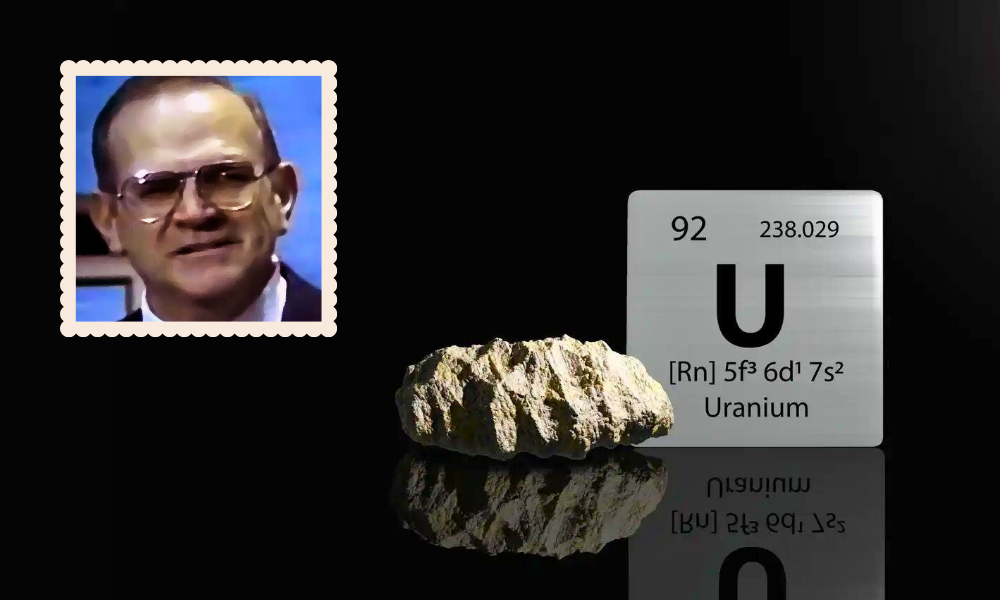
The Man Who Ate Uranium

The Man Who Ate Uranium

Galen Winsor was a notable figure in the nuclear industry, particularly known for his work as a safety officer at the Hanford Nuclear Site and his controversial claims regarding the safety of radioactive materials. He argued that the dangers of radioactive materials were overstated and he even performed risky actions to prove his point, such as swimming in a pool used for storing spent nuclear fuel rods and drinking water from it without suffering ill effects.

Winsor, a nuclear physicist, has traveled and lectured all over America, spoken on national talk radio, and made several videos exposing the misunderstood issues of nuclear radiation. He shows that fear of radiation has been exaggerated to scare people ... so a few powerful people can maintain total control of the world's most valuable power resource.

Winsor's actions and statements sparked debates on radiation safety and the handling of nuclear materials. Despite his claims, there have been concerns and compensation claims from former workers related to alleged exposure to radiation at nuclear facilities. Winsor's legacy remains a topic of discussion in the context of nuclear safety and the public perception of radiation risks.

Galen Winsor made several controversial claims regarding the safety of radioactive materials. Some of his notable assertions included:

Swimming in Spent Fuel Pools: Winsor claimed to have swum in a pool used for storing spent nuclear fuel rods and even drank water from it, suggesting that the water was not harmful.

Eating Uranium: In 1986, he also claimed to have eaten uranium and argued that it did not have any significant impact on his health due to its low radioactivity and high toxicity threshold. Winsor argued that the toxicity of uranium was a greater risk than its radioactivity, and he claimed to have ingested uranium without suffering health effects.

Winsor reportedly consumed the radioactive material in the year 1986 and died in 2008, when he was of age 86.


Drinking Radioactive Water: He also claimed to have drunk water from a spent nuclear fuel pool and to have eaten uranium, suggesting that these actions did not cause him harm.


Downplaying Radiation Dangers: Winsor frequently downplayed the dangers of radiation, asserting that the public's fear of nuclear power and radioactive materials was exaggerated.

Conspiracy Theories: He proposed that there was a conspiracy by an energy cartel to misinform the public about the dangers of radioactive materials, which he believed were largely harmless.

Three Mile Island Incident: He went as far as to claim that the 1979 partial meltdown at the Three Mile Island Nuclear Generating Station did not occur and that the event was fabricated to stoke public fears. In a 2020 video, Galen Winsor claims that the Three Mile Island event was not an accident. 

Claims of Galen Winsor were met with skepticism and criticism, as they contradicted established scientific understanding and safety protocols regarding radiation exposure. It's important to note that while Winsor's actions were meant to prove his point, they are not supported by scientific consensus and should not be replicated. Safety measures and regulations in the nuclear industry are in place to protect workers and the public from potential hazards.

It's important to note that while Winsor's actions were bold, they were also highly unconventional and not in line with standard safety practices. The handling and consumption of radioactive materials are subject to strict regulations to protect individuals from potential harm.

Winsor's demonstrations were meant to challenge regulatory measures which he considered excessive, but they should not be seen as a guideline for the safe handling of radioactive substances.

How Japan's Release of Radioactive Water of Fukushima Plant into the Ocean and Jack Ma's New Startup Struck the Chords

How Japan's Releasing Radioactive Water of Fukushima Plant into the Ocean and Jack Ma's New Startup Struck the Chords?

From Thursday onwards, Japan has started to release 1.3 million tonnes of treated and diluted radioactive water from its stricken Fukushima Daiichi nuclear plant into the Pacific Ocean. Unfortunately, this process expected to take decades.

Japan has started releasing the radioactive water into pacific ocean after it got the U.N. nuclear watchdog's approval to release treated radioactive water from the tsunami-impacted Fukushima plant into the ocean, despite fierce resistance from Beijing and some local residents.

China has already announced an immediate blanket ban on all aquatic products from Japan.

China’s customs department has said that it would stop importing all aquatic products originating from Japan – meaning the ban could potentially limit other oceanic products besides seafood such as sea salt and seaweed.

Meanwhile, early this month Chinese business magnate Jack Ma had already announced his new startup related to fishery and agriculture, based in Hangzhou city of China, which seems to be a calculated & anticipated move to feed the market demand of China post the ban on aquatic products from Japan.

Japan exported about $600 million worth of aquatic products to China in 2022, making it the biggest market for Japanese exports, with Hong Kong second. Sales to China and Hong Kong accounted for 42% of all Japanese aquatic exports in 2022.

According to statistics from Japan's Fisheries Agency, the total export value of seafood products in 2022 was about 387 billion yen ($2.6 billion) and has been on an upward trend over the past several years. With the Asian seafood market expanding, exports to China accounted for 22.5% of the total, with scallops, bonito and tuna being the main export items to China.

So Jack Ma would be tapping the $2.6 billion market with a start up company incorporated less then a month ago. 

Coincidently, Jack Ma, the Alibaba founder has been living in Japan amid the Chinese government’s ongoing crackdown on technology companies including Alibaba and its financial payments arm Alipay.

Even if our speculation is true to certain extent then this way Jack Ma has outsmarted the Crackdown by Chinese regulators, by foreseeing the opportunity in a series of unfortunate events.

Jack Ma
Alibaba Group co-founder Jack Ma lectures students as a visiting professor at the University of Tokyo on June 12. | THE UNIVERSITY OF TOKYO

According to most recent report by a Chinese daily,  Jack Ma has turned his focus to agriculture and education. He has made several international trips to learn about sustainable food production. Media has also reported that Ma spent time studying fisheries and tuna farming in Japan, and he also traveled to Thailand where he visited a sea shrimp farming factory.

The nuclear water release, slammed by China as 'extremely selfish', comes 12 years after an earthquake and tsunami triggered a meltdown of nuclear reactors at the plant.

While the Japanese government has said it is safe to pump the 1.3mn tonnes of water into the sea, experts say regional neighbours mistrust explanations from the country responsible for the nuclear accident.

According to the Japanese government, the process is safe as it has treated the water - enough to fill 500 Olympic-sized swimming pools - used to cool the fuel rods of the Fukushima plant after it was damaged by the earthquake and resulting tsunami.

The so called "treated" radioactive-water will initially be released in smaller portions and with extra checks, with the first discharge totalling 7,800 cubic metres over about 17 days starting Thursday, according to Tokyo Electric Power (TEPCO).

That water will contain about 190 becquerels of tritium per litre, below the WHO drinking water limit of 10,000 becquerels per litre, according to Tepco. A becquerel is a unit of radioactivity.

The Fukushima Daiichi plant was destroyed in March 2011 after a massive 9.0 magnitude earthquake that resulted into powerful tsunami waves causing meltdowns in three reactors of Fukushima Plant. 

However, it is to be noted that the nuclear plant disaster was completely preventable, foreseen and avoidable, and according to reports, the plant operator, Tokyo Electric Power Company (TEPCO), had failed to meet basic safety requirements such as risk assessment, preparing for containing collateral damage, and developing evacuation plans.

In October 2012, TEPCO admitted for the first time that it had failed to take necessary measures for fear of inviting lawsuits or protests against its nuclear plants.

North India's 1st Nuclear Plant is Coming Up in Haryana

North India's 1st Nuclear Plant is Coming Up in Haryana
Representative Image [by Albrecht Fietz from Pixabay] 

North India's first Nuclear Plant is coming up in Haryana in the town of Gorakhpur, which is about 150 km north of the national capital of New Delhi. This was disclosed today, by Dr Jitendra Singh, Union Minister of State (Independent Charge) Science & Technology; Minister of State (Independent Charge) Earth Sciences; MoS PMO, Personnel, Public Grievances, Pensions, Atomic Energy and Space.

Department of Atomic Energy, Government of India, has also been given permission for forming joint ventures with PSUs for resources to opening up of atomic energy plants, which is an upcoming and promising sector, having potential to fulfill India’s all energy needs in times to come.

To recall, in November last year Dr. Jitendra Singh has invited participation of private sector and Startups for building Small Modular Reactors (SMR) Technology within India. India is taking steps for development of SMRs, with up to 300 MW capacity to fulfill its commitment to Clean Energy transition

Today, Dr. Jiteandra Singh said that during Prime Minister Narendra Modi’s regime, one of the major achievements would be the installation of Nuclear/ Atomic Energy plants in other parts of the country, which were earlier confined mostly to the South Indian States like Tamil Nadu and Andhra Pradesh or in the west in Maharashtra.

Keeping in line with the priority to increase India’s nuclear capacity, a number of path breaking decisions were taken in last over 8 years. The minister added that a bulk approval of installation of 10 nuclear reactors has been given a nod by the Modi Government, the minister said.

It is to be noted that, on 13 January 2014, the foundation stone of the first phase of this Nuclear plant project dubbed as Gorakhpur Haryana Nuclear Power Project was laid by the then Prime Minister, Dr. Manmohan Singh. The plant is based on indigenous technology developed by Indian scientists. 

Gorakhpur Haryana Anu Vidyut Pariyojana (GHAVP) having two units of 700 MWe capacity each of Pressurised Heavy Water Reactor (PHWR) indigenous design is under implementation near Gorakhpur village in Fatehabad district in Haryana.

Till date, an amount of ₹4,906 Cr has been spent out of total allocated funds 20,594 Cr. (Total Financial progress is 23.8% as on date).

Construction of other Main Plant buildings/structures viz. Fire Water Pump House (FWPH), Safety Related Pump House (SRPH), Fuel Oil storage area-1&2 (FOSA-1&2), Ventilation stack, overhead tank (OHT), Switchyard Control Building, Safety related & Non-safety related Tunnel & Trenches, Retaining walls and Garland Drain is progressing well. Ground improvement in Turbine Building -1 & 2, 220 kV Switchyard and IDCT-1A is completed. Ground improvement in other areas IDCTs, 400kV Switchyard, Emergency makeup water pond and station roads are in progress. The contractors for IDCT package and Turbine Island Package have mobilized site.

Purchase orders for major long manufacturing cycle equipment/components like Primary Coolant Pumps, Calandria, Reactor Headers, Refuelling Machines Heads, Moderator and other D20 Heat Exchangers, etc. are already in place. End Shields and all Steam Generators for the first unit have been received at site. Manufacturing of other equipment is in various stages and delivery at site is expected well in time to meet the construction schedule.

Construction of Water Duct from Tohana to GHAVP for meeting operational cooling water requirements has been taken up through Haryana Irrigation & Water Resources Department (HI&WRD) as deposit work and progressing well.

Nuclear Tech: Minister Invite Participation of Pvt Sector and Startups for Building SMR Technology Within India

Nuclear Tech : Minister Invite Participation of Pvt Sector and Startups for Building SMR Technology Within India

Union minister Dr Jitendra Singh has recently told that India is taking steps for development of Small Modular Reactors (SMR), with up to 300 MW capacity to fulfill its commitment to Clean Energy transition.

Small modular reactors (SMRs) are nuclear fission reactors that are smaller than conventional nuclear reactors as we know it. SMRs are modular nuclear reactor units with an output of up to 300 megawatts of electricity. Given their smaller footprint, SMRs can be sited on locations which are not suitable for larger nuclear power plants.

Addressing a Workshop on Small Modular Reactors (SMR) organized by NITI Aayog and Department of Atomic Energy, Dr Jitendra Singh said, the participation of private sector and Start-ups needs to be explored in development of this critical technology within India. He emphasized that technology sharing and availability of funding are the two crucial links for ensuring commercial availability of SMR technology.

The minister said that the exploration of new clean energy options is in tune with Prime Minister Modi’s roadmap for clean energy transition through bold climate commitments which are reflected in our updated Nationally Determined Contributions (NDCs).

"We have already taken steps for clean energy transition with penetration of non-fossil based energy resources and achieving net-zero by 2070, nuclear in terms of base load power can play a big role in the de-carbonization strategy. It is in this context that the role of nuclear energy will be critical for clean energy transition of not just India but for the entire World.",said Dr. Singh.

While there are few startups across the globe working on SMR technology, one of them is NuScale, a US based nuclear tech startup, which in August 2020 became
first such startup to receive design approval from U.S. Nuclear Regulatory Commission (NRC).

As of now, the floating nuclear power plant Akademik Lomonosov (operating in Pevek in Russia's Far East) is the first and only operating SMR prototype in the world.

British luxury car maker Rolls-Royce is also working of SMR technology. Other companies working on SMR technology include Hyperion, Holtec, General Atomics, and Hybrid Power Technologies.

US-based Power Company To Start Nuclear-powered Crypto-Mining and Data Center Facilities

Representative Picture


US-based power company Talen Energy will develop a nuclear-powered mining facility and data center adjacent to its "Susquehanna Steam Electric Station", a nuclear power station on the Susquehanna River in Pennsylvania state of the US. 

Notably, Susquehanna Steam Electric Station is one of the largest nuclear power plants in the US.

The project, which is due to come online in Q2 2022, will provide low-cost, reliable, carbon-free power to the data center clients on campus. This allows company's clients to benefit from carbon-free, 24/7 power being supplied directly to the campus, without the intermittency that renewable energy can experience, or requiring fossil fuels.

Cumulus, which is a subsidiary of Talen Energy, has two separate businesses --- Cumulus Data, focused on hyperscale and Cumulus Coin, focused on digital currency mining. Talen Energy also holds USPTO trademark of CUMULUS COIN™, which is intended to cover the categories that include mining, generating, and managing cryptocurrency.

The company has already secured permits for the site and commenced construction. The upcoming nuclear-powered facility will have 164MW of capacity during development, and once complete, will reach 300MW provided by dual 1+GW nuclear units and two independent substations. The on-site power has the potential to reach 1GW.

"As the demand for energy increases among data center and cryptocurrency processing clients, so does the call for decarbonizing these energy sources. Talen Energy is constructing a hyperscale data center campus adjacent to its Susquehanna nuclear generation facility," a company representation said.

To recall, last month Twitter's CEO Jack Dorsey-led payment company Square Inc announced that it is collaborating with blockchain company Blockstream Mining ('Blockstream') to build a solar-powered bitcoin mining facility.

Market Reports

Market Report & Surveys
IndianWeb2.com © all rights reserved