Showing posts with label Nuclear Sector. Show all posts

Capgemini and Orano Deploy 1st AI-Powered Humanoid Robot in Nuclear Industry

Capgemini and Orano Deploy 1st AI-Powered Humanoid Robot in Nuclear Industry

Orano, a recognized industrial leader in the recovery and transformation of nuclear materials, and Capgemini, an AI-powered global business and technology transformation partner, announce the deployment of the first intelligent humanoid robot in the nuclear sector. This project marks a major step forward for a strategic industry that has long been a pioneer in innovation.

Deployed at the Orano Melox Ecole des Métiers [Created in early 2018, Ecole des Métiers is dedicated to promoting and developing the Orano’s technical training] in the Gard region of France, the robot named Hoxo is equipped with embedded artificial intelligence (AI) and advanced sensors for real-time perception, autonomous navigation, execution of technical gestures, and interaction. Its purpose is to replicate human movements and operate alongside teams within nuclear facilities, including in challenging intervention environments.

Over the next four months, Orano Melox’s innovation teams will conduct a testing phase to validate the robot’s range of applications, combining mobility, precision, and artificial intelligence (AI). By offering an agile, scalable robotic platform, this initiative is expected to enhance industrial performance and potentially support operators through robotic assistance.

"Hoxo opens new perspectives for our operations by combining an intelligent and ergonomic robotic solution with the expertise of our on-site teams. It’s an innovation we aim to evolve to meet our industrial needs, contributing to both safety and competitiveness as we tackle the challenges of today and tomorrow," said Arnaud Capdepon, Director of Orano Melox.

"This project, led by our AI Robotics & Experiences Lab, embodies the convergence of robotics, artificial intelligence, computer vision, and digital twins. It redefines human-machine interaction in sensitive environments and pushes the boundaries of industrial automation. Through this initiative, we harness the potential of physical AI to address Orano’s most demanding industrial challenges," added Pascal Brier, Chief Innovation Officer at Capgemini and member of the Group Executive Committee.

About Orano

As a leading international operator in the field of nuclear materials, Orano delivers solutions to address present and future global energy and health challenges. Its expertise and mastery of cutting-edge technologies enable Orano to offer its customers high value-added products and services throughout the entire fuel cycle. Every day, the Orano group’s 18,000 employees draw on their skills, unwavering dedication to safety and constant quest for innovation, with the commitment to develop know-how in the transformation and control of nuclear materials, for the climate and for a healthy and resource-efficient world, now and tomorrow. Orano, giving nuclear energy its full value.

About Capgemini

Capgemini is an AI-powered global business and technology transformation partner, delivering tangible business value. We imagine the future of organizations and make it real with AI, technology and people. With our strong heritage of nearly 60 years, we are a responsible and diverse group of 420,000 team members in more than 50 countries. We deliver end-to-end services and solutions with our deep industry expertise and strong partner ecosystem, leveraging our capabilities across strategy, technology, design, engineering and business operations. The Group reported 2024 global revenues of €22.1 billion.

Discover the humanoid robot Hoxo in pictures:

humanoid robot Hoxo


India’s Largest Indigenous Nuclear Plant Breaks Ground in Rajasthan Under PM Modi’s Leadership

India’s Largest Indigenous Nuclear Plant Breaks Ground in Rajasthan Under PM Modi’s Leadership

Hon’ble Prime Minister Shri Narendra Modi will lay Foundation Stone for ASHVINI’s Mahi Banswara Rajasthan Atomic Power Project - MBRAPP (4X700 MW) at Banswara on 25th Sept 2025. Located in Banswara district of Rajasthan, the project entails an investment of around Rs 42,000 crore.

Upon completion, this project will be one of the largest nuclear plants in the country supplying reliable base load energy and will strengthen India’s position in the environmental stewardship & evolving nuclear energy landscape.

MBRAPP comprises four indigenous 700 MW Pressurized Heavy Water Reactors (PHWRs) with advanced safety features - also known as IPHWR 700 - designed and developed by NPCIL. The project is part of India’s broader “fleet mode” initiative, where ten identical 700 MW reactors are being built across India under uniform design and procurement plans. Three such reactors have been commissioned and Mahi Banswara is also part of the fleet. This approach promotes the spirit of Atmanirbhar Bharat and brings in cost efficiencies, faster deployment, and consolidated operational expertise.

MBRAPP is being developed by Anushakti Vidhyut Nigam Ltd (ASHVINI)— with joint participation of NPCIL (51%) and NTPC (49%) pooling the financial, technological, and project expertise of both companies.

MBRAPP will supply clean, affordable and reliable power to Rajasthan and other beneficiaries. This will create direct & indirect employment opportunities and will support local communities, businesses, and industries, supporting the economic growth and prosperity in the state and the country.

On this occasion, Hon’ble Prime Minister will also inaugurate RSDCL Nokh Solar Park (925 MW) at Phalodi, Rajasthan in which NTPC is developing 735 MW. This RE project will significantly contribute to India’s clean energy capacity, generating substantial amounts of green power while avoiding millions of tonnes of carbon dioxide emissions every year. In addition to strengthening energy security, they will also spur economic growth by creating thousands of direct and indirect employment opportunities.

Govt Approves NPCIL-NTPC JV ASHVINI to Build, Own, and Operate Nuclear Power Plants in India

Govt Approves NPCIL-NTPC JV ASHVINI to Build, Own, and Operate Nuclear Power Plants in India

Anushakti Vidhyut Nigam Ltd (ASHVINI) is a joint venture between the Nuclear Power Corporation of India Limited (NPCIL) and NTPC Ltd. This venture, with NPCIL holding 51% equity and NTPC holding 49%, has been established to build, own, and operate nuclear power plants in India.

On Tuesday, the Indian government granted formal approval to ASHVINI, allowing it to take over the Mahi Banswara Rajasthan Atomic Power Project (MBRAPP), which will utilize indigenous Pressurized Heavy-Water Reactor (PHWR) technology and have a capacity of 2800 MW.

In addition to MBRAPP, ASHVINI shall also pursue other nuclear power projects in different parts of the country.

The Department of Atomic Energy, on September 17, 2024, formally handed over the government approval to Anushakti Vidhyut Nigam Ltd (ASHVINI) to the respective CMDs of Nuclear Power Corporation of India Ltd (NPCIL) and NTPC Ltd.

This move is expected to accelerate nuclear power capacity addition in India, contributing to the country's ambitious targets for nuclear energy and its Net Zero emissions goal by 2070.

Mahi Banswara Rajasthan Atomic Power Project (MBRAPP)

The Mahi Banswara Rajasthan Atomic Power Project (MBRAPP) is a significant nuclear power initiative in India. Here are some key details:
  • Location: The plant will be built near the Banswara district in Rajasthan, covering an area of approximately 1,366.49 acres.
  • Capacity: The project will have an installed capacity of 2800 MW, consisting of four units, each with a capacity of 700 MW.
  • Technology: It will utilize Indigenous Pressurized Heavy-Water Reactor (IPHWR-700) technology, similar to the reactors at Kakrapar Atomic Power Station and Rajasthan Atomic Power Station.
  • Construction Timeline: Construction is scheduled to begin in 2024, with completion expected within 4-5 years.
  • Cost: The estimated cost of the project is around ₹50,000 crore (approximately $6 billion USD).
  • Environmental Impact: The project includes comprehensive environmental impact assessments and mitigation measures to address potential impacts on air quality, water resources, and local ecology.
This project is part of India's broader strategy to enhance its nuclear power capacity and contribute to its energy security and environmental goals.

L&T Arm Flags Off Crucial Component for India's 1st Domestically Built 700 MW Nuclear Reactor

L&T Arm Flags Off Crucial Component for India's 1st Domestically Built 700 MW Nuclear Reactor

The Heavy Engineering arm of Larsen & Toubro (L&T) has flagged off the first Steam Generator (SG), for indigenously developed 10 X 700 MWe Pressurized Heavy Water Reactors (PHWR) Fleet Programme, 12 months ahead of contractual delivery. SG is a heat exchanger that converts water into steam by making use of the heat produced in a nuclear reactor core. These Steam Generators are the most critical components supplied to Nuclear Power Corporation of India Ltd (NPCIL),

With this, L&T has surpassed its own previous benchmark in SG manufacturing, setting a new benchmark in manufacturing and contributing Honourable Prime Minister Mr Narendra Modi’s vision of "Aatmanirbhar Bharat" vision.

This event marks a major step forward for India's nuclear power capabilities and its commitment to clean energy.

The 10 X 700 MWe PHWR Fleet Programme is an ambitious initiative by India to significantly boost its nuclear power capacity. The programme consists of ten 700 MWe Pressurized Heavy Water Reactors (PHWRs) developed within the country.

L&T Arm Flags Off Crucial Component for India's 1st Domestically Built 700 MW Nuclear Reactor
Senior officials of Nuclear Power Corporation of India Ltd(NPCIL) and team L&T Heavy Engineering at flag-off ceremony

First Steam Generator (SG), for indigenously developed 10 X 700 MWe PHWR Fleet Programme manufactured in record time of 33 months

The steam generator, which is a critical component in nuclear reactors, was completed 12 months ahead of the contractual delivery schedule. This accomplishment not only sets a new benchmark in steam generator manufacturing but also aligns with India's COP26 commitment to achieve net-zero carbon emissions by 2070.

The flag-off ceremony took place at L&T's A M Naik Heavy Engineering Complex in Hazira, Gujarat, and was attended by senior officials from the Nuclear Power Corporation of India Ltd (NPCIL) and L&T. This development is part of India's broader mission to fast-track its nuclear power capacity to 22,480 MWe by 2032, which is more than three times the current capacity, in less than a decade.

The fleet mode of construction is expected to bring economies of scale and maximize efficiency.

The Heavy Engineering vertical of L&T has a proven track record of supplying technology-intensive equipment and systems to global customers in the refinery, oil & gas, petrochemicals, fertilisers and nuclear power sectors.

It may be recalled that L&T played a major role in the Kakrapar Atomic Power Station, whose units 3 & 4 were dedicated to the Nation by Honourable Prime Minister in February this year as well as a historic milestone of core fuel loading in 500 MWe Prototype Fast Breeder Reactor (PFBR). All these are contributing to the scripting of a new chapter in India’s strides towards clean energy.

The Man Who Ate Uranium

The Man Who Ate Uranium

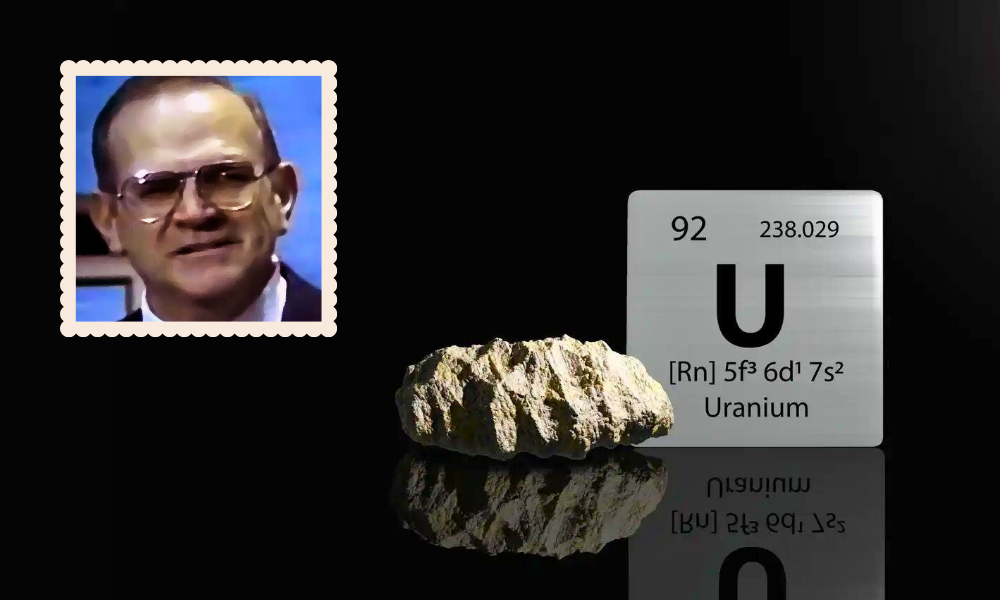
Galen Winsor was a notable figure in the nuclear industry, particularly known for his work as a safety officer at the Hanford Nuclear Site and his controversial claims regarding the safety of radioactive materials. He argued that the dangers of radioactive materials were overstated and he even performed risky actions to prove his point, such as swimming in a pool used for storing spent nuclear fuel rods and drinking water from it without suffering ill effects.

Winsor, a nuclear physicist, has traveled and lectured all over America, spoken on national talk radio, and made several videos exposing the misunderstood issues of nuclear radiation. He shows that fear of radiation has been exaggerated to scare people ... so a few powerful people can maintain total control of the world's most valuable power resource.

Winsor's actions and statements sparked debates on radiation safety and the handling of nuclear materials. Despite his claims, there have been concerns and compensation claims from former workers related to alleged exposure to radiation at nuclear facilities. Winsor's legacy remains a topic of discussion in the context of nuclear safety and the public perception of radiation risks.

Galen Winsor made several controversial claims regarding the safety of radioactive materials. Some of his notable assertions included:

Swimming in Spent Fuel Pools: Winsor claimed to have swum in a pool used for storing spent nuclear fuel rods and even drank water from it, suggesting that the water was not harmful.

Eating Uranium: In 1986, he also claimed to have eaten uranium and argued that it did not have any significant impact on his health due to its low radioactivity and high toxicity threshold. Winsor argued that the toxicity of uranium was a greater risk than its radioactivity, and he claimed to have ingested uranium without suffering health effects.

Winsor reportedly consumed the radioactive material in the year 1986 and died in 2008, when he was of age 86.


Drinking Radioactive Water: He also claimed to have drunk water from a spent nuclear fuel pool and to have eaten uranium, suggesting that these actions did not cause him harm.


Downplaying Radiation Dangers: Winsor frequently downplayed the dangers of radiation, asserting that the public's fear of nuclear power and radioactive materials was exaggerated.

Conspiracy Theories: He proposed that there was a conspiracy by an energy cartel to misinform the public about the dangers of radioactive materials, which he believed were largely harmless.

Three Mile Island Incident: He went as far as to claim that the 1979 partial meltdown at the Three Mile Island Nuclear Generating Station did not occur and that the event was fabricated to stoke public fears. In a 2020 video, Galen Winsor claims that the Three Mile Island event was not an accident. 

Claims of Galen Winsor were met with skepticism and criticism, as they contradicted established scientific understanding and safety protocols regarding radiation exposure. It's important to note that while Winsor's actions were meant to prove his point, they are not supported by scientific consensus and should not be replicated. Safety measures and regulations in the nuclear industry are in place to protect workers and the public from potential hazards.

It's important to note that while Winsor's actions were bold, they were also highly unconventional and not in line with standard safety practices. The handling and consumption of radioactive materials are subject to strict regulations to protect individuals from potential harm.

Winsor's demonstrations were meant to challenge regulatory measures which he considered excessive, but they should not be seen as a guideline for the safe handling of radioactive substances.

Large Deposits of Minerals Discovered in Andhra; Useful in Electronics, Nuclear Tech, Aviation and Green Tech

Large Deposits of Minerals Discovered in Andhra Useful in Electronics, Nuclear Tech, Aviation and Green Tech
Representative Image

In an another significant development, scientists at the CSIR-National Geophysical Research Institute (NGRI) in Hyderabad have discovered the presence of Light Rare Earth Elements (REE) in the Ananthapur district of Andhra Pradesh.

The discovery of these REE minerals has varied applications and usage including manufacturing components in electronic devices such as smartphones, computers, TVs, automobiles, medical devices, jet aircraft and Nuclear reactors.

Moreover, the discovery will reduce India's reliance on foreign imports of these critical minerals, and will break China's near-monopoly on the production of rare earth elements.

The discovery was part of a study funded by the Council of Scientific and Industrial Research (CSIR-India) under a project called SHORE (Shallow subsurface imaging Of India for Resource Exploration).

The Light Rare Earth Element minerals discovered include Lanthanum, Cerium, Praseodymium, Neodymium, Yttrium, Hafnium, Tantalum, Niobium, Zirconium, and Scandium.

Confirming the minerals hosting these REE, Dr Raju PVS, Senior Principal Scientist, NGRI, told news agency PTI, "We found strong anomalous (enriched) Light Rare Earth Elements (La, Ce, Pr, Nd, Y, Nb and Ta) in whole rock analyses." 

300 samples were subjected to further studies to understand the potential of REE Minerals. Dr. Raju said that deep drilling for at least a kilometre will help ascertain the consistency of the elements’ presence underground.

Silvery white Lanthanum is used in Hybrid car batteries, studio lighting and cinema projection as it increases the brightness and give an emission spectrum similar to the sunlight.

In current most significant usage of Lanthanum is in NiMH batteries, which can be found in many models of the Toyota Prius, a hybrid car that uses both internal combustion engine & electric motor. Each electric Prius motor requires 1 kilogram of Neodymium, and each battery uses 10 to 15 kg of Lanthanum.

About Praseodymium, its primary use is as an alloying agent with magnesium to create high-strength metals that are used in aircraft engines.

And, Neodymium has most important use in making very strong permanent magnets. Neodymium magnets are the strongest permanent magnets known in the world. A neodymium magnet of a few tens of grams can lift a thousand times its own weight. Neodymium also offer an effective way to improve the efficiency and performance of crucial clean energy technologies. However, the production of these elements is environmentally and economically costly.

Yttrium is often used in the making of microwave filters for radar and has also been used is used in lasers that can cut through metals.

Hafnium is a good absorber of neutrons and thus used in nuclear submarines or nuclear reactors. As alloys, Hafnium is used for liquid-rocket thruster nozzles, for example the main engine of the Spacecraft, Apollo Lunar Modules, had Hafnium alloy consisting 10% Hafnium. Niobium is used as alloy in jet engines and rockets, beams and girders for buildings and oil rigs, and oil and gas pipelines. This element also has superconducting properties

Scandium is a strong metal and its main application is in aluminium-scandium alloys for minor aerospace industry components. An aluminium-scandium alloy has been used in Russian MIG fighter planes, high-end bicycle frames and baseball bats.

The potential hubs for these REE-bearing minerals are Dancherla, Peddavaduguru, Danduvaripalle, Reddypalle Chintalchervu and the Pulikonda complex in Anantapur and Chittoor districts of Andhra Pradesh. 

Notably, Anantapur, officially Anantapuramu district, in Andhra Pradesh is well known for its gold resources. Ramgiri, a village in Anantapur district has gold mines.

Earlier in February, Geological Survey of India discovered 5.9 million tonnes of lithium deposits in Jammu and Kashmir, which is crucial for Electric Vehicles industry.

About NGRI, headquartered in Hyderabad it was established in 1961 and has the mandate to conduct research for public-good science to enable government agencies, public and private sector stakeholders to make informed decisions about use of geo-resources sustainably and improve preparedness and resilience to natural hazards

NGRI is a constituent research laboratory of the Council of Scientific and Industrial Research (CSIR) 

NuScale becomes 1st Nuclear Tech Firm to Receive US Govt.'s Design Approval for its Small Modular Reactors


Oregon, United States -based NuScale Power, that designs and markets small modular reactors (SMRs) -- nuclear reactors that generates generally 300 MWe equivalent of energy or less, has announced today that the U.S. Nuclear Regulatory Commission (NRC) completed Phase 6 review—the last and final phase—of the Design Certification Application (DCA) for the company’s groundbreaking small modular reactor (SMR) with the issuance of the Final Safety Evaluation Report (FSER), which means the completion of the technical review and approval of the NuScale SMR design.

With this final phase of NuScale’s DCA now complete, customers can proceed with plans to develop NuScale power plants with the understanding that the NRC has approved the safety aspects of the NuScale design.

NuScale's SMR designs are for its 65 feet tall x 9 feet high reactor vessels that use conventional light water cooling methods and runs on low enriched uranium fuel assemblies based on existing light water reactor designs.

Earlier in April 2019, NuScale announced that it was developing a 1-10 MWe "simple and inherently safe compact heat pipe cooled reactor" that "requires little site infrastructure, can be rapidly deployed, and is fully automated during power operation." Partners include Additech, INL, and Oregon State University. The project follows solicitation of ideas and designs from the US Department of Defense and the Department of Energy. 
A diagram depicting a NuScale reactor. [ credit - NuScale / CC BY-SA ]
An artist’s rendering of NuScale Power’s small modular nuclear reactor plant. Photo courtesy of NuScale

NuScale’s DCA was completed in December 2016 and accepted by the NRC in March 2017. The review process demonstrated both the simplicity of NuScale’s SMR design and the thoroughness of the company’s application. As an example, during the rigorous Phase 1 review process, which included 115,000 hours spent reviewing the DCA, the NRC issued far fewer requests for additional information compared to other design certification applications. NuScale spent over $500 million, with the backing of Fluor, and over 2 million labor hours to develop the information needed to prepare its DCA application. The company also submitted 14 separate Topical Reports in addition to the over 12,000 pages for its DCA application and provided more than 2 million pages of supporting information for NRC audits.

This is a significant milestone not only for NuScale, but also for the entire U.S. nuclear sector and the other advanced nuclear technologies that will follow. This clearly establishes the leadership of NuScale and the U.S. in the race to bring SMRs to market. The approval of NuScale’s design is an incredible accomplishment and we would like to extend our deepest thanks to the NRC for their comprehensive review, to the U.S. Department of Energy (DOE) for its continued commitment to our successful private-public partnership to bring the country’s first SMR to market, and to the many other individuals who have dedicated countless hours to make this extraordinary moment a reality.

said NuScale Chairman and Chief Executive Officer John Hopkins.
"Additionally, the cost-shared funding provided by Congress over the past several years has accelerated NuScale’s advancement through the NRC Design Certification process. This is what DOE’s SMR Program was created to do, and our success is credited to strong bipartisan support from Congress."

The simulator control room at NuScale Power's small modular reactor design facility in Oregon. Photo courtesy of NuScale


NuScale Power has developed a new modular light water reactor nuclear power plant to supply energy for electrical generation, district heating, desalination, and other process heat applications. This groundbreaking small modular reactor (SMR) design features a fully factory-fabricated NuScale Power Module™ capable of generating 60 MW of electricity using a safer, smaller, and scalable version of pressurized water reactor technology. NuScale's scalable design—a power plant can house up to 12 individual power modules—offers the benefits of carbon-free energy and reduces the financial commitments associated with gigawatt-sized nuclear facilities. The majority investor in NuScale is Fluor Corporation, a global engineering, procurement, and construction company with a 60-year history in commercial nuclear power.

NuScale is headquartered in Portland, OR and has offices in Corvallis, OR; Rockville, MD; Charlotte, NC; Richland, WA; and London, UK.

NuScale competes with other similar SMR makers like Hyperion, Holtec, General Atomics, and Hybrid Power Technologies, among others.

Last year in June, Holtec signed a partnership agreement with Ukraines Energoatom and Ukraine's national nuclear consultant, State Scientific and Technical Centre for Nuclear and Radiation Safety (SSTC-NRS), to establish a consortium to explore the environmental and technical feasibility of qualifying a 'generic' SMR-160 system that can be built and operated at any candidate site in the country. This would establish a reactor design capability in Ukraine, with a view to it becoming a regional hub for selling such reactors in Europe, Asia and Africa.
~ with inputs from Businesswire

India Opens Nuclear Energy Space to Pvt Firm; To Tap Start-up Ecosystem, Setup Incubators

On 17 May, Finance Minister Nirmala Sitharaman today announced reforms that include opening up the nuclear/atomic energy sector to private players but as this space is highly sensitive the government will invite private firms only in the application of atomic energy in the fields of medicine, agriculture and nuclear research.

Government will now invite private firms to participate in the consumer application of atomic energy, including medical isotopes for cancer treatment and irradiation technology for the agriculture sector.

The announcement also mentioned linking India’s start up eco-system to the nuclear sector through Technology Development cum Incubation Centers.

There will also be Research Reactor to be set up in public-private partnership (PPP) mode that would use irradiation technology for food preservation -- to compliment agricultural reforms and assist farmers.

Research reactors are nuclear reactors that serve primarily as a neutron source. They are also called non-power reactors, in contrast to power reactors that are used for electricity production, heat generation, or maritime propulsion. Research reactors are simpler than power reactors and operate at lower temperatures. They need far less fuel, and far less fission products build up as the fuel is used.

Market Reports

Market Report & Surveys
IndianWeb2.com © all rights reserved