Showing posts with label Quantum Computer. Show all posts

Amaravati to Pioneer India’s First Homegrown 8-Qubit Computer

Amaravati to Pioneer India’s First Homegrown 8-Qubit Computer

In a landmark move for India’s quantum ambitions, Andhra Pradesh Chief Minister N. Chandrababu Naidu announced that Amaravati will deploy the country’s first indigenously built 8-qubit quantum computer this November. The initiative is being spearheaded by Bengaluru-based quantum startup QpiAI, with strategic support from the National Quantum Mission (NQM).

The announcement followed high-level discussions between Naidu and Dr. Nagendra Nagaraja, founder of QpiAI, who will play a pivotal role in the state’s ambitious Amaravati Quantum Valley project.

Our initiative, backed by the National Quantum Mission, aims to transform agriculture, water management, and health care,” Naidu said. “I would like to congratulate QpiAI founder Nagendra Nagaraja and express my gratitude to the National Quantum Mission for their support to this project.

Quantum Valley: A First for India

The Amaravati Quantum Valley will be India’s first dedicated hub for quantum innovation, research, and public-benefit applications. QpiAI will establish a center of excellence in the city, focusing on quantum algorithm development, startup incubation, and skill-building for youth.

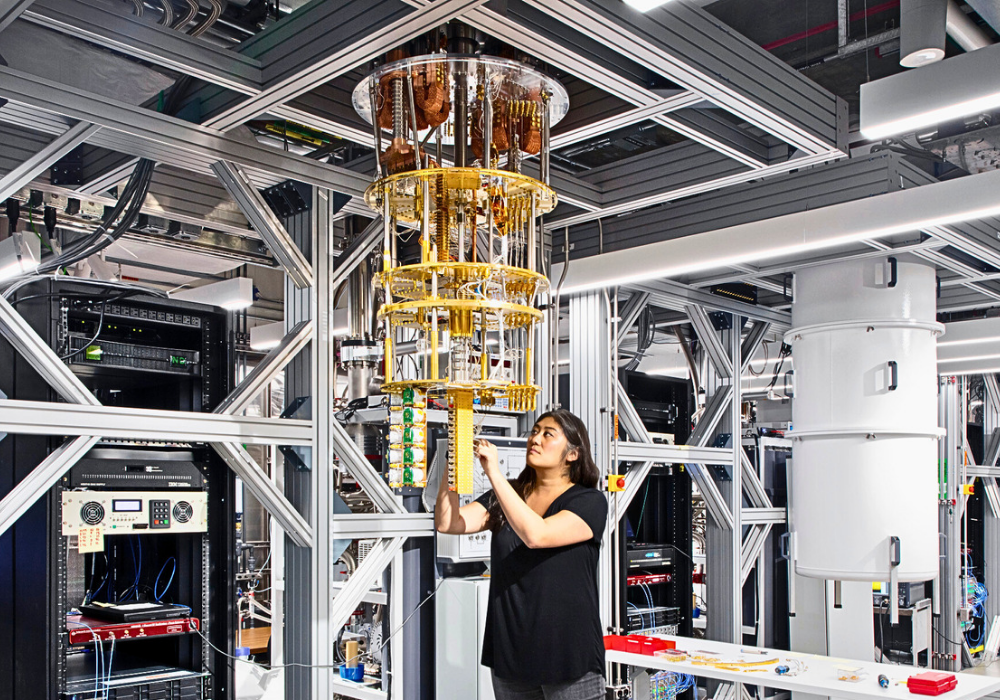
A QpiAI Quantum system

The 8-qubit quantum computer, developed entirely within India, marks a significant milestone in the country’s push toward self-reliance in advanced technologies. It will be used to tackle complex problems across sectors including:
  • Agriculture: Precision farming, pest prediction, and crop advisory systems
  • Water Management: Predictive analytics and efficient resource allocation
  • Healthcare: Disease diagnostics and quantum simulations for treatment
  • Education & Skills: Quantum curriculum integration and youth empowerment

QpiAI’s Strategic Rise

QpiAI recently raised $32 million in Series A funding, co-led by Avataar Ventures and the National Quantum Mission, bringing its total funding to $39 million. The company aims to accelerate product development and global expansion, positioning itself as a frontrunner in the quantum computing space.

National Quantum Mission’s Backing

The National Quantum Mission, launched by India’s Department of Science and Technology (DST), is designed to position the country as a global leader in quantum technologies. Amaravati’s selection as the site for India’s first quantum valley underscores the mission’s commitment to regional innovation and infrastructure development.

With this deployment, Amaravati is set to become a beacon of quantum progress, blending cutting-edge technology with real-world impact across critical sectors.

India’s Largest Quantum Computer To Be Deployed in the Country’s First Quantum Valley Tech Park

India’s Largest Quantum Computer To Be Deployed in the Country’s First Quantum Valley Tech Park
  • IBM, Tata Consultancy Services and Government of Andhra Pradesh Unveil Plans to Deploy India’s Largest Quantum Computer in the Country’s First Quantum Valley Tech Park
  • The Quantum Valley Tech Park will be anchored by next-generation IBM Quantum System Two
  • Tata Consultancy Services partnering with IBM to advance India’s quantum algorithm and application development
IBM (NYSE: IBM) and Tata Consultancy Services (BSE: 532540, NSE: TCS) are partnering to further develop India’s quantum computing industry as part of the State of Andhra Pradesh’s Quantum Valley Tech Park, currently being built in the capital city of Amaravati. The tech park will be anchored by an IBM Quantum System Two installation, with a 156-qubit Heron quantum processor, the largest quantum computer in India. Tata Consultancy Services (TCS) is partnering with IBM to support the development of algorithms and applications that will help the Indian industry and academia solve some of the nation’s most challenging problems. The Government of Andhra Pradesh, IBM and TCS hope to accelerate the development of India’s quantum ecosystem through this initiative.

“Our National Quantum Mission is to make India a global hub in the quantum industry; a true center of innovation and job creation with access to the technology capable of solving some of our country’s and the world’s most pressing and complex challenges,” said N. Chandrababu Naidu, Chief Minister of Andhra Pradesh. “With IBM, TCS, L&T, and other members, the Quantum Valley Technology Park represents how India’s industry and academia will soon be able to take an important step forward in accelerating the achievement of the mission’s goals.”

“We are excited about our plans with the state of Andhra Pradesh to deploy our latest IBM Quantum System Two at the Quantum Valley Tech Park. Our collaboration with TCS will help attract the country’s thriving ecosystem of developers, scientists, and industry experts to develop algorithms and applications. Combining this with India’s National Quantum Mission we could see an acceleration of the next critical milestone – a successful demonstration of quantum advantage,” said Jay Gambetta, Vice President, IBM Quantum.

Members of the Quantum Valley Tech Park can work with TCS for the opportunity to access IBM’s cloud-based quantum computers, and once completed, the Quantum Valley Tech Park will include access to an IBM Quantum System Two with IBM’s latest 156-qubit Heron processor.

“Hybrid architectures are the key to overcoming intractable computing challenges, with quantum computing serving as a catalyst. TCS’s Hybrid Computing strategy is creating what we believe is a breakthrough software layer that intelligently decomposes programs across current systems — CPUs, GPUs and emerging computing architectures — such as quantum. We’re excited to be partnering with IBM, and the Government of Andhra Pradesh at the Quantum Valley Tech Park and support India’s National Quantum Mission to accelerate the development of quantum algorithms and applications that solve complex intractable problems and drive both economic growth and technological innovation,” said Dr. Harrick Vin, Chief Technology Officer, Tata Consultancy Services.

The capabilities of IBM’s quantum computers, Qiskit software, and other resources look to enable India’s growing ecosystem of innovators across academia and industry to discover how quantum computers could be applied toward solutions to complex challenges — such as those goals being pursued by the Government of Andhra Pradesh, via the Quantum Valley Tech Park, in contribution to the country’s National Quantum Mission.

By establishing a vibrant quantum ecosystem encompassing research, access to quantum computers, and industry applications, the Government of Andhra Pradesh intends to create high-end jobs, attract top-tier talent, and draw global investments.

As part of this collaboration, TCS will play a pivotal role in driving India’s applied research and innovation by developing quantum use cases across sectors such as life sciences, materials science, supply chain resilience, energy optimization, cryptography, and sustainable manufacturing. The goal is to unlock applications capable of a quantum advantage in solving practical industry problems that are currently beyond the reach of classical computing. TCS’s role within the Quantum Valley Tech Park will give researchers from TCS, domain experts across Indian industry, and academic institutions alike the opportunity to leverage IBM’s quantum computers and resources.

Govt-backed QpiAI Launches One of India’s Most Powerful Quantum Computers

Govt-backed QpiAI Launches One of India’s Most Powerful Quantum Computers

Bengaluru-based QpiAI, one of the eight startups selected under the National Quantum Mission (NQM), has launched QpiAI-Indus, a 25-qubit superconducting quantum computer. This marks India's first full-stack quantum computing system, integrating advanced quantum processors, scalable control systems, and optimized software for hybrid computing.

The launch, which coincided with World Quantum Day (April 14), positions QpiAI at the forefront of India's quantum ecosystem, driving innovation across life sciences, drug discovery, materials sciences, mobility, logistics, sustainability, and climate action. Since its founding in 2019, QpiAI has filed 11 patent applications and generated revenue of around ₹1 million per annum, with additional funding from SIDBI.
 
QpiAI-Indus
QpiAI-Indus

This milestone aligns with India's broader quantum ambitions, reinforcing its position in deep-science and deep-tech innovation. Given your interest in quantum computing's role in AI model fine-tuning, this development could have exciting implications for hybrid AI-quantum optimization.

Notably, India ranks 6th globally in quantum startups, with 53 startups working in the field. However, private investment in quantum computing in India is significantly lower compared to countries like the US and UK.

To recall, Physicist Rajamani Vijayaraghavan led TIFR Quantum Computing Lab at Tata Institute of Fundamental Research (TIFR) is working on a 6-qubit quantum system, aiming to develop indigenous quantum computing technology.

India's National Mission for Quantum Technology and Applications (NMQTA) was launches five years ago, but public investment remains lower than global leaders like China and the US.

While India is making strides, there's still a long way to go in terms of funding and infrastructure.

India Will Have Its Own Quantum Computer in the Next 3 Years: Dr. Vijay P. Pandurang

India Will Have Its Own Quantum Computer in the Next 3 Years: Dr. Vijay P. Pandurang

Padma Bhushan Dr. Vijay P. Pandurang, one of India's earliest computer scientist, said that "we are working on quantum computers. Through quantum computers, we can increase the speed of any computer manifold" . He said that we have prepared a five-year road map.

Dr. Pandurang is best known for developing the first Indian supercomputer, the PARAM 8000, in 1991. 

The prototype of the quantum computer is ready. Within three years, India will have its own quantum computer, said Dr. Pandurang. He told this in Lucknow, where he was attending the 67th convocation of Lucknow University as the chief guest.

To recall, India is fast progressing towards indigenous quantum computer power. Under the National Quantum Mission, India aims to develop a 24-qubit quantum computer within the next three years and a 100-qubit system in five years. This initiative is being led by the Tata Institute of Fundamental Research (TIFR) in Mumbai, with collaborations from the Defence Research and Development Organisation (DRDO) and Tata Consultancy Services (TCS). 

This development is part of a broader effort to advance India’s capabilities in quantum technology, which includes computing, communication, measurement, and sensing2. The mission has a substantial budget and is expected to foster innovation and research in this cutting-edge field
Dr. Pandurang, who led the led the development of India's Param supercomputers in the late 1980s, also revealed that during the discussion about the visit of the supercomputer to India, the then US President Ronald Reagan was ready to give the supercomputer to India, but he had laid down some conditions. Ronald wanted India to use it in the context of climate and not in any other context. One of these conditions was that if India violates the conditions, then all other agreements with India will be Cancelled by the US.

America feared that India could use the supercomputer to make missiles. Dr. Pandurang said that India is a country with an agricultural economy. In such a situation, it is important to give timely information to farmers by making accurate estimates about the climate regarding their crops. He told that when America made the supercomputer, the then Prime Minister of India Rajiv Gandhi was ready to buy it, he also talked to America. But, after the talks failed due to the condition, on returning to India, Rajiv Gandhi called him and asked if we can make a supercomputer. "So I replied why can't We". Although I have not seen the supercomputer, I have only seen the picture. He told that at that time Japan was trying to make a supercomputer. Rajiv Gandhi again asked how long it would take to be made, so I replied that it would be ready in 3 years.

Dr. Pandurang was the founder and executive director of Centre for Development of Advanced Computing (C-DAC) and is currently working on developing exascale supercomputing for India.

Microsoft and Atom Computing Partner to Bring New Generation of Reliable Quantum Hardware to Customers

Microsoft and Atom Computing Partner to Bring New Generation of Reliable Quantum Hardware to Customers

Microsoft recently announced a significant milestone in quantum computing by demonstrating the best performing logical qubits on record. This achievement is part of their efforts to advance Azure Quantum, a platform designed to provide reliable quantum computing at scale.

In collaboration with Quantinuum, Microsoft created and entangled 12 highly reliable logical qubits, the largest number of entangled logical qubits with the highest fidelity recorded so far. This development is crucial as it addresses the noise and error issues prevalent in current quantum systems, making them more practical for real-world applications.

Additionally, Microsoft is integrating Atom Computing's neutral-atom hardware into Azure Quantum, further enhancing the platform's capabilities. This integration aims to bring best-in-class solutions to customers, enabling advanced hybrid quantum applications that could tackle complex challenges, from sustainable energy solutions to next-generation Therapeutics.

In collaboration with Atom Computing, Microsoft is bringing a new generation of reliable quantum hardware to customers. Bringing together it’s enhanced qubit-virtualization system with Atom Computing’s neutral-atom hardware, Microsoft has jointly generated logical qubits and are optimizing the system to enable reliable quantum computation. The companies believe that this new commercial offering will be the world’s most powerful quantum machine on record and will scale to scientific advantage and beyond.

The reliability of logical qubits is a critical factor in advancing quantum computing. Logical qubits are constructed from multiple physical qubits and are designed to be more robust against errors.

Integrating different types of quantum hardware, such as neutral-atom hardware from Atom Computing, into platforms like Azure Quantum can further enhance reliability. These hybrid systems combine the strengths of various technologies to create more robust and versatile quantum solutions.

One of the main advantages of neutral-atom technology is its potential for scalability. Atom Computing has demonstrated arrays with over 100 qubits, and their systems are designed to scale up to thousands of qubits.

Logical qubits use error-correcting codes to detect and correct errors that occur in physical qubits. This process significantly reduces the error rates, making computations more reliable. The fidelity of a qubit refers to how accurately it can represent quantum information. Higher fidelity means fewer errors and more reliable operations. Microsoft’s recent achievement with 12 highly reliable logical qubits represents a significant improvement in fidelity.

Entangling multiple logical qubits increases their computational power and reliability. The entanglement of 12 logical qubits by Microsoft and Quantinuum is a record-setting achievement that enhances the stability and performance of quantum systems.

Reliable logical qubits are essential for scaling up quantum computers. As the number of qubits increases, maintaining reliability becomes more challenging. Advances in logical qubit technology are crucial for building larger, more powerful quantum computers.

Microsoft is pioneering a new computing paradigm by bringing the power of the cloud and AI together with quantum. Microsoft's Azure Quantum compute platform enables the seamless execution of quantum applications that leverage hardware across a variety of qubit architectures and chips, while offering integration with cloud HPC and AI.

Over this past year, Microsoft has announced new breakthroughs and collaborations in pursuit of this platform mission, including offering Generative Chemistry and Accelerated DFT and advancing the industry to reliable quantum computing by demonstrating highly reliable logical qubits.

Young Scientists From DRDO's Lab Complete End-To-End Testing of Quantum Processor Based on Superconducting Circuit Technology

Young Scientists From DRDO's Lab Complete End-to-end Testing of Quantum Processor Based on Superconducting Circuit Technology

Scientists from the DRDO Young Scientists Laboratory for Quantum Technologies (DYSL-QT) in Pune, in collaboration with the Tata Institute of Fundamental Research (TIFR) in Mumbai, have successfully completed the end-to-end testing of a 6-qubit quantum processor based on superconducting circuit technology.

For a novice, Superconducting Circuits are electronic circuits that operate at extremely low temperatures, where certain materials exhibit zero electrical resistance. This property allows for the creation of highly efficient and fast circuits, which are crucial for quantum computing.

Many quantum processors, including those developed by companies like Google and IBM, use superconducting circuit technology.

This milestone by DRDO's young scientists involved submitting a quantum circuit from a cloud-based interface, executing the program on the quantum hardware, and updating the cloud interface with the computed results.
 
Young Scientists From DRDO's Lab Complete End-to-end Testing of Quantum Processor Based on Superconducting Circuit Technology
Image - DRDO 

The project is a collaboration between DYSL-QT, TIFR, and Tata Consultancy Services (TCS), with the qubits designed and fabricated at TIFR.

The scientists at DYSL-QT developed the control and measurement apparatus using a combination of commercial off-the-shelf electronics and custom-programmed development boards. They are also responsible for optimizing various aspects of the system’s performance before it becomes operational.

The qubits used in the quantum processor were designed and fabricated at TIFR. The architecture of the quantum processor is based on a novel ring-resonator design invented at TIFR.

TCS developed the cloud-based interface that allows users to submit quantum circuits, execute programs on the quantum hardware, and receive computed results.

In future plans, the next steps include scaling up the number of qubits and assessing the technology’s scalability and feasibility for commercial application.

Beside this, the scientists want to further optimize the system's performance and scaling up the number of qubits to assess the technology's scalability and feasibiliy for commercial applications.

Few days back, the National Quantum Mission (NQM) of India announced to offer grants to 10 to 15 startups in the next three months to support startups in the field of quantum computing.

Govt to Offer Grants to 10 to 15 Promising Startups on Quantum Computing

Govt to Offer Grants to 10 to 15 Promising Startups on Quantum Computing

The National Quantum Mission (NQM) in India is actively supporting startups in the field of quantum computing.

The NQM will offer grants to 10 to 15 startups in the next three months. These grants aim to enable startups to grow, scale, and expand globally. This was announced by NQM's board chairman Ajai Chowdhury.

The plan is to set up four independent section 08 companies, each focused on a specific area – computing, communications, sensing, and materials. These companies are expected to take India-developed quantum products to a global audience.

The government is keen on increasing research and development in quantum technologies (QT). Startups working in this field will receive support to advance quantum computing and related technologies.

Funding Range: The grants will range from Rs 2 crore to Rs 25 crore, based on the startup's technology readiness level and other factors.

This initiative aims to accelerate quantum technology development and research, fostering innovation in India's startup ecosystem.

How to Apply

To apply for the National Quantum Mission grants for quantum computing startups in India, follow these steps:

1. Eligibility Check: Ensure your startup meets the eligibility criteria set by the National Quantum Mission. Typically, this includes being a registered Indian company with a focus on quantum technologies.

2. Prepare Documentation:
  • Business Plan: Create a detailed business plan that outlines your startup's goals, technology, and market potential.
  • Technology Proposal: Describe your quantum computing project, its innovation, and how it aligns with the mission's objectives.
  • Financial Projections: Provide financial projections, including how the grant will be utilized.
3. Application Submission:

Keep an eye out for official announcements regarding the application window.
Submit your application through the designated portal or channel specified by the National Quantum Mission.

4. Evaluation and Selection:

Your application will be evaluated based on technical merit, feasibility, and impact.
If shortlisted, you may be invited for an interview or presentation.

5. Grant Utilization:

If approved, utilize the grant for research, development, and scaling up your quantum computing project.

Remember to stay updated on official announcements and guidelines from the National Quantum Mission.

India Soon To Launch Its First Quantum Computer

India Soon To Launch Its First Quantum Computer
Tata Institute of Fundamental Research's (TIFR's) Jay Deshmukh (left) and Binoy Nambiar of the Defence Research and Development Organisation (DRDO) working on a dilution refrigerator used to cool superconducting qubits; (Photo: Mandar Deodhar | Source – IndiaToday.in)

India is making significant strides in the field of quantum computing. The Tata Institute of Fundamental Research (TIFR) in Mumbai is on the verge of completing the country's first quantum computer. This groundbreaking achievement is a testament to the relentless efforts of the Quantum Measurement and Control (QuMaC) lab, which was established 12 years ago with the specific goal of tackling the complex challenges inherent in quantum system development.

Led by Dr. R. Vijayaraghavan, QuMaC views this initial quantum computer as a pivotal stepping stone for India's foray into the burgeoning field of quantum technology. The project, undertaken in collaboration with the Defence Research and Development Organisation (DRDO) and Tata Consultancy Services (TCS), involves designing critical components such as the quantum processing unit, electronics, and software—each presenting its own intricate challenges.

For uninitiated, quantum computers, leveraging the principles of quantum mechanics, hold immense promise for revolutionizing fields ranging from drug discovery and materials science to cryptography and artificial intelligence. While still in its nascent stages, this breakthrough by TIFR marks a crucial step for India in joining the global race to harness the power of quantum computing.

TIFR, in its pursuit of creating India’s first quantum computer, has partnered with two key entities: the Defence Research and Development Organisation (DRDO) and Tata Consultancy Services (TCS). The collaboration with DRDO brings expertise in defense technology and research. DRDO’s involvement likely focuses on security applications and potential military use cases for quantum computing.

Together with TIFR, DRDO contributes to the design and development of critical components, including the quantum processing unit, electronics, and software.

TCS collaborates with TIFR to create the necessary software stack for the quantum computer. This includes programming languages, compilers, and tools to harness the quantum hardware efectively.

Additionally, TCS may contribute insights into practical applications of quantum computing across various domains.

It may be recalled that in June, IndianWeb2 reported that the Government of India is looking to work with IT services majors like TCS, HCL and Tech Mahindra to develop software for quantum technologies under the NQM, which will support Indian startups and scientists working in the emerging area.

Besides this, Indian Institute of Science (IISc) too launched its Quantum Technology Initiative (IQTI) in September 2020. The initiative aims to establish a solid foundation for quantum technologies by fostering collaborations between physicists, material scientists, computer scientists, and engineers. It actively engages with businesses and strategic partners to develop technology with economic and social impact

Additionally, the Indian Institute of Technology (IIT) Mandi is also working on an indigenous room-temperature quantum computer that will use photons for faster calculations.

Intel Research Opens Door for Mass Production of Silicon-based Quantum Processors, A Requirement for Making Fault-Tolerant Quantum Computer

Intel has made a significant advancement in quantum computing by demonstrating high fidelity and uniformity in single-electron control on spin qubit wafers. This achievement, as reported in a recent research paper, published in Nature, indicates a major step towards the scalability of silicon-based quantum processors, which are essential for the development of fault-tolerant quantum computers.

Quantum computing researchers at Intel Foundry Technology Research developed a 300-millimeter (mm) cryogenic probing process to collect high-volume data on the performance of spin qubit devices across full wafers, resulting in state-of-the-art uniformity, fidelity, and measurement statistics of spin qubits.

Intel Research Opens Door for Mass Production of Silicon-based Quantum Processors, A Requirement for Making Fault-Tolerant Quantum Computer
Otto Zietz, quantum hardware engineer at Intel Corporation, stands near a quantum cryoprober in Hillsboro, Oregon. The cryoprober can plunge a 300- millimeter silicon wafer to the extraordinarily low temperature of 1.7 kelvins just a hair above absolute zero. (Credit: Intel Corporation)


For an uninitiated, Spin qubits are a type of quantum bit, or qubit, which are the fundamental building blocks of quantum computers. They are based on the quantum property of electron spin. In classical computing, a bit can be in one of two states: 0 or 1. However, in quantum computing, due to the principle of superposition, a qubit like a spin qubit can be in a state that is a complex combination of both 0 and 1 simultaneously.

Spin qubits are particularly promising for quantum computing because they can be made using existing semiconductor manufacturing techniques, and they can potentially operate at higher temperatures than other types of qubits.

With this, Intel advances in controlling single-electron spins with high fidelity and uniformity across a wafer. This is significant because it suggests the possibility of scaling up the production of spin qubits using established semiconductor fabrication methods, which is a crucial step towards building practical quantum computers.

The key highlights from Intel's breakthrough include:

  • The development of a 300-mm cryogenic probing process to collect high-volume data on the performance of spin qubit devices across full wafers.
  • Achievement of 99.9% fidelity for qubits fabricated using CMOS manufacturing techniques.
  • The potential for mass production and continued scaling of silicon-based quantum processors due to the high device yield and automated testing process.
This research opens the door for the mass production of quantum processors and brings us closer to realizing fault-tolerant quantum computers, which will have a profound impact on various fields, including cryptography, materials science, and complex problem-solving. Intel's approach leverages its expertise in CMOS manufacturing, which is traditionally used for creating billions of transistors per chip, to now also create highly uniform and reliable qubit devices.

Intel is taking steps toward building fault-tolerant quantum computers by improving three factors — (1) Qubit density, (2) Reproducibility of uniform qubits, and (3) Measurement statistics from high volume testing.

Intel Research Opens the Door for Mass Production of Silicon-based Quantum Processors, a Requirement for Making Fault-tolerant Quantum Computer
This 300-millimeter Intel silicon spin qubit wafer. In May 2024, Nature published an Intel research paper, "Probing single electrons across 300-mm spin qubit wafers," demonstrating state-of-the-art uniformity, fidelity and measurement statistics of spin qubits. (Credit: Intel Corporation)

The concept of probing single electrons across 300-mm spin qubit wafers is a significant advancement in quantum computing. This method provides rapid feedback for optimizing the CMOS-compatible fabrication process, which is crucial for achieving high yield and low process variation.

This research is being conducted by Samuel Neyens and colleagues and demonstrates the application of CMOS industry techniques to the fabrication and measurement of spin qubits. The researchers successfully automated measurements of the operating point of spin qubits and probed the transitions of single electrons across full wafers. Their analysis of the random variation in single-electron operating voltages indicated that this fabrication process leads to low levels of disorder at the 300 mm scale.

This breakthrough is a key step towards scalable quantum computers capable of tackling real-world applications, as it leverages the mature chipmaking industry's methods for fabricating and testing conventional computer chips. The ability to probe single electrons with such precision is essential for the development of fault-tolerant quantum computers that require vast numbers of physical qubits.

The practical applications of probing single electrons in spin qubit wafers are still largely in the developmental stage, but the technology holds significant promise for the future of quantum computing. The ability to probe single electrons with high precision is crucial for creating scalable quantum computers, which could revolutionize various fields by performing complex computations much faster than traditional computers.

IBM and Japan's RIKEN To Connect Quantum Computing with the Supercomputer Fugaku

IBM and Japan's RIKEN To Connect Quantum Computing with the Supercomputer Fugaku

IBM Next-Generation Quantum System to be Integrated With the Supercomputer Fugaku

IBM has announced a significant collaboration with RIKEN, a leading Japanese national research laboratory, to integrate IBM's next-generation quantum system with the supercomputer Fugaku. This integration is set to take place at the RIKEN Center for Computational Science in Kobe, Japan.

The integration marks a significant step towards quantum-centric supercomputing, where quantum and classical computing resources work together. This could revolutionize how computational tasks are approached and solved.

Fugaku is a petascale supercomputer at the RIKEN Center for Computational Science in Kobe, Japan. It was completed in 2021 and is named after an alternative name for Mount Fuji. Fugaku is among the world's fastest supercomputer and is used to solve major challenges, such as researching COVID-19 therapies and providing real-time tsunami predictions. 

Supercomputer Fugaku

The IBM Quantum System Two, which is IBM's latest quantum computer architecture, will be co-located with Fugaku. This marks the only instance where a quantum computer will be integrated with Fugaku, aiming to accelerate the development of applications for quantum-centric Supercomputing.

This project is part of a larger initiative supported by the New Energy and Industrial Technology Development Organization (NEDO) under Japan’s Ministry of Economy, Trade and Industry (METI). The goal is to demonstrate the benefits of hybrid computational platforms in the post-5G era, potentially revolutionizing science and business in Japan.

IBM Quantum System Two includes an expandable cryogenic infrastructure, modular quantum control electronics, and advanced system software. It's designed to work alongside traditional high-performance computing (HPC) services, embodying IBM's vision for quantum-centric Supercomputing.

IBM Quantum Heron
At IBM Quantum Summit 2023, ‘IBM Quantum Heron’ was released as IBM’s best performing quantum processor to date, with newly built architecture offering up to five-fold improvement in error reduction.(Credit: Ryan Lavine for IBM)

The system will be powered by a 133-qubit ‘IBM Quantum Heron’ processor. IBM Heron is the first in a new series of quantum processors with an architecture that delivers the highest performance metrics of any IBM Quantum processor that has been released, to date. Now available to users via the cloud, experiments on IBM Heron also had the lowest error rates of any IBM Quantum processor, offering a five-fold improvement over the previous best records set by IBM Eagle.

Moreover, IBM plans to develop a software stack dedicated to generating and executing integrated quantum-classical workflows within a heterogeneous quantum-HPC hybrid computing environment. These advancements are expected to deliver improvements in algorithm quality and execution times.

The deployment of IBM Quantum System Two at RIKEN and its integration with Fugaku represents a significant step towards the future of quantum-centric supercomputing, where quantum and classical computing resources work in tandem to tackle computations beyond current capabilities.

The hybrid system will combine the strengths of quantum computing with those of classical supercomputing, leading to unprecedented computational capabilities. This will enable researchers to tackle complex problems that were previously beyond reach. 

To recall, in last month NVIDIA announced that it has been working on quantum accelerated supercomputing, which leverages quantum processing units (QPUs) to perform quantum computing tasks alongside traditional supercomputing infrastructures.

With this integration of quantum computing +Supercomputer, Fields such as materials science, drug discovery, and climate modeling could benefit greatly from the enhanced computational power, potentially leading to breakthroughs in these areas

In addition, the IBM & RIKEN project involves collaboration with other institutions like the University of Tokyo and Osaka University, fostering a collaborative environment that could accelerate innovation and discovery.

Overall, the integration of IBM's Quantum System Two with Fugaku is expected to open up new horizons in scientific research, enabling researchers to explore and solve complex problems with greater efficiency and precision.

Besides this, Japan's National Institute of Advanced Industrial Science and Technology has also integrated quantum computing with a supercomputer. The institute has deployed ABCI-Q, one of the largest supercomputers dedicated to research in quantum computing. This system expands the ecosystem for hybrid quantum-classical computing.

Scientists To Run Quantum Computing Simulations Using NVIDIA-based Open Source Platform

Scientists To Run Quantum Computing Simulations Using NVIDIA-based Open Source Platform

Scientists to Run State-of-the-Art Quantum Computing Simulations Using NVIDIA CUDA Quantum Platform, Turbocharged by NVIDIA Grace Hopper Superchips.

NVIDIA has announced that Pawsey Supercomputing Research Centre, an Australian government-supported high-performance computing national facility located in Perth, Australia, will add the NVIDIA® CUDA Quantum platform accelerated by NVIDIA Grace Hopper™ Superchips to its National Supercomputing and Quantum Computing Innovation Hub, furthering its work driving breakthroughs in quantum computing.

Researchers at the Pawsey will leverage CUDA Quantum — an open-source hybrid quantum computing platform that features powerful simulation tools, and capabilities to program hybrid CPU, GPU and QPU systems — as well as, the NVIDIA cuQuantum software development kit of optimized libraries and tools for accelerating quantum computing workflows.

The NVIDIA Grace Hopper Superchip — which combines the NVIDIA Grace CPU and Hopper GPU architectures — provides extreme performance to run high-fidelity and scalable quantum simulations on accelerators and seamlessly interface with future quantum hardware infrastructure.

High-performance simulation is essential for researchers to address the biggest challenges in quantum computing — from algorithm discovery and device design to the invention of powerful methods for error correction, calibration and control,” said Tim Costa, director of HPC and quantum computing at NVIDIA.CUDA Quantum, together with the NVIDIA Grace Hopper Superchip, allows innovators such as Pawsey Supercomputing Research Centre to achieve these essential breakthroughs and accelerate the timeline to useful quantum-integrated supercomputing.”

Pawsey Supercomputing Centre’s research and test-bed facility is helping to advance scientific exploration for all of Australia as well as the world,” said Mark Stickells, executive director at the Pawsey Supercomputing Research Centre. “NVIDIA’s CUDA Quantum platform will allow our scientists to push the boundaries of what’s possible in quantum computing research.”

Australia’s national science agency, CSIRO (Commonwealth Scientific and Industrial Research Organisation), estimates the domestic market opportunity from quantum computing to be worth $2.5 billion annually in revenue, with the potential to create 10,000 new jobs by 2040. Achieving this will require quantum computing to be embedded in other scientific domains, with applications in astronomy, life sciences, medicine, finance and more.

Pushing the Quantum Computing Limits

Pawsey will deploy the system to run quantum workloads directly from traditional high performance computing systems, leveraging their processing power and developing hybrid algorithms that intelligently divide calculations into classical and quantum kernels, using the quantum device to improve computing efficiency. Quantum machine learning, chemistry simulations, image processing for radio astronomy, financial analysis, bioinformatics and specialized quantum simulators will be studied, starting with various quantum variational algorithms. 

Pawsey is deploying eight NVIDIA Grace Hopper Superchip nodes based on NVIDIA MGX™ modular architecture. GH200 Superchips eliminate the need for a traditional CPU-to-GPU PCIe connection by combining an Arm-based NVIDIA Grace™ CPU with an NVIDIA H100 Tensor Core GPU in the same package, using NVIDIA NVLink™-C2C chip interconnects.

This increases the bandwidth between GPU and CPU by 7x compared with the latest PCIe technology. It delivers up to 10x higher performance for applications running terabytes of data, giving quantum-classical researchers unprecedented power to solve the world’s most complex problems.

Pawsey is committed to making the NVIDIA Grace Hopper platform available to the Australian quantum community, as well as its international Partners. 

IBM Releases Its Most Performant Quantum Processor and 1st Modular Quantum Computer

IBM’s Releases Its Most Performant Quantum Processor and 1st Modular Quantum Computer

  • IBM Quantum Heron’ is released as IBM’s most performant quantum processor in the world, with newly built architecture offering up to five-fold improvement in error reduction over ‘IBM Quantum Eagle’
  • IBM Quantum System Two begins operation with three IBM Heron processors, designed to bring quantum-centric supercomputing to reality
  • Expansion of IBM Quantum Development Roadmap for next ten years prioritizes improvements in gate operations to scale with qualityp towards advanced error-corrected systems

IBM (NYSE: IBM) has debuted 'IBM Quantum Heron,' the first in a new series of utility-scale quantum processors with an architecture engineered over the past four years to deliver IBM's highest performance metrics and lowest error rates of any IBM Quantum processor to date.

IBM also unveiled IBM Quantum System Two, the company's first modular quantum computer and cornerstone of IBM's quantum-centric supercomputing architecture. The first IBM Quantum System Two, located in Yorktown Heights, New York, has begun operations with three IBM Heron processors and supporting control electronics.

IBM Quantum
At IBM Quantum Summit 2023, ‘IBM Quantum Heron’ was released as IBM’s best performing quantum processor to date, with newly built architecture offering up to five-fold improvement in error reduction. (Credit: Ryan Lavine for IBM)


With this critical foundation now in place, along with other breakthroughs in quantum hardware, theory, and software, the company is extending its IBM Quantum Development Roadmap to 2033 with new targets to significantly advance the quality of gate operations. Doing so would increase the size of quantum circuits able to be run and help to realize the full potential of quantum computing at scale.

"We are firmly within the era in which quantum computers are being used as a tool to explore new frontiers of science," said Dario Gil, IBM SVP and Director of Research. "As we continue to advance how quantum systems can scale and deliver value through modular architectures, we will further increase the quality of a utility-scale quantum technology stack – and put it into the hands of our users and partners who will push the boundaries of more complex problems."

Earlier this year, IBM demonstrated that IBM Quantum systems on a 127-qubit 'IBM Quantum Eagle' processor can serve as a scientific tool to explore utility-scale classes of problems in chemistry, physics, and materials beyond brute force classical simulation of quantum mechanics.

Since that demonstration, leading researchers, scientists, and engineers from organizations including the U.S. Department of Energy's Argonne National Laboratory, the University of Tokyo, the University of Washington, the University of Cologne, Harvard University, Qedma, Algorithmiq, UC Berkeley, Q-CTRL, Fundacion Ikerbasque, Donostia International Physics Center, and the University of the Basque Country, as well as IBM, have expanded demonstrations of utility-scale quantum computing to confirm its value in exploring uncharted computational territory.

This includes experiments already running on the new IBM Quantum Heron 133-qubit processor, which IBM is making available for users via the cloud.

IBM Heron is the first in IBM's new class of performant processors with significantly improved error rates, offering a five-times improvement over the previous best records set by IBM Eagle. Additional IBM Heron processors will join IBM's industry-leading, utility-scale fleet of systems over the course of the next year.

IBM Quantum System Two and Extended IBM Quantum Development Roadmap


IBM Quantum System Two is the foundation of IBM's next generation quantum computing system architecture. It combines scalable cryogenic infrastructure and classical runtime servers with modular qubit control electronics. The new system is a building block for IBM's vision of quantum-centric supercomputing. This architecture combines quantum communication and computation, assisted by classical computing resources, and leverages a middleware layer to appropriately integrate quantum and classical workflows.

As part of the newly expanded 10-year IBM Quantum Development Roadmap, IBM plans for this system to also house IBM's future generations of quantum processors. Also, as part of this roadmap, these future processors are intended to gradually improve the quality of operations they can run to significantly extend the complexity and size of workloads they are capable of handling.

Qiskit and Generative AI to Increase Ease of Quantum Software Programming

IBM has also detailed its plans for a new generation of its software stack, within which Qiskit 1.0 will be a pivot point defined by stability and speed. Additionally, and with the goal of democratizing quantum computing development, IBM is announcing Qiskit Patterns.

Qiskit Patterns will serve as a mechanism to allow quantum developers to more easily create code. It is based in a collection of tools to simply map classical problems, optimize them to quantum circuits using Qiskit, executing those circuits using Qiskit Runtime, and then postprocess the results. With Qiskit Patterns, combined with Quantum Serverless, users will be able to build, deploy, and execute workflows integrating classical and quantum computation in different environments, such as cloud or on-prem scenarios. All of these tools will provide building blocks for users to build and run quantum algorithms more easily.

Additionally, IBM is pioneering the use of generative AI for quantum code programming through watsonx, IBM's enterprise AI platform. IBM will integrate generative AI available through watsonx to help automate the development of quantum code for Qiskit. This will be achieved through the finetuning of the IBM Granite model series.

"Generative AI and quantum computing are both reaching an inflection point, presenting us with the opportunity to use the trusted foundation model framework of watsonx to simplify how quantum algorithms can be built for utility-scale exploration," said Jay Gambetta, Vice President and IBM Fellow at IBM. "This is a significant step towards broadening how quantum computing can be accessed and put in the hands of users as an instrument for scientific exploration."

With advanced hardware across IBM's global fleet of 100+ qubit systems, as well as easy-to-use software that IBM is debuting in Qiskit, users and computational scientists can now obtain reliable results from quantum systems as they map increasingly larger and more complex problems to quantum circuits.

Introducing Quantinuum: The World's Largest Integrated Quantum Computing Company


Quantinuum is a result of the combination of two global leaders in quantum computing: Honeywell Quantum Solutions and Cambridge Quantum

CAMBRIDGE, England and BROOMFIELD, Colo., Nov. 30, 2021 /PRNewswire/ -- The two leading companies in the quantum computing industry have combined to create Quantinuum, thereby accelerating the development of quantum computing and innovation of quantum technologies in a platform agnostic manner to deliver real-world quantum-enabled solutions for some of the most intractable problems that classical computers have not been able to solve.

Cambridge Quantum, the pioneer in quantum software, operating systems, and cybersecurity, and Honeywell Quantum Solutions, which has built the highest-performing quantum hardware, based on trapped-ion technologies, today announced they have satisfied all of the conditions required to close the business combination and formed the new company, now called Quantinuum.


"Quantinuum is now the largest and most advanced integrated quantum computing company in the world," said Ilyas Khan, CEO of the new company and founder of Cambridge Quantum. "By uniting the best-in-class quantum software available with the highest performing hardware available, we are uniquely positioned to bring real, quantum computing products and solutions to large, high-growth markets in the near term, the medium term and the longer term as quantum computers scale in capacity and quality. We are science led, and enterprise driven, and our scale and global presence in this most critical of technologies will provide leadership in each of the key areas that constitute the 'must haves' for quantum computing to deliver real world solutions to all our customers and partners."

Quantinuum will globally launch a quantum cybersecurity product in December 2021, and later in 2022, an enterprise software package that applies quantum computing to solve complex scientific problems in pharmaceuticals, materials science, specialty chemicals and agrochemicals. It will also announce major upgrades to the System Model H1 hardware technologies, Powered by Honeywell, which has the highest measured quantum volume, as well as industry breakthroughs that reduce errors thereby continuing to progress credibly towards the development of a fault-tolerant quantum system. In this respect, the H-Series quantum computers continue the trend of meeting and exceeding the deliverables that the company has previously committed to as part of its hardware roadmap.

"I am thrilled to help lead our new company, which will positively change the world through the application of quantum computing. Our scientists continue to work hard to develop the best quantum software and hardware technologies available and I am excited to be able to offer these to customers on an on-going basis," said Tony Uttley, President and Chief Operating Officer of Quantinuum. "The next few weeks and months are going to be extremely active for Quantinuum as we increase the pace in deriving unique value from today's quantum computers especially in cybersecurity. However, in addition to cybersecurity, our products will include solutions for drug discovery and drug delivery, materials science, finance, natural language processing, as well as optimization, pattern recognition, and supply chain and logistics management."

Quantinuum was formed six months after Honeywell announced that Honeywell Quantum Solutions, its quantum computing division, would separate from the company and combine with Cambridge Quantum. Honeywell will initially be the largest shareholder of Quantinuum with an approximately 54 percent ownership stake in the new company. Additionally, on top of this stake, Honeywell has also invested nearly $300 million in the new venture, ensuring that Quantinuum is well capitalized at inception. Honeywell will also be a supplier to Quantinuum, supporting the manufacturing process for the company's proprietary ion-traps. Additionally, Honeywell is a customer of Quantinuum on various projects across its business units.

Quantinuum has a staff of almost 400 people at inception, with offices in the United Kingdom, United States, Japan, and Germany. Of those employees, approximately 300 are scientists working on technical teams to advance the hardware and develop software solutions.

Quantinuum will maintain a European headquarters in Cambridge, UK and a North American headquarters in Colorado, US. The company will continue to be entirely platform agnostic in its choice of hardware to provide total portability to its clients and ensure the most effective performance for the problems being solved.

For more information, visit www.quantinuum.com.

This release contains certain statements that may be deemed "forward-looking statements" within the meaning of Section 21E of the Securities Exchange Act of 1934. All statements, other than statements of historical fact, that address activities, events or developments that we or our management intends, expects, projects, believes or anticipates will or may occur in the future are forward-looking statements. Such statements are based upon certain assumptions and assessments made by our management in light of their experience and their perception of historical trends, current economic and industry conditions, expected future developments and other factors they believe to be appropriate. The forward-looking statements included in this release are also subject to a number of material risks and uncertainties, including but not limited to economic, competitive, governmental, and technological factors affecting our operations, markets, products, services and prices. Such forward-looking statements are not guarantees of future performance, and actual results, developments and business decisions may differ from those envisaged by such forward-looking statements. The Honeywell trademark is used under license from Honeywell International Inc. Honeywell makes no representations or warranties with respect to this service.

IBM Unveils 'Eagle' - World's Most Powerful Quantum Processor


Tech giant IBM, who is credited to give the world first computer Mark-I during second World War, has unveiled the world’s most powerful quantum processor dubbed as 'Eagle'. With 127 quantum bits (qubits), the Eagle is a major step towards commercial quantum computers outperforming traditional computing machines.

IBM announced its 'Eagle' processor on Tuesday at the IBM Quantum Summit 2021, its flagship, invite-only annual event to showcase milestones in quantum hardware, software, and the growth of the quantum ecosystem.

In a next after Eagle, IBM is planning to introduce Osprey (433 Qubits) and Condor (1,121 Qubits) processors, in the year 2022 and 2023 respectively.

Last week, a team of physicists from the Harvard-MIT Center for Ultracold Atoms and other universities developed a special type of quantum computer known as a programmable quantum simulator capable of operating with 256 Qubits, touted as largest of its kind ever created. However, it is an experimental quantum simulator and not an actual working quantum computer but rather a simulator that allowed researchers to observe several exotic quantum states of matter that had never before been realized experimentally

Coming back to 'Eagle', it is IBM's first quantum processor developed and deployed to contain more than 100 operational and connected qubits. It follows IBM's 65-qubit 'Hummingbird' processor unveiled in 2020 and the 27-qubit 'Falcon' processor unveiled in 2019.

'Eagle' is the first IBM quantum processor whose scale makes it impossible for a classical computer to reliably simulate. In fact, the number of classical bits necessary to represent a state on the 127-qubit processor exceeds the total number of atoms in the more than 7.5 billion people alive today.

Modular & Scalable Quantum Computers

IBM also unveiled a concept for the future of quantum computing systems -- IBM Quantum System Two -- a modular quantum computing concept by IBM, giving flexibility to hardware to continue to increase the scale of IBM chips.

IBM Quantum System Two brings the possibility of providing a larger shared cryogenic workspace, by  linking multiple quantum processors through novel interconnects. Cryogenics is the production and behaviour of materials at very low temperatures. For cryogenic platform, IBM is working with Finland-based Bluefors, a company that specializes in cryogen-free dilution refrigerator systems, with a strong focus on the quantum computing. Bluefors has just revealed a new cryogenic platform called KIDE.

As per IBM, System Two represents a glimpse into the future of what quantum computing looks like — a true quantum data center.

To recall, in May this year IBM announced world’s first chip with 2 nanometer (nm) nanosheet technology, which allows to fit up to 50 billion transistors on a chip the size of a fingernail.


SOURCE - IBM Newsroom | IBM Research Blog

With 256 Qubits, Harvard-MIT Researchers Made Most Powerful Quantum Computer Model


Just four months back, a team of Chinese researchers have demonstrated that with 66-qubit quantum computing speed they built the world’s most powerful quantum computer named 'Zuchongzhi'. Now in a latest a team of physicists from the Harvard-MIT Center for Ultracold Atoms and other universities has developed a special type of quantum computer known as a programmable quantum simulator capable of operating with 256 quantum bits, or "qubits" -- largest of its kind ever created.

Notably, the system made is an experimental quantum simulator and not an actual working quantum computer but a simulator that has allowed researchers to observe several exotic quantum states of matter that had never before been realized experimentally, and to perform a quantum phase transition study so precise that it serves as the textbook example of how magnetism works at the quantum level. 

Technically speaking, the researchers have realized a quantum spin model with tunable interactions for system sizes ranging from 64 to 256 qubits.

Dolev Bluvstein (from left), Mikhail Lukin, and Sepehr Ebadi developed a special type of quantum computer known as a programmable quantum simulator. Ebadi is aligning the device that allows them to create the programmable optical tweezers.  (Credit: Rose Lincoln/Harvard Staff Photographer)

The workhorse of this new platform is a device called the spatial light modulator, which is used to shape an optical wavefront to produce hundreds of individually focused optical tweezer beams. These devices are essentially the same as what is used inside a computer projector to display images on a screen, but we have adapted them to be a critical component of our quantum simulator.

With this done, a major step toward building large-scale quantum machines that could be used to shed light on a host of complex quantum processes and eventually help bring about real-world breakthroughs in material science, communication technologies, finance, and many other fields, overcoming research hurdles that are beyond the capabilities of even the fastest supercomputers today. 

According to Sepehr Ebadi, a physics student in the Graduate School of Arts and Sciences and the lead author of the an the study published in July in the journal Nature, said -

The number of quantum states that are possible with only 256 qubits exceeds the number of atoms in the solar system


SOURCE - The Harvard Gazette

QpiAI Launches a Global AI and Quantum Marketplace

https://ift.tt/2zaxEZA

Business Wire India

Dr Nagendra Nagaraja, CEO and Founder of QpiAI announces QpiAI Global AI and Quantum marketplace (https://www.qpiai-market.tech) to increase adoption of AI and quantum technologies among enterprises and communities. Registration is now open for enterprise users (mainly buyers) and for the first batch of students who score distinction in the QpiAI-IISc certification program which ends in November as the solutions providers. QpiAI-Marketplace is undergoing trials with a few key enterprise customers. Participating enterprise names will be announced soon on the online marketplace. There will be joint announcements in the press with participation from some large enterprises.

This is in continuation with QpiAI-IISc joint certification (https://www.qpiai-explorer.tech/certification/) that upskills students and enterprises with AI and Quantum skills. Distinction (above 90%) in AI level II, AI level pro (to be launched by September-October 2021),  Quantum level II( to be launched by September-October 2021) and joint AI and Quantum certification will qualify to enter marketplace as a solutions provider, service provider and seller of AI models, AI solutions, AI services and Quantum solutions. The Marketplace is expected to have 100+ enterprises as buyers and a million sellers in a couple of years’ time. The certification program has received an overwhelming response of 10000+ registrations in the last 2 months. Out of which, 250 students have been enrolled in two batches. Going forward, enrolment will have an entrance test. All training videos and quizzes will be available for free in a few weeks for those who have registered on the certification website and have obtained logins . Certification, assessments, QpiAI-Explorer, QpiAI-Pro platforms  and assignments will be charged. There will also be merit based discounts based on performance in entrance tests.

With the Marketplace, highly skilled students and professionals (who will be the outcome of certification courses) will be able to participate and benefit in the commercialization of AI and Quantum solutions. Both buyers and sellers are largely expected to use QpiAI-Pro (https://qpiai-pro.tech), QpiAI-Quantum platforms and Qpicloud (https://qpicloud.tech) infrastructure to deliver solutions. Further Qpi Technology (https://qpitech.holdings/) subsidiaries will enable the QpiAI community with a strong technology roadmap. Qpi Technology is committed to the QpiAI Marketplace community to provide latest and cutting-edge quantum and classical compute, high quality innovation in AI, secure infrastructure and platform technologies that enables them to solve the most complex and valuable problems. Technology stack will be delivered via QpiCloud, which has a roadmap to be a Quantum secured cloud. QpiAI community on the Marketplace will automatically be qualified to be part Qpicloud Collaborative Platforms (CPs). Qualified enterprises and individuals will automatically get notifications for requests to participate in the projects when new CPs are launched by enterprises. CPs are designed to generate recurring revenue for the QpiAI community on certain specialized AI and Quantum projects. High level of Security is the main USP of CPs on Qpicloud.

QpiAI-Pro (https://qpiai-pro.tech/) is an all-in-one platform for data preparation, automated model generation, model deployment and ML-ops. One can use this with little coding, except for where custom models need to be designed. QpiAI-Pro is expected to have a Quantum backend in future for model discovery and enable generation of very efficient models. QpiAI-Pro will be a platform that comes up with new kinds of AI automatically, with the help of QpiAI hybrid classical-quantum processor and libraries. Currently QpiAI-Pro has a QpiCloud backend based on GPUs and CPUs. The QpiAI-Pro model discovery is proven to generate models automatically with a very compact footprint. It’s high performance is suitable for both cloud and also power and area constrained embedded applications. QpiAI-Marketplace is one of the microservices integrated into QpiAI-Pro. QpiAI-Pro users can buy and sell models directly from the QpiAI-Pro UI that has an excellent user experience.

QpiAI-Quantum on other hand can be used to model most of the real-world problems into combinations of AI and Quantum. Subsequently, solutions can be derived from AI and Quantum technologies. QpiAI-Quantum currently runs on QpiCloud as simulated solutions and is expected to get Quantum inspired hardware and universal optimization chip (Trion) based solution next year. QpiAI is expected to enable real quantum dots-based hardware backend, as and when they will be available. Transition from Quantum inspired solutions to real quantum solutions based on Quantum computers will prove to be seamless.

The QpiAI certification program and the QpiAI-Marketplace is foreseen to be one of the world’s biggest job creators among AI and Quantum professionals. Apart from that, the QpiAI-Marketplace is predicted to have one of the most powerful AI and Quantum communities in the world, which will be at the forefront of AI and Quantum innovation.

The QpiAI-Pro and QpiAI-Quantum are deeply discounted if users are on the Marketplace. For students and professionals scoring distinction in certification courses (AI-level 2, AI-level pro and AI and quantum joint certification), QpiAI-pro will be free for one year (except the cloud cost, which is a pass through to QpiAI).

Marketplace has an inbuilt legal framework to protect both buyers and sellers. AI models, AI and Quantum solutions are qualified using QpiAI qualifiers on various parameters like explainability, safety and transparency. Sellers are helped with encryption of models and solutions using QpiAI tools. Buyers on the other hand have extremely high-quality solutions and services ensured by rigorous QpiAI models, solutions qualifications and QpiAI certification program for services.

Even large service companies can register on the marketplace given that they clear certification programs with distinction scores. We hope 40% of the project teams score distinction in the certification program while 100% of them score first class. The certification requirement can be waived off on exceptional cases based on CV and company profile at the discretion of the Marketplace admin.

China Researchers Beat Google, IBM To Claim World's Fastest Quantum Computer

A team of Chinese researchers has demonstrated that they have the world’s most powerful quantum computer known as 'Zuchongzhi', having 66-qubit quantum computing speed, surpassing the previous record holder - Google's Quantum computer Sycamore, which has 56-qubit speed. While, IBM's Q System One chip packs 20 qubits.

Zuchongzhi is a 2D programmable computer that can simultaneously manipulate up to 66 qubits.


The quantum computer was developed by a team led by Jian-Wei Pan at the University of Science and Technology of China in Shanghai and has 11 rows and 6 columns of qubits forming a two-dimensional rectangular lattice pattern. The quantum computer has solved a problem in just over an hour that would take the world’s most powerful classical supercomputer eight years to crack.

Google's Sycamore quantum computing processor with 53 qubits is said to be the first to achieve the so-called quantum supremacy, in 2019. Google's Sycamore reportedly did the task in 200 seconds that would have apparently taken a supercomputer 10,000 years to complete. Google's Sycamore was followed by China's 53-qubit Jiuzhang, which is a predecessor of Zuchongzhi.

Quantum Supremacy is a term used to describe a quantum chip that can solve a task that no typical supercomputer can process in any reasonable amount of time

New Microsoft Program to Help Develop the Quantum Computing Workforce of the Future in India

900 faculty from top Indian institutes to be trained

Microsoft is creating a new program to build quantum computing skills and capabilities in the academic community in India.  As part of this initiative, Microsoft Garage is organising a ‘Train the Trainer’ program in collaboration with Electronics and ICT Academies at Malaviya National Institute of Technology (MNIT), Jaipur and National Institute of Technology, Patna. This program will train 900 faculty from Universities and Institutes across India through E& ICT Academies at Institutes of National Importance such as IIT Kanpur, IIT Guwahati, IIT Roorkee, MNIT Jaipur,  NIT Patna, IIIT-D Jabalpur, and NIT Warangal, equipping academics with the required skills to start building their quantum future.

Quantum computing applies the properties of quantum physics to process information. Quantum computers will enable new discoveries in the areas of healthcare, energy, environmental systems, smart materials, and beyond.  Microsoft is bringing the capabilities to develop for this quantum future, to the cloud with Azure Quantum. Azure Quantum is an open cloud ecosystem enabling developers to access diverse quantum software, hardware, and solutions from Microsoft and its partners. It is built on Azure, a trusted, scalable and secure platform, and will continue to adapt to Microsoft’s rapidly evolving cloud future. Moreover, it delivers the ability to have impact today through quantum inspired solvers running on classical hardware and to explorations on classical hardware using the open source Quantum Development Kit and the Q# programming language.

The quantum training program through the E &ICT Academies, supports an initiative by Ministry of Electronics & Information Technology (MeitY) to enhance the skills of the academicians in imparting next level technological skills for future generations. Key themes that will be covered include – an introduction to quantum information, quantum concepts such as superposition and entanglement, processing of information using qubits and quantum gates, as well as an introduction to quantum machine learning and quantum programming. 

Rajiv Kumar, Managing Director, Microsoft India Development Center, and Corporate Vice President, Enterprise+Devices India, said, “India is renowned across the world for its science, technology, engineering, mathematics and computing (STEM+C) workforce, and a tech-capable citizenry. Through this initiative in India, we aim to develop skills in quantum at scale, which has the potential to trigger the new frontier of innovation, shaping the future of the IT industry in this part of the world.”

Inaugurating the program, Ms. Reena Dayal, Director, Microsoft Garage India & Chair for IEEE Quantum SIG, said, “Quantum computing holds the potential to solve some of the most pressing issues our world faces today. Through this program, we aim to equip academia in India with the requisite knowledge to develop a comprehensive quantum learning curriculum in their institutions and help develop these skills among some of the brightest minds in the country.”

The training program will be conducted virtually, from August 24 – Aug 29, 2020. The program will also cover practical coding for participants using Microsoft Q# & Quantum Development Kit.

Speaking on the collaboration, Prof. Udaykumar R Yaragatti, Director, MNIT Jaipur said, “The institute is committed to providing state-of-the-art technologies to students and this collaboration with Microsoft will provide further encouragement to faculty members to explore the different aspects of quantum computing.”

Prof. Pradip K Jain, Director, NIT Patna said, “The COVID situation has given an opportunity for going digital with this program. This partnership will ignite the passion in faculty members who will in turn share the knowledge with their students.” 


About The Microsoft Garage

The Microsoft Garage is a program that drives a culture of experimentation and innovation at Microsoft. They deliver programs and experiences to our employees, customers, and ecosystem that drive collaboration and creativity. Their motto “doers, not talkers” continues to be the core. The Garage attracts people who are passionate about making a difference in the world. Garage India works on Cutting Edge Technologies and actively engages with the Ecosystem in India.


The U.S. is Building Quantum Internet that'll be Virtually Unhackable

The United States (US) Department of Energy (DOE) has unveiled a report that lays out a blueprint strategy for the development of a national quantum internet, an Internet based on quantum computing technology that when implemented will be "virtually unhacabled".

Notably, a system that communicates using quantum mechanics represents one of the most important technological frontiers of the 21st century. One of the distinctive feature of quantum transmissions is that they are exceedingly difficult to eavesdrop (secretly or stealthily listening to the private conversation/communications) on as information passes between locations, making it (Quantum Internet) a virtually unhackable networks.

In February of this year, scientists from DOE’s Argonne National Laboratory in Lemont, Illinois, and the University of Chicago created a 52-mile (83-kilometer) "quantum loop" in the Chicago suburbs, successfully establishing one of the longest land-based quantum networks in the nation. That network will soon be connected to DOE’s Fermilab in Batavia, Illinois, establishing a three-node, 80-mile testbed.

The U.S. Department of Energy 's 17 national laboratories will serve as the backbone of the coming quantum internet, which has initial government funding.

Scientists are also exploring how the quantum internet could expedite the exchange of vast amounts of data. If the components can be combined and scaled, society may be at the cusp of a breakthrough in data communication, according to the report.

Moreover, creating networks of ultra-sensitive quantum sensors could allow engineers to better monitor and predict earthquakes—a longtime and elusive goal—or to search for underground deposits of oil, gas, or minerals. Such sensors could also have applications in health care and imaging.

Market Reports

Market Report & Surveys
IndianWeb2.com © all rights reserved