Showing posts with label research. Show all posts

IIT Mandi’s Quantum-Inspired Theory Reveals Hidden Logic Behind Collective Movement

IIT Mandi’s Quantum-Inspired Theory Reveals Hidden Logic Behind Collective Movement
  • IIT Mandi researchers uncover how quantum-inspired dynamics in visual perception can explain flocking, swarming, and coordination, opening doors to new advances in robotics and neuroscience

Why do birds flock, fish school, or humans synchronize their movements without a designated leader? This age-old question has fascinated scientists across disciplines for decades. Now, 0 at the Indian Institute of Technology (IIT) Mandi have put forward a groundbreaking explanation: the secret may lie in quantum-inspired perception.

The study, led by Prof. Laxmidhar Behera and his team, Dr. Jyotiranjan Beuria and Mayank Chaurasiya, recently published in the prestigious journal Proceedings of the Royal Society A (2025), introduces a radical mathematical framework to explain how coordination emerges in nature. In classical models of collective motion, such as the well-known Vicsek model, agents align their movement based on their neighbors’ directions. While these models capture some aspects of swarming and flocking, they often fall short in accounting for real-world complexities, such as noisy environments, delays in response, or ambiguous information. The IIT Mandi team approached the puzzle from a different angle. Drawing inspiration from quantum mechanics, they proposed that each agent’s perception does not collapse immediately into a definite decision. Instead, it exists in a superposition of possibilities, much like a particle in quantum physics can exist in multiple states until observed.

Commenting on the study, Prof. Laxmidhar Behera, Director of IIT Mandi and co-author of the paper, said –
“Our work shows that quantum-inspired ideas can move beyond physics and provide fresh insight into one of nature’s oldest mysteries: how collective order arises out of local perception. The implications range from understanding the mind and brain to engineering next-generation intelligent systems.”

His words reflect a growing trend in modern science: borrowing principles from quantum theory to enrich disciplines far beyond fundamental physics. By bridging cognitive science, biology, and engineering, the IIT Mandi study points to a unifying framework for perception and coordination.

A Unified Framework for Nature and MachinesIn this framework, agents perceive their neighbors not through fixed snapshots but through entangled perceptual states that evolve dynamically. Coordination arises naturally as these states resolve, balancing uncertainty and alignment in a way that mirrors quantum behavior. A central contribution of the study is the introduction of two novel quantities: perception strength, which measures how strongly agents align their perceptual states, and perceptual energy, which measures the stability of collective perception within the group. Together, these measures allow scientists to quantify how coordination emerges even in noisy or incomplete conditions. Importantly, the researchers demonstrated that classical flocking models are special cases of their broader, quantum-inspired theory. This means that existing frameworks for collective motion can be seen as approximations within a more general, perception-driven model.

New Metrics for Measuring Group Intelligence

The implications of this work extend far beyond theory. In biology, the framework offers a new perspective on how swarms of animals remain cohesive despite disturbances. Instead of relying solely on physical interaction rules, the study suggests that perception itself plays a fundamental role in generating order in living systems.

Game-Changing Implications

In robotics, swarm robotics such as coordinated drones used in search-and-rescue operations, environmental monitoring, or planetary exploration could adopt quantum-inspired perception to achieve more flexible and adaptive coordination. In neuroscience and psychology, the study resonates with how human perception often involves ambiguity, sudden switching, and context-dependent interpretation. By offering a rigorous mathematical model for perceptual dynamics, the framework provides a fresh way to understand brain function and cognitive processes. In artificial intelligence, future AI systems could harness quantum-inspired perceptual operators to handle uncertainty with greater robustness, avoiding brittle or premature decisions when confronted with ambiguous or incomplete data.

About IIT Mandi:

IIT Mandi is one of the top second-generation IITs located in Kamand Valley, Mandi district of Himachal Pradesh, India. It is one of eight new Indian Institutes of Technology (IITs) established by the Ministry of Human Resource Development, Government of India, and recognized as one of Institutes of National Importance. IIT Mandi's permanent campus about 14 km (8.7 mi) from Mandi consists of the South and North campuses connected by a narrow neck. The South campus is on the left bank of the Uhl River below Kamand village. The North campus is along the Kataula Khad opposite Salgi village. A transit campus at Government Post graduate College, Mandi was handed over by the Himachal Pradesh Government on 16 November 2009. The Kamand campus ground-breaking ceremony, to mark the start of construction, was held on 13 April 2012.

On 25 April 2015, IIT Mandi became the first of all the new IITs to completely shift B. Tech students to its permanent campus in Kamand. Since its inception the institute has been involved with more than 275 Research and Development (R&D) projects worth more than ₹120 crore. In the past 10 years, the institute has signed Memorandum of Understanding (MoU) with as many as 11 international and 12 national universities.

IIT Study Finds Indian Ragas Sculpt Brain Activity, Boost Focus & Calm

IIT Study Finds Indian Ragas Sculpt Brain Activity, Boost Focus & Calm

In a landmark fusion of India’s rich musical heritage and cutting-edge neuroscience, a new and recent study led by Prof. Laxmidhar Behera, Director of IIT Mandi, has offered compelling scientific validation for a long-held cultural belief that music can transform the mind, exploring the dynamics of brain microtubules. Published in Frontiers in Human Neuroscience, the study reveals that listening to Indian Classical Ragas can significantly influence brain activity, enhancing attention, emotional regulation, and mental stability.

Conducted in collaboration with IIT Kanpur on 40 participants, the research employed advanced EEG microstate analysis, a real-time brain-mapping technique that captures momentary but meaningful patterns of neural activity. These “microstates,” often lasting just tens of milliseconds, represent the brain’s transient modes of operation such as attention, emotional engagement, or mind-wandering.

Prof. Laxmidhar Behera (far left), Dr. Ashish Gupta (Centre), and  Prof. Braj Bhushan (far right) during the EEG-based music and brain experiment.
Prof. Laxmidhar Behera (far left), Dr. Ashish Gupta (Centre), and  Prof. Braj Bhushan (far right) during the EEG-based music and brain experiment.

What makes this study exceptional is the measurable impact of specific Ragas on these brain states. Raga Darbari, known for its soothing and uplifting qualities, was found to increase attention-related microstates while reducing those associated with mind-wandering, indicating deeper focus and cognitive clarity.

In contrast, Raga Jogiya, a melancholic melody, not only enhanced attentional networks but also activated emotion-regulation microstates, enabling listeners to process emotions with calm and composure. “EEG microstates offer a window into how the brain operates moment by moment,” explained Prof. Behera. “It is remarkable to see how these ancient melodies consistently guide the brain into more stable and focused patterns.” Ashish Gupta, the first author of the study, emphasized that the shifts observed in neural activity were not random. “The data showed repeatable, consistent transitions after exposure to the Ragas, suggesting Indian Classical music can serve as a powerful tool for mental wellness,” he said.

With mental health challenges such as stress, burnout, and attention deficits on the rise, this research points to a culturally resonant, non-invasive alternative. The research team suggests that listening to Raga Darbari before exams or important meetings may improve focus, while Raga Jogiya could help manage emotional overwhelm or grief. The study doesn’t just underscore how people feel in response to music, it demonstrates how the brain structurally responds, offering new potential for music-based interventions in cognitive and emotional health. Professor Braj Bhushan of IIT Kanpur, co-author of the study, remarked, “This work reveals the remarkable capacity of Indian Classical music to engage cognitive and emotional systems. It opens a new path for developing personalized, music-based mental health support tools rooted in India’s cultural wisdom.”

In a further affirmation of the findings, the research team conducted a parallel study on Western participants, which confirmed similar effects of classical music on brain microstates. This cross-cultural consistency highlights the universal neurological power of classical music. Both studies, co-authored by Dr. Ashish Gupta, Mr. Chandan Kumar Srivastava, Prof. Braj Bhushan, and Prof. Laxmidhar Behera, have been published in Frontiers in Human Neuroscience.

In doing so, they contribute not only to the scientific understanding of music’s influence on the brain, but also to a growing movement that harmonizes ancient traditions with modern science reminding us that the future of mental well-being may well lie in the timeless strains of the past.

India Doubles R&D Spend for AI, Quantum & 6G Breakthroughs

India Doubles R&D Spend for AI, Quantum & 6G Breakthroughs

India is making a significant push in next-gen technology research, with plans to ramp up annual spending to ₹1,000 crore—more than doubling the ₹400 crore allocated for FY26. This funding will support advancements in 5G/6G, quantum communications, blockchain, and satellite communication, aligning with India's broader vision for technological leadership.

The Bharat 6G Mission is a key part of this strategy, aiming to position India as a global leader in 6G development by 2030. The government has also been actively fostering research in quantum communication, with recent conclaves focusing on standardization, industry collaboration, and innovation.

The Union Budget 2025-26 allocated ₹20,000 crore for research, development, and innovation, with a focus on deep-tech startups, geospatial infrastructure, and Al-driven advancements.

This increased investment underscores India's commitment to self-reliance in emerging technologies, ensuring that domestic research and development keep pace with global advancements. It also strengthens India's position in telecom, cybersecurity, and space-based communication, areas that are becoming increasingly critical.

India's increased investment in quantum communication, AI, and semiconductors is shaping a strategic shift in its technological landscape.

Quantum Communication & AI

The National Quantum Mission is driving advancements in quantum-secured communication, including satellite-based quantum networks and inter-city Quantum Key Distribution (QKD). This strengthens India's cybersecurity framework, making AI-driven systems more resilient against emerging threats.

Semiconductors & AI Integration

India's semiconductor push is gaining momentum with initiatives like the India Semiconductor Mission (ISM) and new Production Linked Incentive (PLI) schemes. Companies like Tata Electronics and Micron are setting up fabrication and packaging facilities, ensuring a robust supply chain for AI hardware.

Strategic Positioning

India is crafting a third path in AI and semiconductors, distinct from the U.S.-China rivalry. The IndiaAI Mission is fostering homegrown AI models, reducing reliance on foreign technologies while ensuring data sovereignty.

CSIR-NAL with DRDO and ISRO to Construct Most Advanced CTW Tunnel for Aerodynamic Research & Testing

CSIR-NAL with DRDO and  ISRO to Construct Most Advanced CTW Tunnel for Aerodynamic Research & Testing

The Council of Scientific and Industrial Research – National Aerospace Laboratories (CSIR-NAL), the Defence Research and Development Organisation (DRDO), and the Indian Space Research Organisation (ISRO) have teamed up to build a state-of-the-art Continuous Trisonic Wind Tunnel (CTWT) or CTW Tunnel. This facility is expected to be one of the world's most advanced of its kind.

A Continuous Trisonic Wind Tunnel (CTWT) is a sophisticated facility designed to simulate the conditions that aircraft and aerospace vehicles experience at various speeds, including subsonic, transonic, and supersonic speeds (Mach 0.1 to 4).

Unlike traditional wind tunnels that operate intermittently, a CTWT can run continuously, allowing for long-duration tests that are crucial for studying steady-state aerodynamic behaviors.

The CTWT project, which has been approved for development, aims to be completed by 2031. The CTWT will feature two distinct wind tunnels: a Continuous Type Wind Tunnel and a Blowdown Type Wind Tunnel. These tunnels will allow for long-duration tests and high-speed aerodynamic simulations, significantly reducing India's reliance on foreign facilities.

The Continuous Type Wind Tunnel will be 2.5 meters wide by 2.5 meters high. The facility will be capable of simulating air speeds from Mach 0.1 to 1.8. The CTW Tunnel will be designed for continuous operation, allowing for long-duration tests crucial for analyzing steady-state aerodynamic behaviors.

The Blowdown Type Wind Tunnel will be 1.75 meters wide by 1.75 meters high. It will be designed for higher speeds and transient flight conditions, offering insights into high-speed aerodynamics. The Blowdown Type Wind Tunnel will be capable of simulating air speeds from Mach 1.6 to 4. 

Notably, the North American Trisonic Wind Tunnel (NATWT) located in El Segundo, California, built by North American Aviation in the 1950s, had a maximum testing speed of Mach 3.5.

The collaboration between CSIR-NAL, DRDO, and ISRO to build a new Continuous Trisonic Wind Tunnel (CTWT) facility is a significant step for India's aerospace capabilities.

This facility will help reduce reliance on foreign wind tunnels, saving both time and costs, while enhancing national security by keeping sensitive projects within the country.

This ambitious project is expected to be completed by 2031, with a Detailed Project Report (DPR) finalized by July 2025.

These advanced wind tunnels will help studying the behavior of aircraft, missiles, and space vehicles under various flight conditions, and at the same time reducing reliance on foreign wind tunnels and keeping sensitive projects within the country.

Rolls-Royce and TCS Collaborate on Hydrogen Fuel System Tech Research

Rolls-Royce and TCS Collaborate on Hydrogen Fuel System Tech Research

TCS expands its partnership with Rolls-Royce to research hydrogen fuel system technology, continuing to prove hydrogen could be a zero-carbon aviation fuel of the future

Tata Consultancy Services (TCS) has expanded its partnership with Rolls-Royce, a British multinational specializing in civil aerospace, defence aerospace, services and power systems, to advance its sustainable initiatives. This collaboration involves research into hydrogen fuel system technology, continuing to prove hydrogen could be a zero-carbon aviation fuel of the future.

TCS, leveraging its expertise as a trusted service provider, will provide engineering skills and support to Rolls-Royce as it addresses three key challenges in the journey to enabling hydrogen for use in aviation: fuel combustion, fuel delivery, and fuel systems integration with an engine. All elements must be confirmed to operate safely.

This partnership underscores TCS's commitment to driving sustainable transformation across industries, aligning with its broader mission to harness technology for positive societal impact. The International Air Transport Association (IATA) has set ambitious targets for net zero carbon emissions by 2050, necessitating innovative sustainability solutions.

To recall, in early of last month the world's first in-flight study of commercial aircraft using 100% sustainable aviation fuel (SAF) was released and it has shown promising results. The study, which involved an Airbus A350 aircraft powered by Rolls-Royce Trent XWB engines, revealed a significant reduction in soot particle emissions and the formation of contrail ice crystals when compared to conventional Jet A-1 fuel.

Alan Newby, Director, Research and Technology, Rolls-Royce, said, “We welcome TCS to our hydrogen research programme and their engineering skills will play a valuable role in addressing our technology goals. We’ve already made great progress and having TCS with us gives us additional capability as we move forward on our journey to enable the energy transition for the aviation sector.”

This expanded partnership was announced at the Farnborough International Airshow where TCS also showcased its technological prowess in the aviation industry. The partnership builds on a long-standing relationship between Rolls-Royce and the Tata Group, including engines and a strong supply chain commitment. TCS has also been working with Rolls-Royce since 2010 in the areas of design, manufacturing engineering, control systems and software, after-market services as well as IT services. Having supported Rolls-Royce in major civil and business aviation programs, TCS has also supported its end-to-end product development lifecycle.

Anupam Singhal, President - Manufacturing, TCS, said, “The partnership between TCS and Rolls-Royce is an exciting one that represents a powerful alliance in the quest for sustainable aviation solutions. We are aligned with Rolls-Royce’s ambition for a greener future. This partnership is the perfect opportunity to put our technological strengths and passion for the environment to use for advancing innovation and fostering an eco-friendlier aerospace sector.”

TCS will leverage its deep domain knowledge of the aircraft manufacturing industry and will support the engineering activities of Rolls-Royce such as system design, component design, supply chain support and program management. These services will help Rolls-Royce research hydrogen technology as it addresses three key challenges in the journey to enabling hydrogen for use in aviation: fuel combustion, fuel delivery and fuel systems integration with an engine. All elements must be confirmed to operate safely.

Regu Ayyaswamy, Senior Vice President and Global Head- Internet of Things and Digital Engineering, TCS, said, “TCS and Rolls-Royce have been partners in advancing engineering excellence for nearly a decade. The new partnership for research into hydrogen fuel systems represents a pivotal next step at a time when the aviation industry is faced with the urgent challenge of reducing carbon emissions while maintaining performance and efficiency. It aligns well with TCS’ commitment to harness technology for positive societal impact and building a greener future.”

TCS has been on a mission to harness the power of technology for positive societal impact and drive sustainable transformation across industries. With more than 200 sustainability offerings, TCS is helping customers around the world in their sustainability journeys.

As a Tata group company, TCS is also conscious of its impact on the environment. In 2021, TCS had set an ambitious sustainability target to reduce its absolute emissions by 70% across Scope 1 and Scope 2 by 2025 over the baseline year 2016 and to achieve net zero by 2030. By FY24, TCS had already reduced its absolute carbon footprint across Scope 1 and Scope 2 by 80% over a baseline of 2016, exceeding its target achievement by 10%, one year ahead of time.

Intel Research Opens Door for Mass Production of Silicon-based Quantum Processors, A Requirement for Making Fault-Tolerant Quantum Computer

Intel has made a significant advancement in quantum computing by demonstrating high fidelity and uniformity in single-electron control on spin qubit wafers. This achievement, as reported in a recent research paper, published in Nature, indicates a major step towards the scalability of silicon-based quantum processors, which are essential for the development of fault-tolerant quantum computers.

Quantum computing researchers at Intel Foundry Technology Research developed a 300-millimeter (mm) cryogenic probing process to collect high-volume data on the performance of spin qubit devices across full wafers, resulting in state-of-the-art uniformity, fidelity, and measurement statistics of spin qubits.

Intel Research Opens Door for Mass Production of Silicon-based Quantum Processors, A Requirement for Making Fault-Tolerant Quantum Computer
Otto Zietz, quantum hardware engineer at Intel Corporation, stands near a quantum cryoprober in Hillsboro, Oregon. The cryoprober can plunge a 300- millimeter silicon wafer to the extraordinarily low temperature of 1.7 kelvins just a hair above absolute zero. (Credit: Intel Corporation)


For an uninitiated, Spin qubits are a type of quantum bit, or qubit, which are the fundamental building blocks of quantum computers. They are based on the quantum property of electron spin. In classical computing, a bit can be in one of two states: 0 or 1. However, in quantum computing, due to the principle of superposition, a qubit like a spin qubit can be in a state that is a complex combination of both 0 and 1 simultaneously.

Spin qubits are particularly promising for quantum computing because they can be made using existing semiconductor manufacturing techniques, and they can potentially operate at higher temperatures than other types of qubits.

With this, Intel advances in controlling single-electron spins with high fidelity and uniformity across a wafer. This is significant because it suggests the possibility of scaling up the production of spin qubits using established semiconductor fabrication methods, which is a crucial step towards building practical quantum computers.

The key highlights from Intel's breakthrough include:

  • The development of a 300-mm cryogenic probing process to collect high-volume data on the performance of spin qubit devices across full wafers.
  • Achievement of 99.9% fidelity for qubits fabricated using CMOS manufacturing techniques.
  • The potential for mass production and continued scaling of silicon-based quantum processors due to the high device yield and automated testing process.
This research opens the door for the mass production of quantum processors and brings us closer to realizing fault-tolerant quantum computers, which will have a profound impact on various fields, including cryptography, materials science, and complex problem-solving. Intel's approach leverages its expertise in CMOS manufacturing, which is traditionally used for creating billions of transistors per chip, to now also create highly uniform and reliable qubit devices.

Intel is taking steps toward building fault-tolerant quantum computers by improving three factors — (1) Qubit density, (2) Reproducibility of uniform qubits, and (3) Measurement statistics from high volume testing.

Intel Research Opens the Door for Mass Production of Silicon-based Quantum Processors, a Requirement for Making Fault-tolerant Quantum Computer
This 300-millimeter Intel silicon spin qubit wafer. In May 2024, Nature published an Intel research paper, "Probing single electrons across 300-mm spin qubit wafers," demonstrating state-of-the-art uniformity, fidelity and measurement statistics of spin qubits. (Credit: Intel Corporation)

The concept of probing single electrons across 300-mm spin qubit wafers is a significant advancement in quantum computing. This method provides rapid feedback for optimizing the CMOS-compatible fabrication process, which is crucial for achieving high yield and low process variation.

This research is being conducted by Samuel Neyens and colleagues and demonstrates the application of CMOS industry techniques to the fabrication and measurement of spin qubits. The researchers successfully automated measurements of the operating point of spin qubits and probed the transitions of single electrons across full wafers. Their analysis of the random variation in single-electron operating voltages indicated that this fabrication process leads to low levels of disorder at the 300 mm scale.

This breakthrough is a key step towards scalable quantum computers capable of tackling real-world applications, as it leverages the mature chipmaking industry's methods for fabricating and testing conventional computer chips. The ability to probe single electrons with such precision is essential for the development of fault-tolerant quantum computers that require vast numbers of physical qubits.

The practical applications of probing single electrons in spin qubit wafers are still largely in the developmental stage, but the technology holds significant promise for the future of quantum computing. The ability to probe single electrons with high precision is crucial for creating scalable quantum computers, which could revolutionize various fields by performing complex computations much faster than traditional computers.

Walmart and IISc Launches Center for Tech Excellence to Boost India's Research Ecosystem

Walmart and IISc Launches Center for Tech Excellence to Boost India's Research Ecosystem

Walmart Global Tech has recently announced a partnership with the Indian Institute of Science (IISc) to establish the Walmart Centre for Tech Excellence. This initiative is aimed at strengthening the research ecosystem in India, particularly in the field of Computer Science.

The center will operate within IISc's Department of Computer Science and Automation and will focus on solving foundational problems in Artificial Intelligence/Machine Learning (AI/ML), Computer Systems, and Theoretical Computer Science. It's designed to inspire top researchers in India by offering fellowships to highly skilled pre-doc, PhD, and post-doc candidates.

Moreover, the center plans to mentor students from tier 2 and tier 3 institutes through internships, workshops, and pre-doc opportunities, as well as collaborate with leading international universities.

This collaboration is part of Walmart's vision of leveraging technology to benefit communities and follows the launch of a similar Centre.

To recall, in February 2024, Walmart launched a Center for Tech Excellence at IIT Madras as well. Walmart’s partnerships with academia reinforce its commitment towards serving communities and helping them live better.

Robotization Can Lead to Decline of Work Meaningfulness and Autonomy

Robotization Can Lead to Decline of Work Meaningfulness and Autonomy

The impact of robotization on work meaningfulness is a topic of current research and debate. A recent study has found that increasing robotization in the workplace correlates with a decrease in perceived work meaningfulness and autonomy.

Specifically, the study suggests that doubling robotization could lead to a 0.9% decrease in work meaningfulness and a 1% decrease in autonomy. If the robotization intensity of certain industries were to align with the leading industry's level, it could result in a 6.8% reduction in work meaningfulness and a 7.5% decrease in autonomy.

This reflects a significant concern, as meaningful work is closely linked to job satisfaction and worker well-being. The introduction of robots can affect various aspects of meaningful work, such as pursuing a purpose, social relationships, exercising skills and self-development, self-esteem and recognition, and autonomy. While there are potential negative impacts, it's also possible for robotization to enhance the meaningfulness of work by relieving workers from repetitive and physically demanding tasks, thereby allowing them to engage in more complex and fulfilling roles.

It's a complex issue with both challenges and opportunities, and the ethical implications of how robots are implemented in workplaces are crucial to consider.

The research paper released is the first to examine the impact of robotization on work meaningfulness, autonomy, competence, and relatedness, which are essential to motivation and well-being at work. Using surveys of workers and robotization data for 14 industries in 20 European countries spanning 2005–2021.

The statement that robotization can lead to a decline in work meaningfulness is a concern that has been raised in the context of increasing automation. The introduction of robots in the workplace can indeed change the nature of work, potentially reducing the opportunities for employees to engage in tasks that they find meaningful.

When robots take over routine, repetitive tasks, it can lead to a reduction in autonomy and a sense of accomplishment for workers, as they may have fewer opportunities to use their skills and creativity. This can affect their perception of the value and significance of their work, leading to a decline in work meaningfulness.

However, it's also important to consider that robotization can have positive effects on work meaningfulness when implemented thoughtfully. By automating mundane tasks, robots can free up human workers to focus on more complex, engaging, and fulfilling aspects of their jobs. This can enhance their sense of purpose and contribution, potentially increasing the meaningfulness of work.

The key is to find a balance where robotization supports human workers, allowing them to grow and find satisfaction in their roles, rather than replacing or diminishing the human aspect of work. It's a nuanced topic that requires careful consideration of the social, psychological, and economic impacts of automation on the workforce.

Indian Research and Insights Industry Overtakes China, Reaches $2.9 Bn in FY'23

Indian Research and Insights Industry Overtakes China, Reaches $2.9 Bn in FY2023

  • Grew by 17.6% over FY2022
  • Expected to reach USD 3.4 Bn in FY2024
  • Overtakes China and secures the third position in global markets, after US and UK
India’s apex industry-led market research body, Market Research Society of India (MRSI) has announced the launch of its industry sizing report titled ‘The Indian Research & Insights Industry 2023 Update’. As per the report, India’s market research and insights industry grew by 17.6% in FY2023 reaching USD 2.9 Bn from USD 2.7 Bn in FY2022. Currently at the third position globally, India’s market research and insights industry is further expected to reach USD 3.4 Bn in 2024.

With a strong growth trajectory, supported with global confidence, India is considered a talent hub with strong analytics expertise. The growth witnessed aligns with the global research and insights industry, which posted a substantial 12% increase to reach USD 130 Bn, over USD 118 Bn in the previous year. Data analytics is the fastest-growing sector of the global insights industry in absolute terms.

With large project commissions and strategic work being revived, India’s market research industry is well aligned with the Government of India's Vision-2030 strategy. Custom research and analytics have also fuelled the domestic market to grow by 12%. Analytics business from local clients continues to grow with an increasing focus on combining survey data, client data, and social data to derive insights.

Speaking on the industry’s growth, Paru Minocha, President at Market Research Society of India said, “The Indian research and insights industry witnessed another year of significant growth, achieving a substantial size of USD 2.9 Billion. This growth is a testament to India being the focus growth market for companies and the market research industry's ability to navigate challenges and capitalize on emerging opportunities to enable that growth. In addition, there is global confidence in India as a talent hub and as a market that is pivotal in offering valuable insights and research solutions.”

Mitali Chowhan, Director General at Market Research Society of India further added, “The growth our sector is undergoing is very encouraging. This has helped maintain us our Global ranking, and infact has moved us up to the third position in the global Market Research & Insights industry. India’s significant capabilities, along with our industry's ability to adapt effectively to challenges and thrive on both global and domestic fronts is something we can be proud of.”

The BFSI, FMCG, Technology, and Healthcare sectors continue to contribute significantly to sectors growth and revenue. Emerging sectors like Telecom, Electric Vehicles, and Gaming have seen increased demand for analytics and custom research. While online data collection is gaining traction, traditional methods such as face-to-face interviews remain relevant for their cost competitiveness and ability to provide wider coverage of the Indian consumer.

The executive summary of The Indian Research & Insights Industry Report 2023 is available to download at – https://insight.mrsi.co.in/indian-industry-report/

About MRSI

Market Research Society of India (MRSI) is a unique, dynamic and a not-for-profit autonomous market research body formed in 1988 by a large fraternity of research suppliers and users from across India. MRSI works with ESOMAR to bring Indian industry’s voice to the global forum.

MRSI aims to guide, encourage and uphold the highest quality standards of professionalism for all those who use, need, generate or interpret insights/data in the market research industry. It is a platform that brings marketing professionals and insight professionals together and instills a code of conduct that should be followed in the market research industry in India and showcases developments and innovations that take place.

Marketing and social research users, providers, innovators and generators are members of MRSI along with organizations which provide support services to the industry, thus holistically representing the interests of the industry at large.

To learn more, visit mrsi.co.in

Climate Change Strongly Affects Future Fire Weather Danger in Indian Forests – IIT Delhi Study

Climate Change Strongly Affects Future Fire Weather Danger in Indian Forests – IIT Delhi Study

Human activity is causing the earth’s climate to change in unprecedented ways. Atmospheric temperatures are rising rapidly and will continue to rise in the future. These warming temperatures will increase the fire weather danger in many Indian forests, according to a recent study by IIT Delhi.

IIT Delhi researchers developed a very high-resolution data set of future climate projections and used that data to calculate the Fire Weather Index (FWI) for forest regions of India. The results showed that forests in Central and South India and the Himalayan region will see significant increases in FWI by the end of the century. The fire season in these regions will also increase by 12-61 days.

Projected change in forest Fire Weather Index by the end of the 21st Century


FWI zones over India

FWI zones over India
Study area depicting a topography and b classified FWI Zones over India.


These findings align well with the conventional wisdom that higher temperatures increase forest fire hazard. Interestingly, the study showed that not to be the case in all forests. Humid tropical forests in the Western Ghats and parts of the North-East, where rainfall and humidity are projected to rise, will experience lower FWI despite the warming.

Dr. Somnath Baidya Roy, Professor and Head of the Centre for Atmospheric Sciences, and a co-author of the study, said, “We must study forest fires in India at a high degree of granularity to properly represent the diversity in climate and forest types across the country. Course resolution global scale studies simply don’t work for us.”

Anasuya Barik, PhD student at the Centre for Atmospheric Sciences and the lead author of the study, said, “Our study is the first of its kind in India and has significant implications for understanding and managing forest fires. Our study shows that we need to develop fire danger thresholds and management policies at local levels instead of national levels.”

The study was published in Communications Earth and Environment, a highly ranked journal from the Nature Springer group and is available online at https://www.nature.com/articles/s43247-023-01112-w.

Indian Navy and IIT Kanpur Sign MoU To Drive Innovation through Research Partnership

Indian Navy and IIT Kanpur Sign MoU To Drive Innovation through Research Partnership

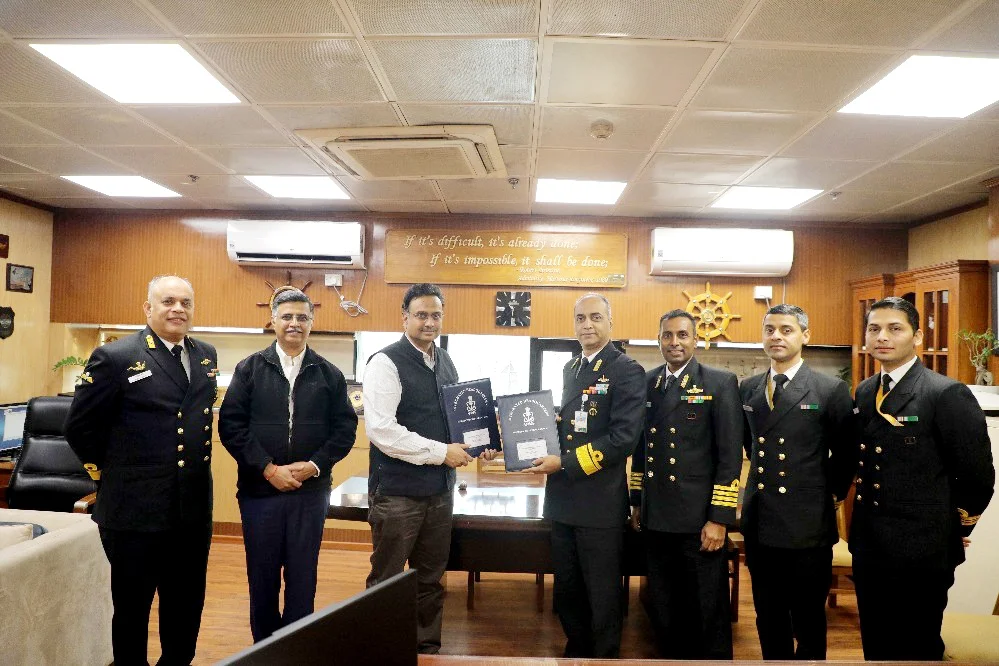
Indian Navy and Indian Institute of Technology Kanpur, signed a Memorandum of Understanding (MoU) today at Naval Headquarters, New Delhi, symbolising their commitment to promote technology development, innovative solutions and joint R&D. Rear Admiral K Srinivas, Asst Chief of Materiel (Dockyard & Refits) and Professor Subramaniam Ganesh, Officiating Director IIT Kanpur concluded this MoU.

Indian Navy and IIT Kanpur share common interest in academic exchange of scientific research activities in the field of Engineering related to defence technologies.

The MoU would serve as a broader framework and enable both sides to enhance capacity building, provide solutions to field level issues and enhance training effectiveness through exchange of faculty/ guest lectures. The structured collaboration focuses on joint Research and Development initiatives involving teams from Centre of Excellence (Marine Engg) at INS Shivaji, Lonavla and IIT Kanpur.

This Strategic alignment signifies a move towards a symbolic relationship between the academia and the armed forces, fostering a conducive environment for innovation and knowledge exchange.

IISc's FSID Launches Multidisciplinary Research Center of Data for Public Good

IISc's FSID Launches Multidisciplinary Research Center of Data for Public Good

IISc’s FSID Launches Centre of Data for Public Good with a first-of-a-kind Symposium

In an initiative aimed at leveraging data for social good, the Foundation for Science Innovation and Development (FSID) within the Indian Institute of Science (IISc) announces the launch of the Centre of Data for Public Good (CDPG). The Centre is dedicated to advancing research, innovation, collaboration, and best practices in the realm of data science, analytics, and policy to address critical societal challenges.

CDPG will serve as a hub for multidisciplinary research, bringing together experts from academia, industry, and government to harness the power of data to benefit the public. With a focus on ethical data use, privacy, and responsible AI, the centre aims to develop solutions that positively impact areas such as smart cities, agriculture, logistics, geospatial, environmental sustainability, and so on.

Emphasising collaboration and innovation, the centre is set to bring under its umbrella learnings from pioneering projects such as the India Urban Data Exchange (IUDX) and the Agricultural Data Exchange (ADeX). These projects, with their focus on urban and agricultural sectors, align seamlessly with the centre’s mission. By incorporating these initiatives, the CDPG will leverage the expertise and resources of IUDX and ADeX, creating a collaborative environment that will accelerate the development and implementation of data-centric solutions. This amalgamation of efforts reflects the Centre’s commitment to harnessing the power of data in addressing real-world issues and advancing the field of data science for societal benefit.

IISc's FSID Launches Multidisciplinary Research Center of Data for Public Good

Speaking about the launch, Prof Govindan Rangarajan, Director, IISc said, “The Centre of Data for Public Good within FSID represents a commitment to harnessing the transformative power of data for the betterment of society. At IISc, we are pleased to nurture such programmes that combine research and practice in service of the nation.

To mark the launch of the centre, IISc hosted the Symposium on Data for Public Good, a flagship event that brought together thought leaders, researchers, and practitioners in the field. The symposium served as a platform for exchanging ideas, showcasing innovative projects, and fostering collaborations.

Distinguished speakers at the event included Mr Kris Gopalakrishnan, Chairman, Axilor Ventures; Co-founder, Infosys, and President, Infosys Science Foundation; Mr J Satyanarayana, Chief Advisor, C4IR India, World Economic Forum; Mr Rajendra Kumar, Chief Postmaster General, Karnataka; Mr Kunal Kumar, Joint Secretary and Mission Director, Smart Cities Mission, and Mr Pramod Varma, CTO of Ekstep Foundation. Their talks shed light on the significance of leveraging data for public good and Digital Public Infrastructure (DPI).

This was followed by panel discussions on urban data, data governance, and agricultural and geospatial data. Many eminent speakers shared their views and several data-driven projects were showcased. Several start-ups displayed innovative solutions. A poster competition was also organised as part of the symposium.

The event culminated with the announcement of a Hackathon focused on a transportation demand prediction problem for specific bus routes in Surat and an air quality prediction problem for certain road segments of Bangalore.

About the CDPG

At CDPG, we are committed to democratising data and our mission is to help harness its power by creating data exchange platforms and integrating them seamlessly into the broader context of Data for Public Good. By ensuring that data exchange is conducted effectively, with a focus on privacy and security, we strive to make the benefits of data accessible to all, promoting inclusivity in decision-making processes.

For more information visit – https://dataforpublicgood.org.in/

Infosys Science Foundation Announces the Infosys Prize 2023 in 6 Categories

Infosys Science Foundation Announces the Infosys Prize 2023 in 6 Categories

Six individuals awarded for their remarkable contributions to scientific research in India

Infosys Science Foundation (ISF) today announced the winners of the Infosys Prize 2023 in six categories – Engineering and Computer Science, Humanities, Life Sciences, Mathematical Sciences, Physical Sciences, and Social Sciences. Since its inception in 2008, the Infosys Prize has honored the accomplishments of the recipients and awarded them for their contributions to scientific research and scholarship impacting India. The prize for each category comprises a gold medal, a citation, and a prize purse of USD 100,000 (or its equivalent in INR). The event was hosted at Infosys Science Foundation’s office in Bengaluru.

The laureates of Infosys Prize 2023 were shortlisted from 224 nominations by an international panel of jurors comprising world-renowned scholars and experts. Over the past 15 years, ISF has recognized some of the best groundbreaking research and scholarship that has contributed to every aspect of human life. The Infosys Prize is currently the largest award in India that recognizes excellence in science and research.

Infosys Prize laureates have gone on to win many international accolades. These include the Nobel Prize (Abhijit Banerjee and Esther Duflo), the Fields medal (Manjul Bhargava and Akshay Venkatesh), the Dan David Prize (Sanjay Subrahmanyam), the MacArthur ‘genius’ Grant (Sunil Amrith), and the Breakthrough Prize in Fundamental Physics (Ashoke Sen). Several laureates have been elected fellows of the Royal Society, among them Gagandeep Kang, who became the first Indian woman to be elected Fellow of the Royal Society. Others have gone on to hold influential posts in government and academia.

The winners of the Infosys Prize 2023 were announced by the trustees of Infosys Science Foundation – Mr. Kris Gopalakrishnan (President, Board of Trustees), Mr. Narayana Murthy, Mr. Srinath Batni, Mr. K. Dinesh, and Mr. S. D. Shibulal. The other trustees of Infosys Science Foundation – Mr. Nandan Nilekani, Mr. Mohandas Pai, and Mr. Salil Parekh – extended their felicitations.

Kris Gopalakrishnan, President – Infosys Science Foundation, said, “This year marks a landmark moment in Infosys Science Foundation’s journey. Over the course of 15 years, the Infosys Prize has recognized mid-career researchers who have done impactful, groundbreaking work across disciplines. The prize has helped drive conversations around their work and on a larger scale created meaningful engagement around science and society. I congratulate the winners of the Infosys Prize 2023.”

Sharing his thoughts, Narayana Murthy, Founder – Infosys, Trustee – Infosys Science Foundation, said, “Learnability, creativity and innovation are the ways to navigate our fast-changing world. We must be daringly inventive to tackle the daunting and persistent problems of today. The laureates of the Infosys Prize have shown us the importance of this adaptive thinking through their approach to problem solving – be it for centuries old conjectures in mathematics, translational medicine and diagnostics or finding solutions to societal challenges like poverty. For this I congratulate all the winners of the Infosys Prize and those who have won in 2023.”

Winners of the Infosys Prize 2023 in the six categories are:

Engineering and Computer Science

The Infosys Prize 2023 in Engineering and Computer Science is awarded to Sachchida Nand Tripathi, Professor, Sustainable Energy Engineering (SEE), IIT-Kanpur, for the deployment of large-scale sensor-based air quality network and mobile laboratory for hyper local measurements of pollution, data generation and analysis using artificial intelligence and machine learning for effective air quality management and citizens awareness. Prof. Tripathi’s work has shown that the important differences between observations of winter haze formation in Delhi and those in other places like Beijing are that the nano-particle growth-rate in Delhi is much higher and happens at night without photochemistry. This finding holds the key to mitigating air pollution in India.

Humanities

The Infosys Prize 2023 in Humanities is awarded to Jahnavi Phalkey, Founding Director, Science Gallery Bengaluru, for her brilliant and granular insights into the individual, institutional, and material histories of scientific research in modern India. Her book, The Atomic State, and many articles insightfully braid the global history of science, especially nuclear science, with the anthropology of the postcolonial state to illuminate rich and textured histories of the everyday lives of science in India. Dr. Phalkey’s work has emphasized the need to see the history of science as much as a history of scientific ideas, as one of power, practice, and the nation-state.

Life Sciences

The Infosys Prize 2023 in Life Sciences is awarded to Arun Kumar Shukla, Professor, Biological Sciences and Bioengineering, IIT-Kanpur, for his outstanding and far-reaching contributions to the field of G-protein coupled receptor (GPCR) biology. Prof. Shukla’s research has established a new understanding of GPCRs, which are one of the most important classes of drug targets. His work has opened up previously uncharted avenues for designing novel and effective therapeutics.

Mathematical Sciences

The Infosys Prize 2023 in Mathematical Sciences is awarded to Bhargav Bhatt, Fernholz Joint Professor at the Institute for Advanced Study and Princeton University, for his outstanding and fundamental contributions to arithmetic geometry and commutative algebra. Prof. Bhatt’s joint work in prismatic cohomology with German mathematician Peter Scholze introduces new ideas and powerful methods in this area at the heart of pure mathematics.

Physical Sciences

The Infosys Prize 2023 in Physical Sciences is awarded to Mukund Thattai, Professor, Biochemistry, Biophysics and Bioinformatics, National Centre for Biological Sciences, in recognition of his groundbreaking contributions to evolutionary cell biology. Prof. Thattai is a physicist who researches how complex cellular organization emerged from microscopic disorder. Thattai’s work could have profound implications in one of biology’s central mysteries of how complex cells emerged from primordial ones. He is among the pioneers of the physics of life.

Social Sciences

The Infosys Prize 2023 in Social Sciences is awarded to Karuna Mantena, Professor, Political Science, Columbia University for her groundbreaking research on the theory of imperial rule, and the claim that this late imperial ideology became one of the important factors in the emergence of modern social theory. Prof. Mantena’s book Alibis of Empire and related papers are landmark publications in political theory with implications for all social sciences. Her impactful book helps us understand that the dramatic shift in imperial policy, following the 1857 rebellion in India was not a straightforward reaction to this traumatic event but legitimated by a new ideology of indirect imperial rule that was carefully crafted by the ingenious conceptual work of thinker-administrators such as Henry Maine. 

Param Hansa Centre for Computational Oncology Launched at IISc

Param Hansa Centre for Computational Oncology Launched at IISc

Param Hansa Philanthropies (PHP) has made a generous commitment to support the setting up of a Centre for Computational Oncology at the Indian Institute of Science (IISc). The Centre was officially launched at a ceremony held on 2 November 2023. It marks a major leap forward in the quest to integrate cutting-edge computational methodologies with ground breaking cancer research.

The Param Hansa Centre for Computational Oncology (PHCCO) will foster research in predictive and quantitative mathematical models of cancer progression, metastasis, and tumor relapse, to identify the underlying fundamental dynamics of these multi-scale processes and to eventually improve patient outcomes in the clinic. The Centre aims to nurture an active community of future leaders in computational oncology in India, through inter-institutional, cross-disciplinary collaborations among researchers in academia, medicine, and industry. The Center will be led by Mohit Kumar Jolly, Associate Professor at the Department of Bioengineering, who heads the Cancer Systems Biology research group at IISc.

Param Hansa Centre – IISc

Param Hansa Centre – IISc

The partnership was facilitated through the IISc Foundation, a non-profit entity set up in the USA, to support research and infrastructure development at IISc. Param Hansa Philanthropies will support the Centre with USD 1 million over the next seven years.

Speaking at the launch ceremony, Mr Dheeraj Pandey, Founding Director of PHP, said, “We, at Param Hansa Philanthropies, are delighted and proud today at the launch of this new initiative aimed at significant, long-term impact in the area of computational oncology, supporting IISc in its mission. We believe in utilising the power of science and data sciences to create deep, meaningful outcomes for cancer research in India and elsewhere. With this long-term collaboration with IISc, we look forward to contributing to the fight against cancer in India and elsewhere, and simultaneously building a cadre of young scientists who, over time, will make a significant contribution to research and training future researchers in this field.”

Prof Govindan Rangarajan, Director of IISc, said, “We are very grateful to Param Hansa Philanthropies for their generous contribution to support research in the emerging area of computational oncology. At IISc, we are constantly seeking to push frontiers in cutting-edge research and encourage cross-disciplinary partnerships that solve pressing clinical challenges. We look forward to the exciting projects and solutions that will emerge from this new Centre.”

About Param Hansa Philanthropies:

Param Hansa Philanthropies (PHP) is Dheeraj and Swapna Pandey’s private foundation in the USA. PHP aims to partner closely with universities and research organizations to foster efforts in the computing + life sciences space, support active development of scientific ideas that revolutionize new frontiers, and harness the power of tech to solve healthcare related problems and help create a better future for human society. PHP’s existing collaborations include partnerships with the University of Texas, Austin and Stanford University. PHP-India began operations recently with the launch of its office in Bengaluru, India, and the establishment of the Param Hansa Centre for Computational Oncology at IISc is its first India partnership. PHCCO, in partnership with IISc, is an outcome of PHP’s deep, long-term commitment to translational research at the intersection of healthcare and technology.

About IISc Foundation:

IISc Foundation is a platform to support IISc’s drive towards global excellence in engineering education and research. It is an IRS-approved tax-exempt 501(c)(3) non-profit entity established and managed by volunteer IISc alumni to raise endowment funds for IISc from alumni, corporations, and foundations in the USA.

Uttar Pradesh Govt Approves 100+ Research Studies on AI and Blockchain of ₹14 Cr Expenditure

Uttar Pradesh Govt Approves 100+ Research Studies on AI and Blockchain of ₹14 Cr Expenditure

With an aim to push technology, the Uttar Pradesh (UP) government’s Department of Science and Technology has granted approval for 109 research studies to be conducted by leading educational institutions in the northern state.

These studies are approved to research use of emerging technologies like artificial intelligence and blockchain in sectors like healthcare and renewable energy, by leading educational institutes, including IIT-Kanpur, MNNIT and KGMU.

To recall, in July the Yogi Adityanath-led UP government had announced its plan to develop major cities as Artificial Intelligence (AI) and Information Technology (IT) Hubs.

These state government-funded research would cost an expenditure of ₹14 crore and aims to develop applications and systems that tackle pressing issues such as early throat cancer detection in tobacco users, correcting sitting posture among desk workers, and assisting individuals with disabilities through specialized wheel chairs.

One of the approved proposals include an AI and IoT-based real-time posture correction system to be developed by the Motilal Nehru National Institute of Technology, Prayagraj (Allahabad). This system will provide warnings to desk workers whenever their posture is incorrect, addressing issues such as back pain and spondylitis caused by sitting for long periods.

An another project is to be developed by IIT-Kanpur, which is a healthcare application using AI and advanced endoscopic imaging for the early detection of cancer in individuals who consume paan and tobacco. This application aims to facilitate early diagnosis and treatment to prevent loss of life.

Kanpur's Ambedkar Institute of Technology for Handicapped has got approval for projects involving the development of a helmet-controlled electronic vehicle wheelchair utilizing artificial intelligence and IoT principles.

Additionally, research will be conducted by various institutions to promote the renewable energy sector in Uttar Pradesh.

The approval for these research proposals was granted during a meeting held in Lucknow on October 5, which was chaired by Narendra Bhooshan, the Principal Secretary of the Department of Science and Technology and the Director General Council of Science and Technology.

Earlier in April this year, Uttar Pradesh based Madan Mohan Malavi University of Technology of Gorakhpur (MMMUT Gorakhpur) announced to launch a new initiative, under which the University is preparing to send satellites into space with the aim of giving further new height to research. 

Bill of $6.03 Bn Fund for R&D and Innovation Introduced in Lok Sabha

Bill of $6.03 Bn Fund for R&D and Innovation Introduced in Lok Sabha

Today, Union Minister of Science & Technology, Dr Jitendra Singh, has introduced a Bill in the Lok Sabha, for setting up a national agency to fund research across universities, institutions and laboratories in the country.

Named "Anusandhan National Research Foundation", the bill once implemented, will provide high level strategic direction for research, innovation and entrepreneurship in the fields of natural sciences including mathematical sciences, engineering and technology, environmental and earth sciences, health and agriculture.

The Anusandhan National Research Foundation Bill-2023 seeks to set up a Rs 50,000-crore (~ US $6.03 Billion) fund, with a sizeable contribution from the private sector, to "seed, grow and promote" research and development (R&D) and foster a culture of research and innovation throughout India's universities, colleges, research institutions, and R&D laboratories.

Introducing the Bill, Dr Jitendra Singh said, when passed by Parliament the Act will provide high level strategic direction for research, innovation and entrepreneurship in the fields of natural sciences including mathematical sciences, engineering and technology, environmental and earth sciences, health and agriculture.

The Minister said, it will also promote scientific and technological interfaces of humanities and social sciences to promote, monitor and provide support as required for such research and for matters connected therewith or incidental thereto.

It may be recalled that on 28th June, 2023 the Union Cabinet, chaired by the Prime Minister Shri Narendra Modi approved the introduction of the National Research Foundation (NRF) Bill, 2023 in the Parliament. The approved Bill will pave the way to establish NRF that will seed, grow and promote Research and Development (R&D) and foster a culture of research and innovation throughout India’s universities, colleges, research institutions, and R&D laboratories.

The bill, after approval in the Parliament, will establish NRF, an apex body to provide high-level strategic direction of scientific research in the country as per recommendations of the National Education Policy (NEP), at a total estimated cost of Rs. 50,000 crores ( ~ US $6.03 billion) during five years (2023-28).

The Department of Science and Technology (DST) will be the administrative Department of NRF which will be governed by a Governing Board consisting of eminent researchers and professionals across disciplines. Since the scope of the NRF is wide-ranging – impacting all ministries - the Prime Minister will be the ex-officio President of the Board and the Union Minister of Science & Technology & Union Minister of Education will be the ex-officio Vice-Presidents. NRF’s functioning will be governed by an Executive Council chaired by the Principal Scientific Adviser to the Government of India.

NRF will forge collaborations among the industry, academia, and government departments and research institutions, and create an interface mechanism for participation and contribution of industries and State governments in addition to the scientific and line ministries. It will focus on creating a policy framework and putting in place regulatory processes that can encourage collaboration and increased spending by the industry on R&D.

The bill will also repeal the Science and Engineering Research Board (SERB) established by an act of Parliament in 2008 and subsume it into NRF which has an expanded mandate and covers activities over and above the activities of SERB.

India, Argentina Initiate Bilateral Exchange of Young Researchers and Startups, Focusing Agriculture and Biotech

India, Argentina Initiate Bilateral Exchange of Young Researchers and Startups, Focusing Agriculture and Biotech

India and Argentina have agreed for a bilateral exchange of young researchers and Startups, particularly in the field of Biotechnology and Agriculture.

This was stated by Union Minister, Dr Jitendra Singh when the Governor of Santa Fe province of Argentina, Omar Angel Perotti called on him, accompanied by a high-level delegation.

The two countries also decided to hold comprehensive talks between delegations comprising academia, R&D Institutes and Industry in the field of Science & Technology and Biotechnology, said the Minister.

India, Argentina Initiate Bilateral Exchange of Young Researchers and Startups, Focusing Agriculture and Biotech

Dr Jitendra Singh mentioned that a new Indo-Argentina call for joint proposals was launched on February 7, 2023 in the research areas of Energy Transition and Biotechnology jointly during his meeting with Argentina's Minister of Science, Technology and Innovation, Mr Daniel Filmus in New Delhi. A total of 82 joint proposals were received under the said call. These are under the evaluation process.

Santa Fe Province accounts for as many as 8 of these joint proposals, said Mr. Perotti, adding that the province also accounts for about 80% of bilateral trade between India and the Latin American nation. The Governor mentioned that Santa Fe is the hub of R&D institutions in Biotechnology and Agricultural research especially in Soyabean, and close tie ups with universities and industry in the province. Pioneering work has been done here in disease resistant seed production, he said.

The Indian delegation evinced interest in collaborating in Geospatial technology, Quantum Computation and Bio-Enzymes. It was pointed out that India has the world’s third largest Startup ecosystem and there is huge potential for joint studies and collaboration at various levels such institutional, universities and multilateral fora.

India is the 4th largest trading partner of Argentina, with bilateral trade touching a historic peak of USD 6.4 billion in the year 2022, recording a growth rate of 12% over 2021. Exports from India to Argentina was worth USD 1.84 billion (31% growth rate) while India’s imports from Argentina was worth USD 4.55 billion. As per DGFT, India-Argentina bilateral trade during the fiscal year 2022-23 was USD 4.16 billion, with India’s exports to Argentina valued at USD 961 million and Argentina’s exports to India valued at USD 3.20 billion.

Major items of India’s exports to Argentina include petroleum oils, agrochemicals, yarn-fabric-made ups, organic chemicals, bulk drugs and two-wheelers. Major items of India’s imports from Argentina include vegetable oils (soya bean and sunflower), finished leather, cereals, residual chemicals and allied products and pulses.

Several Indian companies have established operations in Argentina with a total investment of over USD 1 billion. Argentina’s investment in India stands at approximately USD 120 million. Argentine companies with presence in India include Globant and OLX in IT services and TECHINT in the manufacturing sector.

A new assembly line of Royal Enfield was inaugurated by Argentine President Mr. Alberto Fernandez on 9 September 2020 at the production facility of SIMPA Group in Buenos Aires Province. This marks the first time in the 119 years’ history of Royal Enfield that their bikes would be manufactured outside their own plants.

Agreements to promote cooperation in Oil and Energy sector was signed between OVL Ltd and YPF (Argentine Oil and Energy public sector company) in February 2023; first ever commercial agreement in defence sector for supply of helicopters spares and engine maintenance was signed between HAL and Argentine Air Force in February 2023 as also cooperation agreement between HAL and FAdeA (Argentine public sector company in Aeronautics) in June 2023.

A bilateral business chamber, India-Argentina Business Council (IABC), was formally launched on 14 October 2020. The Council, conceptualized as a non-profit organization comprising leading investors, exporters and importers in Argentina, is currently composed of over 30 companies. IABC, together with India’s Mission, organized the first Business Forum on 25 March 2021.

There are about 2,600 NRIs / PIOs in Argentina. Most of the NRIs live in Argentina. Majority of these live in the capital city of Buenos Aires, including professionals working with Indian companies and multinational corporations.

NITIE and NSE Join Hands for Academic/Research Collab in Economics & Finance Including FinTech

NITIE and NSE Join Hands for Academic/Research Collab in Economic & Finance Including FinTech

The National Stock Exchange of India Limited (NSE), India’s leading stock exchange, and the National Institute of Industrial Engineering (NITIE) Mumbai, one of the leading business schools in the country offering education, training and industrial consultancy in the field of Engineering Management signed an MoU for academic and research collaboration in the field of Finance and Economics.

NITIE was formerly known as National Institute for Training in Industrial Engineering, and is a graduate business school under Ministry of HRD, Government of India. It has been ranked 7th in the NIRF Ranking 2023 management category.

The NITIE & NSE MoU covers a wide range of activities including capacity building through design and development of courses in Finance & Economics, undertaking research in cutting edge areas including Fintech and organizing seminars, conferences, and symposia among others, with the underlying objective of creating an industry-ready talent pool by utilizing mutual capabilities.

NSE and NITIE will also collectively work towards contributing to the literature on financial market research in the country and promoting general financial market awareness and policy advocacy. The MOU was signed by Prof. Vivekanand Khanapuri, Dean (Sponsored Research & Industrial Consultancy), NITIE and Dr. Tirthankar Patnaik, Chief Economist, NSE on Thursday, June 22nd, 2023 at NSE’s headquarters in the presence of Shri. Ashishkumar Chauhan, MD & CEO of NSE and senior faculty members from NITIE.

On this occasion, Shri Ashishkumar Chauhan said: “Financial market education is pivotal for attaining greater financial inclusion in our country. The youth of today are the growth engines of our country and therefore require access to the best pedagogy that is designed to meet the current demands of the economy and provide the competency required to fulfill their career aspirations and achieve financial freedom. NSE is happy to collaborate with NITIE to work towards enhancing financial education in India that will the economy, markets and investors.”

Prof. Manoj Kumar Tiwari, Director, NITIE said “This is a momentous occasion for us as it will open newer learning opportunities for our students in the field of finance. The NSE would benefit from the in-depth knowledge and analytical abilities of the NITIE faculty and students. Moreover, the synergistic effects of this collaboration will help in building the right kind of talent pool that India’s ever-expanding financial sector requires. I am confident that the outcome of this association will be positive and mutually beneficial”.

Paperpal, An AI-powered Assistant for Researchers, Crosses 200K Users Worldwide

Paperpal, An AI-powered Assistant for Researchers, Crosses 200K Users Worldwide

Paperpal, the CACTUS brand offering AI-powered assistance for language and technical compliance checks and translation for research manuscripts, crossed the 200K user mark worldwide on 20th May, 2023. This milestone took only 8 weeks after Paperpal hitting the 100K mark in March 2023. This can be attributed to the growing engagement around AI tools on various social platforms and signifies that researchers are enthusiastically adopting Paperpal for its relevance in academic writing.

Abhishek Goel, CEO, and Co-Fborounder, CACTUS, said, "We launched Paperpal to help researchers write better papers, edit them on the go, and make them publication ready within a very short duration. This tool is convenient; it can be plugged into MS Word and provides suggestions that are relevant to academic research. It gives us great joy when we find researchers praising Paperpal for helping them get published and recognising it as a tool specifically purpose-built for them.”

With over two decades of experience in delivering high-quality academic language editing services to researchers across the globe, CACTUS launched Paperpal, the AI-powered manuscript screening tool to facilitate researchers’ academic writing journey, in October 2020. Paperpal’s AI has been trained on millions of published articles and manuscripts edited by professional academic editors who have extensive experience enhancing manuscripts to meet the requirements of top journals. Paperpal helps improve authors’ chances of publication by flagging common errors and omissions in language and technical reporting prior to journal submission.

Nishchay Shah, Chief Technology Officer, CACTUS said, “Language solutions based on artificial intelligence (AI) are transforming the scholarly communication landscape. Academic writing assistants are witnessing a revolution with the exponential advancements in AI, especially with the explosion in Large Language Models (LLMs) due to the commercial success of chatGPT. Presently, authors have at their disposal a multitude of language editing tools or academic writing assistants that can aid them in their journey of writing a research paper. However, researchers have to use many different tools to get their paper ready for publication, which involves writing; translating; checking for technical journal compliance; reviewing the paper for clarity, style, and consistency; etc. At Paperpal, we blend the best AI tech developed inhouse and leverage bleeding-edge language models from the open-source community to build an integrated solution that seamlessly guides the author in their publication journey.”

Language editing is an essential part of the manuscript preparation process, and AI tools can greatly enhance the quality of academic texts. While AI language editing tools are increasingly being used to ensure clear, error-free writing, there are very few tools that are specifically designed for academic writing, such as Paperpal.

To know more, please visit: https://paperpal.com/

Paperpal is developing superpowers for academic researchers. We believe that brilliant product design and advanced machine learning can help researchers find, write, and submit better science faster. Paperpal is backed by Cactus Communications (cactusglobal.com), a science communications and technology company. CACTUS solves problems for researchers, universities, publishers, academic societies, and life science organizations through innovative products and services developed under the brands Editage, Cactus Life Sciences, Researcher.Life, Impact Science, Paperpal, and Cactus Labs. CACTUS has offices in Princeton, London, Aarhus, Singapore, Beijing, Shanghai, Seoul, Tokyo, and Mumbai; a global workforce of over 3,000 experts; and customers from over 190 countries.

Founded in 2002, Cactus Communications (cactusglobal.com) is a science communications and technology company that aims to advance society by making science accessible globally through innovation and technology. CACTUS solves problems for researchers, universities, publishers, academic societies, and life science organizations through innovative products and services developed under the brands Editage, Cactus Life Sciences, Researcher.Life, Impact Science, Paperpal and Cactus Labs. CACTUS has offices in Princeton, London, Aarhus, Singapore, Beijing, Shanghai, Seoul, Tokyo, and Mumbai; a global workforce of over 3,000 experts; and customers from over 190 countries. CACTUS is considered a pioneer in its workplace best practices and has been consistently ranked a great place to work over the last several years.


India Releases National Climate Research Agenda 2030 and Beyond

India Releases National Climate Research Agenda at International Climate Research Conclave

India’s National Climate Research agenda was released at the inauguration of the two-day International Climate Research Conclave (ICRC-2023) at DST’s Centre of Excellence in Climate Studies at IIT Bombay on 26 May 2023, paving the way forward for coordinating national efforts towards understanding and addressing climate change 2030 and beyond.

Secretary, Department of Science and Technology (DST), Dr. S. Chandrasekhar, highlighted that the damage caused by climate change has already taken its toll, and our response has been delayed. He pointed out that valuable lessons to tackle the situation can be taken from our experiences of positive changes in the environment due to altered human behavior during the COVID-19 pandemic. He said these serve as a reminder that if we act responsibly, there is a real possibility of passing on a sustainable planet to future generations.

Dr. Chandrasekhar emphasised that addressing climate change is not the responsibility of climate scientists alone. “It is a collective responsibility that extends to all individuals and sectors of society. Climate change is influenced by peripheral activities surrounding climate science, and it becomes the duty of scientists to identify the areas that have the most significant impact on the climate and work towards mitigating them,” he stressed at the conclave jointly organised by The Department of Science and Technology (DST) and Ministry of Earth Sciences and hosted by DST’s Centre of Excellence in Climate Studies at IIT Bombay.

By acknowledging the collective responsibility and adopting sustainable practices across various sectors, we can make meaningful progress in mitigating climate change and preserving a healthy planet for future generations. It is a call to action for everyone to play their part in creating a more sustainable and resilient world,” he added while releasing the report on “India’s Climate Research Agenda: 2030 & Beyond’.

Secretary, Ministry of Earth Sciences, Dr. M. Ravichandran, emphasised the importance of understanding the cryosphere and the implications of climate change. He highlighted the importance of formulating policy decisions to address various aspects such as water resources, extreme rainfall, heat waves, and marine waves. These complexities need to be quantified and communicated with reduced uncertainty to facilitate better policy decision-making.

Dr. Ravichandran underscored the interconnectedness between different regions and bodies, including the Arctic, Antarctic, and Himalayas, as they directly impact water bodies. Recognizing this, the conclave aims to generate a multitude of recommendations that will benefit the country as a whole.

This conclave serves as a platform to discuss and propose recommendations that will contribute to effective policy formulation. By addressing these complex challenges and providing actionable insights, the conclave aims to enhance policy decision-making and benefit the nation as a whole in its quest for a more sustainable and resilient future,” he added.

Over 200 climate scientists, students, experts, and policymakers from different parts of the country and around the globe are participating in the International Climate Research Conclave (ICRC-2023) to discuss India’s recent progress in climate research and its agenda and vision for 2030. The conclave also discussed a long-term research agenda for the country in the priority areas of climate research and plans for creating a Climate Consortium of several departments and ministries of the Government of India for facilitating climate Research.

Dr. Akhilesh Gupta, Senior Adviser, DST and Secretary, Science Engineering Research Board (SERB), highlighted the significance of the day, reflecting on the historic celebration of the 10th anniversary of the ICDP (International Centre for Development and Performance) Centre of Excellence at IIT Bombay. This center, established in 2012 as the first Center of Excellence by the Department of Science and Technology (DST), has since paved the way for a broader climate change program.

Referring to the progress made over the years, Dr. Gupta said that today, there are not only 12 Centers of Excellence but also 20 major programs dedicated to climate change research. This extensive network encompasses a staggering 1,400 institutes where climate change studies and research take place, with recent expansions to private institutions.

“This event is, however, immensely significant as its purpose is to unveil the National Climate Research agenda -- a crucial step forward in guiding and coordinating National efforts towards understanding and addressing climate change,” Dr. Gupta explained.

“It is already evident that India is making significant strides in climate research and demonstrating its commitment to combat this global challenge. The conclave serves as a platform for collaboration, knowledge sharing, and setting the course for future research endeavors, all in pursuit of a more sustainable and resilient future,” Dr. Gupta added.


Market Reports

Market Report & Surveys
IndianWeb2.com © all rights reserved