Showing posts with label Russia. Show all posts

Sanctions for All—Except Big Oil?, ExxonMobil’s Russia Move Exposes U.S. Double Standards

Sanctions for All—Except Big Oil?: ExxonMobil’s Russia Move Exposes U.S. Double Standards

After its 2022 exit from Russia following the Ukraine invasion, the largest US energy company, ExxonMobil, is now reportedly exploring a return to the Sakhalin-1 oil and gas project. The company has held discreet talks with Rosneft, Russia’s state energy giant, and is seeking support from the U.S. government to re-enter the market. This comes after Moscow blocked Exxon’s attempt to sell its stake and effectively wiped out its $4 billion investment.

According to an exclusive Wall Street Journal report, ExxonMobil’s Senior Vice President Neil Chapman has held confidential negotiations with Rosneft CEO Igor Sechin—despite Sechin being under U.S. sanctions. The talks, reportedly held in Doha, center on Exxon’s potential return to the Sakhalin-1 oil and gas project, which it exited in 2022 after Russia’s invasion of Ukraine.

The Exxon reentry hinges on a broader diplomatic thaw: both Washington and Moscow would need to approve the move as part of a potential peace process in Ukraine. This adds a layer of strategic complexity—Exxon’s return could be framed not just as economic recovery, but as a geopolitical olive branch.

The Political Undercurrent

The timing is striking. These developments surfaced shortly after a summit in Alaska between Donald Trump and Vladimir Putin, where both leaders expressed openness to renewed business ties. A Russian decree now allows foreign companies to regain ownership in Sakhalin-1, provided they meet certain conditions—like supplying equipment and advocating for sanctions relief.

Double Standards? Many Think So

While India faces steep tariffs for importing Russian oil, the U.S. appears to be quietly facilitating its own energy giant’s re-entry into the Russian market. Critics argue this reflects a selective application of sanctions and a willingness to bend principles when strategic interests are at stake.

India’s Unequal Treatment

Meanwhile, India continues to face tariffs and scrutiny for importing Russian oil, despite its purchases being transparent and essential for domestic energy needs. The contrast is stark: while India is penalized, the largest U.S. energy company is quietly negotiating a comeback under the guise of diplomacy.

This isn’t just about oil—it’s about who gets to bend the rules. ExxonMobil’s potential return, facilitated by U.S. Treasury licenses and quiet political support, exposes a selective enforcement of sanctions that many in the Global South have long criticized.

India Eyes Game-Changing $4.5 Bn Radar Deal with Russia for Unmatched Defense Surveillance

India Eyes Game-Changing Radar $4.5 Bn Deal with Russia for Unmatched Defense Surveillance

India's potential acquisition of Russia's Voronezh Over-the-Horizon (OTH) radar system could be a game-changer for its strategic defense. This $4.5 billion deal would place India among an elite group of nations-alongside the United States, Russia, and China-that operate this cutting-edge technology.

Unlike conventional radars, the Voronezh system can detect objects beyond the Earth's curvature, using high-frequency radio waves that bounce off the ionosphere. This allows it to track stealth aircraft, fighter jets, and ballistic missiles from distances of up to 8,000 km vertically and 6,000 km horizontally. If deployed in Chitradurga, Karnataka, it could provide early warning capabilities against threats from China and Pakistan, significantly enhancing India's deterrence and situational awareness.


VHF radar "Voronezh", Leningrad Region of Russia

VHF radar "Voronezh", Leningrad Region

Russia has used Voronezh radars to counter U.S. missile defense concerns, with former President Dmitry Medvedev citing them as a response to Western military developments.

The Voronezh-DM variant can track objects up to 10,000 km away, detecting targets as small as a football at 8,000 km.

Beyond security, this potent $4.5 billion deal aligns with India's "Make in India" initiative, with 60% local manufacturing expected to involve major firms like Bharat Electronics Limited (BEL) and Tata Advanced Systems. Given India's evolving defense landscape, particularly after the 2020 border tensions with China, this radar could be a transformative asset in regional security frameworks like the Quad.

August 2007 file photo of President Vladimir Putin (R) listens to Colonel General Vladimir Popovkin (C) commander-in-chief of the space forces, during his visit to the new-generation radar station Voronezh in Leningrad Region. [Photo credit: DMITRY ASTAKHOV/AFP via Getty Images] 

The Voronezh radar system offers several technical advantages that make it a formidable asset in early warning and missile defense:
  • Extended Detection Range: It can track objects up to 8,000 km vertically and 6,000 km horizontally, providing early warning against ballistic missiles, stealth aircraft, and hypersonic threats.
  • Phased Array Technology: Unlike older radars, Voronezh uses electronic beam steering, allowing for rapid target acquisition without mechanical movement. 
  • Multi-Frequency Operation: Different variants operate across VHF (Voronezh-M), UHF (Voronezh-DM), and decimeter wavelengths, optimizing detection of low radar cross-section targets like stealth aircraft.
  • High Prefabrication & Modularity: The system is highly prefabricated, meaning it can be deployed in months instead of years, with fewer personnel required.
  • Integrated Missile Attack Early Warning System: Voronezh radars work in unison to create a comprehensive radar picture, enhancing situational awareness and response time.
  • Energy Efficiency: Consumes only 0.7 MW, significantly lower than older radar systems, making it cost-effective.
This radar system is truly a marvel of modern defense technology. If India proceeds with acquiring this system, it could revolutionize its strategic defense capabilities, particularly in monitoring threats from China and Pakistan. What aspect of this technology interests you the most? Do comment below.... 

India Signs $248 Mn Deal with Russia for Procuring Engines for T-72 Tanks for Indian Army

India Signs $248 Mn Deal with Russia for Procuring Engines for T-72 Tanks for Indian Army

The Ministry of Defence, Government of India, has signed a $248 million deal with Russia's Rosoboronexport for the procurement of engines for T-72 tanks. Rosoboronexport is the only state organization in Russia for exporting the entire range of military, dual-use products technologies and services. 

The deal also includes Transfer of Technology (ToT) from M/s Rosoboronexport (RoE), Russian Federation to M/s Armoured Vehicles Nigam Limited (Heavy Vehicle Factory), Avadi, Chennai, for integration and subsequent licensed production of engines under ToT to boost the "Make in India' initiative in Defence Sector.

India Signs $248 Mn Deal with Russia for Procuring Engines for T-72 Tanks for Indian Army

India Signs $248 Mn Deal with Russia for Procuring Engines for T-72 Tanks for Indian Army


This initiative aligns with the "Make in India" program, promoting local production and integration of advanced technology.

T-72 is the mainstay of tank fleet of the Indian Army which is at present fitted with 780 HP Engine. Equipping the existing fleet of T-72 Tanks with 1000 HP Engine will enhance the battle field mobility and offensive capability of Indian Army.

The new 1000 HP engines will significantly enhance the performance of the T-72 tanks in several ways. The higher horsepower will improve the tanks' speed and maneuverability on the battlefield, allowing them to respond more quickly to changing combat situations. The new engines are expected to be more reliable and efficient, reducing the likelihood of mechanical failures during critical operations.

The upgraded engines will enable the T-72 tanks to operate effectively in diverse combat scenarios, including high-altitude and rugged terrains.

Russia Fined Google With Incredibly Vast Amount of $2.5 Decillion

Russia Fined Google With Incredibly Vast Amount of $2.5 Decillion

A Russian court has imposed an unprecedented fine of approximately $2.5 decillion (or two undecillion rubles) on Google. This fine stems from Google's refusal to reinstate the accounts of pro-Kremlin media outlets on YouTube. The fine began accumulating in 2020, with daily penalties doubling each week, leading to this astronomical amount.

It's an incredibly vast sum, far exceeding the global GDP.

As of 2023, the global GDP is approximately $105 trillion,which is the total monetary value of all goods and services produced worldwide in a given year.

The fine imposed on Google by a Russian court is indeed staggering.

Going forward with details on how this situation developed – It was in 2020 when Google-owned YouTube blocked several pro-Kremlin media accounts, including Tsargrad TV and RIA FAN, due to violations of sanctions legislation and trade rules. This led to a series of lawsuits by these media outlets, and in October 2024, the court ruled in their favor. The court ordered Google to reinstate the accounts and imposed a daily fine of 100,000 rubles ($1,025) for non-compliance. This fine doubled every week, leading to the astronomical total of $2.5 decillion.

The court's decision has been described as "bizarre" due to the sheer size of the fine, which far exceeds the global GDP. Despite the enormity of the fine, Google has not yet commented publicly on the ruling or its next steps.

This case highlights the ongoing tensions between Russia and major Western tech companies, especially in the context of geopolitical conflicts and sanctions.

India, Russia and China Plan to Develop Nuclear Power Plant on the Moon

India and Russia, and China, Plan to Develop Nuclear Power Plant on the Moon

India, Russia and China are planning to collaborate on developing a nuclear power plant on the Moon. This ambitious project is led by Russia's state nuclear corporation, Rosatom, and aims to establish a small nuclear reactor capable of generating up to half a megawatt of energy.

The nuclear power plant is intended to support future lunar base operations, providing a reliable energy source essential for sustaining long-term human presence and scientific research on the Moon.

This ground-breaking project, capable of generating half a megawatt of energy and expected to be operational by 2035, will see an initial step of installing a small reactor for essential power.

The plan positions the Global South at the forefront of lunar colonisation efforts. India's involvement aligns seamlessly with its ambitious plans for a manned lunar mission by 2040, potentially accelerating this timeline. The collaboration transcends terrestrial geopolitics, showcasing the Global South's growing influence in space technology and diplomacy.

Using nuclear power on the Moon offers several significant advantages. Unlike solar power, which is dependent on sunlight and affected by the lunar night (lasting about 14 Earth days), nuclear power can provide a continuous and stable energy supply.

Moreover, nuclear reactors have a high energy density, meaning they can produce a large amount of energy from a relatively small amount of fuel. This is crucial for supporting long-term missions and operations on the Moon.

Transporting a nuclear reactor to the Moon is a complex and multi-step process. Typically, the reactor will be designed to be compact and lightweight, ensuring it can be safely transported by a spacecraft. Once in lunar orbit, a specialized lunar lander will transport the reactor from the spacecraft to the Moon’s surface. This lander will need to be capable of safely landing the reactor in the designated area.

After landing, the reactor will be deployed and assembled on the lunar surface. This might involve robotic systems or astronauts, depending on the mission’s specifics.

India's involvement aligns with its plans for a manned lunar mission by 2040. This collaboration underscores the importance of International cooperation in space exploration and the development of sustainable energy solutions for extraterrestrial environments.

This collaboration between India, Russia, and China will likely leverage their combined expertise in space technology and nuclear engineering to achieve this ambitious goal.

US Prez Biden Was Hit With Directed-Energy Weapons During Debate, Says Conspiracy Theorists

US Prez Biden Was Hit With Directed-Energy Weapons During Debate, Says Conspiracy Theorists

Some folks on social media have been speculating about President Joe Biden's recent debate performance wherein the president looked puzzled and frequently spoke haltingly with a blank stare in his eyes. Some conspiracy theorists speculate that Biden's stumbles were due to a directed energy weapon attack, possibly related to Havana Syndrome.

Havana Syndrome, also known as anomalous health incidents, is a mysterious condition reported primarily by U.S. diplomatic, intelligence, and military officials stationed overseas.

Social media influencer Igor Sushko even cited a former KGB spy, Yuri Shvets, who defected to the U.S. in 1993. Shvets suggested that Biden's symptoms during the CNN debate resembled Havana Syndrome, and he floated another conspiracy theory involving a Russian government plane¹. However, it's essential to approach such claims with skepticism and rely on evidence-based assessments.


Those affected with Havana Syndrome experience acute symptoms like sudden onset of perceived loud sounds, visual disturbances, intense pressure or vibration in the head, and pain in the ear or head. Chronic symptoms include balance issues, cognitive problems, insomnia, and headaches.

The first cases were reported by U.S. and Canadian embassy staff in Havana, Cuba, but incidents have occurred in other locations as well. Some theories suggest attacks by unidentified foreign actors, while others blame unknown technologies like ultrasound or microwave weapons. The cause remains unknown and controversial. Studies have ruled out hostile power involvement, and psychogenic factors, environmental causes, or pre-existing medical conditions are being explored as potential causes.

In March 2023, U.S. intelligence agencies concluded that foreign adversaries' involvement was "very unlikely" in causing Havana syndrome.

It is to be noted that conspiracy theories can be captivating, but critical thinking and evidence-based analysis are crucial to separate fact from fiction.

Directed Energy Weapons (DEWs)

While directed-energy weapons (DEWs) have been a topic of interest in both science fiction and real-world military research, the scientific evidence regarding their health effects is still limited.

DEWs encompass various technologies, including lasers, microwaves, and particle beams. They can be used for communication, surveillance, or even as weapons. These devices emit microwave radiation, which can potentially cause tissue heating and damage. However, the specific health effects depend on factors like frequency, power, and exposure duration.

Some non-lethal DEWs are designed to disperse crowds or deter individuals without causing permanent harm. These typically use low-power microwave or acoustic energy.

As mentioned earlier, Havana Syndrome has been associated with directed energy exposure. However, the exact mechanism remains unclear.

Rigorous scientific studies on DEW health effects are scarce due to ethical concerns and limited access to classified information. Different DEW types, exposure levels, and individual susceptibilities make it challenging to draw definitive conclusions. The National Academies of Sciences, Engineering, and Medicine, in the US, conducted a study on Havana Syndrome, but their report did not definitively link it to DEWS. Some studies suggest that microwave exposure can cause neurological symptoms, but more research is needed.

In summary, while there's intriguing evidence and speculation, we lack conclusive scientific proof regarding DEWs' health impact. Researchers continue to investigate, but for now, skepticism and critical analysis are essential.

Russia Offers India Deployment of Its Advanced Floating Nuclear Power Plant (FNPP) Technology

Russia Offers India Deployment of Its Advanced Floating Nuclear Power Plant (FNPP) Technology

Russia has officially offered India the deployment of its advanced Floating Nuclear Power Plant (FNPP) technology. This proposal could significantly impact India's energy landscape, especially in terms of providing reliable power to remote regions and coastal areas. The announcement came in a ROSATOM press release following a meeting between top nuclear officials from both countries and encompasses multiple facets of nuclear energy cooperation.

FNPPs are self-contained, sea-based platforms housing small nuclear reactors. They are designed to be strategically positioned off the coast and can be connected to the onshore power grid, offering a flexible and relocatable energy source¹.

Russia has been a pioneer in the field of FNPPs. The Akademik Lomonosov is the world's first operational FNPP, which has been successfully powering the Chukotka region in the Arctic since 2019.
 
Akademik Lomonosov

Akademik Lomonosov
Akademik Lomonosov – World's Only Floating Nuclear Power Plant

The offer aligns with India's growing energy demands and its commitment to diversifying energy sources. FNPPs present a potential solution to the challenges of supplying reliable power to regions where traditional infrastructure may be lacking.

To recall, in November 2022, India's Science & Technology minister Dr Jitendra Singh had told that India is taking steps for development of Small Modular Reactors (SMR), with up to 300 MW capacity to fulfill its commitment to Clean Energy transition.

Last month, IndianWeb2 reported that BARC is working on a mobile nuclear reactor that uses a teleoperated system of a mobile robot, wireless network, and control stations. The mobile robot is Ackerman steered and has a mission time of 10 hours on a single charge.

Getting back to FNPPs, these are designed to withstand harsh marine environments and incorporate robust safety measures to prevent accidents. They also offer a low-carbon alternative to fossil fuel-based power generation, contributing to India's sustainability goals. However, concerns regarding nuclear safety, waste management, and potential environmental impacts will need thorough consideration before any deployment.

The Russian offer extends beyond FNPPs, including serial construction of Russian-designed land-based nuclear power units, cooperation in nuclear fuel cycles, and exploration of non-power applications of nuclear technologies. This comprehensive approach underscores the depth of potential collaboration between the two nations in the nuclear energy sector.

For India, this presents an opportunity to bolster energy security and strengthen ties with Russia. However, India must carefully weigh this partnership against its existing energy collaborations and broader foreign policy considerations.

The global interest in FNPPs is growing, and the International Atomic Energy Agency (IAEA) has hosted discussions on the benefits, challenges, and regulatory implications of this emerging technology. It's a space that's garnering international attention for its potential to revolutionize energy supply in sustainable ways.

Related Video —


Iran and Russia Developing CBDC, Tokenized Assets for Payments for Cross-Border Transactions

Iran and Russia Developing CBDC, Tokenized Assets for Payments for Cross-Border Transactions

Iran has confirmed its collaboration with Russia on developing Central Bank Digital Currencies (CBDC) and tokenized assets for payments. This initiative is part of their efforts to facilitate trade transactions and mitigate the impact of sanctions, as both countries are currently unable to use SWIFT for cross-border payments and have limitations on trading in dollars or euros.

The two nations are exploring the use of Iran's crypto-rial and Russia's digital ruble for bilateral trade. The move is seen as a way to simplify trade transactions and resolve issues related to fiat currency conversion rates, which can lead to significant business operation costs.

Due to US sanctions, Iran and Russia are unable to make settlements in Dollars and Euros, Russia and Iran have switched to the use of national currencies, said Maxim Chereshnev, chairman of the board of the Council for the Development of Foreign Trade and International Economic Relations. However, difficulties arise with conversion. And also due to the inconsistency of the market rate in Iran with the state. "Starting payments through CFA and digital currencies of central banks can simplify trading", Chereshnev said with surity.

The two countries have strengthened their economic ties, with Russia being one of Iran’s largest trading partners. Russia has invested in Iran’s energy sector, and the two countries have discussed cooperation in areas such as transportation and infrastructure development.

Russia has recently passed legislation allowing the use of digital financial assets (DFAs), such as tokenized gold, for cross-border payments, which is a shift from their previous stance where such assets were not permitted for payments. This change is aimed at circumventing sanctions and facilitating international trade between Russia and Iran.

The practical implementation of these digital currencies and assets is still under development, with cross-border CBDC settlements expected to be possible starting January 1, 2025, following the establishment of the necessary legal framework in Russia. This collaboration marks a significant step in the use of digital currencies in international trade, particularly among countries facing economic sanctions.

Experts say that, CBDCs can significantly improve the efficiency of cross-border payments by reducing the time it takes to process transactions. Traditional cross- border payments can take several days due to the involvement of multiple intermediaries, but CBDCs can streamline this process.

As of March 2024, there are a few countries that have functioning CBDCs and are exploring or using them for cross-border transactions.

The Bahamas, Jamaica, and Nigeria have functioning CBDCs. Moreover, the 5-Nations group – Brazil, Russia, India, China, and South Africa (BRICS), along with new members like Saudi Arabia, Iran, and the UAE, are in the pilot phase of CBDC exploration for cross-border wholesale transactions.

Australia and China are among the countries piloting use cases for their CBDCs, which may include cross-border transactions.

Additionally, SWIFT, the global provider of secure financial messaging services, has been working on solutions to enable financial institutions to incorporate CBDCs and other digital assets into common business practices, which includes cross-border transactions. This indicates a growing trend towards the adoption of CBDCs in international trade and finance.

Logisticians from the Novosibirsk Region Demonstrated in India Integrated Transportation Solutions

Logisticians from the Novosibirsk region demonstrated in India integrated transportation solutions

Logistics companies from the Novosibirsk region took part in the International exhibition on transport and transport technologies «TrafficInfraTech Expo 2022», which was held from 16 to 18 November in Mumbai (Republic of India). The delegation was headed by Lev Reshetnikov, Minister of Economic Development of the Novosibirsk Region.

During the three days of the exhibition, more than 50 B2B meetings were held at the exhibition stand and three cooperation agreements were signed with an Indian company. As part of field events, exporting companies visited 3 logistics centers and 2 seaports.

Novosibirsk exporters presented integrated solutions for the transportation of goods in all directions of the Russian Federation, the Far East, China, countries of Southeast Asia in various formats: accelerated container trains, euro trucks, sea transportation, additional services for export - import to / from China, Korea, India, complex outsourcing of foreign economic activity, logistics and customs outsourcing.

Logisticians from the Novosibirsk region demonstrated in India integrated transportation solutions

Logisticians from the Novosibirsk region demonstrated in India integrated transportation solutions

The delegation of the Novosibirsk Region included representatives of the following companies: AllianceTransTorg LLC, ScientificCoin LLC, VED Agent JSC, SASCO Logistic LLC, Tetra Trans LLC, the Union of Transport Workers, Freight Forwarders and Logisticians of Siberia, SDEK.

Participation in the exhibition allowed logistics companies from the Novosibirsk region demonstrated the convenient logistics solutions to the world community. It allowed to meet with potential buyers and investors, and establish personal contacts with partners.

The Ministry of Economic Development of the Novosibirsk Region acted as the organizer of the trip of Novosibirsk companies to the Republic of India. 

Source: RayHaber


Russian Logisticians will Talk About Convenient Transport Solutions at the TrafficInfraTech Expo 2022 exhibition in Mumbai

Russian Logisticians will Talk About Convenient Transport Solutions at the TrafficInfraTech Expo 2022 exhibition in Mumbai

Logistics companies from the Novosibirsk region of the Russian Federation will take part in the International Exhibition on Transport and Transport Technologies "TrafficInfraTech Expo 2022", which will be held on 11/16/2022 - 11/18/2022 in Mumbai (India).

Novosibirsk exporters will present promising industry solutions in the field of logistics at a separate stand. The delegation of the Novosibirsk Region will include representatives of: AllianceTransTorg LLC, Scientificcoin LLC, VED Agent JSC, Eurosib Terminal Novosibirsk, VM TRANS LLC, SASCO Logistic LLC, Lugros LLC, Union of Transport Workers , freight forwarders and logisticians of Siberia (STELS). The delegation will be headed by Lev Reshetnikov, Minister of Economic Development of the Novosibirsk Region.

The exhibition will present complex solutions for the transportation of goods in all directions of the Russian Federation, the Far East, China, and the countries of Southeast Asia. Stand participants are ready to demonstrate their capabilities in integrated transport and logistics services, transportation in various formats: accelerated container trains, euro trucks, sea transportation, additional services for export - import to / from China, Korea, India, integrated outsourcing of foreign economic activity, logistics and customs outsourcing.

The exhibition will present automotive pistons with a unique coating, paid by microarc oxidation.

We invite everyone who is interested in new solutions for cargo transportation to visit stand A22, participate in b2b meetings and find out about partnership opportunities. The organizer is the Ministry of Economic Development of the Novosibirsk Region of the Russian Federation. 

Source: RaillyNews


Russia's Quantum Leap in Space, Nauka Science Module Launched After 14 Years of Wait


Russia has successfully launched the Nauka Lab module to the International Space Station (ISS) with a delay of 14 years. With Nauka module's help, Russian astronauts will be able to conduct more scientific research. Nauka is being described as Russia's largest space laboratory. The name of NAUKA is also known as Russian Multipurpose Research Module (MLM).

Nauka, the Russian word for 'science', was launched into space on a Proton-M rocket from Russia's Baikonur Cosmodrome in Kazakhstan. Russia's state news agency has reported that at this time the Nuka module has successfully separated from the Proton-M rocket outside the orbital outpost. It is expected to connect with the International Space Station on 29 July.


The Nauka module, which weighs 22 tons, was planned to be launched in 2007 but its launch got delayed over time. The module is carried with it the European Robotic Orm ERA. This robotic arm has been designed to work in the Russian part of the ISS. The module successfully separated from the launcher 580 seconds after lift-off.

Equipped with a host of amenities, the Russian laboratory is 42 feet long and with a maximum diameter of 14 feet, this module will have many modern facilities. Russian space scientists will also be able to do more experiments in this module than before. It will have a separate bed for each of the astronauts. Along with this toilet, oxygen generator and urine filtering system are also installed.


Russia's space agency Roscosmos has confirmed the successful separation of the module from the rocket in a tweet. Roscosmos wrote that at T+9:40 minutes after liftoff, the yacht Multipurpose Laboratory Module separated from the Proton-M carrier rocket in its third stage. The module then begins its 8-day autonomous flight to the ISS.

After 30 minutes of launch, Roscosmos reported that Nauka has successfully deployed its solar panels and antennas. The module will now use its own engines to move forward in its orbit, Russian news agency Tass reported. The connection of this module to the ISS is believed to be fixed on July 29.

Russia's "Sputnik V" Vaccine Will Have "Made in China" Label - CNN Report


Hundreds of millions of doses of Russia-made Sputnik V Covid-19 vaccine, which reportedly showed a 97.6% efficacy, will come with the label "Made in China", said a report by CNN.

Over the past month, companies in China have made agreements to manufacture more than 260 million doses of Russia's Sputnik V vaccine, which has been approved for use in more than 60 countries including a large number of developing nations such as Mexico, India and Argentina.

This deals between China and Russia shows an aligned vaccine goals which assist in neglection of developing countries, like India, Mexico and Argentina, by their traditional Western partners (like the US and Canada) who have been accused of hoarding shots.

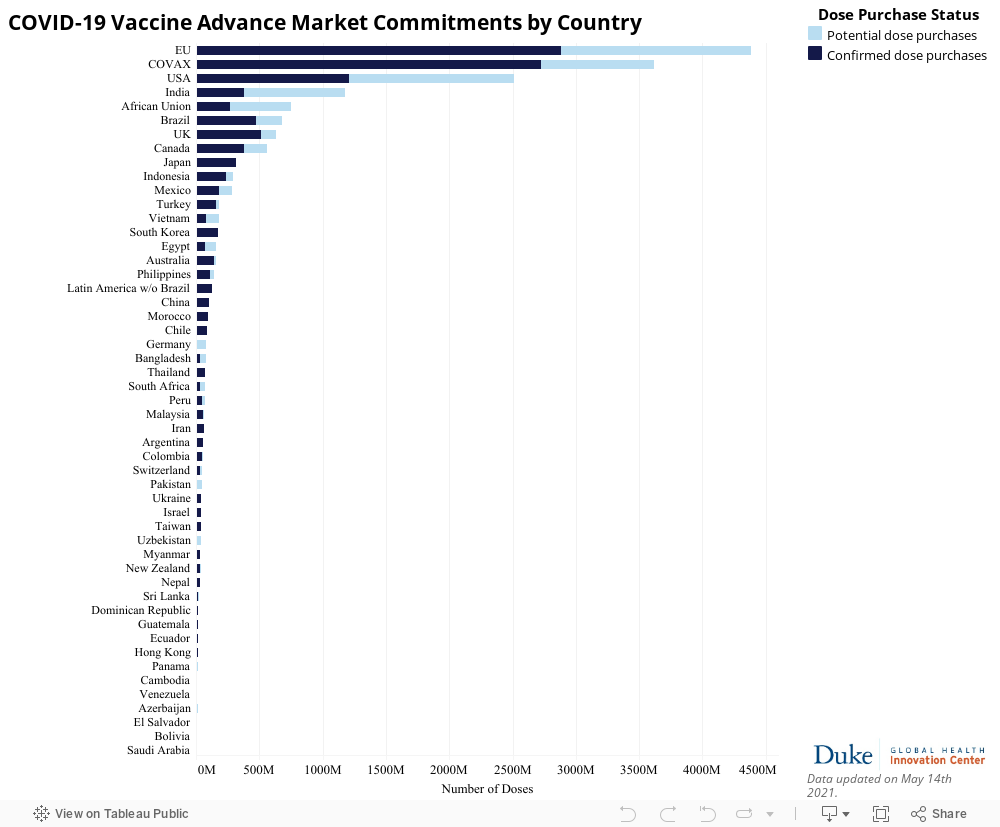
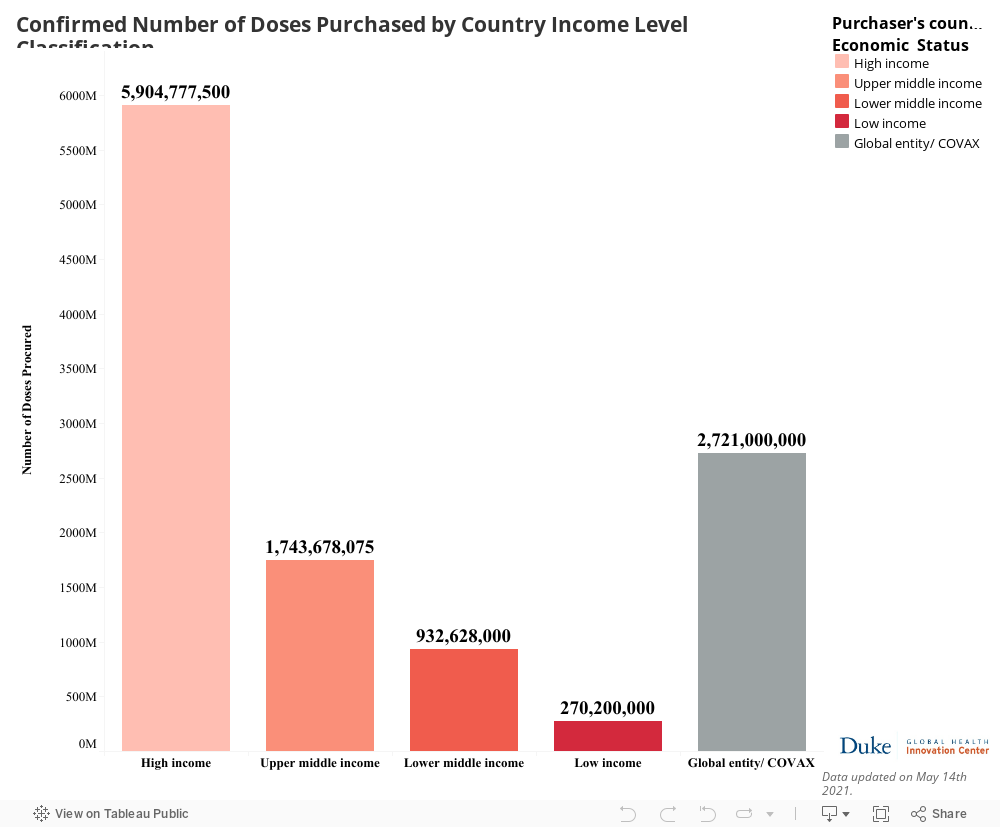
According to a research by Duke University, Countries such as Canada, the UK and New Zealand, have bought enough vaccines to cover their population more than 3-times over, while the vast majority of countries have barely got doses for half their citizens, including some of the nations worst hit by Covid-19. [check this screenshot link if your browser/antivirus blocking this Duke University's research website]

In recent months, Russian disinformation efforts have tried to undermine confidence in US and UK vaccines, such as those made by Pfizer and AstraZeneca, according to Judyth Twigg, professor of political science at Virginia Commonwealth University, according to Judyth Twigg, professor of political science at Virginia Commonwealth University. China with its state-run media is also exaggerating reports of deaths from US and European-made vaccines.

Bobo Lo, an expert on China-Russia relations and former deputy head of mission at Australia's embassy in Moscow, said both Russia and China saw an opportunity for geopolitical gains in the pandemic, winning favor and influence for their autocratic systems.

The Duke University research further states --
Several middle-income countries, including India, also have robust vaccine development programs and are putting forward vaccine candidates, though these are not as far along in the process as the leading candidates from high-income countries. If any of the candidates from middle-income countries achieve regulatory approval, the landscape will likely shift significantly.


According to the models by Duke University predict that there will not be enough vaccines to cover the world's population until 2023 or 2024. Manufacturing capacity can be expanded with targeted investment but only to an extent and it will remain a rate limiter.
 

Russia Announce World's 1st Hypersonic Inter-Continental Missile 27x Faster Than Sound


Representative Image


Russian military says its new hypersonic intercontinental weapon 'Avangard' has become operational and is capable of flying 27 times faster than the speed of sound. According to analysts, Russia is World's first country to put into combat service intercontinental ballistic missiles armed with hypersonic weapons.

Hypersonic speed is one that greatly exceeds the speed of sound, often stated as starting at speeds of Mach 5 and above. Hypersonic weapons are those that can travel more than five times the speed of sound, or around one mile (1.6km) per second.

Russian President Vladimir Putin on Friday had told that the nuclear-capable weapon would be deployed by late 2019. He touted the Avangard’s ability to evade U.S. missile defense systems. Russia showed the missile system to U.S. inspectors last month as part of a bilateral arms control treaty ahead of its deployment.

“This weapon of the future can penetrate both existing and any future missile defense systems,” Putin said at an annual defense meeting Tuesday.


Besides being hypersonic, Avangard is a unique weapon because of the fact that it can fly lower in the atmosphere, avoiding ballistic missile defense radars. It is mounted on an intercontinental ballistic missile, allowing the warhead to be initially carried toward a target on a traditional piece of technology. But as it gets closer to the target, it is designed to fly at hypersonic speeds in an unpredictable path — making detection, tracking and interception extremely difficult.

According to Moscow officials, the weapon flies 27 times faster than the speed of sound. During the last known tests that took place in December 2018, the Avangard hit a practice target 6,000 kilometers away.

"This is the first intercontinental ballistic missile with the hypersonic glide vehicle in the world," Vasily Kashin, a senior research fellow at Moscow's Higher School of Economics, told AFP.


Meanwhile, the New York Times has reported that US Air Force has two hypersonic prototypes in testing and while development is on an accelerated pace, the weapons are not scheduled to be operational until 2022. Other parts of the Pentagon -- the headquarters of the United States Department of Defense, including the Defense Advanced Research Projects Agency, have other hypersonic initiatives, but they are many years down the road.

Russia to Have its Own, Independent Internet Isolated from the World Wide Web

Russian President Vladimir Putin has signed a law to give Russia a 'sovereign internet' that the government of the Russian Federation could disconnect from the global infrastructure of the World Wide Web and which according to Kremlin ensure 'sustainable functioning' of the country's internet if hostile powers try to switch it off from abroad.

Under the new legislation, the Russian government would now create a national network, able to operate separately, independently and isolted from the rest of the world, which according to the Russian parliament, would deal with "threats to the stable, safe and integral operation of the Russian Internet on Russian territory" by centralizing "the general communications network."

In another words, the new law sets in train plans for an alternative domain name system (DNS) for Russia in the event that it is disconnected from the World Wide Web, or, one assumes, in the event that its politicians deem disconnection to be beneficial. Internet service providers would be compelled to disconnect from any foreign servers, relying on Russia's DNS instead.

Critics however have warned that the new law, signed by Putin on May 1 and published on the Kremlin website, will lead to censorship over wide parts of the Internet.

The new legislation, according to Moscow is a defensive move in case the United States were to cut Russia off from the global Internet. Post passing the legislation, Russia's media regulator, Roskomnadzor, would essentially seize control of Russia's Internet and would then be able to filter all Internet traffic.

Russia's state media regulator and its leading technology companies have expressed support for the move, although what's actually thought away from the glare of publicly controlled media is hard to tell, says Forbes. One can assume this is more rhetoric than realpolitik and will be significantly harder to effect that has been suggested by politicians.

Among other things, the new measure requires Internet providers to install equipment to route Russian web traffic through servers in the country.

Internet advocates have said that will allow for greater surveillance by Russian intelligence agencies, and the ability of state authorities to control information.

Roskomnadzor's chief, Aleksandr Zharov, said last month that the measures would also target Telegram, a popular messaging app that is widely used by Russians.

According to the Moscow Times, "Russia reportedly carried out drills in mid-2014 to test the country's response to the possibility of its internet being disconnected from the web... The secret tests reportedly showed that isolating the Russian internet is possible, but that 'everything' would go back online within 30 minutes."

Via ~ Rferl.org

Top Image - Saint Basil’s Cathedral, Moscow, Russia (Photo by Nikita Karimov on Unsplash)

Market Reports

Market Report & Surveys
IndianWeb2.com © all rights reserved