Showing posts with label Satellite. Show all posts

NASA-ISRO Satellite Sends 1st Radar Images of Earth's Surface

NASA-ISRO Satellite Sends 1st Radar Images of Earth's Surface
Captured on Aug. 21, this image from NISAR’s L-band radar shows Maine’s Mount Desert Island. Green indicates forest; magenta represents hard or regular surfaces, like bare ground and buildings. The magenta area on the island’s northeast end is the town of Bar Harbor. (Credit: NASA/Pl-Caltech) 

The NASA-ISRO Synthetic Aperture Radar (NISAR) satellite has successfully transmitted its first radar images of Earth’s surface, marking a major milestone in the joint U.S.-India mission.

Highlights from the First Radar Images
  • Mount Desert Island, Maine (Aug 21):
    • Captured using NASA’s L-band radar.
    • Forests appear green, water bodies in dark tones, and urban areas in magenta.
    • The town of Bar Harbor is clearly visible, showcasing the radar’s ability to distinguish land cover types.
  • Forest River, North Dakota (Aug 23):
    • Shows wetlands, forests, and farmland with circular irrigation plots.
    • Differentiates fallow fields from active crops like corn and soybeans.
NASA-ISRO Satellite Sends 1st Radar Images of Earth's Surface
On Aug. 23, NISAR imaged land adjacent to northeastern North Dakota’s Forest River. Light-colored wetlands and forests line the river’s banks, while circular and rectangular plots throughout the image appear in shades that indicate the land may be pasture or cropland with corn or soy. (Credit: NASA/JPL-Caltech) 

What Makes NISAR Unique

  • Dual Radar System: Combines NASA’s L-band with ISRO’s S-band for comprehensive Earth surface analysis.
  • High Resolution: Can resolve features as small as 5 meters.
  • Global Coverage: Orbits Earth every 12 days from 747 km altitude.

Applications

  • Disaster response (e.g., landslides, floods, earthquakes)
  • Agricultural monitoring and food security
  • Climate change and ecosystem tracking
  • Infrastructure and urban planning
Science operations begin November 2025. NISAR is set to revolutionize Earth observation and environmental monitoring.

Source – usembassy.gov

IN-SPACe Launches Satellite Bus as a Service (SBaaS) to Propel Hosted Payload Opportunities for Indian NGEs

IN-SPACe Launches Satellite Bus as a Service (SBaaS) to Propel Hosted Payload Opportunities for Indian NGEs

The Indian National Space Promotion and Authorization Centre (IN-SPACe) has announced a new opportunity for Indian Non-Governmental Entities (NGEs) under the Satellite Bus as a Service (SBaaS) initiative. The SBaaS aims to provide a pathway for Indian private space players to design and develop small satellite bus platforms for hosted payload applications.

As part of this initiative, IN-SPACe will support the realisation of satellite bus platforms through a two-phase approach. In Phase I, up to four Indian NGEs will be shortlisted based on their technical capabilities to develop a modular, multi-mission satellite bus system. In Phase II, IN-SPACe will support up to two hosted payload missions to demonstrate the utility of these platforms.

Through this Announcement of Opportunity (AO), IN-SPACe invites applications from eligible Indian NGEs to undertake the design, development, and realisation of small satellite bus systems capable of supporting multiple payloads. The effort is aimed at easing access to flight platforms, reducing time to orbit, and enabling in-orbit demonstration for payload developers.

Commenting on the AO, Dr Pawan Goenka, Chairman, IN-SPACe, said, “The Satellite Bus as a Service initiative is a pivotal step in democratizing access for India's Space Sector. By enabling NGE’s with this opportunity we are aiming to push innovation, and reduce our reliance on imports. Together we are looking at making India a global service provider of small satellite bus and hosted payload services.

Dr. Rajeev Jyoti, Director, Technical Directorate at IN-SPACe, added, “SBaaS is designed to bridge the gap between payload developers and satellite platforms. By providing a standardized, modular bus platform, we offer a cost-effective solution for in-orbit validation of diverse payloads. This initiative will accelerate the development cycle for emerging technologies and enhance India's capabilities in delivering end-to-end space solutions.”

The detailed Announcement of Opportunity (AO) document is available on the IN-SPACe Digital Platform (www.inspace.gov.in). Eligible NGEs may register on the platform to access the application process and submit their proposals in the prescribed format.

IN-SPACe was constituted in June 2020 following the Central Government’s decision to open up the space sector and enable the participation of Indian private sector in the gamut of space activities. The Indian National Space Promotion and authorization Centre (IN-SPACe), acts as a single-window, independent, nodal agency which functions as an autonomous agency in Department of Space (DOS).

IN-SPACe is responsible for the promotion, enabling, authorization, and supervision of various space activities of the Non-Governmental Entities (NGEs) that include, among others, the building of launch vehicles & satellites and providing space-based services; sharing of space infrastructure and premises under ISRO; and establishment of new space infrastructure and facilities. The functions of IN-SPACe are being carried out by three Directorates viz., Promotion Directorate (PD), Technical Directorate (TD) and Program Management & Authorization Directorate (PMAD) and Administration, Finance & Legal Wing.

Amazon's Satellite Internet Network Set for First Launch

Amazon's Satellite Internet Network Set for First Launch

Amazon will launch 27 Kuiper satellites into low Earth orbit

Amazon is gearing up to launch 27 Kuiper satellites into low Earth orbit as part of its ambitious Project Kuiper, which aims to provide high-speed, low-latency internet worldwide.

Project Kuiper will deliver high-speed, low-latency internet to virtually any location on the planet, and Amazon expects to begin delivering service to customers later this year.

The launch, scheduled for April 9, will take place aboard a United Launch Alliance (ULA) Atlas V rocket from Cape Canaveral Space Force Station, Florida.

This marks a major step in Amazon's plan to deploy over 3,200 satellites, competing directly with SpaceX's Starlink, which already has more than 7,000 satellites in orbit. Amazon has secured 80 launch missions with partners like Arianespace, Blue Origin, and even SpaceX to build out its constellation.

Amazon's Satellite Internet Network Set for First Launch

To connect to Kuiper’s network, users will need specialized terminal antennas, with Amazon’s smallest dish offering speeds up to 100 Mbps, while larger models will provide speeds up to 1 Gbps.

Rajeev Badyal, vice president of Project Kuiper, said, "We’ve designed some of the most advanced communications satellites ever built, and every launch is an opportunity to add more capacity and coverage to our network."

“We’ve done extensive testing on the ground to prepare for this first mission, but there are some things you can only learn in flight, and this will be the first time we’ve flown our final satellite design and the first time we’ve deployed so many satellites at once. No matter how the mission unfolds, this is just the start of our journey, and we have all the pieces in place to learn and adapt as we prepare to launch again and again over the coming years.”, said Badyal.

Over the next few years, Kuiper and ULA teams will conduct seven more Atlas V launches and 38 launches on ULA’s larger Vulcan Centaur rocket. An additional 30-plus launches are planned across our other launch providers: Arianespace, Blue Origin, and SpaceX.

Kerala Startup HEX20's 'Nila' Satellite Takes Flight, Powered by SpaceX

Kerala Startup HEX20's 'Nila' Satellite Takes Flight, Powered by SpaceX

The launch of the 'Nila' satellite is a groundbreaking achievement for HEX20, a Kerala-based space startup. Named after Kerala's longest river, 'Nila' was launched aboard SpaceX's Transporter-13 mission on March 15, 2025. This satellite is designed to control critical components like solar arrays and antennas in space missions.

HEX20, founded in 2020 and operating from Technopark since 2023, collaborated with the German firm Decubed for this mission. The satellite's payload included Release Actuators, showcasing HEX20's commitment to fostering global partnerships. The mission was supported by the Indian National Space Promotion and Authorisation Centre (IN-SPACe) and received assistance from ISRO for testing and tracking facilities.

This marks a significant step forward for India's private space sector, and HEX20 is already planning future missions, including a 50kg satellite launch with ISRO next year.

The 'Nila' satellite employs advanced technology to control critical components in space missions, such as solar arrays and antennas. It features Release Actuators, developed by the German firm Decubed, which were integrated into the satellite by HEX20. This innovative payload demonstrates HEX20's commitment to fostering global partnerships and advancing space technology.

The satellite's operations are managed from HEX20's ground station at Marian Engineering College in Thiruvananthapuram, where students and faculty are being trained to handle satellite tracking and mission management. This marks a significant step forward in India's private space sector.

ISRO's Next Milestone: LVM3-M5 Prepares to Launch High-Tech BlueBird Satellite

ISRO's Next Milestone: LVM3-M5 Prepares to Launch High-Tech BlueBird Satellite

The Cryogenic Upper Stage (C25) of ISRO's LVM3 launch vehicle was recently flagged off from the ISRO Propulsion Complex (IPRC) in Mahendragiri, Tamil Nadu, to the launch complex at Sriharikota. This marks a significant step for the fifth operational mission of LVM3 (LVM3-M5), which is set to launch the advanced American communications satellite, BlueBird Block-2.

ISRO's Next Milestone: LVM3-M5 Prepares to Launch High-Tech BlueBird Satellite

This stage, powered by the indigenous CE20 cryogenic engine, has a propellant capacity of 28.5 tonnes and was developed by the Liquid Propulsion Systems Centre (LPSC). The upcoming mission is part of a commercial agreement between New Space India Limited (NSIL) and AST & Science, LLC.

The BlueBird satellite, weighing approximately 6,000 kg, will operate in Low Earth Orbit and is designed to enable direct satellite-to-smartphone communication, a groundbreaking technological advancement.

It's an important milestone for ISRO, showcasing India's growing role in global space commerce.

BlueBird Block 2 satellite

ISRO's Next Milestone: LVM3-M5 Prepares to Launch High-Tech BlueBird Satellite

A computer rendering of AST SpaceMobile's five first-generation, Block 1 BlueBird commercial satellites in low Earth orbit. The spacecraft are designed to provide the first-ever space-based cellular broadband service to unmodified mobile phones. Five of the satellites launched on September 12, 2024 and unfolded throughout October 2024. [ IMAGE - ast-science.com] 

The BlueBird Block 2 satellite is developed by Texas, US -based AST SpaceMobile, which has collaborated with ISRO for the launch of its BlueBird Block-2 satellites using the LVM3 rocket. This partnership underscores India's growing role in global space commerce.

The satellite represents a significant leap in space-based cellular broadband technology. These satellites are designed to provide direct-to-smartphone connectivity without the need for ground-based infrastructure. Each satellite features expansive communication arrays, measuring up to 2,400 square feet, making them the largest commercial communication arrays ever deployed in Low Earth Orbit (LEO).

The Block 2 satellites are capable of delivering data speeds of up to 120 Mbps, supporting high-demand applications like HD video streaming and real-time data sharing. This technology aims to bridge connectivity gaps, especially in remote and underserved areas, by creating a global space-based cellular network.

Notably, AST SpaceMobile has established a research and development hub in Hyderabad, focusing on next-generation hardware, software, and space-related technologies. This facility is expected to drive innovation and strengthen AST SpaceMobile's technological capabilities.

Assam to Launch Its Own Satellite System, with ISRO's Help

Assam to Launch Its Own Satellite System, with ISRO's Help

Assam is gearing up to launch its own satellite system, ASSAMSAT, with technical assistance from ISRO. The state government is set to sign a Memorandum of Understanding (MoU) with ISRO soon, and the initial groundwork for the satellite system is expected to be in place by the end of this year.

ASSAMSAT will consist of four to five low-earth orbiting satellites, each focusing on different regions of the state. The command and control center for these satellites will be located in Guwahati. The project aims to enhance disaster management, security (including monitoring illegal infiltration), wildlife tracking, agricultural land use analysis, and road network monitoring. Additionally, it is expected to encourage private sector participation in Assam’s space initiatives.

This is a huge step for Assam in terms of technological advancement and scientific research.

The ASSAMSAT satellites are being developed in collaboration with IN-SPACe (Indian National Space Promotion and Authorization Centre) and ISRO.

Additionally, the project aims to involve students from Assam, who will get hands-on experience in building experimental satellites with support from IN-SPACe and ISRO.

ISRO will also assist Assam in data acquisition and processing, ensuring that the satellite system is effectively utilized for disaster management, forest and agricultural monitoring, land administration, water resource management, and urban planning.

Additionally, ISRO is helping the Assam government develop policy guidelines for using space-based data in governance and environmental monitoring.

Beyond the technical aspects, ISRO is fostering scientific education by allowing 800 students from the Northeast, including 100 from Assam, to visit ISRO's research centers and projects 1 2. This initiative aims to inspire young minds and promote interest in space science and technology.

History & Timeline of NISAR, the World’s Most Expensive Earth-Imaging Satellite

History & Timeline of NISAR, the World’s Most Expensive Earth-Imaging Satellite

The NASA-ISRO Synthetic Aperture Radar (NISAR) satellite is a collaborative project between NASA and ISRO, aimed at providing advanced radar imaging for Earth observation.

NISAR is expected to be the world's most expensive Earth-imaging satellite, with a total cost estimated at US$1.5 billion. The data collected will be freely available to the scientific community and the public, aiding in understanding and managing Earth's natural resources and hazards.

Here's a brief history and timeline of the NISAR mission:

Conceptualization

2014: The partnership between NASA and ISRO was formalized with the signing of a Memorandum of Understanding (MoU) to develop and launch the NISAR satellite.

2016: Detailed design and development work began, with both agencies contributing their expertise and resources.

Artist Rendering of NISAR
Artist Rendering of NISAR (Source: NASA/ JPl-Caltech) 

Development and Testing

2018-2020: The development of the satellite's components, including the L-band radar provided by NASA and the S-band radar provided by ISRO, was completed.

2020-2023: Integration and testing of the satellite and its instruments were conducted to ensure functionality and reliability.

Launch Preparation

2023: The satellite was transported to the Satish Dhawan Space Centre in Andhra Pradesh, India, for final preparations and integration with the launch vehicle.

2024: Final checks and rehearsals were conducted in preparation for the scheduled launch in early 2025.

NISAR
NISAR's flight antenna system undergoes thermal vacuum testing at NASA's Jet Propulsion Laboratory

Launch and Mission

March 2025 (Planned): The NISAR satellite is scheduled to be launched aboard ISRO's Geosynchronous Satellite Launch Vehicle Mark II (GSLV Mk II) from the Satish Dhawan Space Centre.

Mission Objectives

Earth Observation: NISAR will map the entire globe every 12 days, providing data on ecosystems, ice mass, vegetation, sea level rise, groundwater, and natural hazards like earthquakes, tsunamis, volcanoes, and landslides.

Dual Radar Systems: The satellite will carry both L-band and S-band radars, allowing for comprehensive monitoring of Earth's surface movements and natural processes.

NISAR Launch and Deploy Animation Video 


IN-SPACe Announces Ananth Technologies as the 1st Pvt Indian Company to Access Indian Orbital Resources

IN-SPACe Announces Ananth Technologies as the 1st Pvt Indian Company to Access Indian Orbital Resources
  • IN-SPACe Announces Ananth Technologies Limited as Beneficiary of Announcement of Opportunity (AO) Making Indian Orbital Resources Available to NGEs
  • Ananth Technologies Limited (ATL) is the first Indian Private Company enabled to develop and operate GSO Communication Satellite
The Indian National Space Promotion and Authorization Centre (IN-SPACe) has announced M/s Ananth Technologies Limited (ATL), as the beneficiary of the Announcement of Opportunity (AO) enabling access to Indian Orbital Resources for Non-Government Entities (NGEs). This marks a significant milestone in advancing private sector participation in India's space sector.

Under this AO, Indian ITU Filing in the Ka band is being provided to Ananth Technologies Limited (ATL). The allocation of orbital resources requires adherence to both national and international regulations, including frequency coordination with other satellite networks and compliance with the International Telecommunications Union (ITU) processes.

Established in 1992, Ananth Technologies Limited (ATL) is a Hyderabad-based company founded by Dr. Subba Rao Pavuluri, a former employee of the Indian Space Research Organisation (ISRO). With this AO, ATL will develop, launch, and operate a multi-beam high-throughput Ka-band communication Satellite.

IN-SPACe had earlier formulated and released the Norms, Guidelines, and Procedures (NGP) for the implementation of the Indian Space Policy 2023 on May 3, 2024. This framework provides guidelines for granting access to available Indian Orbital Resources to Indian entities. Following this, the Announcement of Opportunity was released on July 30, 2024, with the bid submission closing on October 21, 2024.

Ananth Technologies Limited will undertake the end-to-end management of the project, which includes the development, launch, and operation of a multi-beam high-throughput Ka band communication satellite. Responsibilities also include frequency coordination with satellite operators, managing filings with ITU, and ensuring compliance with due diligence and notification processes.

Dr. Pawan Goenka, Chairman, IN-SPACe said: “This announcement is a transformative step for the Indian space sector. This will make Ananth Technologies Limited, the first private Indian satellite operator to provide state-of-art GSO communication satellite services to the country. With support from ISRO and DoT, this effort establishes a new benchmark for private sector participation in generating SATCOM capacity through indigenous satellites. It is a significant step toward achieving ‘Aatmanirbhar Bharat’ in satellite communication.”

Ananth Technologies Limited (ATL) said, “We appreciate IN-SPACe's initiative and efforts in enabling the Indian private potential satellite operators through this Announcement of Opportunity. This Orbital resource shall help ATL to position itself as the first private Indian communication satellite operator. ATL shall bring-in a state-of-the-art communication satellite building capability in India and have it launched from India. This Geostationary Ka band HTS satellite shall truly be 'Make in India' and 'launch from India' and for 'Bharat'. This indigenous capacity would contribute towards building the 'Digital Highways' for providing the last mile connectivity, particularly for the benefit for 'education and health' sectors." 

ISRO and SpaceX Collaborate to Launch GSAT-20 Communications Satellite Tomorrow

ISRO and SpaceX Collaborate to Launch GSAT-20 Communications Satellite This Week

SpaceX, led by Elon Musk, is collaborating with the Indian Space Research Organisation (ISRO) to launch the GSAT-20 communications satellite.

This launch, which is estimated to cost between $60-70 million, is scheduled for November 19, 2024, from Cape Canaveral in the US using SpaceX's Falcon 9 rocket.
This marks the first commercial collaboration between ISRO and SpaceX. Previously, ISRO relied on European launch services for heavy satellites.

GSAT-20 (GSAT N-2) weighs 4,700 kg, which exceeds the lift capacity of ISRO's heaviest rocket, the LVM-3 (Bahubali), that can carry up to 4,000 kg. This necessitated the partnership with SpaceX.

GSAT 20 Satellite
GSAT-20 Satellite

The satellite is equipped with a Ka-band high-throughput communication system, capable of delivering data at an impressive rate of 70 Gbit/s. It uses 40 beams with dual polarization, effectively doubling the number of beams to 80.

The launch comes at a time when geopolitical tensions have limited ISRO's options for launch services. With Arianespace's Ariane 5 retired and Ariane 6 not yet available, SpaceX emerged as the most viable option.

The satellite is designed to provide vital services like internet connectivity for remote areas and in-flight internet. GSAT-20 uses the advanced Ka-band frequency, which allows for higher bandwidth and better communication services. GSAT-20 will support initiatives like the Smart Cities program and provide in-flight internet connectivity, enhancing India's communication infrastructure.

The satellite is expected to remain operational for 14 years.

This ISRO–SpaceX collaboration marks a significant milestone for both ISRO and SpaceX, showcasing their commitment to enhancing communication infrastructure and technological capabilities.

This collaboration not only strengthens the ties between the US and India in space exploration but also showcases the innovative solutions both organizations bring to the table.

Nibe to Launch 23 Made-In-India Military-Grade Intelligence Satellites in India

Nibe to Launch 23 Made-In-India Military-Grade Intelligence Satellites in India

Nibe Limited, a prominent Indian aerospace and defense company, is gearing up to launch a cutting-edge constellation of 23 military-grade intelligence satellites. This ambitious project marks a major milestone in India's efforts to enhance its space-based surveillance and intelligence capabilities.

The constellation is expected to be expanded to 40 satellites over a time of seven years, and these satellites will be manufactured and launched in India.

These Made-In-India satellites will serve multiple purposes including Military Surveillance, Monitoring borders, Disaster Management and Environmental Monitoring such as deforestation and pollution.

Key Features of the Satellites:

Advanced Technologies: The satellites will be equipped with Optical, Infra-Red, and Synthetic Aperture Radar (SAR) technologies. These tools are essential for providing high-resolution imagery and real-time data.

Versatile Applications: The satellites will benefit both military and civilian applications, including border monitoring, disaster management, and environmental tracking.

Strategic Partnerships:

Nibe Limited is collaborating with several key players to bring this project to fruition:

Thales Alenia Space: A joint venture between French company Thales and Italian firm Leonardo, providing essential components and expertise.

Larsen & Toubro: A major Indian conglomerate with extensive engineering capabilities.

AgniKul and Skyroot: Indian startups known for their breakthroughs in small satellite launch vehicles.

This initiative not only strengthens India's strategic presence in space but also positions the country as a rising player in the global space industry.

Established in 2021, Nibe Limited is headquarters is located in Pune, Maharashtra. Specifically, their main office for the defense and aerospace division is situated at Chakan Industrial Area, Pune District.

The company also have facilities for their Electric Vehicles division in Maharashtra.

Besides this, it may be recalled that earlier this month, Union Minister Nitin Gadkari announced that India will soon introduce a satellite-based toll collection system on highways. This system will use GNSS (Global Navigation Satellite System) and GPS technology to charge vehicles based on the distance traveled, eliminating the need for toll plazas.

New Satellite-based Toll System on Highways Soon - Nitin Gadkari

New Satellite-based Toll System on Highways Soon - Nitin Gadkari

Union Minister Nitin Gadkari announced that India will soon introduce a satellite-based toll collection system on highways. This system will use GNSS (Global Navigation Satellite System) and GPS technology to charge vehicles based on the distance traveled, eliminating the need for toll plazas.

The toll amount will be deducted directly from the user's bank account, making the process more efficient and reducing travel time. This innovation aims to modernize toll collection and improve the commuter experience on Indian highways.

The satellite-based system is being tested on the Bengaluru-Mysuru National Highway (NH-275) in Karnataka and the Panipat-Hisar National Highway (NH-709) in Haryana.

Once approved, the GNSS toll collection system will be rolled out in phases, initially covering major highways that connect key cities.

NHAI's subsidiary Indian Highways Management Company Limited (IHMCL) recently organised an international workshop to discuss the rolling out the Global Navigation Satellite System (GNSS) based Electronic Toll Collection in India.

The new satellite-based toll system will work by leveraging GNSS (Global Navigation Satellite System) and GPS technology to track the distance traveled by vehicles on highways.

This system will utilize the country’s own satellite navigation systems, namely ISRO-developed GAGAN (GPS-Aided GEO Augmented Navigation) and NavIC (Navigation with Indian Constellation). These systems enhance the precision of satellite signals within India and extend coverage beyond its borders.

The National Highways Authority of India (NHAI) is overseeing the implementation, and they have invited global companies to develop and implement the GNSS-based Electronic Toll Collection (ETC) system. This collaborative approach ensures that the technology and infrastructure are robust and efficient.

Below is a breakdown of how the upcoming satellite-based toll collection will function:

1. Vehicle Tracking: Each vehicle will be equipped with a GPS device that communictes with satellites to track its location and movement in real-time.

2. Distance Calculation: The system will calculate the distance traveled by the vehicle on toll roads.

3. Automatic Toll Deduction: Based on the distance traveled, the toll amount will be automatically calculated and deducted from the user's linked bank account or digital wallet.

4. No Toll Plazas: This system eliminates the need for traditional toll plazas, reducing congestion and travel time.

5. Real-Time Monitoring: Authorities will have access to real-time data for monitoring and managing traffic flow more efficiently.

This system aims to streamline toll collection, reduce manual intervention, and enhance the overall efficiency of highway travel.

The introduction of the satellite-based toll system aims to eventually phase out traditional toll plazas. However, this transition will likely happen gradually. Initially, both systems might operate in parallel to ensure a smooth transition and address any potential issues with the new technology.

Phasing out toll plazas completely will depend on the successful implementation and widespread adoption of the satellite-based system. Authorities will need to ensure that all vehicles are equipped with the necessary GPS devices and that the system is reliable and efficient.

ISRO Launches Earth Observation Satellite EOS-08 by the SSLV

ISRO Launches Earth Observation Satellite EOS-08 by the SSLV

Indian Space agency, ISRO, has successfully launched the EOS-08 Earth Observation Satellite using the Small Satellite Launch Vehicle (SSLV)-D3 at 9:17 hrs, on 16 August 2024, from Satish Dhawan Space Centre, Shriharikota.

The EOS-08 satellite is designed for various applications, including satellite-based surveillance, disaster monitoring, environmental monitoring, and more. This mission marks the completion of the SSLV's development phase, paving the way for its future commercial use. With technology transfer, the Indian industry and NSIL India will now produce SSLV for commercial missions. 

The primary objectives of the EOS-08 mission include designing and developing a microsatellite, creating payload instruments compatible with the microsatellite bus, and incorporating new technologies required for future operational satellites.

The EOS-08 satellite represents a significant advancement over previous Earth observation satellites launched by ISRO.
 
ISRO Launches Earth Observation Satellite EOS-08 by the SSLV

EOS-08 is equipped with the Electro-Optical Infrared Payload (EOIR) and the Global Navigation Satellite System-Reflectometry payload (GNSS-R), which allow for high-resolution imaging in both the Mid-Wave IR (MIR) and Long-Wave IR (LWIR) bands12. This enhances its capabilities for day and night observations, unlike some earlier satellites that had more limited imaging capabilities

Built on the Microsat/IMS-1 bus, EOS-08 carries three payloads – 
  1. Electro Optical Infrared Payload (EOIR),
  2. Global Navigation Satellite System-Reflectometry payload (GNSS-R),
  3. SiC UV Dosimeter. 
The EOIR payload is designed to capture images in the Mid-Wave IR (MIR) and Long-Wave IR (LWIR) bands, both during the day and night, for applications such as satellite-based surveillance, disaster monitoring, environmental monitoring, fire detection, volcanic activity observation, and industrial and power plant disaster monitoring.

The GNSS-R payload demonstrates the capability of using GNSS-R-based remote sensing for applications such as ocean surface wind analysis, soil moisture assessment, cryosphere studies over the Himalayan region, flood detection, and inland waterbody detection. Meanwhile, the SiC UV Dosimeter monitors U irradiance at the viewport of the Crew Module in the Gaganyaan Mission and serves as a high-dose alarm sensor for gamma radiation.

The spacecraft mission configuration is set to operate in a Circular Low Earth Orbit (LEO) at an altitude of 475 km with an inclination of 37.4°, and has a mission life of 1 year. The satellite has a mass of approximately 175.5 kg and generates power of around 420 W. It interfaces with the SSLV-D3 launch vehicle.

EOS-08 marks a significant advancement in satellite mainframe systems such as an Integrated Avionics system, known as the Communication, Baseband, Storage, and Positioning (CBSP) Package, which combines multiple functions into a single, efficient unit. This system is designed with cold redundant systems using commercial off-the-shelf (COTS) components and evaluation boards, supporting up to 400 Gb of data storage.

Additionally, the satellite includes a structural panel embedded with PCB, an embedded battery, a Micro-DGA (Dual Gimbal Antenna), an M-PAA (Phased Array Antenna), and a flexible solar panel, each serving as key components for onboard technology demonstration.

The satellite employs a miniaturized design in its Antenna Pointing Mechanisms, capable of achieving a rotational speed of 6 degrees per second and maintaining a pointing accuracy of ±1 degree. The miniaturized phased array antenna further enhances communication capabilities, while the flexible solar panel incorporates a foldable solar panel substrate, GFRP tube, and CFRP honeycomb rigid end panel, offering improved power generation and structural integrity. A pyrolytic graphite sheet diffuser plate, known for its high thermal conductivity of 350 W/mK, reduces mass and finds application in various satellite functions.

Furthermore, the EOS-08 mission adopts a new method of integrating housekeeping panels using a hinge-based fixture, significantly reducing the duration of the Assembly, Integration, and Testing (AIT) phase.

Incorporating additional novel schemes, the EOS-08 mission improves satellite technology through X-band data transmission, utilizing pulse shaping and Frequency Compensated Modulation (FCM) for X-Band data transmitters. The satellite’s battery management system employs SSTCR-based charging and bus regulation, sequentially including or excluding strings at a frequency of 6 Hz.

The mission’s indigenization effort is evident in its solar cell fabrication processes and the use of a Nano-Star Sensor for Microsat Applications. Additionally, the inertial system benefits from reaction wheel isolators that attenuate vibrations and a single antenna interface is utilized for TTC and SPS applications. Thermal management is enhanced using materials such as AFE BGA, Kintex FPGA, Germanium Black Kapton, and STAMET (Si-Al Alloy) Black Kapton to handle the thermal properties of COTS components.

The mission also incorporates an auto-launch pad initialization feature, further demonstrating its commitment to innovative mission management.

From Levitating Transport System on Moon to Plasma Rocket, NASA Updates on 6 Groundbreaking Space Technology Concepts

From Levitating Transport System on Moon to Plasma Rocket, NASA Updates on 6 Groundbreaking Space Technology Concepts

American space agency, NASA, has a program called "NASA Innovative Advanced Concepts (NIAC)", and this program has taken a significant step by advancing six groundbreaking space technology concepts to a new phase of development. These concepts, which seem like they're straight out of science fiction, have completed their initial phase and have been selected for Phase II, which includes additional funding and development.

The NIAC Phase II conceptual studies will receive up to $600,000 (~ ₹5 Crores) to continue working over the next two years to address key remaining technical and budget hurdles and pave their development path forward.

When Phase II is complete, these studies could advance to the final NIAC phase, earning additional funding and development consideration toward becoming a future aerospace mission.

Here's a brief overview of the six innovative tech concepts:

1. Fluidic Telescope (FLUTE):

The Fluidic Telescope (FLUTE) is a revolutionary concept being developed by NASA in collaboration with the Technion Israel Institute of Technology. It represents a significant leap forward in the design and construction of space observatories.

Artist’s depiction of the Fluidic Telescope (FLUTE) Edward Balaban

The FLUTE concept aims to create a large optical observatory in space using fluidic shaping of ionic liquids. It could potentially help investigate high-priority astrophysics targets, such as Earth-like exoplanets, first-generation stars, and young galaxies.

One of the most intriguing aspects of FLUTE is the concept of self-healing mirrors. These mirrors would be able to maintain their shape and repair themselves from minor damages, which is a significant advantage in the harsh environment of space.

FLUTE is designed to study high-priority astrophysics targets, including Earth-like exoplanets, first-generation stars, and early galaxies. By peering farther into space, FLUTE could help answer one of humanity's most profound questions: "Are we alone in the universe?".

2. Pulsed Plasma Rocket:


From Levitating Transport System on Moon to Plasma Rocket, NASA Updates on 6 Groundbreaking Technology Concepts


The Pulsed Plasma Rocket (PPR) is an advanced propulsion system under development that could significantly reduce travel times for human missions to Mars and beyond. The propulsion system utilizes nuclear fission, where atoms split apart to release energy. This energy is then used to create bursts of plasma for propulsion, pushing the rocket forward in space.

It may generate up to 100,000 N of thrust with a specific impulse (Isp) of 5,000 seconds. This exceptional performance combines high Isp and high thrust, which is crucial for efficient space travel over large distances.

The high efficiency of the PPR allows for manned missions to Mars to be completed within just 2 months. It also enables the transport of much heavier spacecraft equipped with shielding against Galactic Cosmic Rays, reducing crew exposure to negligible levels.

3. The Great Observatory for Long Wavelengths (GO-LoW):

The Great Observatory for Long Wavelengths (GO-LoW) is a visionary project proposed by NASA to explore the low-frequency radio sky, which has been largely inaccessible until now due to the Earth's ionosphere.

GO-LOW aims to measure the magnetic fields of terrestrial exoplanets by detecting their radio emissions at frequencies between 100 kHz and 15 MHz.

From Levitating Transport System on Moon to Plasma Rocket, NASA Updates on 6 Groundbreaking Technology Concepts
Artist concept highlighting the novel approach proposed by the 2024 NIAC Phase II awardee for possible future missions. Credits: Mary Knapp

The observatory will consist of an interferometric array of thousands of identical SmallSats located at an Earth-Sun Lagrange point, such as L5. These autonomous SmallSats satellites will measure magnetic fields emitted from exoplanets and the cosmic dark ages.

GO-LOW is part of a long-term vision to map out the technological development required to make such an observatory feasible in the next 10-20 years.

4. Radioisotope Thermoradiative Cell Power Generator:

This study investigates new in-space power sources that could operate at higher efficiencies than NASA's legacy power generators.
 
From Levitating Transport System on Moon to Plasma Rocket, NASA Updates on 6 Groundbreaking Technology Concepts
Artist’s depiction of Radioisotope Thermoradiative Cell Power Generator Stephen Polly

The Radioisotope Thermoradiative Cell (TRC) Power Generator is an innovative power source being developed for space missions, particularly those targeting the outer planets.

The TRC operates on a novel principle of thermal power conversion, somewhat akin to a solar cell working in reverse. It converts heat from a radioisotope source into infrared light, which is then emitted into the cold expanse of space. This process generates electricity.

This technology could significantly improve the capabilities of small spacecraft, enabling missions that were previously not feasible due to power constraints. It's particularly suited for operations in areas where sunlight is scarce, such as polar lunar craters or the outer reaches of our solar system. The ongoing research aims to refine the TRC technology, focusing on system size, weight, and power (SWaP), and to integrate the effects of potential power and efficiency loss mechanisms developed in Phase.

This power generation concept study is from Stephen Polly at the Rochester Institute of Technology in New York.

5. Lunar Railway System:

A concept being developed at NASA’s Jet Propulsion Laboratory for a railway system to provide payload transport on the Moon.

From Levitating Transport System on Moon to Plasma Rocket, NASA Updates on 6 Groundbreaking Technology Concepts
Artist concept of novel approach proposed by a 2024 NIAC Phase II awardee for possible future missions depicting lunar surface with planet Earth on the horizon. Credit: Ethan Schaler

The FLOAT (Flexible Levitation on a Track system) employs unpowered magnetic robots that levitate over a 3-layer flexible film track: a graphite layer enables robots to passively float over tracks using diamagnetic levitation, a flex-circuit layer generates electromagnetic thrust to controllably propel robots along tracks, and an optional thin-film solar panel layer generates power for the base when in sunlight.

This would be a lunar railway system, providing reliable, autonomous, and efficient payload transport on the Moon. This rail system could support daily operations of a sustainable lunar base as soon as the 2030s. Ethan Schaler leads FLOAT at NASA’s Jet Propulsion Laboratory in Southern California.

FLOAT robots have no moving parts and levitate over the track to minimize lunar dust abrasion / wear, unlike lunar robots with wheels, legs, or tracks.

FLOAT will operate autonomously in the dusty, inhospitable lunar environment with minimal site preparation, and its network of tracks can be rolled-up / reconfigured over time to match evolving lunar base mission requirements.

6. ScienceCraft for Outer Planet Exploration (SCOPE)

Artist’s depiction of ScienceCraft, which integrates the science instrument with the spacecraft by printing a quantum dot spectrometer directly on the solar sail to form a monolithic, lightweight structure. Mahmooda Sultana

The ScienceCraft for Outer Planet Exploration (SCOPE) is a groundbreaking mission concept developed by NASA. It aims to revolutionize the exploration of the outer planets, particularly the ice giants Neptune and Uranus, which are believed to hold secrets about the formation and evolution of our solar system.

SCOPE integrates a science instrument and spacecraft into one monolithic structure, which is a significant departure from traditional spacecraft design.

The mission utilizes a quantum dot-based spectrometer printed directly onto the solar sail material. This allows the spacecraft to not only propel through space but also to conduct scientific measurements.

These visionary studies will receive up to $600,000 each to continue working over the next two years to address technical and budget hurdles and pave their development path forward. When Phase II is complete, these studies could advance to the final NIAC phase, earning additional funding and development consideration toward becoming future aerospace missions.

NASA’s Radar Satellite CloudSat That Gave Never-Before-Seen Details of Clouds, Weather and Climate, Ended Its Operations

NASA’s Radar Satellite CloudSat That Gave Never-Before-Seen Details of Clouds, Weather and Climate, Ended Its Operations

NASA's CloudSat mission, which provided unprecedented insights into the vertical structure and water/ice content of clouds, has concluded its operations after nearly two decades. Launched in 2006, CloudSat was initially proposed as a 22-month mission but extended its service to nearly 18 years.

The mission's Cloud Profiling Radar was the first 94 GHz wavelength (W-band) radar in space, a thousand times more sensitive than typical ground-based weather radars. This technology allowed scientists to view clouds in three dimensions, revealing intricate details about cloud formation, precipitation, and their impact on weather and climate.

CloudSat's contributions include peering into hurricanes, calculating global snowfall rates, and aiding in the understanding of how clouds cool and heat the Earth's atmosphere and surface. The data collected by CloudSat has been instrumental in thousands of research publications and will continue to support scientific discoveries.

As planned, due to the end of its operational lifespan, CloudSat was lowered into an orbit in March 2024 that will lead to its eventual disintegration in the Earth's atmosphere. This marks the end of a mission that has significantly advanced our understanding of Earth's weather and climate systems.

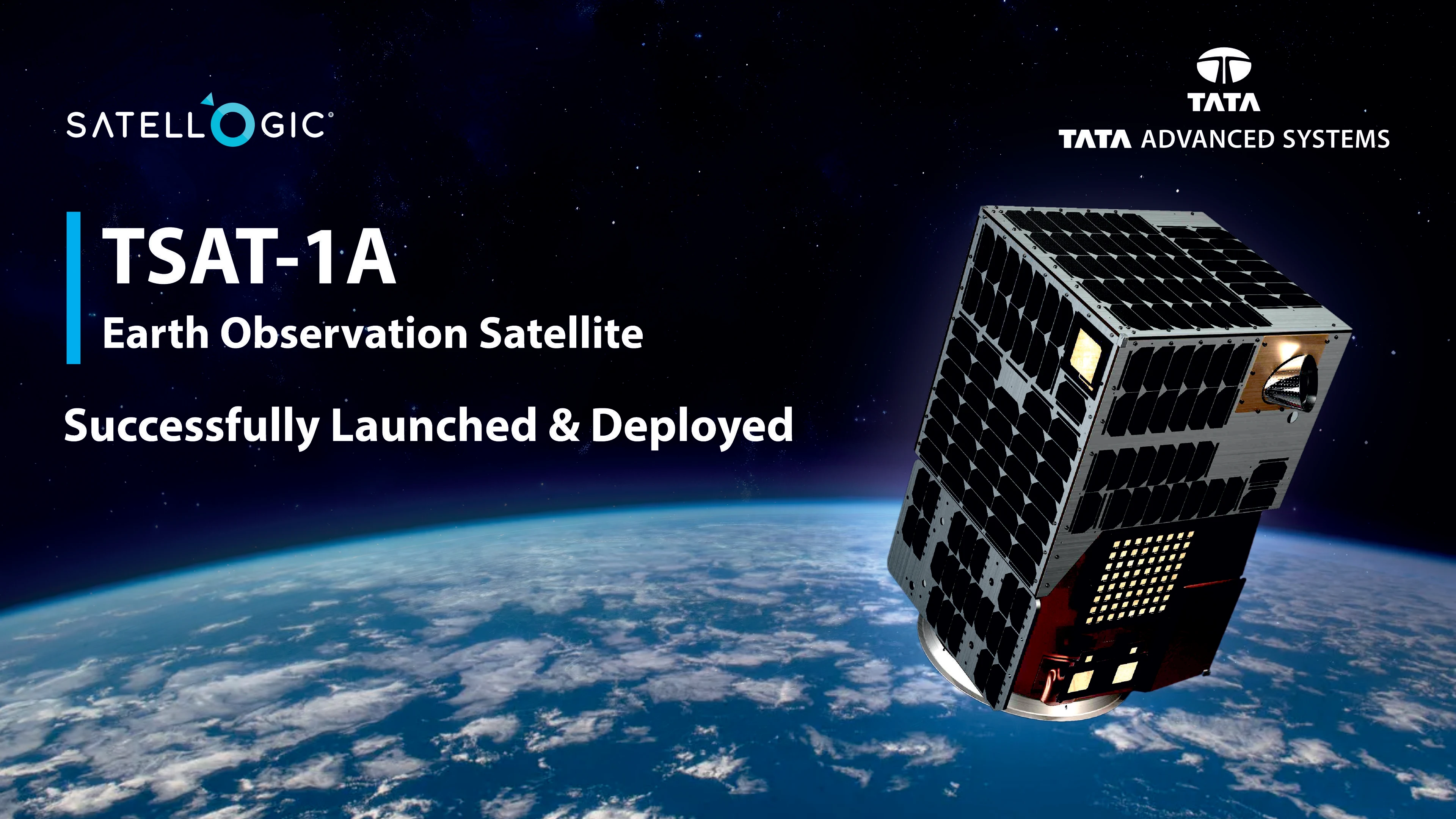
Tata Group's TASL and Satellogic Successfully Place Built-in-India Satellite TSAT-1A into Space

Tata Group's TASL and Satellogic Successfully Place Built in India Satellite TSAT-1A into Space

Tata Advanced Systems Limited (TASL) and Satellogic have announced the successful launch of the TSAT-1A satellite. The satellite was deployed into space aboard SpaceX's Falcon 9 rocket from the Kennedy Space Center in Florida, USA. This marks a significant achievement for TASL, showcasing their commitment to the space sector and their capability to deliver a fully integrated sub-meter optical satellite assembled and tested in India.

TSAT-1A is designed to provide high-resolution optical satellite images and features multispectral and hyperspectral capabilities, which will enhance image collection capacity, dynamic range, and low-latency delivery. This successful launch is a result of the collaboration between TASL and Satellogic, leveraging their combined expertise in satellite development and system integration.


TSAT-1A has been assembled in TASL’s Assembly, Integration and Testing (“AIT”) plant at its Vemagal facility in Karnataka. This achievement follows the collaboration signed between TASL and Satellogic in November 2023, leveraging Satellogic’s expertise to develop and integrate an advanced EO satellite in India and TASL’s capability to undertake complex system integration.

Indianweb2.com first reported about TASL building this military grade spy satellite, in February this year.

TASL is a strategic entity of the Tata Group in the aerospace and defense industry. It was founded in 2007 and is located in Hyderabad, Telangana.

TSAT-1A will deliver high-resolution optical satellite images with increased collection capacity, dynamic range, and low-latency delivery through its multispectral and hyperspectral capabilities.

South-America's Uruguay-based Satellogic provided industry knowledge transfer, foundational components, IP licensing terms, and support in constructing an AIT facility in India – features of its Space Systems offering for direct satellite sales.

TSAT-1A stands out among Earth observation satellites due to its sub-meter resolution imaging capabilities, which allow for extremely detailed images of the Earth's surface. This precision is particularly beneficial for applications requiring high-resolution data, such as urban planning and environmental monitoring.

Compared to other satellites, TSAT-1A's multispectral and hyperspectral imaging technologies provide a broader range of data collection possibilities. These capabilities enable the satellite to capture images across multiple bands of the electromagnetic spectrum, offering more detailed information than traditional optical images.

Furthermore, TSAT-1A is noted for its increased collection capacity, dynamic range, and low-latency delivery. This means it can capture more images in a shorter amount of time, with a wider range of light sensitivities, and deliver these images quickly to users on the ground.

Overall, TSAT-1A's advanced features make it a competitive option in the global market for Earth observation satellites, particularly for customers who require high-quality, detailed imagery with rapid delivery times.

Airbus Now the Sole Owner of Airbus OneWeb Satellites (AOS), A JV Founded in 2016

Airbus Now the Sole Owner of Airbus OneWeb Satellites (AOS); Completes 50% Stake Purchase

This Monday, Airbus U.S. Space & Defense, Inc. announced completion of a deal with Eutelsat OneWeb to purchase its 50% share of the Airbus OneWeb Satellites (AOS) joint venture, which was established in 2016.

With this announcement, Indian multinational conglomerate, Bharti, and Japan's Softbank, who were earlier the co-owners in OneWeb, are no longer the owners in the satellite constellation company.

Till year 2021, India's Bharti Global along with France-based satellite service provider Eutelsat and the UK Government were the OneWeb’s largest shareholders, while Japan's SoftBank retained an equity holding of 12%. Last year in September, Eutelsat merged with OneWeb and created a new "Eutelsat Group" company, with subsidiaries "Eutelsat" and "Eutelsat OneWeb".

With completion of this 50% shares purchase, Airbus is now the sole owner of Airbus OneWeb Satellites (AOS) and the satellite manufacturing facility in Merritt Island, Florida.

The new structure is expected to provide maximum efficiency and increased competitiveness for commercial, institutional and national security space customers.

This agreement furthers our position as a market leader in the small satellite constellation business, building on our successful partnership with OneWeb,” said Robert Geckle, Chairman and CEO, Airbus U.S. Space & Defense, Inc. “We will continue mass producing small satellites for our customers and are excited for what the f uture holds for us on Florida’s Space Coast as we move forward,” he added.

Airbus U.S. Space & Defense recently retooled the Merritt Island factory to accomodate the Arrow450 production line and is starting an expansion project to meet increased demand for small satellites from commercial and government customers deepening the company’s presence in Florida.

The Airbus OneWeb Satellites joint venture, established in 2016, built more than 600 satellites at the rate of two per day for the OneWeb first generation constellation, currently operating on orbit.

A couple of months back, OneWeb India received the necessary authorisations from IN-SPACe to launch Eutelsat OneWeb's commercial satellite broadband services in India.

Cabinet Approves MoU Between ISRO and Mauritius' MRIC on Joint Small Satellite Development

Cabinet Approves MoU Between ISRO and Mauritius' MRIC on Joint Small Satellite Development

The Union Cabinet chaired by Hon’ble Prime Minister Shri Narendra Modi has approved the Memorandum of Understanding (MoU) between the Indian Space Research Organisation (ISRO) and the Mauritius Research and Innovation Council (MRIC) concerning cooperation on the development of a joint small satellite.

MoU will help to establish a framework for cooperation between ISRO and MRIC on the development of a joint satellite as well as for cooperation on the use of the MRIC’s Ground Station. Some of the subsystems for the joint satellite will be taken up through the participation of Indian industries and would benefit the industry.

Collaboration through this joint development of satellite will help in further ensuring continuous support from the Mauritius Government for the Indian ground station at Mauritius, which is critical for ISRO/India’s launch vehicle and satellite missions. In addition, the joint satellite building will also help in ensuring MRIC support from their ground station for ISRO’s small satellite mission in future. Some of the subsystems for the joint satellite will be taken up through the participation of Indian industries and thus may result in employment generation.

Implementation schedule:

Signing of this MoU shall enable the joint realisation of small satellite between ISRO and MRIC. The satellite realisation is proposed to be completed in 15 months’ time frame.

Expenditure involved:

The estimated cost for realisation of the joint satellite is Rs.20 crore, which will be borne by the Government of India. This MoU does not involve any other exchange of funds between the Parties.

The space cooperation between India and Mauritius is dated way back in late 1980s when ISRO established a ground station in Mauritius for tracking and telemetry support for ISRO’s launch vehicle and satellite missions, under a country-level agreement signed in 1986 for this purpose. The current space cooperation is being governed by the country-level agreement signed on 29.7.2009, which superseded the 1986 agreement mentioned above.

Based on the interest expressed by MRIC in jointly building a small satellite for Mauritius, Ministry of External Affairs (MEA) requested ISRO to initiate discussions with MRIC on realizing an India-Mauritius joint satellite, with MEA funding for realisation, launch and operation of the joint satellite. The MoU was signed on November 1, 2023 at Port Louis, Mauritius during the visit of Minister of State (MEA) to Mauritius for the ‘Aapravasi Diwas’ event.

ISRO Begins 2024 with The Successful Launch of xPoSat Satellite

ISRO Begins 2024 with The Successful Launch of xPoSat Satellite

Indian space agency ISRO begins the new year with a successful launch of X-Ray Polarimeter Satellite (XPoSat) Satellite. The PSLV-C58 vehicle placed the satellite precisely into the intended orbit of 650 km with 6-degree inclination.

With this launch, India becomes the second nation in the world to launch an advanced astronomy observatory specifically geared to study black holes and neutron stars.

After injection of XPOSAT, the PS4 stage will be re-started twice to reduce the orbit into 350 km circular orbit to maintain in 3-axis stabilized mode for Orbital Platform (OP) experiments. The PSLV Orbital Experimental Module-3 (POEM-3) experiment will be executed meeting the objective of 10 identified payloads, supplied by ISRO and IN-SPACe.

The spectroscopic and timing information of sources such as blackhole, neutron star etc by various space based observatories provide a wealth of information, however the exact nature of the emission from such sources still poses deeper challenges to astronomers. XPoSat is touted as Indian science community's major contribution to understand the emission mechanism of these astronomical sources – blackhole, neutron stars, active galactic nuclei, pulsar wind nebulae etc.


XPoSat (X-ray Polarimeter Satellite) is India’s first dedicated polarimetry mission to study various dynamics of bright astronomical X-ray sources in extreme conditions. The spacecraft carried two scientific payloads in a low earth orbit (LEO) — POLIX and XSPECT.

POLIX is realized by Raman Research Institute and XSPECT is by Space Astronomy Group of URSC.

The primary payload POLIX (Polarimeter Instrument in X-rays) will measure the polarimetry parameters (degree and angle of polarization) in medium X-ray energy range of 8-30 keV photons of astronomical origin. The XSPECT (X-ray Spectroscopy and Timing) payload will give spectroscopic information in the energy range of 0.8-15 keV.

Indian Researchers At Bharati Station in Antarctica Found Ionospheric Secrets That Can Help Satellite-Based Navigation

Indian Researchers At Bharati Station in Antarctica Found Ionospheric Secrets That Can Help Satellite-Based Navigation

Indian researchers at Bharati, a permanent Antarctic research station commissioned by India, have traced Ionospheric secrets in the southernmost continent that can help satellite-based navigation.

The Ionosphere is part of Earth's upper atmosphere, between 80 and about 600 km where Extreme UltraViolet (EUV) and x-ray solar radiation ionizes the atoms and molecules thus creating a layer of electrons. The ionosphere is important because it reflects and modifies radio waves used for communication and navigation.

Decade-long ionospheric observations at Bharati station, Antarctica, found a substantial seasonal variation with maximum total electron count (TEC) in equinoctial months followed by the summer and winter. The TEC is a key parameter that is used to understand the effects of ionosphere on satellite-based navigation and communication signals.

Indian Researchers At Bharati Station in Antarctica Found Ionospheric Secrets That Can Help Satellite-Based Navigation
India's Bharati Research Station, Antarctica

Such long-term studies can help understand effects of ionosphere on satellite-based navigation and communication systems and to mitigate them.

The ionosphere at polar regions is highly dynamic and acts as a major energy sink for space weather events, and related processes in magnetosphere-ionosphere systems as the magnetic field lines are vertical in this region. The ionospheric observations in Antarctica are few compared to Arctic region due to geographic limitations and limited number of stations.

A team of scientists from the Indian Institute of Geomagnetism (IIG), an autonomous body of the Department of Science and Technology (DST) have examined the long-term seasonal ionospheric observations at Indian Antarctica station Bharati between 2010 and 2022 and also with solar activity following Sun’s 11-year cycle.

Indian Researchers At Bharati Station in Antarctica Found Ionospheric Secrets That Can Help Satellite-Based Navigation
Bharati Research Station

It was observed that though there was no sunlight incidence throughout the day in winter months (polar nights) at Bharati station; a diurnal pattern was observed with peak ionospheric density near local noon. The day-night ionospheric density variations were observed regardless of 24 hours of sunlight in summer and complete darkness in winter. The scientists attributed the peak ionization to particle precipitation and transportation of convectional plasma from high latitudes. Also, the maximum ionospheric density in the summer months where 24 hours sunlight is present (polar days), was about twice more than that of polar nights at the Bharati region.

The study was published in the Journal of Polar Science. This kind of long-term studies will help understand effects of ionosphere on satellite-based navigation and communication systems and to mitigate them.

ISRO, NASA To Launch Joint Remote Sensing Satellite Early Next Year

ISRO, NASA To Launch Joint Remote Sensing Satellite with India Early Next Year

The Indian Space Research Organization (ISRO) and the US space agency NASA plan to launch a joint remote sensing satellite for Earth observation in the first quarter of next year.

The Satellite named NASA-ISRO Synthetic Aperture Radar (NISAR) onboard ISRO’s GSLV will be launched in first quarter of 2024, said science and technology minister Dr. Jitendra Singh.

Dr. Singh met a high-level delegation of NASA led by its Administrator Bill Nelson.

A Low Earth Orbit (LEO) observatory Satellite, NISAR, once placed in the orbit, will provide data for understanding changes in Earth’s ecosystems, ice mass, vegetation
biomass, sea level rise, ground water and natural hazards, including earthquakes, tsunamis, volcanoes and landslides.

If every thing goes according to the plan, NISAR will observe nearly all of Earth’s land and ice surfaces twice every 12 days, measuring movements in extremely fine detail. It will also survey forests and agricultural regions to help scientists understand carbon exchange between plants and the atmosphere.

NISAR’s payload will be the most advanced radar system ever launched as part of a NASA science mission, and it will feature the largest-ever radar antenna of its kind: a drum-shaped, wire mesh reflector nearly 40 feet (12 meters) in diameter that will extend from a 30-foot (9-meter) boom.

Besides this, Nelson also urged the minister to expedite the programme related to India’s first astronaut aboard a NASA rocket to the International Space Station (ISS).

Nelson also met Rakesh Sharma, the first Indian to fly to space.


ISRO and NASA have formed a Joint Working Group (JWG) on Human spaceflight cooperation and are exploring cooperation in radiation impact studies, micro meteorite & orbital debris shield studies; space health and medicine aspects. The 8th meeting of India-USA Joint Working Group on Civil Space Cooperation (CSJWG) was held in Washington DC in January 2023.

ISRO/DoS is also in discussion with prominent US industries (like Boeing, Blue Origin & Voyager) on specific items of cooperation and also to explore joint collaborations with Indian commercial entities.

The Indian side informed that a concept paper on the Implementing Arrangement (IA) is under consideration between ISRO and NASA. After a few iterations, both sides arrived at a mutually agreed draft and the same is processed for intra-Governmental approvals.

Market Reports

Market Report & Surveys
IndianWeb2.com © all rights reserved