Showing posts with label Science. Show all posts

Milestone in Reproductive Science: World's Oldest Baby Born from Frozen Embryo

Milestone in Reproductive Science: World's Oldest Baby Born from Frozen Embryo

On July 26, 2025, a baby boy named Thaddeus Daniel Pierce was born in Ohio, making headlines as the oldest known baby ever born from a frozen embryo. His embryo was cryopreserved in May 1994, meaning it remained frozen for over 30 years — a record-breaking 11,148 days in storage.

The Backstory

  • Original Donor: Linda Archerd, who underwent IVF in 1994 and froze four embryos.
  • One embryo was used immediately, resulting in a daughter born in 1994.
  • The remaining three embryos were stored for decades, with Archerd paying ~$1,000 annually to preserve them.
  • In 2023, she donated them through the Snowflakes program by Nightlight Christian Adoptions.

The Adoptive Parents

  • Lindsey and Tim Pierce, a couple from London, Ohio, had been trying to conceive for seven years.
  • They adopted one of Archerd’s embryos, which was successfully implanted and led to the birth of Thaddeus.
  • Lindsey shared: “We didn’t go into it thinking we would break any records. We just wanted to have a baby.”
Lindsey and Tim Pierce at Rejoice Fertility. (Image - MIT Technology Review) 
The Baby 

Scientific & Ethical Implications

  • Medical Breakthrough: Embryos can remain viable for decades if properly preserved.
  • Ethical Questions: Raises concerns about the fate of millions of unused embryos globally.
  • Legal Landscape: In the U.S., embryos can be stored indefinitely, unlike countries like Australia (5 years) or the UK (55 years).

Embryo Storage Comparison

Country Storage Limit Notes
United States Indefinite No federal limit; varies by state and clinic
Australia 5 years Extensions possible with approval
United Kingdom 55 years Extended from 10 years in 2022

Internet Reactions

  • “Robbed of the 90s.”
  • “So that’s how you get 30 years of experience before you start a job.”
  • “Defrosting humans like leftovers and calling it a miracle.”

Twin Meteor Showers to Illuminate Global Skies on July 29–30

Twin Meteor Showers to Illuminate Global Skies on July 29–30
Two meteor showers — Southern Delta Aquariids and Alpha Capricornids — will peak together, offering a rare double feature of shooting stars visible across the globe.

What to Expect

  • Combined meteor rate: Up to 25 meteors per hour
  • Best viewing time: Midnight to 3 a.m., local time
  • Moon phase: Nearly moonless night for optimal visibility
  • Visibility: Best in Southern Hemisphere, but visible worldwide

Meet the Showers

Meteor Shower Origin Comet Meteor Traits Peak Activity
Southern Delta Aquariids 96P/Machholz Fast, faint streaks July 29–31
Alpha Capricornids 169P/NEAT Slow, bright fireballs (often colorful) July 29–30

Viewing Tips

Twin Meteor Showers to Illuminate Global Skies on July 29–30
  • Look southward in the sky, especially from rural or dark-sky locations
  • No equipment needed — just your eyes and patience
  • Avoid city lights and let your eyes adjust for 20–30 minutes
  • Recline comfortably and bring warm clothes or snacks

Countries with Best Naked-Eye Visibility

Best Visibility Zones

  • Southern Hemisphere: Australia, New Zealand, South Africa, Argentina, Chile, Brazil
  • Southern Latitudes (Northern Hemisphere): India, Mexico, Southern U.S. (Texas, Florida), Southern Europe (Spain, Italy, Greece), Southeast Asia (Thailand, Indonesia)

Also Visible (Lower Meteor Rates)

  • Northern Hemisphere: United States (northern states), Canada, UK, Germany, France, China, Japan

🇮🇳 India-Specific Viewing

  • Excellent visibility across India, especially in rural areas
  • Best times: 3–4 AM and 7–8 PM on July 29–30
  • Look toward the southern horizon, near the constellation Aquarius

Bonus: Perseids Incoming

  • The Perseid meteor shower will peak around August 12
  • July and August are prime months for stargazing

Andhra Pradesh Shoots for the Stars: ₹25K Crore Space Policy Takes Off

Andhra Pradesh Shoots for the Stars: ₹25K Crore Space Policy Takes Off

Andhra Pradesh state government has introduced rhe AP Space Policy 2025–30, which is designed to transform the state into a hub for space innovation and industry. Below is a quick breakdown of what it sets out to achieve:

Strategic Goals

  • Attract ₹25,000 crore in investments over the next decade
  • Create 5,000 direct and 30,000 indirect jobs in high-tech space-linked domains
  • Align with India’s National Space Programme to support missions like Chandrayaan-4 and the Next Generation Launch Vehicle

Twin Space Cities

  • Lepakshi: Innovation hub for upstream and downstream space technologies
  • Tirupati (Routhusurmala): Focused on launch vehicle assembly, satellite integration, and manufacturing

Ecosystem Development

  • Formation of AP Space City Corporation, a special purpose vehicle to drive infrastructure, funding, and partnerships
  • Incentives for MSMEs and large enterprises, including capital subsidies and tax reimbursements
  • Dedicated SpaceTech Fund and ₹1,000 crore VC fund to support startups

Infrastructure & Policy Support

  • Manufacturing clusters near Sriharikota, India’s only operational spaceport
  • Direct logistics corridor with 6-lane road access to Satish Dhawan Space Centre
  • Regulatory frameworks to enable technology transfer and public-private partnerships
This move positions Andhra Pradesh as a serious player in India’s space ambitions. Want to explore how this compares with other state-level tech policies or dive into the startup opportunities it opens up?

Gaganyaan Takes Flight: ISRO Successfully Qualifies Service Module Propulsion System for Human Space Missions

Gaganyaan Takes Flight: ISRO Successfully Qualifies Service Module Propulsion System for Human Space Missions

ISRO has successfully completed the development and qualification testing of the Service Module Propulsion System (SMPS) for the Gaganyaan human spaceflight mission.

This achievement marks a critical step toward human-rating the Gaganyaan systems and ensures readiness for crew safety and mission reliability.

A 350-second full-duration hot test was conducted on July 11, 2025, at the ISRO Propulsion Complex (IPRC), Mahendragiri. The test validated the integrated performance of SMPS under off-nominal mission abort conditions. Results showed normal performance, aligning with pre-test predictions.

The Service Module (SM) uses a regulated bi-propellant propulsion system. It supports:
  • Orbit circularization
  • On-orbit control
  • De-boost manoeuvres
  • Abort capability during ascent phase
Liquid Apogee Motor (LAM) engines provide the main thrust. Reaction Control System (RCS) thrusters ensure precise attitude control.

A test bed emulating the SMPS fluid circuit was developed, including:
  • Propellant tank feed system
  • Helium pressurization system
  • Flight-qualified thrusters
  • Control components
The System Demonstration Model (SDM) underwent 25 tests under nominal and off-nominal conditions, totaling 14,331 seconds of firing time.

SMPS was designed, developed, and realized by the Liquid Propulsion Systems Centre (LPSC), with tests conducted at IPRC, Mahendragiri.

NASA Discovers Heart-Shaped Wonders on Mars

NASA Discovers Heart-Shaped Wonders on Mars

In a delightful twist to planetary science, NASA's Mars Reconnaissance Orbiter has captured images of dozens of heart-shaped landforms sprinkled across the Martian surface—turning the cold, red expanse into a gallery of cosmic affection.

These curious shapes have appeared in various regions, from Arabia Terra to the southern highlands. While they might evoke sentiments of love and whimsy, scientists assure us they’re no extraterrestrial Valentine’s messages. Instead, they’re crafted by natural forces over millions of years.

How Does Mars Carve Out a Heart?

  • Impact Craters: Small meteoroids collide with Mars, revealing lighter sediment underneath and sculpting crater patterns that coincidentally resemble hearts.
  • Erosion & Volcanism: Mesas and depressions, shaped by erosion or volcanic activity, also contribute to heart-like silhouettes.
  • Lighting & Shadows: Martian sunlight plays visual tricks—enhancing ridges and dips to accentuate these romantic outlines.
It's one of those moments where science meets poetry,” remarked Dr. Alisha Grant, a planetary geologist at NASA's Jet Propulsion Laboratory.We're interpreting nature’s randomness as a symbol of something very human.”

Mars: The Solar System’s Secret Romantic?

NASA has been sharing these striking visuals each year around Valentine’s Day, fueling public fascination. One post even quipped, “Looks like Mars has been secretly playing Cupid all along.”

The trend has gained momentum online, with space enthusiasts tagging their favorite heart-shaped formations and debating whether the Red Planet deserves a new nickname: ‘The Loveliest Planet.’

What It Means for Science & Storytelling

While the formations are scientifically valuable—helping researchers analyze erosion patterns, geological layering, and ancient water flows—they also serve a purpose beyond data. They invite the public to engage with space exploration in a playful, emotional way.

After all, when a distant planet 225 million kilometers away starts resembling symbols of love, it’s hard not to feel a cosmic connection.

From Genes to Genius: India Launches Landmark Health Biobank

From Genes to Genius: India Launches Landmark Health Biobank

The Phenome India National Biobank, inaugurated by Union Minister Dr. Jitendra Singh at the CSIR-Institute of Genomics and Integrative Biology (IGIB) in New Delhi, is a state-of-the-art facility designed to collect and store genomic, lifestyle, and clinical data from 10,000 individuals across India.

This initiative captures India's vast diversity—geographically, ethnically, and socio-economically—and is modeled after global benchmarks like the UK Biobank.

Why It Matters

  • Decode complex diseases like diabetes, cancer, cardiovascular conditions, and rare genetic disorders
  • Enable early diagnosis and targeted therapies
  • Support AI-driven diagnostics and gene-guided treatments
  • Track long-term health trajectories and gene-environment interactions

Scientific and Societal Impact

  • Addresses India-specific health challenges such as central obesity in lean individuals
  • Enables population-specific health strategies
  • Bridges the gap between lab research and real-world application
  • Supports India’s leadership in CRISPR, quantum tech, and antimicrobial resistance research

Core Technologies Powering the Biobank

Technology Purpose Application
Genomic Sequencing Decoding individual DNA Identifies genetic variants linked to diseases like cancer, diabetes, and rare disorders
CRISPR-based Genome Editing Functional genomics and therapeutic research Enables gene-function studies and potential gene therapies for conditions like sickle cell anemia
AI & Machine Learning Pattern recognition and predictive modeling Powers diagnostics, risk stratification, and personalized treatment recommendations
Big Data Analytics Integration of multi-modal datasets Analyzes genomic, clinical, and lifestyle data across 10,000+ individuals
Digital Health Platforms Real-time data collection and monitoring Supports longitudinal tracking of health outcomes and lifestyle factors
Biobanking Infrastructure Secure sample storage and retrieval Preserves biological specimens (blood, tissue, etc.) under controlled conditions for future research

Research Focus Areas

  • Gene-environment interactions
  • Population-specific health strategies
  • AI-driven diagnostics
  • Drug development and antimicrobial resistance

Strategic Integration

  • Complementing India’s broader scientific ecosystem
  • Leveraging quantum computing for high-throughput data processing
  • Collaborating with CSIR, DBT, and industry for translational research
  • Implementing ethical frameworks for data governance and privacy
The Phenome India Biobank is not just a data repository—it is a national health intelligence engine poised to transform healthcare and biomedical research in India.

IIT Study Finds Indian Ragas Sculpt Brain Activity, Boost Focus & Calm

IIT Study Finds Indian Ragas Sculpt Brain Activity, Boost Focus & Calm

In a landmark fusion of India’s rich musical heritage and cutting-edge neuroscience, a new and recent study led by Prof. Laxmidhar Behera, Director of IIT Mandi, has offered compelling scientific validation for a long-held cultural belief that music can transform the mind, exploring the dynamics of brain microtubules. Published in Frontiers in Human Neuroscience, the study reveals that listening to Indian Classical Ragas can significantly influence brain activity, enhancing attention, emotional regulation, and mental stability.

Conducted in collaboration with IIT Kanpur on 40 participants, the research employed advanced EEG microstate analysis, a real-time brain-mapping technique that captures momentary but meaningful patterns of neural activity. These “microstates,” often lasting just tens of milliseconds, represent the brain’s transient modes of operation such as attention, emotional engagement, or mind-wandering.

Prof. Laxmidhar Behera (far left), Dr. Ashish Gupta (Centre), and  Prof. Braj Bhushan (far right) during the EEG-based music and brain experiment.
Prof. Laxmidhar Behera (far left), Dr. Ashish Gupta (Centre), and  Prof. Braj Bhushan (far right) during the EEG-based music and brain experiment.

What makes this study exceptional is the measurable impact of specific Ragas on these brain states. Raga Darbari, known for its soothing and uplifting qualities, was found to increase attention-related microstates while reducing those associated with mind-wandering, indicating deeper focus and cognitive clarity.

In contrast, Raga Jogiya, a melancholic melody, not only enhanced attentional networks but also activated emotion-regulation microstates, enabling listeners to process emotions with calm and composure. “EEG microstates offer a window into how the brain operates moment by moment,” explained Prof. Behera. “It is remarkable to see how these ancient melodies consistently guide the brain into more stable and focused patterns.” Ashish Gupta, the first author of the study, emphasized that the shifts observed in neural activity were not random. “The data showed repeatable, consistent transitions after exposure to the Ragas, suggesting Indian Classical music can serve as a powerful tool for mental wellness,” he said.

With mental health challenges such as stress, burnout, and attention deficits on the rise, this research points to a culturally resonant, non-invasive alternative. The research team suggests that listening to Raga Darbari before exams or important meetings may improve focus, while Raga Jogiya could help manage emotional overwhelm or grief. The study doesn’t just underscore how people feel in response to music, it demonstrates how the brain structurally responds, offering new potential for music-based interventions in cognitive and emotional health. Professor Braj Bhushan of IIT Kanpur, co-author of the study, remarked, “This work reveals the remarkable capacity of Indian Classical music to engage cognitive and emotional systems. It opens a new path for developing personalized, music-based mental health support tools rooted in India’s cultural wisdom.”

In a further affirmation of the findings, the research team conducted a parallel study on Western participants, which confirmed similar effects of classical music on brain microstates. This cross-cultural consistency highlights the universal neurological power of classical music. Both studies, co-authored by Dr. Ashish Gupta, Mr. Chandan Kumar Srivastava, Prof. Braj Bhushan, and Prof. Laxmidhar Behera, have been published in Frontiers in Human Neuroscience.

In doing so, they contribute not only to the scientific understanding of music’s influence on the brain, but also to a growing movement that harmonizes ancient traditions with modern science reminding us that the future of mental well-being may well lie in the timeless strains of the past.

India’s Sci & Tech Clusters Enter Phase 2.0: Driving Regional Innovation and National Resilience

India’s Sci&Tech Clusters Enter Phase 2.0: Driving Regional Innovation and National Resilience

In a year marked by technological flux and global uncertainty, India’s Science & Technology (S&T) Clusters quietly built something extraordinary: momentum. The newly released S&T Clusters Annual Report 2024–2025, reads like a blueprint of how grassroots collaboration and applied science can reshape regional innovation.

India’s Science & Technology (S&T) Clusters are collaborative innovation ecosystems designed to bridge the gap between research and real-world impact. Launched in 2020 under the guidance of the Prime Minister’s Science, Technology, and Innovation Advisory Council (PM-STIAC), and supported by the Office of the Principal Scientific Adviser (PSA), these clusters bring together academia, R&D institutions, industry, startups, and local governments to co-create solutions for regional and national challenges.

The Science and Technology (S&T) Clusters Annual Report 2024–2025 was officially released on June 26, 2025, by Prof. Ajay Kumar Sood, Principal Scientific Adviser to the Government of India. It highlights how India’s 8 operational S&T Clusters are evolving into powerful engines of regional innovation and national impact.

Eight Clusters. One Mission. Countless Ripples.

From Delhi to Hyderabad, and Bengaluru to Bhubaneswar, eight operational Science & Technology Clusters are not just conducting research—they’re solving wicked problems, scaling up pilots, and translating ideas into impact. This past year marked the transition from early groundwork to full-fledged implementation, with tangible results lighting up the map.

In Delhi-NCR, the DRIIV cluster deployed EV charging infrastructure that promises to decongest and decarbonize India’s capital. Bengaluru transformed waste into value through cutting-edge e-waste processing systems. Hyderabad turned biotech labs into launchpads for health-tech tools, while Vizag’s AMTZ hub saw homegrown pacemaker leads break new ground in indigenous medical devices.

Culture, Commerce, and Code

The report also chronicles unexpected intersections—like Kalaanubhav.in, an AR/VR-enabled digital marketplace that gives traditional artisans a tech-powered stage. Or the One Delhi App, which stitched together fragmented transit systems into a smooth, digital-first commuter experience for over 300,000 users.

This convergence of science, sustainability, and social innovation hints at a broader shift: the Clusters aren’t working in silos. They’re building bridges—between disciplines, sectors, and cities.

What’s Next: From Projects to Platforms

Perhaps the most significant takeaway isn’t a single innovation, but a structural evolution. The report signals a decisive move into Phase 2.0: inter-cluster collaboration, shared R&D infrastructure, and national-scale innovation grants. The clusters are positioning themselves as platforms, not just pilots—a signal that India’s science ecosystem is ready to scale purposefully and collaboratively.

More Highlights from the S&T Clusters Annual Report 2024–2025

🔬 Health-Tech & One Health Initiatives

  • Diabetic Foot Screening Mats: Low-cost, sensor-based mats developed for early detection of diabetic foot complications—already deployed in community health centers.
  • One Health Surveillance: Integrated platforms for zoonotic disease monitoring, combining veterinary, environmental, and human health data streams.

🔄 Circular Economy & Sustainability

  • E-Waste Management Systems: Bengaluru’s cluster piloted AI-enabled segregation and recycling units, improving material recovery rates and reducing landfill burden.
  • Water Quality Monitoring: Real-time sensors deployed in rural and peri-urban areas to track contaminants and support local governance.

🧬 Indigenous Manufacturing & Deep Tech

  • Pacemaker Leads at AMTZ Vizag: A breakthrough in domestic medical device manufacturing, reducing reliance on imports and lowering costs.
  • Biotech Incubation: Hyderabad’s cluster supported over 20 startups in diagnostics, genomics, and bioinformatics, with several moving to clinical trials.

🧠 Capacity Building & Knowledge Sharing

  • Inter-Cluster Collaborations: Joint projects between clusters (e.g., Delhi and Pune) on AI for urban planning and climate resilience.
  • Shared Infrastructure: Access to high-end labs and equipment via the I-STEM portal, enabling cross-institutional R&D.

📊 Governance & Structure

  • The report emphasizes a consortium-based model, where academic institutions, R&D labs, startups, and local governments co-create solutions.
  • A new Innovation Grant Framework has been introduced to fund multi-sectoral, high-impact projects across clusters.
The report also signals a shift toward inter-cluster collaboration, shared infrastructure, and multi-sectoral innovation grants—marking the beginning of what’s being called Phase 2.0 of the Clusters initiative.

When the Sky Whispers: The Science Behind Falling Clouds and the Magic Above

When the Sky Whispers: The Science Behind Falling Clouds and the Magic Above

Recently, videos from different parts of the world—some even claiming to be from India—have shown a strange phenomenon: clouds seemingly falling from the sky. People watched in awe as fluffy, misty shapes appeared to descend to the ground like lost sky-wool. Some tried to hug them. Others just stared, baffled. Was the sky shedding its skin? Had someone finally plucked a piece of heaven?
Not quite.

The Illusion of Falling Clouds


Many of these viral videos, first spotted in places like Indonesia, captured what appeared to be clouds hugging the earth. But experts were quick to weigh in: these weren’t real clouds. Rather, they were foam-like substances, possibly created by the condensation of industrial pollutants, gas emissions, or chemical reactions under certain weather conditions. Essentially: pollution dressed up as clouds for fifteen seconds of viral fame.


But the curiosity these videos stirred begs a better question—how do real clouds form? And why can’t they just tumble down like fairy floss in a breeze?

The Real Alchemy of Cloud-Making


Clouds may look soft and whimsical, but they’re born from a powerful atmospheric process that starts at ground level:
  • Sunlight meets water: It all begins with solar heat warming up Earth’s surface water—oceans, rivers, lakes, and soil. This triggers evaporation, turning liquid water into invisible vapor.
  • Rise and chill: As this water vapor rises, it enters cooler layers of the atmosphere. Cooler air holds less moisture, so when the temperature drops to the dew point, something beautiful happens.
  • Tiny particles, big magic: Floating high in the sky are microscopic bits of dust, salt, and even pollen. These act as condensation nuclei—the tiny surfaces water vapor clings to when it condenses into droplets.
  • Voilà: a cloud is born: These droplets gather by the millions, forming what we see as clouds. Some are wispy and high-flying like cirrus, others low and thick like stratus, and the dramatic ones—those towering giants before a storm—are called cumulonimbus.
So no, clouds can’t "fall" in the classic sense. They’re made of water droplets so small and light that they float on rising air currents, dancing far above our heads.

Wonder Above and Below

Whether it’s pollution pretending to be clouds or genuine wonders like lenticular clouds shaped like UFOs, the sky never fails to spark imagination. But knowing the science behind it? That gives the wonder even more weight. Because what’s more magical than vapor, dust, and sunlight teaming up to create something that looks like dreams?

India’s Historic Leap: Shubhanshu Shukla To Become 1st Indian on ISS in Multinational Space Mission

India’s Historic Leap: Shubhanshu Shukla To Become 1st Indian on ISS in Multinational Space Mission

History was made today as astronauts from India, Poland, and Hungary embarked on their first-ever mission to the International Space Station (ISS) aboard a SpaceX Crew Dragon capsule. The mission, dubbed Axiom Mission 4 (Ax-4), lifted off from NASA’s Kennedy Space Center in Florida and is expected to dock with the ISS after a 28-hour journey.


The four-member crew includes:
  • Group Captain Shubhanshu Shukla (India) – an Indian Air Force pilot and the first Indian to visit the ISS.
  • SÅ‚awosz UznaÅ„ski-WiÅ›niewski (Poland) – a physicist and ESA project astronaut.
  • Tibor Kapu (Hungary) – a mechanical engineer representing Hungary’s HUNOR program.
  • Peggy Whitson (USA) – a veteran astronaut and mission commander, holding the U.S. record for most days in space.
This privately funded mission, organized by Axiom Space, marks a return to human spaceflight for all three nations after more than four decades. Over the next 14 days, the crew will conduct around 60 scientific experiments spanning microgravity research, space agriculture, and biomedical studies.

And in a charming cultural touch, they’ve brought along national delicacies—Indian curry, Hungarian paprika paste, and Polish pierogies—to share aboard the ISS.

Launch Details:

  • Launch Time & Vehicle: 12:01 PM IST on June 25 from Launch Complex 39A, Kennedy Space Center using a SpaceX Falcon 9 rocket and Crew Dragon spacecraft.
  • Docking Schedule: Expected at 4:30 PM IST on June 26.

Crew Highlights:

  • Shubhanshu Shukla (India) – Pilot, first Indian to visit the ISS.
  • Peggy Whitson (USA) – Commander, record-holder for most days in space by an American.
  • SÅ‚awosz UznaÅ„ski-WiÅ›niewski (Poland) – ESA astronaut and physicist.
  • Tibor Kapu (Hungary) – Engineer from Hungary’s HUNOR program.

Scientific Goals:

  • 60 experiments across 31 countries.
  • Research in space agriculture, gut microbiota, microgravity physics.
  • India-specific studies on screen use, muscle atrophy, and neurofeedback.

Symbolism & Facts:

  • First government-sponsored human spaceflight in over four decades for India, Poland, and Hungary.
  • Fulfills diplomatic commitments for enhanced Indo.
  • Mission overcame six delays due to weather and a liquid oxygen leak.

Ghost Waves Beneath the Ice: NASA's ANITA Hears What Shouldn't Exist

Ghost Waves Beneath the Ice: NASA's ANITA Hears What Shouldn't Exist

High above Antarctica, a NASA experiment called ANITA (Antarctic Impulsive Transient Antenna) detected radio waves coming from beneath the ice — at angles around 30° below the surface. That’s a big deal because, according to the Standard Model of particle physics, such signals should be absorbed by thousands of kilometers of rock before ever reaching the surface. Yet, somehow, they made it through.

Initially, scientists thought these might be caused by neutrinos, those ghostly subatomic particles that rarely interact with matter. But the angles and behavior of the signals don’t match what we’d expect from neutrinos. Researchers have ruled out known particle interactions, background noise, and even checked data from other observatories like Pierre Auger in Argentina — still no satisfying.

Ghost Waves Beneath the Ice: NASA's ANITA Hears What Shouldn't Exist
The unusual radio pulses were detected by the Antarctic Impulsive Transient Antenna (ANITA) experiment, a range of instruments flown on balloons high above Antarctica that are designed to detect radio waves from cosmic rays hitting the atmosphere. (Credit: Stephanie Wissel / Penn State creative commons)

Some theorists are now floating ideas that range from dark matter interactions to new physics beyond the Standard Model. Others suggest we might be seeing an unknown behavior of radio waves near ice or the horizon. A new balloon-based detector called PUEO is expected to launch soon to gather more data and hopefully crack the case.

Ghost Waves Beneath the Ice: NASA's ANITA Hears What Shouldn't Exist
ANITA was placed in Antarctica because there is little chance of interference from other signals. To capture the emission signals, the balloon-borne radio detector is sent to fly over stretches of ice, capturing what are called ice showers. Credit: Stephanie Wissel / Penn State.


After ANITA's balloon-borne detectors picked up those impossible upward-traveling radio pulses (in both 2006 and 2014), researchers ruled out neutrinos as the cause. The angles were just too steep — around 30° below the horizon — meaning any particle would’ve had to pass through nearly 3,000 km of solid Earth. That’s a feat no known particle can pull off.

To double-check, scientists turned to other observatories like IceCube in Antarctica and Pierre Auger in Argentina. Neither found matching events, reinforcing the anomaly. Theories now range from exotic particles to unknown radio propagation effects near ice or the horizon — but none fully explain the signals.

Enter PUEO — the Payload for Ultrahigh Energy Observations. It’s ANITA’s successor, slated to launch soon with five times the sensitivity. It’ll carry more antennas and upgraded electronics to hunt for similar signals and hopefully determine whether we’re seeing new physics or just misunderstood phenomena.

Stephanie Wissel, a lead physicist on the project, summed it up best:
It's one of those long-standing mysteries. We’ve ruled out what it’s not — now we’re trying to figure out what it is


It’s like the ice is whispering secrets from a realm we haven’t yet mapped. Want to dive deeper into the theories — dark matter, exotic particles, or even the more speculative ones? Follow IndianWeb2.com on X, LinkedIn or Facebook.

Eclipses on Demand: How ESA Is Casting Shadows in Space to Illuminate the Sun

Eclipses on Demand: How ESA Is Casting Shadows in Space to Illuminate the Sun

For centuries, astronomers have waited patiently for solar eclipses to glimpse the Sun’s ethereal halo. Now? They’re making their own.

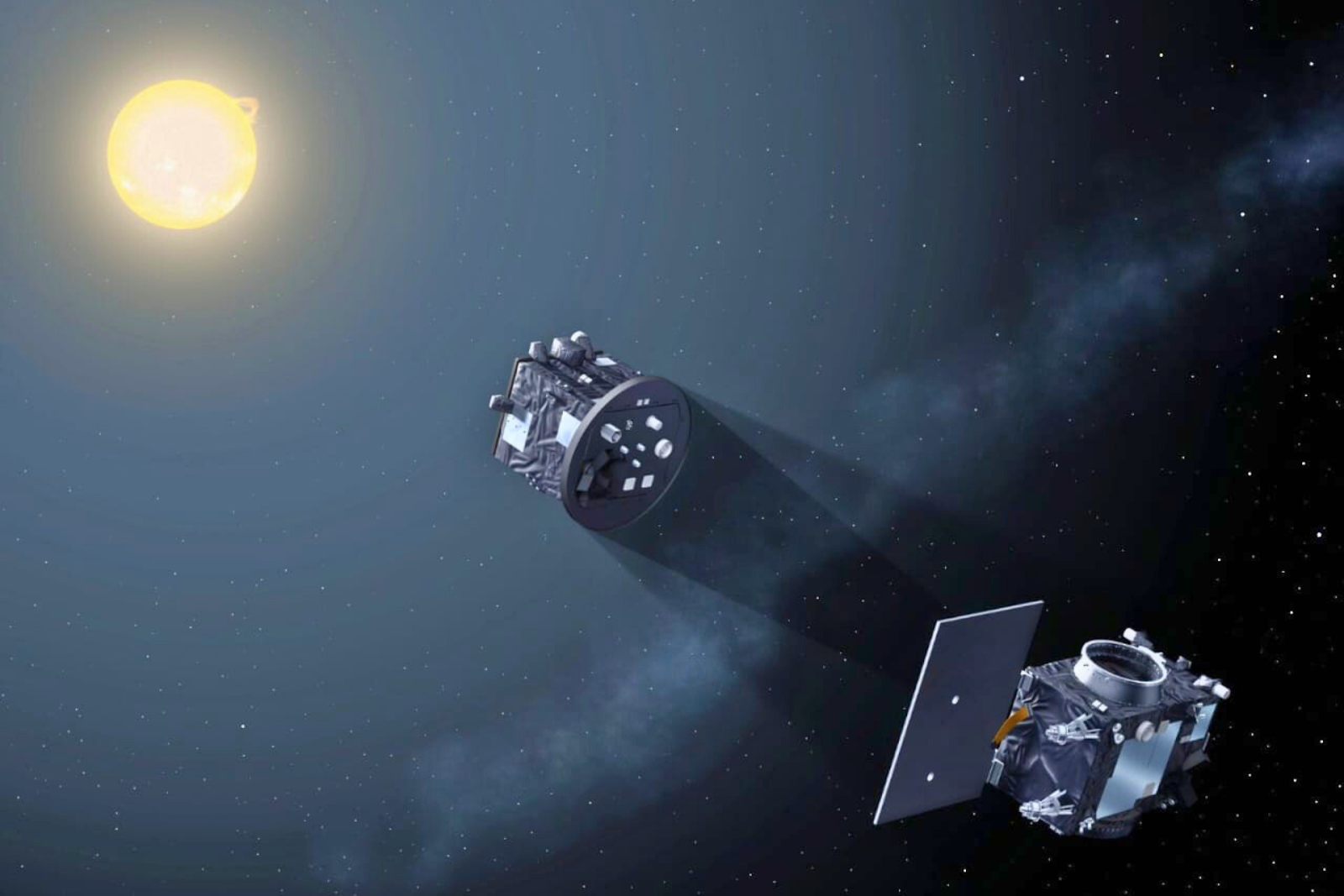
In a move straight from a science fiction script, the European Space Agency (ESA) has created a man-made solar eclipse in space—and it’s not just a one-time show. Using two satellites flying in tight formation, ESA’s Proba-3 mission is rewriting the rules of solar observation.

Scientists have figured out how to make a solar eclipse whenever they want, using two special satellites flying above Earth.

The European Space Agency launched a project called Proba-3. It has two satellites:
  • One blocks the sunlight (like putting your thumb over a torch).
  • The other takes pictures of the Sun’s outer layer, called the corona—a glowing, mysterious area that's hard to see normally.
These two satellites fly in perfect sync, 150 meters apart. That’s how they create a fake or artificial eclipse!

They can do this many times a week, and each eclipse lasts up to six hours—much longer than ones on Earth.

Notably, the Proba-3 mission satellites were launched by the Indian Space Research Organisation (ISRO) using their trusted PSLV-C59 rocket. The launch took place on December 5, 2024, from the Satish Dhawan Space Centre in Sriharikota, India. 

Why Is This a Big Deal?
  • Scientists can now study massive solar blasts that mess with mobile networks, GPS, and power.
  • They can examine the solar wind, which affects satellites and space weather.
  • They're also closer to solving a mystery: Why is the Sun’s outer layer hotter than its surface?
They’ve already taken stunning images—green loops, fire-like arcs, and hidden details of the Sun.

It’s like building a permanent space lab to study our star. Maybe one day, we’ll even see artificial eclipses on Mars!

Precision Shadowplay in Orbit

Eclipses on Demand: How ESA Is Casting Shadows in Space to Illuminate the Sun

At the heart of the mission are two spacecraft with poetic roles: the Occulter, which blocks sunlight using a 1.4-meter disk, and the Coronagraph, trailing behind at a razor-precise 150 meters, poised to observe the Sun’s corona—its wispy, superheated outer atmosphere.

The magic lies in their dance: millimeter-perfect alignment sustained autonomously in space, simulating a solar eclipse for up to six hours. No more relying on fleeting eclipses; now, solar scientists get multiple custom eclipses per week.

And nestled aboard the Coronagraph is ESA’s pride—ASPIICS (Association of Spacecraft for Polarimetric and Imaging Investigation of the Corona of the Sun). This instrument uses layered exposures to pierce the Sun’s glare and reveal its hidden anatomy.

Global Young Scientists Meet Concludes With a Promise to Work Collaboratively to Resolve Global Challenges Together

Global Young Scientists Meet Concludes With a Promise to Work Collaboratively to Resolve Global Challenges Together

A week-long gathering of more than 200 young scientist delegates from 60 countries concluded on a highly successful note with a promise to resolve global challenges faced by humanity by working together collaboratively with commitment.

On the last day, the leadership of twelve National Young Academies (NYAs) from the Asia-Pacific Region met with an aim of reinforcing regional coordination, exchanging best practices, advancing science diplomacy, capacity building and sustainable development. Through a series of deliberations, a common consensus was achieved, which marked the landmark ‘Hyderabad Declaration on the Launch of the Network of Asia-Pacific Young Academies (NAYA)’, which will serve as a regional collaborative platform to Connect, Strengthen and Mentor early and mid-career researchers.

Under the leadership of Indian National Young Academy of Science (INYAS), the following academies provided the homogenous support to form the first of its kind network of young scientific academies of Asia Pacific Region abbreviated NAYA - National Young Academy of Nepal (NAYAN), Young Scientist Network (YSN-ASM) Malaysia, Vietnam Young Academy, Sri Lankan Academy of Young Scientists (SLAYS), Royal Society of New Zealand ECR Forum, The Hong Kong Young Academy of Sciences, Thai Young Scientists Academy (TYSA), Young Academy of Japan, Australian EMCR Forum, World Association of Young Scientists (WAYS) China and the Global Young Academy (GYA).

Prof. B. S. Murty, Director, IIT Hyderabad, stated, "IITH is honoured to host this prestigious global gathering of emerging scientific leaders. The event beautifully reflects our vision of fostering a collaborative, interdisciplinary, and inclusive research environment. By bringing together brilliant minds from across the world, we have not only strengthened international scientific dialogue but also reaffirmed our commitment to empowering young researchers to drive innovation for a better, more sustainable future."

On this occasion, Prof Chandra Shekhar Sharma, Immediate Past Co-Chair of Global Young Academy and Former Chair of INYAS, said that “It’s a historic moment. The efforts started almost five years back and I am so glad that it came to light today under the present leadership of INYAS. This NAYA declaration will pave the way of seamless coordination among the young scientists in Asia-Pacific region to have a broader impact on society at large. Prof Sharma thanked the International Science Council for their continued support to realize this network

This development successfully wrapped up the Annual General Meeting of the Global Young Academy (GYA) and International Conference of Young Scientists 2025, themed "Confluence of Visionaries: Empowering Science for Global Change" scheduled from 08–14 June at the Indian Institute of Technology Hyderabad, India while meeting all objectives successfully. The conference began with pre-conference activities such as the Science Leadership Workshop for the newly elected members, encouraging inclusive innovation, cross-disciplinary collaboration and leadership development. Thematic workshops covered inclusive research evaluation and the changing role of science diplomacy in facing global challenges. The formal commencement included a ceremonial.

Inaugural in the august presence of Honorable Union Minister of Education Shri Dharmendra Pradhan along with other dignitaries. The conference witnessed symbolic tree plantation and high-level plenaries on international innovation ecosystems and ESG frameworks. Participants also participated in research presentations, GYA Activities Fair and thematic research sessions, an indication of the Academy's dedication to diversified scientific discourse and knowledge sharing in collaboration.

Throughout the week, sessions explored forward-looking topics like Industry 5.0, Nutrition and Well- being and human-machine interaction, as internal GYA governance activities like Executive Committee (EC) pitches and elections structured the Academy's next leadership.

A cultural visit to Golconda Fort and a formal reception at the Chowmahalla Palace provided rich cultural immersion in India's heritage, while the Cultural Evening and Gala Dinner honoured international diversity and intercultural understanding. Thematic discussions on foresight, interfaces between science and society and engaging early- and mid-career researchers facilitated members to collectively develop GYA's strategic direction. Committee meetings, important resolutions and formal EC handover were the highlight of the week. In addition to the intellectual agenda, wellness activities like a 2K/5K Crystal Run, Yoga and Zumba exemplified the holistic emphasis of GYA on well-being, camaraderie and dynamic community building among young scientists globally.

India's Nuclear Fuel Complex: 52 Years Since Its First Nuclear Fuel Bundle


A Legacy of Innovation Established in April 1971 , the Nuclear Fuel Complex (NFC) in Hyderabad has been a cornerstone of India's nuclear energy program. It was conceived as a pivotal industrial arm of the Department of Atomic Energy (DAE) to ensure self-reliance in nuclear fuel production—a vision championed by Dr. Homi Bhabha.

In June 1973 , NFC produced its first nuclear fuel bundle, marking a significant milestone in India's journey toward nuclear energy independence. At the time, Indira Gandhi was India's Prime Minister , and Raja Ramanna played a crucial role in India's nuclear advancements as a leading scientist within the Atomic Energy Commission. 

The Science Behind Nuclear Fuel

At the heart of NFC’s operations is the transformation of natural uranium —mined from Jaduguda, Jharkhand —into uranium dioxide (UO₂) pellets . These pellets, which undergo nuclear fission to generate energy, are encased in zirconium alloy tubes , ensuring containment of radioactive byproducts.

A 220 MW PHWR fuel bundle contains 15.2 kg of uranium dioxide , meticulously fabricated to withstand extreme conditions within nuclear reactors.

Manufacturing of Fuel Assemblies

NFC’s expertise extends beyond fuel production, supplying zircaloy-clad uranium oxide fuel assemblies and reactor core components to all 14 operating atomic power reactors in India.

Expanding India's Nuclear Capabilities

Over the decades, NFC has continuously expanded its production capacity. Initially designed to produce 250 tons of UO₂ per year, the Hyderabad facility is now scaling up to 600 tons annually to meet India's growing nuclear energy demands.

Beyond power generation, NFC plays a crucial role in defense and aerospace , supplying high-purity materials to the Indian Navy, Hindustan Aeronautics Limited (HAL), and other strategic sectors

The Road Ahead

As India accelerates its nuclear energy ambitions, NFC is poised to establish two new fuel fabrication facilities , ensuring a steady supply of nuclear fuel for upcoming reactors.

A new facility of NFC at Kota, where fuel tube production is already underway, and is expected later this year, with full commissioning of all fuel modules. 

With its legacy of innovation and commitment to self-reliance, NFC remains a pillar of India's nuclear energy program , driving the nation toward a sustainable and energy-secure future. Would you like me to refine any sections further or add more historical context?

From Sarabhai’s Legacy to Startup Stardust: Ahmedabad’s Spacetech Renaissance Takes Off

From Sarabhai’s Legacy to Startup Stardust: Ahmedabad’s Spacetech Renaissance Takes Off

Ahmedabad is rapidly transforming into a spacetech startup hub, thanks to the combined efforts of ISRO, IN-SPACe, and IIMA Ventures. The city, long associated with India's space legacy—dating back to Vikram Sarabhai's founding of the Physical Research Laboratory (PRL)—is now fostering a new wave of spacetech entrepreneurs, many of whom are former ISRO scientists.

Why Ahmedabad?

Ahmedabad houses ISRO’s Space Applications Centre, IN-SPACe headquarters, and IIMA Ventures, creating a dense ecosystem for space innovation. Startups like PierSight, SatLeo Labs, and Orbitt Space are leveraging this infrastructure to develop cutting-edge satellite technologies, including:
  • Synthetic Aperture Radar (SAR) for maritime surveillance.
  • Thermal imaging satellites for commercial applications.
  • Air-breathing electric propulsion systems for ultra-low Earth orbit (ULEO) missions.

Key Developments

  • PierSight is building a SAR-enabled satellite constellation for persistent maritime surveillance, with plans to launch 32 satellites by 2028.
  • Orbitt Space, founded by ex-ISRO scientists, is working on ULEO propulsion technology, using residual atmospheric gases as propellant to extend satellite lifespans. The newly founded space tech startup has recently raised $1 million from in pre-seed funding led by pi Ventures, with support from IIMA Ventures. 
  • SatLeo Labs secured $3.3 million in funding to advance thermal imaging payloads, aiming to revolutionize commercial space applications.

Institutional Support

IN-SPACe is actively facilitating testing facilities, regulatory approvals, and funding access for startups, while IIMA Ventures is incubating many of these companies, providing strategic mentorship and investment.

Ahmedabad’s scientific heritage, regulatory backing, and entrepreneurial momentum are positioning it as a key player in India’s commercial space race.

Besides Ahmedabad, Pune in Maharashtra is also emerging as a space-tech research hub, with startups working on satellite propulsion systems.

Additionally, Assam in north east of India has recently became home to the Assam State Space Application Centre (ASSAC), which focuses on remote sensing and GIS applications for governance and resource management. The state also boast of AssamSat, the state's first satellite, developed in collaboration with ISRO. 

India is ramping up its space activities, with 30 missions planned for 2024-2025, including launches by Skyroot Aerospace and Agnikul Cosmos. 

Top Image - Prajwal Dwivedi

MBCC 2025 at IIT Mandi: Pioneering Indian Knowledge for Societal Change

MBCC 2025 at IIT Mandi: Pioneering Indian Knowledge for Societal Change

Mind Brain Consciousness Conference 2025 (MBCC 2025) will be held at IIT Mandi from June 4 to 7. At the heart of this annual gathering lies the Indian Knowledge System (IKS)—a profound, holistic framework that integrates ancient wisdom with contemporary inquiry.

This conference brings together researchers from diverse fields such as neuroscience, cognitive science, psychology, Indian philosophy, and Vedantic theology, to engage in meaningful deliberation on the nature of mind, brain, and consciousness from multiple perspectives. These deliberations are not only important for mental well-being, they will impact all fields of study including environment, agriculture, healthcare, innovation and creative leadership.

Sri Sri Ravi Shankar will grace the conference as a visionary speaker. The event will feature keynote addresses by Prof. Shrinivasa Varakhedi (Vice Chancellor of the Central Sanskrit University), Professor Gautam Desiraju (IISc), one of the highest cited Indian scientists, Prof. Roumiana Tsenkova, Kobe University, Japan, Dr. B N Gangadhar, Chairman, National Medical Commission and Former Director, NIMHANS and Bhakti Rasamrita Swami, a Bhakti-vedantist.

The conference is being curated by the center of Indian Knowledge Systems for Mental Health Application (IKSMHA) at IIT Mandi.

Panel discussions featuring leaders and experts in diverse fields from around the world will address “Indian Knowledge Systems shaping the science of cognitive matter” and “Nurturing civilizational consciousness for national transformation”.

Special sessions feature Prof. Chayan Nandi on consciousness biomarkers, Dr. Amit Sethi on brain dynamics and cognition, and Prof. Ajay Chaturvedi, offering a systems perspective on economy and civilizational transitions.

What sets MBCC apart is its outcome-oriented design — bringing together investors, judges, students, and innovators in a space where ideas are meant to translate into action. Highlights include student business plans on the Kullhad Economy, a fresh production-driven model rooted in Indic values.

IIT Mandi Director Prof Laxmidhar Behera notes, “MBCC 2025 reflects our commitment to shaping ideas that matter — where tradition informs innovation and transformation.” MBCC 2025 promises to be a crucible of purpose-driven collaboration — inviting scholars, practitioners, and seekers into a space of lasting impact.

The conference is being chaired by Prof. Laxmidhar Behera (IIT Mandi), Dr. Anirban Chakraborty (National Institute of Materials Science, Japan), and Prof. Ganpati Ramanath (Rensselaer Polytechnic Institute, USA, and Uppsala University, Sweden).

India’s Space Debris Problem: Can We Keep Our Orbits Clean?


Imagine looking up at the night sky, expecting to see twinkling stars, only to realize that what you’re actually gazing at is junk —defunct satellites, spent rocket stages, and thousands of shattered fragments drifting through space like cosmic litter.

This isn’t science fiction. In 2024 alone, more than 3,600 new pieces of space debris entered Earth's orbit, an alarming sign of an increasingly crowded celestial highway. The Indian Space Situational Assessment Report (ISSAR) for 2024, released by ISRO, paints a sobering picture of the challenges ahead. 

The Growing Danger Above Us 

Space Junk
Image - NASA

From the ground, space seems limitless. But in reality, Earth’s orbits—especially Low Earth Orbit (LEO) and Geostationary Orbit (GEO)—are running out of room. The past year saw 261 launch attempts, adding 2,578 new satellites, but also contributing significantly to the debris problem.

Some of this junk isn’t just floating harmlessly—it’s traveling at speeds 10 times faster than a bullet. Even a stray bolt from a shattered satellite can destroy an operational spacecraft upon impact.

Historical growth of space objects (data sourced from Space-Track)

 
And India isn’t just watching from the sidelines. The country had 22 active satellites in LEO and 31 in GEO by the end of 2024, making it critical for ISRO to protect its assets from collisions. 

The Space Junk Problem Hits Home 

The Space Junk Problem Hits Home

ISRO’s Space Situational Awareness (SSA) division faced 10 high-risk collision scenarios in 2024 alone, forcing last-minute orbital adjustments to prevent catastrophic crashes. In one instance, a weather satellite had to dodge debris from a Chinese rocket explosion—a tense reminder that no country is immune to the hazards of orbital debris.

And the problem isn’t just confined to satellites. Over 2,095 catalogued objects re-entered Earth's atmosphere, with 335 defunct Starlink satellites burning up on their way down.

The implications? While controlled de-orbiting ensures safe disposal, uncontrolled debris re-entries pose a potential risk to both infrastructure and human life.

A Case of Mistaken Identity in Bihar 

The space junk problem isn’t just affecting satellites—it’s also causing confusion on the ground. In Jayanagar, Bihar, residents were startled when they spotted drone-like luminous objects hovering in the night sky. 

Given the area’s proximity to the India-Nepal border, concerns about surveillance drones quickly spread.

However, after an investigation by the Sashastra Seema Bal (SSB) and the Indian Air Force, the mystery was solved—the objects weren’t drones at all. They were low-flying Starlink satellites, reflecting moonlight as they passed overhead. 

This incident highlights how satellite constellations are becoming increasingly visible, sometimes leading to mistaken sightings. With Starlink gearing up for its India launch, such sightings may become more common.

India’s Fight for a Debris-Free Space 

As space debris levels hit record highs, India is stepping up. ISRO’s roadmap for debris mitigation and sustainable space exploration includes:
  • Collision Avoidance Alerts: A staggering 53,000 alerts were issued in 2024, warning satellite operators of potential crashes.
  • Laser-Based Debris Removal: Plans are underway to zap hazardous debris out of orbit using ground-based laser systems.
  • Post-Mission Disposal Regulations: New guidelines require satellites to deorbit themselves responsibly, minimizing long-term clutter. India has set an ambitious goal: Achieve a “Debris-Free Space Mission” by 2030

What’s Next?

Space exploration is thrilling. But as humans push deeper into the cosmos, the space junk problem can no longer be ignored. Every satellite we launch must come with an end-of-life plan, ensuring that it either burns up safely upon re-entry or moves to a designated graveyard orbit.

To recall, in April 2022, Indianweb2.com reported that ISRO is going under the process of going self-reliant in monitoring foreign space objects through Project Netra, India's initiative for Space Situational Awareness (SSA).

In a latest, the key development is the establishment of India’s first space debris monitoring radar in Chandrapur, Assam, which will enhance tracking capabilities for objects as small as 10 cm within a 2,000 km range.

The question is: Can India—and the world—clean up space before it’s too late? If ISRO’s 2024 report tells us anything, it’s that time is running out

ISRO & TIFR Join Forces to Advance Space Science and Astronomy Research

ISRO & TIFR Join Forces to Advance Space Science and Astronomy Research

ISRO and TIFR recently held a collaboration meet to strengthen India's capabilities in space science and astronomy. The meeting, attended by fifty scientists and engineers, focused on integrating the scientific and technological expertise of both institutions. Discussions covered various domains, including millimeter-wave astronomy, space weather, radio astronomy, cosmic ray physics, and planetary science.

This initiative aligns with India's evolving space ecosystem and Space Vision 2047, aiming to establish a structured framework for scientific collaboration with clear targets and milestones. The meeting concluded with an action plan to advance joint research efforts.

The ISRO–TIFR collaboration aims to enhance India's capabilities in space science and astronomy by integrating their scientific and technological expertise. Some key objectives include:
  • Strengthening research in millimeter-wave astronomy, space weather, radio astronomy, cosmic ray physics, and planetary science.
  • Establishing a structured framework for scientific collaboration with clear targets and milestones, aligning with India's Space Vision 2047.
  • Leveraging India's radio astronomy observatories for modular integration into international mega-projects.
  • Expanding joint research efforts through domain-specific breakout sessions to identify new areas of cooperation.
This initiative marks a significant step toward building a strong national network for space sciences and achieving global excellence in space research.

Popular Actress Vidya Pradeep’s CRISPR-based Research Gets Published in Reputed Scientific Journal

Popular Actress Vidya Pradeep’s CRISPR-based Research Gets Published in Reputed Scientific Journal

Vidya Pradeep, a well-known Tamil actress, has proven that talent knows no boundaries—not only in cinema but also in cutting-edge science. While she has captivated audiences with her performances in films like Thadam, Thalaivi, and Pasanga 2, her latest accomplishment has taken place in the realm of biomedical research.

Vidya, who holds a Ph.D. in Stem Cell Biology, recently announced that her research has been published in a reputed scientific journal. The study focuses on retinal research using human-induced pluripotent stem cells and CRISPR gene-editing technology —a field at the forefront of regenerative medicine. Her work holds profound implications for treating retinal diseases, potentially offering new hope for millions affected by vision-related disorders.

On her Instagram account, Vidya told her fans, "Dear Instafam, I've been a little quiet on here lately and that's because I took some time to fully dive into my research world. I'm so excited to share that one of my recent works has just been published in a reputed scientific journal!"

Popular Actress Vidya Pradeep’s CRISPR-based Research Gets Published in Reputed Scientific Journal

Her dual journey—balancing an acting career with rigorous scientific endeavors—is both rare and inspiring. Moving to the United States for post-doctoral research, she has demonstrated a relentless passion for discovery, navigating complex laboratory studies while continuing to make a mark in cinema.

This achievement highlights the often-overlooked intersection of art and science. While one realm lets her craft emotions on screen, the other empowers her to shape the future of healthcare. Vidya Pradeep’s success serves as a testament to the boundless potential of human curiosity—an inspiration to aspiring scientists and artists alike.

As she continues to push limits in both fields, one can only anticipate more groundbreaking contributions from this exceptional researcher-artist.

Market Reports

Market Report & Surveys
IndianWeb2.com © all rights reserved