Showing posts with label Vodafone. Show all posts

#Unplugged: How Vodafone’s Digital Wellbeing Campaign in EU Can Inspire Telcos Across Asia

#Unplugged: How Vodafone’s Digital Wellbeing Campaign in EU Can Inspire Telcos Across Asia

In an era of hyperconnectivity, the Vodafone Foundation’s new pan-European initiative, #Unplugged, offers a timely and replicable blueprint for promoting digital wellbeing among young people. Launched this week across six European countries, the campaign is a social-first movement designed to foster healthier digital habits—without preaching abstinence. For telecom operators and digital foundations in Asia, #Unplugged presents a compelling model for engagement, education, and impact.

What Is #Unplugged?

#Unplugged is an 8-week social media campaign targeting teenagers and young adults across Albania, Germany, the Netherlands, Portugal, Romania, and Spain. It’s hosted on Vodafone Foundation’s Kliick feeds and delivered by local content creators in native languages. The tone is playful, relatable, and challenge-driven—designed to resonate with Gen Z on platforms like TikTok, Instagram, and YouTube.

Rather than advocating for digital detoxes, the campaign encourages:
  • Mindful screen time
  • Offline engagement
  • Self-reflection
It’s about balance, not restriction.

Why It Matters

Vodafone Foundation’s study in Germany revealed:
  • 69% of youth spend over 2 hours daily on social media
  • 29% feel stressed by their usage
  • 26% feel guilty about it
These numbers echo trends across Asia, where smartphone penetration is high and digital stress is rising. From Seoul to Mumbai, Jakarta to Manila, young people are navigating the same pressures—constant notifications, algorithmic addiction, and blurred boundaries between online and offline life.

Why Asia’s Telcos Should Pay Attention

Asia is home to some of the world’s most digitally active youth populations. Telcos here are not just connectivity providers—they’re cultural influencers, content distributors, and digital educators. By adapting #Unplugged, they can:
  • Build trust with younger audiences through authentic, wellbeing-focused messaging
  • Support national digital literacy goals and mental health initiatives
  • Strengthen ESG credentials with measurable social impact
  • Collaborate with educators, creators, and NGOs to localize content and amplify reach

How to Localize #Unplugged in Asia

Component European Model Asian Adaptation
Platform TikTok, Instagram, YouTube Add WhatsApp, LINE, WeChat, and regional platforms like Moj or ShareChat
Content Creators Local influencers in native languages Partner with youth icons, educators, and mental health advocates
Tone Humorous, challenge-based Blend humor with cultural sensitivity and local storytelling
Policy Linkage Vodafone’s Skills Upload Junior + Save the Children Align with national digital literacy programs, school curriculums, and CSR mandates
Measurement Reach, engagement, sentiment Add mental health surveys, school partnerships, and community feedback loops

A Call to Action for Asia’s Telcos

The digital wellbeing of young people is no longer a fringe issue—it’s central to the future of inclusive, responsible connectivity. Campaigns like #Unplugged show that telcos can lead with empathy, creativity, and impact. By adapting this model, Asian telecom companies can move beyond infrastructure and into influence—shaping healthier digital cultures for the next generation.

Vodafone Expands in Eastern Europe with $32M Telekom Romania Buy

Vodafone Expands in Eastern Europe with $32M Telekom Romania Buy

Vodafone Romania has signed a binding agreement to acquire key assets of Telekom Romania Mobile Communications from Greek telecom group OTE and Deutsche Telekom, in a joint €70 million ($75M) transaction with Digi Romania.

Digi Romania is the Romanian branch of Digi Communications N.V., a publicly listed telecom group headquartered in Bucharest, with its statutory seat in the Netherlands. Founded in 1994, Digi is one of Romania’s largest telecom operators and has expanded operations across Spain, Italy, Portugal, and Belgium.

Deal Breakdown

  • Vodafone’s Share: €30 million (~$32M) for postpaid customers, retail network, business clients, and infrastructure.
  • Digi’s Share: €40 million (~$43M) for prepaid services, spectrum licenses, towers, and related equipment.
  • Completion Timeline: Early October 2025
  • Regulatory Approval: Cleared by Romania’s Competition Council in July

Strategic Impact

  • Vodafone strengthens its local footprint, adding ~2 million customers to its existing 6.3 million base.
  • Romania’s mobile market consolidates to three major players: Vodafone, Digi, and Orange.
  • OTE gains tax exemptions worth over €100 million and future cash flow savings.

Financial Summary

Buyer Assets Acquired Value
Vodafone Postpaid customers, retail, infrastructure €30M (~$32M)
Digi Prepaid services, spectrum, towers €40M (~$43M)

Executive Commentary

“This transaction strengthens our position in Romania by increasing our local scale and unlocking significant synergy benefits.” — Margherita Della Valle, CEO of Vodafone Group

Vodafone Teams Up With Scientists for New Light-Powered Chip That Beam Stronger Signals


Ever wondered how your phone magically connects you to the world, even when you're on a moving train or deep inside a shopping mall? It’s all thanks to a complex dance of invisible waves, antennas, and a bit of tech wizardry. But now, Vodafone and scientists at the University of Málaga are taking that magic to the next level—by swapping electricity for light.

Vodafone has recently announced that it is developing an advanced speed-boosting computer chip design that can direct a mobile signal straight to a user’s smartphone using light, in collaboration with the Photonics and Radiofrequency Research Lab - part of the Research Institute of Telecommunications at the University of Málaga (TELMA). 

How Mobile Signals Work Today

Right now, your phone talks to the world using radio waves. When you make a call or stream a video, your phone sends signals to the nearest cell tower, which is part of a vast network of base stations. These towers use electronic chips to process and direct your signal, bouncing it from one tower to another until it reaches its destination.

To make this work smoothly, especially in crowded areas, mobile networks use a technique called beamforming. Think of it like a spotlight that focuses the signal toward your phone instead of blasting it in all directions. This helps reduce interference and improves speed—but it still relies on electricity and traditional hardware.

Enter the Light: Vodafone’s Photonic Leap

Vodafone Teams Up With Scientists for New Light-Powered Chip That Beam Stronger Signals
Now imagine replacing those electronic chips with ones that use light instead of electricity. That’s exactly what Vodafone and the University of Málaga are doing with their new photonic computer chips.

Vodafone These chips use a technique called optical beamforming, which harnesses the precision of light to steer mobile signals directly to your device. It’s like upgrading from a flashlight to a laser pointer—more focused, more efficient, and far less wasteful.

Two types of chips are in development:
  • A passive chip for early testing.
  • An active chip that could eventually replace the beamforming tech in today’s radio units, controlling up to 32 antennas on a single mast.

Why It Matters

Vodafone Teams Up With Scientists for New Light-Powered Chip That Beam Stronger Signals
Representative Image

This light-based approach brings some serious perks:
  • Stronger, more stable signals, even in packed stadiums or busy train stations.
  • Lower energy use, which is great for both the planet and your phone’s battery.
  • Less interference, meaning fewer dropped calls and smoother streaming.
And it’s not just about better phone calls. This tech could power future 5G-Advanced and 6G networks, support autonomous vehicles, and even improve satellite communications.

Backed by the European Commission’s IPCEI program and Spain’s Ministry of Industry and Tourism, the project is still in its early stages. But Vodafone plans to release a blueprint for these chips within two years—a big step toward making light-powered mobile networks a reality.

Indus Towers Now A Bharti Airtel Subsidiary As Vodafone Group Made Complete Exit

Indus Towers Now A Bharti Airtel Subsidiary As Vodafone Group Makes Complete Exits

On December 5, 2024, Vodafone Group shareholders collectively divested their entire stake in Indus Towers, leading to the termination of the shareholders' agreement between Bharti Airtel, Vodafone shareholders, and Indus Towers. This as part of a broader strategy to repay domestic debt and support Vodafone Idea's financial obligations.

As a result, Indus Towers, which is India's largest mobile tower installation company, became a subsidiary of Bharti Airtel in August 2024.

This move marks Vodafone Group's complete exit from Indus Towers, following a previous sale of an 18% stake in June 2024. The divestment was conducted through an accelerated book-build offering, with the proceeds aimed at addressing Vodafone's debt obligations.

This divestment is a significant step in Vodafone Group's strategy to streamline its operations and support its Indian joint venture, Vodafone Idea. The proceeds from the sale were used to repay outstanding borrowings and potentially infuse fresh capital into Vodafone Idea.

Following the divestment, Indus Towers became a subsidiary of Bharti Airtel, which held a 50% equity stake in the company as of September 2024. The stock price of Indus Towers surged by 5% in early trade on the day of the announcement.

One of the largest telecom tower companies in the world, Indus Towers provides telecom coverage across all 22 telecom circles in India, with 219,736 towers and 368,588 co-locations as of March 31, 2024.

Indus Towers offers a range of services including tower operations, power solutions, space solutions, smart cities, and next-gen solutions.

Vodafone Offers Alternative Path for Mumbai–Europe Connection With New IEX Undersea Cable Station At Greece's Crete Island

Vodafone Offers Alternative Path for Mumbai–Europe Connection With New IEX Undersea Cable Station At Greece's Crete Island

Vodafone Lands India-Europe-Xpress (IEX) Cable in Tympaki Crete for Alternative Path of Connectivity

Vodafone Greece has successfully connected the island of Crete to the India-Europe-Xpress (IEX) subsea cable system. This new connection is facilitated by a newly constructed landing station in Tympaki, located on the Crete island's southern coast.

The new landing station at Crete Island offers increased data capacity and network resilience to Crete's infrastructure. Landing stations play a critical role in enabling global communication and internet connectivity by facilitating the connection of subsea cables to terrestrial networks

The IEX connection provides an alternative path for data traffic that bypasses the traditionally crowded northern Mediterranean routes. This can help reduce congestion and improve data transfer speeds and reliability.

The IEX subsea cable system, which spans nearly 10,000 kilometers, connects Mumbai to Europe and extends to regions across Asia, Africa, and the Middle East . This new route provides an alternative path for data traffic, bypassing the traditionally crowded northern Mediterranean routes.

The Tympaki landing station is located in southern Crete, away from the northern part of the island where most subsea cables have been concentrated. This strategic positioning helps diversify the network and provides additional redundancy.

India-Europe-Xpress (IEX) subsea cable system


A landing station, also known as a cable landing station (CLS) or submarine cable station, is a facility located at the coastline where undersea fiber optic cables carrying international telecommunications and internet traffic are connected to terrestrial networks.

Landing stations serve as the endpoint for submarine cables that span across oceans and seas, connecting different countries and continents. They provide the interface between the submarine cables and the terrestrial infrastructure, allowing data and communication signals to be transferred to local networks.

These stations enable connectivity to various services, such as internet service providers (ISPs), telecommunication networks, and other data centers.

This new development strengthens the connectivity between India and Europe, providing an alternative route for data traffic that bypasses the traditionally crowded northern Mediterranean routes. This can lead to improved data transfer speeds and reliability for users in both regions.

For Vodafone Idea, this expansion aligns with their commitment to enhancing global connectivity. It positions Vodafone Idea as a key player in the global telecommunications network, potentially attracting more customers and partnerships. The connection integrates Vodafone Idea into a global network that spans multiple continents, providing more robust and diverse connectivity options for customers.

Overall, the new connection via the IEX landing station in Crete enhances Vodafone's network infrastructure, offering improved connectivity, increased capacity, and greater resilience compared to existing connections.

Accenture Gets CCI Approval to Acquire Stake in Vodafone's Subsidiary

Accenture Gets CCI Approval to Acquire Stake in Vodafone's Subsidiary

The Competition Commission of India (CCI) has approved Accenture's acquisition of a stake in Vodafone Shared Operations Ltd (VSOL). This strategic partnership, announced last November, involves Accenture investing €150 million for a minority stake.

Vodafone Shared Operations Ltd (VSOL) is a subsidiary of Vodafone Group Plc, providing shared services to Vodafone and its network of partner telecommunications companies. It provides shared services to the Vodafone Group and its network of partner telecommunications companies.

This move is expected to leverage Accenture's technology and transformation services, including digital solutions and AI expertise, to enhance Vodafone's operations.

Accenture’s expertise in digital transformation and AI can streamline Vodafone’s operations, making them more efficient and cost-effective. Vodafone will gain access to Accenture’s cutting-edge technology solutions, including AI, cloud services, and cybersecurity, which can improve service delivery and innovation.

By leveraging Accenture’s digital solutions, Vodafone can enhance its customer service and engagement, leading to higher customer satisfaction and retention.

Where as for Accenture, this partnership strengthens its presence in the telecommunications sector, adding a significant telecom brand like Vodafone to its portfolio. Working closely with Vodafone provides Accenture with opportunities to innovate and develop new solutions tailored to the telecom industry, which can be leveraged with other clients.

This move positions Accenture as a key player in the digital transformation of the telecom sector, potentially attracting more clients from this industry.

Further about VSOL, it offers a broad range of services, including cloud and infrastructure, cybersecurity, data analytics, and telecom IT. It operates from eight different locations, including India, the UK, and Spain.

VSOL employs over 31,000 people, contributing significantly to Vodafone's operations. The unit has delivered more than €1 billion in value throughits services.

This strategic partnership with Accenture aims to commercialize and enhance these shared services, leveraging Accenture's technology and transformation expertise.

Vodafone Group to Invest Upto Rs 3,000 Cr in Vodafone Idea after Indus Stake Sales

Vodafone Group to Invest Upto Rs 3,000 Cr in Vodafone Idea after Indus Stake Sales

After monetizing its stake in telecom tower company Indus Towers Ltd, Vodafone Group Plc is planning to invest as much as ₹3,000 crore of equity in its Indian telecom joint venture, Vodafone Idea Ltd (Vi). This decision follows the recent successful sale of an 18% stake in Indus Towers for approximately €1.7 billion (around ₹15,300 crore).

The funds raised from the Indus stake sale will be used to repay outstanding bank borrowings secured against Indus Towers shares.

Additionally, Vodafone Plc may raise some amount in the form of debt to fund its investment in Vodafone Idea. The move aims to strengthen Vodafone Idea's network coverage and support the establishment of its 5G network in key geographies across India.

Besides, CNBC TV18 recently reported that Bharti Airtel is in talks with Vodafone Plc to buy an additional 3 percent stake in Indus Towers. If the transaction with Bharti Airtel is executed at a similar price range as the recent block deal, Vodafone Plc could garner an additional ₹2,500 crore.

Vodafone Group’s plans to invest equity into Vi come on the back of a successful Rs 18,000 crore follow-on public offering by the telco in April, which saw participation from investors such as GQG Partners, Fidelity, HDFC MF, and Motilal Oswal MF, among others.

Vi has faced significant regulatory dues, which have impacted its financial health. The Department of Telecommunications (DoT) had initially slapped an AGR demand of 58,000 crore on Vodafone Idea. However, the principal component of this demand is 25%, while the rest comprises interest, penalty, and interest on penalty. As of March 2024, Vi's total AGR dues stand at ₹70,320 crore.

Vi has filed a curative petition in the Supreme Court seeking relief. If successful, analysts estimate that its AGR liability could plunge by almost 46%, reducing the dues to around ₹38,400 crore. This relief would provide some cash flow relief, but Vi still faces significant annual payouts.

So far, Vi has paid 50% of its license fees and SUC dues for the March quarter. The company has assured the DoT that 90% of the dues for the June quarter will be cleared in a staggered manner along with interest payment.

After the four-year moratorium, Vi's annual dues repayment is expected to increase from the current 24,800 crore to ₹43,000 crore. Dues to the government are also projected to grow from 1.6 lakh crore (as of FY21) to 2.2 lakh crore after the moratorium ends.

Vodafone's $2 Billion Stake Sale in Indus Towers

Vodafone's $2 Billion Stake Sale in Indus Towers

Vodafone Group has recently increased its stake sale in Indus Towers to nearly 18% for up to $2 billion, up from about 10% earlier. It is to be noted that it was 10% stake Vodafone originally intended to sell. This move reflects Vodafone's strategic positioning in the Indian telecom market. The company has been actively managing its holdings in Indus Towers, a major player in the telecom infrastructure space.

Vodafone currently owns a 21.5% stake in Indus Towers and plans to use the money from this sale to pay off debt, according to a Reuters report last week. In 2022, Vodafone announced its intention to sell its entire stake in the Indian firm.

Indus Towers is a major telecom infrastructure company that provides passive infrastructure services to telecom operators. It owns and manages a vast network of cell towers, which are essential for mobile connectivity across the country.

Currently, the top shareholders in Indus Towers are – Bharti Airtel Limited: 47.95%; Vofone Group PLC: 21.05%, while other institutional investors and mutual funds hold the remaining shares.

Indus Towers follows a shared infrastructure model, where multiple telecom operators (such as Vodafone Idea, Bharti Airtel, and others) share the same tower infrastructure. This approach reduces duplication, optimizes costs, and ensures efficient network coverage.

The stake sale in Indus Towers by Vodafone Group could have several implications for Vodafone Idea (Vi). Vi, being a major shareholder in Indus Towers, may benefit from the increased valuation resulting from the stake sale. This could positively impact Vi's financial position.

If Vi uses the proceeds from the stake sale to reduce its debt burden, it could improve its liquidity and financial stability. Vi relies on Indus Towers' infrastructure for its network coverage. Any changes in Indus Towers' ownership or operations could impact Vi's network quality and reach.

The stake sale reflects Vodafone's strategic focus on its Indian operations. Vi may need to align its strategies accordingly to maintain competitiveness in the telecom market.

Vodafone and FlyNex in Germany Launches Online Platform for Commercial Drone Flights

Vodafone and FlyNex in Germany Launches Online Platform for Commercial Drones

Vodafone Germany, in collaboration with data collection company FlyNex, has launched DroNet Hub, a comprehensive online platform designed to assist businesses in planning and managing commercial drone flights. This platform addresses the complexities of drone flight operations, including flight approval, trajectory planning, network coverage quality, and post-flight data evaluation.

The new online platform 'DroNet Hub' makes commercial drone flights possible for every company with just a few mouse clicks - regardless of whether it is a large corporation or a medium-sized company. Everything from planning to implementation and analysis to the finished report is now possible online.

DroNet Hub simplifies the process, enabling companies to plan, control, and analyze drone flights with just a few clicks. It includes features like automated data collection and reporting, and integrates AI to quickly analyze aerial photographs for automated report generation¹. These reports can be used to create 3D models or digital twins of the monitored areas.

The platform also offers a new tariff called DroNet Connect Stream, which provides a high-speed data volume of 500GB, expandable to 1TB, ensuring consistent live data transmission from drones directly to the Hub. Additionally, it incorporates mobile network data to help understand connectivity and population density along the flight path.

This innovation is particularly beneficial for monitoring infrastructure such as industrial plants, electricity pylons, and wind farms, which often require complex inspections. Drones can inspect these structures for damage without the need for on-site presence, significantly reducing risks and costs. The launch of DroNet Hub marks a significant advancement in making commercial drone flights more accessible to businesses across Germany.
 
© Vodafone

DroNet Hub platform's capabilities suggest that it could significantly enhance commercial drone operations for various businesses. The integration of flight planning, implementation, report generation, and AI analysis can streamline operations and offer valuable insights for companies utilizing drone technology.

For instance, industries like agriculture, construction, and environmental monitoring could benefit from the data analysis and AI capabilities of DroNet Hub to optimize their operations and decision-making processes. The platform's ability to support fast and straightforward approval with predictions of expected connectivity and population density on the flight path is particularly useful for ensuring safe and efficient drone flights.
 
DroNet drone
DroNet drone © Vodafone


It's worth noting that similar platforms and technologies have been successfully implemented in various sectors, demonstrating the potential for DroNet Hub to facilitate successful drone operations. For example, Elsight's Halo connectivity solution has been used by companies like DroneUp, MissionGo, and Speedbird for drone deliveries and BVLOS (Beyond Visual Line of Sight) operations, showcasing the reliability and safety that robust connectivity solutions can provide.

As DroNet Hub continues to be adopted by more businesses, it's likely that success stories will emerge, highlighting the platform's impact on commercial drone operations. For the latest case studies and success stories, it would be beneficial to keep an eye on industry news and Vodafone's official communications.


Vodafone Completed Sale of Vodafone Spain To Zegona Communications for €5.0 Billion

Vodafone Completed Sale of Vodafone Spain To Zegona Communications for €5.0 Billion

Vodafone Group Plc (“Vodafone”) announced that the sale of Vodafone Spain has been completed. Vodafone has finalized the transaction with Zegona Communications plc, selling 100% of Vodafone Holdings Europe, S.L.U., which includes Vodafone Spain.

The deal was closed for an enterprise value of €5.0 billion, comprising €4.1 billion in cash and €0.9 billion in redeemable preference shares. This strategic move allows Vodafone to focus on markets with sustainable structures and local scale, and it continues to have a presence in Spain through its Innovation Hub in Málaga.

The selling entity is Vodafone Europe B.V. which is a 100% owned subsidiary of Vodafone Group Plc. The buying entity is Zegona Bidco, S.L.U. which is a 100% owned subsidiary of Zegona Communications plc.

Vodafone Spain was an attractive asset with significant market shares in mobile, broadband, and TV, and a gigabit-capable fixed network passing 10.7 million homes.

By divesting from the Spanish market, Vodafone aims to concentrate its resources on markets where it can achieve sustainable growth and improved returns.

Earlier in March, Vodafone Group Plc has completed the sale of its Italian operations, Vodafone Italy, to Swisscom AG. The transaction was finalized for an enterprise value of €8 billion, which includes €8 billion in upfront cash proceeds. This strategic move is part of Vodafone's broader plan to reshape its European footprint, focusing on growing markets where the company holds strong positions with good local scale.

The sale of Vodafone Italy follows Vodafone's divestiture of Vodafone Spain and the merger of Vodafone UK and Three UK. With these changes, Vodafone aims to accelerate its performance in markets where it can create value, particularly in the B2B sector, as demand for digital services continues to expand.

This decision reflects Vodafone's new capital allocation framework, which includes a dividend rebased to 4.5c per share from FY25 onwards and a €4 billion capital return to shareholders via share buybacks. The sale is expected to result in a step-up of Vodafone Group's Return on Capital Employed (ROCE) of more than 1 percentage point.

Swisscom plans to merge Vodafone Italy with Fastweb, its own unit in Italy, which is anticipated to maintain Vodafone Italy's leading position in the Italian market. This consolidation is seen as a value-creating step for both Vodafone and Swisscom, ensuring the continued provision of high-quality telecommunications services in Italy.

Following the strategic divestitures in Italy and Spain, Vodafone is now aiming to grow in markets where it holds strong positions with good local scale. This includes leveraging opportunities with Vantage Towers and enhancing commercial performance, especially in Germany.

Challenges in European Markets

Vodafone, as one of the world's largest telecommunications companies, faces several challenges in its European markets. The telco company operates in a complex regulatory landscape across its core European markets. This includes countries like Spain and Italy, which account for nearly 25% of sales. These markets face unfavorable demographic trends, which can impact customer demand and revenue growth. Managing day-to-day operations in Europe presents challenges. Ensuring network reliability, customer service, and efficient processes requires continuous efforts.

Besides operational challenges, Vodafone also faced challenges in integrating companies it acquired over the time. Vodafone has grown through acquisitions, resulting in various system landscapes and inconsistent business practices and integrating acquired companies and aligning their operations with Vodafone's global strategy is a significant challenge.

Other markets Vodafone is focusing on

The company is expanding its mobile data and payments services in Africa. Vodafone's M-Pesa, a mobile phone- based money transfer service, has been particularly successful and is a significant part of their growth strategy on the continent.

Following the strategic divestitures in Italy and Spain, Vodafone is now aiming to grow in markets where it holds strong positions with good local scale. This includes leveraging opportunities with Vantage Towers and enhancing commercial performance, especially in Germany.

Vodafone and Sony Originated Companies To Combine Blockchain & IoT To Combat Supply Chain Frauds

Vodafone and Sony Originated Companies Combine Blockchain & IoT To Combat Supply Chain Frauds

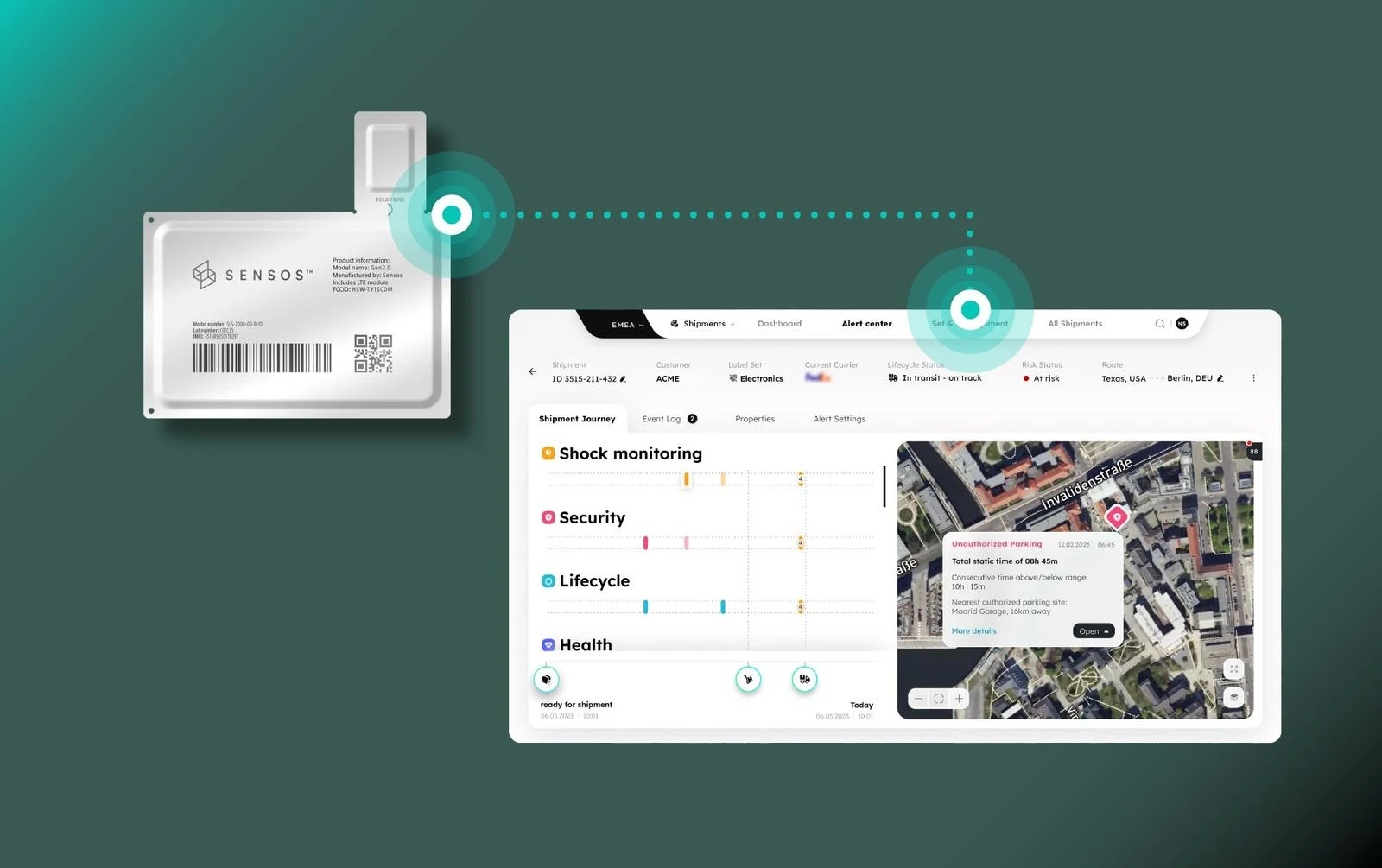
Pairpoint, a blockchain-based trading venture owned by Vodafone and Sumitomo Corporation, has announced a strategic partnership with Sensos, a leading supply chain solution company founded by Sony Semiconductors, to address the growing issue of supply chain fraud. This collaboration aims to leverage Sensos' expertise in smart label technology, which originated from Sony Semiconductor Israel, to enhance the security and transparency of supply chains.

The partnership is expected to integrate Sensos' supply chain management solutions with Pairpoint's Economy of Things (EoT) platform. This will enable logistics companies to securely track their goods at every stage of the supply chain. The use of Sensos' cellular tracking labels and AI-powered control tower, combined with Pairpoint's digital identity, trust, and transactional platform, will allow for the secure and immutable recording of all goods' movements, from port departures to final deliveries.

This initiative is particularly significant as it not only aims to combat fraud but also to improve operational efficiency and cost savings for businesses across multiple industries. The solution is currently being piloted in cooperation with global logistics operator Unilog, part of the ICL Group, at several sites in the US and Europe.

Pairpoint’s secure technology overlays Sensos’ highly reliable, real-time supply chain management solution through the Pairpoint-enabled iSIM and device agent software embedded into a smart label. Every logistic transaction is then verifiable, transparent, and resistant to tampering, effectively combatting fraud, and enhancing trust across the supply chain ecosystem.

The CEOs of both Pairpoint and Sensos have expressed their enthusiasm for the potential impact of this partnership on the supply chain sector, highlighting the importance of intelligent and globally connected cellular labels and the Pairpoint platform.

About Sensos:

Sensos is a real-time supply chain management company with offices in US, Germany and Israel. Sensos’ AI-based solution empowers logistics teams to transition from reactive firefighting to proactive decision making, driving faster shipments, smaller inventories and more efficient production planning- resulting in bottom line savings and more sustainable operations. Learn more about Sensos at: https://sensos.io/

About Pairpoint:

Pairpoint (the brand name of DABCo Limited) is a pioneering blockchain technology company dedicated to revolutionizing the industry with decentrialized solutions. Based in the United Kingdom, with offices in London (UK) and Lisbon (Portugal), it is supported by an investment of 60 million euros from Vodafone Group and Sumitomo Group and employs 50 people with specialist skills and experience in IoT and financial technology. Learn more about Pairpoint at https://pairpoint.io

LTIMindtree and IBM Collaborate on watsonx CoE for Generative AI

LTIMindtree and IBM Collaborate on watsonx CoE for Generative AI

LTIMindtree and IBM have joined forces to establish a Generative AI Center of Excellence (CoE) in India. This collaborative initiative combines the power of IBM's watsonx AI and data platform with the engineering skills of LTIMindtree, a global technology consulting and digital solutions company.

The CoE aims to drive open innovation and accelerate the adoption of generative AI solutions by organizations. The joint Generative AI Center of Excellence (CoE) in India, a co-innovation center combining the power of the IBM watsonx AI and data platform and the engineering skills of LTIMindtree.

LTIMindtree brings its expertise in data and machine learning model customization, along with full-stack engineering capabilities. The CoE leverages IBM's watsonx technology suite, including watsonx.ai, watsonx.data, and watsonx.governance, as well as AI assistants.

The center, located in India, will focus on building point solutions that help clients adopt generative AI more effectively.

Benefits to Clients

LTIMindtree offers watsonx.governance integration with the Canvas.AI platform. This collaborative toolkit enables organizations to strategically incorporate AI governance frameworks throughout the entire AI lifecycle, ensuring compliance with ethical standards and responsible AI practices.

The CoE provides an enterprise data modernization and warehouse augmentation service powered by watsonx.data. This service enhances existing data warehouse capabilities using IBM's technology and LTIMindtree's tailored solutions.

This collaboration represents a significant step toward advancing AI technologies and empowering businesses to achieve success with robust governance. By funneling the latest AI research andsolutions innovations into real-world , LTIMindtree and IBM are poised to make a meaningful impact in the field of generative AI.

Vodafone Integrating Crypto Wallets Directly Onto SIMs


Vodafone is making strides in the integration of cryptocurrency wallets with SIM cards. This innovative move aims to enhance mobile security and convenience by leveraging blockchain technology. The integration is expected to connect SIM cards with digital identities and blockchain networks, with a projection of widespread adoption by 2030, reported Bloomberg.

Vodafone's Blockchain Lead, David Palmer, discussed the company's vision to bring blockchain technology to smartphone users. By 2030, the expectation is to have more than 20 billion mobile phones in operation, many of which will be smartphones. The plan includes linking the SIM card to digital identity and utilizing the cryptography within SIM cards for seamless integration.

This initiative is part of a broader financial strategy, which involves Vodafone Idea Ltd., an entity operating in India where Vodafone Group holds a about ~30% stake, taking on substantial debt over the next two years. Despite financial complexities, Vodafone Group has been actively pursuing innovative partnerships, including a 10-year strategic alliance with Microsoft to introduce generative artificial intelligence (AI) services to its customers.

The integration of cryptocurrency wallets into SIM cards could open up new possibilities for mobile commerce and represents a significant step towards the convergence of mobile technology and blockchain hardware.

Besides, the British Telco is also innovating in the field of Artificial Intelligence and IoT. In January this year, Vodafone and Microsoft announced a 10-year partnership to provide digital platforms, cloud services, generative AI, and IoT solutions to over 300 million businesses, consumers, and public sector organizations in Europe and Africa.

LTIMindtree and Vodafone Collab To Offer Connected and Smart IoT Solutions

LTIMindtree and Vodafone Collab To Offer Connected and Smart IoT Solutions

LTIMindtree, a global technology consulting and digital solutions company, has announced a collaboration with Vodafone, a leader in managed Internet of Things (IoT) with over 175 million connections worldwide.

This partnership aims to deliver connected and smart IoT solutions that will enable Industry X.0 and digital transformation across multiple sectors.

The collaboration will leverage LTIMindtree's Insight NXT platform (iNXT) and Vodafone’s IoT Managed Connectivity to offer advanced capabilities in AI, machine learning, predictive maintenance, digital twin, supply chain visibility, sustainability, energy management, worker safety, sensorization of assets, augmented reality, and virtual reality training.

Gemma Barsby, UK Head of IoT at Vodafone, expressed enthusiasm about supporting the real-time delivery of IoT managed services to clients, which will drive cost efficiencies and greater productivity. Monish Mishra, Chief Business Officer- iNXT at LTIMindtree, highlighted the importance of continuous innovation and connected ecosystems for growth and differentiation.

This strategic partnership is set to design highly scalable, end-to-end solutions by harnessing IoT, Metaverse, Artificial Intelligence, and Machine Learning, delivering secure, connected ecosystems and outcomes over Vodafone’s Managed IoT Connectivity Network.

About Industry X.0, it is the leap into the future of manufacturing, where technology not only supports operations but actively enhances and transforms them. It's a significant shift from simply automating processes to using data and analytics to drive intelligent action.

Nokia, Vodafone Conduct World’s 1st Trial of A New Tech That Greatly Enhances Internet Experiences

Nokia, Vodafone Conduct World’s 1st Trial of A New Tech That Enhances Internet Experiences

Nokia and Vodafone conduct world’s first trial of L4S technology over an end-to-end PON network

Nokia and Vodafone have announced, on Tuesday, that the two companies have conducted the world's first trial of L4S technology over an end-to-end Passive Optical Network (PON), demonstrating its potential to enhance the internet experience for activities like video conferencing and gaming.

L4S is ideal for latency-dependent applications such as cloud gaming, virtual/ augmented reality (VR/AR), and high-quality video conferencing. It helps in managing network congestion, reducing jitter, and preventing packet loss.

What is L4S?

L4S, which stands for "Low Latency, Low Loss, Scalable throughput," is a technology that aims to significantly improve internet traffic management. This new technology ix developed and pioneered by Nokia Bell Labs and is now an Internet Engineering Task Force (IETF) standard.

This technology represents a significant step forward in creating a smoother and more reliable online experience for users, especially as we move towards more real-time and interactive applications on the internet.

The Lab Test

Nokia’s research arm Nokia Bell Labs and Vodafone’s Fixed Access Center of Excellence (CoE) performed this world’s first demonstration of L4S running over PON in Vodafone’s lab in Newbury, U.K.

The demonstration was performed on an end-to-end fixed access network built with Nokia technology. It consisted of a broadband network gateway (BNG), a PON optical line terminal (OLT), multiple PON optical network terminals (ONTs) and WiFi access points. The tests showed extremely low and consistent end-to-end latencies when travelling across every element of the network.

L4S achieves almost zero packet queuing delay, which is a common cause of latency on the internet. This is particularly beneficial when the network is under heavy load.

In tests, L4S showed extremely low and consistent end-to-end latencies across various network elements, including fully congested access networks and WiFi links.

In the lab tests, Vodafone and Nokia Bell Labs measured consistent latencies of 1.05ms at local Ethernet ports running over a fully congested access network (BNG to ONT), and just 12.1ms when including a fully congested WiFi link as the final connection.

Latency can affect the quality and speed of online activities, such as browsing, streaming, gaming, or video calling. Low latency means less delay and a smoother internet experience. For example, low latency ensures that video calls are synced and that your connection has minimal delay. Online gamers typically covet low lag or latency because delays cause losses. Low latency also reduces buffering and allows for better video quality.

While the tests were conducted on PON networks, L4S can be implemented over any access technology, whether wireless or wireline.

Nokia is also working on an another research initiative called UNEXT. L4S is a prime example of the network-application symbiosis that is a key component of UNEXT.

UNEXT is a research initiative from Nokia Bell Labs that aims to redefine network software and systems by evolving the network into an operating system. UNEXT is self-regulating and interactive, and includes Natural-Language Networking, which allows for voice-based network capabilities. Nokia believes that UNEXT will pave the way for the 6G era and enable smooth support for users and applications.

Airtel Giving Away 30GB free Internet: Here’s how to get it

The Indian telecom war is getting fiercer by the day. The war, which started last year after newbie Jio entered the Indian market, is seeing Indian telecom biggies fighting it out to secure the largest market share by providing its customers with lucrative data and calling offers. And now, Airtel, which had previously already announced the removal of all roaming charges for incoming and outgoing calls as well as SMSes and data usage within India, is back with another ‘Free Internet’ offer which is giving its postpaid customers a chance to pocket 30GB of free data for three months (10GB per month).

The offer, which is giving people an opportunity to access 10 GB per month absolutely free of cost, can be availed via Airtel's MyAirtel app.

How to Avail the Offer?


1) Go to MyAirtel App. If not downloaded, you can easily download the app from Google Play Store or Apple App Store absolutely free of cost.

2) Once you have opened the app, you will see a banner flashing on its home page with the title ‘Enjoy India’s fastest network with free Internet. Claim now’.

3) Once you have spotted the banner, click on the ‘Claim Now’ tab.

Make sure that you avail the offer before March 31, which is the deadline fixed by Airtel.

Prior to this free 30 GB offer, Airtel had doubled the monthly data for its ‘my Infinity’ plan users. So, if you had originally subscribed to Airtel’s 10GB data plan, which anyway had doubled over the past few months to 20GB, your monthly data offering has now effectively shot up to 30GB per month. Experts claim that the decision was made so as to provide the postpaid users with something lucrative and make them stay with the telecom operator and not make a switch to others.

Ever since Jio made an entry into the telecom world, rivals Airtel, Vodafone and Idea have been constantly coming out with new, lucrative data tariffs so as to keep the competition at bay. Unfortunately, Jio's data tariffs still remain undefeated in both postpaid and prepaid categories.

Currently, under its Jio Prime programme, Reliance Jio is offering its customers a Rs 303 plan which gives them unlimited data, while 28GB is available at 4G speeds. The FUP is 1GB per day. The plan is currently the cheapest in the Indian market right now.

Other similar data plans from Jio's rivals includes Vodafone’s Rs 1,299 plan that is offering its users 3000 local minutes + STD calling and around 8GB of data. Though, Idea doesn’t have 4G data plans currently, it did announce free incoming calls on domestic roaming and introduced a couple of interesting international roaming value packs.

One thing is for sure, as of now, there's no one in the Indian telecom sector which can match Jio when it comes to data tariffs. Also, from the looks of it, the situation is going to remain like this for quite sometime as Jio, which already has more than 100 million customers in its kitty, has announced that it will keep optimising its data tariffs to offer 20% more value to its customers compared to rivals.

Tech Mahindra, GE, Cisco & Others Unites To Form India IoT Panel

india_iot_panel

Industry veterans from Vodafone, Tesco, Tech Mahindra, Philips, GE and Cisco have joined hands to form an Internet of Things panel in India. The panel will try to build open source Internet of Things (IoT) solutions to solve issues and problems in specific areas such as agriculture, healthcare and education.

The panel will be led by an industry body called Institution of Engineering Technology and Dr. Rishi Bhatnagar, global head for digital enterprise services at Tech Mahindra will be the panel’s chairman.

Other members of the panel include Joy Ranjan Cheruvanthoor, senior Vice-President-strategic alliances and M2M at Vodafone Business Services; Babu Narayan, senior principal scientist at GE Software Research; and Cisco Systems’ principal engineer Mukesh Taneja. Robin Saxby, who is the founder of ARM holdings, has been chosen to be one of the global advisors to the panel.

Internet of Things involves connecting everything from wearable devices and traffic signals to waste control systems and door locks to a huge network.

“The panel will have six working groups on Internet of Things applications which will concentrate on IoT approaches that are being applied across market segments and various businesses. Besides these, the core panel will have a special working group around Internet of Things Labs and on regulatory and legal points," said Bhatnagar in a statement to Economic Times.

The Internet of Things panel will also work on creating a startup accelerator that would combine various components of IoT into useful products.

According to Shekhar Sanyal, country head at Institution of Engineering Technology, India, “There is a large startup ecosystem in Internet of Things space in India. We will provide technical and business mentorship to such startups and also help connect them with investors."  Snayal gave this statement to ET.

The government of India wants the country’s IoT industry to touch the magic figure of $15 billion (Rs. 94,500 crore) by the year 2020. The government is currently working on its 1st IoT policy. Companies expect a significant amount of business from Internet of Things related work and local based software developers such as Tech Mahindra, Infosys and Wipro have already started working on making its way into the market.

The panel will also try to collaborate with other industry bodies which are working on the same issues and problems as them.

Tech Mahindra, GE, Cisco & Others Unites To Form India IoT Panel

india_iot_panel

Industry veterans from Vodafone, Tesco, Tech Mahindra, Philips, GE and Cisco have joined hands to form an Internet of Things panel in India. The panel will try to build open source Internet of Things (IoT) solutions to solve issues and problems in specific areas such as agriculture, healthcare and education.

The panel will be led by an industry body called Institution of Engineering Technology and Dr. Rishi Bhatnagar, global head for digital enterprise services at Tech Mahindra will be the panel’s chairman.

Other members of the panel include Joy Ranjan Cheruvanthoor, senior Vice-President-strategic alliances and M2M at Vodafone Business Services; Babu Narayan, senior principal scientist at GE Software Research; and Cisco Systems’ principal engineer Mukesh Taneja. Robin Saxby, who is the founder of ARM holdings, has been chosen to be one of the global advisors to the panel.

Internet of Things involves connecting everything from wearable devices and traffic signals to waste control systems and door locks to a huge network.

“The panel will have six working groups on Internet of Things applications which will concentrate on IoT approaches that are being applied across market segments and various businesses. Besides these, the core panel will have a special working group around Internet of Things Labs and on regulatory and legal points," said Bhatnagar in a statement to Economic Times.

The Internet of Things panel will also work on creating a startup accelerator that would combine various components of IoT into useful products.

According to Shekhar Sanyal, country head at Institution of Engineering Technology, India, “There is a large startup ecosystem in Internet of Things space in India. We will provide technical and business mentorship to such startups and also help connect them with investors."  Snayal gave this statement to ET.

The government of India wants the country’s IoT industry to touch the magic figure of $15 billion (Rs. 94,500 crore) by the year 2020. The government is currently working on its 1st IoT policy. Companies expect a significant amount of business from Internet of Things related work and local based software developers such as Tech Mahindra, Infosys and Wipro have already started working on making its way into the market.

The panel will also try to collaborate with other industry bodies which are working on the same issues and problems as them.

Market Reports

Market Report & Surveys
IndianWeb2.com © all rights reserved