Showing posts with label cryptocurrency. Show all posts

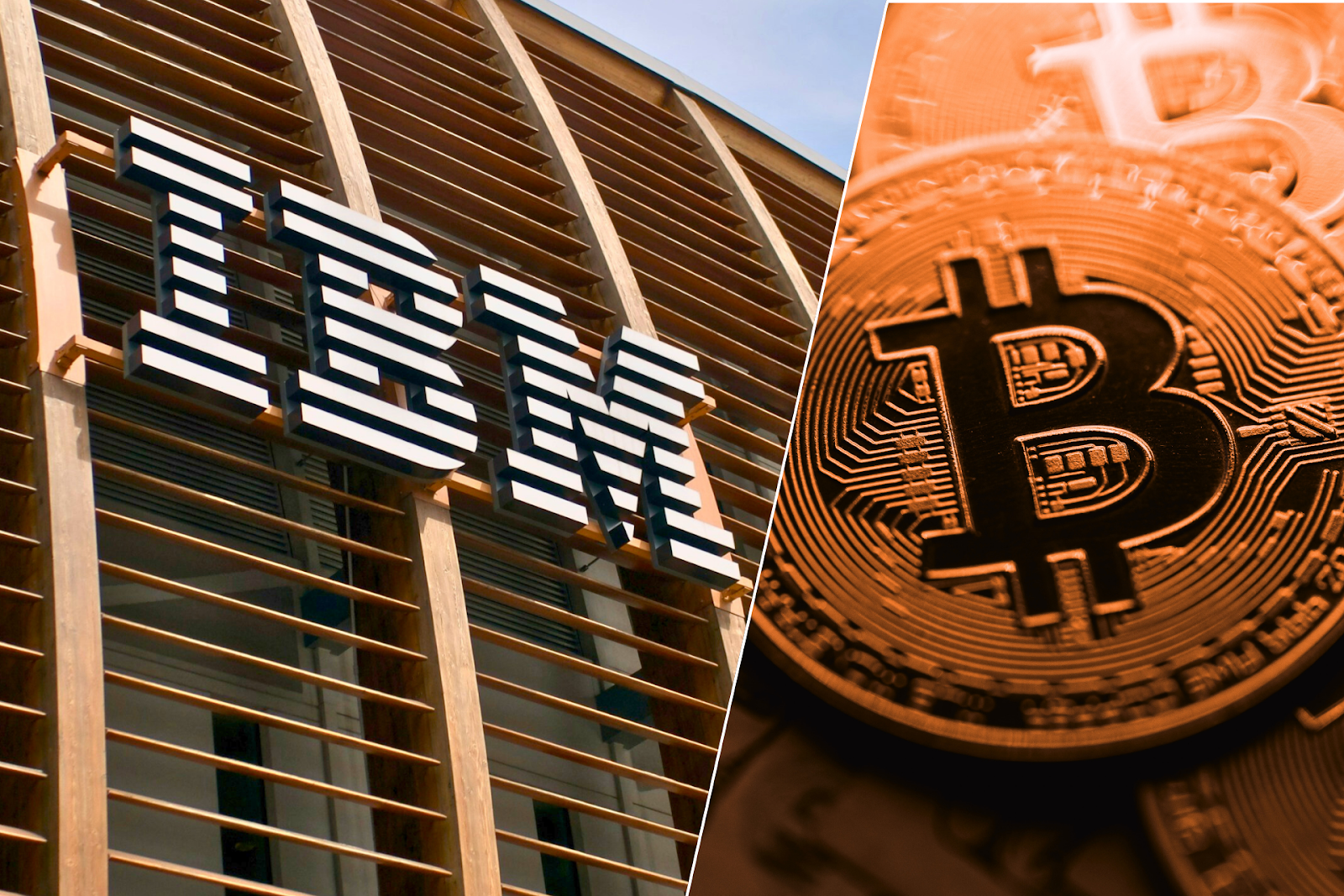
IBM Enters Crypto World with New Platform for Banks and Governments

IBM Enters Crypto World with New Platform for Banks and Governments

IBM has launched “Digital Asset Haven,” a crypto custody platform tailored for banks, governments, and large enterprises, marking its formal entry into institutional blockchain infrastructure.

Here’s a detailed breakdown of what IBM’s new platform offers and why it matters:

What Is Digital Asset Haven?

  • Launch Date: October 27, 2025
  • Purpose: Secure, compliant custody and transaction services for digital assets
  • Target Clients: Financial institutions, government entities, and large corporations

Key Features

  • Multi-Blockchain Support: Custody, transfer, and settlement across 40+ blockchains
  • Wallet Management: Integrated wallet infrastructure with policy-based governance
  • Compliance Tools: Built-in KYC and AML frameworks
  • SaaS Rollout: Initially offered as Software-as-a-Service (SaaS)
  • Partnerships: Developed with Dfns, a French wallet infrastructure firm

Strategic Context

  • Supports the emerging $10 trillion tokenization economy
  • Includes Bitcoin custody and tokenized payments
  • Marks IBM’s shift from experimental blockchain efforts to regulated infrastructure

Implications

  • For Institutions: Trusted, enterprise-grade solution for digital asset management
  • For IBM: Positions IBM as a serious contender in blockchain infrastructure
After winding down earlier blockchain efforts (like IBM Food Trust), this marks a renewed, enterprise-focused push. It targets the same institutional segment as Fireblocks, Anchorage, and BitGo, but with IBM’s legacy in enterprise trust and compliance.

IBM plans to integrate AI-driven risk scoring and predictive compliance analytics by mid-2026.

Architecture & Technology Stack

  • Core Infrastructure: Built on IBM Cloud and IBM Hyper Protect Services with confidential computing and hardware-based encryption
  • MPC Wallets: Uses multi-party computation (MPC) for keyless custody and distributed signing
  • API-First Design: RESTful APIs for integration with banking systems and blockchain networks
  • Smart Contract Support: Compatible with Ethereum, Solana, and other programmable chains

Security & Compliance

  • Regulatory Alignment: Meets Basel III, MiCA, and FATF Travel Rule standards
  • Audit Trails: Immutable logging and real-time monitoring for compliance and forensic analysis
  • Geo-Fencing & Access Controls: Location-based restrictions and role-based access

Strategic Partnerships

  • Dfns Integration: IBM leverages Dfns’ MPC wallet infrastructure with 15M+ wallets deployed
  • Enterprise Pilots: Early adopters include central banks, sovereign wealth funds, and tier-1 institutions
  • Tokenization Ecosystem: Supports CBDCs, tokenized bonds, and real-world asset custody

Use Cases

  • Bitcoin Custody: Secure storage and transfer for institutional BTC portfolios
  • Tokenized Payments: Programmable payments using stablecoins and tokenized fiat
  • Cross-Chain Settlement: Asset movement across Ethereum, Polygon, Avalanche, and private chains

Strategic Implications

  • IBM’s Reentry into Blockchain: A shift from earlier experimental efforts to regulated infrastructure
  • Competitive Positioning: Competes with Fireblocks, Anchorage, and BitGo in institutional custody
  • Future Expansion: Plans to add AI-driven risk scoring and predictive compliance analytics by mid-2026
WazirX to Restart on 24th October With 0% Trading Fees

WazirX to Restart on 24th October With 0% Trading Fees

WazirX, India’s leading crypto exchange, is restarting operations on 24th October. This follows the successful completion of its restructuring process, sanctioned by the Hon’ble High Court of Singapore, and backed overwhelmingly by creditors.

This marks a fresh chapter in the platform’s journey to rebuild trust, transparency, and innovation.

As part of the Restart Offer, all users will enjoy 0% trading fees across all trading pairs. This initiative will help WazirX users to trade without the burden of fees on each trade.
Phased Launch Approach

The relaunch will begin with certain crypto-to-crypto pairs and USDT/INR pair, followed by the gradual expansion of additional markets in the coming days.
Renewed Commitment to Security and Transparency

In a major step towards enhancing fund safety, WazirX has partnered with BitGo, a global leader in digital asset custody, to safeguard platform assets through institutional-grade, insured custody solutions.

Nischal Shetty, Founder of WazirX, said,
At the heart of everything we do is our mission to make crypto accessible to every Indian. I want to thank the WazirX community for their patience through these difficult times.

Asset security is currently a crucial aspect in the global crypto ecosystem. Our partnership with BitGo adds an additional layer of trust and protection with world-class custody standards, as we restart. This isn't just a return to operations, it’s a reinforcement of our integrity which we’ve always strived for.”

Earlier this week, WazirX completed token swaps, merger, delisting, migration of tokens and any rebranding that the tokens may have undergone. WazirX is able to restart operations and initiate token distributions to creditors within 10 business days as estimated. In addition, the platform is working towards issuance of Recovery Tokens to creditors.

For more information, visit www.wazirx.com

India Blocks ₹2,385 Crore in Crypto Linked to Forex Scam

India Blocks ₹2,385 Crore in Crypto Linked to Forex Scam

India’s Enforcement Directorate (ED) has provisionally attached ₹2,385 crore (~$271 million) in cryptocurrency assets under the Prevention of Money Laundering Act (PMLA), 2002. This sweeping action is part of a broader crackdown on illegal foreign exchange trading and digital asset misuse.
  • Target: OctaFX Scam
    The crypto freeze is linked to the OctaFX forex trading platform, which allegedly defrauded Indian investors of ₹1,875 crore between June 2022 and April 2023. The platform reportedly operated from 2019 to 2024, generating illicit profits of up to ₹5,000 crore, much of which was routed overseas.
  • Global Dragnet
    Spanish authorities arrested Pavel Prozorov, the alleged mastermind behind OctaFX, in coordination with Indian investigators. The ED’s Mumbai Zonal Office is leading the probe, which spans shell firms, offshore channels, and cross-border payment loops.
  • Assets Seized
    • Crypto holdings worth ₹2,385 crore
    • Immovable properties and a luxury yacht previously attached
    • Total seized assets in the case now exceed ₹2,681 crore
This case signals India’s intensifying scrutiny of crypto-linked financial crimes and its resolve to regulate digital assets under existing anti-money laundering frameworks.

The first media outlet to report India’s ₹2,385 crore crypto freeze linked to the OctaFX forex scam was BreakingCrypto, publishing the story on October 17, 2025 at 4:54 PM EDT. Hindustan Times followed shortly after with its own coverage at 5:20 PM IST the same day.

Coinbase Invests in CoinDCX, Valuing Indian Crypto Exchange at $2.45 Billion

Coinbase Invests in CoinDCX, Valuing Indian Crypto Exchange at $2.45 Billion

Coinbase has deepened its commitment to the Indian crypto market by investing further in CoinDCX, valuing the exchange at $2.45 billion post-money. Here's a quick breakdown of what this recent development in Indian cryptocurrency market:

Investment Highlights

  • Investor: Coinbase Ventures (the investment arm of Coinbase)
  • Recipient: CoinDCX, one of India’s leading crypto exchanges
  • Valuation: $2.45 billion post-money
  • Funding Type: Extension of a previous round; exact amount undisclosed
  • Purpose:
    • Expand CoinDCX’s product suite
    • Drive user growth and innovation
    • Strengthen presence in India and the Middle East
    • Introduce new on-chain use cases tailored for India
  • Strategic Moves:
    • CoinDCX recently acquired BitOasis, a crypto exchange in the Middle East and North Africa
    • The company now serves over 20 million users across India and the UAE

Coinbase’s Perspective:

Shan Aggarwal, Chief Business Officer at Coinbase, emphasized the potential of India and the Middle East as dynamic regions for crypto adoption and innovation

CoinDCX Valuation Timeline

Date Round Amount Raised Post-Money Valuation Key Investors
Sep 2020 Series B $13.9M $36.3M Block.one, Polychain, Jump Capital
Jun 2021 Series C $90.2M $779M Coinbase, Bain Capital, Polychain
Mar 2022 Series D $135M $1.51B Pantera Capital, Steadview, Coinbase
Oct 2025 Extension Undisclosed $2.45B Coinbase Ventures

Bitcoin Goes Mainstream: Morgan Stanley Tells Advisors to Buy In

Bitcoin Goes Mainstream: Morgan Stanley Tells Advisors to Buy In

Morgan Stanley has made a landmark move in the crypto space that could significantly reshape mainstream investment strategies.

In its latest guidance, the firm’s Global Investment Committee (GIC) recommended that financial advisors and clients maintain a 2%–4% Bitcoin allocation. According to the analysts, BTC is like digital gold, calling it “scarce.”

Here's the essence of their "huge" Bitcoin call:

Allocation Guidance

  • Global Investment Committee (GIC) recommends a 2%–4% allocation to Bitcoin across client portfolios:
    • 2% for balanced growth
    • 3–4% for opportunistic or market-driven returns
  • This guidance reaches 16,000 financial advisors managing $2 trillion in client assets.

Why It Matters

  • Morgan Stanley views Bitcoin as “digital gold”—a scarce, long-term asset with diversification benefits.
  • Institutional ownership of Bitcoin ETFs has climbed to 25% in H2 2025, up from 21.9% in Q1.
  • Morgan Stanley holds $187 million in BlackRock’s iShares Bitcoin Trust (IBIT), ranking among the top five holders.

Potential Impact

  • Bitwise CEO Hunter Horsley called the update “huge,” noting it could open the floodgates to $2 trillion in potential crypto exposure.
  • Partnership with ZeroHash aims to bring crypto access to retail clients via E-Trade by 2026.
  • ETF inflows have helped push Bitcoin to a new ATH of $125K, with further advisor-driven demand expected to amplify the rally.
Bitwise CEO Hunter Horsley called it “huge” and posted on X, saying - “GIC guides 16,000 advisors managing $2 trillion in savings and wealth for clients. We’re entering the mainstream era.”

Mr. Raj Karkara, COO, ZebPay, said “Bitcoin’s record-breaking surge past $125,000 marks a defining moment for the digital asset ecosystem, driven by sustained institutional inflows into spot ETFs, declining exchange reserves, and a pronounced macro shift toward the ‘debasement hedge’ narrative. This rally isn’t fueled by short-term momentum alone; it reflects a structural tightening of supply amid robust on-chain activity and renewed investor conviction. As liquidity migrates towards regulated venues and Bitcoin cements its place among the world’s most valuable assets, we’re witnessing a pivotal evolution in market maturity and capital efficiency within the crypto economy. These developments highlight not only Bitcoin’s resilience as a store of value but also the growing sophistication of participants navigating this dynamic landscape.”

Bitget Becomes First Exchange to Offer All Cryptos on Four Major Chains in One Account

Bitget Becomes First Exchange to Offer All Cryptos on Four Major Chains in One Account

Bitget, the world’s leading Universal Exchange (UEX), has announced a major upgrade to Bitget Onchain, a revolutionary feature that allows users to seamlessly trade, stake, and manage millions of on-chain tokens directly from a single Bitget spot account. The expansion introduces support for four leading blockchains — Ethereum, Solana, BSC, and Base — transforming Bitget Onchain from selected assets into a comprehensive gateway to the decentralized economy.

With this upgrade, Bitget Onchain delivers a full-featured and user-friendly experience that combines the diversity of decentralized markets with the security and reliability of centralized exchanges. Users can now access millions of tokens across multiple chains without the need to juggle separate Web3 wallets, external transfers, or private key management. This streamlined approach makes on-chain trading more accessible to a wider user base while retaining the advanced tools and protections expected by professional traders.

In addition to broad multi-chain coverage, Bitget has also launched Onchain Signals, a new feature powered by AI algorithms. Onchain Signals tracks and filters high-quality “smart money” addresses across blockchains, providing users with real-time token alerts and actionable insights. With one-click trading capabilities, users can act quickly on opportunities and follow strategies from leading market participants, improving both efficiency and success in their on-chain operations.

Security remains at the heart of Bitget Onchain. All tokens are pre-screened, with additional safeguards in place for high-risk assets, ensuring users benefit from exchange-grade protection while exploring the open on-chain ecosystem.

The Onchain upgrade marks another step toward Bitget’s long-term vision of building the Universal Exchange (UEX). As the next-generation exchange model, UEX will support all tradable crypto assets, unlike current CEXs, which mostly support only a few hundred mainstream tokens. In addition, UEX's service radius will not be limited to cryptocurrencies—global premium assets such as stocks, ETFs, gold, and forex will all be tradable on UEX. This is not just about combining the advantages of CEX and DEX, but a fusion of technology and philosophy. While most global exchanges have only begun experimenting with Web3 integrations or partial on-chain coverage, Bitget has already advanced further with unified accounts, full-asset support across multiple blockchains, and AI-driven trading intelligence. Bitget is the first exchange to provide this experience, where users can access both the reliability of CEX and the diversity of DEX in one place.

“Bitget Onchain is breaking down barriers between CEX and DEX by offering both accessibility and security in one place,” said Gracy Chen, CEO of Bitget. “By expanding coverage to millions of tokens across top blockchains and introducing AI-powered Onchain Signals, we are giving users the smartest, safest way to trade on-chain. This upgrade also represents the core of UEX's vision — helping users trade smarter across every market, on-chain and beyond.”

With Bitget Onchain, users gain unmatched access to the decentralized token universe in a secure, streamlined, and user-friendly environment, maintaining Bitget’s role as a global leader in building the future of finance.

For more information on Bitget Onchain, visit here .

About Bitget

Established in 2018, Bitget is the world's largest Universal Exchange (UEX). Serving over 120 million users in 150+ countries and regions, the Bitget exchange is committed to helping users trade smarter with its pioneering copy trading feature and other trading solutions, while offering real-time access to Bitcoin price, Ethereum price, and other cryptocurrency prices. Bitget Wallet is a leading non-custodial crypto wallet supporting 130+ blockchains and millions of tokens. It offers multi-chain trading, staking, payments, and direct access to 20,000+ DApps, with advanced swaps and market insights built into a single platform.

Bitget is driving crypto adoption through strategic partnerships, such as its role as the Official Crypto Partner of the World's Top Football League, LALIGA, in EASTERN, SEA and LATAM markets. Aligned with its global impact strategy, Bitget has joined hands with UNICEF to support blockchain education for 1.1 million people by 2027. In the world of motorsports, Bitget is the exclusive cryptocurrency exchange partner of MotoGP™, one of the world’s most thrilling championships.

Risk Warning: Digital asset prices are subject to fluctuation and may experience significant volatility. Investors are advised to only allocate funds they can afford to lose. The value of any investment may be impacted, and there is a possibility that financial objectives may not be met, nor the principal investment recovered. Independent financial advice should always be sought, and personal financial experience and standing carefully considered. Past performance is not a reliable indicator of future results. Bitget accepts no liability for any potential losses incurred. Nothing contained herein should be construed as financial advice. For further information, please refer to our Terms of Use.

Taiwan’s First Public Bitcoin Treasury Signals Asia’s Corporate Crypto Shift

Taiwan’s First Public Bitcoin Treasury Signals Asia’s Corporate Crypto Shift

In a landmark move for Taiwan’s corporate crypto landscape, Top Win International, originally a luxury watchmaker, has become Taiwan’s first publicly traded corporate Bitcoin treasury. It has successfully raised $10 million to launch the country’s first corporate Bitcoin treasury. The company is rebranding as AsiaStrategy, positioning itself as a regional counterpart to U.S.-based MicroStrategy.

The funding round, completed on August 15, was led by WiseLink, a Taiwan-listed zipper manufacturer and software firm, which contributed $2 million via three-year convertible notes. Additional backing came from U.S. investor Chad Koehn and four unnamed private investors.

AsiaStrategy plans to use the capital to:
  • Accumulate Bitcoin at current market prices (~$42,500 per BTC)
  • Invest in other listed Bitcoin treasury firms
  • Avoid classification as a traditional investment company, sidestepping regulatory hurdles like SEC oversight
The move follows a strategic alliance with Sora Ventures, which previously helped launch Japan’s first Bitcoin treasury firm, Metaplanet. Taiwan’s July 2025 rollout of a blockchain-based payment system further underscores its ambition to become a regional crypto innovation hub.

Global Context: How Taiwan’s Strategy Compares

Region/Country Strategy Type Key Players / Examples Funding Mechanism Regulatory Climate Unique Traits
Taiwan Corporate Treasury (Public) AsiaStrategy (Top Win) $10M via convertible notes Pro-crypto, innovation-focused First public BTC treasury in Taiwan
United States Corporate + Government Reserve MicroStrategy, U.S. Treasury Equity, debt, asset forfeiture Mixed; evolving federal stance Largest BTC holder via seizures
Japan Corporate Treasury (Public) Metaplanet Convertible debt, equity Supportive, ETF approvals Fastest-growing BTC firm in Asia
Bhutan Sovereign Treasury Druk Holdings Mining + strategic purchases Quiet but active BTC mining via hydroelectric surplus
El Salvador Sovereign Treasury Government of El Salvador Direct purchases Fully legalized BTC First country to adopt BTC as legal tender
UK & Europe Corporate Treasury (Public) Smarter Web Co., Blockchain Group IPO + BTC treasury model Varies by country BTC as base layer for equity growth

Strategic Takeaway

Taiwan’s AsiaStrategy is adopting a cautious yet symbolic approach—leveraging convertible debt and public market transparency to build its Bitcoin reserves.
Unlike MicroStrategy’s aggressive accumulation or El Salvador’s sovereign adoption, Taiwan’s model is corporate-first and regulation-aware, signaling a maturing crypto strategy in Asia.

As Bitcoin continues to gain traction as a treasury asset, AsiaStrategy’s pivot could inspire a wave of publicly listed firms across Asia to follow suit—blending traditional business models with digital asset innovation.

Coinbase Reboots in India: FIU Nod, Trading Pause, and Possible CoinDCX Buyout

Coinbase Reboots in India: FIU Nod, Trading Pause, and Possible CoinDCX Buyout

Coinbase, a leading centralized cryptocurrency exchange founded in 2012 by Brian Armstrong, has grown into one of the most trusted platforms for buying, selling, and storing digital assets. It serves over 245,000 ecosystem partners across 100+ countries, with more than $425 billion in assets on its platform.

Headquartered in the U.S. (though now remote-first), Coinbase, has made a notable comeback in India after a period of regulatory turbulence. Here's a breakdown of its current status and activities:

Re-entry into the Indian Market

  • Coinbase has officially registered with India’s Financial Intelligence Unit (FIU), allowing it to operate under local compliance frameworks.
  • This marks a strategic shift from its earlier exit in 2022, when it halted services due to issues with UPI integration and regulatory uncertainty.

What’s Now Available

  • Indian users can reportedly send, receive, convert, and store supported cryptocurrencies on Coinbase.
  • Full trading services (buy/sell) are expected to roll out later this year, following further regulatory alignment.

Security & Compliance

  • Coinbase emphasizes high security standards including 2FA, cold storage, and insurance protection.
  • Its FIU registration ensures anti-money laundering (AML) compliance, making it a safer option compared to unregulated platforms.

Limitations & Challenges

Trading is still restricted for Indian users as of now—no direct buying/selling of crypto.

Transaction fees on Coinbase tend to be higher than local exchanges like CoinDCX or Binance India.

Strategic Vision

Coinbase sees India as a key hub for onchain innovation, citing the country’s growing developer base and startup ecosystem.

The company aims to empower local builders through tools like Base, its Ethereum Layer 2 platform.

Crypto Exchange Comparison

Feature Coinbase 🇺🇸 CoinDCX 🇮🇳 Binance India 🌏
Founded 2012 (US) 2018 (India) 2017 (Global)
Regulatory Status FIU-registered in India FIU-registered Operates via WazirX (unclear FIU status)
Trading Access (India) Limited (no buy/sell yet) Full access Full access
Fees High (up to 3.99%) Low (0.04%–0.1%) Very Low (0.015%–0.1%)
Security 2FA, cold storage BitGo-backed, recently hacked 2FA, SSL, cold storage
Mobile App iOS & Android iOS & Android iOS & Android
Referral Bonus ₹750 in BTC ₹100 in ETH Varies (BNB discounts)
User Experience Global UX, beginner-friendly Localized UX, beginner-friendly Advanced UX, pro tools
Recent News Re-entered India, may acquire CoinDCX Recovering from $44M hack Stable, high liquidity

Key Insights
  • Coinbase is re-entering India with FIU registration and may acquire CoinDCX to accelerate local presence. Talks are ongoing but not confirmed. 
  • CoinDCX offers low-cost trading and full access but is recovering from a major security breach. CoinDCX recently suffered a $44M hack.
  • Binance India remains dominant for advanced traders, though its regulatory clarity is still in question.

CoinDCX Engineer Arrested in $44 Million Crypto Theft; Insider Breach Suspected

CoinDCX Engineer Arrested in $44 Million Crypto Theft; Insider Breach Suspected

Rahul Agarwal, a CoinDCX employee arrested in connection with the $44 million (₹379 crore) crypto theft. Investigations revealed that hackers compromised Agarwal's login credentials to access the system and siphon off $44 million.

What Happened
  • On July 19, CoinDCX detected suspicious activity starting with a test transfer of 1 USDT at 2:37 AM.
  • By 9:40 AM, hackers had siphoned off $44 million in crypto assets, transferring them to six different wallets.
  • The breach targeted CoinDCX’s internal liquidity account, not user funds.
The Employee: Rahul Agarwal
  • Age: 30
  • Role: Staff Engineer at CoinDCX, promoted in April 2025
  • Location: Bengaluru, originally from Haridwar
  • Work History: Joined CoinDCX in May 2023 as a senior software engineer
How the Breach Occurred
  • Investigators found that Rahul’s work laptop was compromised, allowing unauthorized access to CoinDCX’s servers.
  • He allegedly received a WhatsApp call from a German number and was sent files that may have contained malware.
  • Rahul admitted to moonlighting for 3–4 private clients, which may have exposed his system.
Suspicious Transactions
  • ₹15 lakh was deposited into Rahul’s bank account from an unknown source, raising further suspicion.
Legal Action & Investigation
  • Rahul was detained on July 26 by the Whitefield CEN crime police.
  • CoinDCX operator Neblio Technologies filed the complaint and is cooperating with authorities.
  • The company suspects a sophisticated social engineering attack, possibly involving external collaborators.
Broader Implications
  • This case highlights the vulnerabilities in internal cybersecurity and the risks of insider threats in crypto firms.
  • Cybercrime units are now tracing the multi-wallet laundering trail to recover stolen assets.

The first media outlet to report the CoinDCX $44 million crypto theft and the arrest of employee Rahul Agarwal was Times Now, as well as a post on X by Crypto India (below). 


How India’s Income Tax Department Used AI to Crack Down on Crypto Evasion

How India’s Income Tax Department Used AI to Crack Down on Crypto Evasion

India’s Income Tax Department has successfully recovered ₹437 crore from cryptocurrency transactions in FY 2022–2023 by deploying a sophisticated blend of artificial intelligence (AI), machine learning (ML), and digital forensics. Here's how they did it:

Tech-Driven Enforcement Strategy

AI & Machine Learning Analytics
  • Used to detect anomalies and patterns in crypto transactions.
  • Compared Tax Deducted at Source (TDS) filings from crypto exchanges with individual income tax returns.
  • Discrepancies over ₹1 lakh triggered automated alerts to non-compliant taxpayers.
Digital Forensics & Blockchain Analysis
  • Tax officials trained to trace wallet addresses and link them to KYC data.
  • Collaborated with institutions like National Forensic Science University (NFSU), Goa for capacity-building.
  • Project Insight & Non-Filer Monitoring System (NMS)
  • These systems correlated internal databases with reported income to flag under-reporting.
  • Enabled targeted scrutiny without intrusive audits.

Results & Impact

Metric FY 2021–22 FY 2022–23
Tax from Crypto (VDAs) ₹269.09 crore ₹437 crore
Growth Rate +63%
Notices Sent (Discrepancy > ₹1L) Thousands

The 63% year-on-year growth in crypto tax collection signals rising adoption and tighter compliance.

Over 42,000 cases are reportedly under investigation for unreported VDA income.

Global Alignment & Future Plans

India is aligning with the OECD’s Crypto-Asset Reporting Framework (CARF) for cross-border transparency.

The upcoming Income Tax Bill (2025) aims to strengthen real-time monitoring systems and close offshore loopholes.

Bitcoin’s Phantom Founder Joins Billionaire Elite – Still No Face, No Trace

Bitcoin’s Phantom Founder Joins Billionaire Elite—Still No Face, No Trace

In a world obsessed with fame and followers, one name stands out by disappearing: Satoshi Nakamoto. The mysterious creator of Bitcoin—who launched a financial revolution and then vanished—has quietly climbed to the 11th spot on the global rich list, boasting a jaw-dropping estimated net worth of $129 billion. Yet, not a single photo, interview, or tweet exists to prove he, she, or they were ever here.

The inclusion of Satoshi Nakamoto in the global rich list was primarily reported by Arkham Intelligence, a blockchain analytics firm. The firm estimated Nakamoto’s net worth at $128.92 billion, based on holdings of approximately 1.096 million BTC.

Thanks to an untouched stash of over 1.096 million BTC mined in the early days, Nakamoto now outranks billionaires like Michael Dell and nearly catches up to Warren Buffett. If Bitcoin continues its historic pattern of 50% annual growth, analysts project Nakamoto could become the second-richest person in the worl by 2026, trailing only Elon Musk.

But who is this shadowy figure?

Who Might Be Satoshi? Theories That Just Won’t Die

1. Hal Finney

A cryptographic pioneer and the first person to receive Bitcoin, Finney's deep technical knowledge and early involvement make him a prime suspect. Some theorists believe he may have worked solo—or as part of a clandestine team.

2. Nick Szabo

Inventor of “Bit Gold,” a conceptual precursor to Bitcoin. Linguistic analysis has linked his writing style to Nakamoto’s, though he denies the connection.

3. Len Sassaman

A privacy advocate whose death in 2011 curiously aligns with Nakamoto’s last known public messages. Conspiracy or coincidence?

4. A Team Effort?

Given the sophistication of Bitcoin’s code and its philosophical depth, some posit that Nakamoto wasn’t one person, but a group—possibly cypherpunks, cryptographers, and digital rights activists.

Names That Missed the Mark

  • Craig Wright: The Australian scientist who infamously declared himself Nakamoto—only to be legally debunked in 2024.
  • Dorian Nakamoto: A Californian physicist wrongly outed due to name confusion, sparking a media frenzy and sympathetic crypto donations.
  • Peter Todd: A Bitcoin developer featured in HBO’s Money Electric: The Bitcoin Mystery. He denies being Satoshi, though whispers continue.

Fringe Theories That Keep the Internet Buzzing

  • Arthur Britto: A Ripple co-founder who emerged in 2025 and coincidentally sparked movement in dormant “Satoshi-era” wallets.
  • NSA/CIA Experiment: Bitcoin uses SHA-256, a cryptographic function developed by the NSA—fueling theories that the U.S. government is behind it all.
  • Mob Strategy: A far-fetched narrative links Bitcoin’s decentralized ethos to legacy finance tactics from criminal mastermind Meyer Lansky.

The Man, Myth, or Mirror?

Perhaps the best encapsulation of Nakamoto’s legacy isn’t found on a blockchain, but in Budapest—where a bronze statue stands faceless, hooded, and polished to reflect whoever looks at it. A symbolic reminder that “We Are All Satoshi.”

No interviews. No appearances. Just a silent digital titan sitting on a crypto mountain—and reshaping the future from behind the curtain.

India To Release Crypto Regulation Discussion Paper Next Month: Report

India To Release Crypto Regulation Discussion Paper Next Month: Report

India is gearing up to release a discussion paper on crypto regulation in June. According to reports, the paper is expected to outline policy framework options, drawing insights from the International Monetary Fund (IMF) and the Financial Stability Board (FSB). It will invite public feedback to shape India's broader regulatory approach to crypto assets.

India has maintained a cautious stance on cryptocurrencies, imposing a 30% tax on gains from virtual digital assets while requiring crypto exchanges to register with the Financial Intelligence Unit. However, taxation does not equate to legal recognition, and the government is taking a calibrated approach based on national priorities.

The discussion paper comes at a time when global attitudes toward crypto are shifting, with the US moving toward pro-crypto legislation and establishing a strategic bitcoin reserve. India’s stance will likely be influenced by these developments, but officials emphasize that no knee-jerk decisions will be made. 

This could be a pivotal moment for India's crypto landscape.

Key points that might be covered in the discussion paper

India's upcoming crypto regulation discussion paper is expected to cover several key areas:
  • Legal Status of Cryptocurrencies: Clarifying whether crypto assets will be treated as commodities, securities, or a separate asset class.
  • Consumer Protection Measures: Proposals to safeguard investors from fraud, including mandatory disclosures for exchanges and stricter penalties for violations.
  • Taxation Framework: Addressing concerns around the 30% tax on crypto gains and the 1% TDS on transactions, with potential revisions to encourage domestic trading.
  • Regulatory Oversight: Exploring registration requirements for exchanges and compliance with the Financial Intelligence Unit.
  • Global Best Practices: Drawing insights from IMF and FSB recommendations, as well as regulatory approaches in the US, EU, and Singapore.
  • Central Bank Digital Currency (CBDC): Positioning India's digital rupee as a regulated alternative to decentralized cryptocurrencies.
  • Stakeholder Feedback: Inviting public and industry input to shape India's long-term crypto policy.
India is taking a calibrated approach, ensuring that regulations align with national priorities while keeping pace with global trends.

What is American Bitcoin, A Trump Family-backed BTC Mining Co. That's Now Going Public?

What is American Bitcoin?, A Trump Family-backed BTC Mining Co. That Now Going Public

American Bitcoin is a Bitcoin mining company backed by Eric Trump and Donald Trump Jr. It was launched in March 2025 and is majority-owned by Hut 8 Corp. The company is set to go public through a merger with Gryphon Digital Mining, with shares expected to trade on Nasdaq under the ticker symbol ABTC.

The company aims to become the largest pure-play Bitcoin mining operation while maintaining a strategic Bitcoin reserve. Eric Trump, who serves as the chief strategic officer, has stated that the goal is to create the most investable Bitcoin accumulation platform. The Trump family will retain 98% ownership of the combined entity after the merger.

This move is part of the Trump family's broader involvement in cryptocurrency, which includes ventures like World Liberty Financial and meme coins $TRUMP and $MELANIA.

The merger is expected to be completed by Q3 2025, unlocking new capital for expansion. After the merger, American Bitcoin shareholders will retain 98% ownership of the combined entity, with Hut 8 continuing as its exclusive infrastructure and operations partner.

The Trump family has a significant stake in Hut 8 through its involvement in American Bitcoin. Currently, Hut 8 owns 80% of American Bitcoin, while Eric Trump and Donald Trump Jr. hold the remaining 20%.

The Trump family’s broader crypto ventures include World Liberty Financial, a crypto exchange, and the $TRUMP meme coin, which surged in value following promotional events.

Hut 8 Corp. is a Bitcoin mining and digital infrastructure company that integrates power, computing, and high-performance data solutions. It operates across 15 sites in the U.S. and Canada, including Bitcoin mining facilities, high-performance computing data centers, and power generation assets.

Hut 8 is also building a $2.5 billion AI and Bitcoin data center in Louisiana, known as the River Bend Campus. This facility will support 300MW of power and is designed for AI workloads and Bitcoin mining.

The company aims to scale low-cost Bitcoin accumulation while maintaining exposure to Bitcoin's long-term value.

Beyond mining, Hut 8 is also exploring AI hosting and high-performance computing (HPC), positioning itself as a key player in the evolving digital infrastructure landscape.

The Most Popular Cryptocurrencies Swapped on Swapzone

The Most Popular Cryptocurrencies Swapped on Swapzone

What is Swapzone?

Swapzone is a crypto exchange aggregator that allows users to compare and swap digital assets seamlessly. The platform offers real-time exchange rates, a user-friendly interface, and support for hundreds of cryptocurrencies.

Why Do Users Prefer Swapzone?

Swapzone stands out among crypto exchange platforms due to its transparency, speed, and convenience. Users can choose the best exchange rate from multiple providers without the need for account registration, ensuring a hassle-free experience.

Top Cryptocurrencies Swapped on Swapzone

Based on user activity, the following cryptocurrencies are among the most frequently exchanged on Swapzone:

1. Bitcoin (BTC)

Bitcoin remains the king of cryptocurrencies. It is widely traded and serves as the primary store of value in the digital asset space. Many users swap BTC to diversify their portfolios or take advantage of market fluctuations.

2. Ethereum (ETH)

Ethereum is the second-largest cryptocurrency by market capitalization and a top choice for swaps. With its smart contract functionality, ETH is widely used in decentralized applications (DApps) and DeFi protocols.

3. Tether (USDT)

Stablecoins like Tether (USDT) are highly sought after for their stability and liquidity. Many users swap volatile assets for USDT to protect their investments from market fluctuations.

4. Solana (SOL)

Solana has gained immense popularity due to its high-speed transactions and low fees. Many users swap SOL to participate in its growing ecosystem of decentralized applications and NFTs.

5. Ripple (XRP)

Ripple (XRP) is favored for its fast and cost-efficient transactions. Many traders and investors swap XRP to benefit from its low transaction fees and cross-border payment capabilities.

6. Cardano (ADA)

Cardano’s popularity stems from its advanced blockchain technology and sustainability features. Users often swap ADA to engage with the Cardano ecosystem and its staking opportunities.

7. Dogecoin (DOGE)

Originally started as a joke, Dogecoin has gained mainstream adoption and is frequently swapped due to its active community and use in tipping and microtransactions.

How to Swap Cryptocurrencies on Swapzone?

Swapping cryptocurrencies on Swapzone is simple and can be done in a few steps:
  1. Visit the Swapzone website.
  2. Select the cryptocurrency you want to swap and the one you wish to receive.
  3. Compare exchange rates from multiple providers.
  4. Choose the best offer and proceed with the swap.
  5. Enter your wallet address and complete the transaction.
  6. Within minutes, your swapped cryptocurrency will be sent to your wallet.
Conclusion

Swapzone provides a fast, reliable, and user-friendly platform for crypto swaps. Whether you are looking to exchange Bitcoin, Ethereum, or any other popular digital asset, Swapzone ensures you get the best rates with minimal effort.

All About Trump's New US 'Bitcoin Reserve' To Strengthen Digital Asset Holdings

All About Trump's New US 'Bitcoin Reserve' To Strengthen Digital Asset Holdings

The Strategic Bitcoin Reserve and United States Digital Asset Stockpile was established through Executive Order 14233 signed by President Donald J. Trump on March 6, 2025. This initiative aims to position the United States as a leader in government digital asset strategy, ensuring Bitcoin and other digital assets are managed strategically. 

The simplified explanation of the new "Strategic Bitcoin Reserve and Digital Asset Stockpile" is — the U.S. government has decided to keep Bitcoin (BTC) in a special reserve, instead of selling it whenever it gets Bitcoin through legal processes (like when criminals' Bitcoin is seized). This is because Bitcoin is valuable, like gold, and the government wants to hold onto it for the future.

At the same time, the U.S. is also managing a Digital Asset Stockpile-which means the government is collecting other digital currencies that are taken from illegal activities. But these non-Bitcoin assets might be sold or used differently, depending on the government's plans.

The goal of these reserves is to make sure the U.S. strategically manages digital assets, instead of just selling them quickly. It helps the government stay prepared financially as digital currencies become more important.
This initiative centralizes the US government’s digital asset holdings, ensuring strategic management and long-term value preservation.

Here’s a deeper look into the Strategic Bitcoin Reserve and United States Digital Asset Stockpile, based on official sources:

Strategic Bitcoin Reserve

The U.S. Treasury will maintain Bitcoin (BTC) holdings as reserve assets, ensuring they are not sold but instead used to meet governmental objectives.
  • Agencies holding forfeited Bitcoin must transfer them to the Strategic Bitcoin Reserve, consolidating BTC holdings under a single custodial framework.
  • The Secretary of the Treasury and Secretary of Commerce are authorized to develop budget-neutral strategies for acquiring additional BTC, ensuring no incremental costs for taxpayers.

United States Digital Asset Stockpile

This stockpile includes non-BTC digital assets forfeited through criminal or civil asset forfeiture proceedings.

Unlike the Bitcoin Reserve, the Treasury retains discretion over how these assets are managed, allowing for strategic liquidation or retention.

The Stockpile does not acquire new assets beyond those obtained through forfeiture, ensuring a controlled approach to digital asset management.

Policy and Implementation

The Executive Order 14233 establishes these reserves to strategically manage federally owned digital assets.

The initiative aligns with the January 23 Executive Order, which directed the President’s Working Group on Digital Asset Markets to evaluate the feasibility of a national digital asset stockpile.

The Treasury Department will oversee custodial accounts, ensuring proper tracking and utilization of digital assets.
Secretary of the Treasury will oversees the Strategic Bitcoin Reserve and Digital Asset Stockpile, ensuring proper custodial management. Secretary of Commerce will work alongside the Treasury to develop budget-neutral strategies for acquiring additional Bitcoin.

Key Synopsis:
  • Strategic Bitcoin Reserve: The U.S. government will maintain Bitcoin (BTC) holdings as reserve assets rather than selling them, recognizing Bitcoin’s scarcity and security as a unique store of value.
  • United States Digital Asset Stockpile: This stockpile will include other digital assets forfeited through criminal or civil asset forfeiture proceedings, ensuring orderly and strategic management.
  • Treasury Oversight: The Secretary of the Treasury will oversee custodial accounts for both reserves, ensuring proper tracking and utilization.
  • Government BTC Policy: Agencies holding forfeited Bitcoin will transfer them to the Strategic Bitcoin Reserve, preventing premature sales that could negatively impact taxpayers.
This move reflects a shift in U.S. policy toward digital assets, recognizing their role in global financial stability.

India Seizes Cryptocurrencies Worth ~ $1,651 Crore, Cash and A Lexus Car in Bitconnect Fraud Crackdown

India Seizes Cryptocurrencies Worth ~ $1,651 Crore, Cash and A Lexus Car in Bitconnect Fraud Crackdown

The Enforcement Directorate (ED) in India seized cryptocurrency worth approximately $198 million (₹1,646 crore) as part of their investigation into the BitConnect fraud. The seizures were made during searches conducted on February 11 and 15, 2025, under the Prevention of Money-Laundering Act (PMLA), 2002.

BitConnect was involved in a Ponzi scheme that promised high returns through a "volatility software trading bot," but in reality, the funds were siphoned off to digital wallets controlled by the fraudsters. The ED's investigation has been ongoing, and is part of a larger crackdown on the BitConnect cryptocurrency fraud.

BitConnect operated a Ponzi scheme from November 2016 to January 2018, promising high returns through a "volatility software trading bot". However, the funds were actually diverted to digital wallets controlled by the fraudsters. The ED's investigation revealed that no such trading bot existed, and the accused siphoned off the money.

In addition to the cryptocurrency, the ED also confiscated cash amounting to ₹13.5 lakh, a Lexus car, and several digital devices. The probe was initiated based on First Information Reports (FIRs) filed by the Crime Investigation Department (CID) in Surat.

The ED has been tracking a complex network of crypto wallets and gathering intelligence to pinpoint the location of the digital assets. This breakthrough has led to significant seizures and further scrutiny of the fraudulent activities surrounding BitConnect.

The BitConnect fraud has had a significant global impact, affecting investors worldwide. The $2.4 billion scam promised high returns through a fictitious "volatility software trading bot," leading to substantial financial losses for many.

Authorities in multiple countries, including the United States and India, have been investigating BitConnect. In the U.S., the Securities and Exchange Commission (SEC) filed charges against BitConnect's founder, Satish Kumbhani, and promoter Glenn Arcaro. Arcaro pled guilty and agreed to pay restitution to affected investors.

The recent seizure by the Enforcement Directorate (ED) in India is part of a broader effort to recover assets and compensate victims. The ED has been collaborating with global agencies to trace and seize digital assets linked to the fraud.

The BitConnect case has highlighted the vulnerabilities in the cryptocurrency market and the need for stronger regulatory frameworks. It has also underscored the importance of international cooperation in combating financial cyber crime.

This seizure sets a precedent for international asset recovery in the blockchain age. It demonstrates the evolving capacity of law enforcement agencies to tackle web-enabled fraud and recover assets for victims.

The global impact of the BitConnect fraud underscores the importance of vigilance and regulatory oversight in the rapidly evolving world of digital finance.

Singapore High Court Grants Leave for Zettai to propose its Scheme of Arrangement to Creditors, Clearing the Path for WazirX’s Restructuring

In a significant development, the Singapore High Court has given the decision in favour of Zettai Pte Ltd, allowing the company to convene a scheme meeting with the users of the cryptocurrency exchange, WazirX. This decision is a significant step in Zettai’s efforts to distribute assets associated with WazirX to users, and to revive operations of the platform. The Court granted a 16-week moratorium to Zettai, which provides the necessary time and legal protection to carry out the restructuring process. In addition, the Court also granted permission to Zettai to vary the scheme meeting process, which is intended to streamline the process and facilitate the participation of more users in the scheme meeting.

The Court found that there was no abuse of process and also observed that there was no proper or sufficient evidence presented before the Court of wrongdoing or misconduct, contrary to suggestions made by certain users of the platform that Zettai had orchestrated the cyberattack. This observation comes at a crucial time, following a joint statement from the governments of the United States, Japan, and South Korea identifying the North Korean Lazarus group as responsible for the cyberattack. The Court also took note that whilst there may be a number of creditors who have voiced objections to Zettai’s application, there is also the possibility of a silent majority of users who support the application but have decided to be passive in the process.

Zettai wishes to take this opportunity to reiterate its commitment to addressing user concerns and implementing a comprehensive restructuring plan to facilitate recovery for users of the platform in a structured manner.

Key Components of the Approved Scheme:
  1. Debt Restructuring Framework: The Scheme establishes a structured approach for reorganizing the liabilities associated with WazirX to optimize returns for all platform users.
  2. Token Distribution: Rebalanced platform liquid assets will be distributed in tokens to scheme creditors within 10 business days of the effective scheme date.
  3. Recovery Token Implementation: The Scheme includes the issuance of recovery tokens (RTs) and distribution of recoveries through RT purchase mechanisms.
  4. Platform Reactivation: Plans include the strategic reactivation of the WazirX platform, featuring new capabilities and the launch of a decentralized exchange (DEX).
  5. Profit-Sharing Structure: Available net profits generated during a 36-month period would be used to fund RT purchases.
I thank the court for granting us leave to convene the scheme meeting and for acknowledging our efforts. We are leaving no stone unturned to facilitate recovery to the users at the earliest and appeal to the users to vote in favour of the scheme. — said Nischal Shetty, Founder of WazirX.

Next Steps

The creditors' meeting is scheduled to be held online, with voting on the proposed Scheme of Arrangement to take place thereafter electronically. Zettai will notify creditors of details of this process shortly.

Zettai remains committed to maintaining transparency and fairness throughout this process. Zettai believes that the proposed Scheme represents the most efficient and equitable path toward resolution for all platform users, and strongly encourages platform users to support the Scheme, as it offers the potential for enhanced recoveries compared to alternative scenarios.

TRON Founder Justin Sun Buys A Banana for $5.2 Mn

TRON Founder Justin Sun Buys A Banana for $5.2 Mn

Justin Sun, a prominent figure in the cryptocurrency world, and the founder of TRON, a blockchain-based platform that aims to decentralize the web by creating a more efficient and cost-effective internet, is in news because of the his recent weird purchase of an artwork called "Comedian".

"Comedian" is a conceptual artwork by Italian artist Maurizio Cattelan, created in 2019 . The piece consists of a banana duct-taped to a wall. It gained significant attention and sparked debates about the nature of art and value.

TRON Founder, Sun, who is a known for his bold and sometimes controversial actions such as the recent one of purchasing a banana duct-taped to a wall, for $6.2 million, which includes auction house fees of $1 million.

The artwork was first presented at Art Basel Miami Beach in 2019, where it quickly became a cultural sensation. It sold for an astounding $6.2 million at a Sotheby's auction this month, purchased by Justin Sun. He paid using cryptocurrency and received a certificate of authenticity, which grants him the right to replace the banana as it decays.


"Comedian" is often seen as a commentary on the art market and society's perception of value. It has been compared to other groundbreaking works in art history, such as Marcel Duchamp's "Fountain" and Damien Hirst's "The Physical Impossibility of Death in the Mind of Someone Living".

Justin Sun, of TRON, said "the piece represents a cultural phenomenon that bridges the worlds of art, memes, and the cryptocurrency community." But he said the latest version of "Comedian" won't last long.

"Additionally, in the coming days, I will personally eat the banana as part of this unique artistic experience, honoring its place in both art history and popular culture," Sun said.

Sun has been involved in various other projects, including acquiring the company BitTorrent and launching the TRX token. He has also served as the Permanent Representative of Grenada to the World Trade Organization (WTO) from 2021 to 2023.

However, Sun has faced legal challenges, including a lawsuit from the U.S. Securities and Exchange Commission (SEC) in 2023, which accused him and his companies of fraud and other securities law violations.

Binance Gets ₹772 Crore GST Demand Notice

Binance Gets ₹772 Crore GST Demand Notice from Indian Authorities

Binance's return to India has garnered attention, but it comes with a ₹772 crore tax demand from Indian authorities. Despite the regulatory challenges, Binance aims to comply.

On 6th of this month, Binance, the world’s largest crypto exchange, has been issued a notice in India by the Ahmedabad zonal unit of the Directorate General of GST Intelligence (DGGI). The notice demands a Goods and Services Tax (GST) payment of Rs. 772 crore (roughly equivalent to $91.95 million).

Binance allegedly collected fees from Indian customers but did not register under the Indian GST framework. The fees reportedly reached at least Rs 4,000 crore and were transferred to a foreign-based company.

The notice serves as an opportunity for Binance to present its case and align its business operations with India’s legal framework. The Bengaluru Commissionerate will oversee the proceedings, given Binance’s absence of a physical headquarters in India.

As per Indian authorities, Binance users in India had been circumventing tax laws, resulting in lower earnings declarations.

In December 2023, the Indian Ministry of Finance's Financial Intelligence Unit (FIU) issued notices to several offshore crypto exchanges, including Binance, for operating illegally in India. The issue centered around Binance not being registered as a "reporting entity" and not submitting routine statements to the Indian Income Tax Department.

Binance paid a fine of approximately $2.25 million to the FIU for violating Anti-Money Laundering (AML) regulations. It also committed to rigorous AML controls and tax reporting processes.

Binance's return is expected to inject new vigor into the Indian crypto market, fostering competition, innovation, and improved services for crypto enthusiasts.

Binance has committed to robust Anti-Money Laundering (AML) controls and tax reporting processes. It paid a $2.25 million fine to the Indian Financial Intelligence Unit (FIU) for violating AML regulations. Despite an $86 million tax demand, Binance intends to comply with Indian tax laws. The demand is related to Goods and Services Tax (GST) liabilities due to users circumventing tax declaration.

Binance Pays ~ $2.25 Mn Fine to Restart Operations in India, Registers With FIU-IND

Binance Pays $2.25 Mn Fine to Restart Operations in India, Registers With FIU-IND

Binance, one of the world’s largest cryptocurrency exchanges, has registered with India's Financial Intelligence Unit (FIU-IND) and paid a fine of Rs 18.8 crore (approximately $2.25 million) to resume its operations in India, reported several leading media outlets including Gadgets360.com.

This registration marks Binance's 19th global regulatory milestone. The fine was imposed due to non-compliance with India's Prevention of Money Laundering Act (PMLA).

This move allows Binance to re-enter the Indian market, which is noted for its high level of grassroots crypto adoption. Binance's CEO, Richard Teng, emphasized the importance of aligning with Indian regulations to support the country's evolving virtual digital assets (VDA) market.

Binance supports over 350 cryptocurrencies, including popular ones like Bitcoin, Ethereum, and BNB. The crypto exchange operates in over 180 countries and serves millions of users worldwide. Notably, Binance is known for its competitive trading fees, which are among the lowest in the industry. 

Binance’s re-entry into the Indian market could have several implications for other crypto exchanges. Binance’s presence, given its global reputation and extensive services, will likely intensify competition. Other exchanges may need to enhance their offerings and customer service to retain and attract users.

Binance’s compliance with Indian regulations might set a precedent, pushing other exchanges to ensure they meet all regulatory requirements. This could lead to a more standardized and transparent market.

Binance’s return could boost overall market confidence, potentially attracting more investors and users to the crypto space in India. This could benefit all exchanges by expanding the user base. To stay competitive, other exchanges might innovate more rapidly or seek partnerships to leverage new technologies and services.

Indian Govt Stance on Cryptocurrency

The Indian government’s stance on cryptocurrencies has evolved significantly over the years, reflecting a balance between embracing innovation and ensuring financial stability. Initially, the government was skeptical about cryptocurrencies, citing concerns over financial stability, investor protection, and potential misuse for illicit activities. This led to a banking ban on crypto transactions in 2018.

The much-anticipated Crypto Bill, which aims to provide a comprehensive regulatory framework, has faced numerous revisions and delays. The bill's contents remain unclear, with conflicting reports about its stance on private cryptocurrencies.

Despite regulatory caution, the government has shown interest in blockchain technology. Initiatives like the Maharashtra Blockchain Sandbox and IndiaChain highlight efforts to leverage blockchain for e-governance and other applications.

The Reserve Bank of India (RBI) is working on a digital version of the Indian Rupee, indicating a progressive stance towards digital Currencies.

Overall, the Indian government's approach to cryptocurrencies is evolving, with a focus on finding a balance between innovation and regulation. This ongoing process reflects the global struggle to effectively regulate digital assets while harnessing their potential benefits.

Market Reports

Market Report & Surveys
IndianWeb2.com © all rights reserved