Showing posts with label ISRO. Show all posts

ISRO’s Giant Leap: Heaviest Communication Satellite CMS-03 Successfully Launched

ISRO’s Giant Leap: Heaviest Communication Satellite CMS-03 Successfully Launched

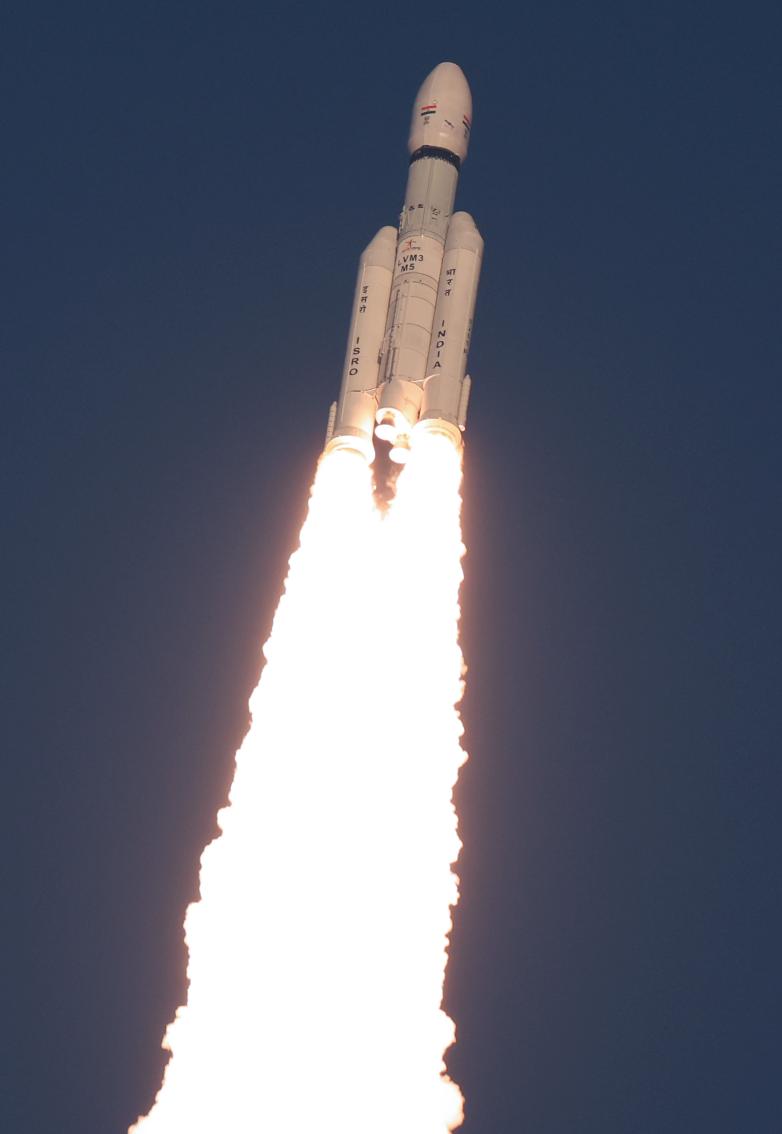
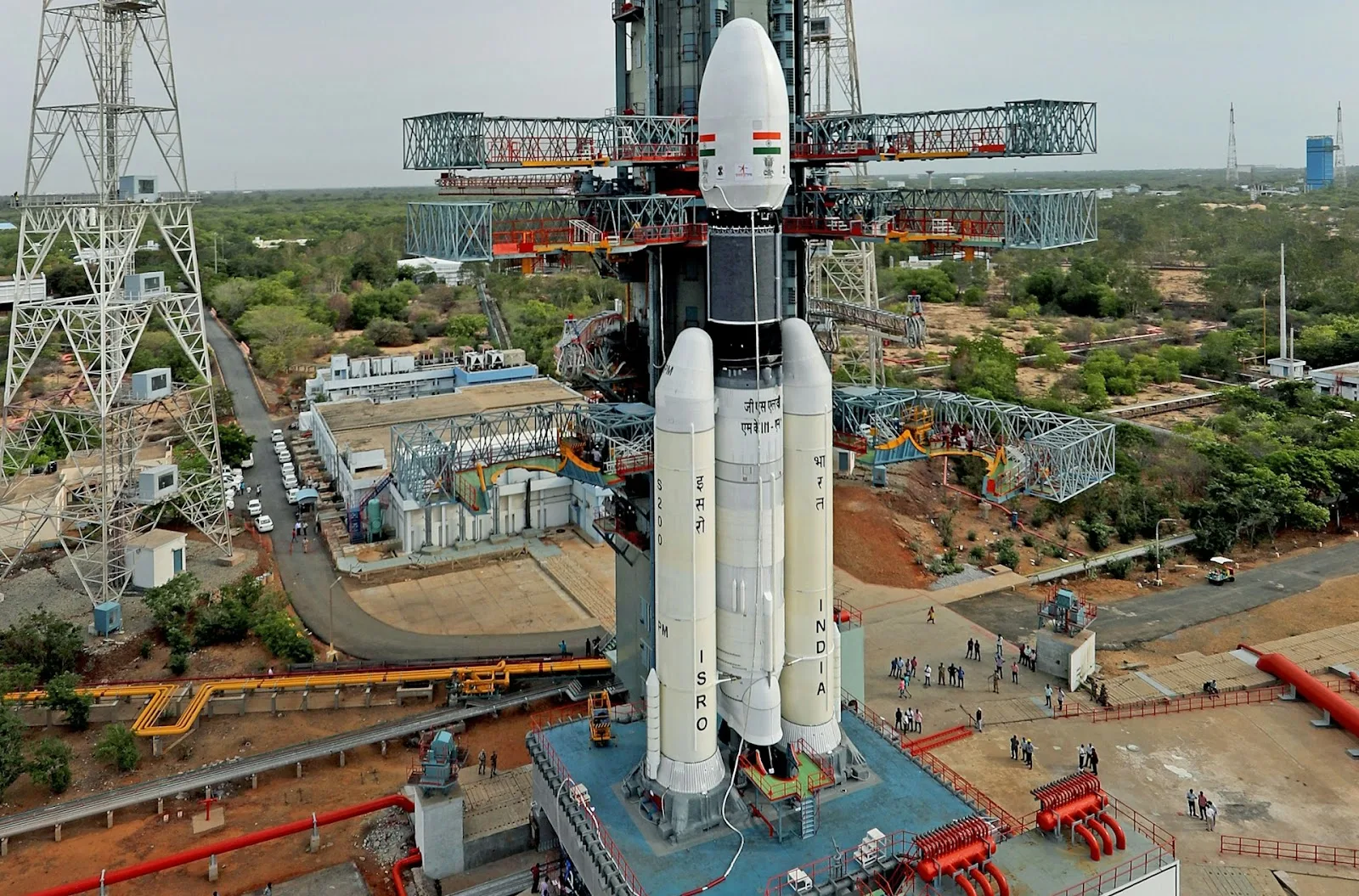
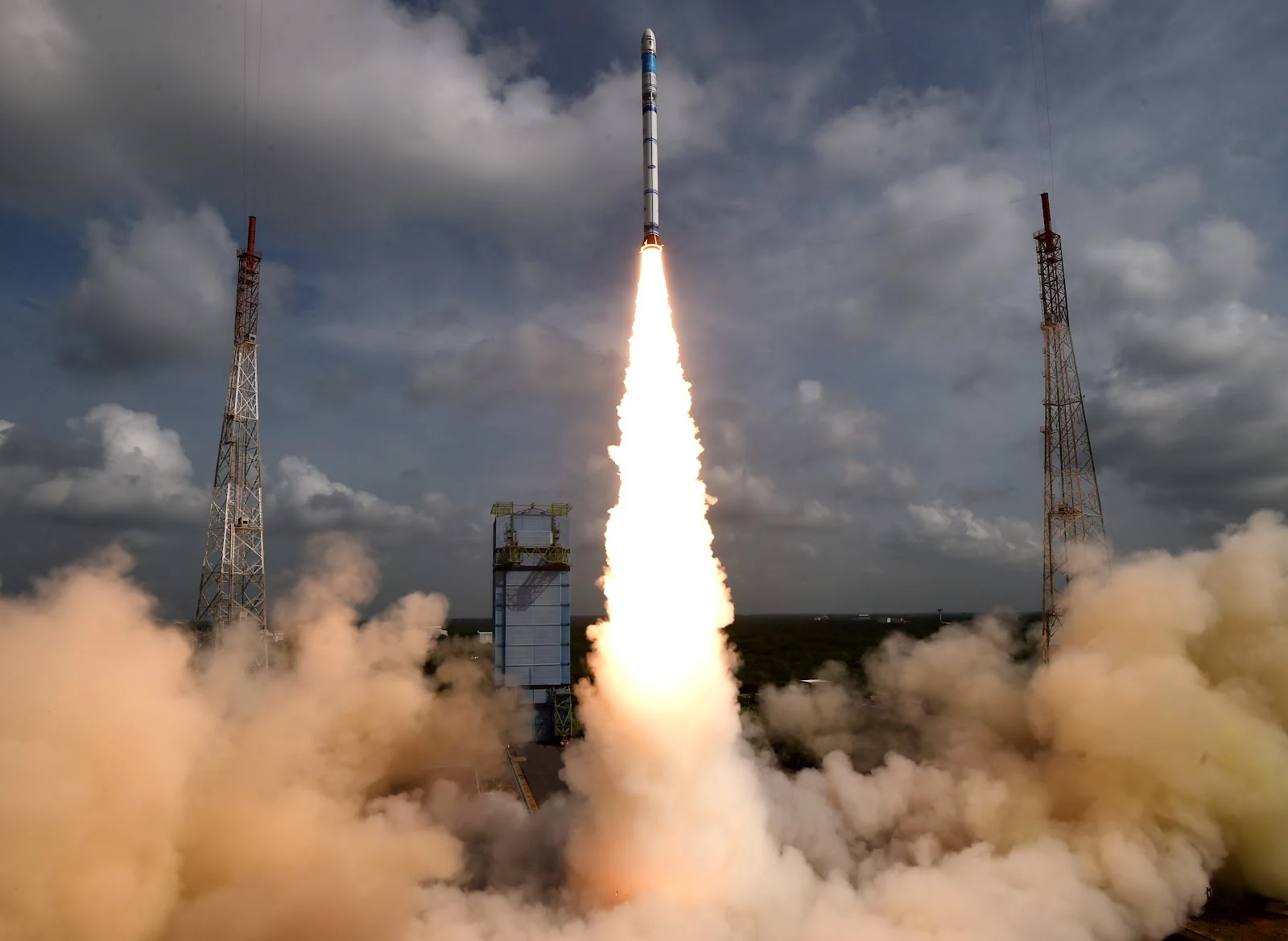
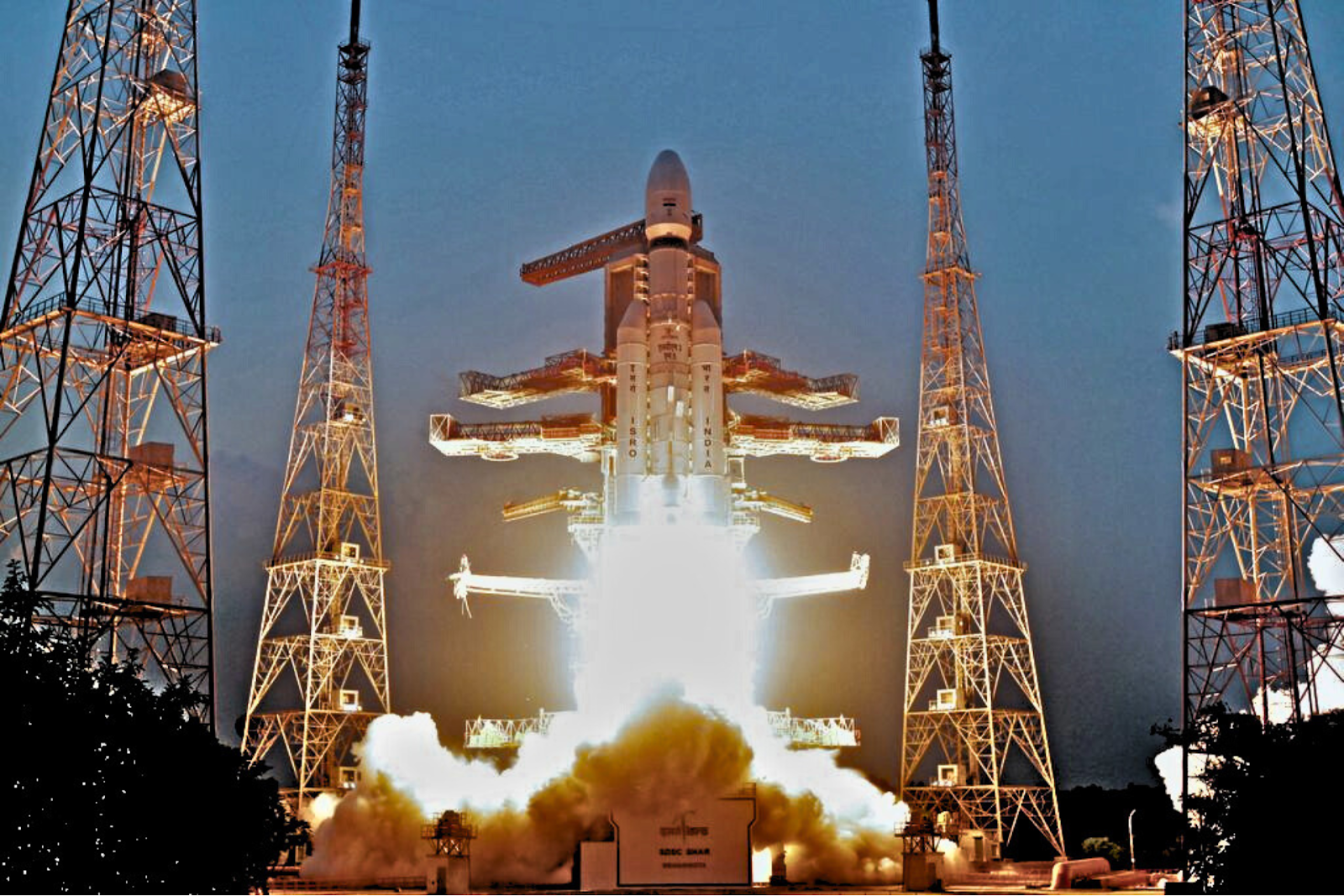
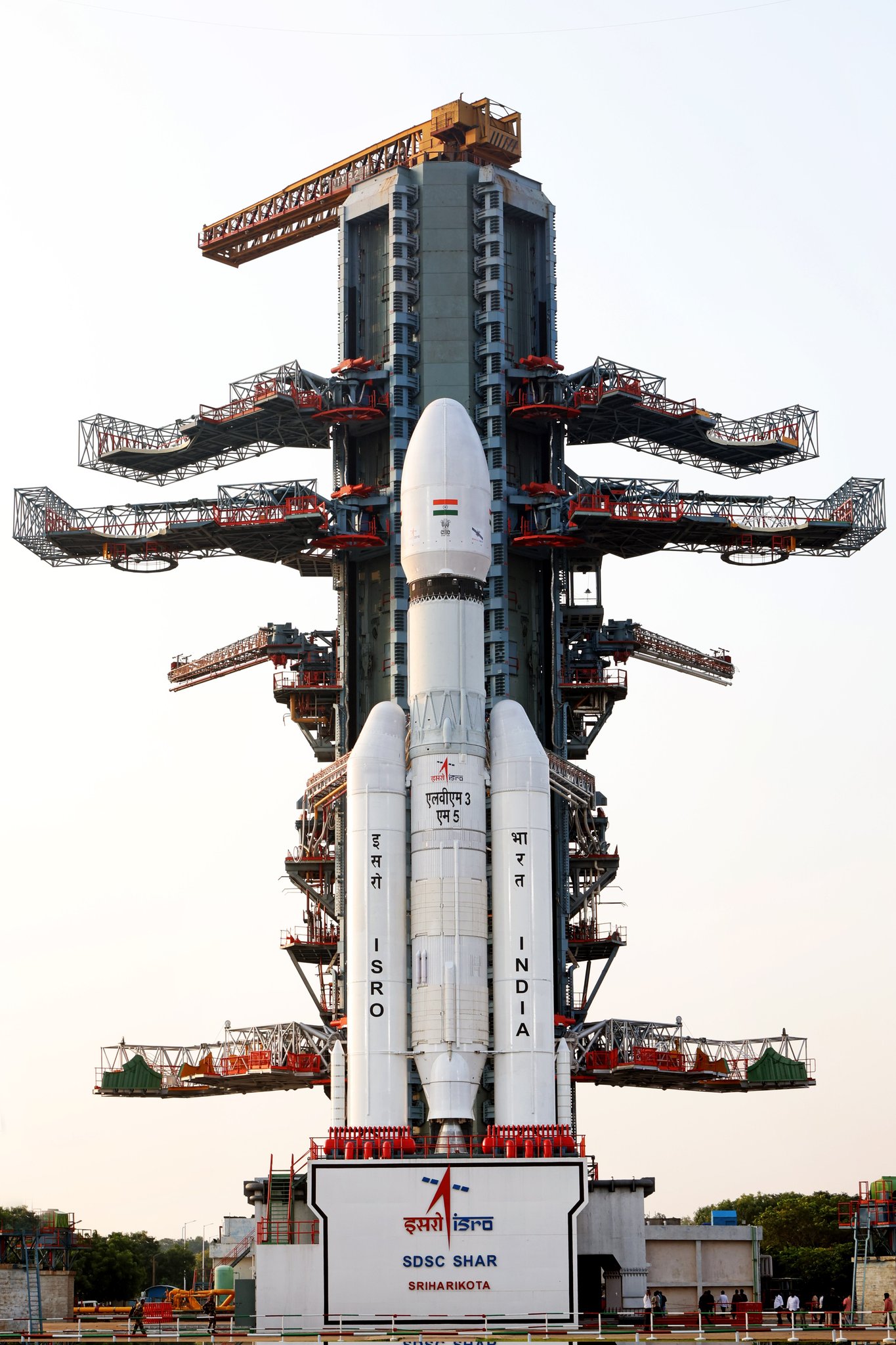
ISRO successfully launched its heaviest communication satellite, CMS-03 (also known as GSAT-7R), aboard the LVM3-M5 rocket on November 2, 2025, from Sriharikota. The 4,410 kg satellite is designed to provide secure, high-bandwidth, multi-band communication for the Indian Armed Forces, especially the Navy, marking a major milestone in India’s heavy-lift space capabilities.

Key Highlights of the CMS-03 Mission

  • Launch Vehicle: LVM3-M5 (Bahubali), India’s most powerful rocket
  • Launch Site: Satish Dhawan Space Centre (SDSC), Sriharikota
  • Date & Time: November 2, 2025, at 17:26 IST
  • Satellite Mass: ~4,410 kg — heaviest communication satellite launched from Indian soil
  • Orbit: Geosynchronous Transfer Orbit (GTO), ~29,970 km x 170 km
  • Mission Purpose: Replace GSAT-7 (2013) and enhance secure naval and defense communications

Strategic Importance

  • Defense Communications: Tailored for the Indian Navy, ensuring encrypted, high-capacity links
  • Indigenous Capability: Fully developed in India, reinforcing strategic autonomy
  • Heavy-Lift Milestone: First >4,000 kg satellite launched into GTO from Indian soil
  • Continuity & Upgrade: Replaces GSAT-7 with greater bandwidth and wider coverage

Comparative Context

Mission Rocket Payload Mass Orbit Purpose
CMS-03 (2025) LVM3-M5 4,410 kg GTO Secure defense communications
GSAT-7 (2013) Ariane-5 2,625 kg GTO Naval communications
Chandrayaan-3 (2023) LVM3-M4 3,900 kg Lunar Transfer Lunar exploration

Broader Implications

  • For India’s Space Program: Strengthens ISRO’s credibility in the global heavy-lift launch market
  • For National Security: Enhances maritime domain awareness and secure communication
  • For Future Missions: Validates LVM3’s readiness for heavier payloads, including crewed missions
ISRO’s Giant Leap: Heaviest Communication Satellite CMS-03 Successfully Launched

ISRO’s Giant Leap: Heaviest Communication Satellite CMS-03 Successfully Launched

ISRO Pioneer Who Brought Satellite TV to Villages Passes Away at 100

ISRO Pioneer Who Brought Satellite TV to Villages Passes Away at 100

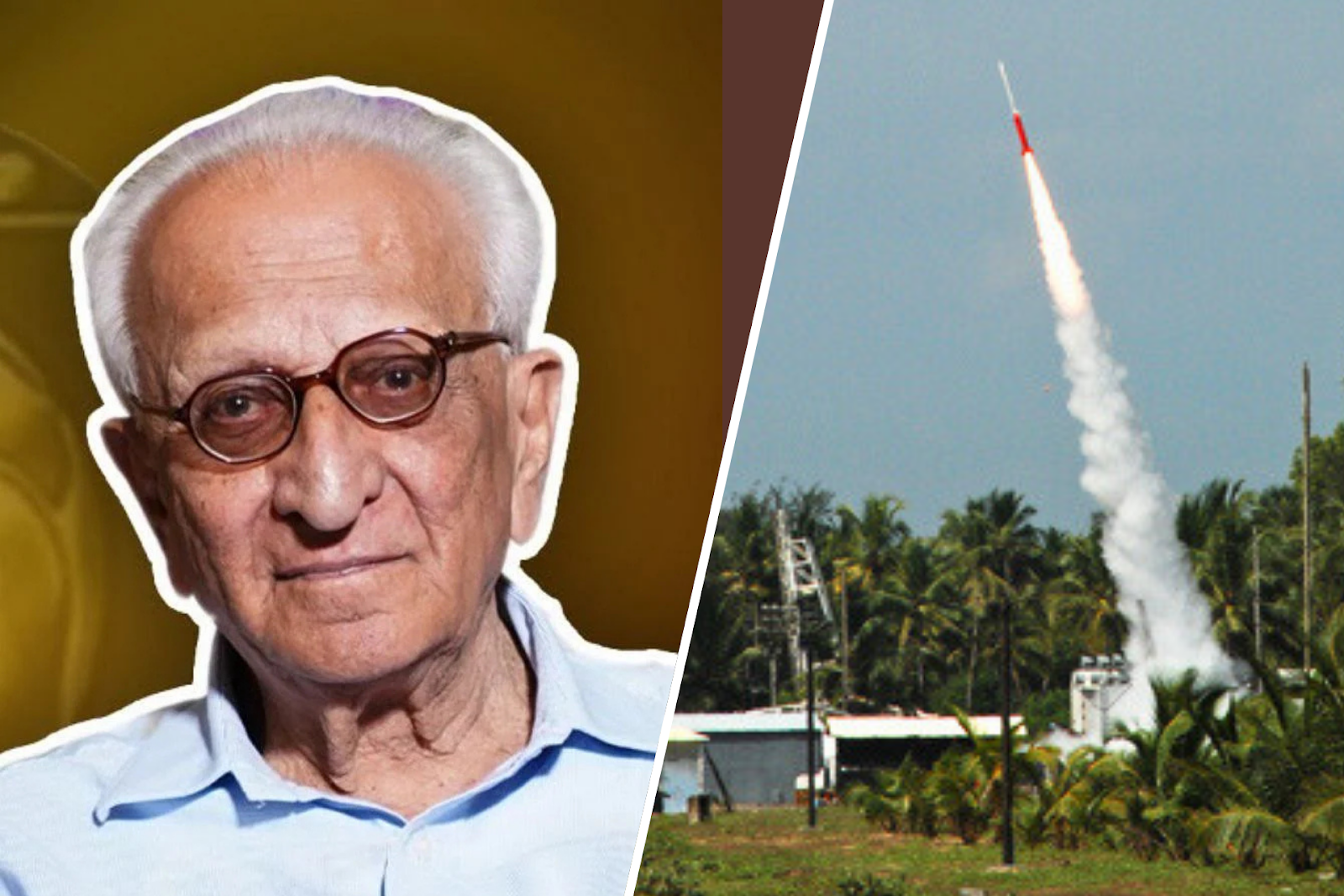
Professor Eknath Vasant Chitnis, one of the founding architects of India’s space programme, passed away in Pune on October 22, 2025, at the age of 100.

Legacy Highlights

  • Handpicked by Dr Vikram Sarabhai, Chitnis played a pivotal role in shaping INCOSPAR into what became ISRO.
  • He led the selection of India’s first launch sites—Thumba in Kerala and Sriharikota in Andhra Pradesh.
  • As Director of the Space Applications Centre, he spearheaded the Satellite Instructional Television Experiment (SITE) in 1975–76, bringing educational TV to 2,400 villages using NASA’s ATS-6 satellite.
  • He was instrumental in recruiting Dr APJ Abdul Kalam into ISRO.
  • Honored with the Padma Bhushan in 1985 for his contributions to science and education.
Professor Eknath Vasant Chitnis

Chitnis also served on the Board of Directors of Press Trust of India for nearly three decades, twice as chairman. His passing marks the end of an era in Indian space science, leaving behind a legacy that continues to shape the nation’s technological ambitions.

IndianaWeb2.com mourn the passing of Prof. Eknath Vasant Chitnis, a visionary scientist and founding architect of India’s space programme. His contributions laid the groundwork for ISRO’s rise and India’s journey into space.

A Lifelong Commitment to Science
Prof. Chitnis’s work bridged technology and education, empowering generations through satellite communication and digital infrastructure. His legacy lives on in every rocket launched, every satellite deployed, and every young mind inspired by India’s space story.

“We Could’ve Done It in 3 Years”: Nambi Narayanan Slams Funding Delays in India’s Space Tech Journey

“We Could’ve Done It in 3 Years”: Nambi Narayanan Slams Funding Delays in India’s Space Tech Journey

At a time when India’s space startup ecosystem is surging, one of its foundational voices has issued a sobering reminder: progress could have come decades earlier, if only the money had followed the vision.

Narayanan emphasized that while India has made strides in rocket technology, financial bottlenecks remain a major hurdle for faster adoption of cutting-edge space systems.

Speaking at National Innovation Day at Rajalakshmi Engineering College, Padma Bhushan awardee and former ISRO scientist Nambi Narayanan reflected on the long, winding road of India’s space propulsion development. His message was clear: funding bottlenecks—not technical limitations—were the real drag force.

Nambi Narayanan
Nambi Narayanan
We could have completed the liquid propulsion system in three yearsNarayanan said. But it took nearly 20 years. Why? Because the funds were not available when we needed them.

The Cost of Delay

  • Narayanan’s remarks cut to the heart of a recurring theme in India’s tech evolution: brilliant minds hamstrung by budgetary hesitation.
  • The liquid propulsion system—critical for modern satellite launches and interplanetary missions—was ready to leap forward in the 1990s.
  • Instead of a sprint, it became a marathon.
We had the technology. We had the talent. What we lacked was timely investment, he added.

A New Era, But Old Lessons

  • India’s space sector has since opened its doors to private players, with over 300 startups now active.
  • The market is projected to reach $44 billion by 2033.
  • Yet Narayanan’s warning resonates: innovation without funding is just aspiration.

Editorial Takeaway

  • Narayanan’s voice is more than nostalgic—it’s strategic.
  • As India positions itself as a global space power, his message is a call to fund not just the future, but the present.
  • Because in space, delays aren’t just costly—they’re orbital.

NASA-ISRO Satellite Sends 1st Radar Images of Earth's Surface

NASA-ISRO Satellite Sends 1st Radar Images of Earth's Surface
Captured on Aug. 21, this image from NISAR’s L-band radar shows Maine’s Mount Desert Island. Green indicates forest; magenta represents hard or regular surfaces, like bare ground and buildings. The magenta area on the island’s northeast end is the town of Bar Harbor. (Credit: NASA/Pl-Caltech) 

The NASA-ISRO Synthetic Aperture Radar (NISAR) satellite has successfully transmitted its first radar images of Earth’s surface, marking a major milestone in the joint U.S.-India mission.

Highlights from the First Radar Images
  • Mount Desert Island, Maine (Aug 21):
    • Captured using NASA’s L-band radar.
    • Forests appear green, water bodies in dark tones, and urban areas in magenta.
    • The town of Bar Harbor is clearly visible, showcasing the radar’s ability to distinguish land cover types.
  • Forest River, North Dakota (Aug 23):
    • Shows wetlands, forests, and farmland with circular irrigation plots.
    • Differentiates fallow fields from active crops like corn and soybeans.
NASA-ISRO Satellite Sends 1st Radar Images of Earth's Surface
On Aug. 23, NISAR imaged land adjacent to northeastern North Dakota’s Forest River. Light-colored wetlands and forests line the river’s banks, while circular and rectangular plots throughout the image appear in shades that indicate the land may be pasture or cropland with corn or soy. (Credit: NASA/JPL-Caltech) 

What Makes NISAR Unique

  • Dual Radar System: Combines NASA’s L-band with ISRO’s S-band for comprehensive Earth surface analysis.
  • High Resolution: Can resolve features as small as 5 meters.
  • Global Coverage: Orbits Earth every 12 days from 747 km altitude.

Applications

  • Disaster response (e.g., landslides, floods, earthquakes)
  • Agricultural monitoring and food security
  • Climate change and ecosystem tracking
  • Infrastructure and urban planning
Science operations begin November 2025. NISAR is set to revolutionize Earth observation and environmental monitoring.

Source – usembassy.gov

India to Launch Ultra-Precise Timekeeping System with ISRO & NPL

India to Launch Ultra-Precise Timekeeping System with ISRO & NPL

In a major leap toward technological self-reliance, India is set to roll out a nationwide precision timekeeping system, developed in collaboration with the Indian Space Research Organisation (ISRO) and the National Physical Laboratory (NPL), reported news agency PTI. The initiative aims to deliver nanosecond-level synchronization across critical sectors, from telecom and transport to defense and energy.

A Strategic Partnership for National Precision

The project, announced during the 89th International Electrotechnical Commission (IEC) General Meeting in New Delhi, will establish five regional hubs to disseminate Indian Standard Time (IST) with unprecedented accuracy.
  • ISRO will provide satellite infrastructure and signal transmission.
  • NPL, India’s official timekeeper, will anchor the system using atomic clocks and calibration protocols.
  • The Ministry of Consumer Affairs is overseeing implementation, aligning it with India’s legal metrology and digital infrastructure goals.

Why It Matters

This precision timing backbone is expected to revolutionize:
  • Smart grids and energy distribution
  • Automated transport and logistics
  • High-frequency financial transactions
  • Cybersecurity and data integrity
  • Telecom and 5G rollout
India’s emergence as the second-largest mobile phone manufacturer and its growing footprint in EVs, solar tech, and AI-driven automation make synchronized timing essential for global competitiveness.

Global Standards, Local Impact

India will join a select group of nations—like the US, Germany, and Japan—with multi-site time dissemination networks. The system also supports India’s recent milestone as the 13th country authorized to issue OIML pattern approvals, strengthening its role in international legal metrology.

Enabling National Missions

The timekeeping system complements flagship initiatives such as:
  • FAME India (electric mobility)
  • PM-KUSUM (solar-powered agriculture)
  • National Green Hydrogen Mission
Together, these efforts signal India’s intent to lead in climate resilience, digital infrastructure, and scientific innovation.

ISRO Accelerates Lunar Ambitions with Chandrayaan-4 and 5: Sample Return, Polar Rover, and Global Partnerships in Play

ISRO Accelerates Lunar Ambitions with Chandrayaan-4 and 5: Sample Return, Polar Rover, and Global Partnerships in Play

ISRO Chairman V. Narayanan has officially confirmed that Chandrayaan-4 and Chandrayaan-5 are actively in development—marking a bold leap in India’s lunar ambitions.

Mission Highlights

Chandrayaan-4

  • Scheduled for launch around 2027
  • Will be India’s first lunar sample-return mission, targeting the Shiv Shakti landing site
  • Includes a Venus Orbiter Mission, expanding ISRO’s interplanetary portfolio

Chandrayaan-5

  • A joint venture with Japan’s JAXA
  • Features a 250 kg rover—a major upgrade from Chandrayaan-3’s 25 kg Pragyan rover
  • Designed to operate through the harsh lunar night at the Moon’s south pole

Technologies Powering Chandrayaan-4 & Chandrayaan-5

Chandrayaan-4: Lunar Sample Return Mission

This mission is a complex ballet of modular engineering and orbital choreography:
Module Function
Propulsion System Transports lander and ascender to lunar orbit
Descender (Lander) Executes soft landing and collects lunar regolith
Ascender Detaches post-sampling and lifts off from Moon’s surface
Transfer Module Receives samples from Ascender and hands off to Re-entry Module
Re-entry Module Returns samples safely to Earth, designed to survive atmospheric re-entry
  • Space Docking Capability via SPADEX experiment
  • Dual Rocket Launch Strategy using LVM3 and PSLV
  • Robotic Sampling Arm for precise regolith collection
  • Thermal Shielding for safe Earth re-entry

Chandrayaan-5: Indo-Japanese LUPEX Mission

This mission is all about long-duration survival and deep polar exploration:
 
Feature Details
Heavy Rover (250 kg) Equipped for subsurface analysis and night-time operation
Advanced Power Systems Likely includes RTGs or high-efficiency solar arrays
JAXA Collaboration Brings precision landing and terrain mapping expertise
South Pole Targeting Focus on permanently shadowed regions for water ice detection
  • Autonomous Navigation for rugged terrain and low-light conditions
  • Cryogenic Sampling Tools to extract and preserve volatiles
  • Radiation-Hardened Electronics for extreme lunar environments

Strategic Impact

These missions aren’t just scientific—they’re foundational for:
  • Crewed lunar landings by 2040
  • Bharatiya Antariksh Station development
  • Global partnerships in deep space exploration

Broader Vision

  • ISRO is also developing the Bharatiya Antariksh Station (BAS), with the first module planned for 2028 and full deployment by 2035. 
  • The Gaganyaan human spaceflight mission will see an uncrewed launch in December 2025, followed by a crewed mission in early 2027. 
  • India aims for a crewed lunar landing by 2040, using fully indigenous technologies
This roadmap positions India among the elite spacefaring nations, blending scientific ambition with strategic partnerships. Want a visual timeline or stylized summary for editorial use? I’d be thrilled to co-create one with you.

ISRO Targets 2047 for Hypersonic Spaceplane That Could Redefine Global Travel

In a bold stride toward redefining space access and global mobility, the Indian Space Research Organisation (ISRO) has unveiled its vision for a Hypersonic Transport Platform (HTP)—a reusable, runway-launched vehicle capable of flying at speeds beyond Mach 5. Targeted for deployment by 2047, this initiative marks a transformative milestone in India’s space ambitions, aligning with the centenary of independence and the nation’s evolving role in the global tech frontier.

ISRO Targets 2047 for Hypersonic Spaceplane That Could Redefine Global Travel
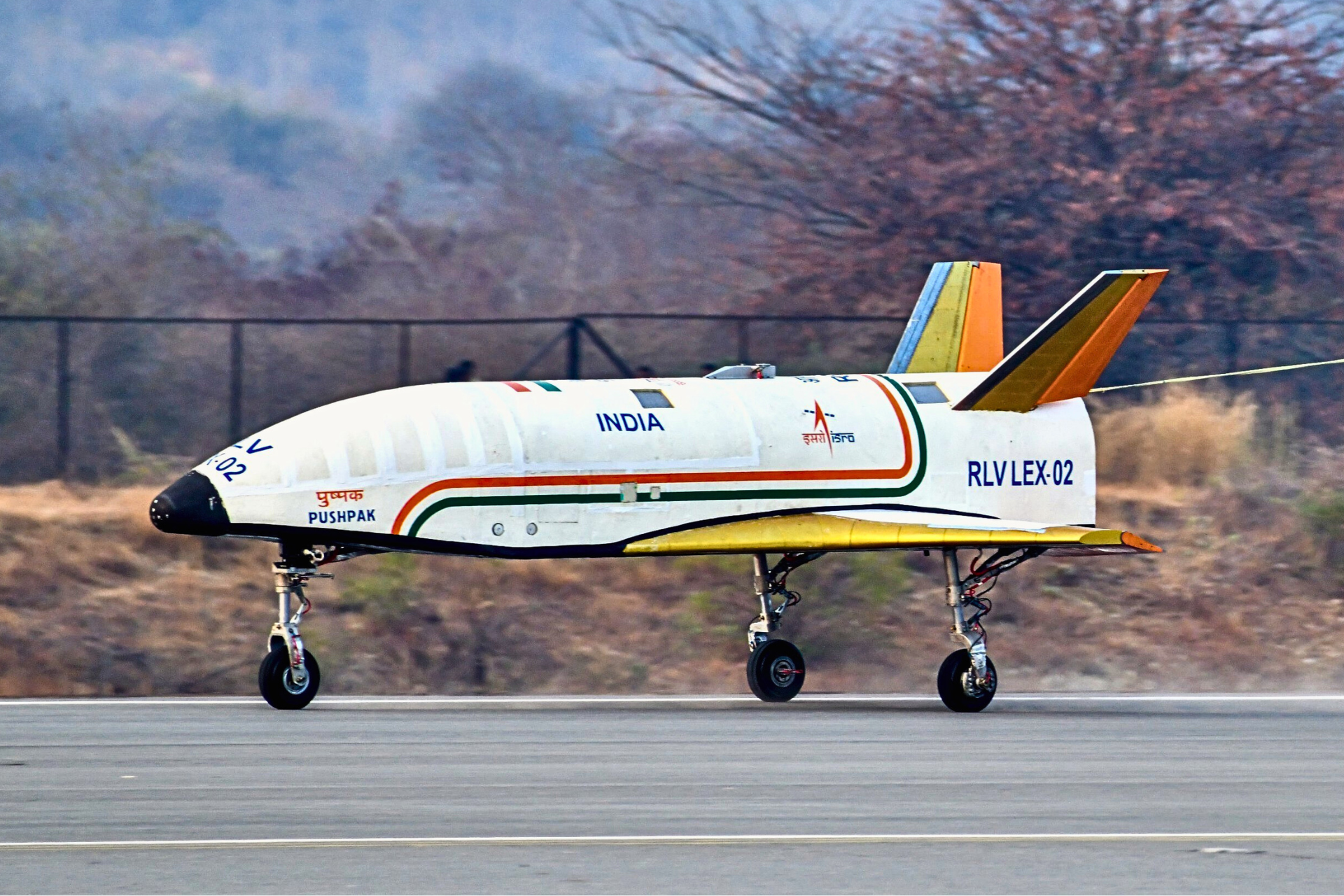
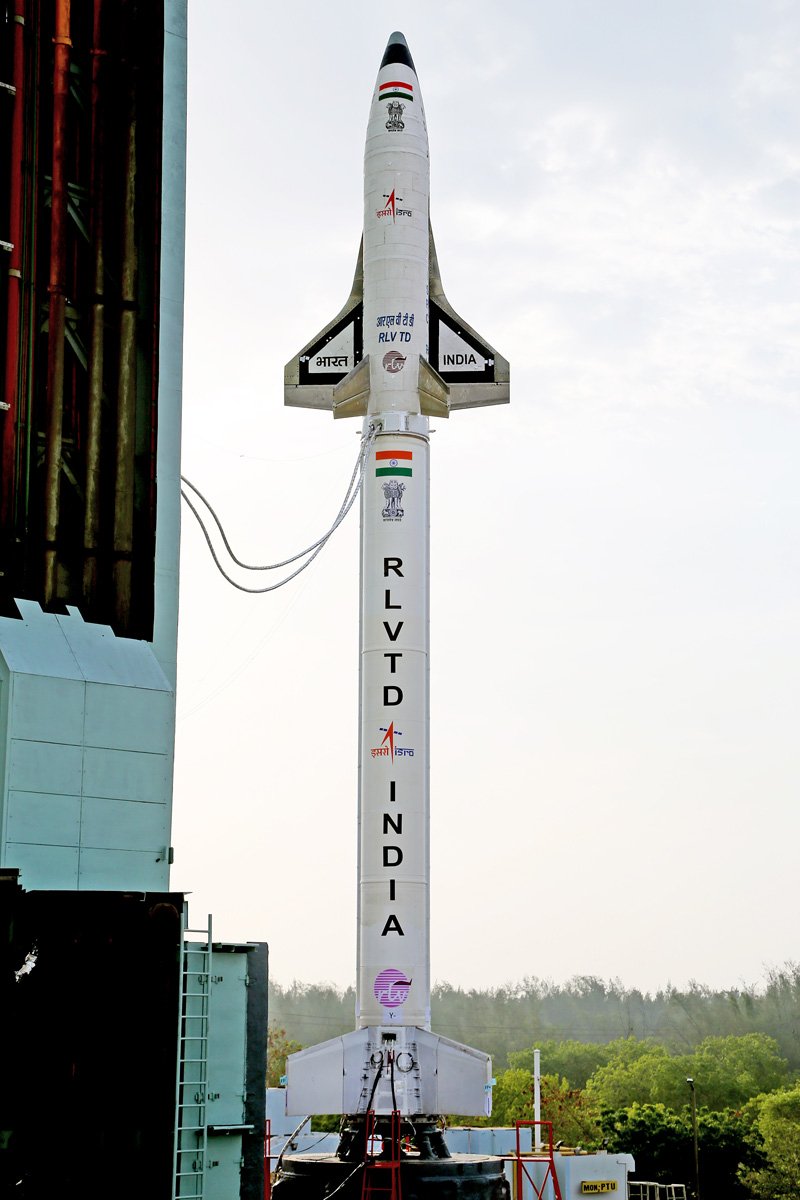
ISRO’s Reusable Launch Vehicle (RLV) Landing Experiment photo 

What Is the Hypersonic Transport Platform?

Unlike conventional rockets, ISRO’s HTP is designed to take off like an aircraft, accelerate to hypersonic speeds, and reach suborbital altitudes—before returning safely to Earth. This dual-purpose platform could serve both space missions and ultra-fast intercontinental travel, shrinking global distances to mere hours or even minutes.

The Tech Behind the Vision

ISRO’s roadmap builds on years of foundational research and successful prototypes:
  • Scramjet Propulsion: Air-breathing engines that operate at hypersonic speeds, reducing fuel load and improving efficiency.
  • Reusable Launch Vehicle (RLV): The HTP is a natural evolution of ISRO’s RLV program, which has already demonstrated autonomous landing capabilities.
  • Thermal-Resistant Materials: Advanced composites and alloys to withstand extreme heat and pressure during high-speed flight.
  • AI-Driven Navigation: Precision guidance systems for autonomous launch, orbit insertion, and recovery.
ISRO's RLV LEX

Strategic Implications for India

Impact Area Potential Outcomes
Space Access Rapid, low-cost satellite deployment and cargo delivery
Defense & Security High-speed reconnaissance and strategic mobility
Commercial Aviation Intercontinental travel in under an hour
Space Tourism Viable platform for suborbital passenger flights
Tech Spillover Innovations in propulsion, materials, and AI for broader industrial applications

Vision 2047: A National Milestone

The HTP is a cornerstone of India’s Space Vision 2047, which also includes:
  • A Bharatiya Antariksh Station by 2035
  • A crewed lunar mission by 2040
  • Expansion of private space partnerships and global launch services
Together, these initiatives position India not just as a spacefaring nation, but as a leader in next-gen aerospace innovation.

The Future Beckons

Imagine boarding a hypersonic craft in Bengaluru and landing in San Francisco in under 90 minutes. Or launching satellites on demand from a reusable platform that returns to base like a jetliner. ISRO’s HTP isn’t just a vehicle—it’s a vision of mobility without limits, where space and time compress into possibility.

LTCC Modules, Solar Adhesives Among ISRO's Five Technologies Transferred for Wider Industrial Use

LTCC Modules, Solar Adhesives Among ISRO's Five Technologies Transferred for Wider Industrial Use

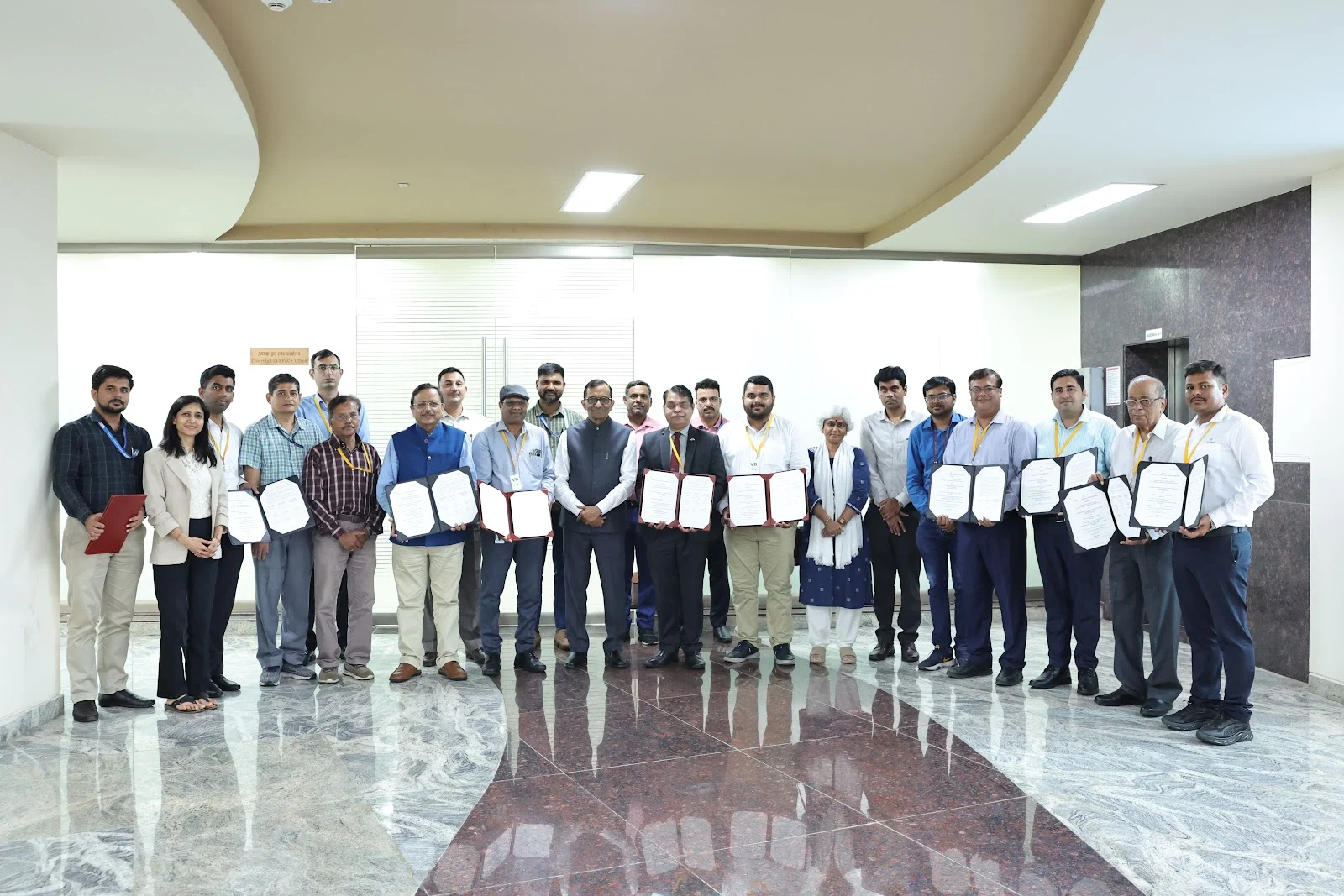
The Indian National Space Promotion and Authorization Centre (IN-SPACe) facilitated the transfer of five technologies developed by ISRO to five Indian companies. The tripartite agreements were signed between NewSpace India Limited (NSIL), the recipient industries, and IN-SPACe at its headquarters in Ahmedabad.

The transfers are aimed at driving commercialization, strengthening self-reliance, reducing imports, and enabling wider applications of space technologies in sectors such as automotive, biomedical, and industrial manufacturing.

One of the technologies, the Low Temperature Co-Fired Ceramic (LTCC) Multi-Chip Module, developed by SAC, enables the integration of multiple semiconductor chips into a single compact module. This has been acquired by M/s Voltix Semicon Pvt. Ltd., Pune, for biomedical use, particularly in RT-PCR kits requiring high-volume production. Voltix currently depends on imports for this technology; the Transfer of Technology (ToT) will enhance domestic capability and self-reliance.

Another, the RTV Silicone Single-Part Adhesive (SILCEM R9), developed by VSSC, is a room-temperature curable adhesive. It has been acquired by M/s Crest Speciality Resins Pvt. Ltd., Ahmedabad, for solar panel bonding. At present, this adhesive is imported; the ToT will ensure local availability, reduce dependence on imports, and boost indigenization.

Commenting on the technology transfer, Dr. Pawan Goenka, Chairman, IN-SPACe, said: “These transfers highlight the growing capability and confidence of Indian industry. While some of these technologies will directly substitute imports, others will unlock applications well beyond the space sector. The true impact will be realized when industry scales them up for widespread use. IN-SPACe, together with ISRO and NSIL, will remain a strong partner in enabling that journey.’’

Shri Rajeev Jyoti, Director, Technical Directorate, IN-SPACe, said,“With today’s five Technology Transfer Agreements (TTAs), the total number of TTAs executed with industries has reached 98. There is strong interest from industry in acquiring these technologies, and IN-SPACe continues to promote them for wider adoption.”

A total of five technologies were transferred to industries under today’s agreements.
  1. Voltix Semicon Pvt. Ltd., Pune – Low Temperature Co-Fired Ceramic (LTCC) Multi-Chip Module Technology (SAC), for biomedical applications; import substitute.
  2. Crest Speciality Resins Pvt. Ltd., Ahmedabad – RTV Silicone Single-Part Adhesive (SILCEM R9), developed by VSSC for solar panel bonding; import substitute.
  3. Azista Composites Pvt. Ltd., Hyderabad – Film Adhesives EFA 1753 and EFA 1752 developed by VSSC.
  4. Ananth Technologies Pvt. Ltd., Hyderabad – 30W HMC DC-DC Converter developed by URSC.
  5. Pushpak Aerospace India Pvt. Ltd., Bengaluru – Anodization of 3D-printed Al-10Si-Mg alloy developed by URSC.

IN-SPACe, ISRO, and Amity Launch Skill Course on Space Tech Applications in Agriculture

IN-SPACe, ISRO, and Amity Launch Skill Course on Space Tech Applications in Agriculture

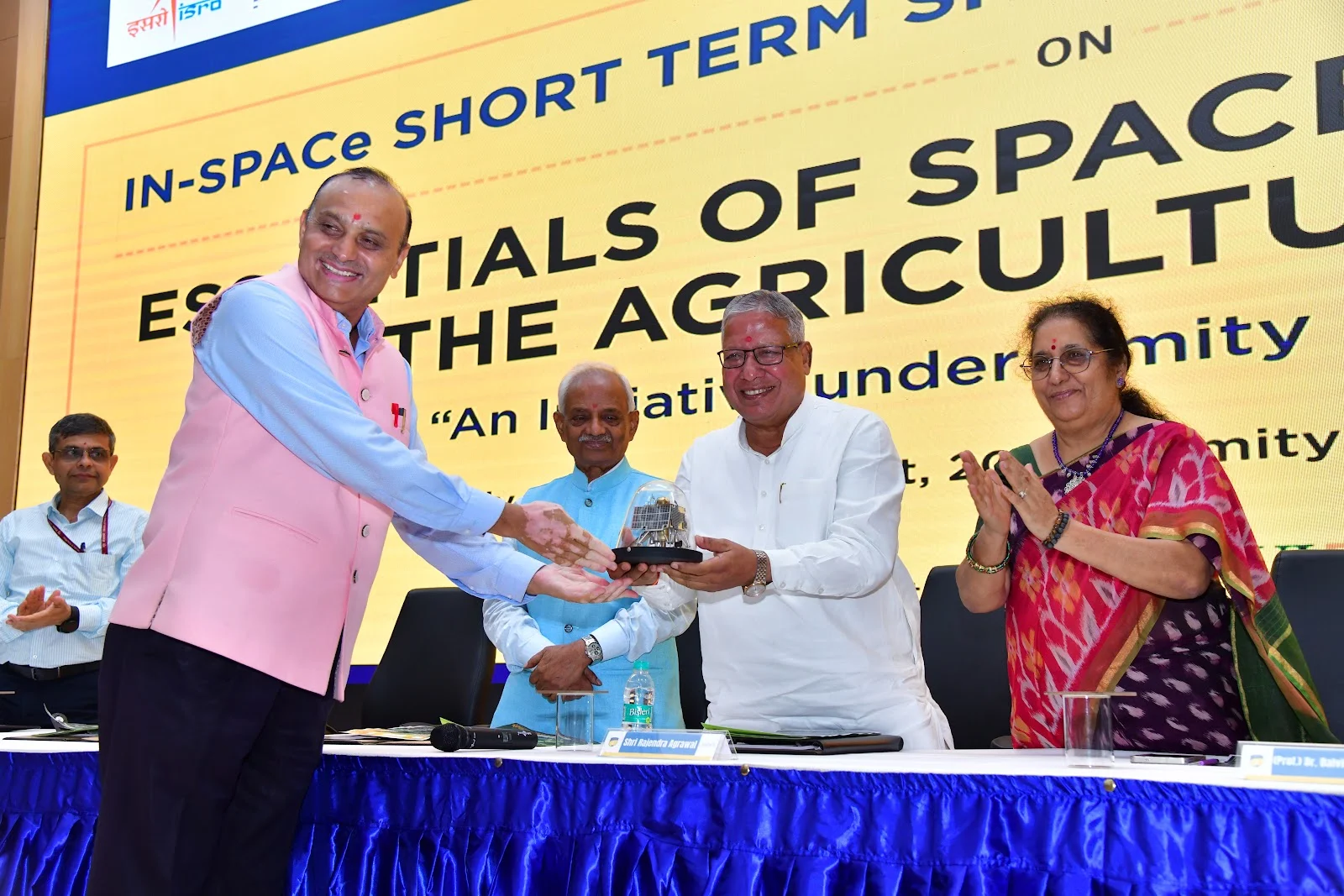
Indian National Space Promotion and Authorization Center (IN-SPACe), in collaboration with ISRO, NCVET and Amity University Noida, Uttar Pradesh, commenced a short-term skill development course titled "Essentials of Space Technology in Agriculture Sector", on 27th July 2025 aimed at introducing non-governmental entities and academia to the applications of space technology in agriculture.

The course was inaugurated at Amity University, with former Member of Parliament Shri Rajendra Agarwal gracing the occasion as Chief Guest. Dr. Vinod Kumar, Director, Promotion Directorate at IN-SPACe, was present for the opening and spoke about the relevance of such academic-industry collaborations in creating awareness around satellite-based tools for modern agriculture. He noted that the program is designed to provide participants with a foundational understanding of how space-based applications can support farming.

In his keynote address, Dr. Vinod Kumar, Director, Promotion Directorate, IN-SPACe, stated, “Space applications have a growing role to play in strengthening India’s agricultural capabilities and resilience. With the help of these applications and geospatial data, farmers can monitor crop health, optimize the use of fertilizers and irrigation, detect pest infestations early, manage fields with precision using GPS-guided machinery, better respond to weather risks and natural disasters, and improve overall farm productivity and decision-making. Through these academic collaborations, we aim to build awareness, share technical know-how, and create a pool of professionals who can apply space-based tools to real-world challenges. These courses are designed to bridge knowledge gaps and encourage deeper engagement from academia and young professionals in space applications across critical sectors.”

The course is part of IN-SPACe’s broader mission to support capacity-building and sector-wide participation, expanding the role of space applications in everyday economic activity. The week-long course, running from July 27 to August 1, 2025, will cover topics ranging from remote sensing and satellite data analysis to their direct application in crop monitoring and resource management.

Gaganyaan Takes Flight: ISRO Successfully Qualifies Service Module Propulsion System for Human Space Missions

Gaganyaan Takes Flight: ISRO Successfully Qualifies Service Module Propulsion System for Human Space Missions

ISRO has successfully completed the development and qualification testing of the Service Module Propulsion System (SMPS) for the Gaganyaan human spaceflight mission.

This achievement marks a critical step toward human-rating the Gaganyaan systems and ensures readiness for crew safety and mission reliability.

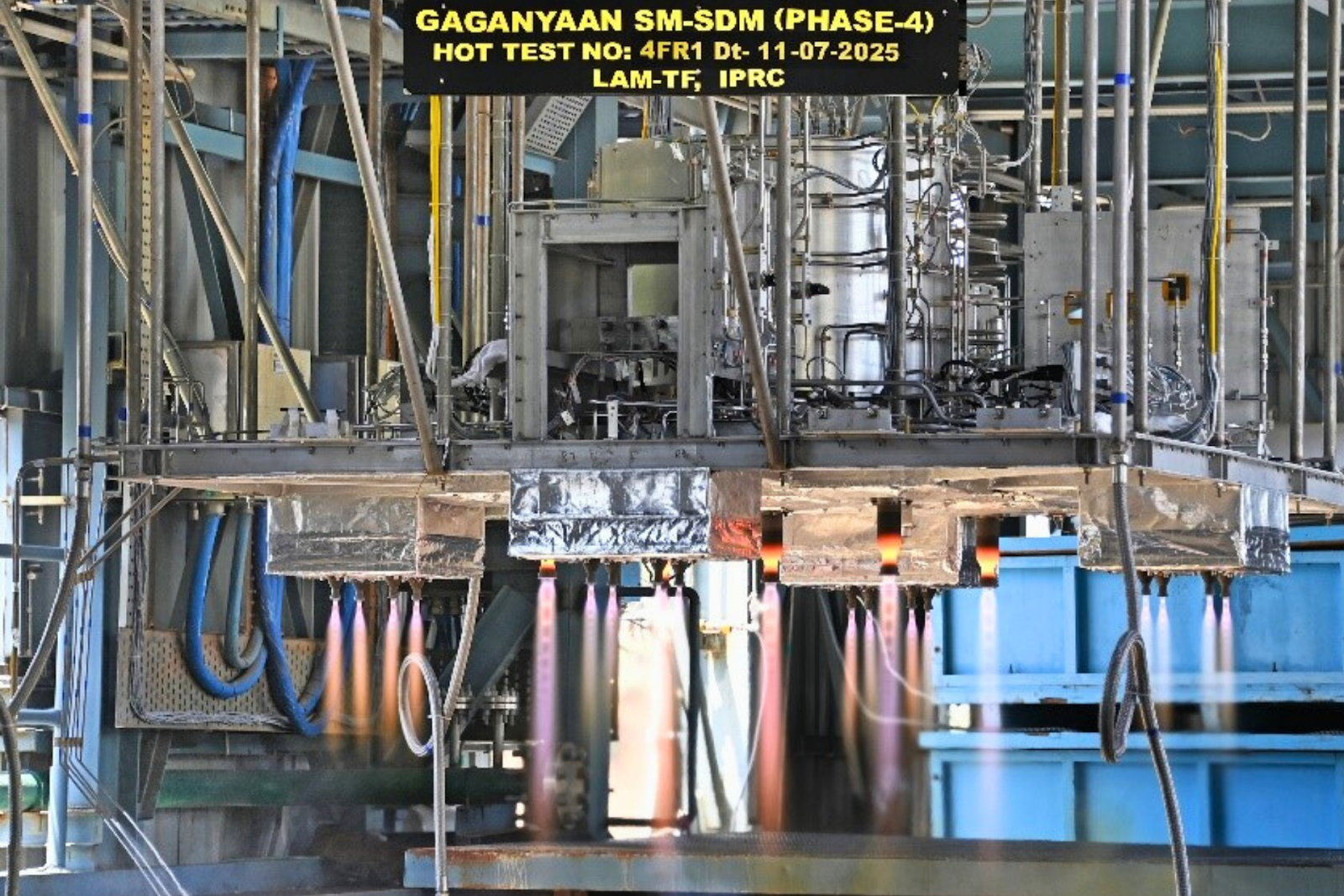
A 350-second full-duration hot test was conducted on July 11, 2025, at the ISRO Propulsion Complex (IPRC), Mahendragiri. The test validated the integrated performance of SMPS under off-nominal mission abort conditions. Results showed normal performance, aligning with pre-test predictions.

The Service Module (SM) uses a regulated bi-propellant propulsion system. It supports:
  • Orbit circularization
  • On-orbit control
  • De-boost manoeuvres
  • Abort capability during ascent phase
Liquid Apogee Motor (LAM) engines provide the main thrust. Reaction Control System (RCS) thrusters ensure precise attitude control.

A test bed emulating the SMPS fluid circuit was developed, including:
  • Propellant tank feed system
  • Helium pressurization system
  • Flight-qualified thrusters
  • Control components
The System Demonstration Model (SDM) underwent 25 tests under nominal and off-nominal conditions, totaling 14,331 seconds of firing time.

SMPS was designed, developed, and realized by the Liquid Propulsion Systems Centre (LPSC), with tests conducted at IPRC, Mahendragiri.

IIT Hyderabad, Department of Posts, and NRSC (ISRO) Collaborate to Launch DIGIPIN: A National-Scale Geospatial Addressing System for India

IIT Hyderabad, Department of Posts, and NRSC (ISRO) Collaborate to Launch DIGIPIN: A National-Scale Geospatial Addressing System for India
  • Compactness: Short and efficient codes for ease of use.
  • Geographic Precision: Ability to extract exact latitude and longitude coordinates.
  • Inclusivity: Coverage for all parts of India, including densely populated and remote regions.
  • Privacy: DIGIPIN carries no personal information.
  • Future-readiness: Scalable and adaptable for future needs.
In a landmark move to revolutionize India’s addressing infrastructure, the Indian Institute of Technology Hyderabad (IITH), in collaboration with the Department of Posts and the National Remote Sensing Centre (NRSC), ISRO, Government of India, has developed DIGIPIN – an open-source, machine-interpretable geospatial addressing system designed to provide precise and standardised digital addresses across the country.

Traditional descriptive addresses in India suffer from a lack of uniformity and machine-readability, causing inefficiencies in postal and logistics operations. DIGIPIN aims to transform this system by introducing a geo-coded, digital public infrastructure (DPI) layer for India’s physical addressing landscape.

DIGIPIN is a compact, intuitive, and human-readable geohash, capable of encoding the latitude and longitude of any point of interest in India, from urban households to remote maritime locations. The system is designed for offline usability, privacy, and robustness, making it suitable for diverse applications including e-commerce, emergency response, and public service delivery.

Dr Shashank Vatedka
Dr Shashank Vatedka
 DIGIPIN is the outcome of a dedicated research effort by a team of faculty from the Department of Electrical Engineering at IIT Hyderabad, Dr Shashank Vatedka, Prof Soumya Jana and Dr Lakshmi Prasad Natarajan, along with Tarandeep Singh, a former MTech (AI) student. Their work has produced a geohashing scheme that encapsulates geographic coordinates into short, intuitive codes, which can be extracted even offline using location-enabled devices.

Prof. Soumya Jana

Dr Lakshmi Prasad Natarajan


Prof. B S Murty, Director of IITH, expressed pride in the achievement, stating, “DIGIPIN represents a leap towards the vision of a digitally empowered India. By converting every location into a simple, verifiable, and interoperable digital code, we are laying the foundation for an address infrastructure that can scale with our nation’s growing technological and societal needs. IITH is proud to contribute to this national initiative that blends open-source innovation, geospatial intelligence, and public service and this can be considered a revolution in the field of Navigation.”

Dr. Shashank Vatedka, Assistant Professor, Department of Electrical Engineering, IITH, mentioned that, “DIGIPIN will provide immense convenience to Indian residents and all stakeholders by succinctly and precisely representing a physical address. For instance, it could be represented as a QR code or a barcode and printed on consignments for machine-based routing; DIGIPIN could be easily stored and communicated using digital wallets.

Dr. Lakshmi Prasad Natarajan, Associate Professor, Department of Electrical Engineering, IITH, mentioned that, “The idea was to make it as easy as possible to automatically assign codes and start using DIGIPIN with as little manual intervention as possible. In many cases, finding one’s DIGIPIN would be possible using only a device with a reasonably good location service (such as a smartphone) and an app equipped with a high-resolution map.”

Dr. Soumya Jana, Professor, Department of Electrical Engineering, IITH, mentioned that “The applicability of DIGIPIN could be wider, going beyond the primary use as a digitization technology for conventional addressing. They could be used in scenarios where conventional addresses are inconsistent or not available, such as emergency response services, locating public service centres/utilities such as Health camps, Aadhar enrollment offices, and so on.”

DIGIPIN is a geohashing scheme designed to have the following features:
  • The length of the DIGIPIN is designed to be as small as possible in order to provide an efficient digital representation of addresses.
  • It contains the geographic location of the address. It is possible to extract the latitude and longitude of the address from the DIGIPIN with low complexity. This can also be done offline.
  • All points of interest to India (including maritime regions) are assigned DIGIPIN, and it is possible to assign a unique DIGIPIN to very densely populated areas.
  • The format of the DIGIPIN is intuitive and human-readable. An effort was made to infuse a sense of directionality within the format of DIGIPIN.
  • Ease of code assignment and usability: A crucial point of consideration was to make it as easy as possible to automatically assign codes and start using DIGIPIN with as little manual intervention as possible. In many cases, finding one’s DIGIPIN would be possible using only a device with a reasonably good location service (such as a smartphone) and an app equipped with a high-resolution map.
DIGIPIN only encodes geographical information and contains no personal details that could lead to privacy violations.

DIGIPIN is designed to be robust to future developments and changes.

HAL Secures ISRO’s SSLV Tech in Major Space Sector Shake-Up

HAL Secures ISRO’s SSLV Tech in Major Space Sector Shake-Up

In a historic development for India’s space industry, the Indian National Space Promotion and Authorization Centre (IN-SPACe) has announced Hindustan Aeronautics Limited (HAL) as the recipient of the Small Satellite Launch Vehicle (SSLV) technology from ISRO. Emerging as the winning bidder among three shortlisted bidders, this transition marks one of the most comprehensive technology transfers from ISRO, facilitated by IN-SPACe, to an Indian commercial entity to date.

The process involved a rigorous eligibility and evaluation framework. After careful scrutiny, three technically qualified bidders were shortlisted: Alpha Design Technologies Ltd., Bengaluru (leading a consortium with Agnikul Cosmos & Walchand Industries Ltd.); Bharat Dynamics Ltd., Hyderabad (leading a consortium with Skyroot Aerospace, Keltron & BHEL); and Hindustan Aeronautics Ltd., Bengaluru (applying independently, not as part of a consortium).

A thorough evaluation process was followed, with various technology and financial readiness levels under review. The process, which continued for several months, culminated in the financial bid evaluation, where HAL emerged as the highest bidder to acquire and operationalize SSLV technology.

HAL Secures ISRO’s SSLV Tech in Major Space Sector Shake-Up

On the milestone, Dr. Pawan Goenka, Chairman, IN-SPACe, said, “As India looks at realizing the $44 billion space economy earmarked for 2033, it is imperative to enable a robust public-private-partnership model. The SSLV technology transfer marks a pivotal moment in India’s transformative commercial space segment, as this is one of the first instances of a space agency transferring complete launch vehicle technology to a company. Under this technology transfer agreement, HAL will have the capability to independently build, own, and commercialize SSLV launches.”

The Technology Transfer Agreement will be signed among HAL, NewSpace India Limited (NSIL), ISRO, and IN-SPACe. The Agreement encompasses extensive training and handholding of HAL personnel by ISRO teams, both at ISRO and HAL facilities, for the realization and launch of two SSLVs in the next two years.

Mr. Rajeev Jyoti, Director, Technical Directorate, IN-SPACe, said, “The three bidders demonstrated a high level of technical competency to absorb the technology, and we appreciate the earnest effort put in by all three bidders in providing extensive documentation in support of the technical evaluation criteria. The launch vehicle system, being multi-disciplinary in nature, would require the winning entity – HAL – to undergo rigorous handholding and training under ISRO at both ISRO’s and the entity’s facilities. This is aimed at realizing the projected launch of two SSLVs from an Indian launch port. We’re looking at completing this entire process within two years from the date of signing the Technology Transfer Agreement.”

Shri Radhakrishnan Durairaj, CMD, NSIL, said, "We are pleased to be part of this SSLV technology transfer process that would enable HAL to develop this launch vehicle that would cater to launch on-demand needs of global small satellite customer needs. This collaboration marks a significant step towards strengthening India’s commercial satellite launch capabilities and more specifically in enabling Indian industry in realising this SSLV.

On winning the bid, Dr. D.K. Sunil, Chairman & Managing Director (CMD) of Hindustan Aeronautics Limited (HAL), said, “In this milestone, India’s national ambition takes priority. We’re looking forward to working closely under ISRO and IN-SPACe’s guidance to progress in phases and realize the end objectives. We’re confident of steering a cohesive ecosystem that enables more small satellite launches from India’s ports.”

This development reinforces India's commitment to privatizing and democratizing access to space technology, empowering Indian industry to play a leading role in space manufacturing and increasing small satellite launches.

Devas Vs. ISRO's Antrix: The Satellite Deal That Sparked a Billion-Dollar Legal War

Devas vs. ISRO's Antrix: The Satellite Deal That Sparked a Billion-Dollar Legal War

The US Supreme Court has recently ruled that the $1.29 billion lawsuit against ISRO-owned Antrix Corporation can proceed in American courts, marking a significant escalation in the long-running legal dispute between India and Devas Multimedia. The case revolves around a 2005 satellite deal between Antrix and Devas, which was abruptly canceled in 2011 by the Indian government over national security concerns.

The Deal and Its Collapse

In 2005, under the leadership of ISRO Chairman G. Madhavan Nair and Antrix Corporation Managing Director K.R. Sridhar Murthy, Antrix signed a contract with Devas Multimedia to provide satellite-based broadband services by leasing S-band transponder capacity on the GSAT-6 and GSAT-6A satellites. At the time, the Minister of Space was the-then Prime Minister Dr. Manmohan Singh, while Dayanidhi Maran held the Communications & IT portfolio.

However, by 2011, the deal was scrapped amid concerns about spectrum undervaluation and potential security risks. ISRO Chairman K. Radhakrishnan and Communications & IT Minister Kapil Sibal were in office when the cancellation decision was made. The termination coincided with India's 2G telecom spectrum controversy, raising questions about transparency and policy inconsistencies.

Devas Multimedia was founded in 2004 and was led by Dr. M.G. Chandrasekhar, a former Scientific Secretary at ISRO. Another key founder associated with the company is Ramachandran Viswanathan. The company was based in Bangalore, India, and aimed to provide satellite broadband services across the country.

Devas also attracted investment from Deutsche Telekom, which acquired a 17% stake for about $75 million. 

Legal Battle in US Courts

Following the Antrix-Devas deal cancellation, Devas Multimedia initiated arbitration, claiming that India's decision was unjustified and amounted to contractual breach. The National Company Law Tribunal (NCLT) later ordered Devas’ liquidation in 2021, a ruling upheld by the Indian Supreme Court. Yet, Devas pursued enforcement of the arbitral award across multiple jurisdictions.

In 2023, the Ninth Circuit Court of Appeals dismissed the lawsuit, asserting that Antrix lacked sufficient ties to the US under the Foreign Sovereign Immunities Act (FSIA). However, in a unanimous 2025 Supreme Court ruling, US justices determined that jurisdiction exists under FSIA when an immunity exception applies and service is proper—allowing the case to proceed.

Implications for India’s Arbitration Strategy

The ruling could shape how India navigates international arbitration, influencing future disputes involving state-owned enterprises and sovereign immunity claims. With global companies increasingly challenging Indian regulatory decisions in foreign courts, the case underscores India's need for a more cohesive legal strategy to protect its interests on the international stage.

As India moves forward, the lawsuit raises critical questions about how sovereign decisions intersect with global business agreements —and whether government-backed enterprises can shield themselves from costly legal battles abroad.

From Sarabhai’s Legacy to Startup Stardust: Ahmedabad’s Spacetech Renaissance Takes Off

From Sarabhai’s Legacy to Startup Stardust: Ahmedabad’s Spacetech Renaissance Takes Off

Ahmedabad is rapidly transforming into a spacetech startup hub, thanks to the combined efforts of ISRO, IN-SPACe, and IIMA Ventures. The city, long associated with India's space legacy—dating back to Vikram Sarabhai's founding of the Physical Research Laboratory (PRL)—is now fostering a new wave of spacetech entrepreneurs, many of whom are former ISRO scientists.

Why Ahmedabad?

Ahmedabad houses ISRO’s Space Applications Centre, IN-SPACe headquarters, and IIMA Ventures, creating a dense ecosystem for space innovation. Startups like PierSight, SatLeo Labs, and Orbitt Space are leveraging this infrastructure to develop cutting-edge satellite technologies, including:
  • Synthetic Aperture Radar (SAR) for maritime surveillance.
  • Thermal imaging satellites for commercial applications.
  • Air-breathing electric propulsion systems for ultra-low Earth orbit (ULEO) missions.

Key Developments

  • PierSight is building a SAR-enabled satellite constellation for persistent maritime surveillance, with plans to launch 32 satellites by 2028.
  • Orbitt Space, founded by ex-ISRO scientists, is working on ULEO propulsion technology, using residual atmospheric gases as propellant to extend satellite lifespans. The newly founded space tech startup has recently raised $1 million from in pre-seed funding led by pi Ventures, with support from IIMA Ventures. 
  • SatLeo Labs secured $3.3 million in funding to advance thermal imaging payloads, aiming to revolutionize commercial space applications.

Institutional Support

IN-SPACe is actively facilitating testing facilities, regulatory approvals, and funding access for startups, while IIMA Ventures is incubating many of these companies, providing strategic mentorship and investment.

Ahmedabad’s scientific heritage, regulatory backing, and entrepreneurial momentum are positioning it as a key player in India’s commercial space race.

Besides Ahmedabad, Pune in Maharashtra is also emerging as a space-tech research hub, with startups working on satellite propulsion systems.

Additionally, Assam in north east of India has recently became home to the Assam State Space Application Centre (ASSAC), which focuses on remote sensing and GIS applications for governance and resource management. The state also boast of AssamSat, the state's first satellite, developed in collaboration with ISRO. 

India is ramping up its space activities, with 30 missions planned for 2024-2025, including launches by Skyroot Aerospace and Agnikul Cosmos. 

Top Image - Prajwal Dwivedi

India’s Space Debris Problem: Can We Keep Our Orbits Clean?


Imagine looking up at the night sky, expecting to see twinkling stars, only to realize that what you’re actually gazing at is junk —defunct satellites, spent rocket stages, and thousands of shattered fragments drifting through space like cosmic litter.

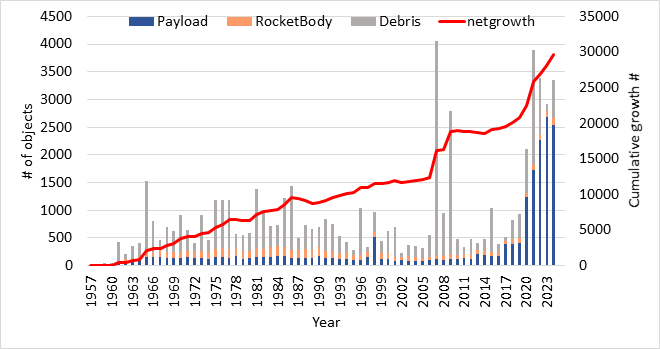
This isn’t science fiction. In 2024 alone, more than 3,600 new pieces of space debris entered Earth's orbit, an alarming sign of an increasingly crowded celestial highway. The Indian Space Situational Assessment Report (ISSAR) for 2024, released by ISRO, paints a sobering picture of the challenges ahead. 

The Growing Danger Above Us 

Space Junk
Image - NASA

From the ground, space seems limitless. But in reality, Earth’s orbits—especially Low Earth Orbit (LEO) and Geostationary Orbit (GEO)—are running out of room. The past year saw 261 launch attempts, adding 2,578 new satellites, but also contributing significantly to the debris problem.

Some of this junk isn’t just floating harmlessly—it’s traveling at speeds 10 times faster than a bullet. Even a stray bolt from a shattered satellite can destroy an operational spacecraft upon impact.

Historical growth of space objects (data sourced from Space-Track)

 
And India isn’t just watching from the sidelines. The country had 22 active satellites in LEO and 31 in GEO by the end of 2024, making it critical for ISRO to protect its assets from collisions. 

The Space Junk Problem Hits Home 

The Space Junk Problem Hits Home

ISRO’s Space Situational Awareness (SSA) division faced 10 high-risk collision scenarios in 2024 alone, forcing last-minute orbital adjustments to prevent catastrophic crashes. In one instance, a weather satellite had to dodge debris from a Chinese rocket explosion—a tense reminder that no country is immune to the hazards of orbital debris.

And the problem isn’t just confined to satellites. Over 2,095 catalogued objects re-entered Earth's atmosphere, with 335 defunct Starlink satellites burning up on their way down.

The implications? While controlled de-orbiting ensures safe disposal, uncontrolled debris re-entries pose a potential risk to both infrastructure and human life.

A Case of Mistaken Identity in Bihar 

The space junk problem isn’t just affecting satellites—it’s also causing confusion on the ground. In Jayanagar, Bihar, residents were startled when they spotted drone-like luminous objects hovering in the night sky. 

Given the area’s proximity to the India-Nepal border, concerns about surveillance drones quickly spread.

However, after an investigation by the Sashastra Seema Bal (SSB) and the Indian Air Force, the mystery was solved—the objects weren’t drones at all. They were low-flying Starlink satellites, reflecting moonlight as they passed overhead. 

This incident highlights how satellite constellations are becoming increasingly visible, sometimes leading to mistaken sightings. With Starlink gearing up for its India launch, such sightings may become more common.

India’s Fight for a Debris-Free Space 

As space debris levels hit record highs, India is stepping up. ISRO’s roadmap for debris mitigation and sustainable space exploration includes:
  • Collision Avoidance Alerts: A staggering 53,000 alerts were issued in 2024, warning satellite operators of potential crashes.
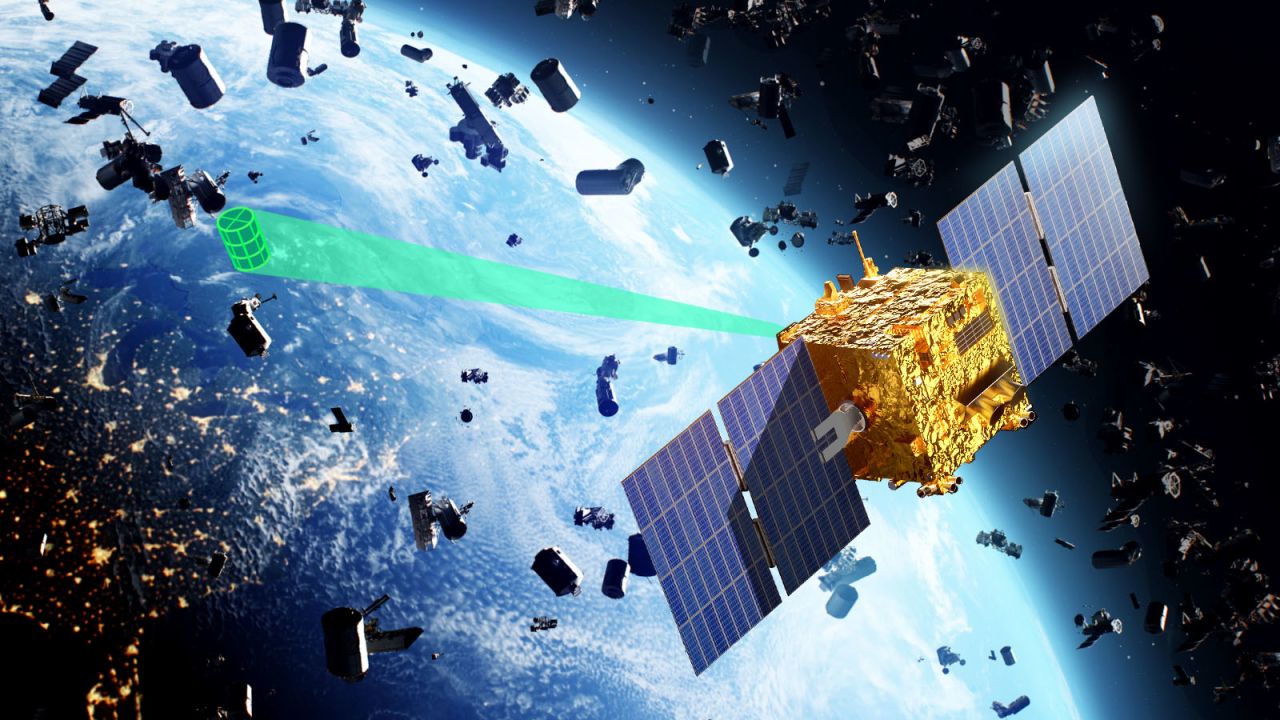
  • Laser-Based Debris Removal: Plans are underway to zap hazardous debris out of orbit using ground-based laser systems.
  • Post-Mission Disposal Regulations: New guidelines require satellites to deorbit themselves responsibly, minimizing long-term clutter. India has set an ambitious goal: Achieve a “Debris-Free Space Mission” by 2030

What’s Next?

Space exploration is thrilling. But as humans push deeper into the cosmos, the space junk problem can no longer be ignored. Every satellite we launch must come with an end-of-life plan, ensuring that it either burns up safely upon re-entry or moves to a designated graveyard orbit.

To recall, in April 2022, Indianweb2.com reported that ISRO is going under the process of going self-reliant in monitoring foreign space objects through Project Netra, India's initiative for Space Situational Awareness (SSA).

In a latest, the key development is the establishment of India’s first space debris monitoring radar in Chandrapur, Assam, which will enhance tracking capabilities for objects as small as 10 cm within a 2,000 km range.

The question is: Can India—and the world—clean up space before it’s too late? If ISRO’s 2024 report tells us anything, it’s that time is running out

Ex-ISRO Scientists' Orbitt Space Secures $1 Mn to Revolutionize Ultra-Low Orbit Propulsion

Ex-ISRO Scientists' Orbitt Space Secures $1 Mn to Revolutionize Ultra-Low Orbit Propulsion

Orbitt Space, an Ahmedabad-based space-tech startup founded by former ISRO scientists, has recently secured $1 million in pre-seed funding led by pi Ventures, with support from IIMA Ventures, said a report by The Economic Times. The 2-months old start-up company is pioneering air-breathing electric propulsion for satellites operating in Ultra Low Earth Orbit (ULEO)-below 250 km altitude.

Orbitt Space was founded in March 2025 by Christopher Parmar and Anupam Kumar, both former ISRO scientists. The company specializes in air-breathing electric propulsion for Ultra Low Earth Orbit (ULEO) satellites, aiming to revolutionize fuel-free, sustainable satellite operations.

Christopher described ULEO as a "blue ocean” opportunity, highlighting how traditional LEO operations face increasing collision risks due to over 40,000 tracked objects and millions of debris fragments. Orbitt’s propulsion system aims to unlock sustainable, fuel-free satellite operations, positioning India at the forefront of next-gen space infrastructure.

This breakthrough propulsion system uses residual atmospheric gases instead of onboard fuel, enabling longer satellite missions while reducing orbital pollution.

The funding will accelerate prototype testing, team expansion, and in-orbit demonstrations, positioning India at the forefront of sustainable space.

The air-breathing electric propulsion system is designed for Ultra Low Earth Orbit (ULEO) satellites—a largely untapped region below 250 km altitude.

Key Funding Details:

  • Technology Focus: Air-breathing propulsion using residual atmospheric gases instead of onboard fuel, enabling longer satellite missions and reducing orbital pollution.
  • Strategic Impact: Addresses congestion in Low Earth Orbit (LEO), offering sharper imaging, lower signal latency, and radiation protection.
  • Next Steps: Funds will support prototype testing, team expansion, and in-orbit demonstrations, paving the way for commercial rollout.
  • Industry Context: Comes amid India's broader push to enhance satellite-based intelligence, surveillance, and reconnaissance (ISR) capabilities.

ISRO & TIFR Join Forces to Advance Space Science and Astronomy Research

ISRO & TIFR Join Forces to Advance Space Science and Astronomy Research

ISRO and TIFR recently held a collaboration meet to strengthen India's capabilities in space science and astronomy. The meeting, attended by fifty scientists and engineers, focused on integrating the scientific and technological expertise of both institutions. Discussions covered various domains, including millimeter-wave astronomy, space weather, radio astronomy, cosmic ray physics, and planetary science.

This initiative aligns with India's evolving space ecosystem and Space Vision 2047, aiming to establish a structured framework for scientific collaboration with clear targets and milestones. The meeting concluded with an action plan to advance joint research efforts.

The ISRO–TIFR collaboration aims to enhance India's capabilities in space science and astronomy by integrating their scientific and technological expertise. Some key objectives include:
  • Strengthening research in millimeter-wave astronomy, space weather, radio astronomy, cosmic ray physics, and planetary science.
  • Establishing a structured framework for scientific collaboration with clear targets and milestones, aligning with India's Space Vision 2047.
  • Leveraging India's radio astronomy observatories for modular integration into international mega-projects.
  • Expanding joint research efforts through domain-specific breakout sessions to identify new areas of cooperation.
This initiative marks a significant step toward building a strong national network for space sciences and achieving global excellence in space research.

At Least 10 Satellites Working Round-the-Clock to Ensure India's Safety & Security: ISRO Chairman

At Least 10 Satellites Working Round-the-Clock to Ensure India's Safety & Security: ISRO Chairman

ISRO Chairman V Narayanan recently stated that at least 10 satellites are working round-the-clock for strategic purposes to ensure India's safety and security. These satellites help monitor India’s 7,000 km coastline and the northern borders, playing a crucial role in surveillance and defense.

These satellites play a crucial role providing real-time imagery and video footage to track enemy movements and terrorist activities.

The comments from ISRO Chairman come amid escalating tensions between India and Pakistan, following the April 22 Pahalgam terror attack, which led to India launching Operation Sindoor against terror sites in Pakistan and Pakistan-occupied Kashmir. Pakistan responded with drone and missile strikes, which India intercepted. However, both nations have now agreed to halt all military actions on land, air, and sea.

Satellites like Cartosat provide sub-meter resolution images, enabling precise identification of military installations and terrorist hideouts.

Inter-Satellite Links (ISL) allow seamless data relay and coordination between satellites, improving intelligence-sharing. Synthetic Aperture Radar (SAR) used in RISAT satellites, capable of penetrating cloud cover and darkness to provide continuous surveillance.

Electronic Intelligence (ELINT) & Signal Monitoring helps intercept enemy communications and radar signals, aiding in counter-terrorism operations. Satellites work alongside military drones for target tracking and precision strikes.

Following the April 22 Pahalgam terror attack, India launched Operation Sindoor, targeting terrorist infrastructure in Pakistan and Pakistan-occupied Kashmir (PoK). ISRO's satellites provided critical intelligence, helping the Indianneutralize radar systems, disrupt drone strikes, and destroy 11 air bases inside Pakistan.

ISRO’s satellites also contribute to disaster management, telemedicine, agriculture, and environmental monitoring, reinforcing their broader role beyond defense.

India Conducting 'Dogfights' in Space with Satellites

India Conducting 'Dogfights' in Space

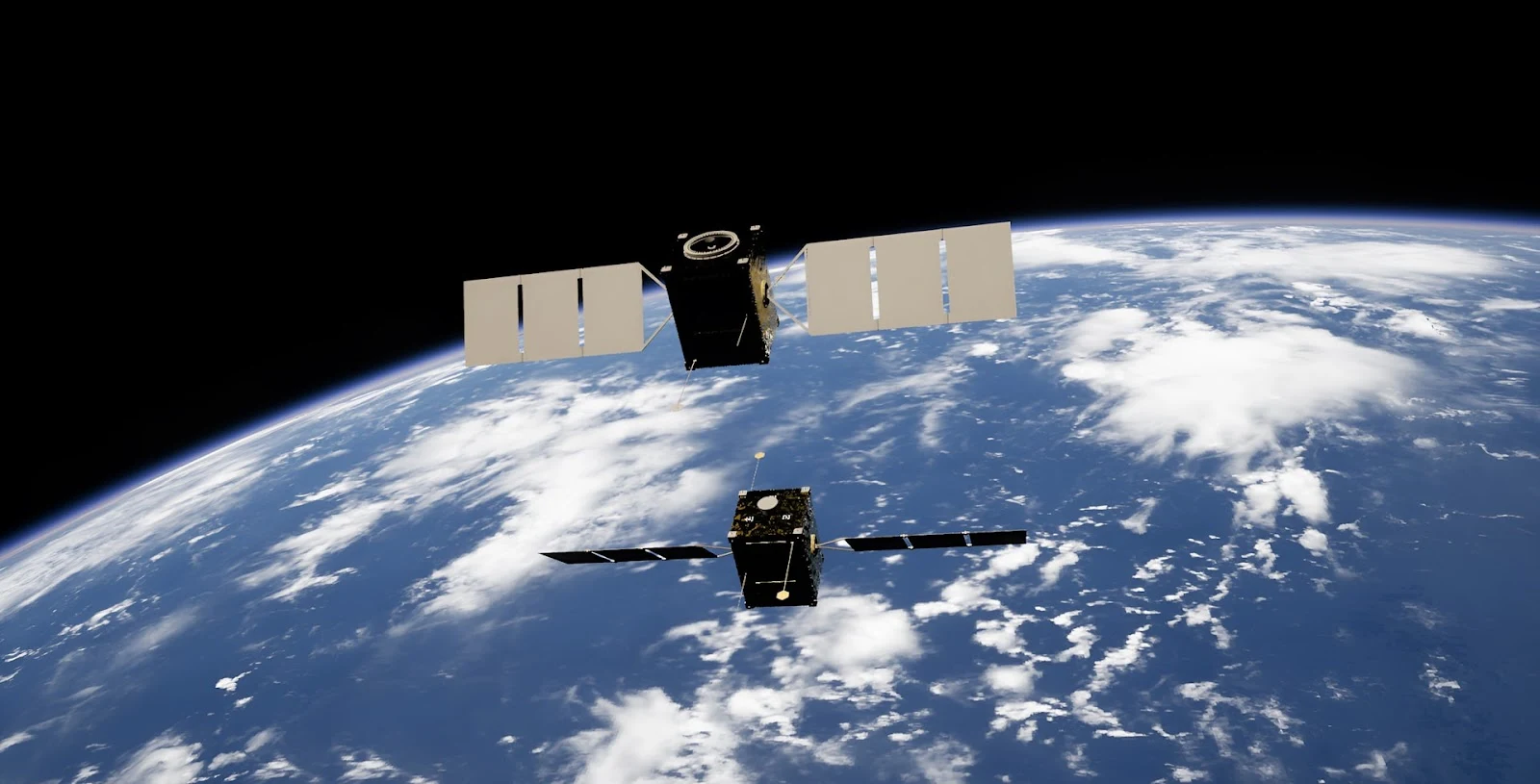
India is conducting "dogfights" in space—a sophisticated maneuver where two satellites, a chaser and a target, engage in close-range orbital tactics, much like fighter jets in aerial combat, reported several Indian media outlets including NDTV. This is part of ISRO’s SPADEX mission, which aims to advance satellite docking, proximity operations, and autonomous flight capabilities.

Dogfights in space refer to coordinated, close-range maneuvers between satellites, similar to aerial dogfights between fighter jets. In India's case, ISRO has successfully executed this maneuver using its SPADEX mission, where a chaser and target satellite engage in precision orbital tactics.

The satellites, orbiting 500 km above Earth at speeds of 28,800 km/h, have successfully demonstrated docking, undocking, and power transfer between them.

These advancements position India among the elite nations mastering space docking and orbital maneuvering.

This follows similar exercises by China’s defense satellites in 2024, prompting global interest in space-based maneuverability. Last month, it was reported that the U.S. Space Force observed five Chinese satellites executing synchronized movements, practicing tactics for on-orbit space operations conducted in Low Earth Orbit (LEO), last year.

India’s SPADEX mission relies on cutting-edge rendezvous and docking technology to execute these satellite maneuvers. The key technologies involved include:
  1. Laser Range Finder & Visual Cameras – Used for precise navigation during close-range docking.
  2. Retroreflectors & Real-Time Imaging – Help align satellites during final approach.
  3. Inter-Satellite Communication Link (ISL) – Enables autonomous coordination between spacecraft.
  4. Indigenous Docking Mechanism – Developed by ISRO as part of the Bharatiya Docking System.
  5. Power Transfer Technology – Allows one satellite to supply energy to another, crucial for future space stations.
  6. Autonomous Rendezvous Strategy – Ensures satellites can approach and dock without human intervention.
This breakthrough strengthens India’s position in space warfare and satellite autonomy, showcasing its ability to execute complex orbital maneuvers with precision. What aspect of this technology intrigues you the most?... Or... What do you think this means for India’s future in space defense? Do comment below...

ISRO Achieves Milestone: PSLV’s Fourth-Stage Engine Qualified with Indigenous Satellite Nozzle Divergent

ISRO Achieves Milestone: PSLV’s Fourth-Stage Engine Qualified with Indigenous Satellite Nozzle Divergent

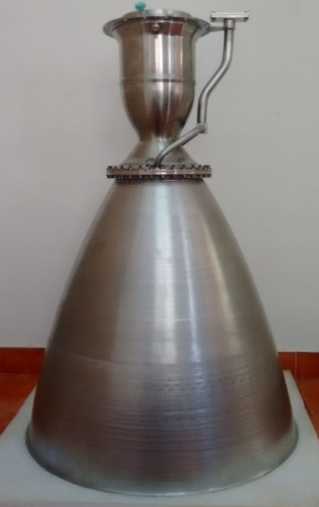
ISRO has successfully qualified the fourth-stage engine of the PSLV with a Satellite Nozzle Divergent made from Stellite (KC20WN), a cobalt-based alloy.

The Indian space agency has successfully tested this new material for the fourth stage engine of its Polar Satellite Launch Vehicle (PSLV). Previously, the nozzle divergent of the engine was made from imported Columbium (C103) material, but ISRO has now developed an alternative material called Stellite (KC20WN), which is a cobalt-based alloy. This new material retains high strength at extreme temperatures (up to 1150°C), making it suitable for rocket engines.

This marks a significant step toward Atmanirbhar Bharat, as it replaces the previously imported Columbium (C103) material, achieving 90% cost savings.

A Satellite Nozzle Divergent is a specialized component used in rocket engines, particularly in the fourth stage of the PSLV (PS4). It helps direct and optimize the exhaust flow to enhance thrust efficiency. Traditionally, ISRO used Columbium (C103) material for this nozzle, but it has now transitioned to Stellite (KC20WN). 

ISRO Achieves Milestone: PSLV’s Fourth-Stage Engine Qualified with Indigenous Satellite Nozzle Divergent

Stellite, the alloy used, is advantageous because it retains high strength at extreme temperatures (up to 1150°C), making it ideal for space applications. This shift to indigenous materials aligns with Atmanirbhar Bharat, reducing reliance on imports and achieving 90% cost savings.

A nozzle divergent is the expanding section of a convergent-divergent (CD) nozzle, commonly used in rocket engines and supersonic jet propulsion. It plays a crucial role in accelerating exhaust gases to supersonic speeds, maximizing thrust efficiency.

How It Works:

  1. Convergent Section – The nozzle first narrows, increasing the velocity of the gas while decreasing pressure. 
  2. Throat – At the narrowest point, the gas reaches Mach (sonic speed).
  3. Divergent SectionThe nozzle then expands, allowing the gas to accelerate beyond Mach 1, achieving supersonic flow.
 
ISRO Achieves Milestone: PSLV’s Fourth-Stage Engine Qualified with Indigenous Satellite Nozzle Divergent
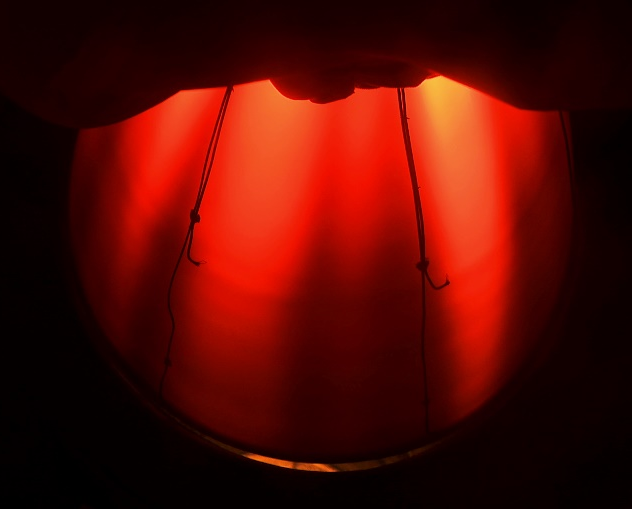
Nozzle divergent during the test

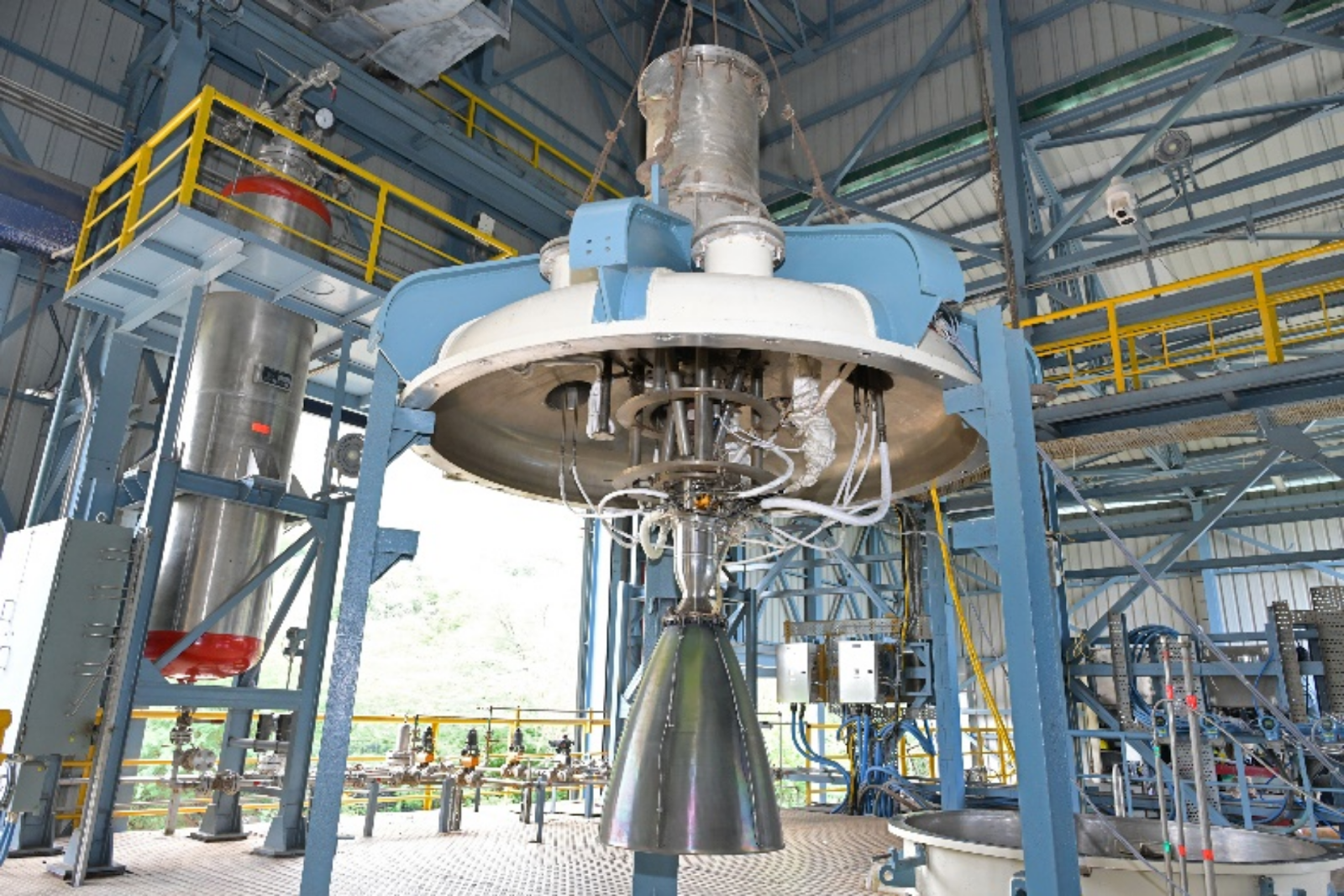
The final qualification test was conducted on April 8, 2025, at the ISRO Propulsion Complex, Mahendragiri, with a hot test lasting 665 seconds.

As part of the qualification programme, 3 hot tests were already completed on two hardware in the first phase.

This breakthrough means ISRO can reduce costs while maintaining high-performance standards for future PSLV missions.

Market Reports

Market Report & Surveys
IndianWeb2.com © all rights reserved