Showing posts with label Quantum. Show all posts

US DoE and AMD Launch $1B AI Supercomputing Initiative to Accelerate Nuclear, Fusion, and Quantum Research

US DoE and AMD Launch $1B AI Supercomputing Initiative to Accelerate Nuclear, Fusion, and Quantum Research

The U.S. Department of Energy (DOE) has partnered with AMD to build two of the world’s fastest AI supercomputers, aimed at advancing nuclear power, fusion energy, and quantum technologies.

On October 27, AMD and the U.S. DOE announced two next-generation systems at Oak Ridge National Laboratory (ORNL) designed to expand America’s leadership in artificial intelligence (AI) and high-performance computing (HPC), the Lux AI supercomputer and the Discovery supercomputer.
  • Strategic Partnership Overview
    • Investment: $1 billion collaboration between the U.S. DOE and AMD
    • Purpose: Construct two cutting-edge AI supercomputers for scientific and national security challenges
    • Partners: AMD (hardware), Hewlett Packard Enterprise and Oracle (infrastructure and software)
  • Scientific and Technological Focus
    • Nuclear & Fusion: Accelerate simulations for next-gen reactors and fusion containment
    • Quantum Tech: Support quantum algorithm development and hybrid computing experiments
    • Medical Breakthroughs: Drug discovery and cancer modeling using massive datasets
    • National Security: Defense simulations, threat detection, and strategic planning
  • AI Capabilities
    • Performance: Among the fastest AI systems globally, real-time data processing
    • Use Cases: Scientific discovery, energy dominance, and national security operations
  • Geopolitical Implications
    • Reinforces U.S. leadership in AI and high-performance computing
    • Supports President Trump’s push to repatriate advanced tech infrastructure

Lux and Discovery are two next-generation AI supercomputers being developed by the U.S. Department of Energy (DOE) at Oak Ridge National Laboratory (ORNL), with deployment planned for 2026 and 2028 respectively. Lux will serve as the nation’s first AI Factory for science, while Discovery will be a second-generation exascale system designed to unify AI and high-performance computing.
  • Lux AI Supercomputer (Deployment: Early 2026)

    • Purpose: First U.S. AI Factory supercomputer for science, energy, and national security
    • Architecture: AMD Instinct MI355X GPUs, AMD EPYC CPUs, AMD Pensando networking
    • Platform: Multi-tenant, cloud-like system for flexible AI training and inference
    • Use Cases: Fusion energy, quantum computing, cancer research, cybersecurity
    • Partners: ORNL, AMD, Oracle Cloud Infrastructure, HPE

  • Discovery Supercomputer (Deployment: 2028)

    • Purpose: Second-generation exascale successor to ORNL’s Frontier system
    • Architecture: HPE Cray Supercomputing GX5000 and K3000 storage systems
    • Performance: Up to 10X productivity boost over current systems
    • Use Cases: Precision medicine, nuclear energy, aerospace, climate modeling
    • Strategic Role: Supports secure, federated AI infrastructure and sovereign AI leadership
  • Combined Impact
    • Investment: $1 billion joint public-private funding
    • Strategy: Aligned with U.S. AI Action Plan for scientific and competitive leadership
    • Location: Oak Ridge National Laboratory (ORNL), Tennessee
DST Supported QNu Labs Demonstrates India’s 1st 500 km Quantum-Safe Network Under National Quantum Mission

DST Supported QNu Labs Demonstrates India’s 1st 500 km Quantum-Safe Network Under National Quantum Mission

India’s Department of Science & Technology (DST), under the National Quantum Mission (NQM), announced that Bengaluru-based startup QNu Labs has successfully demonstrated a 500 km quantum-safe communication network — the country’s first extensive Quantum Key Distribution (QKD) deployment.

Key Facts

  • Startup: QNu Labs Pvt. Ltd., incubated at IIT Madras and supported under DST’s National Quantum Mission (NQM).
  • Achievement: Demonstrated India’s first 500 km Quantum Key Distribution (QKD) network over existing optical fiber infrastructure.
  • Event: Officially announced at the Emerging Science, Technology and Innovation Conclave (ESTIC 2025).
  • Stakeholders Present: Dr. Jitendra Singh, Prof. Ajay K. Sood, Dr. Ajai Chowdhry, Prof. Abhay Karandikar.

What is Quantum Key Distribution (QKD)?

  • QKD uses quantum mechanics to securely share cryptographic keys between two parties.
  • Any attempt to intercept the quantum signal disturbs the system, alerting legitimate users.
  • QKD is provably secure against classical and future quantum attacks, unlike conventional encryption.

Strategic Importance

  • Cybersecurity Leap: A 500 km QKD backbone is a milestone for India’s digital security, especially for defense and critical infrastructure.
  • Collaboration: Indian Army facilitated access to fiber networks in Rajasthan for testing.
  • Global Positioning: Positions India alongside China, the US, and EU in building quantum-secure communication networks.
  • Commercial Potential: QNu Labs expected to commercialize quantum-safe products for government, defense, and enterprise clients.

Why It Matters

This demonstration is a proof-of-concept for India’s quantum-secure future, showing that indigenous startups can deliver cutting-edge infrastructure. It strengthens India’s strategic autonomy in cybersecurity, reduces reliance on imported encryption technologies, and aligns with the National Quantum Mission’s vision of building a robust quantum ecosystem.

New India-UK Project To Use Quantum Power to Boost Soil Health and Food Security

New India-UK Project To Use Quantum Power to Boost Soil Health and Food Security

British Prime Minister Keir Starmer’s upcoming visit to Mumbai is spotlighting a major India-UK research partnership in quantum computing and biotechnology. At the heart of this collaboration is a joint project between Imperial College London and IIT Bombay, aiming to use quantum simulations to improve crop resilience and soil health in climate-vulnerable regions.

Researchers are modeling how plants and soil bacteria communicate, using quantum computing to simulate gene regulation and microbial signaling. Strigolactones, a plant chemicals that act as messengers between roots and microbes. The joint India-UK team is studying how synthetic versions of Strigolactones and biochar can enhance these interactions.

IIT Bombay contributes microbial ecology and genomics, while Imperial brings bioinformatics and quantum simulation capabilities. The aim is to boost natural processes that help crops thrive in arid and extreme weather conditions.

Quantum Roots: How India and the UK Are Using Quantum Computing to Reinvent Agriculture

In a world grappling with climate extremes, a groundbreaking India-UK collaboration is turning to quantum computing—not for finance or cryptography, but for farming. At the heart of this effort is a joint research project between Imperial College London and IIT Bombay, aiming to decode the invisible language between plant roots and soil microbes to build climate-resilient agriculture.

From Silicon to Soil: The Quantum Leap

Led by Dr. Po-Heng (Henry) Lee at Imperial and Dr. Indrajit Chakraborty at IIT Bombay, the project uses quantum simulations to model how plants communicate with microbes in the soil. The focus is on strigolactones—plant hormones that act as chemical messengers, triggering microbial responses that affect nutrient uptake, drought resistance, and overall soil health.

We’re not just simulating molecules—we’re simulating relationships, says Dr. Lee. Quantum computing lets us explore how microbial communities respond to plant signals under stress, and how we might enhance those responses.

The Science Behind the Soil

  • Synthetic strigolactones and biochar are being tested to amplify beneficial microbial activity.
  • IIT Bombay contributes microbial genomics and soil ecology expertise.
  • Imperial College builds quantum circuit models to simulate microbial gene expression and signal transduction.

Strategic Roots: India-UK Tech Diplomacy

  • The project is a flagship under the India-UK Technology Security Initiative (TSI), signed in 2024.
  • Funded by the India Connect Fund, supporting up to 25 joint research efforts annually.
  • Will be spotlighted during Keir Starmer’s visit to Mumbai for the Global Fintech Fest 2025.

Why It Matters

  • Food Security: Quantum-enhanced soil treatments could boost yields in climate-stressed regions.
  • Climate Adaptation: Understanding microbial resilience helps design farming systems that thrive under stress.
  • Tech Transfer: Sets a precedent for applying frontier technologies to grassroots challenges.

The Bigger Picture

This isn’t just about quantum computing—it’s about reimagining agriculture as a system of intelligent, adaptive relationships. By simulating the unseen conversations beneath our feet, researchers hope to unlock new pathways to sustainability.

As Dr. Chakraborty puts it, We’re using the most advanced tools in physics to solve the oldest problem in civilization: how to grow food in a changing world.

IIT Mandi’s Quantum-Inspired Theory Reveals Hidden Logic Behind Collective Movement

IIT Mandi’s Quantum-Inspired Theory Reveals Hidden Logic Behind Collective Movement
  • IIT Mandi researchers uncover how quantum-inspired dynamics in visual perception can explain flocking, swarming, and coordination, opening doors to new advances in robotics and neuroscience

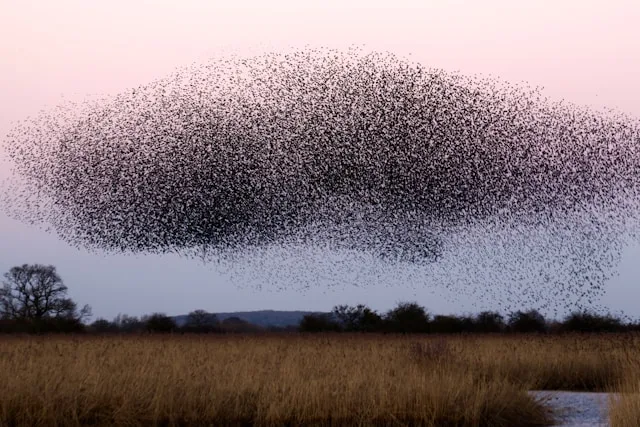
Why do birds flock, fish school, or humans synchronize their movements without a designated leader? This age-old question has fascinated scientists across disciplines for decades. Now, 0 at the Indian Institute of Technology (IIT) Mandi have put forward a groundbreaking explanation: the secret may lie in quantum-inspired perception.

The study, led by Prof. Laxmidhar Behera and his team, Dr. Jyotiranjan Beuria and Mayank Chaurasiya, recently published in the prestigious journal Proceedings of the Royal Society A (2025), introduces a radical mathematical framework to explain how coordination emerges in nature. In classical models of collective motion, such as the well-known Vicsek model, agents align their movement based on their neighbors’ directions. While these models capture some aspects of swarming and flocking, they often fall short in accounting for real-world complexities, such as noisy environments, delays in response, or ambiguous information. The IIT Mandi team approached the puzzle from a different angle. Drawing inspiration from quantum mechanics, they proposed that each agent’s perception does not collapse immediately into a definite decision. Instead, it exists in a superposition of possibilities, much like a particle in quantum physics can exist in multiple states until observed.

Commenting on the study, Prof. Laxmidhar Behera, Director of IIT Mandi and co-author of the paper, said –
“Our work shows that quantum-inspired ideas can move beyond physics and provide fresh insight into one of nature’s oldest mysteries: how collective order arises out of local perception. The implications range from understanding the mind and brain to engineering next-generation intelligent systems.”

His words reflect a growing trend in modern science: borrowing principles from quantum theory to enrich disciplines far beyond fundamental physics. By bridging cognitive science, biology, and engineering, the IIT Mandi study points to a unifying framework for perception and coordination.

A Unified Framework for Nature and MachinesIn this framework, agents perceive their neighbors not through fixed snapshots but through entangled perceptual states that evolve dynamically. Coordination arises naturally as these states resolve, balancing uncertainty and alignment in a way that mirrors quantum behavior. A central contribution of the study is the introduction of two novel quantities: perception strength, which measures how strongly agents align their perceptual states, and perceptual energy, which measures the stability of collective perception within the group. Together, these measures allow scientists to quantify how coordination emerges even in noisy or incomplete conditions. Importantly, the researchers demonstrated that classical flocking models are special cases of their broader, quantum-inspired theory. This means that existing frameworks for collective motion can be seen as approximations within a more general, perception-driven model.

New Metrics for Measuring Group Intelligence

The implications of this work extend far beyond theory. In biology, the framework offers a new perspective on how swarms of animals remain cohesive despite disturbances. Instead of relying solely on physical interaction rules, the study suggests that perception itself plays a fundamental role in generating order in living systems.

Game-Changing Implications

In robotics, swarm robotics such as coordinated drones used in search-and-rescue operations, environmental monitoring, or planetary exploration could adopt quantum-inspired perception to achieve more flexible and adaptive coordination. In neuroscience and psychology, the study resonates with how human perception often involves ambiguity, sudden switching, and context-dependent interpretation. By offering a rigorous mathematical model for perceptual dynamics, the framework provides a fresh way to understand brain function and cognitive processes. In artificial intelligence, future AI systems could harness quantum-inspired perceptual operators to handle uncertainty with greater robustness, avoiding brittle or premature decisions when confronted with ambiguous or incomplete data.

About IIT Mandi:

IIT Mandi is one of the top second-generation IITs located in Kamand Valley, Mandi district of Himachal Pradesh, India. It is one of eight new Indian Institutes of Technology (IITs) established by the Ministry of Human Resource Development, Government of India, and recognized as one of Institutes of National Importance. IIT Mandi's permanent campus about 14 km (8.7 mi) from Mandi consists of the South and North campuses connected by a narrow neck. The South campus is on the left bank of the Uhl River below Kamand village. The North campus is along the Kataula Khad opposite Salgi village. A transit campus at Government Post graduate College, Mandi was handed over by the Himachal Pradesh Government on 16 November 2009. The Kamand campus ground-breaking ceremony, to mark the start of construction, was held on 13 April 2012.

On 25 April 2015, IIT Mandi became the first of all the new IITs to completely shift B. Tech students to its permanent campus in Kamand. Since its inception the institute has been involved with more than 275 Research and Development (R&D) projects worth more than ₹120 crore. In the past 10 years, the institute has signed Memorandum of Understanding (MoU) with as many as 11 international and 12 national universities.

Standard Chartered’s SC Ventures and Fujitsu Launch ‘Project Quanta’ to Accelerate Quantum Innovation in Finance

Standard Chartered’s SC Ventures and Fujitsu Launch ‘Project Quanta’ to Accelerate Quantum Innovation in Finance

SC Ventures by Standard Chartered Bank, which builds and invests in breakthrough ventures in and beyond banking, together with Fujitsu, a leading developer of quantum software and hardware, are set to join forces on September 25 to incubate Project Quanta. The project will integrate multiple software and hardware technologies to provide clients a platform to rapidly explore, develop and integrate quantum computing and quantum- inspired applications.

The joint venture will leverage Fujitsu’s expertise in quantum computing R&D and software-and-algorithm development as well as insights gained through the development of its superconducting quantum computer. It will bring this expertise together with SC Ventures’ venture building prowess and deep insights into financial institutions to accelerate the development of quantum use cases, intellectual property, resources and value.

In this platform, in addition to the development environment, it provides pre- built algorithms in areas such as fraud detection, risk simulations, derivative pricing, and credit decision, enabling users to develop their own algorithms. We also provide access to data and backend hardware, allowing users to test their algorithms.

This project will utilize Fujitsu’s quantum computing technology. Fujitsu has been developing quantum computing capabilities through both software and hardware advancements utilizing multiple joint research initiatives. Based on the collaboration with RIKEN, Fujitsu is currently developing a 1,000-qubit superconducting quantum computer, scheduled to begin operation in fiscal 2026.

Looking ahead, the company is also planning the development of a plus-10,000 qubit (250 logical qubit) superconducting quantum computer by fiscal 2030.

Apurv Suri, Client Engagement & Partnerships Lead, SC Ventures, comments: “The current quantum development industry is fragmented with some companies excelling at hardware integration while others are better at quantum algorithm building tools. By joining forces with Fujitsu, we want to unlock quantum resources and talent on one platform for corporates looking to scale their quantum capabilities.”

Staf ford Bond, Head of Growth Investments, Fujitsu Services Limited, comments: "At Fujitsu, we are committed to solving the world’s most complex challenges through innovation and collaboration. Partnering with SC Ventures on Project Quanta represents a bold step toward democratising access to quantum capabilities and realising true quantum advantage. By combining our expertise in quantum technologies and integration with SC Ventures’ deep industry insight and venture building pedigree, we aim to accelerate the practical application of quantum technologies and unlock transformative value for businesses.”

About Fujitsu

Fujitsu’s purpose is to make the world more sustainable by building trust in society through innovation. As the digital transformation partner of choice for customers around the globe, our 113,000 employees work to resolve some of the greatest challenges facing humanity. Our range of services and solutions draw on five key technologies: AI, Computing, Networks, Data & Security, and Converging Technologies, which we bring together to deliver sustainability transformation. Fujitsu Limited (TSE:6702) reported consolidated revenues of 3.6 trillion yen (US$23 billion) for the fiscal year ended March 31, 2025 and remains the top digital services company in Japan by market share.

Time Reversal: Scientists Achieves A Real-Life Sci-Fi Breakthrough

Time Reversal:  Scientists Achieves A Real-Life Sci-Fi Breakthrough

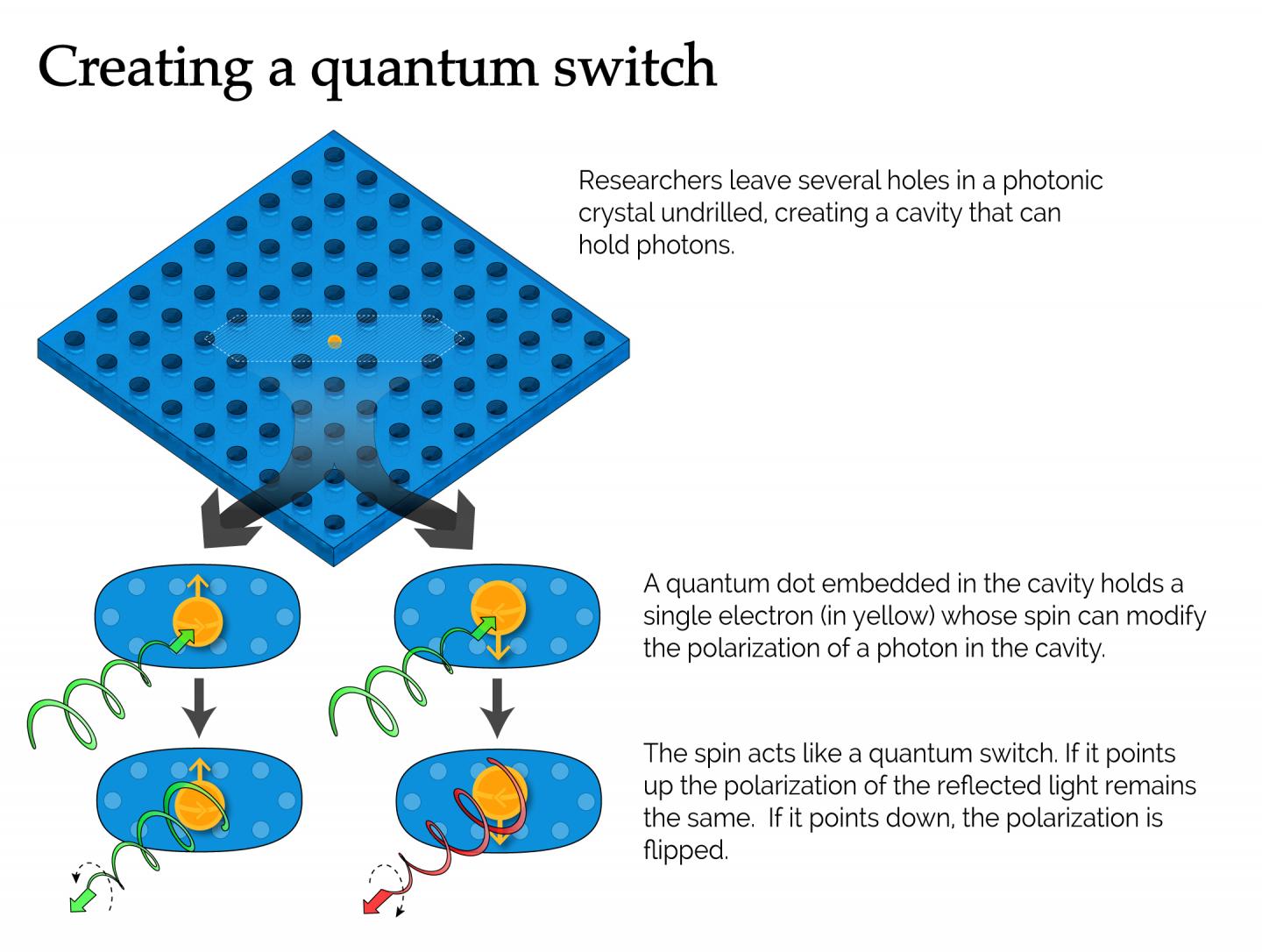
Austrian scientists have pulled off something that sounds straight out of science fiction: they’ve successfully reversed time for a single photon using a device called a quantum switch. This isn’t about building a time machine to visit the dinosaurs—it’s about manipulating the flow of time within quantum systems, where the rules of reality bend in mind-boggling ways.

What They Did

  • Researchers from the Austrian Academy of Sciences (ÖAW) and the University of Vienna used a photon (a particle of light) and sent it through a crystal.
  • With the help of the quantum switch, they were able to rewind the photon’s state—returning it to how it was before the journey began.
  • This process, called a rewind protocol, works even without knowing what happened to the particle during its journey—a feat previously thought impossible in quantum mechanics.

Quantum Switch
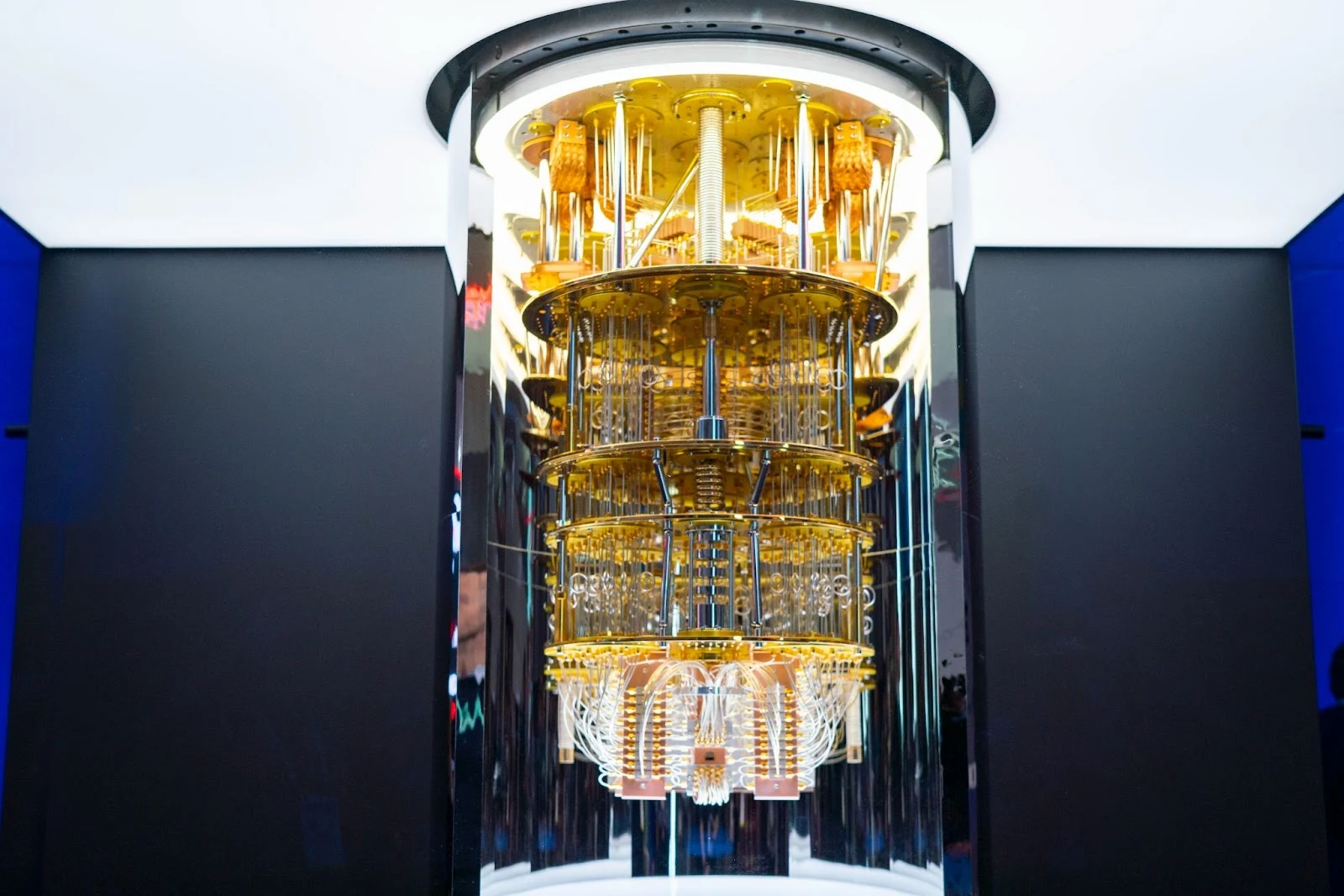
Image Credits – S. Kelley/JQI


Fast-Forwarding Time Too

  • The team didn’t stop at rewinding. They also discovered how to accelerate time for a quantum system.
  • By redistributing “evolutionary time” among identical systems, they made one system age 10 years in just one, while the others remained unchanged.

Why It Matters

  • While reversing time for humans is far beyond reach (it would take millions of years to rewind even one second of a person’s life), this discovery could revolutionize quantum computing.
  • It opens the door to undoing errors in quantum processors, making them more powerful and reliable.

A New Way to Watch Reality

Physicist Miguel Navascués likened classical physics to watching a movie in a theater—linear and unchangeable. Quantum physics, he said, is like watching at home with a remote: you can rewind, fast-forward, or skip scenes.

Quantum India Bengaluru 2025: Karnataka Launches Visionary Quantum Roadmap in Presence of Top Ministers and Global Experts

  • India’s First Global Quantum Event Inaugurated in Bengaluru
  • Nobel Laureates honoured at inaugural event
  • Pancharatnam Prize Announced for Quantum Breakthroughs
  • Karnataka aims for $20B quantum economy by 2035
  • Karnataka Launches Strategic Quantum Roadmap
  • Quantum Hardware Zone planned near Bengaluru
  • Quantum City to unify innovation and industry, Incentives for indigenous quantum tech manufacturing
  • State Quantum Mission to steer development with High-level Task Force for sector governance
  • Karnataka Launches Strategic Quantum Roadmap
Bengaluru witnessed a historic milestone today with the inauguration of the first edition of Quantum India Bengaluru 2025, India’s first international event dedicated to the fast-evolving world of quantum science and technology. The summit was inaugurated by Shri Siddaramaiah, Hon’ble Chief Minister of Karnataka, alongside Shri D.K. Shivakumar, Hon’ble Deputy Chief Minister of Karnataka. The event brought together Nobel Laureates, renowned researchers, industry stakeholders, policymakers, and quantum startups on a shared platform for the first time. Participants from various countries including Denmark, Australia, UK, USA, France, Germany, Netherlands, Israel and Switzerland were part of the event.

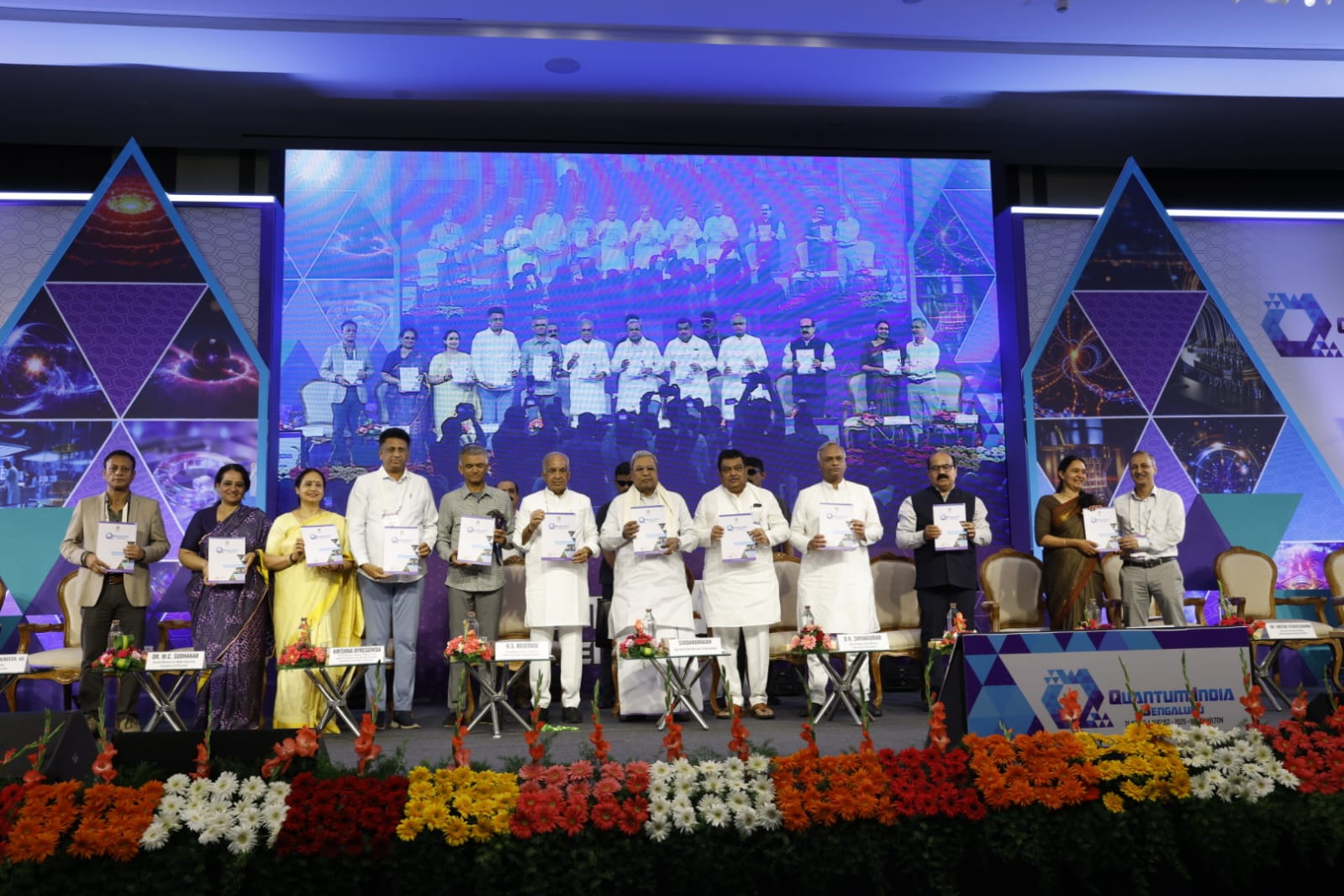
The Karnataka Quantum Roadmap unveiled at the Quantum India Bengaluru (QIB) 2025 in the presence of (from L to R) Prof. Arindam Ghosh, Professor, IISc & QIB 2025 Conference Chair; Dr. Ekroop Caur , IAS, Secretary, Department of Electronics, IT, Bt, and S&T, Government of Karnataka (GoK); Dr. Shalini Rajneesh , IAS, Chief Secretary, GoK; Dr. M.C. Sudhakar, Hon'ble Minister for Higher Education, GoK; Shri Krishna Byregowda, Hon’ble Minister for Revenue, Member of the Legislative Assembly, Byatarayanapura Assembly Constituency, GoK; Shri N.S. Boseraju , Hon’ble Minister for Minor Irrigation and Science & Technology, GoK; Shri Siddaramaiah, Hon’ble Chief Minister of Karnataka; M.B. Patil, Hon'ble Minister for Large and Medium, Industries and Infrastructure Development, GoK; Shri Priyank Kharge , Hon'ble Minister for Rural Development and Panchayat Raj and IT & Bt, GoK; Shri Sadashiva Prabhu B , IAS Director, Department of Science & Technology, Managing Director, Karnataka Science and Technology Promotion Society (KSTePS), GoK; Ms. Smitha Vishveshwara , Professor, Department of Physics, University of Illinois at Urbana-Champaign, US, and Prof. Akshay Naik, Professor, IISc & QIB 2025 Conference Co-Chair, held at Hotel Hilton, Manyata Tech Park, Bengaluru on 31st July 2025.

Organized by the Karnataka Science and Technology Promotion Society (KSTePS), Department of Science & Technology, Government of Karnataka, in collaboration with IISc Quantum Technology Initiative (IQTI), QIB 2025 aims to position India as a global leader in the Quantum Age.

The distinguished gathering included Shri N.S. Boseraju, Hon’ble Minister for Minor Irrigation and Science & Technology, Government of Karnataka; Shri M.B. Patil, Hon'ble Minister for Large and Medium, Industries and Infrastructure Development,, Government of Karnataka; Shri Krishna Byregowda, Hon’ble Minister for Revenue, Member of the Legislative Assembly, Byatarayanapura Assembly Constituency, Govt. of Karnataka; Shri Priyank Kharge, Hon'ble Minister for Rural Development and Panchayat Raj and IT & Bt, Government of Karnataka; Dr. M.C. Sudhakar, Hon'ble Minister for Higher Education, Government of Karnataka; Prof. Duncan Haldane, Princeton University, USA, (2016 Nobel Laureate); Prof. David Gross, UCSB, USA, (2004 Nobel Laureate); Ms. Smitha Vishveshwara, Professor, Department of Physics, University of Illinois at Urbana-Champaign, US; Dr. Ekroop Caur, IAS, Secretary, Department of Electronics, IT, Bt, and S&T, Government of Karnataka; Prof. Arindam Ghosh, Professor, IISc & QIB 2025 Conference Chair; Prof. Akshay Naik, Professor, IISc & QIB 2025 Conference Co-Chair; and Shri Sadashiva Prabhu B, IAS Director, Department of Science & Technology, Managing Director, Karnataka Science and Technology Promotion Society (KSTePS), Government of Karnataka.

Dr. Rajamani Vijayaraghavan, Associate Professor, Dept. of Condensed Matter Physics & Materials Science, Tata Institute of Fundamental Research (TIFR), Mumbai, was felicitated in the presence of (from L to R) Prof. Arindam Ghosh, Professor, IISc & QIB 2025 Conference Chair; Dr. Shalini Rajneesh, IAS, Chief Secretary, GoK; Dr. Ekroop Caur, IAS, Secretary, Dept. of Electronics, IT, Bt, and S&T, GoK; Shri N.S. Boseraju, Hon’ble Minister for Minor Irrigation and Science & Technology, GoK; Dr. M.C. Sudhakar, Hon'ble Minister for Higher Education, GoK; Shri Krishna Byregowda, Hon’ble Minister for Revenue, Member of the Legislative Assembly, Byatarayanapura Assembly Constituency, GoK; Siddaramaiah, Hon’ble Chief Minister of Karnataka; Sadashiva Prabhu B, IAS Director, Dept. of Science & Technology, Managing Director, Karnataka Science and Technology Promotion Society (KSTePS), GoK; M.B. Patil, Hon'ble Minister for Large and Medium, Industries and Infrastructure Development, GoK; and Shri Priyank Kharge, Hon'ble Minister for Rural Development and Panchayat Raj and IT & Bt, GoK at Quantum India Bengaluru (QIB) 2025, held at Hotel Hilton, Manyata Tech Park, Bengaluru on 31st July 2025.

A key highlight of the event was the announcement of the ‘Karnataka Quantum Roadmap,’ outlining the State’s strategic vision for quantum leadership. Built on five pillars of Talent, R&D, Infrastructure, Industry Enablement and Global Partnerships, the roadmap adopts a phased, outcome-driven approach and focuses on aligning academia with industry, scaling indigenous hardware capabilities and building a robust startup ecosystem.

The Government of Karnataka announced the prestigious Pancharatnam Prize for Excellence in Quantum Science and Technology, named in honour of the eminent Indian physicist S. Pancharatnam. Renowned for his groundbreaking discovery of the geometric phase, now a cornerstone of modern quantum technologies, Pancharatnam conducted his pioneering research at the University of Mysore and the Raman Research Institute in Bengaluru. This prize has instituted to recognize Indian nationals whose work bridges fundamental quantum science and real-world applications, and the award carries a citation and a cash prize of ₹2 lakhs.

A special moment was the felicitation of the two Nobel Laureates, Prof. Duncan Haldane, Princeton University, USA, (2016 Nobel Laureate); Prof. David Gross, UCSB, USA, (2004 Nobel Laureate).

Shri Siddaramaiah, Hon’ble Chief Minister of Karnataka stated in his inaugural address, “Quantum technology represents a strategic frontier with the potential to fundamentally transform how global industries solve their most complex challenges. It is not just the future, it is the force that will redefine Karnataka’s capabilities in healthcare, education, energy, infrastructure, and cybersecurity. The Government of Karnataka is fully committed to positioning the state at the forefront of this quantum revolution. Our focus is on the indigenization of quantum technologies and on establishing Karnataka as a global exporter of quantum solutions, unlocking innovations that were once thought to be out of reach.”

Adding to this, Shri D.K. Shivakumar, Hon’ble Deputy Chief Minister, expressed, “Quantum India Bengaluru reflects our deep commitment to shaping the future of science and technology. Karnataka is proud to be at the forefront of India’s quantum journey—bringing together global researchers, startups, investors, and institutions. We envision Bengaluru evolving into the world’s first ‘Quantum City,’ where research, talent, and industry converge. Our efforts begin in the classroom, with quantum education entering schools and universities to prepare the next generation. This revolution must be inclusive, and Karnataka is committed to building a robust ecosystem through research parks, startup hubs, and strong policy support.”

The Government of Karnataka announced the ambitious vision for 2035 to create a $20 billion quantum advantage-driven economy, potentially contributing a major share of India’s quantum tech output. As a part of this vision, the Government has undertaken several pioneering initiatives to lead India’s quantum revolution. Karnataka has established India’s first dedicated Quantum Research Park at IISc Bengaluru, with ₹48 crore sanctioned for its Phase-2 expansion. To bolster indigenous capabilities, the state is developing a Quantum Hardware Manufacturing Zone around Bengaluru—providing plug-and-play infrastructure and incentives for companies building critical components such as cryostats and quantum chips.

Further advancing this vision, the government is planning a first-of-its-kind 'Quantum City' near Bengaluru—a world-class innovation cluster integrating research, advanced manufacturing, education, startups, and government initiatives under one roof. To ensure focused governance, a dedicated State Quantum Mission is being instituted, guided by a high-level Quantum Technology Task Force under the Department of Science & Technology. This task force will bring together leading minds from academia, industry, government, and defense to set strategic goals and drive coordinated action across the sector.

Shri N.S. Boseraju, Hon’ble Minister for Minor Irrigation and Science & Technology, Government of Karnataka said, “It is indeed a privilege for Karnataka to host Quantum India Bengaluru 2025, in the International Year of Quantum, as declared by the United Nations. Under the guidance of our Hon’ble Chief Minister and Deputy Chief Minister, Karnataka is taking focused steps to build a future-ready quantum ecosystem. Our Quantum Roadmap outlines a clear, phased strategy. We are committed to supporting cutting-edge research, attracting world-class quantum companies and nurturing deep-tech startups through dedicated policies and funding. As India steps into the quantum age, Karnataka is proud to lead from the front.”

The two-day Summit is expected to witness participation of 1000+ Delegates, 70+ Speakers across 25+ Sessions, 20+ Exhibitors, 40 Poster Presenters, and 2000+ attendees from 10+ Countries.

The International Conference under the theme, ‘Building a Quantum Ecosystem: Qubits to Society’, will centre around five key focus areas- Quantum Computing; Finance & AI; Quantum Peripherals & Hardware; Quantum in Healthcare, Security; and in Society & Art.  The Summit will feature an exceptional lineup of sessions and engagements. Highlight of the Conference are the keynote lectures to be delivered by the Nobel Laureates- Prof. Duncan Haldane and Prof. David Gross, as well as Prof. Tommaso Calarco, European Union Quantum Flagship, & Director of the Institute of Quantum Control PGI-8, Germany, Prof. Andrea C Ferrari, University of Cambridge, UK, and Prof. Subir Sachdev of the Harvard University, USA. They will be joined by a host of quantum pioneers as speakers and panelists.

In addition to the insightful sessions, the event will also host Closed-door Roundtable Meetings with Ministers, Policy makers, renowned Researchers & Scientists, Academicians, Students and special invitees. There is a dedicated Exhibition showcasing cutting-edge technologies and solutions from startups, research institution, and quantum hardware companies.

A special highlight of the summit is the Quantum Poster Showcase, where students, PhD scholars and researchers will present their work to a global audience and the best posters will be awarded at the valedictory.

QIB 2025 will also host Startup Pitch Fest powered by TiE Bangalore, a platform for deeptech and quantum startups to connect with VCs and Investors and Compete for exciting prize money and possibly funding opportunities, as well as network with global experts, research institutions. 

About Karnataka Science and Technology Promotion Society (KSTePS):

Karnataka Science and Technology Promotion Society (KSTePS) is an initiative of the Government of Karnataka to promote and support science, technology, and innovation in the state. It works closely with academic institutions, industries, and government bodies to drive research, policy formulation, and technology adoption. KSTePS plays a key role in implementing Karnataka’s science and technology policies and fostering collaborations in emerging fields like quantum technologies, AI, and nanotechnology. It also organizes conferences, innovation programs, and funding initiatives to boost the state's R&D ecosystem. As a strategic enabler, KSTePS is instrumental in positioning Karnataka as a global leader in cutting-edge scientific advancements.

The IISc Quantum Technology Initiative (IQTI):

The IISc Quantum Technology Initiative (IQTI) is a dedicated research program at the Indian Institute of Science (IISc), Bengaluru, focused on advancing quantum science and engineering. It brings together experts in physics, computer science, and electrical engineering to drive innovation in quantum computing, quantum communication, and quantum sensing. IQTI aims to develop indigenous quantum technologies, support startups, and collaborate with industry to accelerate commercialization. The initiative plays a crucial role in India's National Quantum Mission, positioning IISc as a leading hub for quantum research. Through interdisciplinary projects and global partnerships, IQTI is shaping the future of quantum technology in India.

Amaravati to Pioneer India’s First Homegrown 8-Qubit Computer

Amaravati to Pioneer India’s First Homegrown 8-Qubit Computer

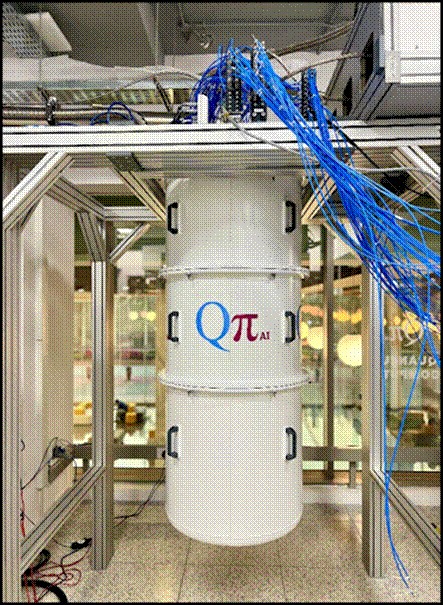
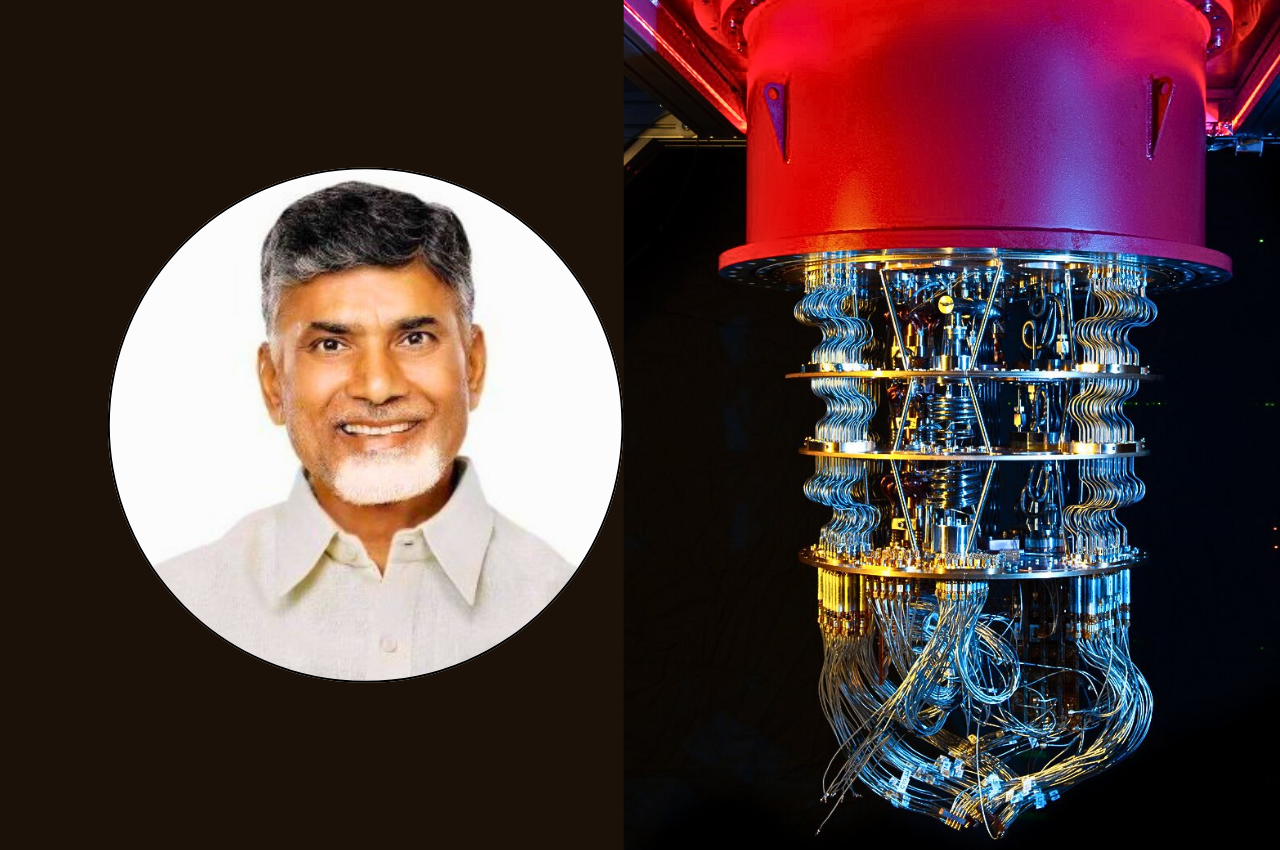
In a landmark move for India’s quantum ambitions, Andhra Pradesh Chief Minister N. Chandrababu Naidu announced that Amaravati will deploy the country’s first indigenously built 8-qubit quantum computer this November. The initiative is being spearheaded by Bengaluru-based quantum startup QpiAI, with strategic support from the National Quantum Mission (NQM).

The announcement followed high-level discussions between Naidu and Dr. Nagendra Nagaraja, founder of QpiAI, who will play a pivotal role in the state’s ambitious Amaravati Quantum Valley project.

Our initiative, backed by the National Quantum Mission, aims to transform agriculture, water management, and health care,” Naidu said. “I would like to congratulate QpiAI founder Nagendra Nagaraja and express my gratitude to the National Quantum Mission for their support to this project.

Quantum Valley: A First for India

The Amaravati Quantum Valley will be India’s first dedicated hub for quantum innovation, research, and public-benefit applications. QpiAI will establish a center of excellence in the city, focusing on quantum algorithm development, startup incubation, and skill-building for youth.

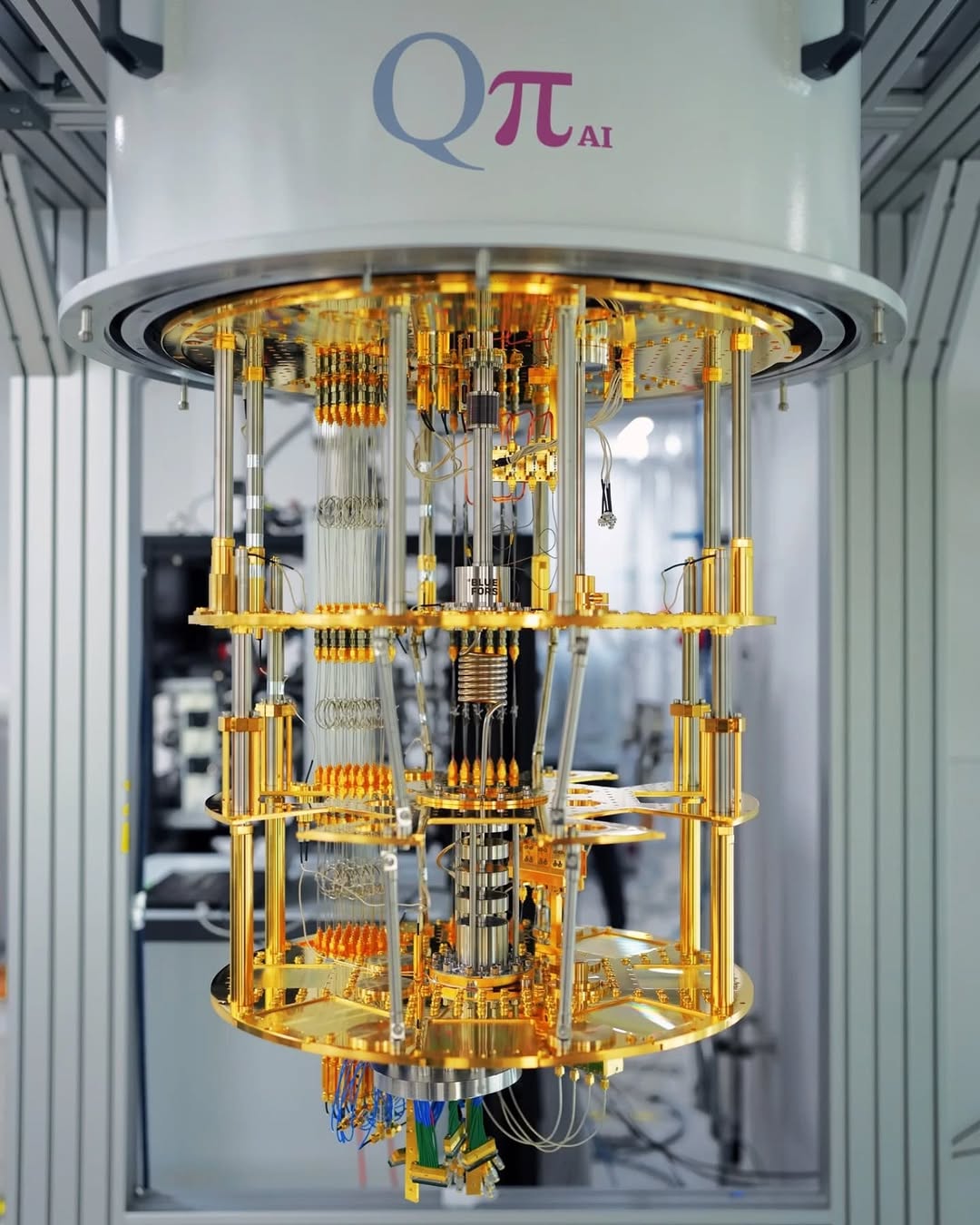
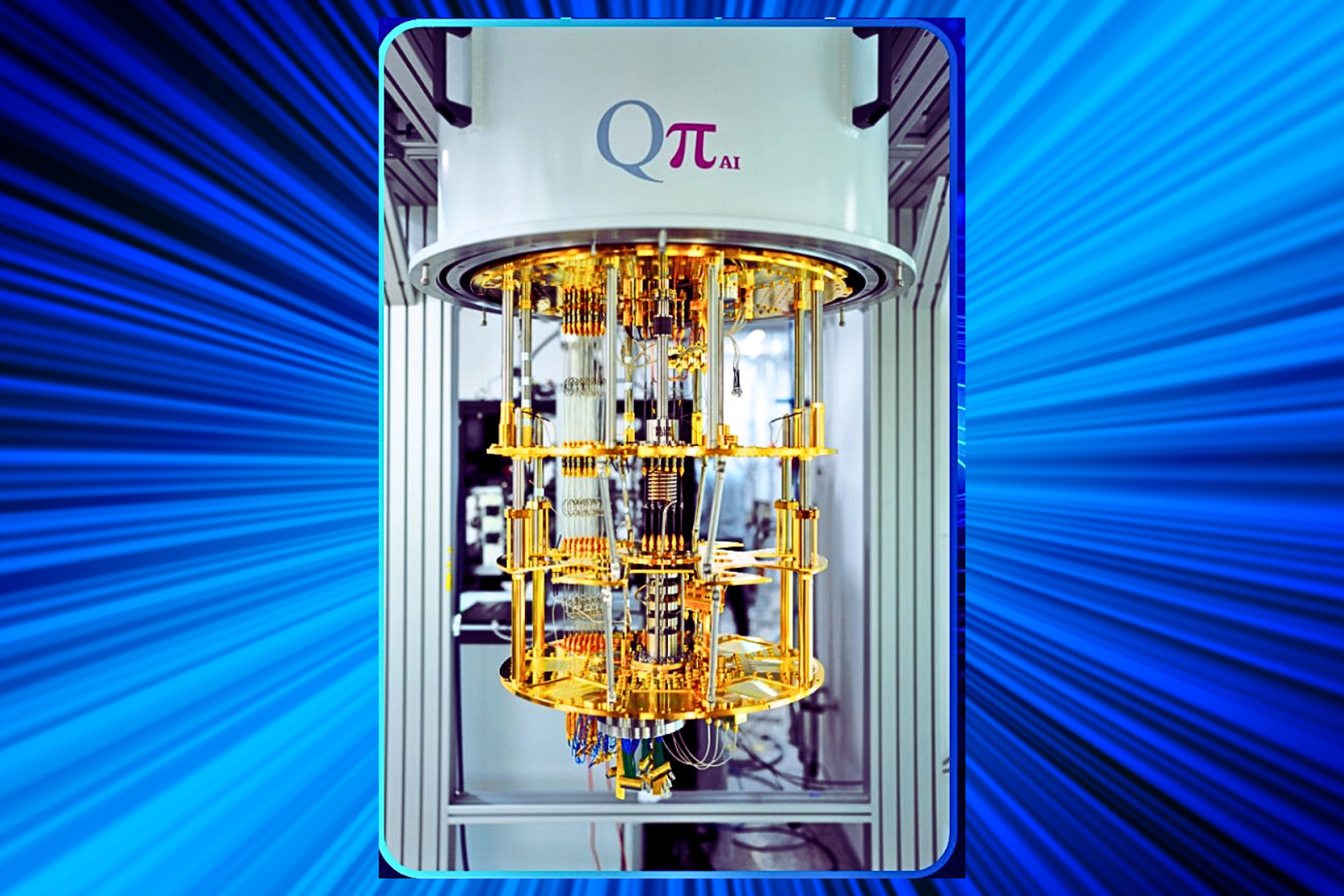
A QpiAI Quantum system

The 8-qubit quantum computer, developed entirely within India, marks a significant milestone in the country’s push toward self-reliance in advanced technologies. It will be used to tackle complex problems across sectors including:
  • Agriculture: Precision farming, pest prediction, and crop advisory systems
  • Water Management: Predictive analytics and efficient resource allocation
  • Healthcare: Disease diagnostics and quantum simulations for treatment
  • Education & Skills: Quantum curriculum integration and youth empowerment

QpiAI’s Strategic Rise

QpiAI recently raised $32 million in Series A funding, co-led by Avataar Ventures and the National Quantum Mission, bringing its total funding to $39 million. The company aims to accelerate product development and global expansion, positioning itself as a frontrunner in the quantum computing space.

National Quantum Mission’s Backing

The National Quantum Mission, launched by India’s Department of Science and Technology (DST), is designed to position the country as a global leader in quantum technologies. Amaravati’s selection as the site for India’s first quantum valley underscores the mission’s commitment to regional innovation and infrastructure development.

With this deployment, Amaravati is set to become a beacon of quantum progress, blending cutting-edge technology with real-world impact across critical sectors.

BQP Raises $5 Mn Seed to Scale Quantum-Powered Digital Twins for Aerospace and Semiconductor

BQP Raises $4.9 Mn Seed to Scale Quantum-Powered Digital Twins for Aerospace and Semiconductor

BQP, a dual-use quantum-accelerated simulation software company, has raised an oversubscribed $4.9 million seed round to expand its unified digital twin platform, BQPhy®, for mission-critical industries, including aerospace, defense (A&D), and semiconductor. The raise follows a strategic collaboration with the Air Force Research Laboratory Aerospace Systems Directorate (AFRL/RQ) under a Cooperative Research and Development Agreement (CRADA) to accelerate mission-critical modeling and simulation capabilities with quantum computing.


Our quantum-inspired solvers are setting a new benchmark in simulation technology, bridging today’s computational limits and the quantum-ready future,” said Abhishek Chopra, BQP’s Founder, CEO, and Chief Scientific Officer. “The traction we're experiencing from AFRL/RQ and industry-leading design partners validates the immediate impact and substantial ROI our platform delivers today. We're also making significant R&D progress in quantum-native solvers for Computational Fluid Dynamics (CFD) and Machine Learning (ML), paving the way for future simulation workload for the next generation of data centers where HPC and quantum computers operate side by side.”

The round was led by Monta Vista Capital, with participation from Empire State Development’s New York Ventures, New York State’s venture capital arm, Arc Ventures, Armory Square Ventures, Emergent Ventures, Alumni Ventures, Arka Venture Labs, Transpose Platform, Gainangels, and Pranatech Venture Capital. The round also saw participation from key angel investors and existing investors, including Paradigm Shift Capital and Griffiss Institute, as part of the Mojave Aerospace Accelerator Fund. Chopra added, “We’re grateful to those who believed in us and our vision! This funding enables us to accelerate the development of our quantum-powered digital twin framework with these design partners and further expand our footprint in A&D and semiconductor industries.”

Total funding raised by the company now stands at $6.6 million.“BQP directly tackles critical bottlenecks in the rapidly evolving $22 billion simulation industry, where conventional technologies have struggled to keep pace with innovation demands in sectors like Aerospace & Defense, Semiconductor, and Energy,” said Roger Krakoff, Partner at Monta Vista Capital. “Their quantum-powered framework is positioned to become foundational infrastructure in the simulation ecosystem.”

Built for hybrid architectures - CPUs, GPUs, and quantum computers - BQPhy’s current version relies on quantum-inspired solvers, enabling a 10X performance boost today on existing CPU/GPU. With their future quantum-native solvers, the customers can experience up to 1000X gains on forthcoming quantum computers.

In addition to the AFRL/RQ, BQP’s design partners include three major Aerospace and Defense companies, including the largest Tier-I Aerospace manufacturer, the Indian Ministry of Heavy Industries, ABB, and major aerospace players.

BQP's solvers can be utilized independently or in a unification as a Digital Twin framework as part of its platform. BQP’s overarching vision is to make BQPhy "the BlackRock of the simulation world," acting as the backend platform that seamlessly integrates into existing simulation workflows and software, as well as optimized for the hybrid computing architectures—CPUs, GPUs, and Quantum Computers—that define the future of data centers.

BQP is actively working with leading quantum ecosystem partners, including Intel, IBM, Classiq, Strangeworks, and members of the NORDTECH Hub. The company will also appear at AIAA Aviation in Las Vegas and ASME Fluids Engineering in July, where Chopra will speak on quantum applications in simulation.

To explore BQP’s quantum-accelerated Digital Twin platform or request a demo, visit bqpsim.com.

ABOUT BQP

BQP (BosonQ Psi) is a quantum-first simulation company building the next generation of digital twin platforms for mission-critical applications. Headquartered in Syracuse, NY, with a technology hub in Bangalore, India, BQP supports faster, more efficient engineering decisions across aerospace, defense, semiconductors, and energy.

Its core platform, BQPhy, integrates into existing engineering workflows and runs on today’s infrastructure - no quantum hardware required. By combining probabilistic algorithms from quantum information science with proprietary solvers, BQPhy enables breakthroughs in optimization, machine learning, and physics-based (CFD) simulations.

BQP works closely with leading partners, including the Department of Defense, Air Force Research Laboratory, IBM, Intel, Moog, and IAI North America.

Learn more at https://www.bqpsim.com

Amaravati’s Quantum Valley Gets Structural Backbone Through AQCC Incorporation

Amaravati’s Quantum Valley Gets Structural Backbone Through AQCC Incorporation

The Andhra Pradesh government has formally established the Amaravati Quantum Computing Centre (AQCC) as a wholly owned government company under the Companies Act, 2013.

This move is part of the state’s ambitious plan to build a Quantum Valley in Amaravati, envisioned as India’s answer to Silicon Valley for quantum technologies.

GO-Ms-25: The Legal Backbone
  • Issued by State IT Secretary Bhaskar Katamneni, the government order outlines the creation of AQCC and its strategic role in quantum innovation.
  • The centre will serve as a technology hub, bringing together:
    • Academic institutions
    • Startups
    • Global tech providers
    • Research labs focused on quantum computing and allied fields.
Strategic Infrastructure & Governance
  • 50 acres have been allocated by the Capital Region Development Authority for the Quantum Valley campus.
  • The initial board of directors includes secretaries from departments like IT, finance, industries, agriculture, energy, health, and real-time governance.
This marks a pivotal moment in India’s deep-tech journey. The centre will support sectors like cybersecurity, pharmaceuticals, climate modeling, materials science, and AI.

This initiative could position Amaravati as a global nucleus for quantum innovation. The Amaravati Quantum Valley Declaration, adopted during a workshop on June 30, outlines a collaborative roadmap for quantum innovation.

Deeptech QNu Labs Launches QNu Academy to Power India’s Quantum-Ready Workforce

Deeptech QNu Labs Launches QNu Academy to Power India’s Quantum-Ready Workforce
  • This launch marks a strategic milestone in India's journey toward achieving quantum self-reliance & digital sovereignty
  • The academy is designed to serve a wide range of learners, including universities, faculties & students to build a skilled workforce capable of securing India’s digital future

QNu Labs, India’s first and world’s no.1 integrated end-to-end quantum secured cybersecurity platform today announced the launch of QNu Academy, a global educational initiative aimed at building a future-ready talent pipeline in quantum technologies and cyber-security. As India advances its digital infrastructure and aligns with the National Quantum Mission, QNu Academy, backed by National Quantum Mission aims to bridge the existing talent gap. This launch marks a strategic milestone in India's journey toward achieving quantum self-reliance and digital sovereignty.

QNu Academy offers in-depth education and practical training in advanced technologies such as Quantum Key Distribution (QKD), Quantum Random Number Generation (QRNG), and Post-Quantum Cryptography (PQC). The curriculum blends self-paced learning and instructor-led modules, curated in collaboration with experts from premier Indian institutions like the IITs and DRDO, as well as global quantum research bodies. Learners benefit from real-world use cases, hands-on lab assignments, continuous assessments, and mentorship from industry practitioners.
  • The academy is designed to serve a wide range of learners, including universities, faculties, and students, to build a skilled workforce capable of securing India’s digital future. In addition, QNu Academy actively supports educational institutions through Faculty Development Programs and the creation of Centres of Excellence (CoE) Labs to promote quantum innovation and applied research. Placement support, certifications and career readiness initiatives are also integrated into the learning journey.

Speaking on the launch, Sunil Gupta, Co-Founder & CEO of QNu Labs, said, “QNu Academy is more than an educational platform. It is a national mission to democratize access to quantum education and build widespread awareness around quantum communications. Our goal is to create a sustainable ecosystem for quantum learning in India through faculty development programs, industry-relevant programs, CoE labs, certified programs, real-time projects, and assignments with placement opportunities to develop quantum experts, empowering you to become a future leader. The future of cybersecurity in India depends on how well we prepare today’s learners to tackle tomorrow’s threats.

Through QNu Academy, we hope to foster a culture of innovation, encourage indigenous R&D in quantum tech and empower India’s workforce to lead on the global stage,” he added.

QNu Academy represents a timely and important investment in human capital. The program aligns well with India’s broader goals of technological development, digital resilience, and global leadership in quantum innovation. It is envisioned as a long-term commitment to enabling India’s readiness for quantum disruption and equipping the country with the skilled manpower needed to thrive in the post-quantum era.

DRDO’s New Quantum Research Centre in Delhi Strengthens National Security

DRDO’s New Quantum Research Centre in Delhi Strengthens National Security

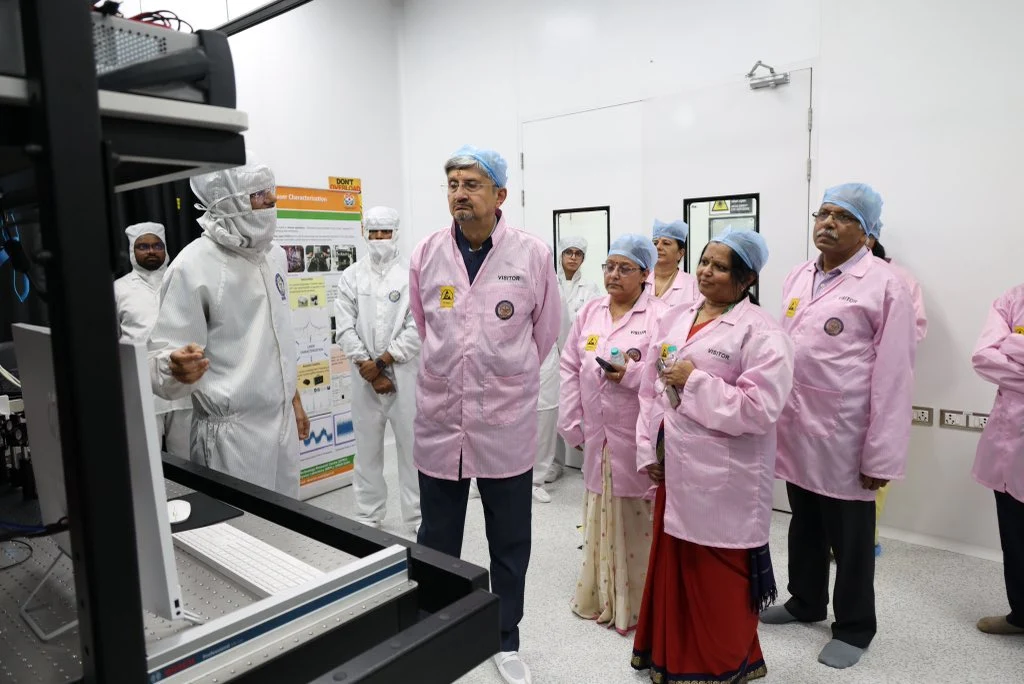
India's quantum ambitions just took a big leap! The Defence Research and Development Organisation (DRDO) has inaugurated the Quantum Technology Research Centre (QTRC) at Metcalfe House, Delhi. This facility is designed to strengthen indigenous quantum capabilities for strategic and defence applications.

Spearheaded by Solid State Physics Laboratory (SSPL), QTRC also focuses on foundational technologies including an Ultra-Small Atomic Clock based on Coherent Population Trapping for highly precise timekeeping in Global Navigation Satellite System-denied environments, an Atomic Magnetometer using optically pumped magnetometry for ultra-sensitive magnetic field detection, and Cutting-edge solid-state quantum devices and materials.

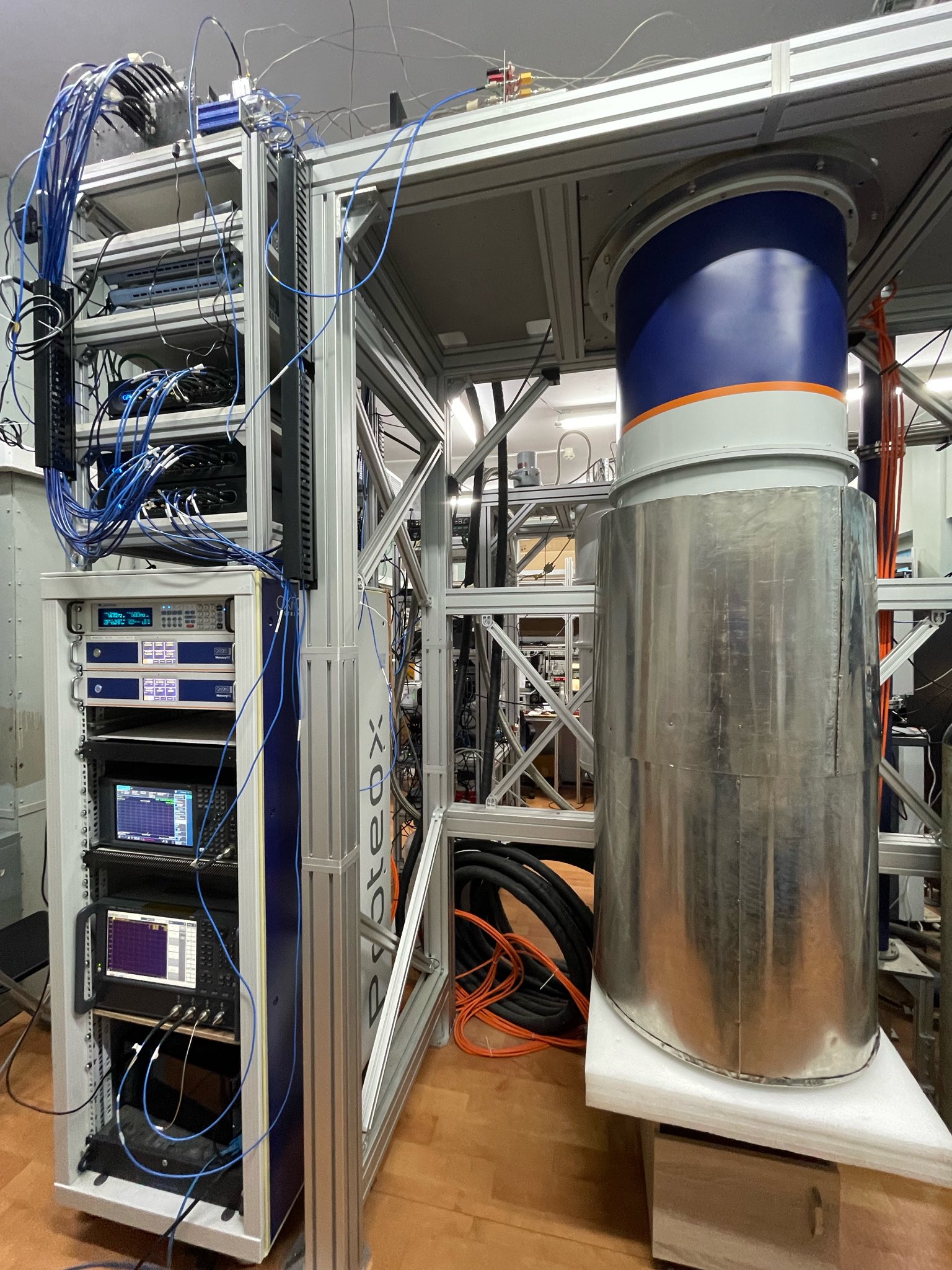
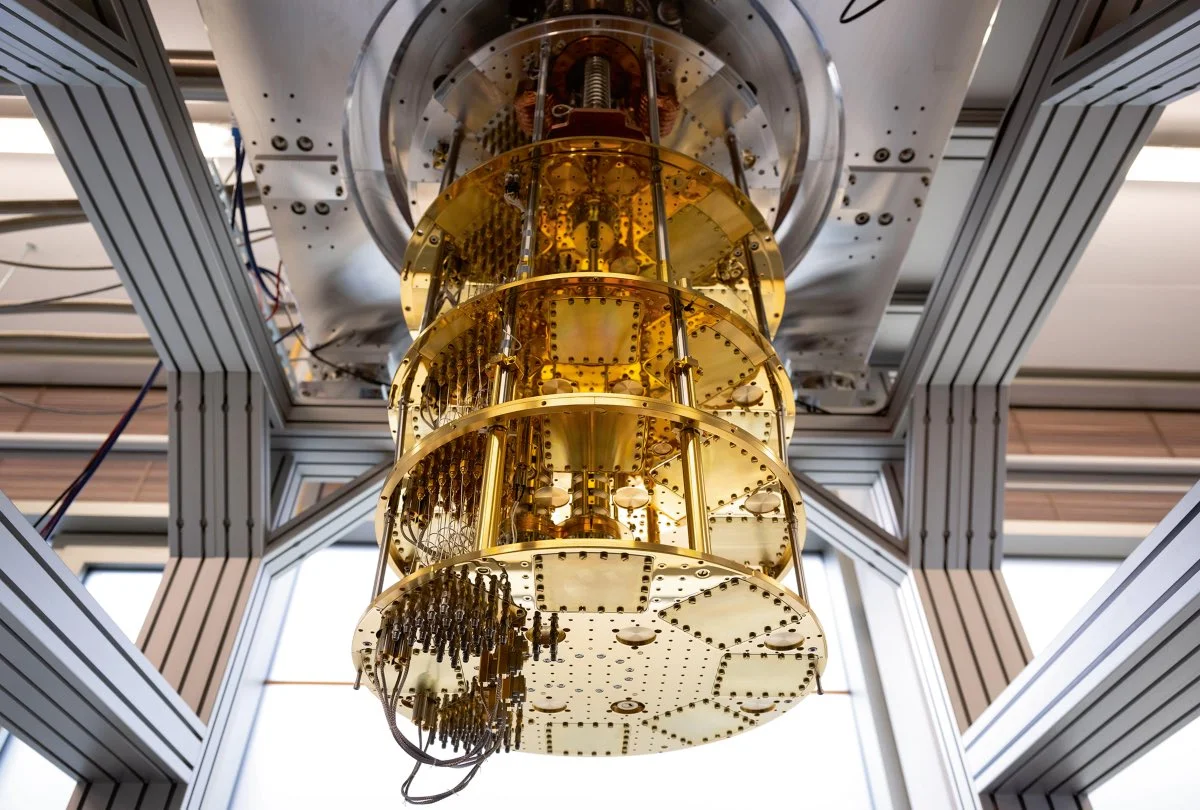
6 qubit Quantum processor based on superconducting circuit technology
A 6 qubit Quantum processor based on superconducting circuit technology, by DRDO and TIFR 

Key Highlights:

  • Ultra-Secure Communication: The centre will focus on Quantum Key Distribution (QKD) techniques to safeguard national security in the post-quantum era.
  • Advanced Quantum Devices: Research includes atomic magnetometers, ultra-small atomic clocks, and solid-state quantum materials.
  • Cutting-Edge Experimental Setups: Includes single-photon source test-beds, laser characterization platforms, and micro-fabricated alkali vapor cell analysis.
  • National Quantum Mission: DRDO is a key stakeholder, driving indigenous innovation in quantum sensing, secure communications, and post-quantum cryptography.
The inauguration ceremony was graced by Director General (Micro Electronic Devices, Computational Systems & Cyber Systems) Smt Suma Varughese whose vision and leadership were instrumental in conceptualising this cutting-edge facility. DG (Resource & Management) Dr Manu Korulla and Directors of SSPL and SAG, senior scientists, and other dignitaries attended the function.

This move aligns with India's broader push to develop sovereign quantum technologies, ensuring strategic superiority in emerging defence applications.

India Moves Toward Ultra-Secure Telecom: C-DOT & Synergy To Develop Drone-based Secure Communication

India Moves Toward Ultra-Secure Telecom: C-DOT & Synergy To Develop Drone-based Secure Communication

Big move for India's quantum-secure communication! The Centre for Development of Telematics (C-DOT), the premier telecom R&D institution under the Department of Telecommunications (DoT), Government of India, has recently announced partnership with Synergy Quantum India to develop drone-based Quantum Key Distribution (QKD) systems.

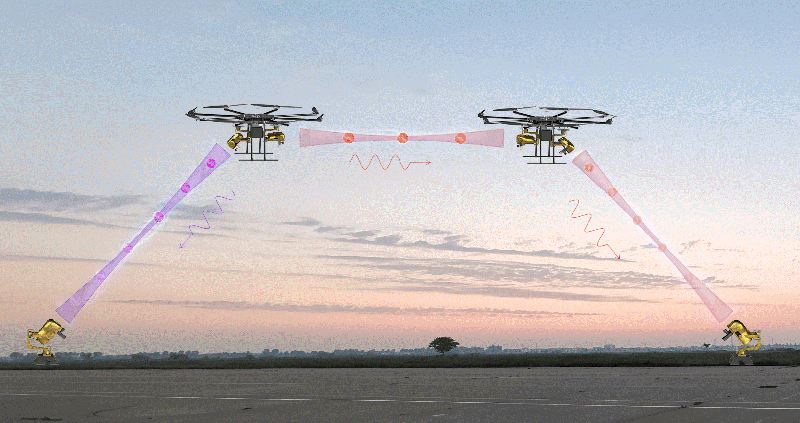
Drone-based Quantum Key Distribution (QKD) is a cutting-edge method for securely transmitting encryption keys using quantum mechanics, but with the added mobility of drones.

This collaboration aims to enhance secure telecom infrastructure using the BB84 protocol with polarization encoding, targeting Technology Readiness Level (TRL) 6 or higher.

Technology Readiness Level (TRL) 6 refers to a stage in technology development where a system or prototype has been validated in a relevant environment. This means it has moved beyond basic lab testing and is being tested in conditions that closely resemble real-world applications.

How It Works:

Drone QKD
The drone based quantum communication system consists of a drone (left) that generates entangled photon pairs and distributes them to ground stations. From each pair, one photon (purple beam) goes directly to the ground, while the other (pink beam) is relayed through the second drone (right).
[Image - TheQuantumInsider.com

  1. Quantum Key Distribution (QKD) ensures secure communication by using quantum properties to generate encryption keys that cannot be intercepted without detection.
  2. Drones act as mobile quantum communication nodes, enabling secure key exchange over long distances, even in areas lacking traditional telecom infrastructure.
The system typically employs the BB84 protocol with polarization encoding, making it resistant to eavesdropping.

Why It Matters:

  • Defense & Security: Enables encrypted communication for military and government operations.
  • Emergency Response: Provides secure data transmission in disaster zones.
  • Mobile Networks: Expands quantum-secure communication beyond fixed fiber-optic setups.
As part of the collaboration, C-DOT and Synergy Quantum will jointly pursue the development of quantum communications technologies optimized for drone-based deployment. The partnership will also include co-creation of research proposals for national and international grant applications and dissemination of outcomes through scholarly publications, white papers, and other platforms.

Key representatives from both organizations may also engage in delivering expert talks, short courses, and organizing symposia, conferences, and meetings on timely research themes.

The initiative aligns with India's Atmanirbhar Bharat vision, fostering indigenous innovation in quantum communication. The QKD systems will be optimized for drone-based deployment, making them valuable for defense, emergency services, and government networks.

C-DOT CEO Rajkumar Upadhyay emphasized the importance of merging public R&D with private innovation, while Synergy Quantum CEO Jay Oberoi highlighted India's potential to lead in drone-based quantum-secure communications.

This partnership could be a game-changer for secure mobile data transmission as it is expected to lay the foundation for next-generation quantum-safe telecom infrastructure, revolutionizing secure data transmission for applications in defence, emergency response, critical infrastructure, and secure government communication.

L&T-Cloudfiniti and QpiAI Partner to Drive Quantum Computing Workloads Including Quantum Computing as a Service (QCAAS)

L&T-Cloudfiniti and QpiAI Partner to Drive Quantum Computing Workloads Including Quantum Computing as a Service (QCAAS)

To revolutionise the quantum computing landscape globally, L&T-Cloudfiniti has forged a strategic partnership with Bengaluru-based deep-tech company QpiAI. The collaboration will focus on driving quantum computing workloads, including Quantum Computing as a Service (QCAAS), enabling scalable deployment of quantum solutions across domains.

L&T-Cloudfiniti and QpiAI will explore collaborative opportunities under India’s National Quantum Mission. QpiAI is the company that has built Indus, India's most powerful 25-qubit quantum computer. Going forward, they will offer 256-qubit quantum computer, followed by a fault-tolerant quantum computer with 100 logical qubits, thus opening up large-scale commercial applications.

Combining L&T’s industry leadership with QpiAI’s technical capabilities, the two companies will initiate and execute joint R&D programmes focussed on next-generation solutions at the intersection of artificial intelligence and quantum computing. This will lead to the development of innovative solutions that address complex challenges across domains, including finance, healthcare, logistics and more.

Commenting on the collaboration, Ms Seema Ambastha, Chief Executive, L&T Cloudfiniti, stated: “We are thrilled to partner with QpiAI to drive quantum computing workloads globally. This collaboration will leverage our cloud infrastructure to host and execute quantum algorithms, enabling scalable deployment of quantum solutions across domains. Together, we aim to deliver innovative and efficient solutions to our customers and enhance operational efficiency.”

Dr Nagendra Nagaraja, CEO, QpiAI, added: “The collaboration with L&T-Cloudfiniti marks a significant milestone in the advancement of quantum computing technology. By combining our technical expertise with L&T’s industry leadership, we are poised to drive innovation and deliver cutting-edge solutions to our customers. We are excited about the opportunities this partnership will bring under India’s National Quantum Mission.”

The partnership marks a significant milestone in the advancement of quantum computing technology and its application across industries.

India’s Largest Quantum Computer To Be Deployed in the Country’s First Quantum Valley Tech Park

India’s Largest Quantum Computer To Be Deployed in the Country’s First Quantum Valley Tech Park
  • IBM, Tata Consultancy Services and Government of Andhra Pradesh Unveil Plans to Deploy India’s Largest Quantum Computer in the Country’s First Quantum Valley Tech Park
  • The Quantum Valley Tech Park will be anchored by next-generation IBM Quantum System Two
  • Tata Consultancy Services partnering with IBM to advance India’s quantum algorithm and application development
IBM (NYSE: IBM) and Tata Consultancy Services (BSE: 532540, NSE: TCS) are partnering to further develop India’s quantum computing industry as part of the State of Andhra Pradesh’s Quantum Valley Tech Park, currently being built in the capital city of Amaravati. The tech park will be anchored by an IBM Quantum System Two installation, with a 156-qubit Heron quantum processor, the largest quantum computer in India. Tata Consultancy Services (TCS) is partnering with IBM to support the development of algorithms and applications that will help the Indian industry and academia solve some of the nation’s most challenging problems. The Government of Andhra Pradesh, IBM and TCS hope to accelerate the development of India’s quantum ecosystem through this initiative.

“Our National Quantum Mission is to make India a global hub in the quantum industry; a true center of innovation and job creation with access to the technology capable of solving some of our country’s and the world’s most pressing and complex challenges,” said N. Chandrababu Naidu, Chief Minister of Andhra Pradesh. “With IBM, TCS, L&T, and other members, the Quantum Valley Technology Park represents how India’s industry and academia will soon be able to take an important step forward in accelerating the achievement of the mission’s goals.”

“We are excited about our plans with the state of Andhra Pradesh to deploy our latest IBM Quantum System Two at the Quantum Valley Tech Park. Our collaboration with TCS will help attract the country’s thriving ecosystem of developers, scientists, and industry experts to develop algorithms and applications. Combining this with India’s National Quantum Mission we could see an acceleration of the next critical milestone – a successful demonstration of quantum advantage,” said Jay Gambetta, Vice President, IBM Quantum.

Members of the Quantum Valley Tech Park can work with TCS for the opportunity to access IBM’s cloud-based quantum computers, and once completed, the Quantum Valley Tech Park will include access to an IBM Quantum System Two with IBM’s latest 156-qubit Heron processor.

“Hybrid architectures are the key to overcoming intractable computing challenges, with quantum computing serving as a catalyst. TCS’s Hybrid Computing strategy is creating what we believe is a breakthrough software layer that intelligently decomposes programs across current systems — CPUs, GPUs and emerging computing architectures — such as quantum. We’re excited to be partnering with IBM, and the Government of Andhra Pradesh at the Quantum Valley Tech Park and support India’s National Quantum Mission to accelerate the development of quantum algorithms and applications that solve complex intractable problems and drive both economic growth and technological innovation,” said Dr. Harrick Vin, Chief Technology Officer, Tata Consultancy Services.

The capabilities of IBM’s quantum computers, Qiskit software, and other resources look to enable India’s growing ecosystem of innovators across academia and industry to discover how quantum computers could be applied toward solutions to complex challenges — such as those goals being pursued by the Government of Andhra Pradesh, via the Quantum Valley Tech Park, in contribution to the country’s National Quantum Mission.

By establishing a vibrant quantum ecosystem encompassing research, access to quantum computers, and industry applications, the Government of Andhra Pradesh intends to create high-end jobs, attract top-tier talent, and draw global investments.

As part of this collaboration, TCS will play a pivotal role in driving India’s applied research and innovation by developing quantum use cases across sectors such as life sciences, materials science, supply chain resilience, energy optimization, cryptography, and sustainable manufacturing. The goal is to unlock applications capable of a quantum advantage in solving practical industry problems that are currently beyond the reach of classical computing. TCS’s role within the Quantum Valley Tech Park will give researchers from TCS, domain experts across Indian industry, and academic institutions alike the opportunity to leverage IBM’s quantum computers and resources.

Govt-backed QpiAI Launches One of India’s Most Powerful Quantum Computers

Govt-backed QpiAI Launches One of India’s Most Powerful Quantum Computers

Bengaluru-based QpiAI, one of the eight startups selected under the National Quantum Mission (NQM), has launched QpiAI-Indus, a 25-qubit superconducting quantum computer. This marks India's first full-stack quantum computing system, integrating advanced quantum processors, scalable control systems, and optimized software for hybrid computing.

The launch, which coincided with World Quantum Day (April 14), positions QpiAI at the forefront of India's quantum ecosystem, driving innovation across life sciences, drug discovery, materials sciences, mobility, logistics, sustainability, and climate action. Since its founding in 2019, QpiAI has filed 11 patent applications and generated revenue of around ₹1 million per annum, with additional funding from SIDBI.
 
QpiAI-Indus
QpiAI-Indus

This milestone aligns with India's broader quantum ambitions, reinforcing its position in deep-science and deep-tech innovation. Given your interest in quantum computing's role in AI model fine-tuning, this development could have exciting implications for hybrid AI-quantum optimization.

Notably, India ranks 6th globally in quantum startups, with 53 startups working in the field. However, private investment in quantum computing in India is significantly lower compared to countries like the US and UK.

To recall, Physicist Rajamani Vijayaraghavan led TIFR Quantum Computing Lab at Tata Institute of Fundamental Research (TIFR) is working on a 6-qubit quantum system, aiming to develop indigenous quantum computing technology.

India's National Mission for Quantum Technology and Applications (NMQTA) was launches five years ago, but public investment remains lower than global leaders like China and the US.

While India is making strides, there's still a long way to go in terms of funding and infrastructure.

First Edition of India’s International Technology Engagement Strategy (ITES) for Quantum Released

First Edition of India’s International Technology Engagement Strategy (ITES) for Quantum Released

The Office of the Principal Scientific Adviser to the Government of India today released the first edition of International Technology Engagement Strategy for Quantum, marking a significant step toward articulating India’s outward-facing strategy in Quantum Science, Technology and Innovation (QSTI), with the intent to accelerate discovery, foster innovation, and catalyse adoption across critical sectors.

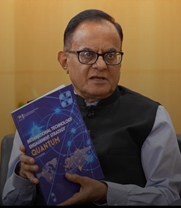
Prof. Ajay Kumar Sood
The report was officially unveiled by PSA Prof. Ajay Kumar Sood during the Office of PSA’s podcast on the occasion of World Quantum Day 2025, celebrated every year on April 14. This report comes with a special significance because of 2025 being the International Year of Quantum Science and Technology (IYQST) designated by the United Nations and member states.

This inaugural edition of ITES-Q provides a comprehensive overview of both global and national quantum ecosystems, covering analysis of investments, talent development, institutional strengths, research publications, intellectual property, startups, supply chains, and industrial activity. The ITES-Q is thought out to facilitate impactful partnerships and particularly add value to the efforts of Indian missions abroad in strengthening bilateral and multilateral engagements for QSTI.

The ITES is an initiative of the Office of the PSA to GoI, designed to strengthen and elevate India’s Technology Diplomacy efforts across critical and emerging domains.

The full ITES-Q report can be accessed through the Office of PSA website: https://psa.gov.in/CMS/web/sites/default/files/publication/ITES_QWEBSITE1.pdf

World Quantum Day 2025 Podcast with PSA can be tuned in here: 


Mphasis Granted U.S. Patent for Quantum Prediction System

Mphasis Granted U.S. Patent for Quantum Prediction System

Mphasis, (BSE:526299; NSE: MPHASIS), a leading Information Technology (IT) solutions provider specialising in cloud and cognitive services, today announced the award of a U.S. patent on “System and method for optimized processing of information on quantum systems”.

The newly issued patent outlines a pipeline to improve the scalability and performance of quantum machine learning (QML) on near-term quantum computing systems including quantum simulators.

This solution transforms high-dimensional classical input data into an enhanced feature space in quantum format. The feature space transformation ensures efficient mapping and preparation for quantum state loading, paving the way for improved quantum data processing and analysis. The optimal representation method for classical data on quantum systems minimizes the need for additional qubits for higher-dimensional data, handles large feature sets and high volumes of data, and ensures efficient convergence during quantum machine learning (QML) model training.

QML leverages its ability to process high-dimensional, complex data, delivering solutions beyond the reach of classical high-performance computing hardware.

Quantum Machine Learning (QML) is emerging as a transformative paradigm, enabling academia and industry to solve real-world AI challenges with unprecedented efficiency. This technology and the associated patent stand as a testament to our commitment to innovation and the advancement of next-generation technologies,” said Srikumar Ramanathan, Chief Solutions Officer, Mphasis.

IBM and Modi Govt Exploring Collaboration in Geospatial AI and Quantum Computing

IBM and Modi Govt Exploring Collaboration in Geospatial AI and Quantum Computing

IBM and the Indian government are exploring collaborations in quantum computing, artificial intelligence (AI), and geospatial AI solutions. This initiative aligns with India's National Quantum Mission, which aims to position the country as a global leader in quantum technology.

IBM's Global Head, Arvind Krishna, recently met with Union Minister Dr. Jitendra Singh to discuss potential partnerships. The discussions highlighted India's rapid technological transformation under Prime Minister Narendra Modi, emphasizing the importance of private sector involvement in driving innovation.

The collaboration could have significant implications for industries such as defense, intelligence, and economic security, as quantum technology is seen as a key factor in determining future global power.

Quantum technology is seen as a key factor in reshaping defense, intelligence, and economic security. A recent NITI Aayog report emphasized the transformative impact of quantum technology on defense and intelligence.

The collaboration aligns with India's goal of achieving self-reliance in critical technologies and becoming a global leader in emerging tech sectors.

During the meeting, Dr Singh mentioned the Anusandhan National Research Foundation (ANRF), which aims to build a robust research ecosystem in India. ANRF provides strategic funding for advanced research.

Besides IBM, Google has been working with the Indian government on various initiatives, including digital literacy programs and AI-driven solutions for agriculture and healthcare. Microsoft has partnered with the Indian government to enhance digital transformation in public services and promote AI adoption in sectors like education and healthcare.

AWS has collaborated with the government to provide cloud computing solutions for startups and small businesses, supporting India's digital economy. TCS has been involved in developing AI and blockchain solutions for government projects, including smart city initiatives.

National Quantum Mission (NQM), which was launched in April 2023, has received budget of ₹6,003.65 crore and aims to position India as a global leader in quantum technology by 2031.

Quantum technologies are expected to revolutionize sectors like communication, cryptography, healthcare, and climate monitoring. The mission aligns with national priorities like Digital India, Make in India, and Sustainable Development Goals.

India's proactive investments and strategic initiatives are setting the stage for long-term growth in quantum computing.

Andhra Pradesh to Create 'Quantum Valley', A World-class Quantum Computing Hub

Andhra Pradesh to Create 'Quantum Valley', A World-class Quantum Computing Hub

Andhra Pradesh is making significant strides in the field of quantum technology. Chief Minister N. Chandrababu Naidu has announced plans to establish a 'Quantum Valley' in Amaravati, aiming to create a world-class quantum computing hub. This initiative is part of the National Quantum Mission and involves collaboration with prestigious institutions like IIT Madras, Tata Consultancy Services (TCS), and IBM.

The state government is setting up a task force to drive this effort, with the goal of attracting top-tier talent and global investments. The vision is to position Andhra Pradesh as a national hub for quantum computing research, much like how the state led the Information Technology revolution in the 1990s.

This development is expected to bring revolutionary advancements across various sectors, aligning with the state's focus on emerging technologies and innovation.

The 'Quantum Valley' project is an ambitious initiative by the Andhra Pradesh government, led by Chief Minister N. Chandrababu Naidu, to establish a world-class quantum computing hub in Amaravati. This initiative aligns with the National Quantum Mission and aims to position Andhra Pradesh as a leader in quantum technology and deep tech advancements.

Key Collaborations

The project involves collaboration with prestigious institutions and industry leaders, including:
  • IIT Madras: Providing academic and research support.
  • Tata Consultancy Services (TCS): Contributing expertise in AI, data science, and cloud-based quantum applications.
  • IBM: Driving technological breakthroughs with their research strengths.

Strategic Goals

The primary goals of the 'Quantum Valley' initiative are:

1. Attract Top-Tier Talent: By creating a conducive environment for research and innovation, the project aims to attract top-tier talent from around the world.

2. Global Investments: The initiative seeks to draw significant global investments to foster cutting-edge research and development.

3. Technological Advancements: Focus on advancing quantum computing and deep tech to drive revolutionary advancements across various sectors.

Key Meetings and Stakeholders

A high-level meeting was held to lay the groundwork for the Quantum Computing Hub, attended by notable leaders from industry and academia, including:
  • Natarajan Chandrasekaran: Chairman of Tata Sons.
  • S.N. Subrahmanyan: Chairman & MD of L&T.
  • Prof. Abhay Karandikar: Secretary, Department of Science 77777777and Technology.
  • Dr. J.B.V. Reddy: Head of Quantum Technology Centre, DST.
  • Prof. Satyanarayana Kalidindi: Director, IIT Tirupati.
  • Prof. Kamakoti: Director, IIT Madras.
  • Dr. Amith Singhee: Director, IBM Research India.
  • Venkat Subramaniam: IBM Quantum India Leader.
Vision and Future Plans

The vision for 'Quantum Valley' is to establish Andhra Pradesh as a national hub for quantum computing research, similar to how the state led the Information Technology revolution in the 1990s. The initiative also includes plans to integrate quantum computing into Amaravati’s technological ecosystem and explore possibilities for research in the field.

Broader Impact

The establishment of 'Quantum Valley' is expected to bring revolutionary advancements across various sectors, including AI, space technology, defense, and energy. The project is part of a broader plan to create a DeepTech Research Park in Amaravati, fostering international collaborations and attracting technology leaders.

Market Reports

Market Report & Surveys
IndianWeb2.com © all rights reserved