Showing posts with label Space Technology. Show all posts

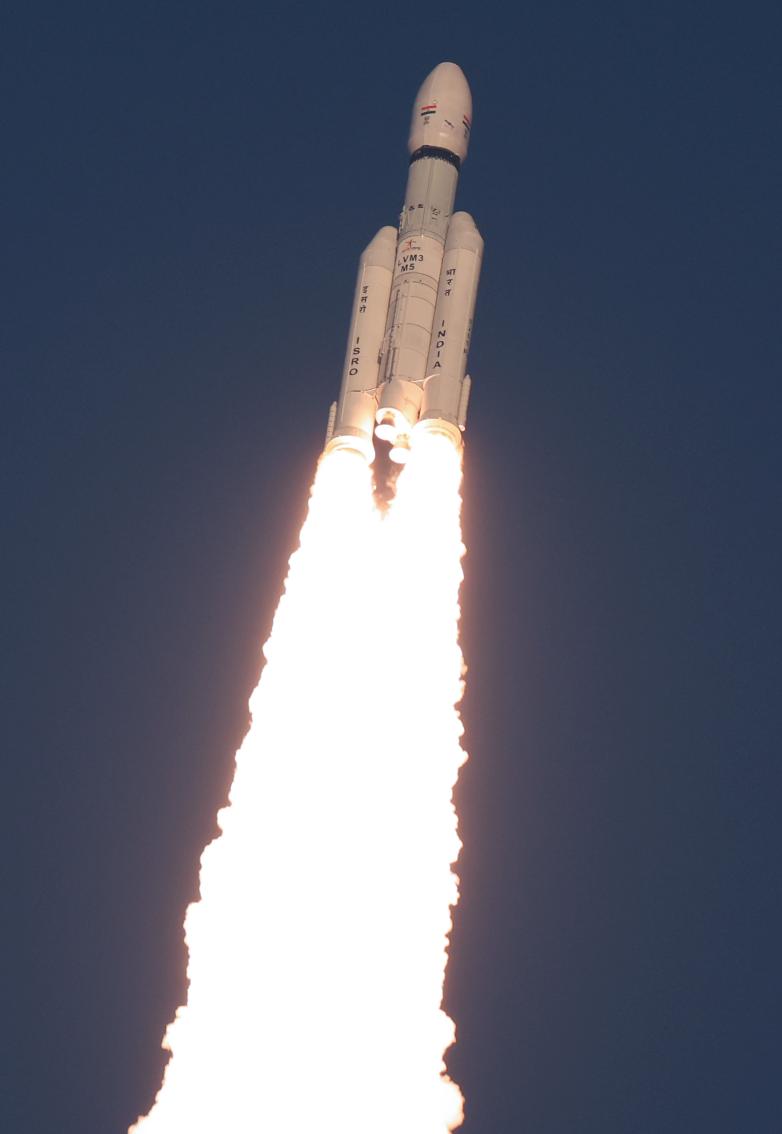
ISRO’s Giant Leap: Heaviest Communication Satellite CMS-03 Successfully Launched

ISRO’s Giant Leap: Heaviest Communication Satellite CMS-03 Successfully Launched

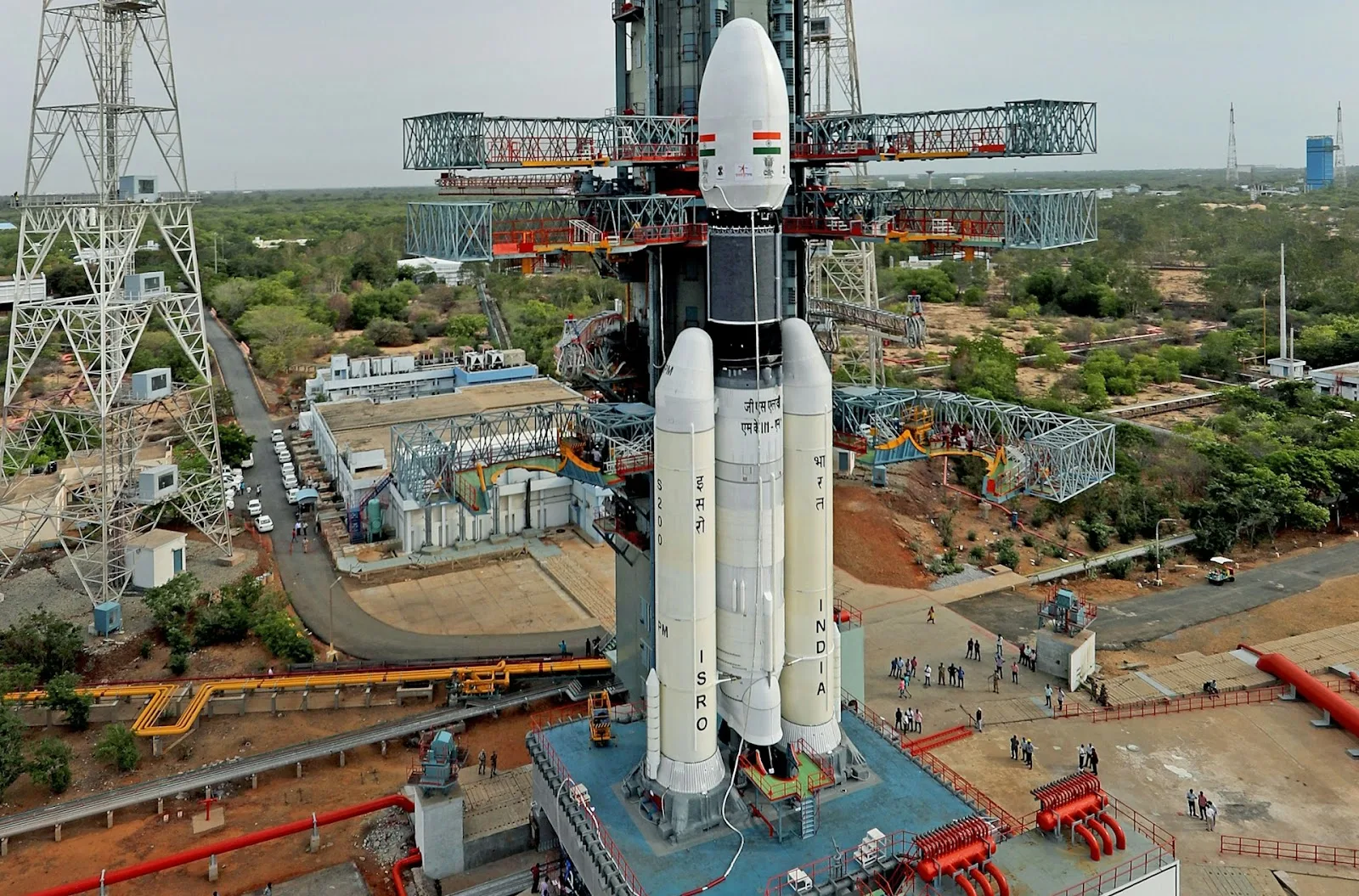
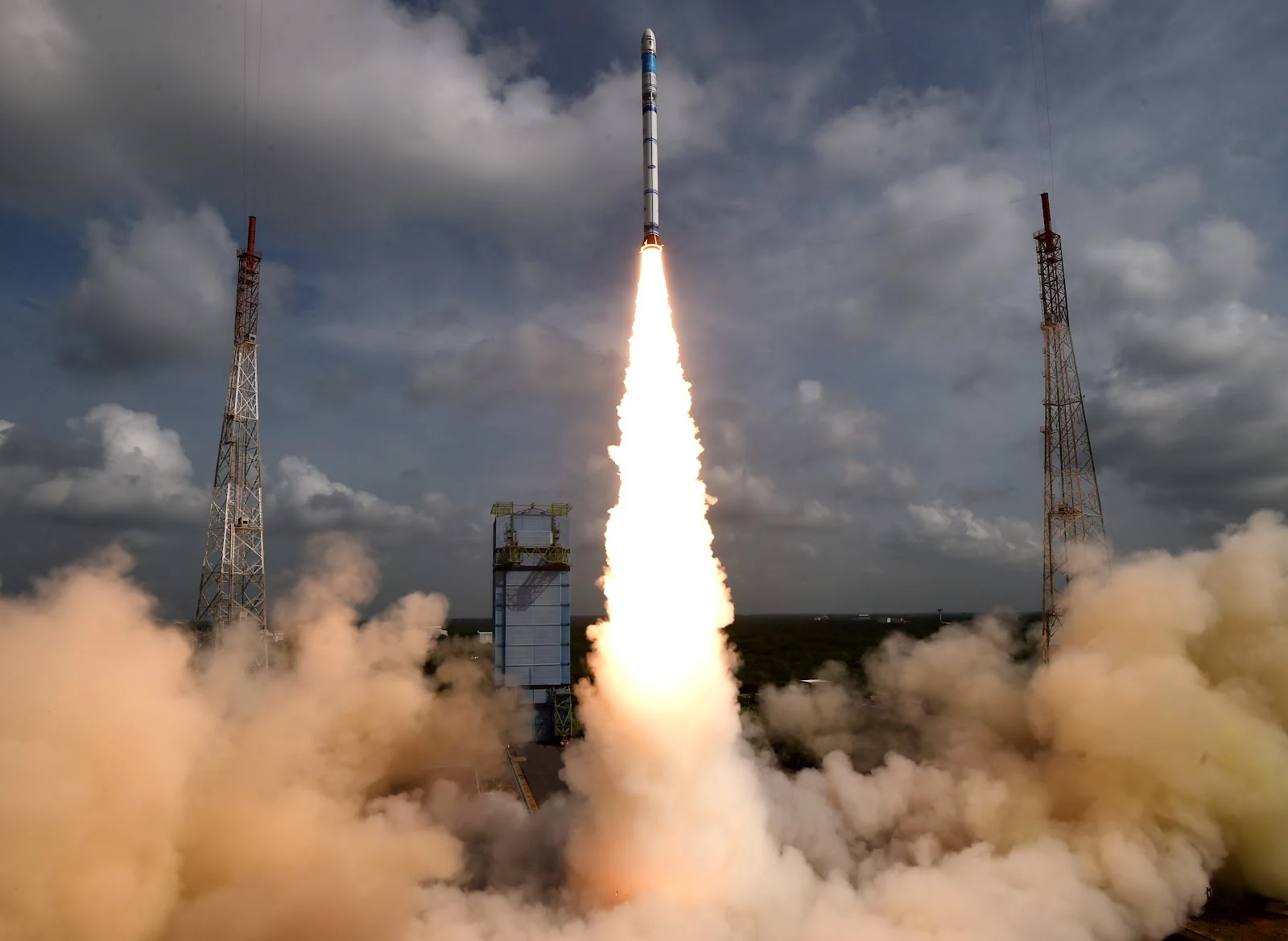
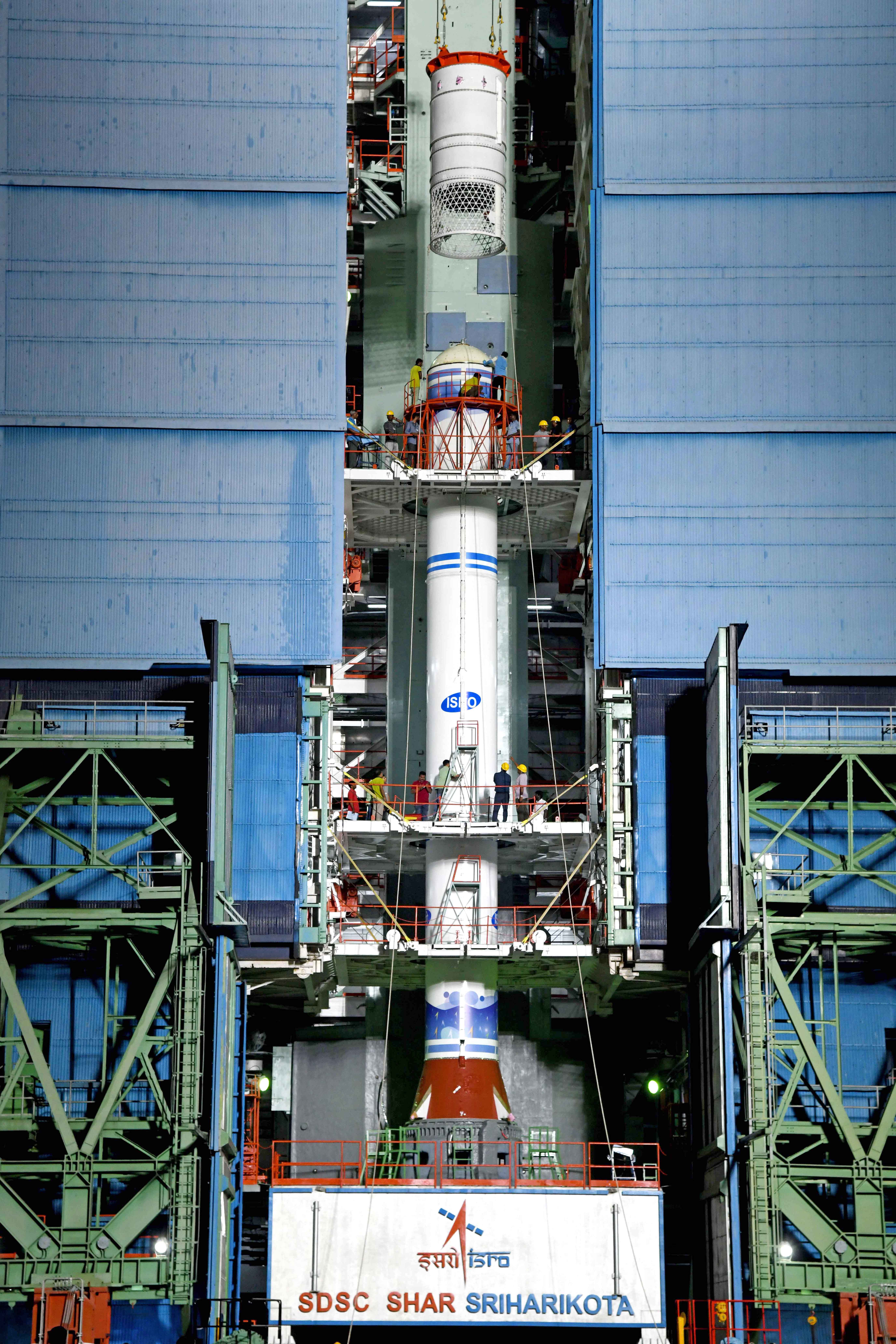
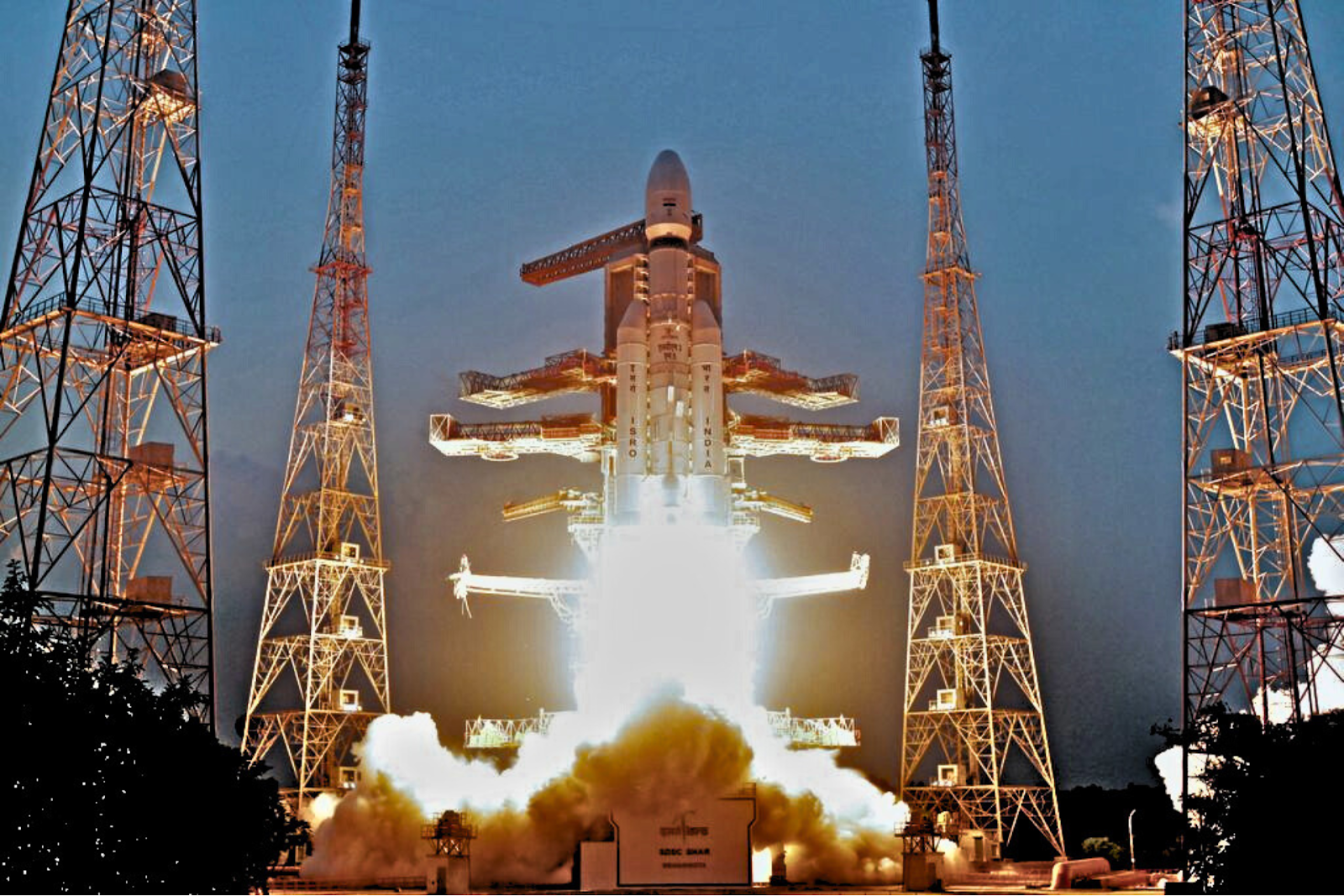
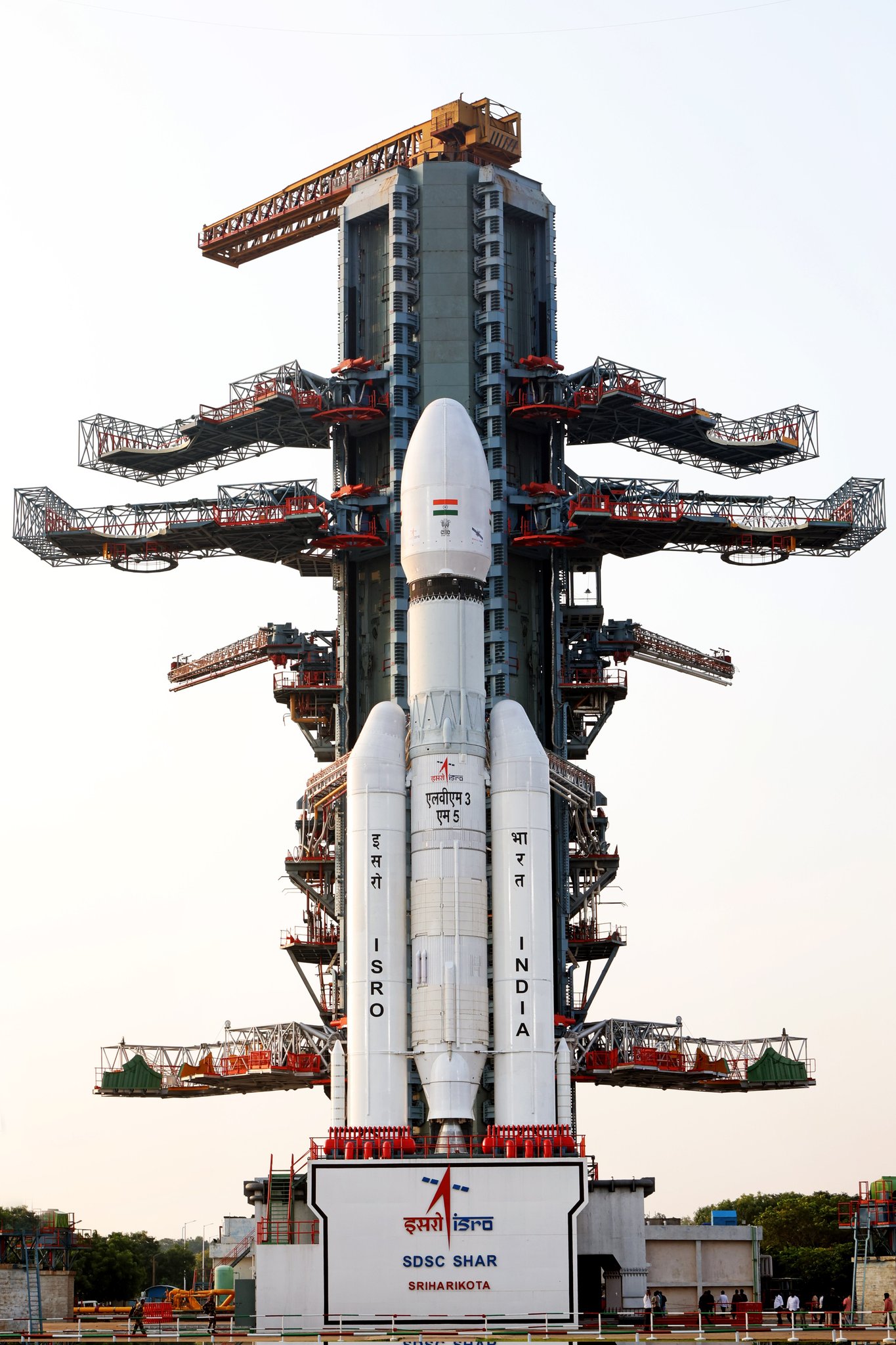
ISRO successfully launched its heaviest communication satellite, CMS-03 (also known as GSAT-7R), aboard the LVM3-M5 rocket on November 2, 2025, from Sriharikota. The 4,410 kg satellite is designed to provide secure, high-bandwidth, multi-band communication for the Indian Armed Forces, especially the Navy, marking a major milestone in India’s heavy-lift space capabilities.

Key Highlights of the CMS-03 Mission

  • Launch Vehicle: LVM3-M5 (Bahubali), India’s most powerful rocket
  • Launch Site: Satish Dhawan Space Centre (SDSC), Sriharikota
  • Date & Time: November 2, 2025, at 17:26 IST
  • Satellite Mass: ~4,410 kg — heaviest communication satellite launched from Indian soil
  • Orbit: Geosynchronous Transfer Orbit (GTO), ~29,970 km x 170 km
  • Mission Purpose: Replace GSAT-7 (2013) and enhance secure naval and defense communications

Strategic Importance

  • Defense Communications: Tailored for the Indian Navy, ensuring encrypted, high-capacity links
  • Indigenous Capability: Fully developed in India, reinforcing strategic autonomy
  • Heavy-Lift Milestone: First >4,000 kg satellite launched into GTO from Indian soil
  • Continuity & Upgrade: Replaces GSAT-7 with greater bandwidth and wider coverage

Comparative Context

Mission Rocket Payload Mass Orbit Purpose
CMS-03 (2025) LVM3-M5 4,410 kg GTO Secure defense communications
GSAT-7 (2013) Ariane-5 2,625 kg GTO Naval communications
Chandrayaan-3 (2023) LVM3-M4 3,900 kg Lunar Transfer Lunar exploration

Broader Implications

  • For India’s Space Program: Strengthens ISRO’s credibility in the global heavy-lift launch market
  • For National Security: Enhances maritime domain awareness and secure communication
  • For Future Missions: Validates LVM3’s readiness for heavier payloads, including crewed missions
ISRO’s Giant Leap: Heaviest Communication Satellite CMS-03 Successfully Launched

ISRO’s Giant Leap: Heaviest Communication Satellite CMS-03 Successfully Launched

ISRO Pioneer Who Brought Satellite TV to Villages Passes Away at 100

ISRO Pioneer Who Brought Satellite TV to Villages Passes Away at 100

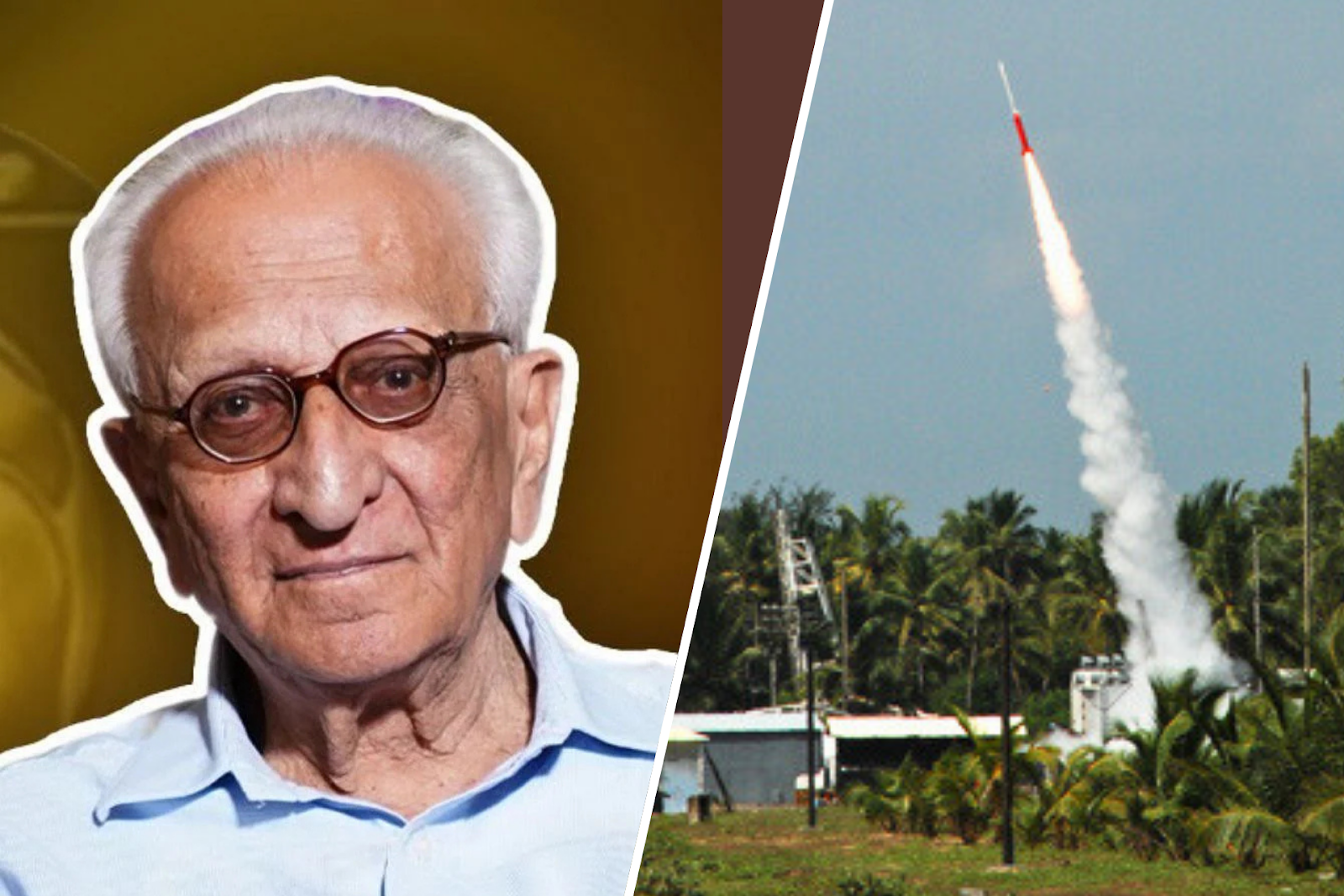
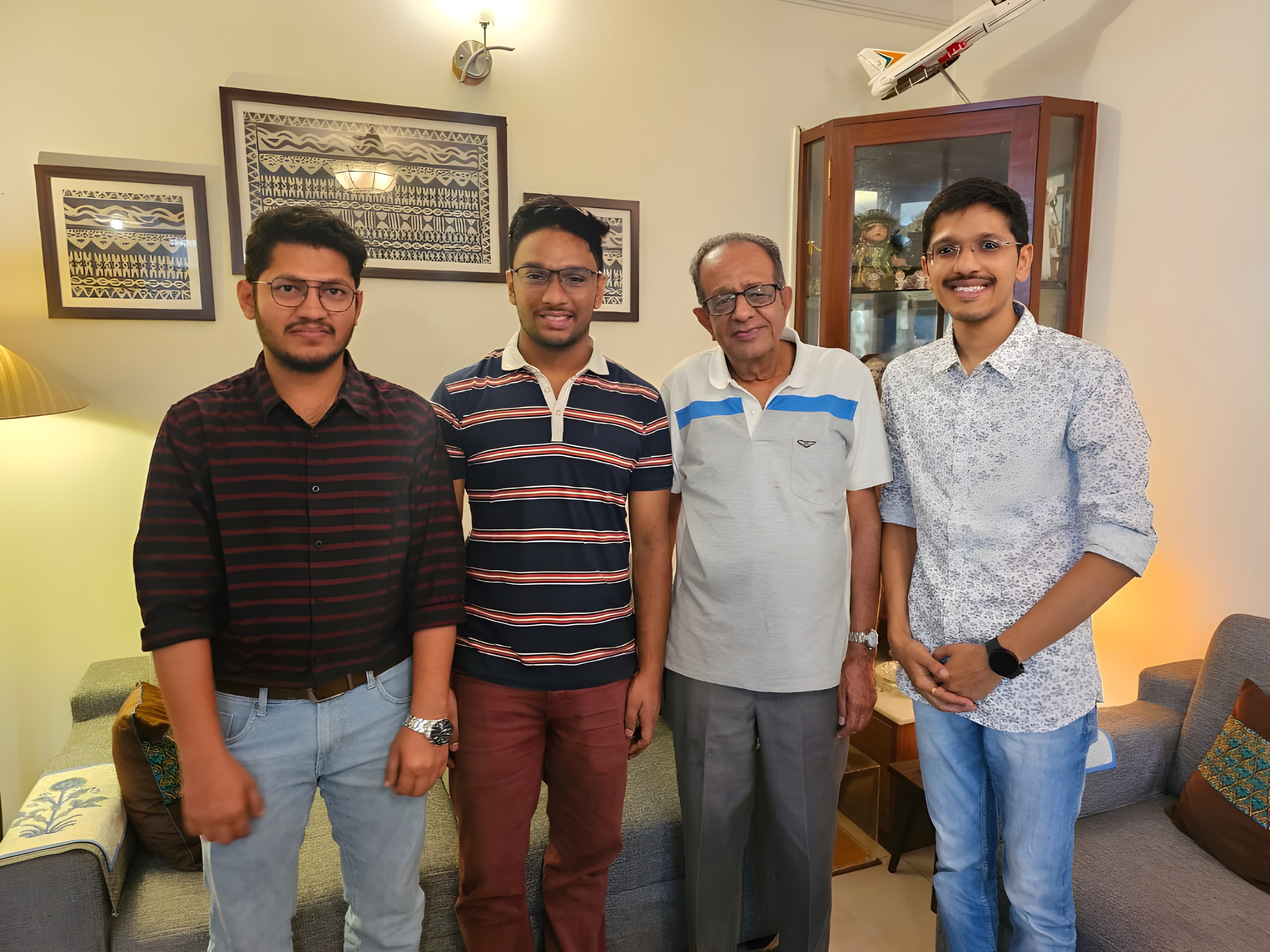
Professor Eknath Vasant Chitnis, one of the founding architects of India’s space programme, passed away in Pune on October 22, 2025, at the age of 100.

Legacy Highlights

  • Handpicked by Dr Vikram Sarabhai, Chitnis played a pivotal role in shaping INCOSPAR into what became ISRO.
  • He led the selection of India’s first launch sites—Thumba in Kerala and Sriharikota in Andhra Pradesh.
  • As Director of the Space Applications Centre, he spearheaded the Satellite Instructional Television Experiment (SITE) in 1975–76, bringing educational TV to 2,400 villages using NASA’s ATS-6 satellite.
  • He was instrumental in recruiting Dr APJ Abdul Kalam into ISRO.
  • Honored with the Padma Bhushan in 1985 for his contributions to science and education.
Professor Eknath Vasant Chitnis

Chitnis also served on the Board of Directors of Press Trust of India for nearly three decades, twice as chairman. His passing marks the end of an era in Indian space science, leaving behind a legacy that continues to shape the nation’s technological ambitions.

IndianaWeb2.com mourn the passing of Prof. Eknath Vasant Chitnis, a visionary scientist and founding architect of India’s space programme. His contributions laid the groundwork for ISRO’s rise and India’s journey into space.

A Lifelong Commitment to Science
Prof. Chitnis’s work bridged technology and education, empowering generations through satellite communication and digital infrastructure. His legacy lives on in every rocket launched, every satellite deployed, and every young mind inspired by India’s space story.

“We Could’ve Done It in 3 Years”: Nambi Narayanan Slams Funding Delays in India’s Space Tech Journey

“We Could’ve Done It in 3 Years”: Nambi Narayanan Slams Funding Delays in India’s Space Tech Journey

At a time when India’s space startup ecosystem is surging, one of its foundational voices has issued a sobering reminder: progress could have come decades earlier, if only the money had followed the vision.

Narayanan emphasized that while India has made strides in rocket technology, financial bottlenecks remain a major hurdle for faster adoption of cutting-edge space systems.

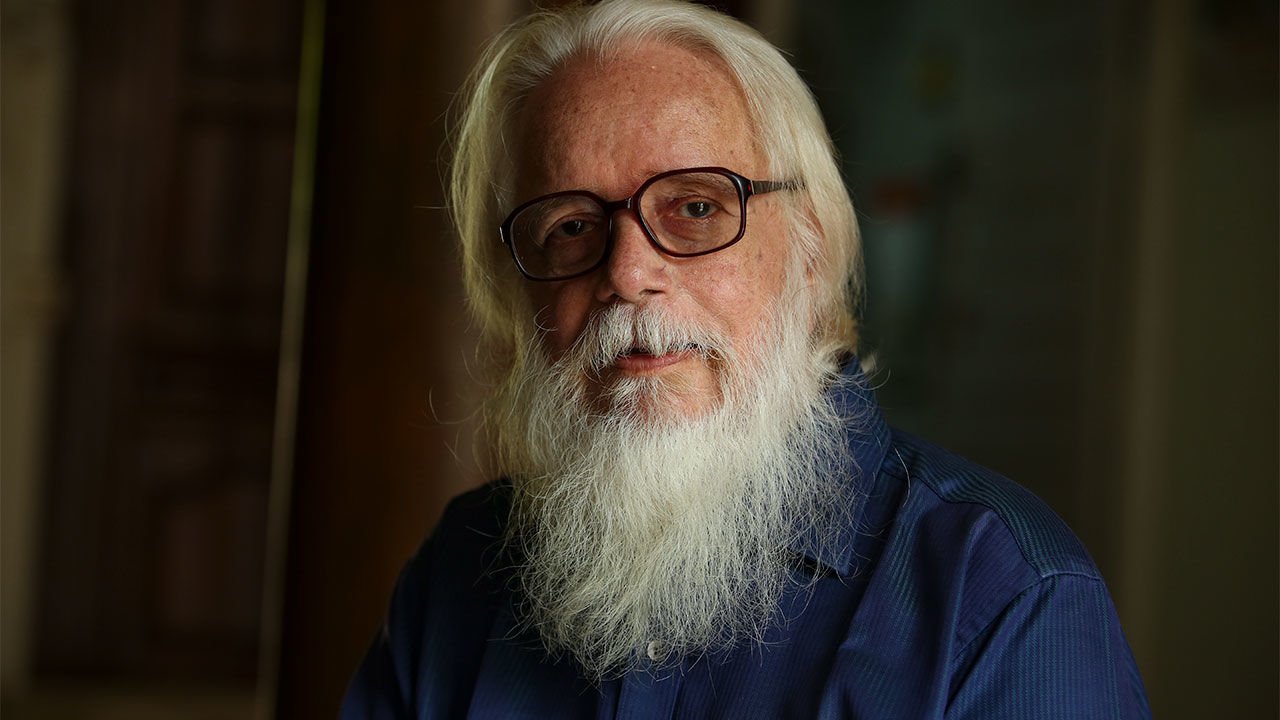
Speaking at National Innovation Day at Rajalakshmi Engineering College, Padma Bhushan awardee and former ISRO scientist Nambi Narayanan reflected on the long, winding road of India’s space propulsion development. His message was clear: funding bottlenecks—not technical limitations—were the real drag force.

Nambi Narayanan
Nambi Narayanan
We could have completed the liquid propulsion system in three yearsNarayanan said. But it took nearly 20 years. Why? Because the funds were not available when we needed them.

The Cost of Delay

  • Narayanan’s remarks cut to the heart of a recurring theme in India’s tech evolution: brilliant minds hamstrung by budgetary hesitation.
  • The liquid propulsion system—critical for modern satellite launches and interplanetary missions—was ready to leap forward in the 1990s.
  • Instead of a sprint, it became a marathon.
We had the technology. We had the talent. What we lacked was timely investment, he added.

A New Era, But Old Lessons

  • India’s space sector has since opened its doors to private players, with over 300 startups now active.
  • The market is projected to reach $44 billion by 2033.
  • Yet Narayanan’s warning resonates: innovation without funding is just aspiration.

Editorial Takeaway

  • Narayanan’s voice is more than nostalgic—it’s strategic.
  • As India positions itself as a global space power, his message is a call to fund not just the future, but the present.
  • Because in space, delays aren’t just costly—they’re orbital.

NASA-ISRO Satellite Sends 1st Radar Images of Earth's Surface

NASA-ISRO Satellite Sends 1st Radar Images of Earth's Surface
Captured on Aug. 21, this image from NISAR’s L-band radar shows Maine’s Mount Desert Island. Green indicates forest; magenta represents hard or regular surfaces, like bare ground and buildings. The magenta area on the island’s northeast end is the town of Bar Harbor. (Credit: NASA/Pl-Caltech) 

The NASA-ISRO Synthetic Aperture Radar (NISAR) satellite has successfully transmitted its first radar images of Earth’s surface, marking a major milestone in the joint U.S.-India mission.

Highlights from the First Radar Images
  • Mount Desert Island, Maine (Aug 21):
    • Captured using NASA’s L-band radar.
    • Forests appear green, water bodies in dark tones, and urban areas in magenta.
    • The town of Bar Harbor is clearly visible, showcasing the radar’s ability to distinguish land cover types.
  • Forest River, North Dakota (Aug 23):
    • Shows wetlands, forests, and farmland with circular irrigation plots.
    • Differentiates fallow fields from active crops like corn and soybeans.
NASA-ISRO Satellite Sends 1st Radar Images of Earth's Surface
On Aug. 23, NISAR imaged land adjacent to northeastern North Dakota’s Forest River. Light-colored wetlands and forests line the river’s banks, while circular and rectangular plots throughout the image appear in shades that indicate the land may be pasture or cropland with corn or soy. (Credit: NASA/JPL-Caltech) 

What Makes NISAR Unique

  • Dual Radar System: Combines NASA’s L-band with ISRO’s S-band for comprehensive Earth surface analysis.
  • High Resolution: Can resolve features as small as 5 meters.
  • Global Coverage: Orbits Earth every 12 days from 747 km altitude.

Applications

  • Disaster response (e.g., landslides, floods, earthquakes)
  • Agricultural monitoring and food security
  • Climate change and ecosystem tracking
  • Infrastructure and urban planning
Science operations begin November 2025. NISAR is set to revolutionize Earth observation and environmental monitoring.

Source – usembassy.gov

Agnikul’s New 3D Printing Facility Promises Faster, Smarter Rocket Manufacturing in India

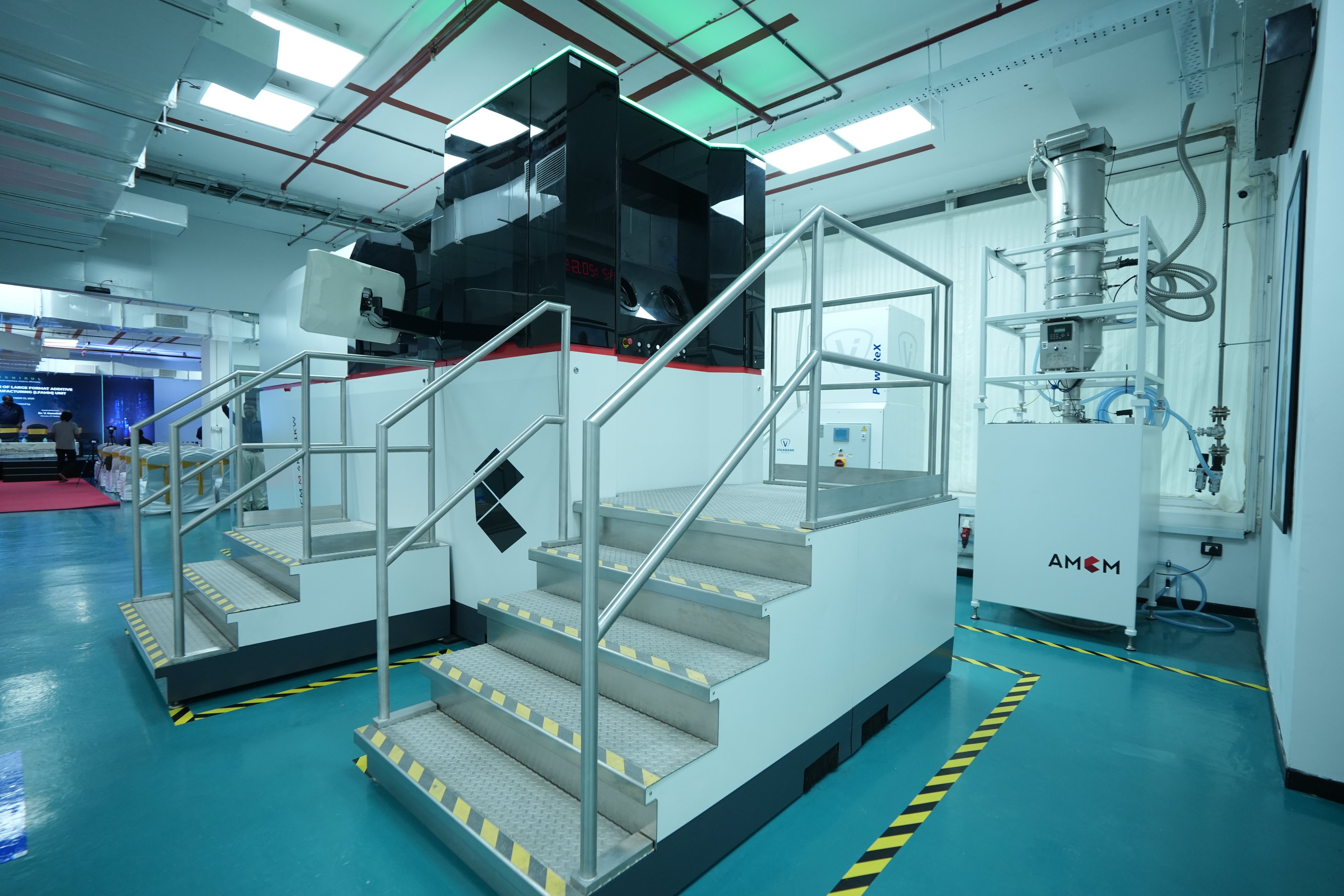
In a landmark moment for India’s private space sector, Chennai-based spacetech startup Agnikul Cosmos has commissioned the country’s first large-format 3D printing facility dedicated to aerospace and rocket systems, reported Times of India today. Located at the IIT Madras Research Park, the facility integrates design, simulation, printing, post-processing, and testing under one roof—dramatically accelerating the production of flight-ready hardware.

image Credits – News IADN@X

This is not just a milestone for Agnikul, it is a statement of national capability,” said Moin SPM, Co-founder & COO of Agnikul Cosmos.

Key Highlights 

  • Scale & Capability: First in India to enable 3D printing of aerospace components up to 1 metre in height, previously considered too complex for additive manufacturing.
  • Speed & Efficiency: Fully finished rocket engines can now be produced in just days, cutting development cycles and costs by up to 50%.
  • Indigenous Innovation: Includes a homegrown de-powdering machine for flawless post-processing, ensuring space-grade quality without external dependencies.
  • Patent Power: Agnikul holds a US patent for single-piece 3D-printed rocket engines. The new facility allows production of engines with seven times the thrust of earlier designs.
  • Strategic Vision: The facility strengthens India’s space manufacturing ecosystem, positioning it as globally competitive in terms of quality, speed, and affordability.
Founded in 2017 and incubated at IIT Madras, Agnikul previously made headlines by launching its Agnibaan rocket from Sriharikota’s first private launchpad, Dhanush. The startup has raised $45 million to date from investors including Celesta Capital, Rocketship.vc, and Pi Ventures.
Agnikul was started with the goal of making space available to everyone, said Srinath Ravichandran, Co-founder & CEO. “By developing not just printing capacity but also full-scale machines in-house, we are equipping ourselves to build space transportation systems faster.”

With over 250 space-tech startups now active in India, Agnikul’s new facility marks a pivotal step toward a self-sustaining, innovation-driven space economy.

Astrophel’s Cryogenic Pump Hits ISRO Test Bench—Paving the Way for India’s First Private Gas Generator Cycle

  • Astrophel Aerospace has successfully developed an indigenous cryo-pump capable of spinning at 25,000 RPM, to power its next-gen rocket engines.
  • It awaits testing and certification by ISRO, marking a significant technical milestone in propulsion technology.
  • The next stage of development will focus on upgrading it to a turbopump for integration into its in-house first and second stage engines by late 2026.
  • Referred to as the “heart of a rocket engine”, it requires more than 50 precision-engineered components.
Spacetech Startup Astrophel’s Cryogenic Pump Hits ISRO Test Bench—Paving the Way for India’s First Private Gas Generator Cycle
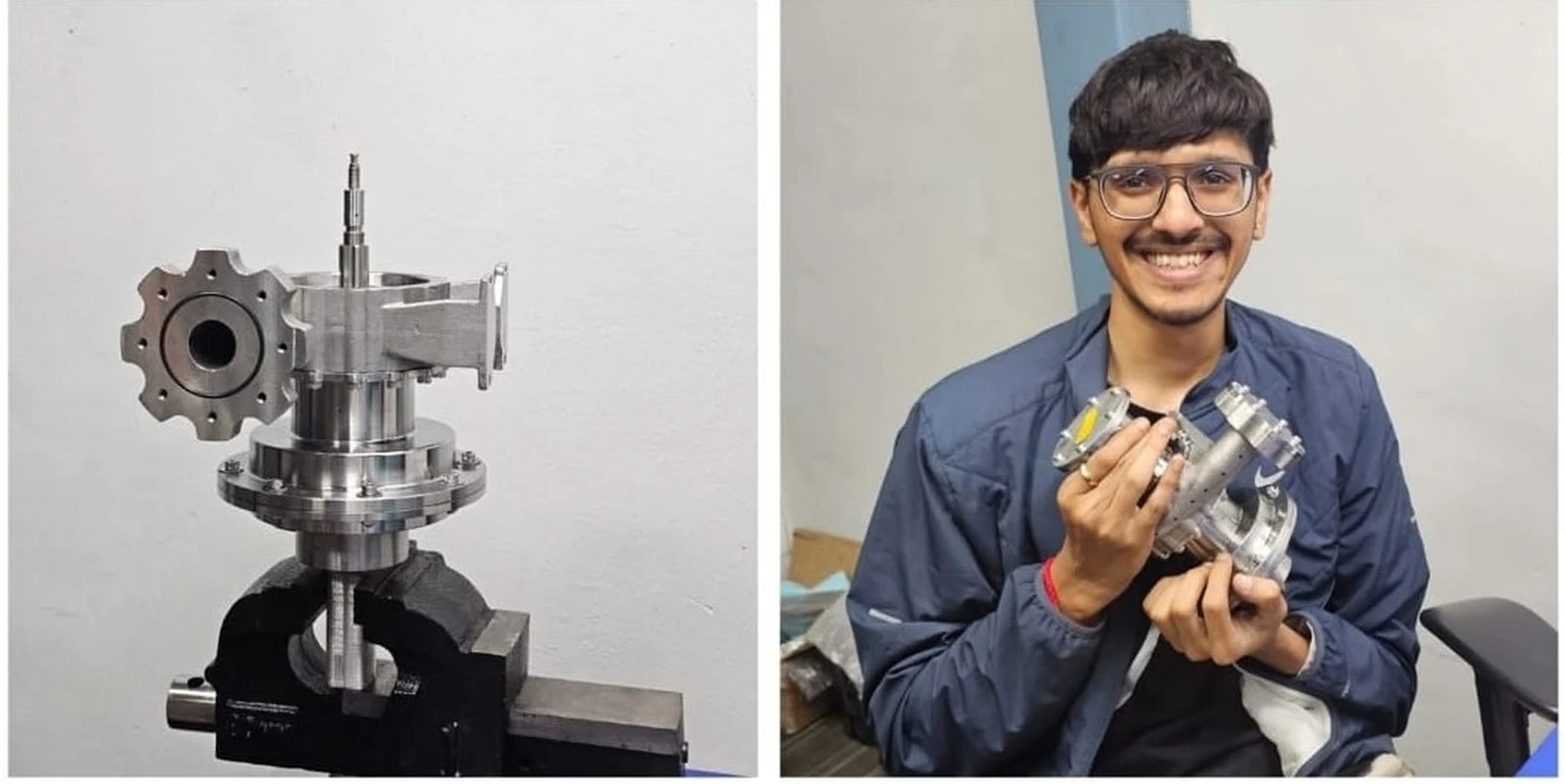
Suyash Bafna, Cofounder, Astrophel Aerospace, holding the cryo-pump for testing

Astrophel Aerospace, a Pune-based spacetech startup, is currently testing and characterising its indigenously developed cryogenic pump at ISRO facilities. Once successfully validated, the cryo-pump will be upgraded into a fully-fledged turbopump for integration into the startup's rocket engine, the Astra C1, by late 2026. The technical milestone positions Astrophel as one of the first private Indian space startups to develop an in-house cryo-pump.

Astrophel is also in the process of signing an MoU with a US-based partner and is actively exploring additional global collaborations, for export commercialisation at the sub-component level to service rising demand in the global space sector and industries such as oil and gas, which handle cryogenic fuels. Unlike other technical approaches, a turbopump draws power directly from the engine itself, eliminating the need for external batteries, making it a more sustainable long-term solution for space engine reusability and cost-efficient launches across all segments.

This milestone is a testament to how India can indigenously develop advanced propulsion technologies at a fraction of global costs,” said Suyash Bafna, Co-Founder of Astrophel Aerospace. “ISRO’s certification will validate not just our pump, but India’s ability to innovate world-class space hardware with global export opportunities”, he added.

What began as fifty-plus separate, precisely engineered components comes together into a cryo-pump system that spins at 25,000 RPM, delivering cryogenic fuel that will power both Astrophel’s first and second-stage rocket engines. For context, at least 8-9 turbopumps are required just during the first-stage liftoff of an SSLV.

The announcement comes as India sets its sight on growing the space economy from $8.4 billion in 2022 to $44 billion by 2033, capturing 8% of the global market. With more than 250 startups entering the sector, propulsion milestones like Astrophel’s cryo-pump are vital to achieving this vision. “This milestone represents the culmination of years of frugal engineering and is a stepping stone toward India’s first privately developed gas generator cycle,” added Immanuel Louis, Co-Founder, Astrophel Aerospace.

Though the size of a one-litre bottle, the cryo-pump is powerful enough to generate 100 to 150 horsepower, equivalent to that of a family car, which will be scaled up to deliver 500 to 600 horsepower (turbopump) for larger launch vehicles. Acting as the “heart of the rocket,” a turbopump feeds cryogenic fuel into the engine at high pressure, ensuring efficient thrust control and lower material costs. Astrophel’s approach differs from other startups pursuing 3D-printed, electric pumps. Adopting lean manufacturing principles from the auto sector ensures cost efficiency, rapid assembly, and scalable production.

About Astrophel Aerospace

Astrophel Aerospace is an Indian space tech startup developing affordable, dedicated launch vehicles for small satellites, powered by semi-cryogenic propulsion systems. Its flagship Astra C1 series and Potentia engine position it among the few Indian private companies to have independently built and successfully test-fired a semi-cryogenic engine on 15th August 2023, without any external funding. By combining best practices from automotive manufacturing with 3D printing, Astrophel reduces production time and cost by up to 40%, making it potentially one of the most accessible launch providers in the segment.

The company has developed in-house capabilities across throttleable engine valves, regenerative nozzle design, cryogenic subsystems, and real-time avionics software. Astrophel is planning full orbital missions from Indian launchpads utilising reusable launchers to capitalise on the potential of India's space industry, projected to reach USD 44 billion by 2033. It is supported by a distinguished advisory board of propulsion experts with experience working at ISRO, Hindustan Aeronautics Limited and DRDO. Together, they bring technical oversight and strategic depth to Astrophel’s mission to democratise space access.

About Suyash Bafna

Suyash Bafna is the Co-Founder of Astrophel Aerospace, playing a key role in systems integration, operations, and strategic execution. With a background in mechanical engineering, Suyash bridges the gap between propulsion, avionics, and structural design, ensuring that Astrophel’s launch systems are optimised for performance and reliability. He has been instrumental in coordinating subsystem development for the Astra C1 vehicle and managing timelines for the company’s upcoming suborbital launch. His focus on mission-readiness, testing protocols, and cross-functional collaboration has helped streamline development despite limited resources.

At Astrophel, Suyash also oversees external partnerships and vendor alignments, working to reduce costs while maintaining technical integrity. Passionate about building indigenous space capabilities, he is committed to enabling affordable access to space for small satellite operators. His systems-driven leadership contributes significantly to Astrophel’s goal of becoming India’s most cost-effective and agile launch provider.

About Immanuel Louis

Immanuel Louis is the Co-Founder of Astrophel Aerospace. An aerospace engineer by training and a lifelong aviation enthusiast, Immanuel holds a master’s degree from MIT Chennai. His journey began with building remote-control aircraft as a child and evolved into co-building one of India’s most affordable semi-cryogenic rocket engines. At Astrophel, he spearheads propulsion system design, engineering integration, and business strategy. He is committed to building India’s next-gen launch infrastructure and fostering a new wave of aerospace talent. His passion lies in combining indigenous innovation with global best practices to position Astrophel as an upcoming leader in the small satellite launch segment.

About MD Taj Baba, Founding Member & Head of Aero Thermal Engineering

MD Taj Baba is a founding member of Astrophel Aerospace and currently leads aero-thermal engineering initiatives with a dedicated focus on liquid propulsion and rocket nozzle systems. With a Bachelor’s in Aeronautical Engineering from AeSI, New Delhi, and a Master’s in Thermal Engineering from Osmania University, Taj brings crucial expertise in thermodynamic analysis, engine heat transfer, and high-performance thermal system design. While instrumental in shaping Astrophel’s early vision and direction as a Co-Founder, Taj is now transitioning away from operational leadership to focus full-time on technical development within the propulsion team.

At Astrophel, he has played a pivotal role in the design and validation of critical cryogenic engine components, control valves, and regenerative cooling systems. An Associate Member of the Aeronautical Society of India and a mentor to aspiring aerospace engineers, Taj remains deeply committed to advancing indigenous semi-cryogenic propulsion technologies and scaling India’s capabilities in the global space sector.

ISRO Accelerates Lunar Ambitions with Chandrayaan-4 and 5: Sample Return, Polar Rover, and Global Partnerships in Play

ISRO Accelerates Lunar Ambitions with Chandrayaan-4 and 5: Sample Return, Polar Rover, and Global Partnerships in Play

ISRO Chairman V. Narayanan has officially confirmed that Chandrayaan-4 and Chandrayaan-5 are actively in development—marking a bold leap in India’s lunar ambitions.

Mission Highlights

Chandrayaan-4

  • Scheduled for launch around 2027
  • Will be India’s first lunar sample-return mission, targeting the Shiv Shakti landing site
  • Includes a Venus Orbiter Mission, expanding ISRO’s interplanetary portfolio

Chandrayaan-5

  • A joint venture with Japan’s JAXA
  • Features a 250 kg rover—a major upgrade from Chandrayaan-3’s 25 kg Pragyan rover
  • Designed to operate through the harsh lunar night at the Moon’s south pole

Technologies Powering Chandrayaan-4 & Chandrayaan-5

Chandrayaan-4: Lunar Sample Return Mission

This mission is a complex ballet of modular engineering and orbital choreography:
Module Function
Propulsion System Transports lander and ascender to lunar orbit
Descender (Lander) Executes soft landing and collects lunar regolith
Ascender Detaches post-sampling and lifts off from Moon’s surface
Transfer Module Receives samples from Ascender and hands off to Re-entry Module
Re-entry Module Returns samples safely to Earth, designed to survive atmospheric re-entry
  • Space Docking Capability via SPADEX experiment
  • Dual Rocket Launch Strategy using LVM3 and PSLV
  • Robotic Sampling Arm for precise regolith collection
  • Thermal Shielding for safe Earth re-entry

Chandrayaan-5: Indo-Japanese LUPEX Mission

This mission is all about long-duration survival and deep polar exploration:
 
Feature Details
Heavy Rover (250 kg) Equipped for subsurface analysis and night-time operation
Advanced Power Systems Likely includes RTGs or high-efficiency solar arrays
JAXA Collaboration Brings precision landing and terrain mapping expertise
South Pole Targeting Focus on permanently shadowed regions for water ice detection
  • Autonomous Navigation for rugged terrain and low-light conditions
  • Cryogenic Sampling Tools to extract and preserve volatiles
  • Radiation-Hardened Electronics for extreme lunar environments

Strategic Impact

These missions aren’t just scientific—they’re foundational for:
  • Crewed lunar landings by 2040
  • Bharatiya Antariksh Station development
  • Global partnerships in deep space exploration

Broader Vision

  • ISRO is also developing the Bharatiya Antariksh Station (BAS), with the first module planned for 2028 and full deployment by 2035. 
  • The Gaganyaan human spaceflight mission will see an uncrewed launch in December 2025, followed by a crewed mission in early 2027. 
  • India aims for a crewed lunar landing by 2040, using fully indigenous technologies
This roadmap positions India among the elite spacefaring nations, blending scientific ambition with strategic partnerships. Want a visual timeline or stylized summary for editorial use? I’d be thrilled to co-create one with you.

ISRO Targets 2047 for Hypersonic Spaceplane That Could Redefine Global Travel

In a bold stride toward redefining space access and global mobility, the Indian Space Research Organisation (ISRO) has unveiled its vision for a Hypersonic Transport Platform (HTP)—a reusable, runway-launched vehicle capable of flying at speeds beyond Mach 5. Targeted for deployment by 2047, this initiative marks a transformative milestone in India’s space ambitions, aligning with the centenary of independence and the nation’s evolving role in the global tech frontier.

ISRO Targets 2047 for Hypersonic Spaceplane That Could Redefine Global Travel
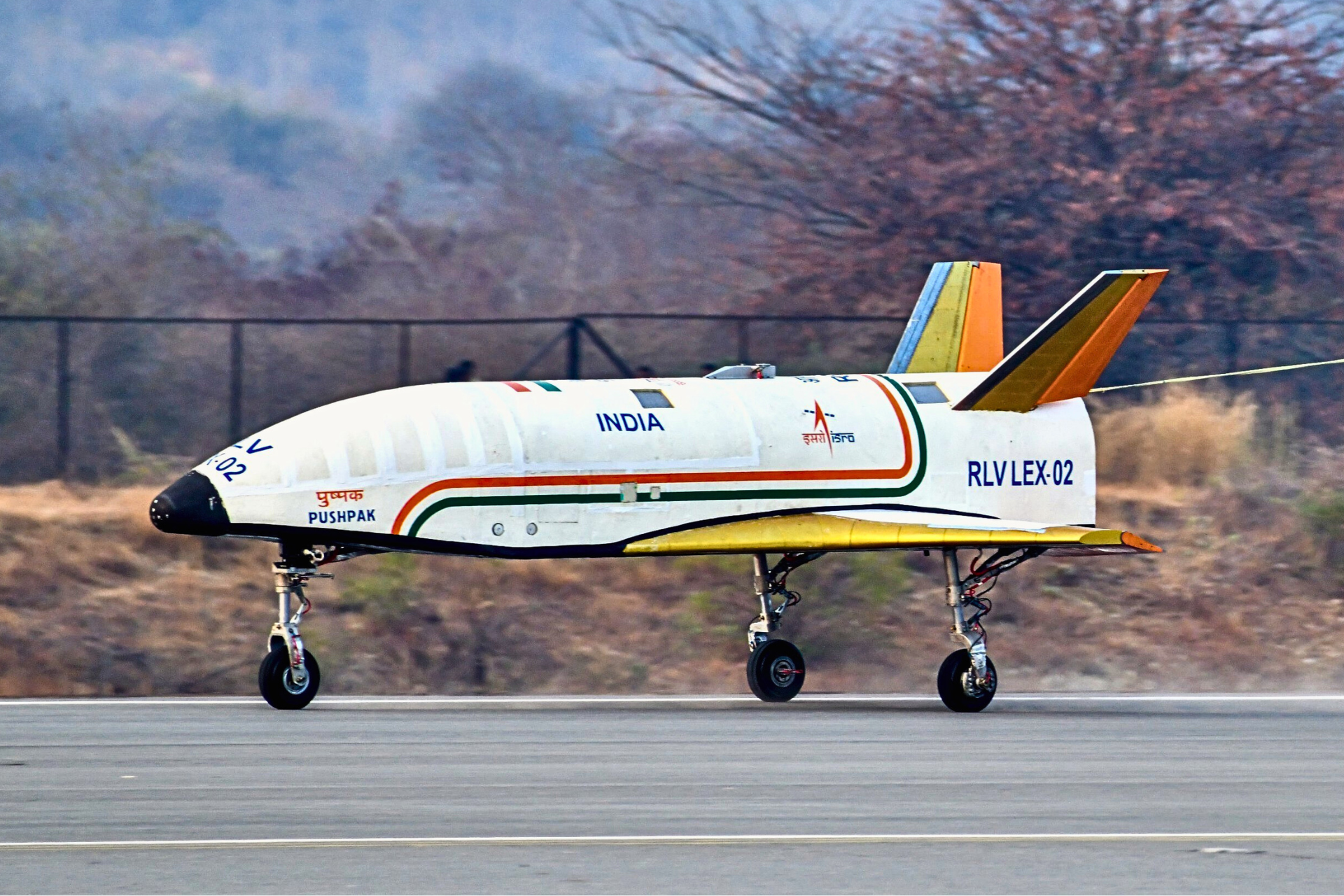
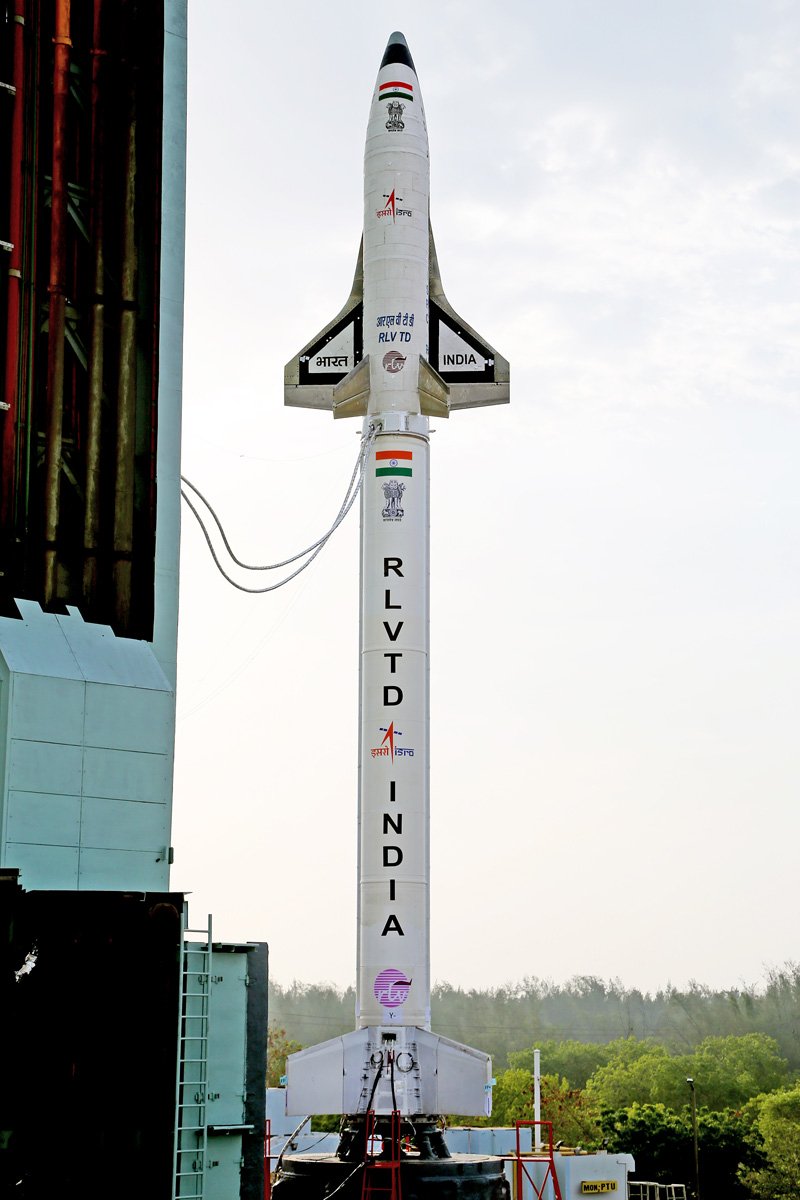
ISRO’s Reusable Launch Vehicle (RLV) Landing Experiment photo 

What Is the Hypersonic Transport Platform?

Unlike conventional rockets, ISRO’s HTP is designed to take off like an aircraft, accelerate to hypersonic speeds, and reach suborbital altitudes—before returning safely to Earth. This dual-purpose platform could serve both space missions and ultra-fast intercontinental travel, shrinking global distances to mere hours or even minutes.

The Tech Behind the Vision

ISRO’s roadmap builds on years of foundational research and successful prototypes:
  • Scramjet Propulsion: Air-breathing engines that operate at hypersonic speeds, reducing fuel load and improving efficiency.
  • Reusable Launch Vehicle (RLV): The HTP is a natural evolution of ISRO’s RLV program, which has already demonstrated autonomous landing capabilities.
  • Thermal-Resistant Materials: Advanced composites and alloys to withstand extreme heat and pressure during high-speed flight.
  • AI-Driven Navigation: Precision guidance systems for autonomous launch, orbit insertion, and recovery.
ISRO's RLV LEX

Strategic Implications for India

Impact Area Potential Outcomes
Space Access Rapid, low-cost satellite deployment and cargo delivery
Defense & Security High-speed reconnaissance and strategic mobility
Commercial Aviation Intercontinental travel in under an hour
Space Tourism Viable platform for suborbital passenger flights
Tech Spillover Innovations in propulsion, materials, and AI for broader industrial applications

Vision 2047: A National Milestone

The HTP is a cornerstone of India’s Space Vision 2047, which also includes:
  • A Bharatiya Antariksh Station by 2035
  • A crewed lunar mission by 2040
  • Expansion of private space partnerships and global launch services
Together, these initiatives position India not just as a spacefaring nation, but as a leader in next-gen aerospace innovation.

The Future Beckons

Imagine boarding a hypersonic craft in Bengaluru and landing in San Francisco in under 90 minutes. Or launching satellites on demand from a reusable platform that returns to base like a jetliner. ISRO’s HTP isn’t just a vehicle—it’s a vision of mobility without limits, where space and time compress into possibility.

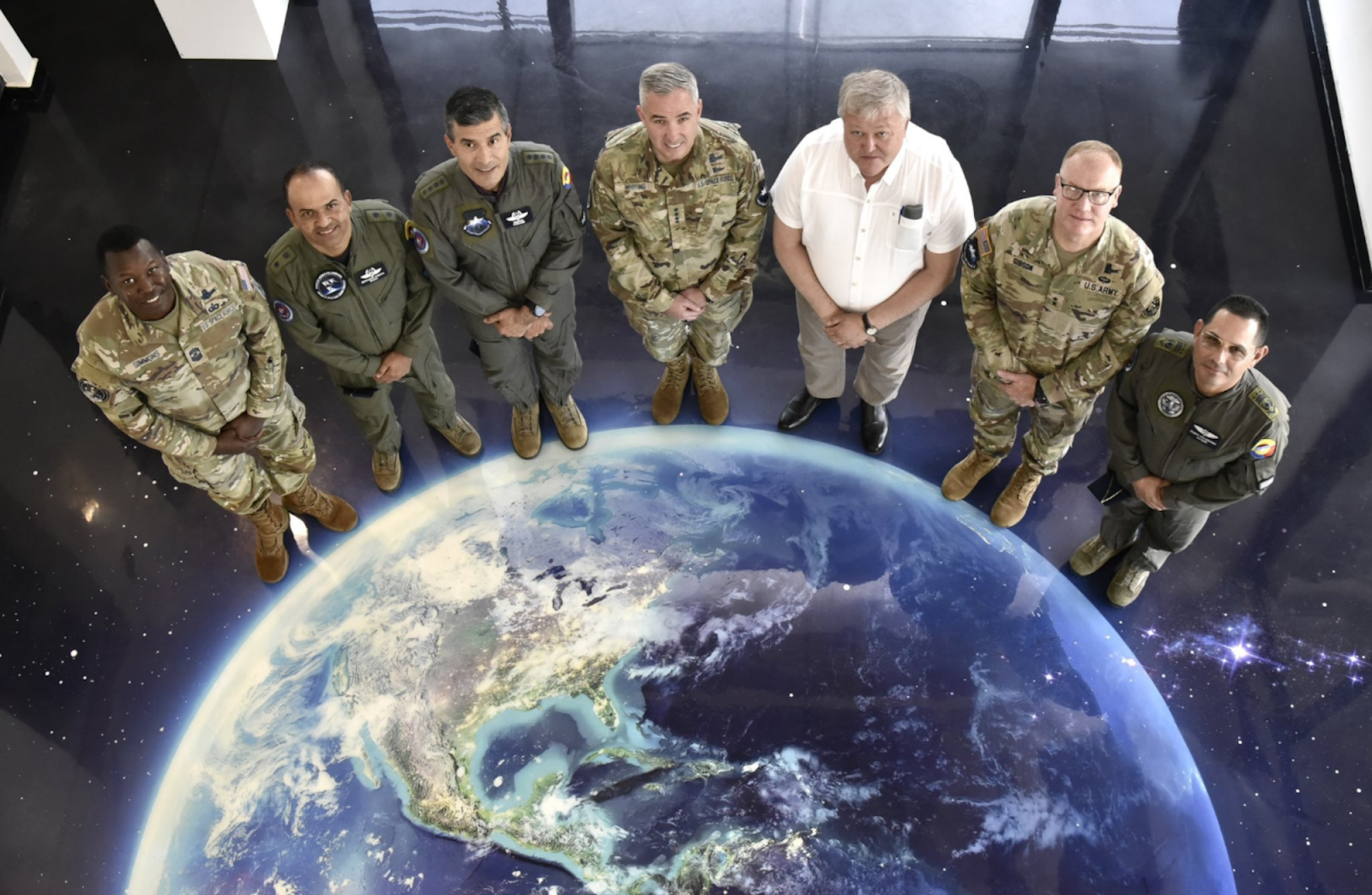
U.S. Space Command Headquarters Relocates to Huntsville, Alabama

U.S. Space Command Headquarters Relocates to Huntsville, Alabama

In a landmark decision with far-reaching implications for U.S. defense strategy and regional development, President Donald Trump announced Tuesday that the headquarters of U.S. Space Command will officially relocate from Colorado Springs, Colorado, to Huntsville, Alabama.

The move reactivates a 2021 plan that had previously designated Huntsville—widely known as “Rocket City”—as the preferred site due to its robust aerospace infrastructure, cost efficiency, and proximity to key defense assets. The decision reverses a 2023 Biden-era directive that had kept the command in Colorado, reigniting debate over political influence in military basing decisions.

Why Huntsville?

Huntsville is home to NASA’s Marshall Space Flight Center, Redstone Arsenal, and a dense ecosystem of defense contractors including Boeing, Lockheed Martin, and Northrop Grumman. The city has long been a hub for missile defense, satellite development, and space launch innovation.

This is about mission readiness, cost-effectiveness, and long-term strategic advantage,” Trump stated during the announcement. “Huntsville is where the future of American space defense belongs.

What Is U.S. Space Command?

Reestablished in 2019, U.S. Space Command oversees military operations in space, including satellite defense, missile tracking, and global communications. It plays a critical role in safeguarding U.S. assets against emerging threats from adversaries like China and Russia, who are rapidly expanding their own space capabilities.

The relocation is expected to involve the transfer of approximately 1,700 personnel and the construction of new facilities over the next five years.

Economic & Strategic Impact

The move is projected to inject billions into Alabama’s economy, creating over 30,000 direct and indirect jobs. It also positions Huntsville as a central node in the U.S. military’s evolving space strategy, potentially influencing future procurement, R&D, and international collaboration.

Global Implications

For international observers, the relocation signals a renewed emphasis on space as a contested domain. As global powers race to secure orbital assets and develop anti-satellite technologies, the U.S. is doubling down on its commitment to space superiority.

Defense analysts suggest the move could accelerate partnerships with allied space agencies and prompt further investment in space-based deterrence systems

SpaceX's 1,900th Starlink Satellite Launch

SpaceX's 1,900th Starlink Satellite Launch

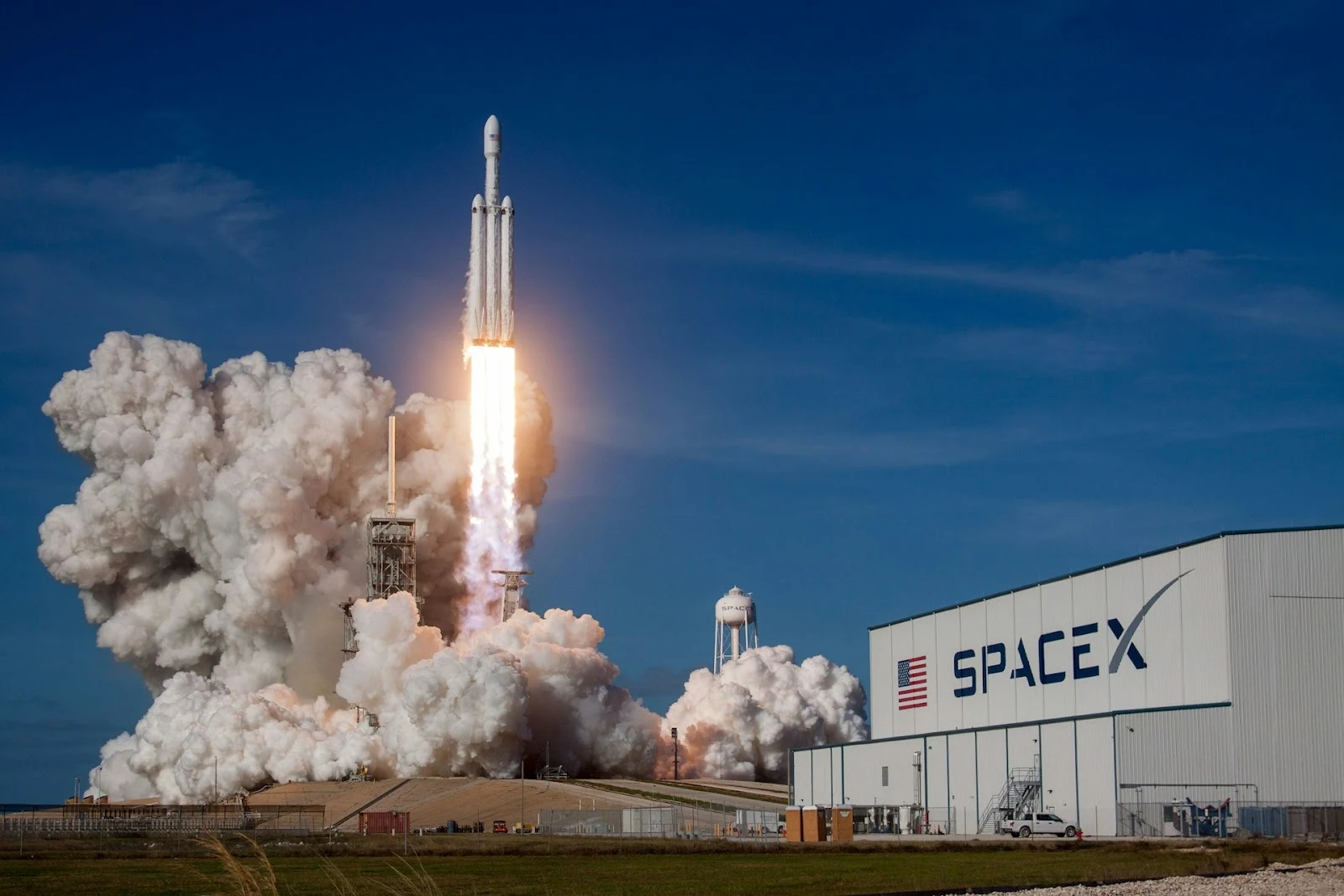
On Sunday, August 31, 2025, SpaceX is set to launch its 1,900th Starlink V2 Mini satellite aboard a Falcon 9 rocket from Cape Canaveral Space Force Station in Florida. This mission, designated Starlink 10-14, marks SpaceX’s 77th Starlink launch of the year, and its ninth Starlink mission in August alone.

Mission Highlights

  • Date: Sunday, August 31, 2025
  • Mission: Starlink 10-14
  • Launch Site: Cape Canaveral Space Force Station, Florida
  • Launch Time: 7:20 a.m. EDT (11:20 UTC)
    • Rocket: Falcon 9 Booster 1077 (23rd flight)
    • Trajectory: North-easterly path from Florida’s Space Coast
    • Landing Target: Drone ship Just Read the Instructions in the Atlantic Ocean

Network Expansion

  • Over 1,900 Starlink V2 Mini satellites launched in 2025 alone
  • Total active constellation exceeds 8,100 satellites
  • Global coverage spans 130+ countries, including rural India

Reusability Record

  • 489th Falcon 9 landing
  • 454th reflight milestone

Weather Outlook

  • 90% chance of favorable conditions
  • Minor risks from cumulus and anvil clouds
Summary: This launch marks SpaceX’s relentless cadence, operational efficiency, and its vision for global connectivity.

Starlink Launches by Year (2019–2025)

Year Launches Satellites Deployed Key Milestones
2019 6 ~360 First operational batch (v0.9) launched in May
2020 15 ~900 Regular cadence begins; v1.0 satellites dominate
2021 17 ~1,020 Laser interlinks introduced; global coverage expands
2022 25 ~1,500 v1.5 satellites deployed; polar orbit missions begin
2023 30+ ~2,000 v2 Mini satellites debut; constellation crosses 4,500
2024 40+ ~2,400 Direct-to-cell (DTC) satellites begin launching
2025 (Jan–Aug) 77 ~1,900+ Monthly launches peak; global user base hits 7M+

📊 Total Launches (2019–Aug 2025): ~210+
🛰️ Total Satellites Launched: ~9,580
🌐 Active Satellites in Orbit: ~8,280

🔍 Strategic Notes:
  • Reusability: Most launches used Falcon 9 Block 5 boosters, many flying 20+ times.
  • Coverage Expansion: Starlink now serves 150+ countries, including recent additions like Kazakhstan.
  • Tech Evolution: From basic v0.9 satellites to v2 Mini and DTC-enabled units, each year brought major upgrades.

LTCC Modules, Solar Adhesives Among ISRO's Five Technologies Transferred for Wider Industrial Use

LTCC Modules, Solar Adhesives Among ISRO's Five Technologies Transferred for Wider Industrial Use

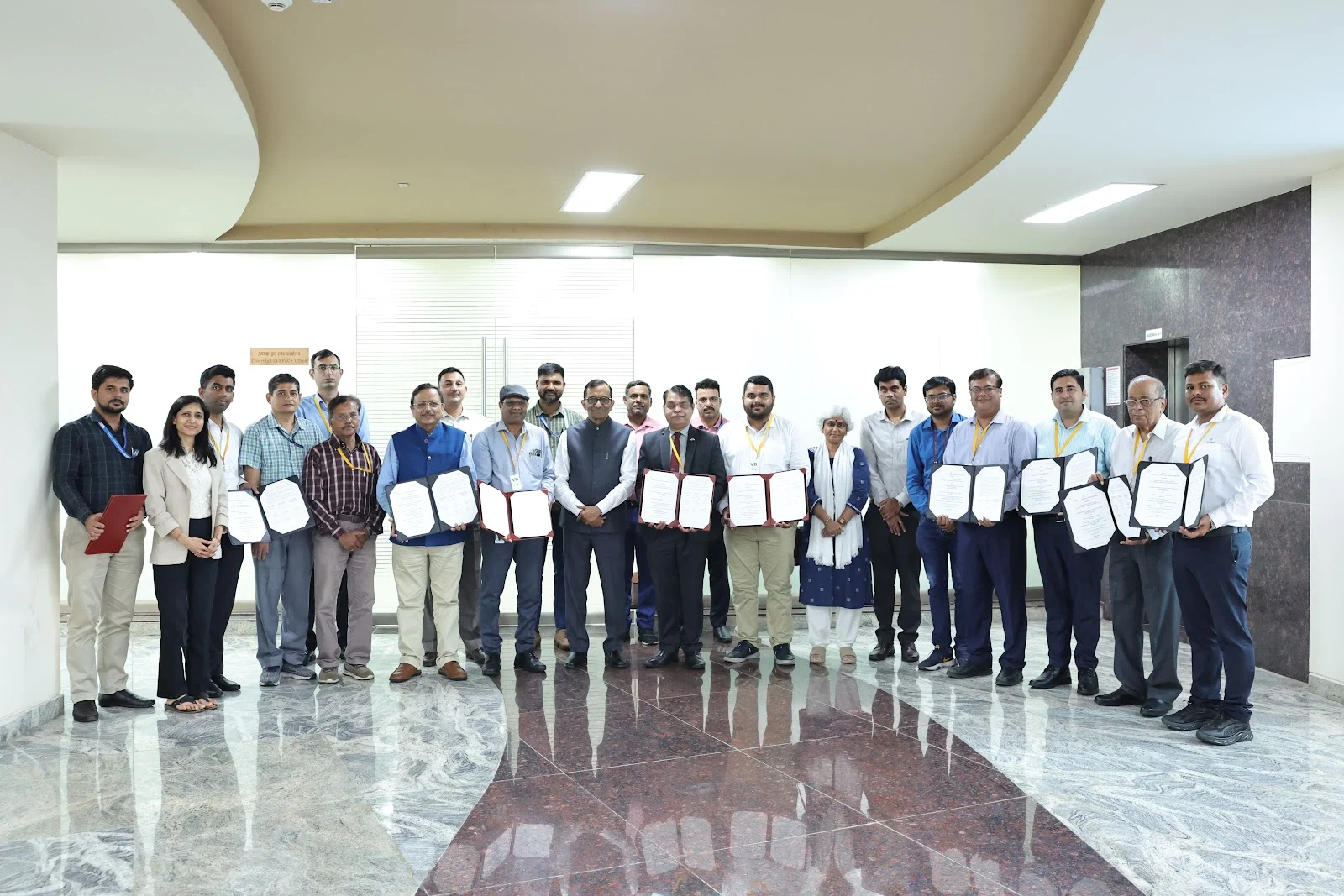
The Indian National Space Promotion and Authorization Centre (IN-SPACe) facilitated the transfer of five technologies developed by ISRO to five Indian companies. The tripartite agreements were signed between NewSpace India Limited (NSIL), the recipient industries, and IN-SPACe at its headquarters in Ahmedabad.

The transfers are aimed at driving commercialization, strengthening self-reliance, reducing imports, and enabling wider applications of space technologies in sectors such as automotive, biomedical, and industrial manufacturing.

One of the technologies, the Low Temperature Co-Fired Ceramic (LTCC) Multi-Chip Module, developed by SAC, enables the integration of multiple semiconductor chips into a single compact module. This has been acquired by M/s Voltix Semicon Pvt. Ltd., Pune, for biomedical use, particularly in RT-PCR kits requiring high-volume production. Voltix currently depends on imports for this technology; the Transfer of Technology (ToT) will enhance domestic capability and self-reliance.

Another, the RTV Silicone Single-Part Adhesive (SILCEM R9), developed by VSSC, is a room-temperature curable adhesive. It has been acquired by M/s Crest Speciality Resins Pvt. Ltd., Ahmedabad, for solar panel bonding. At present, this adhesive is imported; the ToT will ensure local availability, reduce dependence on imports, and boost indigenization.

Commenting on the technology transfer, Dr. Pawan Goenka, Chairman, IN-SPACe, said: “These transfers highlight the growing capability and confidence of Indian industry. While some of these technologies will directly substitute imports, others will unlock applications well beyond the space sector. The true impact will be realized when industry scales them up for widespread use. IN-SPACe, together with ISRO and NSIL, will remain a strong partner in enabling that journey.’’

Shri Rajeev Jyoti, Director, Technical Directorate, IN-SPACe, said,“With today’s five Technology Transfer Agreements (TTAs), the total number of TTAs executed with industries has reached 98. There is strong interest from industry in acquiring these technologies, and IN-SPACe continues to promote them for wider adoption.”

A total of five technologies were transferred to industries under today’s agreements.
  1. Voltix Semicon Pvt. Ltd., Pune – Low Temperature Co-Fired Ceramic (LTCC) Multi-Chip Module Technology (SAC), for biomedical applications; import substitute.
  2. Crest Speciality Resins Pvt. Ltd., Ahmedabad – RTV Silicone Single-Part Adhesive (SILCEM R9), developed by VSSC for solar panel bonding; import substitute.
  3. Azista Composites Pvt. Ltd., Hyderabad – Film Adhesives EFA 1753 and EFA 1752 developed by VSSC.
  4. Ananth Technologies Pvt. Ltd., Hyderabad – 30W HMC DC-DC Converter developed by URSC.
  5. Pushpak Aerospace India Pvt. Ltd., Bengaluru – Anodization of 3D-printed Al-10Si-Mg alloy developed by URSC.

India Expands Astronaut Pool to Include Women and Civilians in Bold Space Push

India Expands Astronaut Pool to Include Women and Civilians in Bold Space Push

In a landmark move to democratize space exploration, India will now include women and professionals from diverse backgrounds in its astronaut pool, breaking away from its earlier reliance solely on Indian Air Force pilots. The announcement was made by Prime Minister Narendra Modi during his address on National Space Day, marking a new chapter in the country’s human spaceflight ambitions.

Prime Minister Modi addressed the country on the National Space Day, August 23, 2025. He announced plans to form a diverse astronaut pool and emphasized the need for 40–50 trained astronauts to support future missions like Gaganyaan, the Bharatiya Antariksh Station, and a manned Moon mission.

From Air Force to All Walks of Life

Until now, India’s astronaut training was limited to elite Air Force personnel. The first batch for the Gaganyaan mission—Group Captains Shubhanshu Shukla, Prashanth Nair, Angad Pratap, and Ajith Krishnan—underwent rigorous training in Russia and India. However, ISRO officials confirmed that future selections will be open to women and civilians, reflecting global trends in space participation.

"The astronaut pool will not be restricted to the Air Force alone. It will have people from all walks of life,” said a senior ISRO official. Globally, it’s not just researchers but also entrepreneurs who are travelling to space.

Vision for Human Spaceflight

The initiative aligns with India’s long-term space roadmap:
  • Gaganyaan Mission: First crewed flight expected by 2027
  • Bharatiya Antariksh Station: Indigenous space station planned by 2035
  • Manned Moon Mission: Targeted for 2040
PM Modi emphasized the need for a ready pool of 40–50 astronauts to support sustained missions and invited youth to join this national endeavor.

A New Era of Inclusivity

The decision to diversify the astronaut pool is seen as a major step toward inclusivity and innovation in India’s space program. It also fulfills a promise made by Modi in his 2018 Independence Day speech: “An Indian boy or girl will unfurl the Tricolour in space."

In my conversation with Group Captain Shubhanshu, I saw the boundless courage and infinite dreams of the youth of New Bharat. On this Space Day, I invite my young friends to join this astronaut pool and give wings to the dreams of Bharat. – PM Modi

Global Context

India joins a growing list of nations expanding astronaut eligibility beyond military ranks. NASA, ESA, and private companies like SpaceX have already sent scientists, engineers, and even artists into orbit.

IN-SPACe Awards EO-PPP Contract to PixxelSpace-Led Consortium for Indigenous Satellite Constellation

IN-SPACe Awards EO-PPP Contract to PixxelSpace-Led Consortium for Indigenous Satellite Constellation

The Indian National Space Promotion and Authorisation Centre (IN-SPACe), under the Department of Space, Government of India, today announced the selection of a PixxelSpace India-led consortium, comprising of Piersight Space, Satsure Analytics India, and Dhruva Space, to design, build, and operate India’s first fully indigenous commercial Earth Observation (EO) satellite under the pioneering Public-Private Partnership (EO-PPP) model.

The selection follows a competitive bidding process. Three consortia were shortlisted after rigorous technical evaluation:
  1. Astra Microwave Products Limited, Hyderabad (with Bharat Electronics Ltd., Sisir Radar & Spectragaze Systems)
  2. GalaxEye Space, Bengaluru (with CoreEL)
  3. PixxelSpace India Pvt. Ltd., Bengaluru (with Piersight Space, Satsure Analytics India, and Dhruva Space)
Following the financial bid assessment, the PixxelSpace India-led consortium emerged as the successful bidder.

This initiative represents a pivotal point for India’s space sector. For the first time in the history of the Indian space sector, a private consortium would invest more than ₹1,200 crore over the next 5 years to launch a constellation of 12 state-of-the-art EO satellites equipped with panchromatic, multispectral, hyperspectral, and microwave SAR sensors. The constellation will deliver Analysis Ready Data (ARD) and Value-Added Services (VAS) for applications in climate change monitoring, disaster management, agriculture, infrastructure, marine surveillance, national security, and urban planning, while also catering to the global demand for high-quality geospatial intelligence.

By generating high-resolution, indigenous satellite data, the initiative will significantly reduce India’s reliance on foreign sources, ensure data sovereignty, and position the country among the global leader, in space-based data solutions.

Dr. Pawan Goenka, Chairman, IN-SPACe, said, “This initiative signals the coming of age of India’s private space industry in the space sector. It demonstrates the capability and confidence of Indian companies to lead large-scale, technologically advanced, and commercially viable space missions that serve both national and global markets. The EO-PPP model fosters an ecosystem where public and private capabilities reinforce each other to drive growth, innovation, and self-reliance.”

Under the PPP framework, the Government of India will provide strategic, technical, and policy support, while the PixxelSpace India-led consortium will own and operate the EO system, including satellite manufacturing, launches from Indian soil, ground infrastructure, and commercialization of data services.

Shri Rajeev Jyoti, Director, Technical Directorate, IN-SPACe, said: “All three shortlisted bidders submitted excellent technical and business plans, underscoring the growing maturity of India’s private space capabilities. This project is about building India’s own independent and future-ready geospatial infrastructure. It will lead to Atmanirbharta (self-reliance) in high-resolution optical and radar data for India, catalyse innovation, create thousands of high-skill jobs, and contribute directly to our goal of growing India’s space economy from $8.4 billion in 2022 to $44 billion by 2033.”

Awais Ahmed, CEO of Pixxel said: “Being the winning proposal to build India’s national EO constellation is a major milestone for Pixxel and our consortium members in India’s space story. We’re grateful to IN-SPACe and the Government of India for trusting our consortium with this historic mission. Together with our partners Satsure, Dhruva and PierSight, we look forward to building world-class space-tech capabilities that serve the whole planet from Indian soil. This is India’s moment to lead the world in space-powered solutions.”

The EO constellation will be deployed in a phased manner over the next four years to ensure continuous service upgrades and expanded coverage. Once operational, it will be among the most advanced EO systems in the world, designed, built, and operated entirely in India by Indian talent.

This initiative reaffirms the Government of India’s commitment to space sector reforms and to enabling Indian industry to emerge as a major global player in the space economy.

IN-SPACe, ISRO, and Amity Launch Skill Course on Space Tech Applications in Agriculture

IN-SPACe, ISRO, and Amity Launch Skill Course on Space Tech Applications in Agriculture

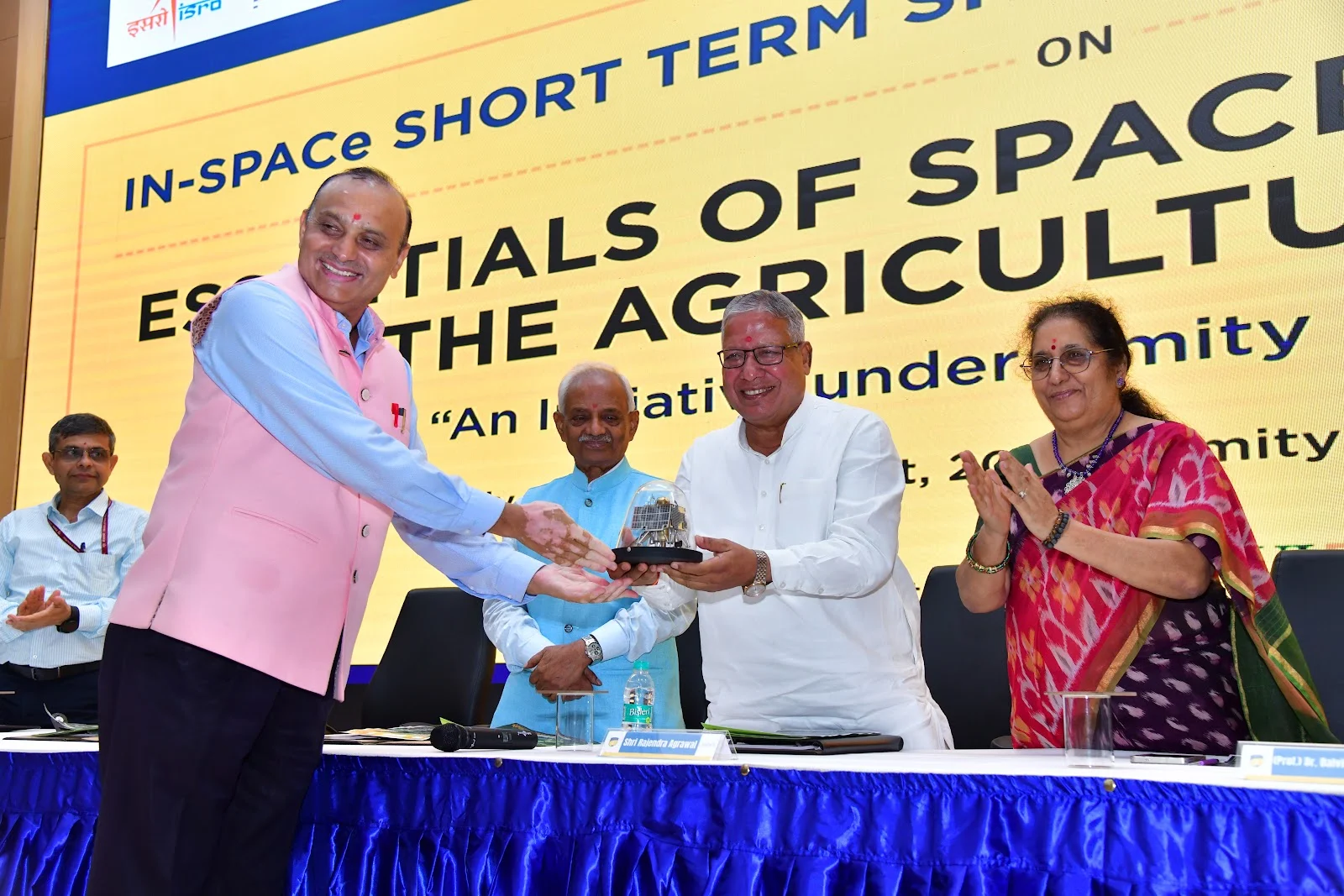
Indian National Space Promotion and Authorization Center (IN-SPACe), in collaboration with ISRO, NCVET and Amity University Noida, Uttar Pradesh, commenced a short-term skill development course titled "Essentials of Space Technology in Agriculture Sector", on 27th July 2025 aimed at introducing non-governmental entities and academia to the applications of space technology in agriculture.

The course was inaugurated at Amity University, with former Member of Parliament Shri Rajendra Agarwal gracing the occasion as Chief Guest. Dr. Vinod Kumar, Director, Promotion Directorate at IN-SPACe, was present for the opening and spoke about the relevance of such academic-industry collaborations in creating awareness around satellite-based tools for modern agriculture. He noted that the program is designed to provide participants with a foundational understanding of how space-based applications can support farming.

In his keynote address, Dr. Vinod Kumar, Director, Promotion Directorate, IN-SPACe, stated, “Space applications have a growing role to play in strengthening India’s agricultural capabilities and resilience. With the help of these applications and geospatial data, farmers can monitor crop health, optimize the use of fertilizers and irrigation, detect pest infestations early, manage fields with precision using GPS-guided machinery, better respond to weather risks and natural disasters, and improve overall farm productivity and decision-making. Through these academic collaborations, we aim to build awareness, share technical know-how, and create a pool of professionals who can apply space-based tools to real-world challenges. These courses are designed to bridge knowledge gaps and encourage deeper engagement from academia and young professionals in space applications across critical sectors.”

The course is part of IN-SPACe’s broader mission to support capacity-building and sector-wide participation, expanding the role of space applications in everyday economic activity. The week-long course, running from July 27 to August 1, 2025, will cover topics ranging from remote sensing and satellite data analysis to their direct application in crop monitoring and resource management.

Andhra Pradesh Shoots for the Stars: ₹25K Crore Space Policy Takes Off

Andhra Pradesh Shoots for the Stars: ₹25K Crore Space Policy Takes Off

Andhra Pradesh state government has introduced rhe AP Space Policy 2025–30, which is designed to transform the state into a hub for space innovation and industry. Below is a quick breakdown of what it sets out to achieve:

Strategic Goals

  • Attract ₹25,000 crore in investments over the next decade
  • Create 5,000 direct and 30,000 indirect jobs in high-tech space-linked domains
  • Align with India’s National Space Programme to support missions like Chandrayaan-4 and the Next Generation Launch Vehicle

Twin Space Cities

  • Lepakshi: Innovation hub for upstream and downstream space technologies
  • Tirupati (Routhusurmala): Focused on launch vehicle assembly, satellite integration, and manufacturing

Ecosystem Development

  • Formation of AP Space City Corporation, a special purpose vehicle to drive infrastructure, funding, and partnerships
  • Incentives for MSMEs and large enterprises, including capital subsidies and tax reimbursements
  • Dedicated SpaceTech Fund and ₹1,000 crore VC fund to support startups

Infrastructure & Policy Support

  • Manufacturing clusters near Sriharikota, India’s only operational spaceport
  • Direct logistics corridor with 6-lane road access to Satish Dhawan Space Centre
  • Regulatory frameworks to enable technology transfer and public-private partnerships
This move positions Andhra Pradesh as a serious player in India’s space ambitions. Want to explore how this compares with other state-level tech policies or dive into the startup opportunities it opens up?

Gaganyaan Takes Flight: ISRO Successfully Qualifies Service Module Propulsion System for Human Space Missions

Gaganyaan Takes Flight: ISRO Successfully Qualifies Service Module Propulsion System for Human Space Missions

ISRO has successfully completed the development and qualification testing of the Service Module Propulsion System (SMPS) for the Gaganyaan human spaceflight mission.

This achievement marks a critical step toward human-rating the Gaganyaan systems and ensures readiness for crew safety and mission reliability.

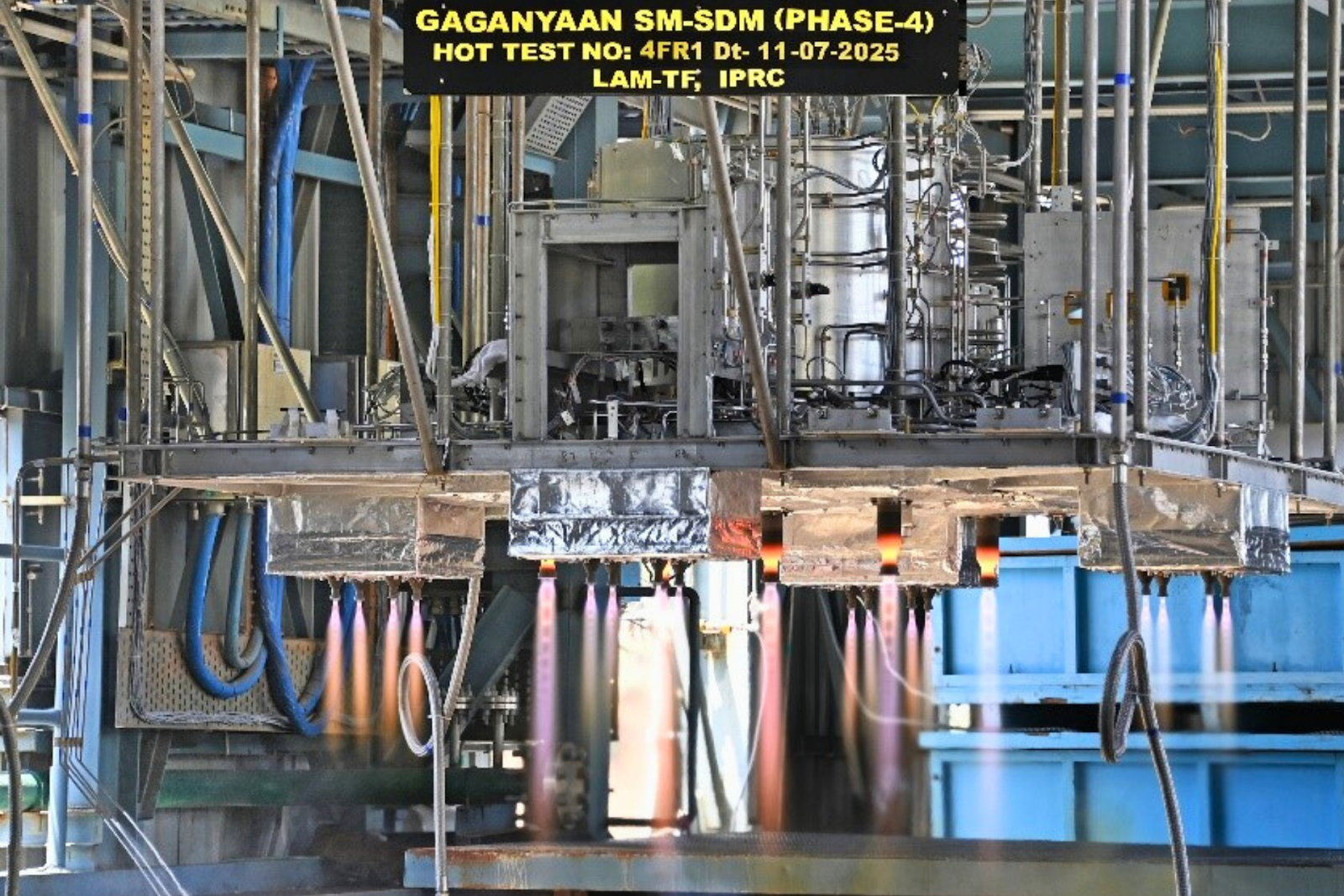
A 350-second full-duration hot test was conducted on July 11, 2025, at the ISRO Propulsion Complex (IPRC), Mahendragiri. The test validated the integrated performance of SMPS under off-nominal mission abort conditions. Results showed normal performance, aligning with pre-test predictions.

The Service Module (SM) uses a regulated bi-propellant propulsion system. It supports:
  • Orbit circularization
  • On-orbit control
  • De-boost manoeuvres
  • Abort capability during ascent phase
Liquid Apogee Motor (LAM) engines provide the main thrust. Reaction Control System (RCS) thrusters ensure precise attitude control.

A test bed emulating the SMPS fluid circuit was developed, including:
  • Propellant tank feed system
  • Helium pressurization system
  • Flight-qualified thrusters
  • Control components
The System Demonstration Model (SDM) underwent 25 tests under nominal and off-nominal conditions, totaling 14,331 seconds of firing time.

SMPS was designed, developed, and realized by the Liquid Propulsion Systems Centre (LPSC), with tests conducted at IPRC, Mahendragiri.

Astrophel Aerospace Raises INR 6.84 Cr to Build Reusable Rocket Engine

Astrophel Aerospace Raises INR 6.84 Cr to Build Reusable Rocket Engine

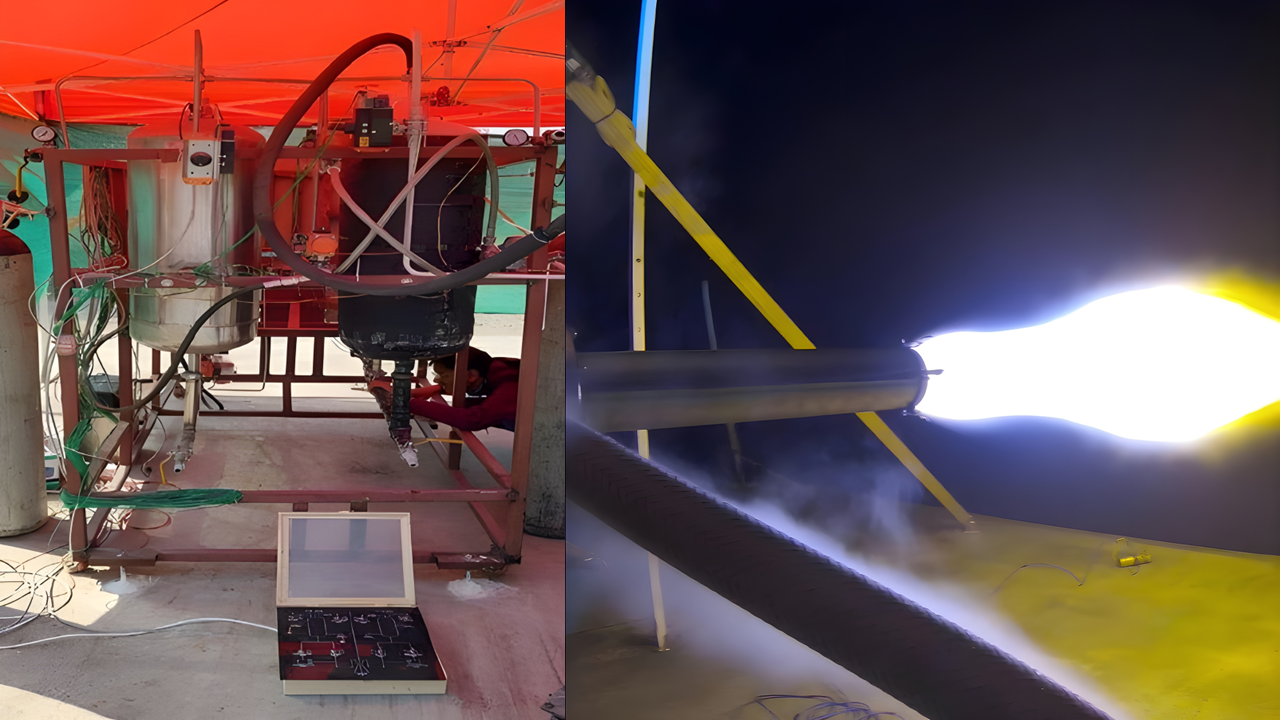
  • Astrophel Aerospace is one of only a few startups to successfully test-fire a semi-cryogenic engine, securing INR 6.84 Crore (USD 800,000).
  • Funding will be deployed to develop a prototype of a reusable semi-cryogenic launch vehicle and scale its in-house R&D to develop missile-grade guidance systems.
  • Backed by policy tailwinds and ISRO tie-ins, the Pune-based deep tech aerospace startup is building propulsion infrastructure for the growing small satellite economy.

Astrophel Aerospace, a Pune-based deep-tech space startup, has raised INR 6.84 Crore (USD 800,000) in a pre-seed funding round led by a consortium of individuals and angel venture firms. The funds will be deployed to develop a reusable semi-cryogenic launch vehicle, scale its in-house R&D to develop missile-grade guidance systems and components. The company anticipates having a working, reusable prototype ready for testing within the next 24 to 36 months. 

The funding has been raised on the cusp of the landmark Gaganyaan, Axiom-4, and Space Activities Bill, poised to open the floodgates for private innovation in space technologies. Astrophel Aerospace is one of only a handful of indigenous private startups to have successfully test-fired a semi-cryogenic engine. The milestone was achieved by spending a mere INR 6 Lakh (USD 7,000) and zero external funding before the current round. 

Astrophel Aerospace is leveraging a modular, systems-first approach inspired by auto manufacturing best practices to build its Potentia C1U engine. It has also signed an MoU with ISRO for collaborative R&D and testing campaigns. India’s space economy is expected to grow from USD 8.4 billion in 2022 to USD 44 billion by 2033, with over 8,500 small satellites forecast to be launched globally within this decade, as per IN-SPACe.

Suyash Bafna, Co-founder, Astrophel Aerospace, said,

We believe that India’s private space sector is ready to tackle high-complexity, deep-tech challenges in aerospace. We're building reusable systems and precision components that reduce costs and will usher in a new age of space access for India.

Astrophel Aerospace is also collaborating with a listed Indian manufacturer to co-produce cryogenic valves, with dual-use potential in both commercial and defence applications. India’s space startup ecosystem is gaining exponential momentum, backed by favourable policy reforms.

"Reusable rockets, turbopump-fed engines and missile-grade guidance systems are among some of the toughest challenges in aerospace today," said Immanuel Louis, Co-founder, Astrophel Aerospace. "The funding will enable us to deep-dive into development while staying lean and execution-focused," he added.

With its first suborbital launch on the horizon, Astrophel Aerospace is positioning itself as India’s next propulsion and launch infrastructure company, built from the ground up to serve India’s ambitious space aspirations.

About Astrophel Aerospace


Astrophel Aerospace is an Indian deep tech space startup developing affordable, dedicated launch vehicles for small satellites, powered by semi-cryogenic propulsion systems. Its flagship Astra C1 series and Potentia engine position it among the few Indian private companies to have independently built and successfully test-fired a semi-cryogenic engine in August 2023, without any external funding. By combining best practices from automotive manufacturing with 3D printing,

Astrophel reduces production time and cost by up to 40%, making it potentially one of the most accessible launch providers in the segment. The company has developed in-house capabilities across throttleable engine valves, regenerative nozzle design, cryogenic subsystems, and real-time avionics software. Astrophel is planning full orbital missions from Indian launchpads utilising reusable launchers to capitalise on the potential of India's space industry, projected to reach USD 44 billion by 2033. It is supported by a distinguished advisory board, consisting of propulsion experts with experience working at ISRO, Hindustan Aeronautics Limited and DRDO. Together, they bring technical oversight and strategic depth to Astrophel’s mission to democratise space access. 

About Suyash Bafna

Suyash Bafna is the Co-Founder of Astrophel Aerospace, playing a key role in systems integration, operations, and strategic execution. With a background in mechanical engineering, Suyash bridges the gap between propulsion, avionics, and structural design, ensuring that Astrophel’s launch systems are optimised for performance and reliability. He has been instrumental in coordinating subsystem development for the Astra C1 vehicle and managing timelines for the company’s upcoming suborbital launch. His focus on mission-readiness, testing protocols, and cross-functional collaboration has helped streamline development despite limited resources.

At Astrophel, Suyash also oversees external partnerships and vendor alignments, working to reduce costs while maintaining technical integrity. Passionate about building indigenous space capabilities, he is committed to enabling affordable access to space for small satellite operators. His systems-driven leadership contributes significantly to Astrophel’s goal of becoming India’s most cost-effective and agile launch provider.

About Immanuel Louis

Immanuel Louis is the Co-Founder of Astrophel Aerospace. An aerospace engineer by training and a lifelong aviation enthusiast, Immanuel holds a master’s degree from MIT Chennai. His journey began with building remote-control aircraft as a child and evolved into co-building one of India’s most affordable semi cryogenic rocket engines. At Astrophel, he spearheads propulsion system design, engineering integration, and business strategy. He is committed to building India’s next-gen launch infrastructure and fostering a new wave of aerospace talent. His passion lies in combining indigenous innovation with global best practices to position Astrophel as an upcoming leader in the small satellite launch segment.

About MD Taj Baba, Founding Member & Head of Aero Thermal Engineering

MD Taj Baba is a founding member of Astrophel Aerospace and currently leads aero-thermal engineering initiatives with a dedicated focus on liquid propulsion and rocket nozzle systems. With a Bachelor’s in Aeronautical Engineering from AeSI, New Delhi, and a Master’s in Thermal Engineering from Osmania University, Taj brings deep expertise in thermodynamic analysis, engine heat transfer, and high-performance thermal system design. While instrumental in shaping Astrophel’s early vision and direction as a Co-Founder, Taj is now transitioning away from operational leadership to focus full-time on technical development within the propulsion team. At Astrophel, he has played a pivotal role in the design and validation of critical cryogenic engine components, control valves, and regenerative cooling systems. An Associate Member of the Aeronautical Society of India and a mentor to aspiring aerospace engineers, Taj remains deeply committed to advancing indigenous semi cryogenic propulsion technologies and scaling India’s capabilities in the global space sector.


India’s Historic Leap: Shubhanshu Shukla To Become 1st Indian on ISS in Multinational Space Mission

India’s Historic Leap: Shubhanshu Shukla To Become 1st Indian on ISS in Multinational Space Mission

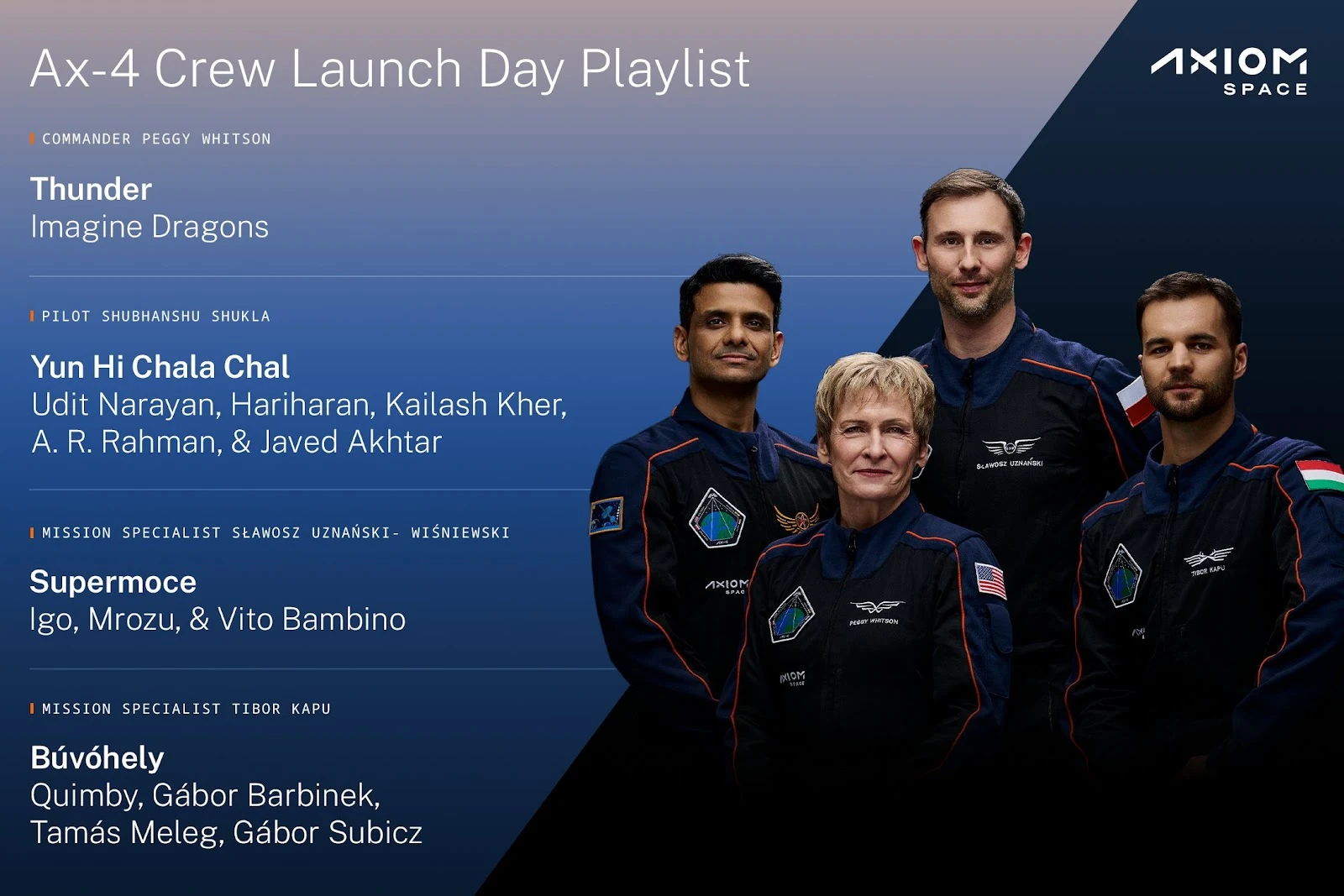
History was made today as astronauts from India, Poland, and Hungary embarked on their first-ever mission to the International Space Station (ISS) aboard a SpaceX Crew Dragon capsule. The mission, dubbed Axiom Mission 4 (Ax-4), lifted off from NASA’s Kennedy Space Center in Florida and is expected to dock with the ISS after a 28-hour journey.


The four-member crew includes:
  • Group Captain Shubhanshu Shukla (India) – an Indian Air Force pilot and the first Indian to visit the ISS.
  • Sławosz Uznański-Wiśniewski (Poland) – a physicist and ESA project astronaut.
  • Tibor Kapu (Hungary) – a mechanical engineer representing Hungary’s HUNOR program.
  • Peggy Whitson (USA) – a veteran astronaut and mission commander, holding the U.S. record for most days in space.
This privately funded mission, organized by Axiom Space, marks a return to human spaceflight for all three nations after more than four decades. Over the next 14 days, the crew will conduct around 60 scientific experiments spanning microgravity research, space agriculture, and biomedical studies.

And in a charming cultural touch, they’ve brought along national delicacies—Indian curry, Hungarian paprika paste, and Polish pierogies—to share aboard the ISS.

Launch Details:

  • Launch Time & Vehicle: 12:01 PM IST on June 25 from Launch Complex 39A, Kennedy Space Center using a SpaceX Falcon 9 rocket and Crew Dragon spacecraft.
  • Docking Schedule: Expected at 4:30 PM IST on June 26.

Crew Highlights:

  • Shubhanshu Shukla (India) – Pilot, first Indian to visit the ISS.
  • Peggy Whitson (USA) – Commander, record-holder for most days in space by an American.
  • Sławosz Uznański-Wiśniewski (Poland) – ESA astronaut and physicist.
  • Tibor Kapu (Hungary) – Engineer from Hungary’s HUNOR program.

Scientific Goals:

  • 60 experiments across 31 countries.
  • Research in space agriculture, gut microbiota, microgravity physics.
  • India-specific studies on screen use, muscle atrophy, and neurofeedback.

Symbolism & Facts:

  • First government-sponsored human spaceflight in over four decades for India, Poland, and Hungary.
  • Fulfills diplomatic commitments for enhanced Indo.
  • Mission overcame six delays due to weather and a liquid oxygen leak.

HAL Secures ISRO’s SSLV Tech in Major Space Sector Shake-Up

HAL Secures ISRO’s SSLV Tech in Major Space Sector Shake-Up

In a historic development for India’s space industry, the Indian National Space Promotion and Authorization Centre (IN-SPACe) has announced Hindustan Aeronautics Limited (HAL) as the recipient of the Small Satellite Launch Vehicle (SSLV) technology from ISRO. Emerging as the winning bidder among three shortlisted bidders, this transition marks one of the most comprehensive technology transfers from ISRO, facilitated by IN-SPACe, to an Indian commercial entity to date.

The process involved a rigorous eligibility and evaluation framework. After careful scrutiny, three technically qualified bidders were shortlisted: Alpha Design Technologies Ltd., Bengaluru (leading a consortium with Agnikul Cosmos & Walchand Industries Ltd.); Bharat Dynamics Ltd., Hyderabad (leading a consortium with Skyroot Aerospace, Keltron & BHEL); and Hindustan Aeronautics Ltd., Bengaluru (applying independently, not as part of a consortium).

A thorough evaluation process was followed, with various technology and financial readiness levels under review. The process, which continued for several months, culminated in the financial bid evaluation, where HAL emerged as the highest bidder to acquire and operationalize SSLV technology.

HAL Secures ISRO’s SSLV Tech in Major Space Sector Shake-Up

On the milestone, Dr. Pawan Goenka, Chairman, IN-SPACe, said, “As India looks at realizing the $44 billion space economy earmarked for 2033, it is imperative to enable a robust public-private-partnership model. The SSLV technology transfer marks a pivotal moment in India’s transformative commercial space segment, as this is one of the first instances of a space agency transferring complete launch vehicle technology to a company. Under this technology transfer agreement, HAL will have the capability to independently build, own, and commercialize SSLV launches.”

The Technology Transfer Agreement will be signed among HAL, NewSpace India Limited (NSIL), ISRO, and IN-SPACe. The Agreement encompasses extensive training and handholding of HAL personnel by ISRO teams, both at ISRO and HAL facilities, for the realization and launch of two SSLVs in the next two years.

Mr. Rajeev Jyoti, Director, Technical Directorate, IN-SPACe, said, “The three bidders demonstrated a high level of technical competency to absorb the technology, and we appreciate the earnest effort put in by all three bidders in providing extensive documentation in support of the technical evaluation criteria. The launch vehicle system, being multi-disciplinary in nature, would require the winning entity – HAL – to undergo rigorous handholding and training under ISRO at both ISRO’s and the entity’s facilities. This is aimed at realizing the projected launch of two SSLVs from an Indian launch port. We’re looking at completing this entire process within two years from the date of signing the Technology Transfer Agreement.”

Shri Radhakrishnan Durairaj, CMD, NSIL, said, "We are pleased to be part of this SSLV technology transfer process that would enable HAL to develop this launch vehicle that would cater to launch on-demand needs of global small satellite customer needs. This collaboration marks a significant step towards strengthening India’s commercial satellite launch capabilities and more specifically in enabling Indian industry in realising this SSLV.

On winning the bid, Dr. D.K. Sunil, Chairman & Managing Director (CMD) of Hindustan Aeronautics Limited (HAL), said, “In this milestone, India’s national ambition takes priority. We’re looking forward to working closely under ISRO and IN-SPACe’s guidance to progress in phases and realize the end objectives. We’re confident of steering a cohesive ecosystem that enables more small satellite launches from India’s ports.”

This development reinforces India's commitment to privatizing and democratizing access to space technology, empowering Indian industry to play a leading role in space manufacturing and increasing small satellite launches.

Eclipses on Demand: How ESA Is Casting Shadows in Space to Illuminate the Sun

Eclipses on Demand: How ESA Is Casting Shadows in Space to Illuminate the Sun

For centuries, astronomers have waited patiently for solar eclipses to glimpse the Sun’s ethereal halo. Now? They’re making their own.

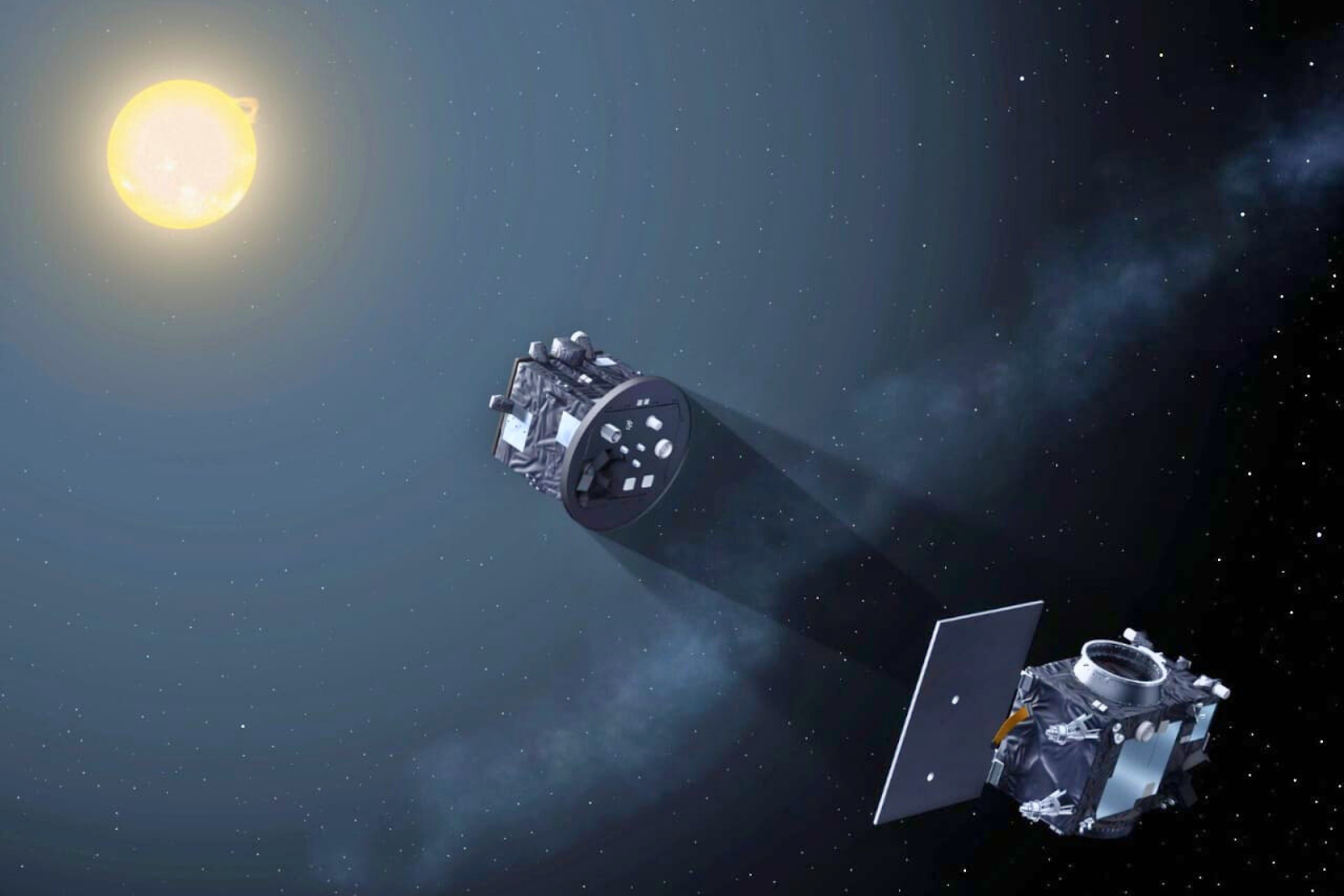
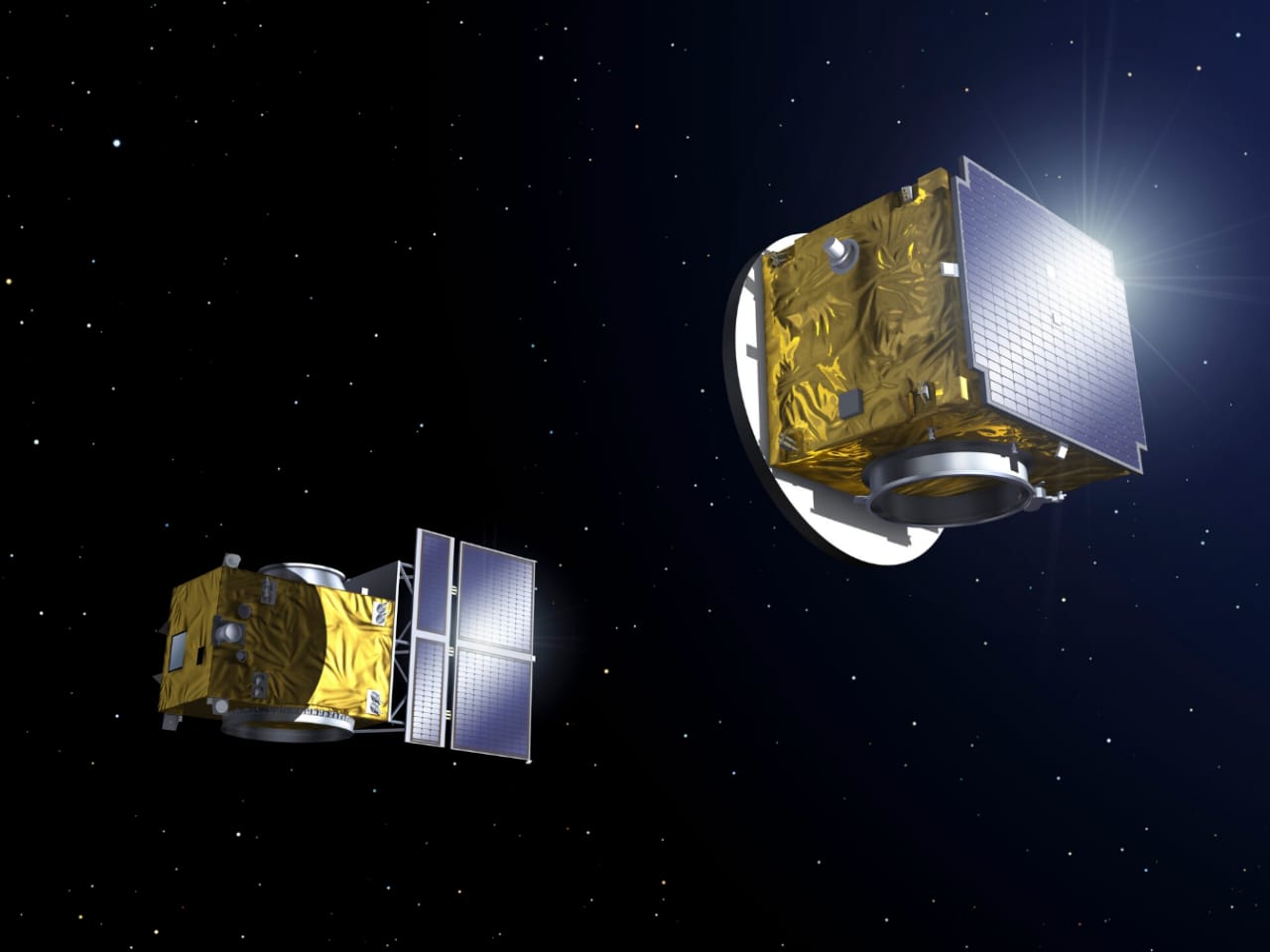
In a move straight from a science fiction script, the European Space Agency (ESA) has created a man-made solar eclipse in space—and it’s not just a one-time show. Using two satellites flying in tight formation, ESA’s Proba-3 mission is rewriting the rules of solar observation.

Scientists have figured out how to make a solar eclipse whenever they want, using two special satellites flying above Earth.

The European Space Agency launched a project called Proba-3. It has two satellites:
  • One blocks the sunlight (like putting your thumb over a torch).
  • The other takes pictures of the Sun’s outer layer, called the corona—a glowing, mysterious area that's hard to see normally.
These two satellites fly in perfect sync, 150 meters apart. That’s how they create a fake or artificial eclipse!

They can do this many times a week, and each eclipse lasts up to six hours—much longer than ones on Earth.

Notably, the Proba-3 mission satellites were launched by the Indian Space Research Organisation (ISRO) using their trusted PSLV-C59 rocket. The launch took place on December 5, 2024, from the Satish Dhawan Space Centre in Sriharikota, India. 

Why Is This a Big Deal?
  • Scientists can now study massive solar blasts that mess with mobile networks, GPS, and power.
  • They can examine the solar wind, which affects satellites and space weather.
  • They're also closer to solving a mystery: Why is the Sun’s outer layer hotter than its surface?
They’ve already taken stunning images—green loops, fire-like arcs, and hidden details of the Sun.

It’s like building a permanent space lab to study our star. Maybe one day, we’ll even see artificial eclipses on Mars!

Precision Shadowplay in Orbit

Eclipses on Demand: How ESA Is Casting Shadows in Space to Illuminate the Sun

At the heart of the mission are two spacecraft with poetic roles: the Occulter, which blocks sunlight using a 1.4-meter disk, and the Coronagraph, trailing behind at a razor-precise 150 meters, poised to observe the Sun’s corona—its wispy, superheated outer atmosphere.

The magic lies in their dance: millimeter-perfect alignment sustained autonomously in space, simulating a solar eclipse for up to six hours. No more relying on fleeting eclipses; now, solar scientists get multiple custom eclipses per week.

And nestled aboard the Coronagraph is ESA’s pride—ASPIICS (Association of Spacecraft for Polarimetric and Imaging Investigation of the Corona of the Sun). This instrument uses layered exposures to pierce the Sun’s glare and reveal its hidden anatomy.

Market Reports

Market Report & Surveys
IndianWeb2.com © all rights reserved