Showing posts with label Electric Vehicles. Show all posts

Axis Bank Partners with JSW MG Motor on Innovative Dual Loan Scheme Anchored in Battery‑as‑a‑Service Model

Axis Bank Partners with JSW MG Motor on Innovative Dual Loan Scheme Anchored in Battery‑as‑a‑Service Model

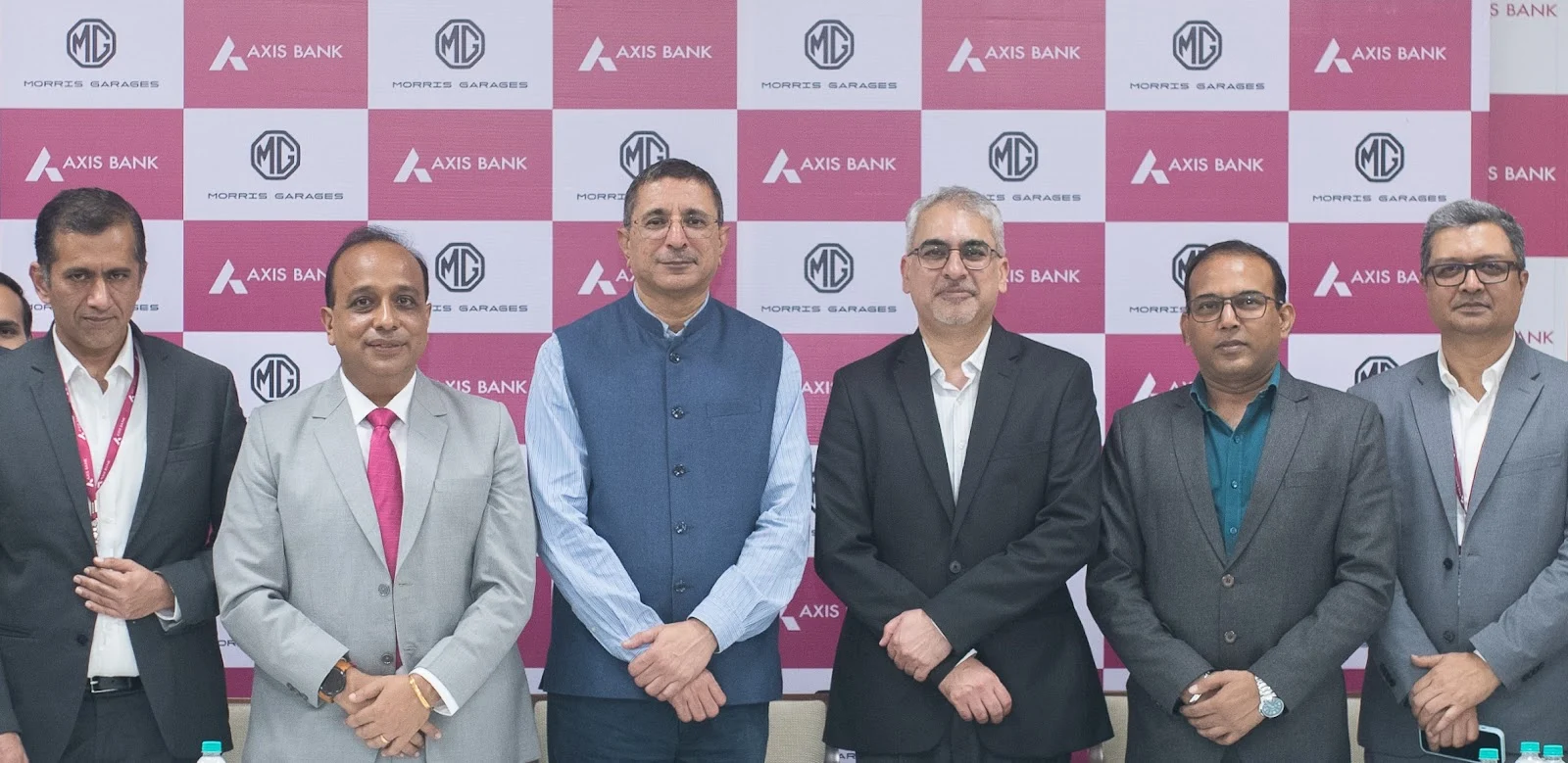
Axis Bank, one of the largest private sector banks in India, in collaboration with JSW MG Motor, has introduced an innovative Dual Loan program designed to make electric mobility more accessible and future-ready for Indian customers.

Anchored in MG’s pioneering Battery-as-a-Service (BaaS) model, this initiative allows customers to avail separate loans for the vehicle and its battery, significantly reducing the upfront cost of ownership. The program offers up to 100% on-road funding and flexible tenures of up to 8 years for the battery, turning conventional fuel expenses into predictable, long-term value, and making sustainable driving a practical, intelligent choice.

Commenting on the partnership, Munish Sharda, Executive Director, Axis Bank, said, “At Axis Bank, we are committed to offering customer-friendly solutions and driving innovation in vehicle financing. We are delighted to partner with JSW MG Motor India on the pioneering Dual Loan program, which enhances the EV financing ecosystem in India by providing smart and flexible options across segments. We are confident that this collaboration will help make greener choices more accessible to customers and support the wider adoption of electric vehicles.

For electric mobility to move from aspiration to adoption, we must make ownership both practical and progressive. The Dual Loan program builds precisely on that premise, separating the battery from the vehicle cost to give customers financial flexibility without compromise. Much like how consumers have embraced subscription models in technology, BaaS allows them to experience cutting-edge mobility with smarter economics. Together with Axis Bank, we’re turning innovation into everyday access, accelerating India’s journey towards a more sustainable future.” Said, Anurag Mehrotra, Managing Director, JSW MG Motor India.

BaaS (Battery-as-a-Service), launched in September 2024 by JSW MG Motor India, addresses one of the biggest barriers to EV adoption – the high upfront cost – by separating the cost of the battery from the vehicle. Building on this innovation, JSW MG Motor India and Axis Bank, who have been partners since 2019, have now introduced the dual loan financing, further strengthening their collaboration across channel and retail finance solutions.

This innovative financing solution not only makes EV ownership more affordable but also gives customers greater flexibility to upgrade their vehicles without being constrained by price. With Axis Bank as a financing partner, the program reaches a wider customer base and expands access to smart mobility solutions. Through this collaboration, JSW MG Motor India and Axis Bank aims to provide customers with greater choice and financial control, while also contributing to the growth of India’s EV ecosystem.

Axis Bank is one of the largest private sector banks in India. Axis Bank offers the entire spectrum of services to customer segments covering Large and Mid-Corporates, SME, Agriculture, and Retail Businesses. It has 5,976 domestic branches (including extension counters) and 13,177 ATMs and cash recyclers spread across the country as on 30th September 2025. The Bank’s Axis Virtual Centre is present across eight centres with over ~1,786 Virtual Relationship Managers as on 30th September 2025. The Axis Group includes Axis Mutual Fund, Axis Securities Ltd., Axis Finance, Axis Trustee, Axis Capital, A.TReDS Ltd., Freecharge, Axis Pension Fund and Axis Bank Foundation.

About JSW MG Motor India

SAIC Motor, a global Fortune 500 company with a presence in over 100 countries and JSW Group (India's leading conglomerate with interests across B2B and B2C sectors) formed a joint venture - JSW MG Motor India Pvt. Ltd. in 2023. The joint venture aims to build a smart and sustainable automotive ecosystem while staying focused on developing a diverse portfolio of vehicles to give car buyers better access to advanced technologies and futuristic products with attractive value propositions. JSW MG Motor India Pvt. Ltd. is committed to introducing world-class technology, strengthening the manufacturing landscape, bringing the best of innovation across its business operations, and generating significant employment opportunities through extensive localisation.
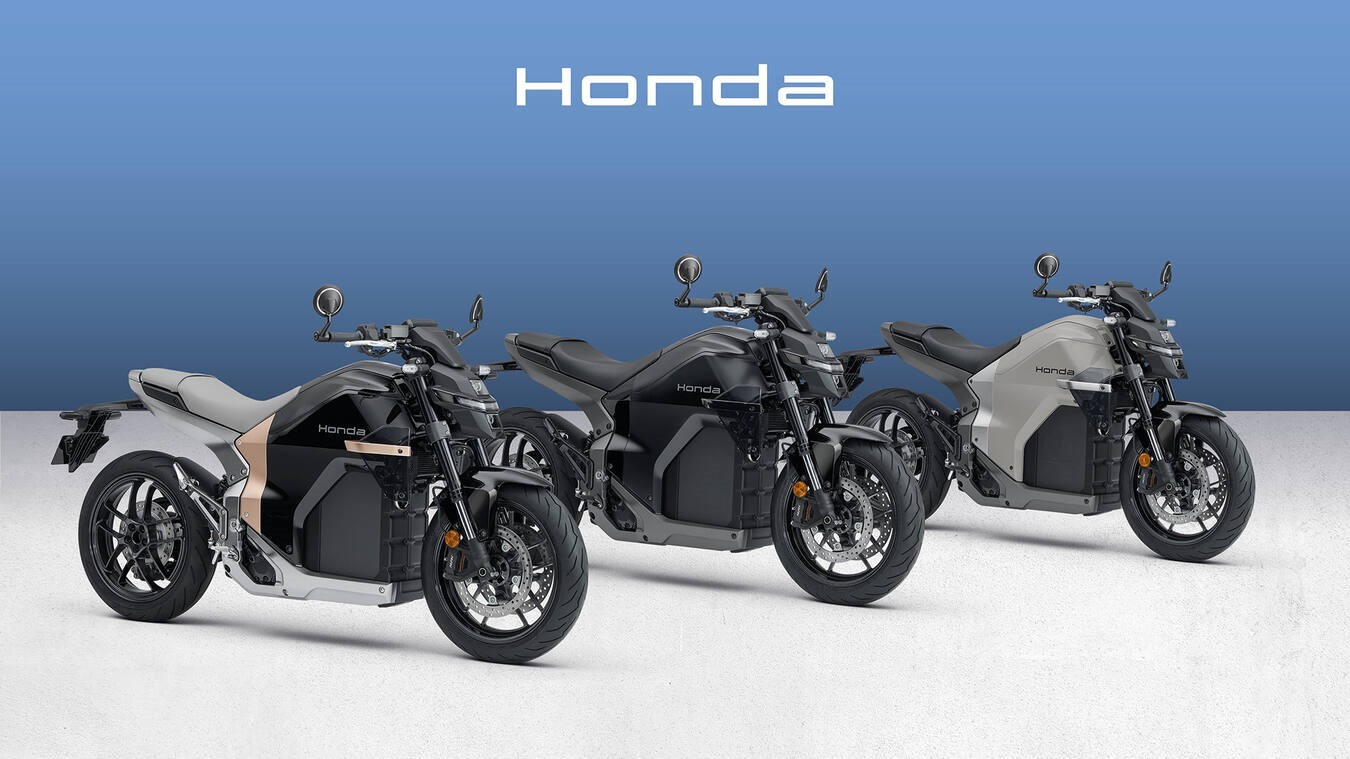

Honda Unveils First Electric Motorcycle WN7 at EICMA 2025 in Milan

Honda unveiled its first electric motorcycle, the Honda WN7 to the public for the first time., at EICMA 2025 (the Milan Motorcycle Shows; Press days: November 4-5, Public days: November 6-9) in Milan, Italy.

Honda WN7

Key Features of Honda WN7

Development concept

The Honda WN7 is the first electric naked model in the FUN category developed under Honda’s new electric motorcycle brand direction. Its development concept, “Be the Wind,” expresses the joy of freely gliding through the air with quietness unique to an electric vehicle. Riders can directly sense the sounds and atmosphere of their surroundings—the conversations and laughter of people on the street, the rustling of leaves—experiences not possible with ICE (internal combustion engine) models. Reflecting its developers’ passion, the WN7’s smooth yet strong torque acceleration and agile handling allows riders to enjoy the liberating feeling of riding like the wind.

Design

Aiming to refine functionality and express essence, the design features a seamless, smooth surface on the areas the rider touches, while combining a distinctive and powerful silhouette. Its signature horizontal light bar will serve as a common design identity for Honda’s future electric motorcycles.

The WN7 also debuts a dedicated color theme for Honda’s electric motorcycles, featuring a black-based body accented with gold component parts. Like the signature lighting, this color theme will be adopted across upcoming global electric models.

Frameless chassis

Unlike conventional motorcycles that use a frame connecting the front and rear of the body, the WN7 adopts a frameless structure in which the centrally positioned aluminum battery case forms part of the main frame. The head pipe supporting the steering and the pivot bracket supporting the rear are both directly connected to the centrally located power unit. By eliminating the traditional frame, the WN7 achieves not only weight reduction but also greater layout flexibility, contributing significantly to its slim and compact proportions.

In addition, positioning the heavy battery pack at the center of the chassis also enhances mass centralization and agile handling.

Integrated motor-inverter unit

A newly developed, compact and lightweight water-cooled motor with an integrated inverter powers the WN7. It delivers a maximum output of 50 kW, equivalent to a 600 cc ICE motorcycle, and maximum torque of 100 Nm, comparable to a 1000 cc class ICE motorcycle. This ensures powerful yet composed performance both in city riding and on open roads.

Power from the motor is transmitted via a newly designed gearbox to a belt-drive system, which drives the rear wheel while contributing to quiet operation.

Drive battery and charging standards

The WN7 is equipped with a newly developed 9.3 kWh fixed lithium-ion battery. It supports both CCS2 fast charging¹ and Type 2 normal charging², compatible with standard household outlets in many regions. With a fast charger, the battery can be charged from 20% to 80% in approximately 30 minutes, allowing for quick recharging on the go and reducing the stress of waiting time.

In addition, normal charging fully charges the battery from 0% to 100% in under 2.4 hours³, providing a cruising range of 140 km (WMTC mode) on a full charge.

Regenerative braking, Deceleration Selector, and Walking Speed Mode

During deceleration with the throttle off, the WN7’s motor performs energy regeneration while providing regenerative braking⁴. Riders can adjust the level of deceleration using the Deceleration Selector on the left handlebar switch, enabling smooth low-speed control with minimal brake operation or a gliding sensation with reduced deceleration—offering a new riding feel distinct from ICE motorcycles.

The WN7 is also equipped with a Walking Speed Mode, allowing the rider to move the bike forward or backward slowly using the left-hand switch and throttle—useful for parking or maneuvering in tight urban spaces.

The Honda WN7 will be produced at Honda’s Kumamoto Factory - the company’s global hub for motorcycle production. Honda will introduce the model sequentially to global markets where electrification shift is advancing, as the company accelerates electrification of motorcycles on a global scale.

[1]CCS2: Combined Charging System Type 2, a connector standard used for electric vehicle fast chargers.

[2]When using a 200V power supply and charging gun.

[3] Charging time may vary depending on the charging environment (such as temperature). Charging time based on Honda measurements.

[4] Regenerative braking may not be activated depending on the remaining battery capacity.

China Accuses India of Unfair EV Subsidies at Global Trade Body

China Accuses India of Unfair EV Subsidies at Global Trade Body

China has officially lodged a complaint with the World Trade Organization (WTO) against India, alleging that its electric vehicle (EV) and battery subsidy programs unfairly favor domestic manufacturers and violate global trade rules.

Key Allegations from China

Violation of WTO principles: China claims India’s subsidies breach the principle of national treatment and constitute import substitution subsidies, which are explicitly prohibited under WTO rules.

Discrimination against imports: The complaint highlights that India’s Production Linked Incentive (PLI) schemes for EVs and advanced chemistry cell (ACC) batteries are contingent on the use of domestic goods, thereby disadvantaging foreign products—especially Chinese exports.

Schemes under scrutiny:

  • ₹18,100 crore National Programme on ACC Battery Storage. 
  • ₹25,938 crore PLI Scheme for Automobile and Auto Components. 
  • Additional schemes promoting domestic EV manufacturing

India’s Position (Implied)

India offers some of the world’s highest subsidies on electric cars. For example, the Tata Nexon EV reportedly receives subsidies amounting to nearly 46% of its price, including reduced GST and other incentives.

What Happens Next?

China has requested consultations under the WTO’s dispute settlement mechanism—a formal first step in resolving trade disputes. If unresolved, the case could escalate to a WTO panel and potentially lead to retaliatory measures or mandated policy changes.

Flytta Unveils India’s First Retrofitted 13-Ton EV Truck for Industrial Decarbonization


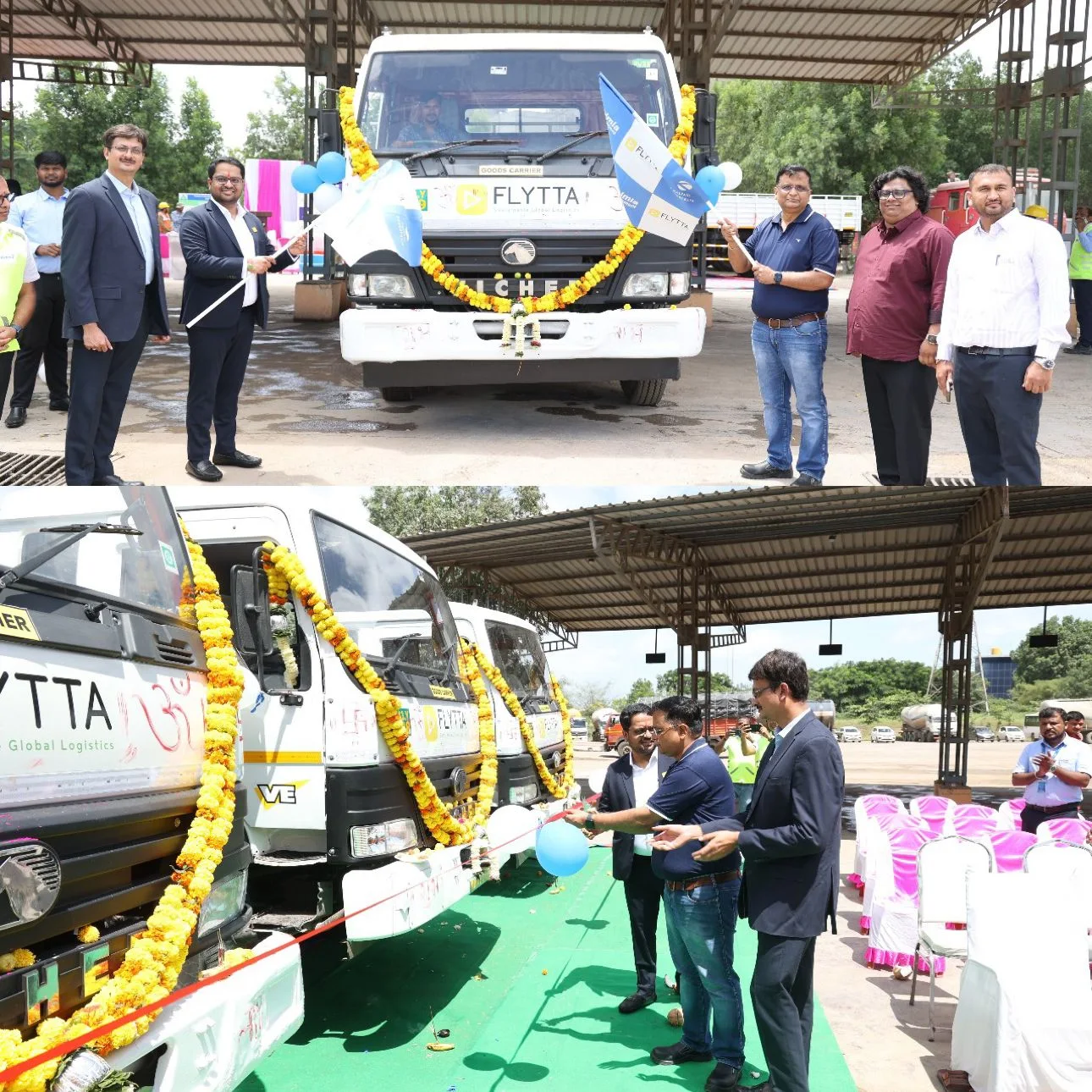
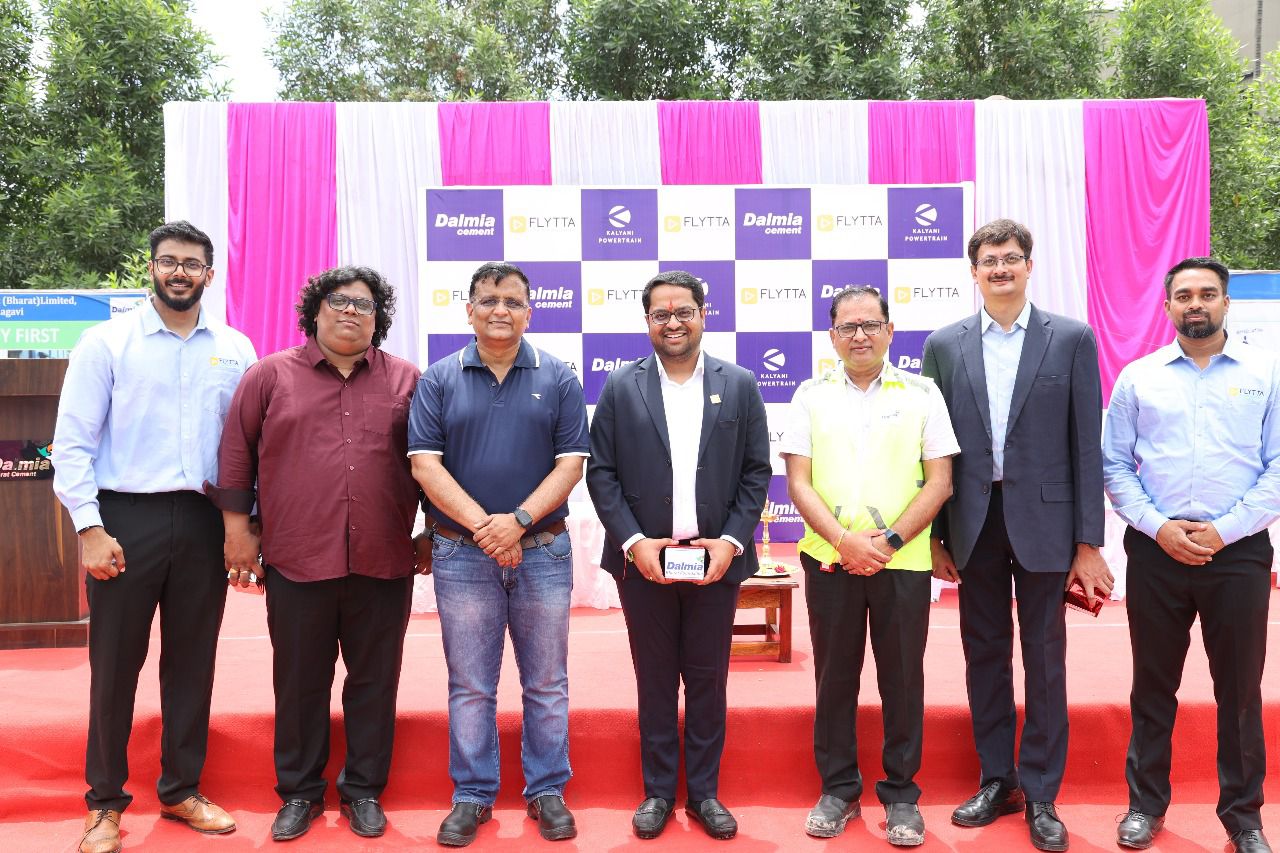
Flytta today announced the launch of India’s first retrofitted 13-ton payload capacity electric truck, purpose-built for cement bag transportation across challenging ghat roads and industrial terrains. The truck has been custom-developed by Kalyani Powertrain Limited (KPTL), the electric mobility subsidiary of the Kalyani Group, and is being introduced into operations with Dalmia Cement on the Yadwad–Goa corridor.

This pioneering initiative combines Flytta’s sustainable logistics expertise, Kalyani’s engineering excellence in EV retrofitting and powertrain solutions, and Dalmia Cement’s commitment to green manufacturing and supply chain transformation. Together, the three companies are setting a new benchmark for industrial decarbonization in India.

The first fleet has already commenced operations, and Flytta plans to deploy nearly 200 such retrofitted EV trucks in the coming months. With this milestone, Flytta has evolved into a fully integrated medium and heavy-duty EV trucking platform, offering payload capacities from 13 tons to 40 tons across trucks, dumpers, and trailers for industries spanning cement, steel, coal, metals, and minerals.


Rahul Kanuganti, CEO of Flytta, said, “This launch is a defining moment for Flytta and for the logistics sector. By collaborating with Kalyani Powertrain and Dalmia Cement, we are showing how industrial transport can rapidly shift to sustainable solutions without compromising efficiency. Our vision is to build a green logistics backbone for India’s growth, and this is a major step toward that goal.

Pankaj Sonalkar, Managing Director, Kalyani Powertrain Limited said, “We are proud to partner with Flytta and Dalmia Cement on this industry-first initiative. At KPTL, we have engineered a rugged, high-performance retrofitted EV truck that can handle the heavy payloads and demanding conditions of the cement sector. This project demonstrates how advanced retrofitting can accelerate India’s transition to clean mobility."

Srawan Agarwal, Assistant Executive Director of Logistics Dalmia Cement said, “At Dalmia Cement, sustainability is at the core of our operations. Working with Flytta and Kalyani Powertrain, we are excited to be among the first in the country to adopt retrofitted EV trucks for our logistics. At Dalmia Cement, sustainability is central to our operations, and the adoption of EVs in industrial logistics is not only crucial for reducing carbon emissions but also for advancing India’s mission of energy self-sufficiency and reducing reliance on external resources. For this transition to accelerate, we need stronger infrastructure—better road connectivity and more proactive government initiatives in establishing EV charging stations, rather than depending solely on private firms”

Hyundai to Launch India’s First Locally Designed Electric Vehicle by 2030—A Strategic Shift in the EV Market

Hyundai to Launch India’s First Locally Designed Electric Vehicle by 2030—A Strategic Shift in the EV Market

Hyundai Motor Co has announced plans to launch India’s first electric vehicle designed entirely for local consumers—not just assembled here, but conceptualized, engineered, and tailored for Indian roads and buyers. This marks a bold shift from global adaptation to local innovation.

It was announced at the CEO Investor Day in New York, 

Key Highlights:
  • India-Centric Design: Built from the ground up for Indian driving conditions, climate, and consumer preferences.
  • Localized Supply Chain: Hyundai is investing in a full ecosystem—from R&D to manufacturing—to reduce costs and improve serviceability.
  • Talegaon Plant Expansion: The Pune facility will add 2,50,000 units to Hyundai’s global capacity, positioning India as a major export hub.
  • Global Vision Alignment: Part of Hyundai’s goal to sell 5.55 million vehicles globally by 2030, with 60% electrified.

How It Stacks Up: Hyundai vs Tata, Mahindra, BYD

Brand Core Strategy Product Focus Localization Price Range Unique Edge
Hyundai India-first EV design Compact & mid-size EVs Full local design & supply chain TBD (₹15–25L expected) First global OEM to design EV in India
Tata Motors Mass-market disruptor Hatchbacks, SUVs Deep localization, platform reuse ₹8–23L Largest EV market share, trusted brand
Mahindra SUV-led electrification Born-Electric SUVs Local R&D + global tech ₹15–26L Futuristic BE platform, rugged appeal
BYD Premium-to-affordable pivot Compact SUVs, MPVs Import-heavy, exploring local assembly ₹20–35L Blade Battery tech, global EV leader

Strategic Takeaways
  • Tata dominates the budget segment with proven models like Tiago EV and Nexon EV, leveraging ICE platforms for cost efficiency.
  • Mahindra is carving out a niche with its BE series and XUV400, targeting aspirational SUV buyers.
  • BYD, despite import duties, is pushing premium tech like Blade Batteries and exploring partnerships (e.g., Adani) for local assembly.
  • Hyundai’s India-first EV could redefine the mid-tier segment—blending global design standards with local cost efficiency and infrastructure.
Notably, until Hyundai’s recent announcement, India had no electric vehicle designed entirely from scratch by a global OEM specifically for Indian consumers.

So far, India’s EVs have been Tata Tiago EV, Nexon EV, which are built on ICE platforms with EV adaptations. While engineered and manufactured locally, they weren’t designed as EVs from the ground up.

While Hyundai’s upcoming EV is the first global OEM-designed EV for India, several Indian automakers have already built vehicles from the ground up for domestic needs. Tata Tiago EV & Nexon EV were designed and engineered by Tata Motors in India, these models use modified ICE platforms to deliver affordable EVs tailored for Indian roads and climate.

Hyundai’s upcoming EV—confirmed at its 2025 CEO Investor Day—is the first electric car designed entirely for India, with — A localized supply chain, India-specific design & engineering.

This marks a first-of-its-kind milestone where in a global automaker designing an EV from scratch for India’s roads, climate, and consumer needs—not just adapting or assembling an existing model.

TVS Motor Company and Noise Pioneer India’s First EV Smartwatch Integration

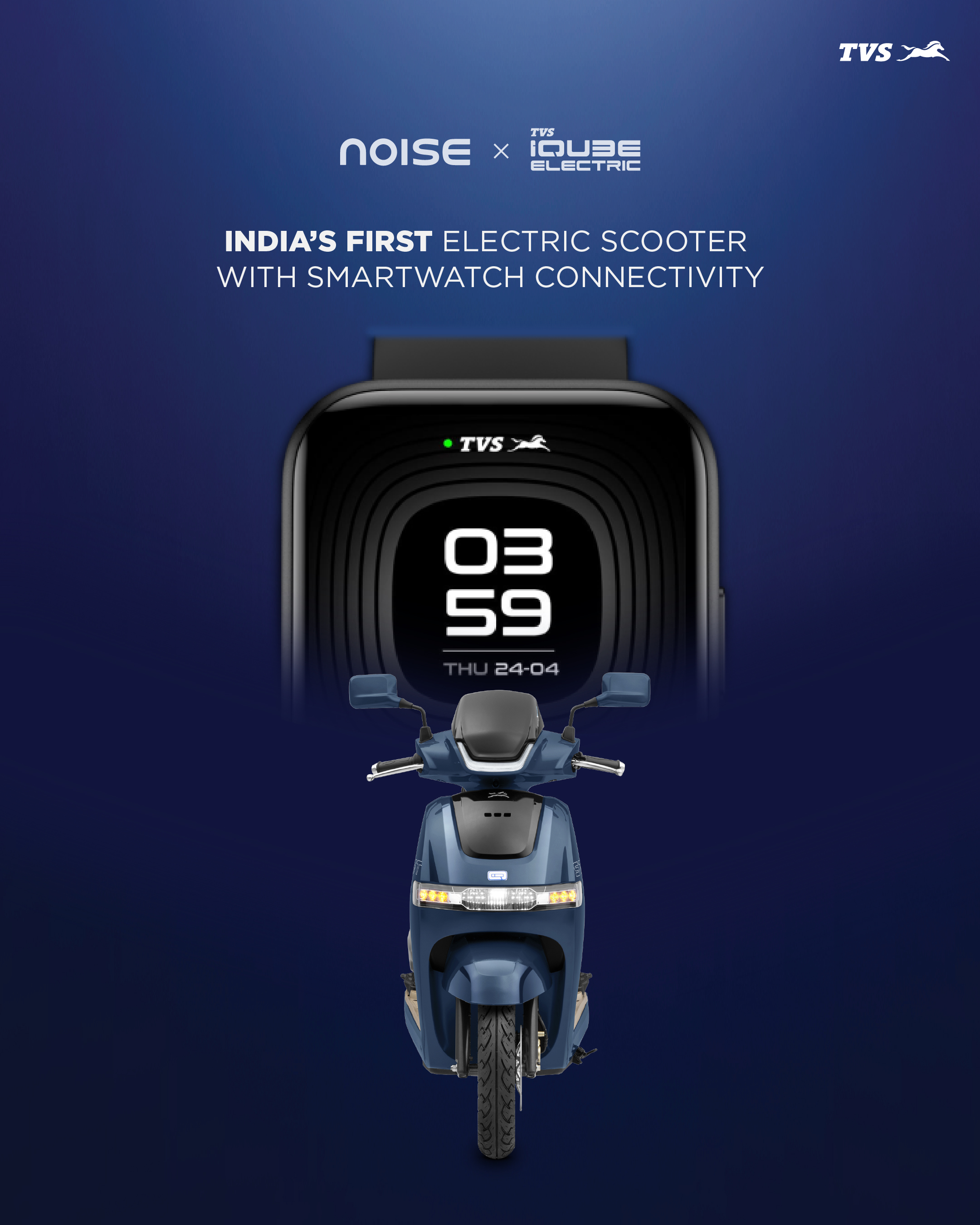
  • Delivers real-time ride statistics: battery, tyre pressure, range, and safety alerts, in a simple, glanceable format.
  • Built on secure APIs and user permissions, ensuring privacy while unlocking the future of intelligent, connected mobility in India.
  • The smartwatch will be exclusively available on the TVS iQube official website.
TVS Motor Company and Noise Pioneer India’s First EV Smartwatch Integration

TVS Motor Company (TVSM), a global leader in the two and three-wheeler segments and Noise, India’s leading connected lifestyle brand, today introduced a Made-in-India, industry-first innovation - India’s first EV-Smartwatch integration, redefining the way riders connect with their vehicles. This integration connects the TVS iQube electric scooter with a special edition Noise smartwatch, customized to provide real-time access to critical updates including vehicle status, battery insights, tyre pressure, and safety alerts along with plethora of native watch features.

TVS iQube has surpassed the 6,50,000 unit sales milestone in the domestic market, reaffirming its position as India’s No.1 EV scooter brand. This partnership with Noise further enhances customer choice, turning the smartwatch into a true mobility companion that provides seamless access to vehicle features. As smartwatches evolve beyond lifestyle accessories, they are becoming command centers of productivity and mobility, making everyday rides smarter, safer, and more convenient. Together, TVS iQube and Noise are setting a new benchmark in connected technology and customer experience.

Speaking on the industry-first innovation, Aniruddha Haldar, Senior Vice President — Head Commuter & EV Business and Head Corporate Brand & Media, TVS Motor Company said, “We are committed to reimagining the future of mobility by seamlessly blending technology, sustainability and customer-centric innovation. Our partnership with Noise is a testament to this vision, transforming the smartwatch from a lifestyle device into a smart riding assistant. By integrating the TVS iQube with a connected smartwatch, we are empowering our riders with smarter, safer and more intuitive journeys while shaping the future of mobility in India.”

Commenting on the launch, Amit Khatri, Co-Founder, Noise, said, “At Noise, our vision has always been to build technology that empowers people to live, move, and stay connected with ease. This partnership with TVS Motor Company is a powerful step in that direction, bringing meaningful innovation to the wrist by turning the smartwatch into a mobility companion. As consumers look for smarter, more integrated ways to move through their day, this first-of-its-kind experience reflects our commitment to pushing boundaries, delivering purposeful technology, and shaping the future of connected living in India.”

THE EV-SMARTWATCH INTEGRATION DELIVERS:

Features Description
Vehicle Status Monitoring Locked, Unlocked, On Ride, Charging, or Charging Complete displayed clearly on the smartwatch.
State of Charge (SoC) Battery percentage with visual cues for charging progress and low battery alerts (below 20%).
Distance to Empty (DTE) Shows estimated range across ride modes to help plan commutes and charging stops more efficiently.
Tyre Pressure Monitoring (TPMS) Live pressure values for both tyres with recommended pressure benchmarks and alerts on select models.
Charging Progress Real-time charging updates, including time-to-full and “Charging Complete” notification.
Tow/Theft Alert Haptics and visual prompts triggered when motion is detected, followed by a mobile app notification.
Crash/Fall Detection On-wrist alert followed by a notification in the app in case of a crash or fall.
Geofence Notifications Alerts when the vehicle crosses a predefined

The TVS iQube Noise Smartwatch will be exclusively available on the TVS iQube offcial website at an attractive introductory price of Rs. 2,999 only. The smartwatch also comes with a complimentary 12 month Noise Gold subscription.

The TVS iQube Noise Smartwatch will be exclusively available on the TVS iQube offcial website at an attractive introductory price of Rs. 2,999 only. The smartwatch also comes with a complimentary 12 month Noise Gold subscription.

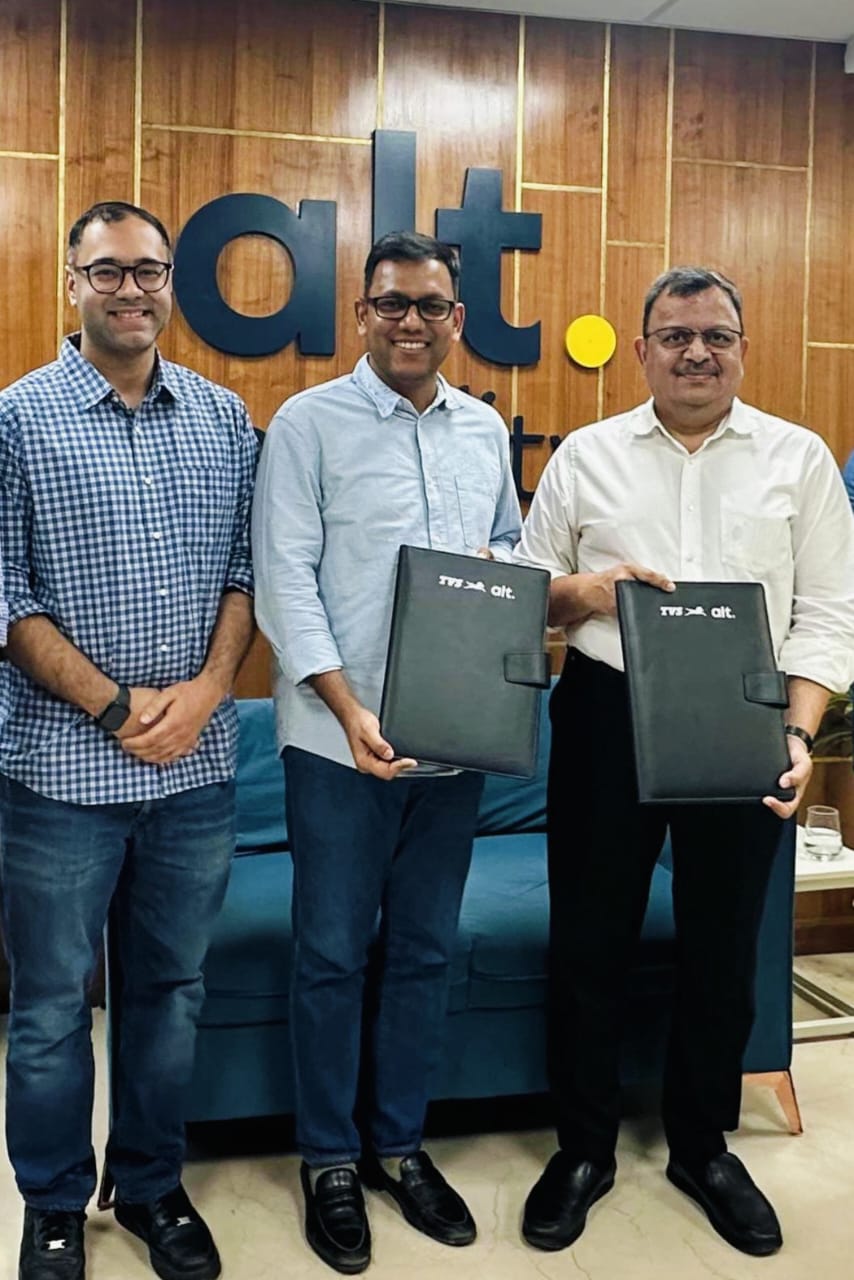
TVS Motor Company and Alt Mobility Partner to Deploy 3,000 Electric Three-Wheelers in FY 2025–26

TVS Motor Company, a global leader in two and three-wheeler manufacturing, today announced the signing of a Memorandum of Understanding (MoU) with ALT Mobility, a leading leasing and asset management company, to enable the leasing and deployment of up to 3,000 TVS electric three-wheelers (Passenger & Cargo) during FY 2025–26.

TVS Motor Company and Alt Mobility Partner to Deploy 3,000 Electric Three-Wheelers in FY 2025–26

As part of this collaboration, TVS Motor Company will provide vehicles, while ALT Mobility will procure, lease, and finance them through its ecosystem. The models, variants, and specifications will be jointly finalized to best serve customer needs, and the vehicles will be rolled out through TVS Motor’s extensive network authorized dealers and ALT’s point of sales across India.

The vehicles will be deployed under ALT’s Drive-to-own leasing model to individual drivers and fleet operators for Cargo and Passenger transportation.

At the core of the offering is ALT’s integrated asset management value proposition, which ensures 24x7 vehicle monitoring and pre-emptive maintenance to minimize potential vehicle breakdown or downtime. This leads to top-notch vehicle health, enables higher uptime and therefore better asset utilization for higher earning potential.

Speaking on the occasion, Mr. Rajat Gupta, Business Head – Commercial Mobility, TVS Motor Company, said: “This collaboration with ALT Mobility is a significant step towards enabling sustainable urban and last-mile mobility at scale. Our advanced electric three-wheeler portfolio, engineered for superior range, faster charging, and durability, is designed to empower businesses and drivers with reliable, clean, and cost-efficient solutions. Together with ALT Mobility, it is our endeavour to make electric mobility more accessible while creating a measurable impact on the environment and livelihoods.”

Commenting on the partnership, Mr. Anuj Gupta, Co-founder & CBO, ALT Mobility, said: “We are committed to building scalable solutions that integrate sustainable mobility with financial inclusion. Partnering with TVS Motor Company gives us access to industry-leading vehicles and technology, which will help us scale our leasing and fleet operations effectively. Through the Drive-to-own model and our integrated lease offerings, we are making electric vehicle adoption seamless for drivers and fleets — ensuring uptime, assured earnings, and a sustainable livelihood, while building a stronger zero-emission logistics’ ecosystem for the country.”

ALT’s all-inclusive lease plan covers key expense areas like maintenance, insurance, roadside assistance, servicing, challan and fitness management, giving vehicle users a hassle-free ownership experience.

The collaboration will serve both last-mile logistics and shared passenger mobility segments, thereby strengthening clean mobility adoption across multiple use cases. The initiative will support driver livelihood creation and small fleet operators, generating socio-economic value while advancing India’s electric mobilit

Tesla and NODWIN Unite for India’s Biggest Esports Showdown

Tesla and NODWIN Unite for India’s Biggest Esports Showdown
  • The association marks a defining moment for Indian esports, with Tesla Model Y cars set to be showcased at the grand finals of the country’s most-watched esports event from September 12 to 14
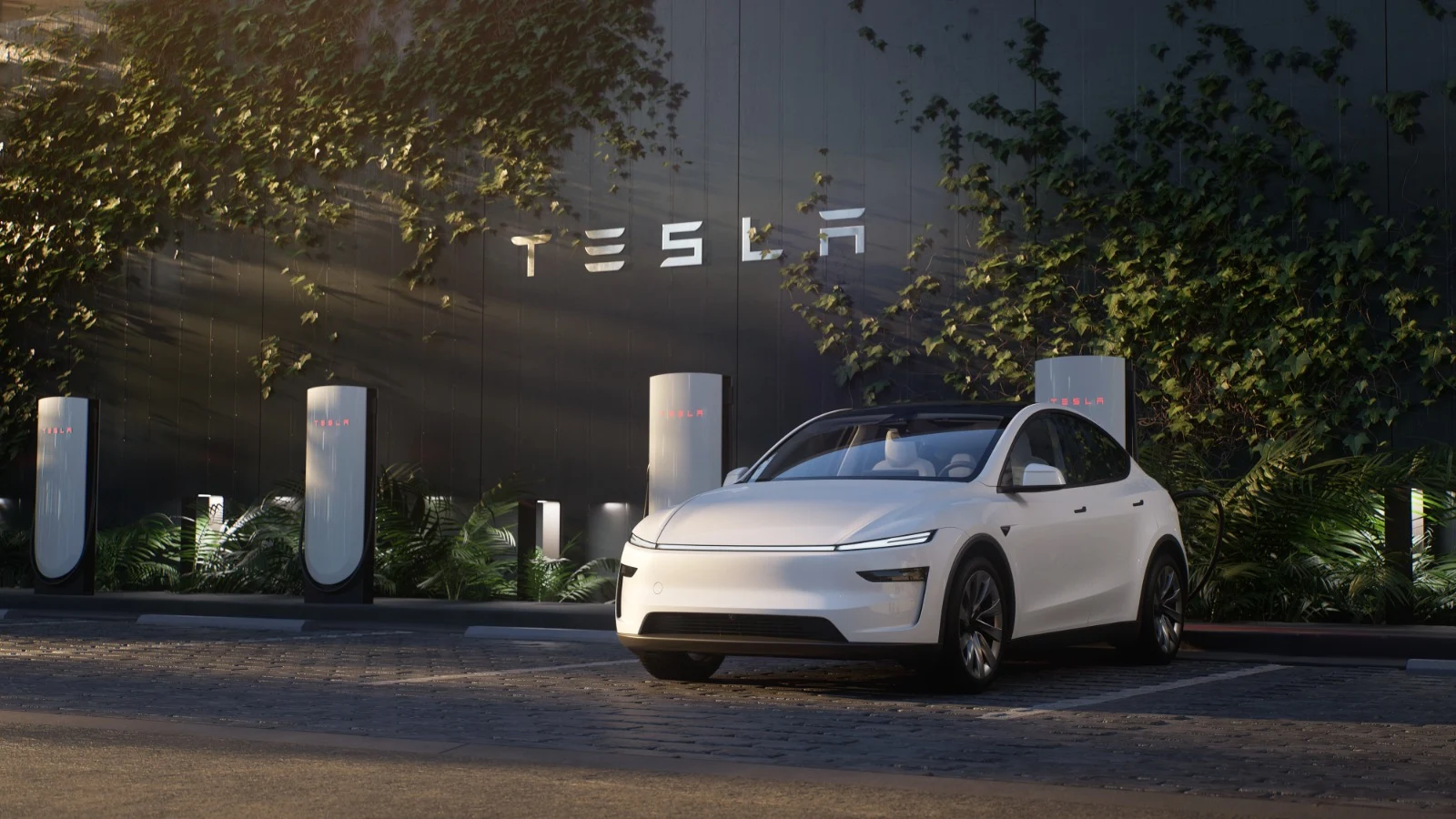
NODWIN Gaming, South Asia’s leading gaming and esports company, today announced a collaboration with American electric vehicle manufacturer Tesla for the Grand Finals of the Battlegrounds Mobile India Masters Series (BGMS) Season 4. This is Tesla’s first-ever collaboration with an Indian esports tournament, marking a historic moment for the country’s esports industry.

The Grand Finals of BGMS Season 4 will be held from September 12 to 14, bringing together the top 16 teams in the country to compete in a high-octane LAN Final. Tesla, which recently entered the Indian market by opening experience centers in BKC, Mumbai, and Worldmark Aerocity, Delhi, will showcase one of the world’s best-selling cars, the redesigned Model Y, at the event, giving fans a firsthand look at one of the most technologically advanced vehicles on the road. The Grand Finals will open with the Tesla Light Show, which has become a viral cultural phenomenon at global events over the years.

Both Tesla and NODWIN Gaming share a forward-looking identity of innovation, disruption, and technology leadership. Tesla’s integration of software, EV technology, and even gaming into its cars mirrors the digital-first mindset of esports. Collaborating with NODWIN Gaming for BGMS enables Tesla and NODWIN to mutually enhance their presence in India, engaging directly with a vibrant, youth-first community at the forefront of digital entertainment. As the only esports tournament in India broadcast on national television, the entire collaboration created unparalleled visibility among Gen Z and millennial audiences, highlighting the growing cultural and commercial significance of esports in the country.

At NODWIN Gaming, every season of BGMS is about pushing boundaries, and this year we’re proud to have Tesla join the journey. Their association reflects how esports in India has grown into a mainstream cultural and commercial platform that forward-looking brands want to engage with. Together, we’re shaping how global brands and gaming communities connect, here in India and beyond. Collaborations like this show what’s possible when innovation and culture come together,” said Akshat Rathee, Co-founder and Managing Director of NODWIN Gaming.

According to the FICCI-EY Media and Entertainment Industry Report 2025, the number of brands investing in esports in India is expected to grow from 68 in 2024 to 75 in 2025, fueled by new titles, larger tournaments, and deeper engagement with youth audiences. Season 4 of BGMS is a testament to this surge, with a powerful line-up of partners including OnePlus as Title Sponsor and Official Smartphone Partner, Android as Co-Title Sponsor, and TVS Motor Company entering its third consecutive year. The tournament also features Red Bull, Duolingo English Test, Swiggy, and Bisleri, further proving the sector’s growing ability to attract marquee global and Indian brands.

The BGMS Season 4 Grand Finals will be broadcast live on Star Sports Khel and on JioHotstar from September 12 to 14, airing during prime-time from 5 PM to 8 PM IST.

Mumbai Gets a MegaCharge! Tata Power & Tata.ev Launch City’s Largest EV Hub

Mumbai Gets a MegaCharge! Tata Power & Tata.ev Launch City’s Largest EV Hub

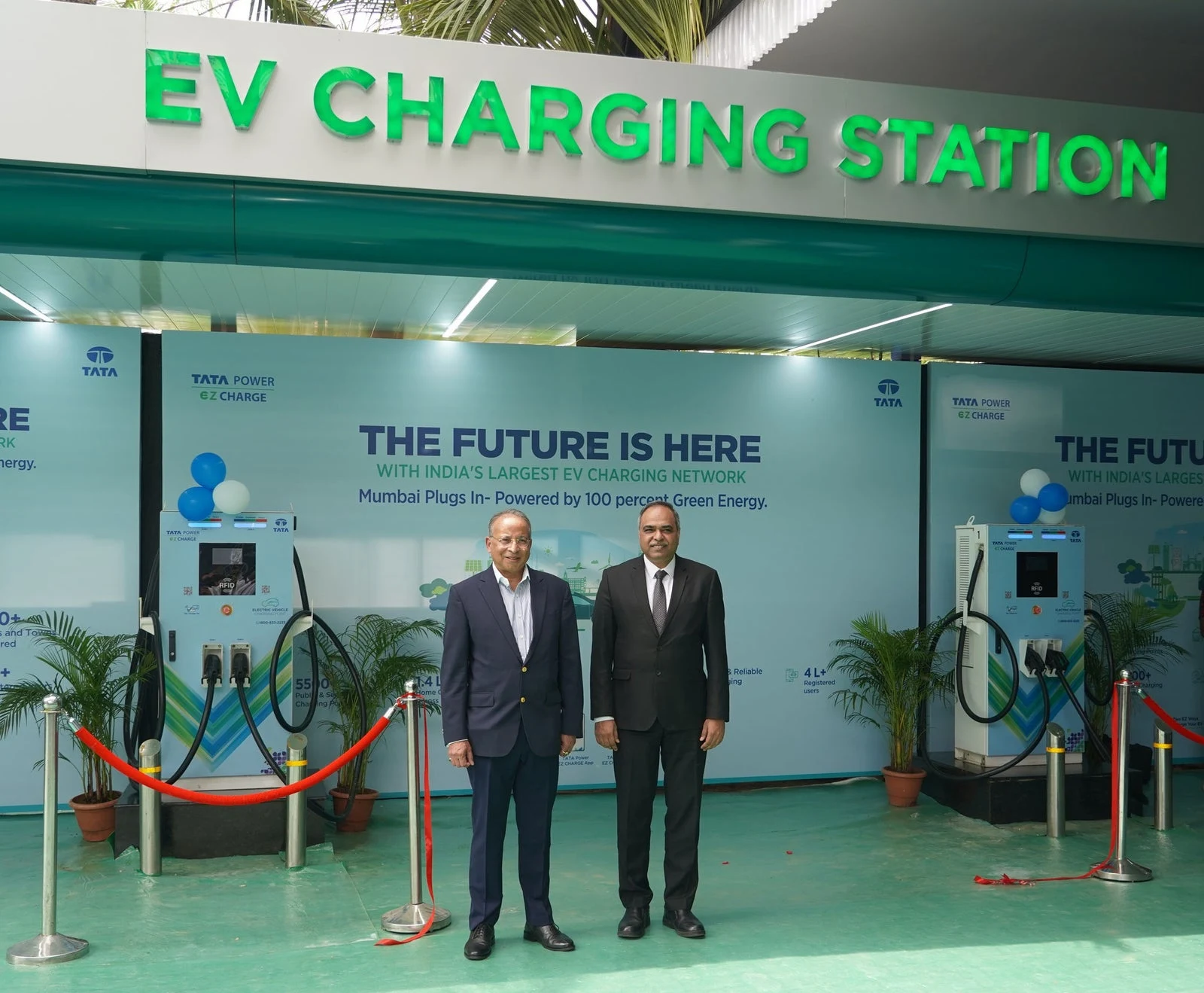
In a landmark move to accelerate India’s electric mobility infrastructure, Tata Power Company Limited and Tata Passenger Electric Mobility Limited have jointly inaugurated Mumbai’s first large-scale premium EV charging hub under the TATA.ev MegaCharger initiative. The launch coincided with World EV Day, marking a strategic milestone in the country’s clean energy transition.

A Flagship Collaboration for Urban EV Adoption

The co-branded charging facility was unveiled by Dr. Praveer Sinha, CEO & MD of Tata Power, and Mr. Shailesh Chandra, MD of Tata Motors Passenger Vehicles and Tata Passenger Electric Mobility. Located within the premises of The Leela Mumbai Hotel, adjacent to Terminal 2 of Chhatrapati Shivaji Maharaj International Airport, the hub is designed to serve a wide spectrum of EV users—from private car owners to commercial fleets.
This MegaCharger hub reflects our commitment to building a robust, accessible EV ecosystem that supports India’s net-zero ambitions,” said Dr. Sinha during the inauguration.

Infrastructure Highlights

  • Eight fast DC chargers with speeds up to 120 kW
  • 16 charging bays, enabling simultaneous charging for 16 EVs
  • 24/7 accessibility for private vehicles, taxis, ride-hailing services, and logistics operators
  • Strategically positioned to serve airport travelers, hotel guests, and professionals in the Andheri–BKC–South Mumbai corridor
The facility aims to eliminate long wait times and offer a seamless charging experience, especially during peak hours. Its location near a major transit hub also makes it a critical node in Mumbai’s evolving EV landscape.

Clean Mobility Meets Premium Access

The TATA.ev MegaCharger hub is part of Tata Power’s broader strategy to deploy 25,000+ EV charging points across India by 2028. With this launch, the company reinforces its leadership in both EV infrastructure and sustainable urban planning.
“This initiative not only supports our growing EV customer base but also sets a benchmark for future-ready urban mobility solutions,” said Mr. Chandra.

Delhi Flags Off First Batch of SWITCH EiV12 Electric Buses in Landmark 950-Unit Rollout

Delhi Flags Off First Batch of SWITCH EiV12 Electric Buses in Landmark 950-Unit Rollout

SWITCH Mobility, a global leader in electric buses and light commercial vehicles and part of the Hinduja Group, today flagged off the SWITCH EiV12 – Low Floor Electric City Buses from its landmark 950-unit order for the Department of Transport, Delhi, awarded under the CESL tender.

These buses were flagged off by the Hon’ble Chief Minister, Smt. Rekha Gupta, in the presence of Dr. Pankaj Singh, Hon’ble Transport Minister; Sh. Manoj Tiwari, Hon’ble Member of Parliament (North East Delhi); Sh. Surya Prakash Khatri, Hon’ble MLA (Timarpur); Ms. Niharika Rai, Commissioner, Department of Transport, Delhi; Sh. Prince Dhawan, Managing Director, DTC, Delhi; Dr. Chadda, Senior Advisor, Hinduja Group; R.G. Venkataraman, Chief Commercial Officer, SWITCH Mobility; and Saurabh Chaudhary, CEO, Ohm Global Mobility. The occasion marks a key milestone in Delhi’s transition towards sustainable urban mobility.

Manufactured at SWITCH’s state-of-the-art facility, these buses embody the company’s ‘Make in India for the World’ vision, bringing together cutting-edge global technology and Indian manufacturing excellence.

The ultra-low-floor SWITCH EiV12 platform, designed for Delhi’s demanding urban transit needs, offers comfortable seating for 39 passengers. These 12-meter electric buses provide an impressive range to seamlessly meet daily schedules and are equipped with advanced safety and passenger convenience features, including a wheelchair ramp for differently-abled passengers, CCTV cameras, panic buttons, and GPS tracking. Ergonomically optimized and intelligently engineered, the SWITCH EiV12 ensures global standards in performance, durability, safety, and superior passenger comfort.

RG Venkataraman, Chief Commercial Officer of SWITCH Mobility, said, "We are delighted to commence delivery of our SWITCH EiV12 electric buses to Delhi, reinforcing the capital's leadership position in sustainable urban transportation. These Low Floor Electric City Buses, engineered with advanced global technology and manufactured with pride in India, will significantly enhance Delhi's public transport ecosystem while contributing to cleaner air and improved quality of life for millions of commuters. This deployment underscores our commitment to empowering Indian cities with intelligent, efficient, and eco-friendly transportation solutions that drive progress towards a more sustainable future."

The SWITCH EiV12 exemplifies cutting-edge design tailored for urban city commutes, offering a smart and lightweight solution that enhances metropolitan mobility. Its streamlined ultra-low-floor design ensures easy passenger boarding and a smooth ride through Delhi's bustling streets. The vehicles’ efficient rear-end dual-gun charging interface enables rapid recharging while optimizing depot spaces. Powered by SWITCH iON, the proprietary telematics system, the buses offer real-time vehicle health monitoring, Intelligent Transportation Management System (ITMS), and efficient fleet management capabilities.

Prioritizing passenger safety, each bus is equipped with an advanced Fire Detection and Suppression System (FDSS). The floor-mounted LFP batteries contribute to a lower centre of gravity, ensuring excellent vehicle stability and enhanced safety during operations.

The deployment of these electric buses aligns with the Delhi Government's vision to maintain its position as the Indian city with the highest number of electric buses. This rollout is expected to significantly reduce CO₂ emissions, improve air quality, and provide safer, more comfortable commutes for Delhi's millions of daily bus users.

Ultraviolette Secures $21 Mn with Strategic Backing from Japan's TDK Ventures and Existing Investors

Ultraviolette Secures $21 Mn with Strategic Backing from Japan's TDK Ventures and Existing Investors
  • The investment round of $21M saw strategic participation from TDK Ventures and strong continued backing from existing investors Zoho Corporation and Lingotto (previously Exor Capital) among other leading institutional investors.
  • Ultraviolette is actively expanding its retail footprint across India, scaling from its current presence in 20 cities to over 100 cities nationwide.
  • F77 is the first Indian E2W to receive European Certification and to be sold across 10 countries in Europe.
  • TDK Ventures now joins Ultraviolette’s distinguished group of institutional investors, which includes Qualcomm Ventures LLC, Zoho Corporation Private Limited, Speciale Invest, Lingotto (a subsidiary of Exor N.V.), and TVS Motor Company Limited.
  • Other notable investors include Sriharsha Majety (Co-founder & CEO, Swiggy), Ankit Nagori (Co-founder, Cure Foods; former Chief Business Officer, Flipkart), Aprameya Radhakrishna (Co-founder, TaxiForSure), and Dulquer Salmaan (renowned actor and automotive enthusiast).
Ultraviolette, today, announced a strategic investment from TDK Ventures, the corporate venture capital arm of TDK Corporation (TSE: 6762). This partnership represents a pivotal step in Ultraviolette’s mission to develop and scale globally competitive performance-oriented EVs, that embodies Indian innovation and engineering excellence.

TDK Ventures now joins Ultraviolette’s distinguished group of institutional investors, which includes Qualcomm Ventures, Zoho Corporation, Speciale Invest, Lingotto (Previously Exor Capital), and TVS Motor Company. Other notable investors in Ultraviolette include Sriharsha Majety (Co-founder & CEO, Swiggy), Ankit Nagori (Co-founder, Cure Foods; former Chief Business Officer, Flipkart), Aprameya Radhakrishna (Co-founder, TaxiForSure), and Dulquer Salmaan (renowned actor and automotive enthusiast).

Ultraviolette was founded with a vision to craft electric vehicles that combine futuristic designs with precision engineering. Following years of rigorous R&D, Ultraviolette’s flagship motorcycle- the F77 has set new benchmarks in performance, safety, and technology, establishing itself as one of the world’s most advanced electric two-wheelers today. With a well-established foundation, Ultraviolette is now scaling up manufacturing, accelerating research, expanding its distribution network, and bringing its product portfolio to global markets of the world.

Mobility is undergoing a radical transformation, and at Ultraviolette, we are leading that change through cutting-edge innovation. Our partnership with TDK Ventures fast forwards our efforts, from advanced battery platforms to intelligent vehicle systems. This collaboration not only accelerates our vision of future ready mobility but also reinforces our commitment to delivering electric vehicles that are aspirational and globally relevant”, stated Narayan Subramaniam, CEO and Co-founder of Ultraviolette.

Niraj Rajmohan, CTO and Co-founder of Ultraviolette, commented, “Through this partnership with TDK Ventures, Ultraviolette will continue to innovate in deep-tech to shape the future of mobility. Together, we will continue to push the boundaries in building safer, smarter, and a more efficient electric mobility eco-system.”

TDK Ventures is committed to supporting disruptive startups that are driving scalable solutions in energy, mobility, and sustainability - key sectors that are shaping the future of global economy. Its investment, as part of Ultraviolette’s latest funding round represents TDK Ventures’ commitment to advancing sustainable transportation technologies around the globe. This strategic investment positions TDK Ventures at the forefront of India's electric two-wheeler revolution.

Ravi Jain, Investment Director of TDK Ventures, commented, “We look forward to bringing our TDK Goodness to Ultraviolette and their ambitious plan to design the next generation of energy efficient and performance EV 2W platforms. TDK Ventures is excited to support Ultraviolette in their relentless pursuit of growing their global reach."

In late 2023, TDK Ventures launched its Bengaluru Innovation Hub to empower India’s exceptional entrepreneurs to scale their technologies globally by leveraging its expertise in nurturing deep-tech startups around the world.

Tesla Powers Into Gurugram with First EV Hub and Second India Store

Tesla Powers Into Gurugram with First EV Hub and Second India Store

Tesla has officially leased a 33,475 sq ft space at Orchid Business Park on Sohna Road, Gurugram, marking its first integrated EV hub in Delhi-NCR and second retail store in India after Mumbai. Here's what makes this move significant:

Strategic Location & Facility Details
  • Address: Orchid Business Park, Sohna Road, Gurugram
  • Lease Duration: 9 years, with a 3-year lock-in
  • Monthly Rent: ₹40.17 lakh; Security Deposit: ₹2.41 crore
  • Annual Escalation Clause: 4.75%
  • Purpose: Combined delivery center, service hub, and retail showroom
Why Gurugram?
  • Proximity to NH-48 and Sohna Elevated Road ensures excellent connectivity.
  • Located in a tech-forward, affluent district ideal for early EV adopters.
  • Surrounded by automobile showrooms, tech parks, and commercial hotspots.
Tesla’s India Strategy
  • Complements Tesla’s Mumbai showroom at Bandra Kurla Complex.
  • Signals a long-term commitment to India’s EV market amid rising government incentives and infrastructure upgrades.
  • Expected to boost local employment, supporting industries, and EV adoption.
What’s Next?
  • Tesla is also preparing to launch its Delhi store at Worldmark 3, Aerocity, on August 11.
  • The Gurugram hub will likely become a flagship for northern India, streamlining customer experience with integrated services.

ZELO ELECTRIC Launches Knight+ – India’s Most Affordable Electric Scooter At An Introductory Price of ₹59,990

ZELO ELECTRIC Launches Knight+ – India’s Most Affordable Electric Scooter At An Introductory Price of ₹59,990

ZELO ELECTRIC, one of India’s fastest-growing electric two-wheeler brands, has launched its most advanced and affordable offering yet - the Knight+, at a breakthrough introductory price of ₹59,990 (ex-showroom). Knight+ aims to make premium electric mobility accessible to every Indian, blending performance, safety, and design like never before in its segment.

Knight+ is built to meet the everyday needs of Indian riders - whether navigating city traffic, riding through small towns, or covering longer rural routes. Powered by a 1.8kWh portable LFP battery, it delivers a dependable 100 km real-world range, thermal safety, and easy home charging. Its 1.5kW motor and 55 km/h top speed ensure a smooth, powerful ride across varied Indian terrains.

With Knight+, we’re not just launching a scooter - we’re delivering on our vision of premium yet affordable EVs for Bharat,” said Mukund Baheti, Co-founder, ZELO ELECTRIC.

At just ₹59,990, it’s the most feature-rich, value-packed electric scooter in its class. We believe this will empower thousands to switch to smarter, cleaner mobility”, he added.

What truly sets the Knight+ apart are its segment-first features:
  • Hill Hold Control - prevents the scooter from rolling backward on inclines, making uphill starts effortless and safe
  • Cruise Control - for a more relaxed and consistent riding experience on longer routes
  • Follow-Me-Home Headlamps - keeps the headlamp on briefly after parking, lighting the rider’s path in low-light conditions
  • USB Charging Port - enables riders to charge their phone or gadgets on the go
  • Portable Battery - removable and easy to charge anywhere, offering maximum convenience and flexibility
Available in 6 colours -
  • Single Tone: Glossy White, Glossy Black
  • Dual Tone: Matte Blue & White, Matte Red & White, Matte Yellow & White, Matte Grey & White


Zelo currently operates with 4 active models in the market, 3 low-speed electric scooters Zoop, Knight and Zaeden and one under the RTO segment Zaeden+. The launch reinforces Zelo’s commitment to make premium electric mobility accessible to every Indian household while maintaining world-class safety and performance standards.

Aditya Baheti, Co-founder, ZELO ELECTRIC, added, “Knight+ is built for the everyday Indian rider - someone who expects performance, practicality, and peace of mind. From our LFP battery to safety features like Hill Hold Control and Follow-Me-Home Headlamps, every detail has been thoughtfully engineered for real-world use. This launch is a major milestone in our journey to bring smart, affordable electric mobility to every rider, everywhere in India.”

ZELO ELECTRIC is redefining the electric two-wheeler experience in India by building robust, low-maintenance, and future-ready vehicles that deliver uncompromised value. With Knight+, the brand strengthens its commitment to cutting-edge innovation, purposeful design, and real-world performance, setting new benchmarks in accessible premium mobility.

Knight+ is now open for pre-booking across all ZELO ELECTRIC dealerships and deliveries will begin from August 20, 2025.

About ZELO ELECTRIC

ZELO ELECTRIC, under SLSR Electro Pvt Ltd, is committed to reimagining two-wheeler mobility in India. With a focus on premium quality, advanced features, and affordability, ZELO ELECTRIC is building a range of EVs tailored to the real needs of Indian riders. In just three years, the brand has grown into a trusted name across India’s EV ecosystem, backed by a strong dealership network and an expanding product portfolio.

Tata Motors and UBS’s EV Arm Ink Landmark Deal for 100 Magna Electric Coaches

Tata Motors and UBS’s EV Arm Ink Landmark Deal for 100 Magna Electric Coaches

In a major boost to India’s intercity electric mobility landscape, Tata Motors, the country’s largest commercial vehicle manufacturer, signed a Memorandum of Understanding (MoU) with Green Energy Mobility Solutions Pvt. Ltd (GEMS), the newly formed electric mobility arm of Universal Bus Services (UBS). The agreement will see Tata Motors supply 100 state-of-the-art Magna EV intercity coaches to GEMS, marking a significant step in UBS’s transition to sustainable transport.

A Strategic Leap at PV Expo 2.0

The MoU was formalized at the Passenger Vehicle Expo 2.0 in Chennai, where Tata Motors showcased its latest innovations in commercial passenger mobility. Among the highlights were the all-electric Magna EV and the LPO 1822, both engineered for superior performance, enhanced passenger comfort, and best-in-class total cost of ownership.

The signing ceremony was attended by Dr. T.R.B. Rajaa, Hon’ble Minister for Industries, Government of Tamil Nadu, alongside senior government delegates and members of the All Omni Bus Owners Association (AOBOA), underscoring the state’s commitment to fostering green mobility solutions.

UBS Accelerates Its Green Transition

Universal Bus Services, a leading premium intercity travel brand in South India, is known for its customer-centric approach and operational reliability. With the launch of GEMS, UBS is pivoting toward electric mobility, aiming to deploy advanced EV coaches and supporting infrastructure across its network.

The 100 Magna EV coaches from Tata Motors will serve as the backbone of this transition, offering long-range capabilities, fast-charging support, and a zero-emission footprint tailored for intercity operations.

Industry Impact and Future Outlook

This partnership signals a broader shift in India’s commercial transport sector, where legacy operators are increasingly aligning with OEMs to adopt electric fleets. For Tata Motors, the deal reinforces its leadership in the EV space and its commitment to delivering scalable, sustainable solutions for passenger mobility.

With Tamil Nadu emerging as a hub for EV innovation and manufacturing, the collaboration between Tata Motors and GEMS is expected to catalyze further investments in green infrastructure and fleet electrification across the region.

DPIIT Signs MoU with Ather Energy to Accelerate EV Manufacturing and Clean Mobility in India

DPIIT Signs MoU with Ather Energy to Accelerate EV Manufacturing and Clean Mobility in India

In a strategic move to bolster India’s electric vehicle (EV) sector, the Department for Promotion of Industry and Internal Trade (DPIIT) has announced the signing of a Memorandum of Understanding (MoU) with Bengaluru-based EV manufacturer Ather Energy. The partnership aims to strengthen the country’s clean mobility ecosystem and support deep-tech startups in the EV value chain.

A Push for Indigenous Innovation

The collaboration is part of the Build in Bharat initiative, led by the Startup Policy Forum (SPF)—a coalition of over 50 innovation-driven startups focused on hardware and manufacturing. The MoU outlines a multi-pronged strategy to:
  • Provide strategic mentorship for startups developing core EV and battery technologies. 
  • Offer infrastructure access and exposure to manufacturing processes. 
  • Launch joint innovation programs like the Bharat Startup Grand Challenge. 
  • Host skill development initiatives and national events such as Startup Mahakumbh

Voices from the Partnership

Joint Secretary of DPIIT, Sanjiv Singh, emphasized the transformative potential of the EV sector:
Through this partnership with Ather Energy, we aim to catalyse an enabling environment where startups can contribute meaningfully to EV manufacturing, battery innovation, and clean energy solutions.

Ather Energy’s Co-founder and CEO, Tarun Mehta, echoed the sentiment:

We are happy to collaborate with DPIIT to strengthen support systems for hardware and deep-tech startups. With policy support and stronger industry participation, this initiative can help founders tackle core technology challenges and scale high-quality products from India.

Strategic Impact

The MoU is expected to:
  • Bridge the gap between early-stage ventures and industrial-scale opportunities. 
  • Promote localisation of EV components and battery innovation
  • Expand India’s startup base in clean mobility and advanced manufacturing
President and CEO of the Startup Policy Forum, Shweta Rajpal Kohli, described the partnership as a milestone:

Unlocking the potential of India’s manufacturing sector through collaboration is key to building a globally competitive innovation ecosystem.

Context and Momentum

The DPIIT–Ather Energy pact comes amid growing momentum in India’s EV sector, driven by policy incentives, state-level EV programs, and rising consumer adoption. It follows DPIIT’s recent MoU with Maruti Suzuki India, signaling a broader push to integrate startups into the country’s industrial growth narrative.

What Influences the Electric Scooter Price in Delhi?

What Influences the Electric Scooter Price in Delhi?

When it comes to buying an electric scooter in Delhi, there are several factors that influence the price, from the model you choose to government policies that provide incentives. The electric scooter market is growing, and with so many options available, understanding the elements that add to the final price can help you make a wise decision.

Whether you're eyeing a budget-friendly option or a high-end model packed with advanced features, knowing what impacts the electric scooter price in Delhi will ensure you get the best value for your money.

Model and Brand

One of the primary factors affecting electric scooter price in Delhi is the model and brand you opt for. Scooters with advanced technology, longer ranges, and higher speeds tend to be more expensive than basic models. Well-established brands that offer quality and reliable performance will likely have higher prices compared to new or lesser-known manufacturers.

For instance, the electric scooter market in India includes several models from different brands offering varying levels of performance. Some brands offer scooters with impressive features such as long battery life, fast charging, high-speed capabilities, and app connectivity, all of which come at a premium price.

For example, scooters with ranges upwards of 150 km on a single charge and top speeds around 70-80 km/h will typically have higher prices compared to those designed for shorter city commutes. The electric scooter price in Delhi for these models could be anywhere between ₹1,30,000 and ₹1,40,000, depending on the features.

Battery Size and Range

The size of the battery and the range it offers are key factors influencing the electric scooter price in Delhi. Electric scooters with larger batteries generally offer longer ranges and better overall performance, but they also come at a higher price. A scooter with a range of 50 km per charge will typically cost less than one that can go up to 100 km or more, as the battery's capacity directly impacts the price.

Additionally, the charging time and ease of charging also play a role in the cost. Fast-charging options and the ability to charge at home with a regular socket may add to the price, but they make the scooter more convenient for daily use.

Government Incentives and Subsidies

Delhi's government offers several incentives to encourage the adoption of electric vehicles (EVs). These can significantly impact the electric scooter price in Delhi, making it more affordable for buyers.

For example, the Delhi government offers a subsidy of ₹5,000 per kWh of battery capacity for electric scooters, which means a scooter with a 3 kWh battery could benefit from a ₹15,000 subsidy. Additionally, there may be other exemptions on road tax, registration fees, or incentives provided by specific dealerships.

While these subsidies reduce the upfront cost, the price of the scooter before the subsidy still depends on the model as well as the brand you choose.

Type of Scooter: Commuter vs. High-Performance

Another factor influencing the electric scooter price in Delhi is whether the scooter is designed for daily commuting or high performance. Scooters designed for regular use in the city with moderate ranges and speeds are generally more affordable than performance-oriented models designed for longer distances and higher speeds.

High-performance electric scooters, with features like higher top speeds, longer ranges, and more advanced safety features, will naturally have a higher price tag.

Technology and Features

The level of technology integrated into an electric scooter is another determinant of its price. Features like smart connectivity, GPS navigation, app integration, and advanced safety systems can increase the cost of the scooter.

Scooters equipped with features such as reverse mode, cruise control, regenerative braking, and LED displays tend to be priced higher. Riders who prioritise smart features and modern technology are likely to pay a premium for these additional capabilities.

Quality of Build and Materials

The quality of the materials used in building the scooter, such as the frame, wheels, suspension, and brakes, also affects the electric scooter price in Delhi. Scooters with sturdy, durable materials that can withstand rough roads or longer rides are often more expensive. Those with higher-quality frames, tyres, and braking systems generally come at a premium, ensuring better longevity and comfort.

Additionally, build quality directly impacts the overall ride experience. Scooters that offer a smoother, more comfortable ride with better suspension and handling often come with a higher price tag.

Dealerships and Location

Finally, the location and dealership you buy from can also affect the electric scooter price in Delhi. Dealers in certain areas may charge more for service and maintenance, or they may include additional services like extended warranties or free charging equipment. It’s worth checking various dealerships for pricing and offers before making a decision.

An EV Scooter that Rides Through Delhi’s Streets

The electric scooter price in Delhi depends on factors, including the brand, model, battery capacity, range, and government incentives. With the growing popularity of electric scooters in Delhi, prices are becoming more competitive, and buyers have plenty of options to choose from.

By considering the factors mentioned above and understanding how they impact the on-road price, you can make a decision about which electric scooter fits your needs and budget. With the government's incentives, buying an electric scooter in Delhi has become a more cost-effective and sustainable option. This is helping you save money while contributing to a cleaner environment.

Godrej's Tooling Biz Accelerates EV Supply Chain with Indigenous Precision Engineering and Strategic R&D

Godrej's Tooling Biz Accelerates EV Supply Chain with Indigenous Precision Engineering and Strategic R&D

As India’s electric vehicle (EV) sector continues its sharp upward trajectory, the tooling business of Godrej Enterprises Group is playing a pivotal role in strengthening the industry's supply chain through advanced tooling solutions. With the automotive industry rapidly shifting gears towards adoption of electric vehicles in India, it has necessitated the development of new engines, battery boxes and high precision sheet metal parts.

In line with this, the business has enhanced its capabilities to serve the unique demands of EV manufacturing, focusing on high-precision dies and tooling solutions for critical EV components by increasing. Anticipating the surge in EV demand, the company had strategically invested 2–3% of its revenue in research & development and advanced machinery to foster future-ready innovation, meet evolving industry requirements, and enhance production efficiency.

With May 2025 registering a 28% year-on-year surge in EV sales and a record 1.96 million units sold in FY2025, the demand for locally manufactured, high-precision EV components has never been higher. The business has significantly ramped up its focus on high-precision dies and tooling systems tailored for the EV ecosystem. This focused approach is enabling India’s Tier 1 and Tier 2 automotive suppliers to meet evolving EV requirements while aligning with the government’s thrust on ‘Make in India’ and import substitution.

Over the past three years 10-15% of the business’s revenues are from EV-related tooling orders, reflecting the sector’s growing reliance on precision engineering and localized manufacturing.

Pankaj Abhyankar, Business Head, Tooling business of Godrej Enterprises Group, said, “As EV manufacturers scale up production to meet growing consumer demand, they require tooling partners who understand both the technical complexities and the commercial imperatives of this rapidly evolving sector. India’s EV transition is not just about vehicles, it’s about building a resilient, self-reliant, and globally competitive ecosystem. At Godrej Enterprises Group, we are proud to be enabling this transformation through our precision engineering solutions. These world-class tooling systems help reduce dependence on imports while improving lead times, cost efficiency, and product reliability.”

Godrej Enterprises Group is also exploring the localization of select tools currently produced overseas. By manufacturing these tools at domestic facilities, the business aims to boost exports while creating secondary markets for these localized solutions. This dual strategy of global servicing and local manufacturing underscores the company’s commitment to making India a hub for world-class tooling exports.

How the Global Battery Crisis Is Testing India’s EV Dreams

How the Global Battery Crisis Is Testing India’s EV Dreams

As the world races toward electrification, a storm is brewing in the heart of the battery industry. What began as a global supply chain shuffle has now ballooned into a full-blown crisis—affecting prices, innovation, and policy strategies worldwide. And for India, an ambitious contender in the EV transition, the aftershocks are impossible to ignore.

Global Fires, Local Flares

The battery industry’s foundations are under pressure. China's recent clampdown on antimony exports—essential for battery flame retardants—has quadrupled prices to over $60,000 per metric ton, destabilizing supply chains from Seoul to San Jose. Meanwhile, Europe’s battery darling Northvolt has hit a wall, struggling against soaring energy costs and regulatory hurdles.

China controls 60% of global antimony supply (a critical mineral for lead-acid batteries) and over 75% of global battery production, making other nations vulnerable to supply disruptions.

India, heavily reliant on imports for battery cells and critical minerals, stands squarely in the path of these seismic shifts.

India’s Lithium Dependency Dilemma

Despite the fanfare around EV launches and green energy investments, India imports over 70% of its battery components, exposing it to raw material shocks and fluctuating global markets.
  • Lithium, cobalt, and nickel are sourced largely from geopolitically tense regions.
  • China commands significant sway over the refining and distribution pipelines.

EV Adoption at a Tipping Point

Battery costs account for up to 40% of an EV’s price in India. Any spike here reverberates across the market—especially in a country where price sensitivity governs buyer behavior.
  • Price hikes risk alienating the urban middle class targeted by India’s green mobility push.
  • Two-wheelers and e-rickshaws may see price stagnation or reduced subsidies.

Gigafactories vs. Reality

Government schemes like the PLI program and FAME II promise localization and scale, but execution remains sluggish.
  • India still lacks end-to-end battery manufacturing capabilities.
  • Ola Electric, Amara Raja, and Reliance are building gigafactories, but results will take time.

Innovation Sparks in the Ashes

The crisis has spurred interest in alternative chemistries and strategic alliances.
  • India is exploring sodium-ion and solid-state batteries.
  • Startups are developing modular battery swapping solutions.
  • New joint ventures are forming to secure global mining rights.

Will India Accelerate or Stall?

The battery crisis may become the crucible in which India's resilience, innovation, and strategic autonomy are forged.

The question now is not whether India will electrify—but how fast, how smart, and how self-sufficient it can become while doing so.

Honda Motorcycle & Scooter India inaugurates its First-Ever EV Concept Store in Bengaluru

Honda Motorcycle & Scooter India inaugurates its First-Ever EV Concept Store in Bengaluru

In a significant step towards electric mobility journey, Honda Motorcycle & Scooter India (HMSI) today inaugurated its first-ever EV Concept Store in India, located at Mantri Square Mall, Malleshwaram, Bengaluru. This one-of-a-kind Concept Store is designed to offer customers an immersive & futuristic experience, giving them a glimpse into Honda’s world of mobility, technology, and innovation. HMSI also announced a new BaaS Lite Plan for ACTIVA e: where customers can pay just Rs 678/month, making EV ownership more accessible than ever before.

A Glimpse into the Future: Inside Honda’s EV Concept Store

Honda EV Concept Store

Honda’s new EV Concept Store is designed to offer a fascinating experience of the company’s technological advancements. From electric mobility to personal aviation, it captures the essence of Honda’s global innovation. At the heart of the store is a main LED Display, which serves as a digital focal point to engage visitors through interactive content, brand storytelling, and product highlights. It provides dynamic insights into Honda’s electrification journey. A history wall is also on display, exhibiting the remarkable journey and key milestones of Honda over the years.

The Product Display Zone showcases Honda’s latest electric offerings in India – the ACTIVA e: and QC1. Visitors can get up close with these models, explore their features, and understand the engineering that powers them. For families and younger visitors, the Kids Interaction Zone offers engaging experiences. This section has been specially designed to make the store welcoming to all age groups, reflecting Honda’s inclusive brand philosophy.


The Safe Tech Zone gives a detailed look at the core components behind ACTIVA e: and QC1, including the PMS motor, hub motor, charger, battery and Mobile Power Pack (MPP). Visitors will also witness Honda’s advanced battery swapping technology at the dedicated Honda Power Pack Exchanger e:. This innovative system enables seamless battery replacement for the ACTIVA e:, providing unmatched convenience to users. Live demonstrations of the system will showcase the efficiency and user-friendliness of this technology.

Adding an international flair, the store features a scale model of the Honda Jet, symbolizing the excellence in personal aviation. Honda’s Electric Racing Go-Kart (eGX), showcasing the company’s innovative approach to sustainable performance, is also on display. Powered by Honda Mobile Power Pack e: swappable batteries, the electric Go-Kart delivers impressive acceleration & precision handling. Another exciting highlight is the Honda Moto Compacto, a foldable electric scooter. Weighing just 19 kg, it is ideal for urban commuting with a top speed of 24 kmph and range of 20 km per charge. This display illustrates how Honda blends nostalgia with cutting-edge tech to create modern solutions.

Honda ACTIVA e: New BaaS Lite Plan

Honda EV Concept Store

Marking a pivotal moment in HMSI’s journey towards sustainable mobility, the all-new ACTIVA e: aims to redefine urban transportation in the country. The ACTIVA e: features Honda Mobile Power Pack e: - a swappable battery system developed by Honda Motor Co. Ltd. Japan and managed by Honda Power Pack Energy India Pvt. Ltd (HEID). It is equipped with two 1.5 kWh swappable batteries, delivering a range of 102 km* on a full charge.

As part of commitment to make electric mobility convenient for customers, Honda has introduced a new BaaS Lite plan, wherein the customers will have to pay just Rs. 678 per month (for 20kWh energy usage per month), making EV ownership accessible for users. This affordable subscription model is tailored specifically for users with lower daily running, offering them an economical entry into EV ownership. With the BaaS Lite plan, customers can easily swap batteries at Honda’s battery swapping stations, ensuring seamless and hassle-free usage. The new BaaS Lite plan has been launched in addition to the existing Basic and Advance subscription packages.

Tata Elxsi and Infineon Partner to Accelerate EV Innovation in India

Tata Elxsi and Infineon Partner to Accelerate EV Innovation in India
Collaboration focuses on ready-to-deploy EV systems built on Infineon technologies for two-wheelers (2W), three-wheelers (3W), passenger vehicles (PV), and commercial vehicles (CV)

Tata Elxsi, a global leader in design and technology services, and Infineon Technologies, a global leader in semiconductor solutions, have signed a Memorandum of Understanding (MoU) to jointly develop application-ready EV solutions tailored to the Indian market.

This strategic collaboration aligns with India’s rapid shift towards electrification, with EV sales growing by 25–30% year-on-year in 2024, including a 28% increase in electric two- and three-wheeler sales.

The partnership strategically leverages design and integration expertise, enabling faster adoption of automotive-grade, cost-optimised, and safety-compliant subsystems across key mobility segments. It addresses critical safety requirements such as ASIL-D (Automotive Safety Integrity Level D) compliance, as per ISO 26262 (Functional Safety of Road Vehicles) standards.

Tata Elxsi brings its design, system integration, and validation capabilities, while Infineon will provide early access to its latest semiconductor technologies—such as silicon carbide (SiC)-based components, microcontrollers, and integrated circuits (ICs).

Through this collaboration, Tata Elxsi and Infineon will work closely to develop high-voltage inverters for traction and auxiliary systems, scalable battery management systems (BMS), bi-directional onboard chargers, and high-voltage thermal management solutions for the Indian market. This will serve India’s fast-evolving 2W, 3W, PV, and CV segments, with future pathways to address eVTOL, energy, and off-highway sectors.

“Currently, several of our EV solutions are already built on Infineon SoCs and components. This MoU further strengthens our partnership by giving us a clearer scope and tighter system-level alignment, enabling shorter turnaround times to address Indian market requirements. As EV adoption scales, our focus remains on delivering production-ready, automotive standards-compliant platforms and solutions,” said Nambi Ganesh, Head of Automotive, Tata Elxsi.

“At Infineon, we are committed to driving innovation in the electric vehicle sector and empowering our partners to bring cutting-edge technologies to market. This partnership with Tata Elxsi is a significant step in our journey to support India’s ambitious electrification goals. By combining Tata Elxsi's design and integration expertise with our advanced semiconductor solutions, we are not only enhancing the development of ready-to-deploy EV systems but also ensuring that they meet the highest safety and performance standards. Together, we aim to accelerate the adoption of electric mobility across various segments, from two-wheelers to commercial vehicles, and contribute to a more sustainable future for India,” said Kenneth Lim, Senior Vice President, Automotive, Infineon Technologies Asia Pacific.

This initiative supports national targets outlined by NITI Aayog, including 80% electrification of 2W and 3W and 70% of CVs by 2030.

Tata Elxsi is among the world’s leading providers of design and technology services across industries including automotive, broadcast, communications, healthcare, and transportation. Tata Elxsi works with leading OEMs and suppliers in the automotive and transportation industries for R&D, design, and product engineering services from architecture to launch and beyond.

It brings together domain experience across autonomous, electric, connected vehicle technologies, and software-defined vehicles (SDVs), supported by a worldwide network of design studios, development centres, and a global talent pool of over 13,000 engineers and specialists. For more information, please visit: www.tataelxsi.com/industries/automotive

About Infineon

Infineon is a global semiconductor leader in power systems and IoT. Infineon drives decarbonization and digitalization with its products and solutions. The Company had around 58,060 employees worldwide (end of September 2024) and generated revenue of about €15 billion in the 2024 fiscal year (ending 30 September). Infineon is listed on the Frankfurt Stock Exchange (ticker symbol: IFX) and in the USA on the OTCQX International over-the-counter market (ticker symbol: IFNNY).

Market Reports

Market Report & Surveys
IndianWeb2.com © all rights reserved